

What do you think?
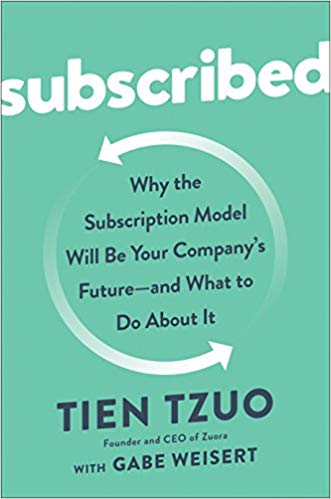
Subscribed: Why the Subscription Model Will Be Your Company's Future - and What to Do About It
A USA Today bestseller! Companies like Netflix, Spotify, and Salesforce are just the tip of the iceberg for the subscription model. The real transformation--and the real opportunity--is just beginning.
Subscription companies are growing nine times faster than the S&P 500. Why? Because unlike product companies, subscription companies know their customers. A happy subscriber base is the ultimate economic moat.
Today's consumers prefer the advantages of access over the hassles of maintenance, from transportation (Uber, Surf Air), to clothing (Stitch Fix, Eleven James), to razor blades and makeup (Dollar Shave Club, Birchbox). Companies are similarly demanding easier, long-term solutions, trading their server rooms for cloud storage solutions like Box. Simply put, the world is shifting from products to services.
But how do you turn customers into subscribers? As the CEO of the world's largest subscription management platform, Tien Tzuo has helped hundreds of companies transition from relying on individual sales to building customer-centric, recurring-revenue businesses. His core message in Subscribed is simple: Ready or not, excited or terrified, you need to adapt to the Subscription Economy -- or risk being left behind.
Tzuo shows how to use subscriptions to build lucrative, ongoing one-on-one relationships with your customers. This may require reinventing substantial parts of your company, from your accounting practices to your entire IT architecture, but the payoff can be enormous. Just look at the case studies:
* Adobe transitions from selling enterprise software licenses to offering cloud-based solutions for a flat monthly fee, and quadruples its valuation.
* Fender evolves from selling guitars one at a time to creating lifelong musicians by teaching beginners to play, and keeping them inspired for life.
* Caterpillar uses subscriptions to help solve problems -- it's not about how many tractors you can rent, but how much dirt you need to move.
In Subscribed, you'll learn how these companies made the shift, and how you can transform your own product into a valuable service with a practical, step-by-step framework. Find out how how you can prepare and prosper now, rather than trying to catch up later.
Subscription companies are growing nine times faster than the S&P 500. Why? Because unlike product companies, subscription companies know their customers. A happy subscriber base is the ultimate economic moat.
Today's consumers prefer the advantages of access over the hassles of maintenance, from transportation (Uber, Surf Air), to clothing (Stitch Fix, Eleven James), to razor blades and makeup (Dollar Shave Club, Birchbox). Companies are similarly demanding easier, long-term solutions, trading their server rooms for cloud storage solutions like Box. Simply put, the world is shifting from products to services.
But how do you turn customers into subscribers? As the CEO of the world's largest subscription management platform, Tien Tzuo has helped hundreds of companies transition from relying on individual sales to building customer-centric, recurring-revenue businesses. His core message in Subscribed is simple: Ready or not, excited or terrified, you need to adapt to the Subscription Economy -- or risk being left behind.
Tzuo shows how to use subscriptions to build lucrative, ongoing one-on-one relationships with your customers. This may require reinventing substantial parts of your company, from your accounting practices to your entire IT architecture, but the payoff can be enormous. Just look at the case studies:
* Adobe transitions from selling enterprise software licenses to offering cloud-based solutions for a flat monthly fee, and quadruples its valuation.
* Fender evolves from selling guitars one at a time to creating lifelong musicians by teaching beginners to play, and keeping them inspired for life.
* Caterpillar uses subscriptions to help solve problems -- it's not about how many tractors you can rent, but how much dirt you need to move.
In Subscribed, you'll learn how these companies made the shift, and how you can transform your own product into a valuable service with a practical, step-by-step framework. Find out how how you can prepare and prosper now, rather than trying to catch up later.
256 pages, Hardcover
First published January 1, 2018
Ratings & Reviews
Friends & Following
Create a free account to discover what your friends think of this book!
Community Reviews
Displaying 1 - 30 of 197 reviews

June 11, 2018
Once you get past first half, which is like a magazine-like article on why subscriptions are the next big thing (netflix!), book settles down with some very good, even valuable insights into what's required to strategically win with subscription model. And also, some of the things to watch out for.

Read
June 25, 2020A very informative book that talks about the shifting trend and challenges of the service based subscription economy. It demonstrates how you can no longer build a rigid product. Everything needs to be around the customers and data driven irrespective of the industry.
This data is much more efficient than the advertising and helps you remain agile with your service. Also, this helps you create new sources of revenue. It is a book that talks about the struggles and the success stories of companies who have made the shift to subscription based model and how it evolves the role of domains such as sales, finances and product in the company
This data is much more efficient than the advertising and helps you remain agile with your service. Also, this helps you create new sources of revenue. It is a book that talks about the struggles and the success stories of companies who have made the shift to subscription based model and how it evolves the role of domains such as sales, finances and product in the company

July 20, 2018
Aidosti hyvä "bisneskirja"! Millaista olisi, jos kaikki perustuisi kuukausitilausmalleihin, kuten Netflixilla? Autot, isot koneet yms. Hienoa visiointia ja käytäntöä.

November 25, 2019
Over the past decade the Subscription Economy has taken hold.
One of the landmark companies that led the charge was Salesforce.com. Instead of buying and installing software, rent it. The author had a bird's-eye view of the evolution from product to service as employee #11. His current company provides support services to companies wishing to make the transition from buying to renting.
The author makes a compelling case for the current transition away from products and toward services. Now that we live in a digital world we prefer outcomes over ownership. We want constant improvement, not planned obsolescence.
Just a few of the Big Box stores that have disappeared in the past decade include the following: Circuit City, Tower Records, Blockbuster, Borders and Virgin Megastore.
Ten years ago there was no Spotify and Netflix was a DVD company.
The emerging business model revolves around services, not products. "It isn't that retail is dead. But bad brick-and-mortar is." The Service Economy business model starts with the customer instead of the product. It's about establishing ongoing relationships. The new business model imperative is to grow and develop a dedicated subscriber base. Treat your customers like subscribers—partners in an ongoing, mutually beneficial relationship.
The case studies about Adobe's and PTC's transitions to subscription services are informative. The author contends that "every company has the potential to reinvent and thrive in the Subscription Economy."
Subscribed is a valuable addition to The Must-Read Shelf of the Best Business Books of 2018. If you are looking for a more detailed "how-to" in order to refocus your energies on customers and away from products, check out Clayton M. Christensen's Competing Against Luck.
Access Gene Babon's reviews of books on Business Leadership and Business Strategy at Pinterest.
One of the landmark companies that led the charge was Salesforce.com. Instead of buying and installing software, rent it. The author had a bird's-eye view of the evolution from product to service as employee #11. His current company provides support services to companies wishing to make the transition from buying to renting.
The author makes a compelling case for the current transition away from products and toward services. Now that we live in a digital world we prefer outcomes over ownership. We want constant improvement, not planned obsolescence.
Just a few of the Big Box stores that have disappeared in the past decade include the following: Circuit City, Tower Records, Blockbuster, Borders and Virgin Megastore.
Ten years ago there was no Spotify and Netflix was a DVD company.
The emerging business model revolves around services, not products. "It isn't that retail is dead. But bad brick-and-mortar is." The Service Economy business model starts with the customer instead of the product. It's about establishing ongoing relationships. The new business model imperative is to grow and develop a dedicated subscriber base. Treat your customers like subscribers—partners in an ongoing, mutually beneficial relationship.
The case studies about Adobe's and PTC's transitions to subscription services are informative. The author contends that "every company has the potential to reinvent and thrive in the Subscription Economy."
Subscribed is a valuable addition to The Must-Read Shelf of the Best Business Books of 2018. If you are looking for a more detailed "how-to" in order to refocus your energies on customers and away from products, check out Clayton M. Christensen's Competing Against Luck.
Access Gene Babon's reviews of books on Business Leadership and Business Strategy at Pinterest.

June 9, 2020
The book is divided into two halves where the first half reads almost like a magazine with just scores of fascinating facts about how companies such as Adobe, Apple, Walmart, Fender, Hollywood, Netflix, Salesforce, etc., in various industries, viz. Media, Mobility, Tech, Manufacturing, etc. have adopted the subscription model of revenue, the foundations for this new approach and how they've fared thence.
The author has used all these examples to emphasize on the importance of customer relations to be at the centre of a subscription model and why it's the next big thing. Having been at the centre of Salesforce.com - the company that essentially pioneered subscription revolution, he does have an insider perspective on how the model has transformed industries.
The 2nd part is all about adoption, implementation & succeeding with the subscription approach, with specific chapters talking on how Sales, Marketing & Finance should to be re-aligned around this new model. And while all the chapters under this segment pack great insights, Chapter 12 is supremely important.
I expected to read about the change in metrics of companies after adopting subscription pricing and the various marketing and sales campaigns they ran to make this model successful for their business, which I couldn't find. The change in metrics details are there but only for a few companies and isn't in-depth.
Must read for anyone involved with a company running subscription based revenue models!!
The author has used all these examples to emphasize on the importance of customer relations to be at the centre of a subscription model and why it's the next big thing. Having been at the centre of Salesforce.com - the company that essentially pioneered subscription revolution, he does have an insider perspective on how the model has transformed industries.
The 2nd part is all about adoption, implementation & succeeding with the subscription approach, with specific chapters talking on how Sales, Marketing & Finance should to be re-aligned around this new model. And while all the chapters under this segment pack great insights, Chapter 12 is supremely important.
I expected to read about the change in metrics of companies after adopting subscription pricing and the various marketing and sales campaigns they ran to make this model successful for their business, which I couldn't find. The change in metrics details are there but only for a few companies and isn't in-depth.
Must read for anyone involved with a company running subscription based revenue models!!

September 20, 2019
I liked the idea that subscriptions are the only business model that is entirely based on the happiness of our customers and that is a business with no beginning and no end. I expected to learn and read more practical examples on successful marketing and selling campaigns on subscriptions, which didn't really happen. The best and most useful chapter for me was chapter 12 - about the eight "new" sales strategies (which I don't really find new). Maybe my expectations were too high.

December 27, 2020
Okumaya başladığım an içimdeki fırtınalar kopmaya başlıyor. Benim için abonelik iş modelinin yeri apayrı..
Bu adam dijital aboneliğin mucidi. Tien Tzuo, abonelik modelini inşaa eden ve bunu geliştiren başarılı bir teknoloji adamı. Abonelik modeline kafayı takmış ve Salesforce'un başarısı ile ortaya harikulade bir eser çıkarmış.
Şirketlerin ve girişimlerin neden abonelik modeline geçmesini aptala anlatır gibi anlatıyor. Çok teknik detaylara girmeden sizi hemen konuya bağlayabiliyor (Kitabın sonlara doğru belirli formül ve metriklere değiniyor).
Beni en çok Adobe'un CC sürecindeki abonelik geçişi etkiledi. CFO geliyor ve; "Biz 2 yıl boyunca zarar edeceğiz. 2 yılın sonunda kara geçeceğiz. Hem de çok... " diyerek karlı bir şirketi iş modelini değiştirerek zarara sokuyor.
Yıl 2013 ve abonelik dünyada bu kadar yaygın değil. Büyük bir cesaret ve özveri istiyor.
Her ne kadar okuduğunuzda iştahınızı kabartsa da aman diyorum. Geçtiğimiz aylarda okuduğum "Otomatik Müşteri" kitabı gibi tehlikeli ve gaza getirici. Sakın ama sakın burada yazılanlara güvenerek Türkiye’de kutu abonelik modeline sahip kurmayın.
İş kurarsanız da tecrübe edin ve sürekli deneyin.
Abonelik konusunda kendisini geliştirmek isteyen şirketler ve girişimciler olmak üzere bütün beyaz yakalılara tavsiye ediyorum Bol feyizli ve metriklere dayalı iş kitabı.
Bu adam dijital aboneliğin mucidi. Tien Tzuo, abonelik modelini inşaa eden ve bunu geliştiren başarılı bir teknoloji adamı. Abonelik modeline kafayı takmış ve Salesforce'un başarısı ile ortaya harikulade bir eser çıkarmış.
Şirketlerin ve girişimlerin neden abonelik modeline geçmesini aptala anlatır gibi anlatıyor. Çok teknik detaylara girmeden sizi hemen konuya bağlayabiliyor (Kitabın sonlara doğru belirli formül ve metriklere değiniyor).
Beni en çok Adobe'un CC sürecindeki abonelik geçişi etkiledi. CFO geliyor ve; "Biz 2 yıl boyunca zarar edeceğiz. 2 yılın sonunda kara geçeceğiz. Hem de çok... " diyerek karlı bir şirketi iş modelini değiştirerek zarara sokuyor.
Yıl 2013 ve abonelik dünyada bu kadar yaygın değil. Büyük bir cesaret ve özveri istiyor.
Her ne kadar okuduğunuzda iştahınızı kabartsa da aman diyorum. Geçtiğimiz aylarda okuduğum "Otomatik Müşteri" kitabı gibi tehlikeli ve gaza getirici. Sakın ama sakın burada yazılanlara güvenerek Türkiye’de kutu abonelik modeline sahip kurmayın.
İş kurarsanız da tecrübe edin ve sürekli deneyin.
Abonelik konusunda kendisini geliştirmek isteyen şirketler ve girişimciler olmak üzere bütün beyaz yakalılara tavsiye ediyorum Bol feyizli ve metriklere dayalı iş kitabı.

December 25, 2019
I'm thrilled with the subscriptions options that I learned from the book. I prefer much more to pay-per-use than own (and pay for) something that I'll barely use. So, I liked to see the examples of non-software products that can be offered as service/subscription.
I've just found out that I can rent a lawnmower. Sometimes I wonder what's the difference between rent and subscribe to something!?
The book seems to be a good start point for those thinking about offering their products as service as it explains this new model, how it works, the new knowledge and skill needed for employees from different areas (HR, accounts, IT, etc) to work in this new model. This is a new (and better) world IMHO but it's a challenge in the mindset both for companies and consumers. People, in general, like ownership, but I'm glad that new generations prefer to try new and different things and to have new experiences instead of keeping certain things. Coincidently, while reading this book, I bought a chocolate in the Hotel Chocolat, then they gave me a rewards card and when I went to their website to register the card I saw that they offer a monthly subscription for those who want to try their latest recipes before anyone else :) I'd never subscribe to eat chocolates but I'm glad for Hotel Chocolat who said that they already have 55k subscribers! :)
I also liked very much the references/sources in the end of the book, many links to interesting articles that compliment the reading.
I've just found out that I can rent a lawnmower. Sometimes I wonder what's the difference between rent and subscribe to something!?
The book seems to be a good start point for those thinking about offering their products as service as it explains this new model, how it works, the new knowledge and skill needed for employees from different areas (HR, accounts, IT, etc) to work in this new model. This is a new (and better) world IMHO but it's a challenge in the mindset both for companies and consumers. People, in general, like ownership, but I'm glad that new generations prefer to try new and different things and to have new experiences instead of keeping certain things. Coincidently, while reading this book, I bought a chocolate in the Hotel Chocolat, then they gave me a rewards card and when I went to their website to register the card I saw that they offer a monthly subscription for those who want to try their latest recipes before anyone else :) I'd never subscribe to eat chocolates but I'm glad for Hotel Chocolat who said that they already have 55k subscribers! :)
I also liked very much the references/sources in the end of the book, many links to interesting articles that compliment the reading.

December 7, 2019
The book puts together some really good and well studied real life stories with insights and frameworks built upon those examples.
It goes beyond the typical business novela telling the story everyone wants to read about someone else's success. It makes a good efforts to extract some lessons that you can try in your own endeavors.
I think the framework is still in its infancy, but we have a very healthy toddler here.
It goes beyond the typical business novela telling the story everyone wants to read about someone else's success. It makes a good efforts to extract some lessons that you can try in your own endeavors.
I think the framework is still in its infancy, but we have a very healthy toddler here.

July 9, 2024
I liked the book's first part, which provides a general overview of different industries and companies that use the subscription model as a primary revenue generation mechanism. It was also interesting to read about insights into the IoT and how it currently relates to manufacturing. Lots of potential there.
Ultimately, this book proves that the subscription model is all about creating long-term value for the customer, and I couldn't agree more. If you provide something valuable and very specific/narrow to a selected customer, your subscription will be profitable. If you don't, then well, it won't. You either grow or die.
Also, it clearly takes time to pivot from the traditional (sell of unit) revenue model to a subscription (sell of service/relationship) model. This is especially true when you have to nail correct pricing, establish a clear value proposition, and do other things; however, the real pain, to me, is the execution and moving from the legacy architecture that supports the linear quote-to-cash model to the subscription architecture. That sounds like a true nightmare. Praise the backend engineers.
The second part of the book provided some valuable insights on rethinking marketing and sales growth strategies; however, other things were not that valuable to me. It's a nice overview of how things should work, but I think it's more geared towards enterprise-level businesses. For example, one of the growth strategies identified as acquisitions is clearly not for everyone. Requires extensive capital, legal help, etc.
All in all, a good general-interest book on the subscription economy and how to be/become a part of it.
3/5 ⭐⭐⭐
Ultimately, this book proves that the subscription model is all about creating long-term value for the customer, and I couldn't agree more. If you provide something valuable and very specific/narrow to a selected customer, your subscription will be profitable. If you don't, then well, it won't. You either grow or die.
Also, it clearly takes time to pivot from the traditional (sell of unit) revenue model to a subscription (sell of service/relationship) model. This is especially true when you have to nail correct pricing, establish a clear value proposition, and do other things; however, the real pain, to me, is the execution and moving from the legacy architecture that supports the linear quote-to-cash model to the subscription architecture. That sounds like a true nightmare. Praise the backend engineers.
The second part of the book provided some valuable insights on rethinking marketing and sales growth strategies; however, other things were not that valuable to me. It's a nice overview of how things should work, but I think it's more geared towards enterprise-level businesses. For example, one of the growth strategies identified as acquisitions is clearly not for everyone. Requires extensive capital, legal help, etc.
All in all, a good general-interest book on the subscription economy and how to be/become a part of it.
3/5 ⭐⭐⭐

July 26, 2020
First part of the book is an introduction to the membership economy and can be summarised in two phrases:
1/ Membership economy is taking over the world (even when it’s not: the authors seem to *really* want it to, and frequent mentions of their company, that sells a subscription service to other companies, feels a bit annoying).
2/ Companies are transitioning from a model centered on products/goods (bought by anonymous people through distribution channels) to a model centered on subscribers/members and more specifically their needs, which means: direct relations with customers, data on them/their usage, new KPIs (mainly CLV, ARPU, MRR, churn), different culture, technical stack, etc.
Although some case studies are interesting (eg Dropbox offering its freemium service to users then saling to their companies, FT opening its paywall during Brexit vote), this part is too long and finally boring.
Second part/half of the book are basic insights for running a subscription-based company (and what it means for sales, financial, IT...). It ends with the PADRE (*sigh*) model for this: Positionning, Acquire, Deploy, Run and Expand.
Overall, good book if you want to be introduced to the membership economy, but way too basic if you already work in a company that sell subscriptions and want to learn more.
1/ Membership economy is taking over the world (even when it’s not: the authors seem to *really* want it to, and frequent mentions of their company, that sells a subscription service to other companies, feels a bit annoying).
2/ Companies are transitioning from a model centered on products/goods (bought by anonymous people through distribution channels) to a model centered on subscribers/members and more specifically their needs, which means: direct relations with customers, data on them/their usage, new KPIs (mainly CLV, ARPU, MRR, churn), different culture, technical stack, etc.
Although some case studies are interesting (eg Dropbox offering its freemium service to users then saling to their companies, FT opening its paywall during Brexit vote), this part is too long and finally boring.
Second part/half of the book are basic insights for running a subscription-based company (and what it means for sales, financial, IT...). It ends with the PADRE (*sigh*) model for this: Positionning, Acquire, Deploy, Run and Expand.
Overall, good book if you want to be introduced to the membership economy, but way too basic if you already work in a company that sell subscriptions and want to learn more.
October 27, 2019
First half: a bunch of examples of companies and industries that have switched to subscriber-based recurring revenue models and an interesting explanation of the upside of IoT. Could have been a big table, one row per company, and a short article on IoT.
Second half: breakdowns of how individual departments' responsibilities change when a business switches from selling one-time products to selling subscriptions. Good view of how to leverage recurring revenue to be deliberate about investing in growth vs. KTLO/RTB vs. profit.
Outside of the IoT and growth vs operating expenses parts, there wasn't much here for me. I don't see myself recommending this to anyone else.
Second half: breakdowns of how individual departments' responsibilities change when a business switches from selling one-time products to selling subscriptions. Good view of how to leverage recurring revenue to be deliberate about investing in growth vs. KTLO/RTB vs. profit.
Outside of the IoT and growth vs operating expenses parts, there wasn't much here for me. I don't see myself recommending this to anyone else.

March 16, 2021
This one took me forever to read because I couldn’t or wouldn’t make time to concentrate, but once I finally downloaded it and listened to it on Audible during what would be no productive time in my car, I was able to better appreciate it.
I hope any leader looking to ensure longevity for their business understands the power of the subscription economy. I’m sold on it and hope my company gets it right. This is a great tool for anyone looking to explain the subscriptions model vs the traditional product-centric business model and also provides so really good things to think about when putting it into practice. I’ll be referring to this one often, so I’m glad I have the hard copy!
I hope any leader looking to ensure longevity for their business understands the power of the subscription economy. I’m sold on it and hope my company gets it right. This is a great tool for anyone looking to explain the subscriptions model vs the traditional product-centric business model and also provides so really good things to think about when putting it into practice. I’ll be referring to this one often, so I’m glad I have the hard copy!

July 18, 2020
An informative book about the rapid growth of the subscription economy and why it is essential in the upcoming generation-z world.
In some ways, this could be a marketing piece for people to start business and rely on zuora’s platform, but regardless, this book is well equipped with great examples of the subscription revolution.
I am giving 4 stars just because it was a reasonably hard read for me as a student who just graduated high school without much knowledge of business, including the terms Tien kept referring to in his book. Apart from that, it was an educational and interesting read.
In some ways, this could be a marketing piece for people to start business and rely on zuora’s platform, but regardless, this book is well equipped with great examples of the subscription revolution.
I am giving 4 stars just because it was a reasonably hard read for me as a student who just graduated high school without much knowledge of business, including the terms Tien kept referring to in his book. Apart from that, it was an educational and interesting read.

January 29, 2023
This book was published 5 years ago, so you don’t find here the most recent news/insights about the subscription service industry.
The book is more about shifting to a subscription mindset in product companies from different sectors, and less about IT companies.
My favorite part of the book is the examples of subscription businesses in different spheres, especially car and media subscriptions.
The book is more about shifting to a subscription mindset in product companies from different sectors, and less about IT companies.
My favorite part of the book is the examples of subscription businesses in different spheres, especially car and media subscriptions.

August 20, 2025
Software-CDs war einmal. Heute wird die Software abonniert und man bezahlt eine monatliche/Jährliche Gebühr. Nicht mehr "besitzen" ist der Trend sondern "benutzen". Ähnliche Ansätze gibt es bei Musik, Fernsehen und Autos. Alles wird 'subscibed' und nicht mehr gekauft.
Gute Zusammenfassung des allgemeinen Trends und Analysen, wie vorteilhaft dies für den Händler und Benutzer ist. Gut und verständlich geschrieben.
Gute Zusammenfassung des allgemeinen Trends und Analysen, wie vorteilhaft dies für den Händler und Benutzer ist. Gut und verständlich geschrieben.

February 23, 2021
Great book that ties al lot of different trends and developments in de business world together. The digital transformation, agile development, customer centred business, the SaaS business model etc etc. Was a joy to read, sparked a lot of new ideas for projects to work on. It definitely gave me some very practical insights into what to do if you want to run a SaaS company. Great.

November 19, 2020
Part 2 on this book is GOLD for anyone running a subscription business.
The way Tien explains how sales & marketing should be considered in the subscription economy is crystal clear.
I found part 1 way too long as the book goes over and over with examples from different industries.
4 stars!
The way Tien explains how sales & marketing should be considered in the subscription economy is crystal clear.
I found part 1 way too long as the book goes over and over with examples from different industries.
4 stars!

May 27, 2019
Although I have worked over 6 years in SaaS companies which are using the subscription model it was still interesting to learn about the origins of subscription and what exactly makes it different from other models.

September 22, 2018
Interesting ideas on a business model that can be adopted more widely using technology.

December 16, 2022
(The English review is placed beneath the Russian one)
Во-первых, книга скучна. Я одолел книгу только со второго раза, т.к. читая её в первый раз, я дошёл где-то до середины и бросил. Во-вторых, возможно сама тема не подразумевает создание интересного контента. Автор взял тему «subscribe», а это, всё равно что, взять тему «продажа по каталогам». Можно ли написать интересную книгу? Теоретически, возможно и можно, но для этого должен быть не только талант (я сомневаюсь, что у авторов он имеется), но и хорошая база собранной и проанализированной информации.
В первой половине книги авторы описывают различные примеры данной модели бизнеса. Однако мы вполне можем сами вспомнить многочисленные примеры, такие как Netflix’s, онлайновые компьютерные игры, музыка по подписке (различные сервисы), электронные СМИ, прокат автомобилей и так далее. Благодаря интернету подобный вид бизнеса стал более распространённым, и, разумеется, мы должны держать в голове подобную бизнес-модель. Но дальше авторы сползают в какие-то ненужные детали, пустословие, общие размышления и до чего способен дойти человек своим умом. Возможно, это максимум, что можно извлечь из такой темы. Возможно. Однако как я дал понять в самом начале, достаточно обладать критический мышление и способностью наблюдать и анализировать окружающую действительность, чтобы прийти к определённым заключениям, которые вполне способны заменить данную книгу.
Дополнение к рецензии от 23.10.2021.
Спустя пару лет, после написания рецензии, я в третий раз попробовал прочитать всё книгу целиком или почти целиком. В общем, моё мнение о книге не изменилось. Несмотря на интересную тему, книга невероятно скучная. Однако в своём дополнении я хотел сказать не об этом, разумеется. Меня поразил пример, который авторы взяли из мира компьютерных игр. Т.к. я большой поклонник компьютерных игр (также пишу рецензии на них), я кое-что знаю о ситуации в этой области. Так вот, авторы очень сильно ошиблись, когда решили использовать компьютерные игры в качестве примера, где используется модель подписки. На сегодняшний день, лишь очень небольшая часть игр продаётся или функционирует на основе этой бизнес-модели. Подавляющее большинство игр продаётся как обычный товар, т.е. потребитель платит один раз и больше никаких выплат не делает (дополнения или DLC я сюда не включаю). На самом деле ввести такой способ оплаты в мире компьютерных игр, архисложно. Я могу вспомнить лишь игру World of Warcraft, которая распространяется только по подписке, т.е. чтобы поиграть в эту игру вы должны ежемесячно платить разработчику. Что касается остальных онлайн игр, то подавляющее большинство из них функционируют по модели free-to-play, что означает, что игрок может играть в игру бесплатно, но может использовать виртуальный магазин, для покупки предметов помогающих ему в процессе игры. Как вы понимаете, это сильно отличается от той модели, о которой пишут авторы этой книги. Да и будучи фанатом компьютерных игр, я просто не могу вспомнить ещё какую-нибудь игру, за исключением вышеназванной World of WarCraft, которая была бы и популярна и распространялась только по подписке.
В чём главная проблема данного подхода? Проблема в том, что потребитель, фактически, должен переплачивать за предоставляемые услуги, ибо он, делая ежемесячные оплаты, которые в какой-то момент могут стать запредельными. Да, если игра продаётся за 500 рублей, а подписка стоит 10 рублей в месяц, то тогда в этой есть смысл (при условии, что цена не будет повышаться ни при каких условиях на всём протяжении предоставления товара). Но таких услуг просто не существует. Ежемесячная подписка на World of WarCraft начинается от 1799 рублей (Shadowlands Base Edition) и заканчивается 3599 рублей (Shadowlands Epic Edition). Средняя цена игры в интернет-магазине Steam, около 300-500 рублей. Как видите, подписка может озолотить компанию, но для этого нужно найти фанатично приверженных людей. Такое если и случается, то очень редко. Да, есть игры из той же серии что World of WarCraft, в которые я сам играл. Например, легендарная игра Lineage 2, только эта игра была в основе своей бесплатна, и платная подписка была добровольна, хотя многие активно её покупали (можно было один месяц оплатить, а в другой месяц не делать никаких оплат). Но что важно понять так это то, что такие игры являются исключением. Их очень и очень мало. Привлечь в них людей в достаточном количестве, + чтобы они играли в игру на протяжении многих лет, очень и очень тяжело, ибо за 500 – 1,000 рублей, предлагается продукт ничуть не хуже, а во многих случаях и лучше, нежели ежемесячная оплата в несколько тысяч рублей. Так что приведённый авторами пример, просто катастрофический, он отражает то, что авторы не особо вдумывались в суть того метода, о котором пишут.
Согласно книге, такой способ ведения бизнеса, станет всё более и более распространённым. Я сомневаюсь в этом. И причина в том, что такой метод очень затратен как для продавца, так и для покупателя (покупателю предлагают оплачивать один и тот же товар каждый месяц). Меня просто поразило нахальство Microsoft, которая сделала свою последнюю версию Microsoft Office доступной только по подписке. Прости, а за что я должен КАЖДЫЙ месяц платить? За одну и ту же программу? Это называется жадность, а не моделью распространения по подписке. По подписке можно распространять довольно ограниченный вариант товаров и услуг, когда клиент каждый раз получает не тот же самый товар, а новый. Примером является ежемесячная подписка на газеты и журналы, когда покупатель в итоге платит меньше, чем, если бы каждый раз покупал газеты и журнале в киоске. В таком случаи, мы видим выгоду покупателя. А в тех примерах, которые я привёл выше, мы видим только алчность компаний и нулевую выгоду для покупателей. Вот об этом в книге не сказано ни-че-го. И оно понятно, ибо авторы просто переписали корпоративные доклады, в которых расхваливается данная модель бизнеса и всё. Никакого анализа метода, никакой критики и никакого глубокого рассмотрения с точки зрения стратегии. Халтура, одним словом.
First of all, the book is boring. I did not finish the book until the second time because the first time I read it, I got about halfway through and gave up. Second, perhaps the theme itself is not meant to create interesting content. The author took the "subscribe" theme, which is like taking the "catalog sales" theme. Is it possible to write an interesting book? Theoretically, it is possible, but it requires not only talent (I doubt that the authors have it) but also a good base of collected and analyzed information.
In the first half of the book, the authors describe various examples of this business model. However, we can think of numerous examples ourselves, such as Netflix, online computer games, subscription music (various services), digital media, car rentals, and so on. Thanks to the Internet, this kind of business has become more widespread, and, of course, we should keep this kind of business model in mind. But then the authors slip into some unnecessary details, verbiage, general speculation, and what a person can get up to with his mind. Perhaps this is the maximum that can be extracted from such a topic. Perhaps. However, as I made clear in the beginning, it is enough to possess critical thinking and the ability to observe and analyze reality in order to come to certain conclusions, which are quite capable of replacing this book.
Addendum to the review of 10/23/2021.
A couple of years after writing the review, I tried to read the whole or almost the whole book for the third time. Overall, my opinion of the book hasn't changed. Despite the interesting subject matter, the book is incredibly boring. However, that's not what I wanted to say in my addendum, of course. I was struck by the example the authors took from the world of computer games. Since I am a big fan of computer games (I also write reviews on them), I know a thing or two about the situation in this area. Well, the authors made a big mistake when they decided to use computer games as an example that uses the subscription model. Today, only a very small fraction of games are sold or operated based on this business model. The vast majority of games are sold as the regular stuff, i.e., the consumer pays once and doesn't make any further payments (not including add-ons or DLC here). In fact, introducing such a payment method in the world of PC games is arch-hard. The only game I can think of is "World of Warcraft", which is only distributed on a subscription basis, i.e., to play this game, you have to pay the developer every month. As for the rest of the online games, the vast majority of them operate on a free-to-play model, which means that the player can play the game for free but can use the virtual store to buy items that help him in the game. As you can see, this is very different from the model the authors of this book are writing about. And being a fan of computer games, I just can't think of any other game other than the aforementioned "World of WarCraft" that was both popular and distributed only by subscription.
What is the main problem with this approach? The problem is that the consumer actually has to overpay for the services provided because s/he making monthly payments, which at some point may become excessive. Yes, if the game is sold for 500 rubles, and a subscription costs 10 rubles a month, then it makes sense (provided that the price will not increase under any circumstances throughout the provision of goods). But such services simply do not exist. A monthly subscription to "World of WarCraft" starts at 1,799 rubles (Shadowlands Base Edition) and ends at 3,599 rubles (Shadowlands Epic Edition). The average price of the game in the Steam online store is about 300-500 rubles. As you can see, a subscription can make a company rich, but you need to find fanatically committed people to do it. This, if it happens, is very rare. Yes, there are games from the same series as World of WarCraft, which I myself have played. For example, the legendary game Lineage 2, except that this game was basically free, and paid subscription was voluntary, although many actively purchased it (you could pay for one month and not make any payments in another month). But what is important to understand is that such games are the exception. They are very, very few. Attract enough people to them + so that they play the game for many years, very, very hard, because for 500 - 1,000 rubles, the product is not any worse, and in many cases better than the monthly payment of several thousand rubles. So the example given by the authors is simply disastrous, and it reflects the fact that the authors have not really thought about the essence of the method they write about.
According to the book, this way of doing business will become more and more common. I doubt it. And the reason is that this method is very costly for both the seller and the buyer (the buyer is asked to pay for the same product every month). I was just struck by Microsoft's insolence in making its latest version of Microsoft Office available only by subscription. I'm sorry, but what do I have to pay for EVERY month? For the same program? It's called greed, not the subscription distribution model. Subscriptions can be used to distribute a fairly limited range of goods and services, where the customer receives a new product instead of the same one each time. An example is a monthly subscription to newspapers and magazines, where the customer ends up paying less than if he bought newspapers and magazines from a kiosk every time. In such a case, we see a benefit to the customer. In the examples I gave above, we see only the greed of the companies and zero benefits to the customer. This is what the book does not say anything about. And this is understandable because the authors have simply rewritten corporate reports that praise this business model, and that's it. No analysis of the method, no criticism, and no in-depth consideration in terms of strategy. It's just hackwork, in a word.
Во-первых, книга скучна. Я одолел книгу только со второго раза, т.к. читая её в первый раз, я дошёл где-то до середины и бросил. Во-вторых, возможно сама тема не подразумевает создание интересного контента. Автор взял тему «subscribe», а это, всё равно что, взять тему «продажа по каталогам». Можно ли написать интересную книгу? Теоретически, возможно и можно, но для этого должен быть не только талант (я сомневаюсь, что у авторов он имеется), но и хорошая база собранной и проанализированной информации.
В первой половине книги авторы описывают различные примеры данной модели бизнеса. Однако мы вполне можем сами вспомнить многочисленные примеры, такие как Netflix’s, онлайновые компьютерные игры, музыка по подписке (различные сервисы), электронные СМИ, прокат автомобилей и так далее. Благодаря интернету подобный вид бизнеса стал более распространённым, и, разумеется, мы должны держать в голове подобную бизнес-модель. Но дальше авторы сползают в какие-то ненужные детали, пустословие, общие размышления и до чего способен дойти человек своим умом. Возможно, это максимум, что можно извлечь из такой темы. Возможно. Однако как я дал понять в самом начале, достаточно обладать критический мышление и способностью наблюдать и анализировать окружающую действительность, чтобы прийти к определённым заключениям, которые вполне способны заменить данную книгу.
Дополнение к рецензии от 23.10.2021.
Спустя пару лет, после написания рецензии, я в третий раз попробовал прочитать всё книгу целиком или почти целиком. В общем, моё мнение о книге не изменилось. Несмотря на интересную тему, книга невероятно скучная. Однако в своём дополнении я хотел сказать не об этом, разумеется. Меня поразил пример, который авторы взяли из мира компьютерных игр. Т.к. я большой поклонник компьютерных игр (также пишу рецензии на них), я кое-что знаю о ситуации в этой области. Так вот, авторы очень сильно ошиблись, когда решили использовать компьютерные игры в качестве примера, где используется модель подписки. На сегодняшний день, лишь очень небольшая часть игр продаётся или функционирует на основе этой бизнес-модели. Подавляющее большинство игр продаётся как обычный товар, т.е. потребитель платит один раз и больше никаких выплат не делает (дополнения или DLC я сюда не включаю). На самом деле ввести такой способ оплаты в мире компьютерных игр, архисложно. Я могу вспомнить лишь игру World of Warcraft, которая распространяется только по подписке, т.е. чтобы поиграть в эту игру вы должны ежемесячно платить разработчику. Что касается остальных онлайн игр, то подавляющее большинство из них функционируют по модели free-to-play, что означает, что игрок может играть в игру бесплатно, но может использовать виртуальный магазин, для покупки предметов помогающих ему в процессе игры. Как вы понимаете, это сильно отличается от той модели, о которой пишут авторы этой книги. Да и будучи фанатом компьютерных игр, я просто не могу вспомнить ещё какую-нибудь игру, за исключением вышеназванной World of WarCraft, которая была бы и популярна и распространялась только по подписке.
В чём главная проблема данного подхода? Проблема в том, что потребитель, фактически, должен переплачивать за предоставляемые услуги, ибо он, делая ежемесячные оплаты, которые в какой-то момент могут стать запредельными. Да, если игра продаётся за 500 рублей, а подписка стоит 10 рублей в месяц, то тогда в этой есть смысл (при условии, что цена не будет повышаться ни при каких условиях на всём протяжении предоставления товара). Но таких услуг просто не существует. Ежемесячная подписка на World of WarCraft начинается от 1799 рублей (Shadowlands Base Edition) и заканчивается 3599 рублей (Shadowlands Epic Edition). Средняя цена игры в интернет-магазине Steam, около 300-500 рублей. Как видите, подписка может озолотить компанию, но для этого нужно найти фанатично приверженных людей. Такое если и случается, то очень редко. Да, есть игры из той же серии что World of WarCraft, в которые я сам играл. Например, легендарная игра Lineage 2, только эта игра была в основе своей бесплатна, и платная подписка была добровольна, хотя многие активно её покупали (можно было один месяц оплатить, а в другой месяц не делать никаких оплат). Но что важно понять так это то, что такие игры являются исключением. Их очень и очень мало. Привлечь в них людей в достаточном количестве, + чтобы они играли в игру на протяжении многих лет, очень и очень тяжело, ибо за 500 – 1,000 рублей, предлагается продукт ничуть не хуже, а во многих случаях и лучше, нежели ежемесячная оплата в несколько тысяч рублей. Так что приведённый авторами пример, просто катастрофический, он отражает то, что авторы не особо вдумывались в суть того метода, о котором пишут.
Согласно книге, такой способ ведения бизнеса, станет всё более и более распространённым. Я сомневаюсь в этом. И причина в том, что такой метод очень затратен как для продавца, так и для покупателя (покупателю предлагают оплачивать один и тот же товар каждый месяц). Меня просто поразило нахальство Microsoft, которая сделала свою последнюю версию Microsoft Office доступной только по подписке. Прости, а за что я должен КАЖДЫЙ месяц платить? За одну и ту же программу? Это называется жадность, а не моделью распространения по подписке. По подписке можно распространять довольно ограниченный вариант товаров и услуг, когда клиент каждый раз получает не тот же самый товар, а новый. Примером является ежемесячная подписка на газеты и журналы, когда покупатель в итоге платит меньше, чем, если бы каждый раз покупал газеты и журнале в киоске. В таком случаи, мы видим выгоду покупателя. А в тех примерах, которые я привёл выше, мы видим только алчность компаний и нулевую выгоду для покупателей. Вот об этом в книге не сказано ни-че-го. И оно понятно, ибо авторы просто переписали корпоративные доклады, в которых расхваливается данная модель бизнеса и всё. Никакого анализа метода, никакой критики и никакого глубокого рассмотрения с точки зрения стратегии. Халтура, одним словом.
First of all, the book is boring. I did not finish the book until the second time because the first time I read it, I got about halfway through and gave up. Second, perhaps the theme itself is not meant to create interesting content. The author took the "subscribe" theme, which is like taking the "catalog sales" theme. Is it possible to write an interesting book? Theoretically, it is possible, but it requires not only talent (I doubt that the authors have it) but also a good base of collected and analyzed information.
In the first half of the book, the authors describe various examples of this business model. However, we can think of numerous examples ourselves, such as Netflix, online computer games, subscription music (various services), digital media, car rentals, and so on. Thanks to the Internet, this kind of business has become more widespread, and, of course, we should keep this kind of business model in mind. But then the authors slip into some unnecessary details, verbiage, general speculation, and what a person can get up to with his mind. Perhaps this is the maximum that can be extracted from such a topic. Perhaps. However, as I made clear in the beginning, it is enough to possess critical thinking and the ability to observe and analyze reality in order to come to certain conclusions, which are quite capable of replacing this book.
Addendum to the review of 10/23/2021.
A couple of years after writing the review, I tried to read the whole or almost the whole book for the third time. Overall, my opinion of the book hasn't changed. Despite the interesting subject matter, the book is incredibly boring. However, that's not what I wanted to say in my addendum, of course. I was struck by the example the authors took from the world of computer games. Since I am a big fan of computer games (I also write reviews on them), I know a thing or two about the situation in this area. Well, the authors made a big mistake when they decided to use computer games as an example that uses the subscription model. Today, only a very small fraction of games are sold or operated based on this business model. The vast majority of games are sold as the regular stuff, i.e., the consumer pays once and doesn't make any further payments (not including add-ons or DLC here). In fact, introducing such a payment method in the world of PC games is arch-hard. The only game I can think of is "World of Warcraft", which is only distributed on a subscription basis, i.e., to play this game, you have to pay the developer every month. As for the rest of the online games, the vast majority of them operate on a free-to-play model, which means that the player can play the game for free but can use the virtual store to buy items that help him in the game. As you can see, this is very different from the model the authors of this book are writing about. And being a fan of computer games, I just can't think of any other game other than the aforementioned "World of WarCraft" that was both popular and distributed only by subscription.
What is the main problem with this approach? The problem is that the consumer actually has to overpay for the services provided because s/he making monthly payments, which at some point may become excessive. Yes, if the game is sold for 500 rubles, and a subscription costs 10 rubles a month, then it makes sense (provided that the price will not increase under any circumstances throughout the provision of goods). But such services simply do not exist. A monthly subscription to "World of WarCraft" starts at 1,799 rubles (Shadowlands Base Edition) and ends at 3,599 rubles (Shadowlands Epic Edition). The average price of the game in the Steam online store is about 300-500 rubles. As you can see, a subscription can make a company rich, but you need to find fanatically committed people to do it. This, if it happens, is very rare. Yes, there are games from the same series as World of WarCraft, which I myself have played. For example, the legendary game Lineage 2, except that this game was basically free, and paid subscription was voluntary, although many actively purchased it (you could pay for one month and not make any payments in another month). But what is important to understand is that such games are the exception. They are very, very few. Attract enough people to them + so that they play the game for many years, very, very hard, because for 500 - 1,000 rubles, the product is not any worse, and in many cases better than the monthly payment of several thousand rubles. So the example given by the authors is simply disastrous, and it reflects the fact that the authors have not really thought about the essence of the method they write about.
According to the book, this way of doing business will become more and more common. I doubt it. And the reason is that this method is very costly for both the seller and the buyer (the buyer is asked to pay for the same product every month). I was just struck by Microsoft's insolence in making its latest version of Microsoft Office available only by subscription. I'm sorry, but what do I have to pay for EVERY month? For the same program? It's called greed, not the subscription distribution model. Subscriptions can be used to distribute a fairly limited range of goods and services, where the customer receives a new product instead of the same one each time. An example is a monthly subscription to newspapers and magazines, where the customer ends up paying less than if he bought newspapers and magazines from a kiosk every time. In such a case, we see a benefit to the customer. In the examples I gave above, we see only the greed of the companies and zero benefits to the customer. This is what the book does not say anything about. And this is understandable because the authors have simply rewritten corporate reports that praise this business model, and that's it. No analysis of the method, no criticism, and no in-depth consideration in terms of strategy. It's just hackwork, in a word.

February 7, 2019
SUBSCRIBED values more than the whole MBA program in Ive League combines. If you have a business or going to build one, this one is a must read.
Creating business is like enter into a relationship, you and me babe, business and customers, your aim is a healthy, long term relationship, help each other to thrive. You don’t need unnecessary third parties (channel/middleman/reps) because this is direct to consumer business model. You have 100% freedom to establish direct on going relationships with your customers. No need to do unprofitable marketing campaign because instead of trying to “persuade” poeple, you want to focus on how to build product and service that customer love.
This book will show you how to focus on the right customers and fire bugs. How to sell a great customer experience, not just the product. How to capitalize on potential for a seamless customer experience. You need a mindset that treats your customers like subscribers–partners in an ongoing mutually beneficial relationship. How you want to build the community around your product and service because the customer aren’t just the members, but the participant in the creative process.
Pro
-Explain how the subscription model transform every industries.
-Thoroughly explain the advantage of subscription biz model–scale, growth, cost control, customer life time value, finance, IT, accounting, marketing.
-Provide a bunch of business cases and frameworks to show how this model works.
-The eight core growth strategies makes this book a goal.
-Darn simple message, everyone can read, strait forward and powerful reading.
Con
-none
Creating business is like enter into a relationship, you and me babe, business and customers, your aim is a healthy, long term relationship, help each other to thrive. You don’t need unnecessary third parties (channel/middleman/reps) because this is direct to consumer business model. You have 100% freedom to establish direct on going relationships with your customers. No need to do unprofitable marketing campaign because instead of trying to “persuade” poeple, you want to focus on how to build product and service that customer love.
This book will show you how to focus on the right customers and fire bugs. How to sell a great customer experience, not just the product. How to capitalize on potential for a seamless customer experience. You need a mindset that treats your customers like subscribers–partners in an ongoing mutually beneficial relationship. How you want to build the community around your product and service because the customer aren’t just the members, but the participant in the creative process.
Pro
-Explain how the subscription model transform every industries.
-Thoroughly explain the advantage of subscription biz model–scale, growth, cost control, customer life time value, finance, IT, accounting, marketing.
-Provide a bunch of business cases and frameworks to show how this model works.
-The eight core growth strategies makes this book a goal.
-Darn simple message, everyone can read, strait forward and powerful reading.
Con
-none

November 1, 2020
The most notes that I have made on any book so far. The first part is a bit too generalised, but the second part is rather practical also addressing how to tackle the struggles with moving to subscription in older businesses.
January 6, 2022
Tien has superbly explained how Subscribed doesn’t just mean asking customers for monthly payments instead of an upfront one. Subscription models create and sustain stronger relationships with your customers by knowing them better every day and tailoring our services as per their emerging needs.
The world is moving very fast from an ownership model to a membership model. This is the right way forward as it avoids all kinds of waste both for the organisations and the customers. Tien also explains what changes the departments in the organisations need to make not just in terms of processes but also in terms of mindset
A very informative read which keeps your interest throughout the book
The world is moving very fast from an ownership model to a membership model. This is the right way forward as it avoids all kinds of waste both for the organisations and the customers. Tien also explains what changes the departments in the organisations need to make not just in terms of processes but also in terms of mindset
A very informative read which keeps your interest throughout the book

August 6, 2022
Después de leer muchos libros sobre emprendimiento que terminan siendo repetitivos citándose entre ellos. Suscritos de verdad te pone la mente a trabajar, lleno de ideas, ejemplos geniales y conocimiento en realidad aplicable!

December 4, 2022
It's really a different and very interesting idea. The book made me really rethink what I've been studying in business school. For many years, economics students have been basically taught about 4P's, cost plus, ERP, Double-entry bookkeeping etc. However, the situation has changed and may be, what we learned has become out of date!!?
Highly recommend it for those who consider economics and have an economic background (because there are many specialization terms).
Highly recommend it for those who consider economics and have an economic background (because there are many specialization terms).

June 23, 2020
Read this when I am doing subscription pricing research for a Series A startup. Although it did not give me what I wanted - I am looking for tips on how to price a subscription service, but I do not regret reading this book. A really, really practical guidebook that provides holistic view on the subscription business - how to make product, organize your company, and create a culture around the subscription economy. I will find my way back to this book soon.

March 8, 2019
A great walk-through of all things subscribed in a relatively short book. If you work in or around a company thinking about new, recurring business models - this is a must-read. Towards the end there is a little too much promotion of the authors company, but that is a minor glitch in this great book. Well worth both the money and time spent.

August 18, 2019
All the facts and arguments collected into a one great read. It will probably convince you to start thinking about subscription model for your business. Recommended!

July 4, 2021
Dành cho ai quan tâm MÔ HÌNH SUBSCRIPTION
--------
Trước tiên, cùng xem sự chuyển dịch mô hình kinh doanh của các công ty Fortune 500
IBM - APPLE - FACEBOOK - NETFlLIX - UBER ...
▶️ General Electric (GE)
GE là công ty đứng vị trí thứ tư trong danh sách Fortune 500 vào năm 1955, đứng số 13 trong danh sách cuốn sách này được viết vào khoảng năm 2017. GE thành lập 1889, là Công ty điện tử gia dụng Edison, chuyên sản xuất bóng đèn, linh kiện bán dẫn điện tử và máy phát điện. Tuy nhiên ngày nay, lợi nhuận chính của GE là từ các dịch vụ chứ không phải sản phẩm.
▶️ International Business Machines Corporation (IBM)
IBM từng đứng ở vị trí 61 trong danh sách Fortune 500 vào năm 1955 và giữ vững ở vị trí 32 trong những năm gần đây. Ban đầu, công ty này chuyên bán cân và các sản phẩm máy bấm lỗ. Giờ đây, IBM đã chuyển qua các dịch vụ công nghệ thông tin và máy tính lượng tử. Từ một công ty gia công sản phẩm, họ đã chuyển hướng sang thành ông trùm trong mảng dịch vụ doanh nghiệp. IBM hiện đang làm việc cùng Watson – một nền tảng công nghệ sử dụng bộ xử lý ngôn ngữ tự nhiên (NLP) và học máy (machine learning) để khai thác những thông tin từ cơ sở dữ liệu phi cấu trúc.
Trên thực tế, 12% các công ty từng được vào danh sách Fortune 500 hiện tại vẫn bám trụ danh sách và phần lớn đều có những bước chuyển đổi tương tự. Xerox đã không chỉ sản xuất giấy và thiết bị in mà chuyển qua dịch vụ thông tin.
▶️ McGraw-Hill đã chuyển đổi từ công việc in sách giáo khoa và tạp chí sang cung cấp các dịch vụ tài chính và hệ thống học thích ứng. NRC cũng chuyển từ việc kinh doanh máy đếm tiền sang các dịch vụ thanh toán số. Họ không còn thực sự bán sản phẩm nữa.
Vậy còn những công ty mới bước vào danh sách Fortune 500 thì sao? Các công ty mới nổi như Amazon, Alphabet, Facebook, Apple, Netflix đều đã quen thuộc với chúng ta nhưng còn khá mới với danh sách Fortune 500. Những công ty này ngay từ khi bắt đầu, họ đã tập trung vào việc xây dựng mối quan hệ số hóa trực tiếp với khách hàng với mục đích kinh doanh dịch vụ chứ không phải sản phẩm.
Và cả những công ty đang lăm le vào danh sách Fortune 500 như Uber, Spotify và Box. Những công ty này xuất hiện và phát triển mạnh mẽ, họ không chỉ bỏ qua thị trường hàng hóa hữu hình mà tập trung ngay vào những thị trường mới, dịch vụ mới, các mô hình kinh doanh mới, nền tảng công nghệ mới khiến nhiều công ty lao đao.
Đặc điểm chung nhất giữa ba nhóm công ty trên là gì? Dù là GE, Amazon hay Uber, họ đều thành công khi nhận ra vị thế của mình trong một thế giới số hóa. Hành vi mua sắm của người tiêu dùng đã không còn như xưa, họ có những kỳ vọng mới. Mọi khách hàng đều thích sự quan tâm tới từng cá nhân chứ không phải món đồ ai cũng như ai. Cách tiếp cận “một cho tất cả” đã trở nên lỗi thời. Và để thành công trong thế giới số hóa mới này, các công ty phải chuyển hóa và ngừng việc tập trung vào phẩm hữu hình.
Và ngày nay KHÁCH HÀNG CẦN GÌ?
Thời hoàng kim của các tập đoàn quyền lực đầy độc đoán đã chấm dứt. Thông tin được đưa tới với khách hàng qua rất nhiều các nguồn khác nhau. Phần lớn khách hàng đã tìm hiểu, đánh giá các sản phẩm trước khi được chào mời mua. Công chúng ngày càng coi việc mua một món đồ gì đó là điều không cần thiết, họ không muốn phải chật vật với những món đồ hữu hình. Đó là lý do vì sao các công ty bán lẻ băng đĩa lần lượt ra đi.
Ngày nay, chúng ta hy vọng những dịch vụ sẽ mang đến sự thoải mái ngay tức thời. Họ muốn được đi xe, không phải lái xe. Họ muốn sữa chứ không muốn con bò. Họ muốn những bài hát của Kanye, chứ không phải đĩa của anh ấy. Khán giả muốn ngày nào cũng được gây ngạc nhiên đầy hứng khởi. Và nếu không đáp ứng được nhu cầu của khách hàng, công ty bạn sẽ bị ngó lơ, chưa nhắc tới việc bị bỏ xó trên mạng xã hội.
Những công ty công nghệ đột phá như Salesforce và Amazon đã nâng mô hình khách hàng là yếu tố hàng đầu lên một tầm cao mới bằng việc thiết lập những mối quan hệ liên tục trực tiếp với khách hàng. Họ không phân khúc khách hàng nữa mà chuyển sang theo dõi từng cá nhân độc lập. Mỗi người theo dõi sẽ có một trang riêng, lịch sử hoạt động độc lập, những đánh dấu riêng, các gợi ý được thuật toán sắp xếp riêng và cả những trải nghiệm khác biệt. Nhờ vào hệ thống danh tính người theo dõi, tất cả những quá trình giao dịch tẻ nhạt tại quầy dần biến mất. 10 năm trước, chẳng có Netflix hay Spotify. Thời điểm hiện tại, cả hai công ty đều thu được lợi nhuận siêu khủng trong lĩnh vực của mình!
Sự tăng trưởng vượt bậc của các công ty này đều nhờ sự chuyển đổi hoạt động kinh doanh tập trung vào khách hàng (Mô hình kinh doanh dựa trên lượng người theo dõi - Subscription Economy hay Subscription model)
Tiếp theo là lựa chọn mô hình kinh doanh của BẠN ^^
Trích "Subscribe? Ok, tôi đăng ký!" - Tác giả: Tien Tzuo (Nhà sáng lập kiêm CEO của Zuora)
#subscribe
#subscribers
#subscription
#Subscription_Economy
#Subscription_model
#amazon #netflix #Spotify
#saigonbooks
--------
Trước tiên, cùng xem sự chuyển dịch mô hình kinh doanh của các công ty Fortune 500
IBM - APPLE - FACEBOOK - NETFlLIX - UBER ...
▶️ General Electric (GE)
GE là công ty đứng vị trí thứ tư trong danh sách Fortune 500 vào năm 1955, đứng số 13 trong danh sách cuốn sách này được viết vào khoảng năm 2017. GE thành lập 1889, là Công ty điện tử gia dụng Edison, chuyên sản xuất bóng đèn, linh kiện bán dẫn điện tử và máy phát điện. Tuy nhiên ngày nay, lợi nhuận chính của GE là từ các dịch vụ chứ không phải sản phẩm.
▶️ International Business Machines Corporation (IBM)
IBM từng đứng ở vị trí 61 trong danh sách Fortune 500 vào năm 1955 và giữ vững ở vị trí 32 trong những năm gần đây. Ban đầu, công ty này chuyên bán cân và các sản phẩm máy bấm lỗ. Giờ đây, IBM đã chuyển qua các dịch vụ công nghệ thông tin và máy tính lượng tử. Từ một công ty gia công sản phẩm, họ đã chuyển hướng sang thành ông trùm trong mảng dịch vụ doanh nghiệp. IBM hiện đang làm việc cùng Watson – một nền tảng công nghệ sử dụng bộ xử lý ngôn ngữ tự nhiên (NLP) và học máy (machine learning) để khai thác những thông tin từ cơ sở dữ liệu phi cấu trúc.
Trên thực tế, 12% các công ty từng được vào danh sách Fortune 500 hiện tại vẫn bám trụ danh sách và phần lớn đều có những bước chuyển đổi tương tự. Xerox đã không chỉ sản xuất giấy và thiết bị in mà chuyển qua dịch vụ thông tin.
▶️ McGraw-Hill đã chuyển đổi từ công việc in sách giáo khoa và tạp chí sang cung cấp các dịch vụ tài chính và hệ thống học thích ứng. NRC cũng chuyển từ việc kinh doanh máy đếm tiền sang các dịch vụ thanh toán số. Họ không còn thực sự bán sản phẩm nữa.
Vậy còn những công ty mới bước vào danh sách Fortune 500 thì sao? Các công ty mới nổi như Amazon, Alphabet, Facebook, Apple, Netflix đều đã quen thuộc với chúng ta nhưng còn khá mới với danh sách Fortune 500. Những công ty này ngay từ khi bắt đầu, họ đã tập trung vào việc xây dựng mối quan hệ số hóa trực tiếp với khách hàng với mục đích kinh doanh dịch vụ chứ không phải sản phẩm.
Và cả những công ty đang lăm le vào danh sách Fortune 500 như Uber, Spotify và Box. Những công ty này xuất hiện và phát triển mạnh mẽ, họ không chỉ bỏ qua thị trường hàng hóa hữu hình mà tập trung ngay vào những thị trường mới, dịch vụ mới, các mô hình kinh doanh mới, nền tảng công nghệ mới khiến nhiều công ty lao đao.
Đặc điểm chung nhất giữa ba nhóm công ty trên là gì? Dù là GE, Amazon hay Uber, họ đều thành công khi nhận ra vị thế của mình trong một thế giới số hóa. Hành vi mua sắm của người tiêu dùng đã không còn như xưa, họ có những kỳ vọng mới. Mọi khách hàng đều thích sự quan tâm tới từng cá nhân chứ không phải món đồ ai cũng như ai. Cách tiếp cận “một cho tất cả” đã trở nên lỗi thời. Và để thành công trong thế giới số hóa mới này, các công ty phải chuyển hóa và ngừng việc tập trung vào phẩm hữu hình.
Và ngày nay KHÁCH HÀNG CẦN GÌ?
Thời hoàng kim của các tập đoàn quyền lực đầy độc đoán đã chấm dứt. Thông tin được đưa tới với khách hàng qua rất nhiều các nguồn khác nhau. Phần lớn khách hàng đã tìm hiểu, đánh giá các sản phẩm trước khi được chào mời mua. Công chúng ngày càng coi việc mua một món đồ gì đó là điều không cần thiết, họ không muốn phải chật vật với những món đồ hữu hình. Đó là lý do vì sao các công ty bán lẻ băng đĩa lần lượt ra đi.
Ngày nay, chúng ta hy vọng những dịch vụ sẽ mang đến sự thoải mái ngay tức thời. Họ muốn được đi xe, không phải lái xe. Họ muốn sữa chứ không muốn con bò. Họ muốn những bài hát của Kanye, chứ không phải đĩa của anh ấy. Khán giả muốn ngày nào cũng được gây ngạc nhiên đầy hứng khởi. Và nếu không đáp ứng được nhu cầu của khách hàng, công ty bạn sẽ bị ngó lơ, chưa nhắc tới việc bị bỏ xó trên mạng xã hội.
Những công ty công nghệ đột phá như Salesforce và Amazon đã nâng mô hình khách hàng là yếu tố hàng đầu lên một tầm cao mới bằng việc thiết lập những mối quan hệ liên tục trực tiếp với khách hàng. Họ không phân khúc khách hàng nữa mà chuyển sang theo dõi từng cá nhân độc lập. Mỗi người theo dõi sẽ có một trang riêng, lịch sử hoạt động độc lập, những đánh dấu riêng, các gợi ý được thuật toán sắp xếp riêng và cả những trải nghiệm khác biệt. Nhờ vào hệ thống danh tính người theo dõi, tất cả những quá trình giao dịch tẻ nhạt tại quầy dần biến mất. 10 năm trước, chẳng có Netflix hay Spotify. Thời điểm hiện tại, cả hai công ty đều thu được lợi nhuận siêu khủng trong lĩnh vực của mình!
Sự tăng trưởng vượt bậc của các công ty này đều nhờ sự chuyển đổi hoạt động kinh doanh tập trung vào khách hàng (Mô hình kinh doanh dựa trên lượng người theo dõi - Subscription Economy hay Subscription model)
Tiếp theo là lựa chọn mô hình kinh doanh của BẠN ^^
Trích "Subscribe? Ok, tôi đăng ký!" - Tác giả: Tien Tzuo (Nhà sáng lập kiêm CEO của Zuora)
#subscribe
#subscribers
#subscription
#Subscription_Economy
#Subscription_model
#amazon #netflix #Spotify
#saigonbooks
Displaying 1 - 30 of 197 reviews