Jump to ratings and reviews
Rate this book

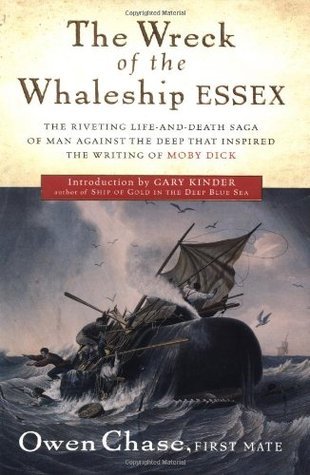
The Wreck of the Whaleship Essex

Rate this book
On the morning of November 20, 1820, in the Pacific Ocean, an enraged sperm whale rammed the Nantucket whaler Essex. As the boat began to sink, her crew of thirty had time only to collect some bread and water before pulling away in three frail open boats. Without charts, alone on the open seas, and thousands of miles from any known land, the sailors began their terrifying journey of survival. Ninety days later, after much suffering and death by starvation, intense heat, and dehydration, only eight men survived to reach land. One of them was Owen Chase, first mate of the ill-fated ship, whose account of the long and perilous journey has become a classic of endurance and human courage. The elements of his tale inspired Herman Melville (who was born the year the Essex sank) to write the classic Moby Dick. A gallant saga of the sea, this riveting narration of life and death, of man against the deep, will enthrall readers.

106 pages, Paperback

First published January 1, 1821

593 people are currently reading
1589 people want to read

About the author

Owen Chase

41 books6 followers

Ratings & Reviews

What do you think?
Rate this book

Friends & Following

Create a free account to discover what your friends think of this book!

Community Reviews

5 stars
413 (28%)
4 stars
584 (40%)
3 stars
371 (25%)
2 stars
67 (4%)
1 star
19 (1%)
Displaying 1 - 30 of 146 reviews
Profile Image for Matt.
752 reviews625 followers
November 29, 2018
This was a surprise and better than expected; an enrichment of my 2018 reading experience. Arno SChmidt would most likely had a field day etymising it:

“sperm [whale] molestS se[a]men on S=sex...”

But it isn’t funny. Not at all. It’s a true story. No fake news, no alternative facts (well, perhaps a few). The first sentence reads:
I am aware that the public mind has been already nearly sated with the private stories of individuals, many of whom had few, if any, claims to public attention, and the injuries which have resulted from the promulgation of fictitious histories, and in many instances, of journals entirely fabricated for the purpose, has had the effect to lessen the public interest in works of this description, and very much to undervalue the general cause of truth.

The original title of the book (pub in 1821) comes in handy as it offers a brief summary:

Narrative of the Most Extraordinary and Distressing Shipwreck of the Whale-Ship Essex, of Nantucket; Which Was Attacked and Finally Destroyed by a Large Spermaceti-Whale, in the Pazific Ocean; with an Account of the Unparalleled Sufferings of the Captain and Crew during a Space of Ninety-Three Days at Sea, in Open Boats; in the Years 1819 & 1820.

The books details the events that led to the attack by a whale on the whaler “Essex” on November 20th 1820 but mostly about the 90 day anguish the crew had to endure on three little boats in the middle of the Pacific Ocean. And those were torments that I at least can’t really imagine and neither do I want to. Very soon there was very little food left for the seamen (some bread and a few living turtles) and way too little water. Then there were storms, heavy rains, calm that lasted days, heat, and the tropical sun beating down on the already rather fragile bodies. I probably would have kicked the bucket after only a few days. But then again I’m no whaler from Nantucket. Those were cut from different cloth altogether. Owen Chase was first mate on the “Essex” and kept a diary under the most adverse circumstances. I can hardly imagine, however, how he managed to do this when his own survival was hanging by a thread.

Only four months after the ordeal at sea the book was published in 1821 and it’s an excellently elaborated form of Chase’s diary. But the sailor wasn’t a professional writer and never published anything before or after “The Wreck”. Without offending him, I suspected there was a ghostwriter involved. The prose seems just too polished and sophisticated to me to have been written by a lay writer. A few text passages are reminiscent of E.A.Poe, especially his A.G.Pym (pub. 1838), but also the writing style in general. My suspicion was confirmed in the article on Owen Chase on Wikipedia.

Anyway, whoever wrote this book: Kudos to the unknown ghost, who managed to stay on the fine line between over-emotional drama and insensible report very well. And thanks to Owen Chase for surviving and sharing his experiences with the world.


Creative Commons License
This work is licensed under a Creative Commons Attribution-NonCommercial-ShareAlike 3.0 Unported License.
Profile Image for Vicki.
1,206 reviews178 followers
March 3, 2016
Wreck of the Whale Ship Essex is the story of the real life ship that inspired the fictional story of Moby Dick.

This book tells the horror these survivors faced while on the ship and while at sea. The telling is chilling. This whaler, Chase Owen, used his own journals to assure his facts were accurate. He gives a day by day accounting of their struggle. He begins his story explaining how he was hired by the captain of the Essex for a period of three years.

The Essex was a whaling ship and has about twenty whalers on board. While harpooning one whale and focusing on that whale, one whale attacked while they were occupied with that other whale. the ship was torn apart and began to sink.

The surviving men loaded into the smaller boats and they stayed afloat for over a month. Over twenty men left the ship with few provisions and leaky boats. Many of the men were lost. They landed on an uninhabited island and faced starvation there and all but three men were forced to leave the safety of the island and head back to sea. Another long period of floating in order to reach Easter Island over eight hundred miles away.

There are other stories included that tell of whale attacks and there is some interesting facts about whale production. It is a very interesting read. Loved the history of it all.
Profile Image for Kerri Anne.
560 reviews51 followers
January 12, 2015
If you and 19 of your closest sea-bros decide to set sail for some epic(ally disturbing) whaling, and subsequently find yourselves having pissed off what was likely the impressively-sized mother of two (or three, ugh) smaller sperm whales that you've already harpooned, and she rams your ship out of sheer spite, TWICE, thus succeeding in sinking your sorry ship and leaving all of you marooned on three rickety whale boats for three+ months, I'm going to, as I did while reading this first-person account of the sinking of the whaleship Essex, wish whales had hands so I could high-five that momma sperm whale (and all whales in general).

The moral of the story: Karma's a bitch. Especially when she's an 84-foot-long sperm whale.


[Three water-logged stars for being a large font of inspiration for Melville's most beloved (or loathed, depending on your penchant for long-winded stories about marine mammals) whale-of-a-tale.]

Profile Image for Donna.
1,055 reviews57 followers
February 22, 2011
In November of 1820, the whaleship Essex sank after being repeatedly rammed by a sperm whale. The sailors salvaged food, water, and supplies, then they took off for land, hoping to be picked up by another ship along the way. The men spent months on the open ocean in three small boats, and only eight out of the original twenty five crew members survived.

This short book was written by Owen Chase, the first mate of the Essex, soon after he arrived home in Nantucket. Chase describes what happened and his feelings at the time, but he has a matter-of-fact, concise style even when talking about some of the more gruesome "eat your dead shipmates" details. It's easy to read even if it is a little old-fashioned.

The boat that Chase was in charge of got separated from the other two just as things were starting to get truly desperate, and his boat fared the best through some combination of luck and leadership. Chase's account gives only a few details about what happened in the other boats, and has no information about the three sailors who chose to remain on a small island visited by the Essex crew. They were rescued, but that wasn't known until after the book was published.

I'd recommend skipping Gary Kinder's introduction entirely. It's a book report style summary that quotes heavily from the book, as if it's not obnoxious to present the reader with the best lines from Chase's work before they read it.

The afterword, by Iola Haverstick and Betty Shepard, is a little better. It fills the reader in on the later lives of the survivors and the impact of Chase's book, including its influence on Melville. I'd take any facts from the afterword with a grain of salt, though. There's a brief mention of the Mignonette that manages to be wrong about the type of ship, the nationality of both ship and crew, and the fate of the survivors. It's only a paragraph, but botching the basics of an infamous case doesn't inspire confidence in their research.

The Loss of the Ship Essex, Sunk by a Whale collects Chase's account as well as two others from the survivors. I don't have it yet, but it might be a better option for those interested in the first-hand stories. Nathaniel Philbrick's In the Heart of the Sea: The Tragedy of the Whaleship Essex would be a good choice for anyone looking for a more modern, comprehensive take on the subject.
Profile Image for Tarissa.
1,580 reviews83 followers
January 15, 2016
Good resource to quickly learn about what happened to the whaling ship, Essex. This is the ship that was immortalized in Melville's Moby Dick.

The first half of the book is Owen Chase's (first mate of the Essex) eyewitness account of the 1819 battle with the whale and the shipwreck that left the crew at sea for 93 days. Following Chase's personal account are many newspaper clippings and short stories of either the same event or similar whale experiences in the Pacific Ocean. Through reading this book, I learned numerous facts of the dangers and adventures that came with boarding a whaling ship, particularly during the 1800s and very early 1900s.

Ken Rossignol, as editor and compiler, does a supreme job of weaving together a historical tale that many will enjoy. An engrossing read.

Recommended for maritime enthusiasts or as a companion to the classic piece of literature known as Moby Dick.
Profile Image for Carlton Phelps.
550 reviews10 followers
September 28, 2018
Sad but true

I found myself rooting for the whales for most of the book. But alas I knew they were doomed.
Whaling had it's heyday and many men lost their lives whaling.
What I found very interesting was the way whales fought back and sunk many ships.
The Herman Melville book used a lot of the stories as research for his book. Just the idea that a whale would fight back gave him the idea for the book.
Not all of the book just that background of the whaling industry.
Historical and worth the read.
Profile Image for Dr. Sidharth Sivaprasad.
47 reviews3 followers
February 4, 2025
'Moby Dick' എന്ന ക്ലാസിക് നോവൽ എഴുതാൻ ഹെർമൻ മേൽവിലിന് പ്രചോദനമായ,ഒരു നാവികന്റെ ഓർമ്മക്കുറിപ്പുകൾ...
'ഒരു കപ്പൽച്ചേതത്തിന്റെ കഥ' എന്ന പേരിൽ Mathrubhoomi books പുറത്തിറക്കിയ പരിഭാഷയാണ് ഞാൻ വായിച്ചത്..
Profile Image for John Owen.
394 reviews5 followers
January 31, 2024
This is the account of the Wreck of the Essex by the first mate. The language is of the 1820's so for many people, that would be a detriment.

Chase was good at showing how the situation affected people differently. Some gave up. Some just put their shoulder into the work and survived. It's hard to say I enjoyed the book but I did find it fascinating and well-written. It's a classic ship-wreck story.
Profile Image for Sara.
179 reviews201 followers
January 28, 2015
With the caveat that I'm in a reading moment right now which I think of as "Preparing for the Zombie Apocalypse," I stole this book from the desk of a fellow teacher (and read it and put it back before he noticed... like a NINJA!).

As you'll know if you read my other reviews, I am not a fan of Moby Dick. I love The Wreck of the Whaleship Essex, though. It's a brilliant little gem of pre-current thinking about the environment (nature exists to serve human beings, and the 300 live sea turtles in our hold will go without food or water until we're ready to eat them... and there's NOTHING WRONG WITH THAT) and the duties of human beings (life is dirty and mean and short, and frequently the only things that will keep you going are SHEER BLOODYMINDEDNESS and GOOD MANNERS). And GOD SAYS SO, TOO. *foot stomp with nose in air* *dramatic arm gesture*

On the one hand, the horror of what the crew endures while shipwrecked and the atrocious acts they perpetrate to survive make you judge them, but at the same time, they are not only very much a product of their situation and time, the pathos of the situation encourages simultaneous forgiveness. I couldn't help but think two things: 1. I would be dead of seasickness in the first 24 hours, and 2. If that didn't kill me, the boredom would. Honestly, I think I would start doing mean things to my boatmates, just to keep myself sane. Most of sixty days adrift? Nope. I am not that kind of person.

It's short, brutal, and has some brief and gentle meditation on the role in our lives of "right" and "duty." There are a few vocabulary words you'll have to hurdle, and it helps if you can Google pictures of boat parts, but you should read it.
Profile Image for Nancy Oakes.
2,018 reviews918 followers
February 12, 2008
Including a glossary of terms, this book is only 106 pages long, but packs a wallop! Gary Kinder, himself an author, wrote the introduction to this small narrative, and his ending words were "As you sit in your chair, the subliminal thought recurs: My god, this really happened." I knew then I was in for a good read.

synopsis:
The first mate of the whaleship Essex, Owen Chase, set down a chronological narrative of events that happened to himself and the crew of the Essex, after the fact. In November of 1820, the whaleboats of the ship were out trying to make progress on capturing & killing sperm whales when the Essex was rammed by another whale. This attack left a hole in the ship, and although the crew were able to board the ship & take out provisions, they were all forced to take to the whaleboats out in open sea. Twenty men started on the journey; only five survived. This book narrates what happened between the shipwreck & rescue. When you read this, you must consider that this book was a product of the times, so the reader gains the vantage point of one of the survivors, making the book all the more intriguing.

I liked this book very much; I will probably wish to reread it at some point. Highly recommended.
Profile Image for Gerry.
Author 43 books118 followers
January 2, 2012
Setting out from Nantucket in 1819 the whaleship 'Essex' was off on just another whaling expedition. But what was to transpire was an epic tale of heroic endeavour with men constantly on the brink of danger and death.

A whale was to ram and destroy the 'Essex' and the 20 crew managed to escape, with some material saved from the ship, in three small boats. They were then to endure almost three months at sea with little food and water.

After many weeks at sea they landed on an island but found little sustenance there although when they decided to move on three of the men chose to remain. The small boats were later separated; two were eventually picked up but one remained lost for ever.

This is the gripping tale as told by the first-mate, who managed to rescue pencil and paper from the doomed 'Essex' and who documented the dramatic sea saga day-by-day.

Gary Kinder provides a useful introduction and a smart history of the Nantucket whaling industry as an afterword.

Of course, the tale was later to inspire Herman Melville for his novel 'Moby Dick'.

Profile Image for VeganMedusa.
580 reviews2 followers
August 27, 2011
A good account of the wreck of the Essex and their subsequent struggle for survival. Includes accounts by Owen Chase, Captain Pollard, and an account by Thomas Chapple from a religious tract. Along with Herman's notes (unreadable) and the transcription.
A very strange foreword by Tim Cahill includes this:
The reader who wishes to compare the destruction of the fictional Pequod with the historic Essex may conclude that Herman Melville stacked the metaphysical deck. The Pequod, for instance, was on a sealing expedition. No other whales were struck, and the great white whale's fury is made to seem wholly malevolent. It was perhaps necessary that readers' sympathies not be unduly divided.
Which makes me wonder if Tim Cahill actually read the book?
Profile Image for Everett.
291 reviews6 followers
January 16, 2012
This is extreme reading. Chase, like Nickerson, captures the nail-biting (pun totally intended) Essex tale with such great immediacy, engulfing the reader in empathetic despair. My interest in this story has reached fever-pitch. Now after having read all available documentation, Philbrick´s award-winning read, and Moby Dick, inspired by the Essex tale, I can go on to reading about something else. I ask again however, if anyone knows or has heard of any writing from Captain Pollard. Melville makes an statement that he´s read parts of what was reported to be Pollard´s narrative, but I´ve never heard of anything anywhere else. Anyone have a clue?
Profile Image for Mark Valentine.
2,086 reviews28 followers
July 8, 2016
Melville brought me to this book. In 1841, nine years before Moby Dick went to sea, he was handed a copy by Chase's son to read; he notes that he was fascinated by the reversal of nature--that the mature sperm whale sensed that three of its pod had been harpooned by the crew of the Essex, it turned on the vessel and rammed it once, then twice, stoving it in on itself.

'When Prey Becomes Predatory' could be the subtitle.

But this account by Chase (and Pollard and Chapple) concerns survival at sea and the cannibalism that ensued; it's a fascinating study in human survival, behavior, and accountability.
1 review1 follower
August 28, 2010
I was really surprised that I found the story interesting...but it touches on aspects of the whaling industry that I honestly didn't really have any knowledge of...digresses into an explanation of the effect of dehydration...even into the impact the ships crew had on one of the islands of the Galapagos.

It's better then Moby Dick could have been because of the facts the author provides...I really had a good sense of the horrible conditions the crew suffered...and how far the survivors had to come before being rescued.
Profile Image for Michael.
35 reviews24 followers
September 21, 2007
This is the account of one of the survivors of the Whaleship Essex that was to inspire Melville to write Moby Dick. This was a very interesting read about survival at sea and how they did it for so long. Also the amazing eye witness account of how a sperm whale purposefully rammed a whaleship, turned around and did it again till it sank. How to survive at sea? Drink urine, guard the food, and eat your dead friends.
Profile Image for Len Knighton.
741 reviews5 followers
November 15, 2016
A tough book to review. My rating is on the down side of 4 stars. Punctuation problems and archaic writing made this book difficult to read at times. The sinking of the ESSEX covers about half the book with various stories of whaling adventures in the latter half. The entire book was written more than a hundred years ago.
7 reviews
January 19, 2016
Fascinating account of this historical epic journey. Particularly appreciated the prologue and epilogue which gave insight into the whaling industry as it existed and closure to the life stories of the seamen who endured it.
Profile Image for Virginia.
42 reviews
August 3, 2011
This is the REAL story of what happened...Moby Dick was fictionalized...and this was told by a cabin boy whose tale does not reflect well on the officers...I DO love stories of the sea!
Profile Image for Sol.
698 reviews36 followers
January 16, 2025
An account by a survivor of the whale attack that inspired Moby Dick. Gets right to the point, a harrowing story of starvation, dehydration, and cannibalism. The whale attack is a small part of the story, though it calls attention to the unusual nature of the attack. It seems strange that it's simultaneously true that hundreds of thousands of sperm whales were killed by whalers, and that a whale did counterattack, but it only happened once. From the description, it could only be deliberate, as the same whale struck the ship twice, and at high speed moving in the opposite direction of the ship to maximize damage. Perhaps like rogue waves, it's a rare event that tends to kill all who observe it.

This edition contains short narratives related by Captain George Pollard, and Thomas Chappel, two of the other 5 survivors who saw things that Chase did not, like the eight skeletons on the deserted island. It also has facsimiles and transcriptions of notes by Herman Melville in an early copy of this book.
Profile Image for Grace.
355 reviews11 followers
February 18, 2022
I downloaded this book without even realizing its connection to Moby Dick or the 2015 movie, The Heart of the Sea. When I saw Ken Rossignol's name connected with this Kindle version I didn't hesitate to download it. He does an amazing job of editing these manuscripts.

The Wreck of the Whale Ship Essex only occupies half of this book, but what follows are first-hand accounts and fascinating articles about the whaling industry.

I watched the movie, The Heart of the Sea, before I read this book. The movie followed Owen Chase's account very closely, except for a couple of things which Hollywood likes to throw in.

This whole edition was excellent. Many of these stories were so gripping I couldn't wait to find out what happened. If you like history and thrilling stories this edition will not disappoint you.

I really appreciate the recovery these old manuscripts. Not only are they historically significant but the language of centuries gone-by is exquisite to read.
Profile Image for Cam Netland.
140 reviews1 follower
August 21, 2023
One of the most riveting and horrifying pieces of non-fiction I’ve encountered. Beautifully written and nothing short of inspiring. Recommended to all, fans of Moby Dick and beyond will appreciate the resilience these men faced under the most dire conditions.
Profile Image for Francesca Cosmai.
85 reviews2 followers
March 29, 2024
Agghiacciante, uno dei racconti letti che più mi ha angosciato in assoluto.
Profile Image for Jackie Wu.
114 reviews1 follower
January 5, 2025
inspired to read this after watching the movie In the Heart of the Sea
Profile Image for Jessica.
602 reviews19 followers
October 18, 2025
Whales, shipwrecks, and cannibalism... oh my! Really though, what more could you ask for?
44 reviews1 follower
December 15, 2015
A great read of heroic life and death of the early days of whale hunting by New England based sailing ships on the Pacific ocean. The Author has drawn directly on the written account of the fateful voyage of the Bedford sailing whale ship Essex on her fateful voyage ending in it's sinking and subsequent long voyage to S. America in small open boats by the survivors. The author uses the actual writing of the surviving first mate and cabin boy to describe what later inspired to great story Moby Dick and today is the story portrayed in Director Ron Howard's newest movie, "In the Heart of the Sea". Additionally the author, using his skills from his days as owner, publisher, editor, write and distributor of his own newspaper, follows this with articles from the 1850's through the early 1900's of actual stories of famous whales that were known for attacking whalers and their ships. The book is an educational journey into these adventurous days when men hunted whales in small boats. The tale of the long voyage after the Essex was sunk, with the deaths from exposure to the elements and starvation leads to cannibalism of the crew to survive. Even to the horrific drawing of straws to decide who will die so that the others might live!

A great and educational read of the spirit of man and his will to survive at all costs! A true story that you will long remember!
Profile Image for Tom Schulte.
3,416 reviews78 followers
July 27, 2019
Although attacks by whales on whalers were not at all common, there were instances, of which Herman Melville was aware. This collection of related pieces leads off with the lion's share of the content, a first-hand account of the sinking of the Nantucket whaler Essex in 1820, after a large sperm whale rammed her 2,000 miles (3,200 km) from the western coast of South America. First mate Owen Chase, one of eight survivors, recorded theses events in his 1821 narrative where the privation and cannibalism after the attack dwarfs the drama of the violently defensive animal. This leads to additional supporting pieces on attacking whales and cannibalism including the late 1830s of the albino sperm whale Mocha Dick. Mocha Dick was rumored to have 20 or so harpoons in his back from other whalers, and appeared to attack ships with premeditated ferocity. Mocha Dick was an albino and partially inspired Herman Melville's 1851 novel Moby-Dick, or, the Whale .
Profile Image for Pete daPixie.
1,505 reviews3 followers
September 19, 2018
Having spent time at sea in the Merchant Marine I have always been attracted to tales of the sea. Here is one of the more famous accounts of disaster and fortitude from the early nineteenth century. The narrative of Owen Chase is clearly of that era, as is the additional testimonies of Capt Pollard of the whaler 'Essex' and the 2nd mate Thomas Chapple.
Mention was made of why the survivors did not head for Tahiti, saving them from sailing the much longer course to the coast of Chile, and I also wonder why they did not sail due East, again a much shorter journey, to the coast of Ecuador?
As the saying goes, 'stranger things have happened at sea'.
However abhorrent most view the killing of whales in the 21st century, I feel it is wrong to pass judgement on the actions of historical characters with modern sensibilities.
Another nautical maxim comes to mind of 'when ships were made of wood and men were made of steel, but now it's the other way round.'
Profile Image for Rahul Mittal.
6 reviews
July 31, 2018
Not taking anything away from Melville, but using the "Essex" just as a subplot source is far from justified. I am so glad that this narrative version of Chase exists. There are some narratives that need no extra drama, and it is one of them. The rawness with which it explores the tussle between man and nature is so thought provoking. The best thing with such "narrations" is that unlike a standard book, they do not try to give any interpretations.
"Wreck of the Whale Ship Essex" is essentially a raw and brazen account by a very raw and brazen First Mate totally undone by extremely raw and brazen nature!

It also gives us some hard hitting insights about how man today has come to understand the nature, far far away from the time when it was a part of accepted social conscious that nature exists for the sole purpose to serve man!
Displaying 1 - 30 of 146 reviews

Can't find what you're looking for?

Get help and learn more about the design.