
What do you think?
Rate this book


80 pages, Paperback
First published January 1, 1901


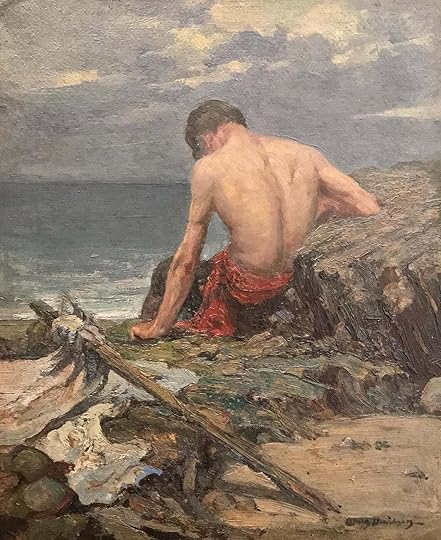
”And for him, who knew nothing of the earth, England was an undiscovered country. It was some time before he learned its name; and for all I know he might have expected to find wild beasts or wild men here, when, crawling in the dark over the sea-wall, he rolled down the other side into a dyke, where it was another miracle he didn't get drowned.”
”He fought his way against the rain and the gale on all fours, and crawled at last among some sheep huddled close under the lee of a hedge. They ran off in all directions, bleating in the darkness, and he welcomed the first familiar sound he heard on these shores.”
”He had approached them as a beggar, it is true, he said; but in his country, even if they gave nothing, they spoke gently to beggars. The children in his country were not taught to throw stones at those who asked for compassion.”
“The land he looked upon seemed to him kept neatly, like the grounds round a landowner's house; the size of the cart-horses struck him with astonishment; the roads resembled garden walks, and the aspect of the people, especially on Sundays, spoke of opulence. He wondered what made them so hardhearted and their children so bold.”
“He became aware of social differences, but remained for a long time surprised at the bare poverty of the churches among so much wealth. He couldn't understand either why they were kept shut up on week days. There was nothing to steal in them. Was it to keep people from praying too often?”
” If it’s true, as some German fellow has said, that without phosphorus there is no thought, it is still more true that there is no kindness of heart without a certain amount of imagination. She had some. She had even more than is necessary to understand suffering and to be moved by pity. She fell in love under circumstances that leave no room for doubt in the matter; for you need imagination to form a notion of beauty at all, and still more to discover your ideal in an unfamiliar shape.”
Hirtelen felindulás volt, a LibriVox dobta fel, mint Bellona Times felolvasását. Arra is kíváncsi voltam, hogy ugyanolyan nehezen hallgatható-e, mint Maugham Rain-je (spoiler: igen) vagy ott még csak meg volt szeppenve. Azon kívül Conradról még nem hallottam, épp itt volt az ideje elkezdeni az ismerkedést, még ha csak egy elbeszéléssel is.
Nem fogott meg annyira, mint Maugham, valószínűleg azért, mert nem tudott/akart olyan jól karaktereket írni. Viszont atmoszférát teremteni Conrad is nagyon jól tud, bár inkább egyfajta kollektív hozzáálláson, nem az individuum milyenségén keresztül. Valójában mind a falu lakói, mind a hajótörött egy élethelyzetet, életmódot képviselnek. Senkinek nincs személyisége. A címadó Amy Foster pedig az a tehetetlen női karakter, aki bár ott van hídként a két életmód között, valójában nem tud javulást előidézni. A nemzeti érzések, a lokálpatriotizmus és az ismeretlentől, másmilyenségtől való félelem kiteljesedését láthatjuk ebben az elbeszélésben. Külön „csavar”, hogy egy falubeli névtelen valakinek a narrációjában, akiről nehéz eldönteni, hogy valójában mit gondol a helyzetről. A végső tragikum persze elkerülhetetlen. Nem is tudom, láttam-e már vidám elbeszélést…


