

What do you think?

If We Had Known
A literary tour de force from the acclaimed author of The Blessings-a riveting novel about one of the most urgent crises of our time. One August afternoon, as single mother Maggie Daley prepares to send her only child off to college, their world is shattered by news of a mass shooting at the local mall in rural Maine. As reports and updates about the tragedy begin to roll in, Maggie, an English professor, is further stunned to learn that the gunman had been a student of Nathan Dugan was an awkward, complicated young man whose quiet presence in her classroom had faded from her memory-but not, it seems, the memories of his classmates. When a viral blog post hints at the existence of a dark, violence-tinged essay Nathan had written during Maggie's freshman comp seminar, Maggie soon finds herself at the center of a heated national controversy. Could the overlooked essay have offered critical red flags that might have warned of, or even prevented, the murders to come? As the media storm grows around her, Maggie makes a series of desperate choices that threaten to destroy not just the personal and professional lives she's worked so hard to build, but-more important-the happiness and safety of her sensitive daughter, Anna. Engrossing and provocative, combining sharp plot twists with Juska's award-winning, trademark literary sophistication, If We Had Known is at once an unforgettable mother-daughter journey, an exquisite portrait of a community in turmoil, and a harrowing examination of ethical and moral responsibility in a dangerously interconnected digital world.
321 pages, Kindle Edition
First published April 17, 2018
About the author
Elise Juska
12 books191 followersElise Juska's new novel, Reunion, was released by HarperCollins in May 2024 and named one of People Magazine's "Best New Books." Her previous novels include If We Had Known and The Blessings, which was selected for Barnes & Noble's Discover Great New Writers series, featured on Entertainment Weekly's "Must List," and named one of the Philadelphia Inquirer's Best Books of the Year.
Juska's short fiction and nonfiction have appeared in Ploughshares, The Gettysburg Review, The Missouri Review, Electric Literature, The Hudson Review and elsewhere. She was awarded the Alice Hoffman Prize for Fiction from Ploughshares and her work has been cited by the Best American Short Stories and Pushcart Prize anthologies. She teaches creative writing at the University of the Arts in Philadelphia.
Juska's short fiction and nonfiction have appeared in Ploughshares, The Gettysburg Review, The Missouri Review, Electric Literature, The Hudson Review and elsewhere. She was awarded the Alice Hoffman Prize for Fiction from Ploughshares and her work has been cited by the Best American Short Stories and Pushcart Prize anthologies. She teaches creative writing at the University of the Arts in Philadelphia.
Ratings & Reviews
Friends & Following
Create a free account to discover what your friends think of this book!
Community Reviews
Displaying 1 - 30 of 181 reviews

April 13, 2019
Awww...the human race is so judgmental. The plot is a headline that has become almost normal in our society. A gunman opens fire, kills a group of innocent people and then turns the gun on himself. As the media storm swirls, questions abound- why did this happen? did anyone know? and who's to blame?
Enter Professor Margaret(Maggie) Daley, who as it turns out knew the gunman as a former student. When a former classmate discusses a "disturbing" story that the gunman wrote in class on Facebook, a witch hunt begins and both Maggie and her college freshmen daughter find themselves consumed by the finger pointing and guilt.
He had been sitting in her classroom for an entire semester, within reach of her other students, of herself---it was not unrealistic to think something could have set him off.
It surprises me a little to see that there are less than seven hundred ratings on this book. Is it because too many of us have been touched by these tragedies directly or inadvertently? Are we numbed out? Do we feel that there's nothing more to say unless those in authority positions are ready to talk about the gun epidemic? Perhaps the answer is simply-a little bit of everything.
From now on, he said, if a student writes about any inflammatory subject, staff must report it.
Inflammatory subject , she repeated. Such as?
Any material that alludes, directly or indirectly, to feelings of sadness, anxiety, anger, violence, hopelessness---
But that's every student, Bill. Every paper.
That's the policy
Oy! And people wonder why teachers at all levels are stressed? I found myself having difficulty separating myself from Maggie. It's a hazard of being a teacher that eventually a student could put something personal into their writing that could cause plenty of misinterpretation. As I read, I wondered what I would do in that exact situation. As the teacher? As the classmate? As a member of society? Ultimately I think that is exactly what the author wanted us to consider all along.
Enter Professor Margaret(Maggie) Daley, who as it turns out knew the gunman as a former student. When a former classmate discusses a "disturbing" story that the gunman wrote in class on Facebook, a witch hunt begins and both Maggie and her college freshmen daughter find themselves consumed by the finger pointing and guilt.
He had been sitting in her classroom for an entire semester, within reach of her other students, of herself---it was not unrealistic to think something could have set him off.
It surprises me a little to see that there are less than seven hundred ratings on this book. Is it because too many of us have been touched by these tragedies directly or inadvertently? Are we numbed out? Do we feel that there's nothing more to say unless those in authority positions are ready to talk about the gun epidemic? Perhaps the answer is simply-a little bit of everything.
From now on, he said, if a student writes about any inflammatory subject, staff must report it.
Inflammatory subject , she repeated. Such as?
Any material that alludes, directly or indirectly, to feelings of sadness, anxiety, anger, violence, hopelessness---
But that's every student, Bill. Every paper.
That's the policy
Oy! And people wonder why teachers at all levels are stressed? I found myself having difficulty separating myself from Maggie. It's a hazard of being a teacher that eventually a student could put something personal into their writing that could cause plenty of misinterpretation. As I read, I wondered what I would do in that exact situation. As the teacher? As the classmate? As a member of society? Ultimately I think that is exactly what the author wanted us to consider all along.

February 4, 2018
"If We Had Known" was a unique read that gave me chills.
With all the shootings that have been happening, well...everywhere, I was honestly surprised I hadn't seen millions upon millions of books trying to hone in on the public interest. When I initially picked this book up, I was under the impression this book might try to do just that, but it was surprisingly and beautifully respectful.
I did enjoy this book. I think it was an interesting ride all the way along, and it kept me hooked. There were a couple chapters where it was slow and I became bored, but overall it was an addicting ride.
So, what are my pros and cons?
Pros:
1. Different POVs - There are many different point of views in this story, and one of them is NOT the shooter (believe it or not). I appreciated watching the lives of many people fold out, and not just one.
2. Story Telling - I LOVE how Elise Juska told this story. Her choice of words and pace of the novel really fit well with this topic. I wouldn't change a thing in relation to this.
3. Intertwining Stories - When stories intertwine I get so giddy! All of these stories having effects on each other (some positive, some very negative) made the book just a little bit more exciting. I could guess some of the effects that they would have on each other, but it was still nice to see that things do effect other people.
Cons:
1. Plot Device Characters - It felt like some characters were thrown in and taken out super fast just to move the plot along. I would have liked to see Anna's boyfriends a little bit more and see how things affected them.
2. Happily Ever After - Everything tied up so nicely at the end! I was kind of hoping to leave off on a weird note, and not a semi-happy note. Now, everybody who knows me knows I like happy/good endings, but I felt a little cheated with this one. There shouldn't have been a really good ending, and anybody who's been through something like this would tell you how honest that was.
Overall, I really liked this book! There are definitely some minor problems with this book, but it was a worthy read!
Four out of five stars!
I received this book for free through Goodreads First Reads.
With all the shootings that have been happening, well...everywhere, I was honestly surprised I hadn't seen millions upon millions of books trying to hone in on the public interest. When I initially picked this book up, I was under the impression this book might try to do just that, but it was surprisingly and beautifully respectful.
I did enjoy this book. I think it was an interesting ride all the way along, and it kept me hooked. There were a couple chapters where it was slow and I became bored, but overall it was an addicting ride.
So, what are my pros and cons?
Pros:
1. Different POVs - There are many different point of views in this story, and one of them is NOT the shooter (believe it or not). I appreciated watching the lives of many people fold out, and not just one.
2. Story Telling - I LOVE how Elise Juska told this story. Her choice of words and pace of the novel really fit well with this topic. I wouldn't change a thing in relation to this.
3. Intertwining Stories - When stories intertwine I get so giddy! All of these stories having effects on each other (some positive, some very negative) made the book just a little bit more exciting. I could guess some of the effects that they would have on each other, but it was still nice to see that things do effect other people.
Cons:
1. Plot Device Characters - It felt like some characters were thrown in and taken out super fast just to move the plot along. I would have liked to see Anna's boyfriends a little bit more and see how things affected them.
2. Happily Ever After - Everything tied up so nicely at the end! I was kind of hoping to leave off on a weird note, and not a semi-happy note. Now, everybody who knows me knows I like happy/good endings, but I felt a little cheated with this one. There shouldn't have been a really good ending, and anybody who's been through something like this would tell you how honest that was.
Overall, I really liked this book! There are definitely some minor problems with this book, but it was a worthy read!
Four out of five stars!
I received this book for free through Goodreads First Reads.
April 11, 2018
If We Had Known is a book that I was not totally sure that I would finish. Why? Because there are several predictable moments in the book that felt a bit too much for me to take. The first one occurred after I had read 25% of the book when the main characters made a move that I just KNEW would bite her in the ass later on. And, then several more occurrences happened that made me mentally roll my eyes. However, I decided to keep going. And, I'm glad for it because I ended up liking the book very much.
Notwithstanding the fact that I struggled with some parts of the book is the story actually really engrossing, and if you stick with the book, despite, being annoyed with some of Maggie's decisions, etc., then you will find that this book is actually pretty good. Personally, I found how society dealt with the mass shooting to be the interesting part of the book, how quick people are to judge, how the internet can play a large part in judgment because you can be anonymous. Also, we have the big issue, how far do we go when it comes to seeing signs of a troubled youth? Should teachers and professors be more observant when it comes to essays? What role do they have, should they try to interfere, for instance, report students when they show signs that something is off? Isn't that a very big responsibility to put on teachers' shoulders, to try to see who's troubled or not?
I got a bit sidetracked there. What I want to say is that this book is a great book to read (and discuss). Yes, there were some parts that I found hard to digest because it felt so predictably, but overall is this book really good!
I want to thank Grand Central Publishing for providing me with a free copy through NetGalley for an honest review!
Notwithstanding the fact that I struggled with some parts of the book is the story actually really engrossing, and if you stick with the book, despite, being annoyed with some of Maggie's decisions, etc., then you will find that this book is actually pretty good. Personally, I found how society dealt with the mass shooting to be the interesting part of the book, how quick people are to judge, how the internet can play a large part in judgment because you can be anonymous. Also, we have the big issue, how far do we go when it comes to seeing signs of a troubled youth? Should teachers and professors be more observant when it comes to essays? What role do they have, should they try to interfere, for instance, report students when they show signs that something is off? Isn't that a very big responsibility to put on teachers' shoulders, to try to see who's troubled or not?
I got a bit sidetracked there. What I want to say is that this book is a great book to read (and discuss). Yes, there were some parts that I found hard to digest because it felt so predictably, but overall is this book really good!
I want to thank Grand Central Publishing for providing me with a free copy through NetGalley for an honest review!

April 22, 2018
I wanted to love this book. But, I can only give it 3.75 stars.
It was not the riveting novel about one of today’s most urgent crises that I expected..it’s more of a character study.
The focus isn’t the mall shooting, but more about it’s aftermath on the residents of the small Maine town.
Nathan Dugan was a student in Maggie Daley’s Freshman English class. An outsider, who wrote an essay, with many details about guns.
Luke was another student in that class, who posts a blog about that essay, as he attempts to come to terms with what happened and the fact that he knew the gunman.
When the blog goes viral, Professor Daley becomes the center of controversy as those around her wonder if the tragedy could’ve been prevented if she had recognized the red flags in the essay.
Her sensitive daughter Anna, struggles as the attention on her Mom, thrusts her in the middle of the controversy as well.
If you want something thought provoking about this crisis, and social media, this IS a book for you. It does examine the ethical and moral responsibilities of parents, schools, and the media, as promised.
But, Perhaps since the story picks up after the shooting, without vivid eye witness accounts or interviews with those in the mall, it is a slower, more thoughtful read.
The book cover is beautiful and haunting. But, for me, the story did not have that same gut wrenching, emotional punch as the cover did when I saw it.
It was not the riveting novel about one of today’s most urgent crises that I expected..it’s more of a character study.
The focus isn’t the mall shooting, but more about it’s aftermath on the residents of the small Maine town.
Nathan Dugan was a student in Maggie Daley’s Freshman English class. An outsider, who wrote an essay, with many details about guns.
Luke was another student in that class, who posts a blog about that essay, as he attempts to come to terms with what happened and the fact that he knew the gunman.
When the blog goes viral, Professor Daley becomes the center of controversy as those around her wonder if the tragedy could’ve been prevented if she had recognized the red flags in the essay.
Her sensitive daughter Anna, struggles as the attention on her Mom, thrusts her in the middle of the controversy as well.
If you want something thought provoking about this crisis, and social media, this IS a book for you. It does examine the ethical and moral responsibilities of parents, schools, and the media, as promised.
But, Perhaps since the story picks up after the shooting, without vivid eye witness accounts or interviews with those in the mall, it is a slower, more thoughtful read.
The book cover is beautiful and haunting. But, for me, the story did not have that same gut wrenching, emotional punch as the cover did when I saw it.

January 4, 2019
A mass shooting happens at the mall of a small Maine college town. We follow the fallout through the eyes of the English professor who had taught him creating writing four years earlier --and who has an essay he wrote that might have been a tip-off to future behavior.
This masterfully written novel asks us very important questions:
* Can a mass murder ever really be anticipated?
* What responsibility do teachers have to look for potentially dangerous mental states?
* How much should a teacher become involved in students' lives?
The author also provides great descriptions of teenage anorexia, sexual activity, the impacts of divorce, and more. Anyone who has ever taught a writing class will appreciate the angst faced by one of the protagonists in this book. The author really understands professors who take their careers very seriously, and also college students today. She also really "gets" mother-daughter relationships.
This was the first novel I've read that incorporates social media communications as part of the plot and narrative. This makes the book up-to-the-minute in terms of relevance. Very skillful.
Although I sometimes became irritated with two main characters, I was deeply affected by this novel, and feel like it helped me to better evaluate my own strengths and weaknesses as a writing professor.
This masterfully written novel asks us very important questions:
* Can a mass murder ever really be anticipated?
* What responsibility do teachers have to look for potentially dangerous mental states?
* How much should a teacher become involved in students' lives?
The author also provides great descriptions of teenage anorexia, sexual activity, the impacts of divorce, and more. Anyone who has ever taught a writing class will appreciate the angst faced by one of the protagonists in this book. The author really understands professors who take their careers very seriously, and also college students today. She also really "gets" mother-daughter relationships.
This was the first novel I've read that incorporates social media communications as part of the plot and narrative. This makes the book up-to-the-minute in terms of relevance. Very skillful.
Although I sometimes became irritated with two main characters, I was deeply affected by this novel, and feel like it helped me to better evaluate my own strengths and weaknesses as a writing professor.

May 18, 2018
Jeez, this was boring!
If We Had Known deals with the aftermath of a shooting by a young man named Nathan who was once in a creative writing class four years ago taught by Maggie.
When it is discovered he had written an essay that may have offered clues to his violent behavior, Maggie must come to terms with the consequences of Nathan's actions, how it affects the community, the victims and those left behind.
Like some reviewers have noted, this book is more about Maggie, her irritating daughter, Anna, the wife of the man Maggie is consorting with, Suzanne, and a student with social anxiety issues who suddenly popped up midway in the book as mostly filler, I felt.
I didn't like the constant flip flopping between Maggie and her daughter; it also didn't help that I didn't like either of them.
Anna was 'too sensitive' in my opinion but that might be just because I'm not a crybaby and hard as nails.
Maggie was a single parent of an only child so between her constant fussing and fawning over her only daughter, she is also hooking up with a married man, whose presence only served the purpose of how Nathan's paper eventually reaches the public.
The adulterer is not important nor do I understand why they hooked up in the first place. Their relationship is never developed or elaborated on. He's just there to move the action forward.
There is no action, actually. There's a lot of talking and finger pointing and recriminations and sad faces. I get it. Shootings in the US have become so commonplace we are mostly numb to them when we watch the news. It's terrible. So are people.
I don't consider If We Had Known a story about a mother and a daughter; rather, its more about a story about how much we seem to care about people unrelated to us, as if distancing ourselves from the people who matter most makes it easier for us to love them.
The title doesn't really apply to the shooter and his violent tendencies, in my opinion. It applies to all problems families endure, unique to their dynamic and interactions.
Sometimes, we discover too late what is troubling a spouse or child in order to resolve it, prevent it, or make amends.
We should all be aware but of ourselves and our families and what they may or may not be going through.
On the plus side, the writing was good, but not enough to add an extra star.
If We Had Known deals with the aftermath of a shooting by a young man named Nathan who was once in a creative writing class four years ago taught by Maggie.
When it is discovered he had written an essay that may have offered clues to his violent behavior, Maggie must come to terms with the consequences of Nathan's actions, how it affects the community, the victims and those left behind.
Like some reviewers have noted, this book is more about Maggie, her irritating daughter, Anna, the wife of the man Maggie is consorting with, Suzanne, and a student with social anxiety issues who suddenly popped up midway in the book as mostly filler, I felt.
I didn't like the constant flip flopping between Maggie and her daughter; it also didn't help that I didn't like either of them.
Anna was 'too sensitive' in my opinion but that might be just because I'm not a crybaby and hard as nails.
Maggie was a single parent of an only child so between her constant fussing and fawning over her only daughter, she is also hooking up with a married man, whose presence only served the purpose of how Nathan's paper eventually reaches the public.
The adulterer is not important nor do I understand why they hooked up in the first place. Their relationship is never developed or elaborated on. He's just there to move the action forward.
There is no action, actually. There's a lot of talking and finger pointing and recriminations and sad faces. I get it. Shootings in the US have become so commonplace we are mostly numb to them when we watch the news. It's terrible. So are people.
I don't consider If We Had Known a story about a mother and a daughter; rather, its more about a story about how much we seem to care about people unrelated to us, as if distancing ourselves from the people who matter most makes it easier for us to love them.
The title doesn't really apply to the shooter and his violent tendencies, in my opinion. It applies to all problems families endure, unique to their dynamic and interactions.
Sometimes, we discover too late what is troubling a spouse or child in order to resolve it, prevent it, or make amends.
We should all be aware but of ourselves and our families and what they may or may not be going through.
On the plus side, the writing was good, but not enough to add an extra star.
October 15, 2018
Honestly, it was “okay”. Interesting enough to keep reading but spread out too thin. Taking on the POV of several people involved in the plot created a bit of a messiness and the execution led to confusion (“wait, who’s talking now?”) that I could’ve done without.
The premise of the book has so much potential that I was psyched to read it. Unfortunately, the build up was more powerful than the story and the writing.
I wish it had been a deeper and darker story but, just imo, shifting the focus quickly between a handful of characters, some of who don’t have a fleshed out storyline (what happened with Nathan’s mother? Did Luke stop going to college because of money? Etc etc.), held back the impact that it could have had. 2 & 1/2 stars if I could.
The premise of the book has so much potential that I was psyched to read it. Unfortunately, the build up was more powerful than the story and the writing.
I wish it had been a deeper and darker story but, just imo, shifting the focus quickly between a handful of characters, some of who don’t have a fleshed out storyline (what happened with Nathan’s mother? Did Luke stop going to college because of money? Etc etc.), held back the impact that it could have had. 2 & 1/2 stars if I could.
August 1, 2018
This is a book that touched me because, like the main character, I have found grading student writing to be a heavy and emotionally taxing task. What if we make the wrong call? Are we then the ones that must bear that responsibility? What is the line between what should be red flagged and what is not? Before you read this book, it's important to understand it's not a book about a shooting. That happens "off stage." This is a book about the people who are touched by the shooting, those who held responsibility to "say something," and our human urge to point a finger of blame at someone. I thought it was well done.
May 18, 2018
While this author is a superb writer (paints a vivid picture, draws us into her characters, and has an eloquent narrative voice) I’m disappointed in the ending. I actually thought I skipped a page because the ending was abrupt and inconclusive. Juska addresses a contemporary and controversial topic (gun violence), but I found it to be a stretch to potentially hold a former writing professor liable for not detecting the gunman’s troubles earlier. The shooting was off campus, literally years after he was in her class. Since when do we look to the prior educators of criminals to place blame? While a stretch, I’m further let down that nothing remarkable became of this potential link. I thought the story would develop further. Perhaps involving legal repercussions or a trial. I also thought something surprising might happen with Luke Finch (a copycat move for example) based on her in-depth focus on his peculiar character, but again it amounted to nothing. Three stars for writing talent, but there were no conclusive answers or satisfying developments otherwise.
This entire review has been hidden because of spoilers.
May 25, 2018
I thought the premise of this book was unique and that's mostly what kept my sustained attention. While the mass-shooter story has been done and re-done in numerous genres, particularly YA, I think that Juska's focalization of the perspectives of the main characters did a really artful job of exploring the contours of these types of national tragedies and how they play out on a more micro scale. The book was a pretty captivating read and I found myself weirdly invested in Maggie--particularly in the descriptions of her life as a professor and how she views her relationship to her students. With that said, I feel like the book ended really abruptly and kind of sloppily. I was glad that there wasn't a happy ending--the cynic in me appreciates it when there isn't this forced tying up of loose ends, but I found the relationship between Luke and Anna rather trite and found the last ~40 pages devoid of the same verve with which the novel began. Overall it was an enjoyable, somewhat breezy read.
February 2, 2018
“If We Had Known” by Elise Juska is one of the most thematically innovative I have read. The title refers not only to the characters pondering how they could have stopped a school shooting if they had known the shooter’s intentions but also refers to how a wife could have fixed her marriage and how a woman could have given friendship to a woman in need if she had known she needed it. The plot of a university professor trying to understand the psyche of her former, violent student is captivating, but at times this story reads like a hallmark film. All the usual teen angst tropes are there, some more successful things than others. For such an action packed premise, it moves at a glacial pace. The writing is beautiful however and I would ultimately read another book by this author
I received a copy of this book from Goodreads in return for an honest review
I received a copy of this book from Goodreads in return for an honest review

October 20, 2018
a wonderful and necessary book. sensitive, literary sophisticated, multilayered writing. a highly relevant, tragic story of our times - a shooting at a mall, actually its aftermath, the way it affects the life of maggie, a professor of creative writing who had the future killer amongst her students - and also the life of her sensitive, adolescent daughter anna and other people involved. i very much appreciated the telling of the story from different pov's, each of them beautifully and insightfully written. there is a lot of first-hand knowledge about the world of academia which, in addition to indisputable talent and the choice if a truly relevant subject of our time make this book a very valuable one. very highly recommended, both for adults and younger adults.
May 19, 2018
Being an English teacher myself, I’ve encountered my fair share of troubling student writing and have had to pass along alarming student work to our school counselors. Because of this, I really connected with the main character, who I felt was both flawed and believable as she navigated life after a tragedy which everyone believes she could have potentially prevented. This book didn’t focus so much on the mass shooting itself—which briefly took place in the opening pages—but on the repercussions of such tragic events for all involved.
June 4, 2018
Wow! So many layers in this amazing read! Of course there is the (timely) mall shooting that the story is built around, but it becomes such a small part of how this unfolds.... debilitating anxiety, eating disorders, the role of social media and it’s far reaching affects, the signs we miss as parents and teachers, blame and guilt- it is all wrapped up in this well written novel that I could not put down! I will be reading more from Elise Juska!

October 6, 2018
I LOVED THIS. SO MUCH. I got chills reading it. I think its so important to get the perspective of all the different people affected by the shooting, because its an accurate depiction of real life. so many people are affected directly and indirectly by shootings. the book really had me so hooked I finished it in one sitting.
April 23, 2018
Review to come

October 9, 2018
I want to say this was OK, but I should be honest with myself and say I just didn't enjoy it. I wasn't entirely sure where it was going, what the story was trying to "say," or how it would wrap up. It was mainly just a long look at what a bunch of people were thinking and doing after this major event, but it didn't really reveal or say much. I would have liked more insight into the actual shooting - maybe a look at the victim's perspectives instead of Anna's (I'll get to her later). There just was not much to show for all the speculation and all the characters doing normal mundane things that, I assume, one would do during a situation like this. I just couldn't come up with anything really poignant or meaningful in the reactions and musings of these characters. It seemed very shallow, lacking real human depth in the face of such an overwhelming situation. I'd like to know some of the deep seated, real things going through people's heads after something like this. Some substance. Not the trivial, mundane crap about the people they're sleeping with and the gossip around town.
Also, god DAMN was the daughter irritating. For being about to go to college, she sure acted a lot like she was closer to about 13. Like when she asked why she couldn't read the essay of the shooter. Like, really? Because that's personal, potentially even police business, and you're sensationalizing it and being nosy. Come on, kid. I actually fast forwarded her parts by the time I was halfway through. God they were grating. As was her douche-lord, mansplaining college boyfriend James. I have one word for him: NAUSEATING.
I'm also not buying that a bunch of adult higher education professionals would take a sensationalist piece of student "journalism" and allow that to influence their opinions enough to implicate a professor and place blame on her for not doing enough to stop a school shooting that she could have had no idea would happen.
Last complaint - the audiobook narrator gave the college-age female characters the voice of a 10 year old beauty pageant contestant on uppers. I swear to god my ears were bleeding. I almost stopped listening. Why did the men have a normal-sounding voice, and the women had the voice of a child? I think that's probably why I thought the daughter was so obnoxious. Because the "reporter" who called Luke had the same voice. Blech.
Overall, the farther I got with this, the less I enjoyed it.
Also, god DAMN was the daughter irritating. For being about to go to college, she sure acted a lot like she was closer to about 13. Like when she asked why she couldn't read the essay of the shooter. Like, really? Because that's personal, potentially even police business, and you're sensationalizing it and being nosy. Come on, kid. I actually fast forwarded her parts by the time I was halfway through. God they were grating. As was her douche-lord, mansplaining college boyfriend James. I have one word for him: NAUSEATING.
I'm also not buying that a bunch of adult higher education professionals would take a sensationalist piece of student "journalism" and allow that to influence their opinions enough to implicate a professor and place blame on her for not doing enough to stop a school shooting that she could have had no idea would happen.
Last complaint - the audiobook narrator gave the college-age female characters the voice of a 10 year old beauty pageant contestant on uppers. I swear to god my ears were bleeding. I almost stopped listening. Why did the men have a normal-sounding voice, and the women had the voice of a child? I think that's probably why I thought the daughter was so obnoxious. Because the "reporter" who called Luke had the same voice. Blech.
Overall, the farther I got with this, the less I enjoyed it.

June 25, 2018
After a shooting at a local mall, English professor Maggie Daley discovers the shooter was one of her former students. While shaken by the event, she pours her focus into sending her daughter off to college and starting a new semester. However, when another former student, Luke Finch, makes a Facebook post alleging the shooter's class compositions might have contained extreme violence, Maggie is thrust into a nationwide debate over violence prevention.
The strongest part of this book is the characters. This story is told through multiple points of view, swapping around each chapter. By doing so, it allows readers to get a sense of the totality of the shooting and to understand how it impacts a broader community. While the shooting remains the catalyst for everything, the characters themselves push the plot forward, and I appreciate that Elise Juska framed this novel as more of a character study.
That noted, these characters are flawed and some of their decisions are downright hair-pulling as their consequences unfold. Maggie, while deeply sympathetic, makes a few choices that left me sunk because, without clear foreshadowing, it's so apparent something negative is going to follow. However, Juska keeps her characters grounded in reality and the logic makes sense. For me, so long as it makes sense for the character, I can accept some cringe-inducing decisions, and that's balanced beautifully here.
Overall, I really enjoyed this book and I appreciated Juska's exploration of blame in the aftermath of tragedy.
Note: I received a free copy of this book through a Goodreads Giveaway.
The strongest part of this book is the characters. This story is told through multiple points of view, swapping around each chapter. By doing so, it allows readers to get a sense of the totality of the shooting and to understand how it impacts a broader community. While the shooting remains the catalyst for everything, the characters themselves push the plot forward, and I appreciate that Elise Juska framed this novel as more of a character study.
That noted, these characters are flawed and some of their decisions are downright hair-pulling as their consequences unfold. Maggie, while deeply sympathetic, makes a few choices that left me sunk because, without clear foreshadowing, it's so apparent something negative is going to follow. However, Juska keeps her characters grounded in reality and the logic makes sense. For me, so long as it makes sense for the character, I can accept some cringe-inducing decisions, and that's balanced beautifully here.
Overall, I really enjoyed this book and I appreciated Juska's exploration of blame in the aftermath of tragedy.
Note: I received a free copy of this book through a Goodreads Giveaway.

July 1, 2018
A longer version of this review is available here at my blog Reading Recluses
I received a copy of this book in a Goodreads Giveaway in exchange for an honest review. This does not affect my review.
After a shooting at a local mall, Maggie Daley, English teacher, learns that the shooter was one of her former students. When Luke, another former student, writes a viral facebook post, mentioning a troubling essay written by the shooter for Maggie’s class, Maggie must deal with the implications that maybe she could have prevented the shooting.
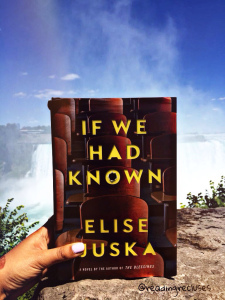
If We Had Known follows the perspectives of Maggie, Anna (Maggie’s daughter), Luke and many many other characters. The shooter’s mother had a couple of chapters which just reminded me of Lionel Shriver’s novel We Need to Talk About Kevin which is so much more insightful than this one.
The problem with this book is it didn’t have a clear direction. I did not know what it wanted me to learn or to realize. Also, some of the storylines were just way more interesting than others.
Whilst, an interesting novel about human relationships and our effect on one another, If We Had Known fails to captivate.
Rating: 60/100
Age: 15 & up
Warnings: anorexia, anxiety, shooting, infidelity
For more reviews like this one, check out my blog, Reading Recluses
I received a copy of this book in a Goodreads Giveaway in exchange for an honest review. This does not affect my review.
After a shooting at a local mall, Maggie Daley, English teacher, learns that the shooter was one of her former students. When Luke, another former student, writes a viral facebook post, mentioning a troubling essay written by the shooter for Maggie’s class, Maggie must deal with the implications that maybe she could have prevented the shooting.
If We Had Known follows the perspectives of Maggie, Anna (Maggie’s daughter), Luke and many many other characters. The shooter’s mother had a couple of chapters which just reminded me of Lionel Shriver’s novel We Need to Talk About Kevin which is so much more insightful than this one.
The problem with this book is it didn’t have a clear direction. I did not know what it wanted me to learn or to realize. Also, some of the storylines were just way more interesting than others.
Whilst, an interesting novel about human relationships and our effect on one another, If We Had Known fails to captivate.
Rating: 60/100
Age: 15 & up
Warnings: anorexia, anxiety, shooting, infidelity
For more reviews like this one, check out my blog, Reading Recluses

July 9, 2018
I really thought this book was a fascinating exploration of the ways in which we can be implicated when things go wrong. The main character, Maggie, is a college English teacher, who gladly teaches comp 101. She's glad to be the one to open her students to the possibilities of writing powerfully when they write honestly. This invitation for students to write about what matters most to them becomes a problem when a student writes about hunting with his dad. Maggie is also a rather distant mother and wife. She tries her best but isn't able to connect with them the way she connects with her student. Teaching is so satisfying that this where she essentially puts all her energy. The book keeps returning to Maggie but also includes chapters which focus on her daughter, Anna, and some of the people who live in Maggie's community.
I think the complications of these characters are amazingly portrayed...shown, not told. Maggie is very flawed but I felt she was sympathetic. Parents are indicted, especially divorced parents, social media, lies, missing students who need help, affairs with married people...all are indicted, but there is an understanding that these flawed people are trying, and have moments of awareness, kindness and generosity. I know the author's uncle. He was my brother's best friend in college. They remain close. He too is incredibly smart. That's what I think about this novel. It's timely, and very smart. It's painful to read. There are so many ways we fail. The book reminds us of this, and also explores the ways in which we help each other to survive.
I think the complications of these characters are amazingly portrayed...shown, not told. Maggie is very flawed but I felt she was sympathetic. Parents are indicted, especially divorced parents, social media, lies, missing students who need help, affairs with married people...all are indicted, but there is an understanding that these flawed people are trying, and have moments of awareness, kindness and generosity. I know the author's uncle. He was my brother's best friend in college. They remain close. He too is incredibly smart. That's what I think about this novel. It's timely, and very smart. It's painful to read. There are so many ways we fail. The book reminds us of this, and also explores the ways in which we help each other to survive.
Read
April 24, 2018This is NOT a book about a shooting. I repeat: This is NOT a book about a shooting.
Yes, there is a shooting that acts as the catalyst for this immensely rich, character-driven novel, but that's what it is: a catalyst. Juska patiently follows a riveting cast of complex characters who, in one way or another, deal with anxiety, and that's what this novel investigates--how our modern world, tainted by shootings and other abrupt tragedies that plague our social media feeds, affects our lives, both externally and internally. The narrative mainly follows Maggie Daley, an English teacher scrutinized for "missing the signs" of the future shooter (an ex-student), and her daughter, Anna, who is prone to episodes of acute paranoia and panic attacks. Essentially, Juska gives insight onto how a shooting--even one in such a small town--ripples throughout all of our lives. This isn't a novel that unnecessarily digs into the nitty gritty of a shooting (tastefully, Juska avoids the shooter's perspective and explicitly describing what occurred in that mall), but rather one that follows the consequences of such an occurrence, whether or not any person is truly capable of accurately perceiving the world and people around them, and what our responsibility is to one another should we see the signs.
Yes, there is a shooting that acts as the catalyst for this immensely rich, character-driven novel, but that's what it is: a catalyst. Juska patiently follows a riveting cast of complex characters who, in one way or another, deal with anxiety, and that's what this novel investigates--how our modern world, tainted by shootings and other abrupt tragedies that plague our social media feeds, affects our lives, both externally and internally. The narrative mainly follows Maggie Daley, an English teacher scrutinized for "missing the signs" of the future shooter (an ex-student), and her daughter, Anna, who is prone to episodes of acute paranoia and panic attacks. Essentially, Juska gives insight onto how a shooting--even one in such a small town--ripples throughout all of our lives. This isn't a novel that unnecessarily digs into the nitty gritty of a shooting (tastefully, Juska avoids the shooter's perspective and explicitly describing what occurred in that mall), but rather one that follows the consequences of such an occurrence, whether or not any person is truly capable of accurately perceiving the world and people around them, and what our responsibility is to one another should we see the signs.

August 21, 2018
To me, this book was like an infinite hallway in a supernatural horror movie... I'm running and running trying to move forward, but I'm getting nowhere as the door at the end of the hall remains closed and just keeps getting further and further away. I slogged through 3/4 of this book before I decided I just couldn't do it anymore.
Juska's writing is wonderful, but this is an emotional and character-driven novel. There is absolutely nothing wrong with that, but it's evidently not what I was in the mood for at this time. There is nearly no plot to speak of. This is NOT a book about a mass shooting. The mall shooting mentioned within the opening pages is merely the catalyst for the characters to suffer and wonder if they could have made a difference.
Juska's writing is wonderful, but this is an emotional and character-driven novel. There is absolutely nothing wrong with that, but it's evidently not what I was in the mood for at this time. There is nearly no plot to speak of. This is NOT a book about a mass shooting. The mall shooting mentioned within the opening pages is merely the catalyst for the characters to suffer and wonder if they could have made a difference.

January 8, 2019
Huh? Not to be desperate for the glorifying of gun violence, but this book was solely about a shooting in a mall and the effects on the people “involved” though the connections are actually tenuous and there is so little to propel the story after the initial inciting event. Also, the audiobook enhanced the dullness. Skip.

May 6, 2018
Well written and engaging throughout. An in-depth look at some very contemporary issues ... mall shootings, eating disorders, alcohol hook ups in college, social media ... but also some universals dealing with family relationships, teacher-student experiences, personal fears, etc.

June 8, 2018
This a slow slog of a character study, not a fast-paced reaction to domestic terrorism. Juska knows her way around words but the marketing of this book is doing her no favors. Finishing was a chore and honestly it wasn't really worth it imo. Some nice moments but that's about it.

April 20, 2018
Slow burn that pays off about 25% in. Solid 3.5.

June 17, 2018
Far too much of the foundation of this book is too preposterous for me to connect with the story.

July 19, 2018
I think this book is well written, but that the story was told from too many viewpoints. I struggled to finish it.
January 16, 2019
This is a pretty complex book, involving social media an its effects on our lives, different anxiety problems and their effects, and just tying to cope with life in general. Very sweet endng

July 3, 2023
Tightly written with excellent character development
Displaying 1 - 30 of 181 reviews