

What do you think?

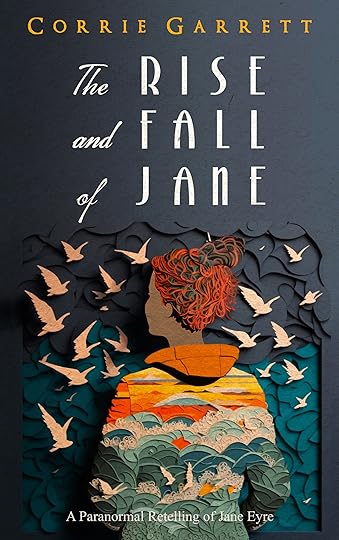
The Rise and Fall of Jane: A Modern Retelling of Jane Eyre
2018 New Release! For lovers of The Lizzie Bennet Diaries and other modern retellings...
Jane wants to leave her lonely, dysfunctional past behind when she gets a job as a nanny at Miles Hayes's mansion. It only takes a few encounters with Miles for her to feel drawn to him, but Jane refuses to be *that* nanny, the one who falls for her boss and breaks her heart. She's no Cinderella and life isn't a fairy tale. She won't throw away her pride for a wealthy player, or raise the hopes of the little girl she cares for.
But when attempted murder shakes up the family, Jane's heart falters. Should she trust Miles and his strange explanations, or hit the road?
The Rise and Fall of Jane is one woman's journey of betrayal, mystery, danger... and ultimately love.
Jane wants to leave her lonely, dysfunctional past behind when she gets a job as a nanny at Miles Hayes's mansion. It only takes a few encounters with Miles for her to feel drawn to him, but Jane refuses to be *that* nanny, the one who falls for her boss and breaks her heart. She's no Cinderella and life isn't a fairy tale. She won't throw away her pride for a wealthy player, or raise the hopes of the little girl she cares for.
But when attempted murder shakes up the family, Jane's heart falters. Should she trust Miles and his strange explanations, or hit the road?
The Rise and Fall of Jane is one woman's journey of betrayal, mystery, danger... and ultimately love.
380 pages, ebook
Published December 28, 2017
About the author
Corrie Garrett
36 books59 followersHello! I'm Corrie Garrett, indie author of the Austen Ensemble trilogy and other romance novels. I'm currently working on a story about the characters of Mansfield Park, as well as an historical fantasy in the Byzantine Empire.
I love to read as well as write - mainly young adult (contemporary, dystopian, adventure, science fiction), romance (Christian, suspense, historical), science fiction, and urban fantasy.
Ask a question, make a recommendation, or just say hello - and thanks for stopping by!
I love to read as well as write - mainly young adult (contemporary, dystopian, adventure, science fiction), romance (Christian, suspense, historical), science fiction, and urban fantasy.
Ask a question, make a recommendation, or just say hello - and thanks for stopping by!
Ratings & Reviews
Friends & Following
Create a free account to discover what your friends think of this book!
Community Reviews
Displaying 1 - 16 of 16 reviews

August 21, 2018
This felt more like Pollyanna than Jane Eyre. It started out okay, but the last 25% went completely off the rails.

October 9, 2020
REVIEW | Once in a while I pick up an Indie novel by an author I don’t know, which is unusual and a kind of “reader risk.” The draw of this title is its connection to a classic. Inspired by Charlotte Bronte’s Jane Eyre, the modern re-telling actually impresses me, at least to a point. Mind you, I haven’t’ read the Bronte novel, but still, this one is good. Find the review and content summary in full on Finding Wonderland

Want to Read
June 11, 2023what a gorgeous cover!

October 20, 2019
This one is tough, and I should point out that some of my comments may be considered spoilers. As I see it, the whole point of a retelling is to shine a different, usually contemporary, light on a timeless story. So, it’s important to respect the shifts in attitudes, otherwise it’s just a lazy way to avoid coming up with an original plot. This tale was interesting and fairly well told until the halfway mark. Once the sad, abused heroine gets a massive break, instead of jumping at it, she starts to wallow in self-pity and becomes incredibly irritating. I understand that she has been hardened and made cynical by her terrible childhood, but everyone has problems (as we soon discover). One needs to take a chance at happiness, and not be forever defined by the past. I also disliked the suffocating religious overtones. Once a book starts to hint that there is something wrong with two unattached, consenting adults having a sexual relationship, it becomes a huge turn-off for me. Also, too much is made of the age difference, to the point that the hero (at thirty-seven, an athletic man still approaching his prime) is given an improbable dusting of grey hair to emphasize that he’s much older than the mature-beyond-her-years heroine.
Also, I am happy to accept the supernatural elements involving animals, mysterious influences, unexplained gifts, etc., but there should be consistency and some logic within the fabrications. To expect a normal, healthy man to stay at the hand-holding stage for months while the heroine grapples with her insecurities about not being good enough … sorry. I can’t see the man going along with that. What exactly is so great about this woman to justify this ridiculous self-denial? She tells him she’s crazy about him, but now that they have both declared their mutual love, and he’s asked to marry her … nah, let’s wait a few months because … people might talk.
The heroine’s impulsive flight and everything that comes after that is pure nonsense. Suddenly, the tough, street-smart woman becomes a spineless idiot, refusing to let the hero explain. It’s such an overused device. Not sure what the point was, except to introduce a gratuitous shovelful of “conflict”, but it kills the story, and certainly it ended my interest in it. This is where adhering to the plot of the original classic being “retold” gets this author into logistic difficulties she is unable to overcome.
I liked the story up to the fifty percent mark, but the strength of the beginning gets diluted by the mess of the second half. The pace is slow but consistent, while characterization is sketchy. I got the impression that each actor in the drama was being shoehorned into whatever was required to fit the story, instead of allowing for some natural diversity in human nature. As a result, the conclusion, although technically an HEA, is limp and unsatisfying.
Also, I am happy to accept the supernatural elements involving animals, mysterious influences, unexplained gifts, etc., but there should be consistency and some logic within the fabrications. To expect a normal, healthy man to stay at the hand-holding stage for months while the heroine grapples with her insecurities about not being good enough … sorry. I can’t see the man going along with that. What exactly is so great about this woman to justify this ridiculous self-denial? She tells him she’s crazy about him, but now that they have both declared their mutual love, and he’s asked to marry her … nah, let’s wait a few months because … people might talk.
The heroine’s impulsive flight and everything that comes after that is pure nonsense. Suddenly, the tough, street-smart woman becomes a spineless idiot, refusing to let the hero explain. It’s such an overused device. Not sure what the point was, except to introduce a gratuitous shovelful of “conflict”, but it kills the story, and certainly it ended my interest in it. This is where adhering to the plot of the original classic being “retold” gets this author into logistic difficulties she is unable to overcome.
I liked the story up to the fifty percent mark, but the strength of the beginning gets diluted by the mess of the second half. The pace is slow but consistent, while characterization is sketchy. I got the impression that each actor in the drama was being shoehorned into whatever was required to fit the story, instead of allowing for some natural diversity in human nature. As a result, the conclusion, although technically an HEA, is limp and unsatisfying.

January 15, 2018
Jane Agosto didn’t have the happiest upbringing. Abandoned by her mother, neglected by her aunt, she entered the foster system at age six and was always a step away from “falling through the cracks.” After school, she takes up work as a nanny watching an endearing eight-year-old named Adele. But when the girl’s absentee father, Miles Hayes, shows up, he takes an interest in Jane. He is a surfer, an environmental philanthropist, thirty-seven years old, and a millionaire…and it’s the last one that bothers Jane the most. With few friends in her young life, Jane finds herself drawn to Miles’ companionship–but she’s determined not to be that nanny, the one that sleeps with her employer.
As Jane’s relationship with Miles deepens, so do the mysteries surrounding the house on the ocean. Why are the pet seals in the aquarium so vicious whenever Miles is around? Who attacked the keeper named Poole and almost killed him? And who set the fire that almost burned Miles to death in his sleep? Eventually, Jane will have to make her own decision–to choose Miles with all of his mysterious past, or to extricate herself from this impossible situation and try to make her own way in the world.
This whimsical retelling of Jane Eyre was a pleasant weekend read. It has a light chick-lit flavor instead of the Gothic eeriness of the original. One of the drawbacks of a modern version of this classic is that it is difficult to explain why Rochester…ahem, Miles Hayes…didn’t extricate himself from his difficulties with a divorce (after all, divorce is a little easier to obtain in the 21st century than in the 19th), but the story was still entertaining enough with some suspension of disbelief. I enjoyed the elements of sea mythology that were blended into the story, and I would have loved to see these explored more. All in all, a quick and fun read!
As Jane’s relationship with Miles deepens, so do the mysteries surrounding the house on the ocean. Why are the pet seals in the aquarium so vicious whenever Miles is around? Who attacked the keeper named Poole and almost killed him? And who set the fire that almost burned Miles to death in his sleep? Eventually, Jane will have to make her own decision–to choose Miles with all of his mysterious past, or to extricate herself from this impossible situation and try to make her own way in the world.
This whimsical retelling of Jane Eyre was a pleasant weekend read. It has a light chick-lit flavor instead of the Gothic eeriness of the original. One of the drawbacks of a modern version of this classic is that it is difficult to explain why Rochester…ahem, Miles Hayes…didn’t extricate himself from his difficulties with a divorce (after all, divorce is a little easier to obtain in the 21st century than in the 19th), but the story was still entertaining enough with some suspension of disbelief. I enjoyed the elements of sea mythology that were blended into the story, and I would have loved to see these explored more. All in all, a quick and fun read!
January 20, 2018
Fun and mysterious!
I love Jane Eyre. Carrie Garrett shows a shared love of the story yet injects a sense of humor that is entertaining and clever. Come into this read with an open mind and enjoy where Corrie Garrett takes you. I laughed out loud many times while reading. The Bronte Jane Eyre is a masterpiece but there are moments where you scream inwardly in exasperation. Garret relates to those inward groans and cleverly addresses them in a lighthearted way that doesn't loose the feel of the original. I also loved the magic and fantasy that she made part of this retelling. It was subtle but captivating. The pace of mystery and drama was great! I'm really looking forward to her next retelling based on Pride and Prejudice! Enjoy your read!
I love Jane Eyre. Carrie Garrett shows a shared love of the story yet injects a sense of humor that is entertaining and clever. Come into this read with an open mind and enjoy where Corrie Garrett takes you. I laughed out loud many times while reading. The Bronte Jane Eyre is a masterpiece but there are moments where you scream inwardly in exasperation. Garret relates to those inward groans and cleverly addresses them in a lighthearted way that doesn't loose the feel of the original. I also loved the magic and fantasy that she made part of this retelling. It was subtle but captivating. The pace of mystery and drama was great! I'm really looking forward to her next retelling based on Pride and Prejudice! Enjoy your read!

November 4, 2023
One of the better retellings of a story. The paranormal aspects were slight and different than I've read not overwhelmingly so as well. The rise and fall of Jane Eyre always sounds way too dramatic for the character as if she's got something detrimental coming to her, yet her story is turbulent and steadfast. The characters in the story weren't overbearing and boring, but put into positions at the right points for the right purposes that pinpoint pivotal assets in the plots. I thoroughly enjoyed the roundabout and conclusion to this entire novel. It was truly a dramatic mysterious paranormal type mystery. It wasn't overstated in it's retellings and nor understated!

March 3, 2018
I have always liked the book Jane Eyre. She was a strong character and the twist is always surprising to those who don't see it coming. When I see a retelling I choose to try and read it . One such book was Jane: a modern retelling of Jane Eyre. At first I liked it but when I reached one particular part, I realized the author did not understand Jane Eyre if she put that element in her retelling. After I read that book I bemoaned that there were no good modern retelling s. Then my best friends sent me an email with this book and I decided to chance it.
To start this author gets Jane Eyre and her story. Jane in this book is pitch perfect. Her struggles are relate-able and yet not. Miles is a really good Rochester.
The books greatest strength was not only capturing the spirit of the original but making it more clear to me personally. I don't know what else to say about this book. Should you wish for more thoughts I made notes while reading but beware spoilers in my notes.
I HIGHLY recommend this to Jane Eyre lovers
To start this author gets Jane Eyre and her story. Jane in this book is pitch perfect. Her struggles are relate-able and yet not. Miles is a really good Rochester.
The books greatest strength was not only capturing the spirit of the original but making it more clear to me personally. I don't know what else to say about this book. Should you wish for more thoughts I made notes while reading but beware spoilers in my notes.
I HIGHLY recommend this to Jane Eyre lovers
December 13, 2018
What a fun read! I had a hard time getting into Jane Eyre when I was in high school, but this modern retelling captured my attention, and I could hardly put the book down. It was a good story, and I found myself rooting for Jane even as I questioned some of her choices. Great ending. Looking forward to reading more from Corrie Garrett!
March 31, 2019
Wonderful retelling
This was a wonderful, modern retelling of Jane Eyre. It keeps the overarching storyline of the original but puts it in a completely believable modern setting. It was a joy to read!
This was a wonderful, modern retelling of Jane Eyre. It keeps the overarching storyline of the original but puts it in a completely believable modern setting. It was a joy to read!

January 17, 2018
Omg this book is amazing . I wasn't sure if I would like it but it sounded so good so I figure I would enter in the giveaway for it and man oh man this book is SL good. Five stars for sure
February 3, 2018
Unlikable characters
Stilted writing. First person (ugh!). I didn't care for anyone in the book and didn't care about the secrets. Wasted time.
Stilted writing. First person (ugh!). I didn't care for anyone in the book and didn't care about the secrets. Wasted time.

June 10, 2019
10 word summary: Jane Eyre retold by the sea with attack seals. Ridiculous!
#entrancedbirdstoo #IlikedAdele
🦔🦔 I'm conflicted. Some good. Some bad. Some meh.
#entrancedbirdstoo #IlikedAdele
🦔🦔 I'm conflicted. Some good. Some bad. Some meh.

July 19, 2023
This book started out incredibly strong and then went downhill incredibly fast. By the end I was over it and just trudging through to see how it ended.

January 11, 2018
I received a free advanced reader copy of this book in exchange for an honest review. I loved this adaptation of Jane Eyre. The characters were endearing, true to form, and still surprising. There were twists that were captivating and wonderful to read. I highly recommend this book.

July 7, 2018
An amazingly well done adaptation of Jane Eyre. I was hooked right away and had the hardest time putting it down.
The author makes sure to address the plot points that become problematic for a modern setting but never gets around to finishing them. Jane takes issue with Mr. Rochester’s equivalent, Miles, being already married. Then she finds out he’s been injured and suddenly appears to not care about it at all.
Oh and some of the characters can magically talk to animals? Like, this book is good, but what was that about?
The author makes sure to address the plot points that become problematic for a modern setting but never gets around to finishing them. Jane takes issue with Mr. Rochester’s equivalent, Miles, being already married. Then she finds out he’s been injured and suddenly appears to not care about it at all.
Oh and some of the characters can magically talk to animals? Like, this book is good, but what was that about?
Displaying 1 - 16 of 16 reviews