Whenever I visit a new city I try to visit as many of its bookshops as possible. In my younger years I also tried to acquire as many books as I could but those days are long gone. My spending habits are a lot more sustainable these days and since I knew that I had two piles of books left unread at home I knew that I wouldn't go on a spending spree in Prague.
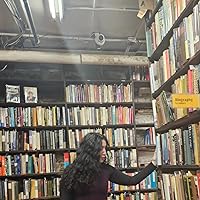
Prague is a lovely city but the city center is overrun by tourists (me being one of them, of course, so I understand the irony). When I made my way over the overcrowded Karlův most I was overjoyed when I found that "Shakespeare & Sons", the lovely bookshop at the other side of the bridge, was a place of quiet. Not many customers were in the shop and so I could take my sweet time browsing its shelves. The bookshop has two levels and it's full of books in the English language. I visited other bookshops in Prague as well but "Shakespeare & Sons" was by far (!) my favorite. So I knew that I had to buy my "Prague book" in this shop.
I toyed with the idea of getting a beautiful bilingual edition of Kafka's Die Verwandlung but since I had already read that book (and thought 20,00€ was a bit much) I decided to go with this slim volume of poetry instead: I Have More Souls Than One by Fernando Pessoa. When I saw Carolyn Marie gush about this book on her channel I wanted to order it only to find that the Penguin Mini Classics run is slowly going out of print. I couldn't find a place to get it new. So I was overjoyed when I found it in this cute bookshop in Prague. (Side note: I also found the box set of the Penguin Deluxe Classics edition of Homer's Iliad and Odyssey without the books in it, and when I asked the owner if I could take the box home with me, because both of the books sit box-less on my shelves at home, he actually said: "Yes, the box's yours." My day was made!)
I hadn't read anything by Pessoa prior to this but I am absolutely sold. He seems like such a fascinating man and I know that I'll read The Book of Disquiet one day. I would also not say no to more poetry from him because this slim collection was a treat. I Have More Souls Than One is split into four parts, each focusing on a different persona/heteronym of Pessoa: Alberto Caeiro, Álvaro de Campos, Ricardo Reis, and Pessoa himself. I was immediately intrigued by this structure, not many writers I know work with heteronyms the way Pessoa did.
Pessoa said of his approach: "How do I write in the name of these three? Caeiro, through sheer and unexpected inspiration, without knowing or even suspecting that I'm going to write in his name. Ricardo Reis, after an abstract meditation, which suddenly takes concrete shape in an ode. Campos, when I feel a sudden impulse to write and don't know what." How cool is that? And the crazy thing is that his personas really feel different from one another. Their styles and subjects for their poetry are distinct. Super fascinating!
Apparently Alberto Caeiro was Pessoa's first great heteronym. He summarises him as follows: "He sees things with the eyes only, not with the mind. He does not let any thoughts arise when he looks at a flower... the only thing a stone tells him is that it has nothing at all to tell him... this way of looking at a stone may be described as the totally unpoetic way of looking at it. The stupendous fact about Caeiro is that out of this sentiment, or rather, absence of sentiment, he makes poetry."
"Beauty is the name of something that does not exist / Which I give to things in exchange for the pleasure they give me. / It signifies nothing."
Caeiro does not question anything whatsoever, he calmly accepts the world as it is. The recurrent themes to be found in nearly all of Caeiro's poems are wide-eyed childlike wonder at the infinite variety of nature. Central to his world-view is the idea that in the world around us, all is surface: things are precisely what they seem, there is no hidden meaning anywhere. Caeiro manages thus to free himself from the anxieties that batter his peers; for him, things simply exist and we have no right to credit them with more than that.
"If, after I die, they should want to write my biography, / There’s nothing simpler.
I’ve just two dates – of my birth, and of my death. / In between the one thing and the other all the days are mine."
Ricardo Reis' philosophy of life overlaps in some regards with that of Caeiro. Reis lives by the motto: "See life from a distance. Never question it. There's nothing it can tell you." Like Caeiro, Reis defers from questioning life. He is a modern pagan who urges one to seize the day and accept fate with tranquility. "Wise is the one who does not seek. The seeker will find in all things the abyss, and doubt in himself." Believing in the Greek gods, yet living in a Christian Europe, Reis feels that his spiritual life is limited and true happiness cannot be attained. This, added to his belief in Fate as a driving force for all that exists, as such disregarding freedom, leads to his epicureanist philosophy, which entails the avoidance of pain, defending that man should seek tranquility and calm above all else, avoiding emotional extremes.
"There are no sorrows / Nor joys either / In our life. / So let us learn, / Thoughtlessly wise, / Not to live it, / But to flow down it, / Tranquil, serene, / Letting children / Be our teachers / And our eyes be / Filled with Nature."
Where Caeiro wrote freely and spontaneously, with joviality, of his basic, meaningless connection to the world, Reis writes in an austere, cerebral manner, with premeditated rhythm and structure and a particular attention to the correct use of the language when approaching his subjects of the brevity of life, the vanity of wealth and struggle, the joy of simple pleasures, patience in time of trouble, and avoidance of extremes.
It is one of Reis' poems that gives this slim collection its title: "I have more souls than one. / There are more I's than myself. / And still I exist / Indifferent to all. / I silence them: I speak." So simple, yet so beautiful.
Álvaro de Campos manifests, in a way, as a hyperbolic version of Pessoa himself. Of the three heteronyms he is the one who feels most strongly, his motto being "to feel everything in every way." And bestie babes, I think none of ya'll are surprised that his poetry is the one that resonated with me the most. Campos is a dreamer, someone who's tired of reality. And I related to nothing more in life: "I am tired, that is clear, / Because, at a certain stage, people have to be tired. / Of what I am tired, I don't know: / […] At the tiredness being only this - / In the body a wish for sleep, / In the soul a desire for not thinking". Whew, chile, if that isn't me.
"We conquer the whole world before getting out of bed; / But we wake up and it is opaque, / We get up and it is alien,"
As such, his poetry is the most emotionally intense and varied, constantly juggling two fundamental impulses: on the one hand a feverish desire to be and feel everything and everyone, declaring that "in every corner of my soul stands an altar to a different god" (alluding to Walt Whitman's desire to "contain multitudes"), on the other, a wish for a state of isolation and a sense of nothingness.
As a result, his mood and principles varied between violent, dynamic exultation, as he fervently wishes to experience the entirety of the universe in himself, in all manners possible (a particularly distinctive trait in this state being his futuristic leanings, including the expression of great enthusiasm as to the meaning of city life and its components) and a state of nostalgic melancholy, where life is viewed as, essentially, empty.
This collection concludes with the poems of "Pessoa as Pessoa", and funnily enough, those were the hardest to understand. They seemed a lot more abstract and complicated than the poems of his personas. Pessoa wrote of love and longing, of grief and lost love, and the power of the imagination. One of my favorite quotes from this book can be found in the final poem: "There are dreamed anguishes that are more real / Than the ones life brings us, there are sensations / Felt only by imagining / Which are more ours than our life is." Simply beautiful.