

What do you think?

The Last Watchman of Old Cairo
In this spellbinding novel, a young man journeys from California to Cairo to unravel centuries-old family secrets.
Joseph, a literature student at Berkeley, is the son of a Jewish mother and a Muslim father. One day, a mysterious package arrives on his doorstep, pulling him into a mesmerizing adventure to uncover the tangled history that binds the two sides of his family. For generations, the men of the al-Raqb family have served as watchmen of the storied Ibn Ezra Synagogue in Old Cairo, built at the site where the infant Moses was taken from the Nile. Joseph learns of his ancestor Ali, a Muslim orphan who nearly a thousand years earlier was entrusted as the first watchman of the synagogue and became enchanted by its legendary—perhaps magical—Ezra Scroll. The story of Joseph’s family is entwined with that of the British twin sisters Agnes and Margaret, who in 1897 depart their hallowed Cambridge halls on a mission to rescue sacred texts that have begun to disappear from the synagogue.
The Last Watchman of Old Cairo is a moving page-turner of a novel from acclaimed storyteller Michael David Lukas. This tightly woven multigenerational tale illuminates the tensions that have torn communities apart and the unlikely forces—potent magic, forbidden love—that boldly attempt to bridge that divide.
Advance praise for The Last Watchman of Old Cairo
“A beautiful, richly textured novel, ambitious and delicately crafted, The Last Watchman of Old Cairo is both a coming-of-age story and a family history, a wide-ranging book about fathers and sons, religion, magic, love, and the essence of storytelling. This book is a joy.”—Rabih Alameddine, author of the National Book Award finalist An Unnecessary Woman
“Michael David Lukas has given us an elegiac novel of Cairo—Old Cairo and modern Cairo—with a bit of Berkeley thrown in. His prose is deeply evocative, and a sense of mystery and profound tristesse pervade this unusual narrative, which tells the story of a young California man on a quest to understand a puzzling gift left for him by his late father, the descendant of generations of watchmen at the venerable Ben Ezra synagogue in the depths of Old Cairo. The novel is enhanced by Lukas’ impressive historical research on the Geniza and the colorful characters involved in rescuing its treasure trove of documents. But his greatest flair is in capturing the essence of that beautiful, haunted, shabby, beleaguered, yet still utterly sublime Middle Eastern city.”—Lucette Lagnado, author of The Man in the White Sharkskin Suit and The Arrogant Years
Joseph, a literature student at Berkeley, is the son of a Jewish mother and a Muslim father. One day, a mysterious package arrives on his doorstep, pulling him into a mesmerizing adventure to uncover the tangled history that binds the two sides of his family. For generations, the men of the al-Raqb family have served as watchmen of the storied Ibn Ezra Synagogue in Old Cairo, built at the site where the infant Moses was taken from the Nile. Joseph learns of his ancestor Ali, a Muslim orphan who nearly a thousand years earlier was entrusted as the first watchman of the synagogue and became enchanted by its legendary—perhaps magical—Ezra Scroll. The story of Joseph’s family is entwined with that of the British twin sisters Agnes and Margaret, who in 1897 depart their hallowed Cambridge halls on a mission to rescue sacred texts that have begun to disappear from the synagogue.
The Last Watchman of Old Cairo is a moving page-turner of a novel from acclaimed storyteller Michael David Lukas. This tightly woven multigenerational tale illuminates the tensions that have torn communities apart and the unlikely forces—potent magic, forbidden love—that boldly attempt to bridge that divide.
Advance praise for The Last Watchman of Old Cairo
“A beautiful, richly textured novel, ambitious and delicately crafted, The Last Watchman of Old Cairo is both a coming-of-age story and a family history, a wide-ranging book about fathers and sons, religion, magic, love, and the essence of storytelling. This book is a joy.”—Rabih Alameddine, author of the National Book Award finalist An Unnecessary Woman
“Michael David Lukas has given us an elegiac novel of Cairo—Old Cairo and modern Cairo—with a bit of Berkeley thrown in. His prose is deeply evocative, and a sense of mystery and profound tristesse pervade this unusual narrative, which tells the story of a young California man on a quest to understand a puzzling gift left for him by his late father, the descendant of generations of watchmen at the venerable Ben Ezra synagogue in the depths of Old Cairo. The novel is enhanced by Lukas’ impressive historical research on the Geniza and the colorful characters involved in rescuing its treasure trove of documents. But his greatest flair is in capturing the essence of that beautiful, haunted, shabby, beleaguered, yet still utterly sublime Middle Eastern city.”—Lucette Lagnado, author of The Man in the White Sharkskin Suit and The Arrogant Years
192 pages, Kindle Edition
First published March 13, 2018
About the author
Michael David Lukas
8 books207 followersWinner of the Sami Rohr Prize, the National Jewish Book Award, and the Prix Interallie, Michael David Lukas is the author of The Invisible Line, The Last Watchman of Old Cairo and The Oracle of Stamboul. His writing has appeared in The New York Times, The Wall Street Journal, VQR, The Common, and the Georgia Review. A recipient of fellowships from the National Endowment for the Arts and the Bread Loaf Writers’ Workshop, he has been a Fulbright Scholar in Turkey, a Rotary Scholar in Tunisia, a staff member at UC Berkeley’s Center for Middle East Studies, and a visiting scholar at the Graduate Theological Union. He lives in Oakland and teaches at San Francisco State University.
Ratings & Reviews
Friends & Following
Create a free account to discover what your friends think of this book!
Community Reviews
Displaying 1 - 30 of 449 reviews

February 7, 2018
Last Watchman of Cairo tells its story via three loosely related threads and timelines. In contemporaneous America, the Muslim Egyptian father of Joseph – the last watchman referenced in the title -- has died, and he has had a friend deliver to Joseph a keepsake without explanation. Joseph, raised exclusively by his Jewish Egyptian (by birth) mother in the US, had a cordial relationship with his father, at least until his father learned Joseph is gay. They didn’t have a falling out, but had communicated only by occasional phone call for several years prior to his dad’s demise. Nonetheless, Joseph heads to Egypt with the ostensible goal of looking up a friend of his dad’s and obtaining more information regarding the keepsake. Alternating chapters also tell the story of twin late-middle-aged very British women scholars in Egypt in approximately 1897 seeking to transport a significant collection of ostensibly important historical Jewish documents to Cambridge, and, finally, the story that takes place in approximately 1022 A.D. – the story of the original watchman of the Ibn Ezra Synagogue, Ali ibn al-Marwani, an ancestor of Joseph’s.
As is often the case with multiple timeline stories, one story is far more interesting and successful than the other or others. In this case, the ancient tale of Ali is captivating and Ali is an engaging protagonist. The descriptions of Cairo during his time are fascinating. One can feel the heat, the dust, the neighborhoods, and visualize the Synagogue in detail. His dialogue and his story, and that of the characters that interact with him, comes across largely authentic.
On the other hand, with respect to the twin sisters, comments attributed to them regarding the lack of good tea in Cairo, and references to the documents as “ours” and the importance of removing the document set to Cambridge in order to preserve them from thieving locals was sufficiently off-putting, even for the times, that I hurried through chapters devoted to their adventure with increasing speed as the book progressed. The side story regarding Dr. Schechter and his youthful assistant, for example, was a waste of time and detracted from this portion of the story.
And Joseph? He was neither engaging nor believable. When he finally learns the truth of his parents’ relationship via decades-old handwritten letters they exchanged, preserved by his father – a moment that in many another novel would have had great emotional impact – the reader feels nothing because Joseph feels nothing. The descriptions of present-day Cairo in his section lack any energy or flavor for one of the world’s most fascinating cities. Hence, since his is the framing story and Cairo is nigh unto missing from his story’s telling, it’s difficult for a reader to be fully engaged in the work, as a whole.
So, in the end, this novel is partly successful and adequately written. I found it ultimately disappointing, but it may well appeal to other readers seeking historical fiction written by a Western author and set in Cairo.
Thanks to the publisher and to NetGalley for providing an ecopy of this novel.
As is often the case with multiple timeline stories, one story is far more interesting and successful than the other or others. In this case, the ancient tale of Ali is captivating and Ali is an engaging protagonist. The descriptions of Cairo during his time are fascinating. One can feel the heat, the dust, the neighborhoods, and visualize the Synagogue in detail. His dialogue and his story, and that of the characters that interact with him, comes across largely authentic.
On the other hand, with respect to the twin sisters, comments attributed to them regarding the lack of good tea in Cairo, and references to the documents as “ours” and the importance of removing the document set to Cambridge in order to preserve them from thieving locals was sufficiently off-putting, even for the times, that I hurried through chapters devoted to their adventure with increasing speed as the book progressed. The side story regarding Dr. Schechter and his youthful assistant, for example, was a waste of time and detracted from this portion of the story.
And Joseph? He was neither engaging nor believable. When he finally learns the truth of his parents’ relationship via decades-old handwritten letters they exchanged, preserved by his father – a moment that in many another novel would have had great emotional impact – the reader feels nothing because Joseph feels nothing. The descriptions of present-day Cairo in his section lack any energy or flavor for one of the world’s most fascinating cities. Hence, since his is the framing story and Cairo is nigh unto missing from his story’s telling, it’s difficult for a reader to be fully engaged in the work, as a whole.
So, in the end, this novel is partly successful and adequately written. I found it ultimately disappointing, but it may well appeal to other readers seeking historical fiction written by a Western author and set in Cairo.
Thanks to the publisher and to NetGalley for providing an ecopy of this novel.

March 21, 2018
“The Oracle of Stamboul”, written by Michael David Lukas — published in 2011—
his debut....was sooooo wonderful- I was speechless to express how much I loved his novel.
It’s still a very special book to me - one I read with my daughter...with so many fond memories. I remember the story as if I read it yesterday.
The writing is gorgeous.
It was a joy to meet Michael years back and hear him talk about his book.
I learned of ‘this’ book yesterday - ( thank You Netgalley - Random House - and Goodreads friend Esil)...and was excited to receive a copy.
I spent my day reading “The Last Watchman of Cairo”. What a delight!!! Michael still has that ‘it’ quality I love ....
His prose feels effortless - while transporting us to a luxurious world of the past.
I cared about the characters - hanging onto the story - and feeling their emotions.
From the start - I was curious about the title. There was mystery for me about the word “Watchman”. I knew there was religious meaning and symbolism tied heavily to this word. I was wondering how ‘the Watchman’ would be used.
We soon learn it’s a very high honor to be a Watchman. The Watchman described the work of a prophet among God’s people. They have the role to warn and teach. If a threat appeared- a warning/ message would spread to the community.
Joseph, a grad student at Berkeley, often dreaded his last name: ‘al-Raqb’, while growing up in the United States. Not even teachers pronounced it correctly. I could relate - teachers had a hard time with my name as a child too - Elyse -They often mis- read the spelling and called me Elsie....at a time when ‘Elsie-the-Cow’ was a popular TV commercial. Wasn’t fun getting laughed at. So, I knew how Joseph felt.
But.......
the summer when Joseph was 11 years old - he visited his father in Cairo - an Arab. His mother was from Egypt, also but was Jewish. His mother came to the states in the 50’s and married Bill. Bill and Joseph’s mother raised him in Santa Fe.
The summer when Joseph visited his father - was the first time he felt proud to have his last name - ‘al-Raqb’.
There was a Beautiful touching moment in the book between Joseph, 11-years-old at the time—in aw of his dad. His father said:
“Nearly a thousand years ago our family has lived on the Nile. The river is in our veins”.
“We are watchers. Our name al-Raqb, it means ‘the watcher’, he who watches. It is the forty-third name of God”. Joseph was so proud of his dad that day and of his name.
Joseph, for different reasons, never went back to stay with his father over the summers in Cairo. He received a package - while in grad school at Berkeley - and news of his father’s death. Joseph wanted to understand the message his dad sent him: minimal information to go on to start: a parchment paper with Hebrew on one side and Arabic on the other.
Two stories are weaved together. Joseph traces his family history back to the ancient Ibn Ezra synagogue in Cairo.
The novel begins with the first Watchman - a Muslim-( Ali), Right away we see the sacred responsibility has and to rise to meet the challenge - wanting to demonstrate he is trustworthy.
In the middle of the book - we are introduced to twins Agnes and Margaret - Biblical students - from Cambridge- they travel to Cairo searching for archives - stored away in the Jewish sacred storage called ‘The Genizah’....that have been possibly hidden away - the Ezra Scroll- with all good intentions of bringing it back to Cambridge.
I love the purity - wholesomeness - and storytelling of this novel. David captures beauty through vivid descriptions—- from splashing waters in the river - ointment that smelled like opium and chili peppers - smells of Kosher meals - warmth of Kittens mewing- moments of solitude- children playing in the street -etc.
I enjoyed this slim book very much - quick to read — but I can’t resist saying - I’m still PASSIONATELY in LOVE “The Oracle in Stamboul” — yet — I did love this book too. I’ll read anything by this Michael David Lukas with pleasure!
Thank You Random House, Netgalley, and Michael David Lukas
his debut....was sooooo wonderful- I was speechless to express how much I loved his novel.
It’s still a very special book to me - one I read with my daughter...with so many fond memories. I remember the story as if I read it yesterday.
The writing is gorgeous.
It was a joy to meet Michael years back and hear him talk about his book.
I learned of ‘this’ book yesterday - ( thank You Netgalley - Random House - and Goodreads friend Esil)...and was excited to receive a copy.
I spent my day reading “The Last Watchman of Cairo”. What a delight!!! Michael still has that ‘it’ quality I love ....
His prose feels effortless - while transporting us to a luxurious world of the past.
I cared about the characters - hanging onto the story - and feeling their emotions.
From the start - I was curious about the title. There was mystery for me about the word “Watchman”. I knew there was religious meaning and symbolism tied heavily to this word. I was wondering how ‘the Watchman’ would be used.
We soon learn it’s a very high honor to be a Watchman. The Watchman described the work of a prophet among God’s people. They have the role to warn and teach. If a threat appeared- a warning/ message would spread to the community.
Joseph, a grad student at Berkeley, often dreaded his last name: ‘al-Raqb’, while growing up in the United States. Not even teachers pronounced it correctly. I could relate - teachers had a hard time with my name as a child too - Elyse -They often mis- read the spelling and called me Elsie....at a time when ‘Elsie-the-Cow’ was a popular TV commercial. Wasn’t fun getting laughed at. So, I knew how Joseph felt.
But.......
the summer when Joseph was 11 years old - he visited his father in Cairo - an Arab. His mother was from Egypt, also but was Jewish. His mother came to the states in the 50’s and married Bill. Bill and Joseph’s mother raised him in Santa Fe.
The summer when Joseph visited his father - was the first time he felt proud to have his last name - ‘al-Raqb’.
There was a Beautiful touching moment in the book between Joseph, 11-years-old at the time—in aw of his dad. His father said:
“Nearly a thousand years ago our family has lived on the Nile. The river is in our veins”.
“We are watchers. Our name al-Raqb, it means ‘the watcher’, he who watches. It is the forty-third name of God”. Joseph was so proud of his dad that day and of his name.
Joseph, for different reasons, never went back to stay with his father over the summers in Cairo. He received a package - while in grad school at Berkeley - and news of his father’s death. Joseph wanted to understand the message his dad sent him: minimal information to go on to start: a parchment paper with Hebrew on one side and Arabic on the other.
Two stories are weaved together. Joseph traces his family history back to the ancient Ibn Ezra synagogue in Cairo.
The novel begins with the first Watchman - a Muslim-( Ali), Right away we see the sacred responsibility has and to rise to meet the challenge - wanting to demonstrate he is trustworthy.
In the middle of the book - we are introduced to twins Agnes and Margaret - Biblical students - from Cambridge- they travel to Cairo searching for archives - stored away in the Jewish sacred storage called ‘The Genizah’....that have been possibly hidden away - the Ezra Scroll- with all good intentions of bringing it back to Cambridge.
I love the purity - wholesomeness - and storytelling of this novel. David captures beauty through vivid descriptions—- from splashing waters in the river - ointment that smelled like opium and chili peppers - smells of Kosher meals - warmth of Kittens mewing- moments of solitude- children playing in the street -etc.
I enjoyed this slim book very much - quick to read — but I can’t resist saying - I’m still PASSIONATELY in LOVE “The Oracle in Stamboul” — yet — I did love this book too. I’ll read anything by this Michael David Lukas with pleasure!
Thank You Random House, Netgalley, and Michael David Lukas

April 1, 2018
I went into this book with no idea what to expect. Although it was a very busy time, actually an insanely hectic time, I managed to read a few pages in between.
From the blurb:
Since this novel is a historic-fictional memoir with autobiographical elements added, the reader can expect that the drama and suspense will not not be riding the waves of adrenaline and expectations. It is written by a gentle, kind, soul. I loved the introduction of Cairo in its colorful variety of history, people, cultures and secrets, presenting a smorgasbord of tastes and impressions. There was a passion and an inherent love for this city present in the author's words.
Sadly the passion was absent in the prose. The three story lines just fizzled out. The connection of several generations of men with the Ezra-role and their 'watchmanship' over it, made this novel worth the read. There was just something missing. It prevented this tale from becoming a wow-moment for me. No heart palpitations, no excitement.
The crux of the book is important, but since it will spoil the experience for other readers, I cannot include it in my 'activity' - as GR so cutely branded our reviews. :-)) So my 'activity' will not be complete as a result.
Other readers found it a good read, such as Rabih Alameddine, author of the National Book Award finalist An Unnecessary Woman:
I love Middle-Eastern authors and hope the next book will have me jumping up and down with joy and delight. Khaled Hosseini did that. And Nadia Hashimi. And Kamin Mohammadi. And Rabih Alameddine.
It's worth a try, though.
From the blurb:
Joseph, a literature student at Berkeley, is the son of a Jewish mother and a Muslim father. One day, a mysterious package arrives on his doorstep, pulling him into a mesmerizing adventure to uncover the tangled history that binds the two sides of his family. For generations, the men of the al-Raqb family have served as watchmen of the storied Ibn Ezra Synagogue in Old Cairo, built at the site where the infant Moses was taken from the Nile. Joseph learns of his ancestor Ali, a Muslim orphan who nearly a thousand years earlier was entrusted as the first watchman of the synagogue and became enchanted by its legendary--perhaps magical--Ezra Scroll. The story of Joseph's family is entwined with that of the British twin sisters Agnes and Margaret, who in 1897 depart their hallowed Cambridge halls on a mission to rescue sacred texts that have begun to disappear from the synagogue.
Since this novel is a historic-fictional memoir with autobiographical elements added, the reader can expect that the drama and suspense will not not be riding the waves of adrenaline and expectations. It is written by a gentle, kind, soul. I loved the introduction of Cairo in its colorful variety of history, people, cultures and secrets, presenting a smorgasbord of tastes and impressions. There was a passion and an inherent love for this city present in the author's words.
Sadly the passion was absent in the prose. The three story lines just fizzled out. The connection of several generations of men with the Ezra-role and their 'watchmanship' over it, made this novel worth the read. There was just something missing. It prevented this tale from becoming a wow-moment for me. No heart palpitations, no excitement.
The crux of the book is important, but since it will spoil the experience for other readers, I cannot include it in my 'activity' - as GR so cutely branded our reviews. :-)) So my 'activity' will not be complete as a result.
Other readers found it a good read, such as Rabih Alameddine, author of the National Book Award finalist An Unnecessary Woman:
"A beautiful, richly textured novel, ambitious and delicately crafted, The Last Watchman of Old Cairo is both a coming-of-age story and a family history, a wide-ranging book about fathers and sons, religion, magic, love, and the essence of storytelling. This book is a joy."I want to go for three stars, but will add another one for the well-researched background to the book.
I love Middle-Eastern authors and hope the next book will have me jumping up and down with joy and delight. Khaled Hosseini did that. And Nadia Hashimi. And Kamin Mohammadi. And Rabih Alameddine.
It's worth a try, though.

Read
July 19, 2018"Love never dies, it is only diverted."
I don't think I would ever have come across this beautiful book if PRH International had not given me the opportunity to read it. The Last Watchman of Old Cairo is a lush tale about a family of watchmen in Cairo dating back many centuries. It is a tale about two sisters on the hunt for a legendary scroll and a student trying to trace back the roots of his family.
The story starts off strong. The reader is introduced to three different points of view that are set many (in one case even many hundred) years apart. Each POV on its own is already compelling. But seeing how the three stories are intertwined to create one big tale takes it to a whole new level.
I was positively surprised (and automatically more intrigued) when I realised that the main character in this book was gay. And I was equally fascinated by Margaret and Agnes, twin sisters and researchers from Cambridge. Their special bond and intelligence help them navigate their way through a world that looks down upon them simply because of their sex.
I have to admit that I was a tad disappointed. What started with a promise of adventure, danger and treachery was somehow turned into an interesting but less adventurous journey. I thought that we might at least see someone being threatened by a wicked enemy or tricked by someone thought trustworthy. Things remained tame and harmless, disappointingly so. I think this story would have shone with a couple hundred pages more to it. It is not the longest book as it is and shortness and division in three POVs resulted in plot and character arcs that left many things unexplored.
Overall I enjoyed the glimpse into the past and present of Cairo and would love to see the city with my own eyes. Until then, I can only recommend this book to anyone looking for a brief and pleasant summer read.
Find more of my books on Instagram
I don't think I would ever have come across this beautiful book if PRH International had not given me the opportunity to read it. The Last Watchman of Old Cairo is a lush tale about a family of watchmen in Cairo dating back many centuries. It is a tale about two sisters on the hunt for a legendary scroll and a student trying to trace back the roots of his family.
The story starts off strong. The reader is introduced to three different points of view that are set many (in one case even many hundred) years apart. Each POV on its own is already compelling. But seeing how the three stories are intertwined to create one big tale takes it to a whole new level.
I was positively surprised (and automatically more intrigued) when I realised that the main character in this book was gay. And I was equally fascinated by Margaret and Agnes, twin sisters and researchers from Cambridge. Their special bond and intelligence help them navigate their way through a world that looks down upon them simply because of their sex.
I have to admit that I was a tad disappointed. What started with a promise of adventure, danger and treachery was somehow turned into an interesting but less adventurous journey. I thought that we might at least see someone being threatened by a wicked enemy or tricked by someone thought trustworthy. Things remained tame and harmless, disappointingly so. I think this story would have shone with a couple hundred pages more to it. It is not the longest book as it is and shortness and division in three POVs resulted in plot and character arcs that left many things unexplored.
Overall I enjoyed the glimpse into the past and present of Cairo and would love to see the city with my own eyes. Until then, I can only recommend this book to anyone looking for a brief and pleasant summer read.
Find more of my books on Instagram

November 29, 2020
In a year where I craved personal interactions, I have rejoined the new and improved Jewish book club. My good reads friends Jan and Stacey have done a wonderful job in running the club and choosing genres each month that they know members would be interested in reading. I honestly hadn’t thought much about the group recently other than to see what they were reading until about a month ago Jan liked my review of Man in a White Sharkskin Suit, having been lead there by good reads because she had read The Last Watchman of Old Cairo. Not to sound like a good reads ad, but I found out that Jan read the Old Cairo book as a group read in the Jewish book club. That being settled, I rejoined and feel right at home amongst members of the tribe.
The Last Watchman of Old Cairo is the debut novel of Michael David Lukas where he tells the fictionalized story of his family history. Dating back to before the time of the Rambam (Maimonides) around 1100 C.E., an orphaned teenaged boy named Ali needed an income in order to pull his weight as a member of his uncle’s home. Having nowhere to turn to, Ali became a substitute messenger between the caliph of the palace and Shmarya the pious, leader of the Jewish community. The Jews appreciated Ali’s punctuality and offered him the position of night watchman of their synagogue, so that he could guard their precious Ezra Torah scroll as well as a geniza that dated back for centuries. Ali performed his role with the greatest of care, yet, almost cliched, he became infatuated with the daughter of Shmarya the pious, and at the urging of the elders of the congregation, got married to his cousin Fatima. Ali and Fatima would go on to have four children, and the job of watchman would be passed from father to eldest son for centuries, the family adopting the surname Al-Raqb, signifying watchman in Arabic.
Lukas moves the story to present day, which could have been his own family story. This section of the novel was written with love, and one could sense this while reading. A doctoral student named Joseph gets word that his father has died of cancer in Cairo. A few months later, Joseph receives a fragment of parchment written in both Hebrew and Arabic from a leader of Cairo’s old synagogue, which at this point is all but at extinct. In 1956, Egyptian President Abdul Nasser decreed that all foreigners had to leave the country, and this included Jews who had called Egypt home for centuries. Prior to World War II, Cairo had rivaled Paris as a jewel of a city- I got this feeling in Lucette Lagnado’s Man in a White Sharkskin Suit; yet, with the 1956 revolution and expulsion of the Jews, Cairo crumbled. Joseph’s mother’s family left for Paris even though they were Shmaryas, descendants of Shmarya the pious, and leaders of their community. Claudia was ten years old at the time and had to say goodbye to her best friend, Joseph’s father, the son of the watchman of the synagogue. The two would correspond for years, leading to a meeting a Paris, and Joseph’s birth, which Claudia kept secret until after he was born. She relocated to Los Angeles to get out from under the thumb of her parents who did not approve of Inter-religious marriages, realizing that her childhood friend was all but gone to her. Claudia would remarry a man named Bill, eliminate most religion from her life, and allow Joseph to travel to Cairo but once in his life. Upon receiving the parchment, Joseph decides to take a leave of absence from his program and spend a semester in Cairo to discover the truth of his family history.
It is apparent that Lukas did not have enough material to fill a novel with the storylines of both Joseph and Ali Al-Raqb. He added a third storyline about an expedition to recover the geniza from the old synagogue one hundred years ago. Dr Solomon Schechter from Cambridge University traveled to Cairo along with sisters Margaret Lewis and Agnes Gibson, leaders in their field of excavation. Their goal was to bring the entire geniza, highlighted by the Ezra scroll, to its new home in Cambridge. Lukas did not tend to the characters in this section with the same care as he did the ones representing his family. Dr Schechter, a leader in Jewish education, becomes a one-dimensional character with little to no role in advancing the novel. Sisters Lewis and Gibson, while ahead of their time in the 1890s, appeared to me also not as multi-faceted characters. It had been brought to my attention that Dara Horn in her Guide to the Perplexed paints a better picture of these historical figures and should be read in conjunction with this book. Perhaps one day I will because the sections here featuring the English excavation nearly made me abandon the book, as much as I enjoyed the sections featuring Ali and Joseph.
Lukas wraps up Watchman a little too neatly for my taste. The story was better than the writing, and even one third of the novel, the story line was lacking. Yet in a year like this, I have craved easy reading, neglecting most quality literary prose other than that of authors who I have previously read and enjoy. Perhaps I will one day give Michael David Lukas a second try; his other novel received awards so it at least merits a read. Or I will revisit this subject matter in Dara Horn’s book. Or I will just let it be. Reading about the rise and fall of Jews in the diaspora is always intriguing to me even though this was not Lukas’ primary aim in this book. This is a book I’m certain I would not have read if it had not been for good reads. I am glad that I rejoined the Jewish book club and have a home for all the Jewish themed books that I have been reading on my own over these last few years. I have a feeling that regardless of the quality of the books chosen, there is certain to be a great discussion afterward.
3 stars
The Last Watchman of Old Cairo is the debut novel of Michael David Lukas where he tells the fictionalized story of his family history. Dating back to before the time of the Rambam (Maimonides) around 1100 C.E., an orphaned teenaged boy named Ali needed an income in order to pull his weight as a member of his uncle’s home. Having nowhere to turn to, Ali became a substitute messenger between the caliph of the palace and Shmarya the pious, leader of the Jewish community. The Jews appreciated Ali’s punctuality and offered him the position of night watchman of their synagogue, so that he could guard their precious Ezra Torah scroll as well as a geniza that dated back for centuries. Ali performed his role with the greatest of care, yet, almost cliched, he became infatuated with the daughter of Shmarya the pious, and at the urging of the elders of the congregation, got married to his cousin Fatima. Ali and Fatima would go on to have four children, and the job of watchman would be passed from father to eldest son for centuries, the family adopting the surname Al-Raqb, signifying watchman in Arabic.
Lukas moves the story to present day, which could have been his own family story. This section of the novel was written with love, and one could sense this while reading. A doctoral student named Joseph gets word that his father has died of cancer in Cairo. A few months later, Joseph receives a fragment of parchment written in both Hebrew and Arabic from a leader of Cairo’s old synagogue, which at this point is all but at extinct. In 1956, Egyptian President Abdul Nasser decreed that all foreigners had to leave the country, and this included Jews who had called Egypt home for centuries. Prior to World War II, Cairo had rivaled Paris as a jewel of a city- I got this feeling in Lucette Lagnado’s Man in a White Sharkskin Suit; yet, with the 1956 revolution and expulsion of the Jews, Cairo crumbled. Joseph’s mother’s family left for Paris even though they were Shmaryas, descendants of Shmarya the pious, and leaders of their community. Claudia was ten years old at the time and had to say goodbye to her best friend, Joseph’s father, the son of the watchman of the synagogue. The two would correspond for years, leading to a meeting a Paris, and Joseph’s birth, which Claudia kept secret until after he was born. She relocated to Los Angeles to get out from under the thumb of her parents who did not approve of Inter-religious marriages, realizing that her childhood friend was all but gone to her. Claudia would remarry a man named Bill, eliminate most religion from her life, and allow Joseph to travel to Cairo but once in his life. Upon receiving the parchment, Joseph decides to take a leave of absence from his program and spend a semester in Cairo to discover the truth of his family history.
It is apparent that Lukas did not have enough material to fill a novel with the storylines of both Joseph and Ali Al-Raqb. He added a third storyline about an expedition to recover the geniza from the old synagogue one hundred years ago. Dr Solomon Schechter from Cambridge University traveled to Cairo along with sisters Margaret Lewis and Agnes Gibson, leaders in their field of excavation. Their goal was to bring the entire geniza, highlighted by the Ezra scroll, to its new home in Cambridge. Lukas did not tend to the characters in this section with the same care as he did the ones representing his family. Dr Schechter, a leader in Jewish education, becomes a one-dimensional character with little to no role in advancing the novel. Sisters Lewis and Gibson, while ahead of their time in the 1890s, appeared to me also not as multi-faceted characters. It had been brought to my attention that Dara Horn in her Guide to the Perplexed paints a better picture of these historical figures and should be read in conjunction with this book. Perhaps one day I will because the sections here featuring the English excavation nearly made me abandon the book, as much as I enjoyed the sections featuring Ali and Joseph.
Lukas wraps up Watchman a little too neatly for my taste. The story was better than the writing, and even one third of the novel, the story line was lacking. Yet in a year like this, I have craved easy reading, neglecting most quality literary prose other than that of authors who I have previously read and enjoy. Perhaps I will one day give Michael David Lukas a second try; his other novel received awards so it at least merits a read. Or I will revisit this subject matter in Dara Horn’s book. Or I will just let it be. Reading about the rise and fall of Jews in the diaspora is always intriguing to me even though this was not Lukas’ primary aim in this book. This is a book I’m certain I would not have read if it had not been for good reads. I am glad that I rejoined the Jewish book club and have a home for all the Jewish themed books that I have been reading on my own over these last few years. I have a feeling that regardless of the quality of the books chosen, there is certain to be a great discussion afterward.
3 stars

February 25, 2021
“عندما تقوم بحماية شيء، أيًا كانت طبيعة هذا الشيء، فهو يصير ملكًا لك”.
“لم يكن الحارس مجرد فرد أمن، بل كان هو روح المكان، والتجسد الحي للمبنى على شكل إنسان”.
“في مصر، لم تكن المثلية سمة من سمات الشخصية، بل كانت نوعًا من السلوك. كانت فعلًا، أو أفعالاً متعددة يقدم عليها المرء، ولم تكن نوعًا من الهوية”.
“الحياة مثل الضيف متقلب الأحوال. لا يدري أحد متى سيرحل”.
“الحب لا يموت، بل فقط يحول مساره”.
“عندما نموت، لا يعود هناك يهودي ولا مسلم ولا مسيحي. ففي مدينة الموتى، لا يوجد سوى إله واحد”.
“بعد كل هذه السنوات من التجوال، لا بد وأن هناك شيئًا ما في نهاية المطاف”.
“الرحمة أقوى من العدل، والتسامح أعظم من الانتقام”.


November 26, 2019
Historical fiction about Joseph al-Raqb, an American graduate student of Egyptian descent, who travels to Cairo in the year 2000 in a quest to solve the mystery of a package sent to him after his father’s death. Two other timelines are covered. The first is set in the 11th century and follows Ali ibn al-Marwani, a Muslim orphan, as he is invited by the Jewish council members to become the first night watchman over the Ibn Ezra Synagogue in Cairo. The second involves English twins, Agnes Lewis and Margaret Gibson, as they arrive in Cairo in 1897 to acquire ancient scrolls stored in the same synagogue. The common thread in the three stories is the legendary Ezra scroll, presumed to be the most perfect Torah scroll ever written and rumored to have been stored in the synagogue.
This premise is intriguing. The descriptions of both ancient and modern Cairo are evocative. The author succeeds in bringing three eras in history to life. The author’s message of hope with respect to building relationships and understanding among cultures and religions of the world is positive and uplifting, as is the emphasis on forgiveness. I liked this book and recommend it, especially regarding the history of Cairo. The author clarifies which portions are based on fact. Just be aware that it has an unfinished quality and leaves many open questions for the reader to interpret.
This premise is intriguing. The descriptions of both ancient and modern Cairo are evocative. The author succeeds in bringing three eras in history to life. The author’s message of hope with respect to building relationships and understanding among cultures and religions of the world is positive and uplifting, as is the emphasis on forgiveness. I liked this book and recommend it, especially regarding the history of Cairo. The author clarifies which portions are based on fact. Just be aware that it has an unfinished quality and leaves many open questions for the reader to interpret.

June 25, 2018
“The heart of a father is the masterpiece of nature.”
----Antoine François Prévost
Michael David Lukas, an American bestselling author, has penned a compelling historical fiction called, The Last Watchman of Old Cairo that revolves around an American part-Jewish-part-Muslim student exploring the roots of his father's side family in Cairo where his father's forefathers used to be the watchman of an ancient synagogue, protecting its secrets and faith with their courage and sacrifices. The author has spun this tale around three shifting timelines about a young Muslim boy, two twin sisters from Cambridge on a mission to Cairo and a young American student picking the clues his father left for him after his death.
Synopsis:
In this spellbinding novel, a young man journeys from California to Cairo to unravel centuries-old family secrets.
Joseph, a literature student at Berkeley, is the son of a Jewish mother and a Muslim father. One day, a mysterious package arrives on his doorstep, pulling him into a mesmerizing adventure to uncover the tangled history that binds the two sides of his family. For generations, the men of the al-Raqb family have served as watchmen of the storied Ibn Ezra Synagogue in Old Cairo, built at the site where the infant Moses was taken from the Nile. Joseph learns of his ancestor Ali, a Muslim orphan who nearly a thousand years earlier was entrusted as the first watchman of the synagogue and became enchanted by its legendary--perhaps magical--Ezra Scroll. The story of Joseph's family is entwined with that of the British twin sisters Agnes and Margaret, who in 1897 depart their hallowed Cambridge halls on a mission to rescue sacred texts that have begun to disappear from the synagogue.
The Last Watchman of Old Cairo is a moving page-turner of a novel from acclaimed storyteller Michael David Lukas. This tightly woven multigenerational tale illuminates the tensions that have torn communities apart and the unlikely forces--potent magic, forbidden love--that boldly attempt to bridge that divide.
Joseph al-Raqb, a Berkeley grad student, decides to take a long trip to his father's hometown, Cairo, to unravel the clues and the pieces of fragments of a supposedly important and an ancient document left by his father after his death. Born to a Jewish mother and a Muslim Egyptian father, who never married, Joseph has forever suffered with identity crisis and has silently blamed his father for all his pain. On his journey to Cairo, he learn's about his father's family's 100 year old history of serving as the watchman to Cairo's ancient Ibn Ezra Synagogue, protecting its secrets and many treasured documents that once upon a time held a significant importance to the existence of Jews in Egypt. But the mystery lies in the missing sacred scroll of Ezra, that was removed by the a Rabbi along with the help of two Cambridge antiquarians sisters who were on a mission to save and preserve the documents from losing its essence tucked away in a dirty attic of that synagogue. And how are the characters related to one another and what is the importance of that fragment left by Joseph's father, all these questions lie hidden deep within the story. So grab a copy of this book now to know more.
The author has brought alive the history of Cairo through this story and the readers can visually imagine the descriptions of the old Cairo is a striking manner. The vividly described city of Nile where once Muslims and Jews lived under harmony and peace is not only picturesque but has an essence that will intrigue the readers to turn the pages of this book to lose themselves in the beauty of this captivating tale. The author has done his research well as he not only resurrected some real life characters and scenarios from the pages of history but also gave his readers hope about a city with united front between two religions and how they protected the soul of Cairo. Although, what I felt disappointed about is the life of a watchman that author hasn't shed much light on the struggles faced by one. Moreover, I felt a disconnected with that profession, and felt like most of the limelight was on the Ezra scroll.
The author's writing style is absolutely articulate, laced perfectly with evocative emotions that will move the readers deeply. The dialogues are engaging enough to keep the readers glued to the book. Also the pacing is fast enough, with a tightly packed plot with suspense and clawing drama making sure to keep the readers curious about the synagogue and the contents within it. There is a sweet love story amidst of the history of Jews and the synagogue in Cairo, I wish the author could have explored more in that line.
The characters are well developed with flaws and strong and impressionable personality. The main character, Joseph is believable and very realistic in the eyes of the readers with his doubts and issues gnawing at him constantly arising from identity crisis to the clues of existence of Ezra scroll to the synagogue to his father's absence from his life. The rest of the supporting characters are also nicely sketched out from raw giving them meaning and importance in the eyes of the readers.
In a nutshell, this story about a synagogue that connects the family of Joseph through centuries is an absolutely absorbing one, laced with subtle amount of mystery, enough history behind the idyllic landscape of Cairo through three different timelines, each having its own essence.
Verdict: A must read for all historical fiction lovers.
Courtesy: Thanks to the publishers from Penguin Random House for giving me an opportunity to read and review this book.
----Antoine François Prévost
Michael David Lukas, an American bestselling author, has penned a compelling historical fiction called, The Last Watchman of Old Cairo that revolves around an American part-Jewish-part-Muslim student exploring the roots of his father's side family in Cairo where his father's forefathers used to be the watchman of an ancient synagogue, protecting its secrets and faith with their courage and sacrifices. The author has spun this tale around three shifting timelines about a young Muslim boy, two twin sisters from Cambridge on a mission to Cairo and a young American student picking the clues his father left for him after his death.
Synopsis:
In this spellbinding novel, a young man journeys from California to Cairo to unravel centuries-old family secrets.
Joseph, a literature student at Berkeley, is the son of a Jewish mother and a Muslim father. One day, a mysterious package arrives on his doorstep, pulling him into a mesmerizing adventure to uncover the tangled history that binds the two sides of his family. For generations, the men of the al-Raqb family have served as watchmen of the storied Ibn Ezra Synagogue in Old Cairo, built at the site where the infant Moses was taken from the Nile. Joseph learns of his ancestor Ali, a Muslim orphan who nearly a thousand years earlier was entrusted as the first watchman of the synagogue and became enchanted by its legendary--perhaps magical--Ezra Scroll. The story of Joseph's family is entwined with that of the British twin sisters Agnes and Margaret, who in 1897 depart their hallowed Cambridge halls on a mission to rescue sacred texts that have begun to disappear from the synagogue.
The Last Watchman of Old Cairo is a moving page-turner of a novel from acclaimed storyteller Michael David Lukas. This tightly woven multigenerational tale illuminates the tensions that have torn communities apart and the unlikely forces--potent magic, forbidden love--that boldly attempt to bridge that divide.
Joseph al-Raqb, a Berkeley grad student, decides to take a long trip to his father's hometown, Cairo, to unravel the clues and the pieces of fragments of a supposedly important and an ancient document left by his father after his death. Born to a Jewish mother and a Muslim Egyptian father, who never married, Joseph has forever suffered with identity crisis and has silently blamed his father for all his pain. On his journey to Cairo, he learn's about his father's family's 100 year old history of serving as the watchman to Cairo's ancient Ibn Ezra Synagogue, protecting its secrets and many treasured documents that once upon a time held a significant importance to the existence of Jews in Egypt. But the mystery lies in the missing sacred scroll of Ezra, that was removed by the a Rabbi along with the help of two Cambridge antiquarians sisters who were on a mission to save and preserve the documents from losing its essence tucked away in a dirty attic of that synagogue. And how are the characters related to one another and what is the importance of that fragment left by Joseph's father, all these questions lie hidden deep within the story. So grab a copy of this book now to know more.
The author has brought alive the history of Cairo through this story and the readers can visually imagine the descriptions of the old Cairo is a striking manner. The vividly described city of Nile where once Muslims and Jews lived under harmony and peace is not only picturesque but has an essence that will intrigue the readers to turn the pages of this book to lose themselves in the beauty of this captivating tale. The author has done his research well as he not only resurrected some real life characters and scenarios from the pages of history but also gave his readers hope about a city with united front between two religions and how they protected the soul of Cairo. Although, what I felt disappointed about is the life of a watchman that author hasn't shed much light on the struggles faced by one. Moreover, I felt a disconnected with that profession, and felt like most of the limelight was on the Ezra scroll.
The author's writing style is absolutely articulate, laced perfectly with evocative emotions that will move the readers deeply. The dialogues are engaging enough to keep the readers glued to the book. Also the pacing is fast enough, with a tightly packed plot with suspense and clawing drama making sure to keep the readers curious about the synagogue and the contents within it. There is a sweet love story amidst of the history of Jews and the synagogue in Cairo, I wish the author could have explored more in that line.
The characters are well developed with flaws and strong and impressionable personality. The main character, Joseph is believable and very realistic in the eyes of the readers with his doubts and issues gnawing at him constantly arising from identity crisis to the clues of existence of Ezra scroll to the synagogue to his father's absence from his life. The rest of the supporting characters are also nicely sketched out from raw giving them meaning and importance in the eyes of the readers.
In a nutshell, this story about a synagogue that connects the family of Joseph through centuries is an absolutely absorbing one, laced with subtle amount of mystery, enough history behind the idyllic landscape of Cairo through three different timelines, each having its own essence.
Verdict: A must read for all historical fiction lovers.
Courtesy: Thanks to the publishers from Penguin Random House for giving me an opportunity to read and review this book.

July 16, 2018
4.5 stars. I really super enjoyed this read about a half Jewish half Muslim, 100% Egyptian young man who is the son of the Last Watchman of Old Cairo, a tradition spanning hundreds of years and centuries. Written from three perspectives in time, this gem of a book intertwines questions and situations and tensions from each time period that culminate in the mysteries of the present. So looking forward to hearing what others think about its interesting end. Just loved it!

November 8, 2017
If I am not for myself who will be for me?

Read
May 13, 2022لا ادري اذا كانت الترجمة سيئة
لكنها مملة .. لم أستطع إكمالها
لكنها مملة .. لم أستطع إكمالها

October 29, 2020
Even before opening this book, I inevitably began comparing it to Dara Horn's A Guide for the Perplexed, since like Guide, The Last Watchman of Old Cairo tells a tripartite story comprising the present, the time of the discovery of the Cairo geniza in the late nineteenth century, and medieval proto-Cairo.
Once I began, I found this is easy-reading, smoother than Guide. But would I learn anything?
This book, Watchman, has a subtle aspect of magical realism. People are found when they're ready to be found; sacred scriptures tingle and glow. And beware of lover's charms -- or charming lovers. The main magical element, though, is a sort of transmigration of souls. Unrequited loves percolate through the generations.
Guide, as I remember, has a sci-fi element to the part of the story set in the present. I think the three segments of Watchman are better integrated, again based on my memory of the earlier book.
I appreciated that the book made me see the expulsion of Jews and Europeans from Egypt after the 1956 Suez Canal Crisis as similar to other historical episodes of deportation, when populations have been driven from their homes of centuries, the only homes they've ever known. I had read André Aciman's family memoir Out of Egypt: A Memoir (a theme he also explores in his novel Harvard Square) but despite how good a writer he is, he didn't make me see that so sharply. Lukas writes:
In Watchnan, the present book, the author also confirmed for me what he calls the power of lost worlds, in the way the protagonist's mother Claudia, deported with her Jewish family as a young child, is drawn from afar to his father, Claudia's childhood friend Ahmed.
In the past, I read a book, Stranger from Abroad: Hannah Arendt, Martin Heidegger, Friendship and Forgiveness, that gave me a similar idea about Hannah Arendt's continuing attraction to Heidigger, even after the war and his Nazism, due to his being all that was left of her lost world.
I once even felt something similar myself, briefly being drawn to someone just because he had known me in my youth -- although in my case the personage was alleging a connection that had barely existed -- for youth, too, is a lost world.
Who doesn't like it when a suspected truth is substantiated?
I thought, though, that the author over-romanticized the concept of wandering, not such a romantic experience for Jews over the millennia.
And I wondered about some of the religiously based legends in the book. Were they real? Or made up to meet the needs of the story? Take the legend of the "Two Brothers," on the relative merits of justice and mercy. I'm not questioning the moral but, rather, whether it's a real story from the Talmud or the like.
The book is seductive that way. While some of its insights may be solid, others may serve the needs of the story but be less than reliable.
For example, in fiction, characters from diverse cultures interact and have relationships (as in Kristin Hannah's The Nightingale), while in the memoirs or history I'm thinking of, cross-cultural relationships are less likely if not completely forbidden (Farewell, Babylon: Coming of Age in Jewish Baghdad).
I don't feel that way about Dara Horn's Guide for the Perplexed. It's more solid.
But in criticizing Watchman, I can't forget there's a lot I don't know; it has occurred to me that the "Two Brothers" legend could be taken from a Hasidic tale, of which I'm largely ignorant.
In his story, the author touted an unresolved mystery as being "the beating heart of any story." As for the story line, though, he wrapped up the fates of the characters a little too neatly, leaving no unanswerable questions.
The book was quite an enjoyable read, pulling me in and drawing me right along. However, it has an ephemeral quality. Although I'd just finished a few days ago, this review required a good bit of rereading.
Three stars or four? Once again, I'll round up. It's very enjoyable but I question its lasting value.
Once I began, I found this is easy-reading, smoother than Guide. But would I learn anything?
This book, Watchman, has a subtle aspect of magical realism. People are found when they're ready to be found; sacred scriptures tingle and glow. And beware of lover's charms -- or charming lovers. The main magical element, though, is a sort of transmigration of souls. Unrequited loves percolate through the generations.
Guide, as I remember, has a sci-fi element to the part of the story set in the present. I think the three segments of Watchman are better integrated, again based on my memory of the earlier book.
I appreciated that the book made me see the expulsion of Jews and Europeans from Egypt after the 1956 Suez Canal Crisis as similar to other historical episodes of deportation, when populations have been driven from their homes of centuries, the only homes they've ever known. I had read André Aciman's family memoir Out of Egypt: A Memoir (a theme he also explores in his novel Harvard Square) but despite how good a writer he is, he didn't make me see that so sharply. Lukas writes:
In October 1956, the president of Egypt, Gamal Abdel Nasser, announced the expulsion of all foreigners from the country. This included British, French, and Italian nationals as well as thousands of Jewish families who had known no other home. It happened slowly at first, then all at once. Businesses were seized, civil liberties were stripped away. Jewish teachers, doctors, and engineers were fired. Some families converted, some went into hiding, some used their connections to stay another year and another. But most simply left. After more than a thousand years living on the shores of the Nile, the Jews of Cairo dispersed to London, Paris, Sao Paulo, Tel Aviv, and San Francisco.
In Watchnan, the present book, the author also confirmed for me what he calls the power of lost worlds, in the way the protagonist's mother Claudia, deported with her Jewish family as a young child, is drawn from afar to his father, Claudia's childhood friend Ahmed.
In the past, I read a book, Stranger from Abroad: Hannah Arendt, Martin Heidegger, Friendship and Forgiveness, that gave me a similar idea about Hannah Arendt's continuing attraction to Heidigger, even after the war and his Nazism, due to his being all that was left of her lost world.
I once even felt something similar myself, briefly being drawn to someone just because he had known me in my youth -- although in my case the personage was alleging a connection that had barely existed -- for youth, too, is a lost world.
Who doesn't like it when a suspected truth is substantiated?
I thought, though, that the author over-romanticized the concept of wandering, not such a romantic experience for Jews over the millennia.
And I wondered about some of the religiously based legends in the book. Were they real? Or made up to meet the needs of the story? Take the legend of the "Two Brothers," on the relative merits of justice and mercy. I'm not questioning the moral but, rather, whether it's a real story from the Talmud or the like.
The book is seductive that way. While some of its insights may be solid, others may serve the needs of the story but be less than reliable.
For example, in fiction, characters from diverse cultures interact and have relationships (as in Kristin Hannah's The Nightingale), while in the memoirs or history I'm thinking of, cross-cultural relationships are less likely if not completely forbidden (Farewell, Babylon: Coming of Age in Jewish Baghdad).
I don't feel that way about Dara Horn's Guide for the Perplexed. It's more solid.
But in criticizing Watchman, I can't forget there's a lot I don't know; it has occurred to me that the "Two Brothers" legend could be taken from a Hasidic tale, of which I'm largely ignorant.
In his story, the author touted an unresolved mystery as being "the beating heart of any story." As for the story line, though, he wrapped up the fates of the characters a little too neatly, leaving no unanswerable questions.
The book was quite an enjoyable read, pulling me in and drawing me right along. However, it has an ephemeral quality. Although I'd just finished a few days ago, this review required a good bit of rereading.
Three stars or four? Once again, I'll round up. It's very enjoyable but I question its lasting value.

July 4, 2020
الحارس الأخير للقاهرة القديمة.....مايكل ديفيد لوكاس
ت: ايناس التركي
رواية لطيفة فيها كم من الأفكار الجيدة والتفاصيل الجذابة اللي يضمن لها متعة خاصة، عملية التقديم اللي عملها الكاتب كانت موفقة جدا، في النصف الاول من الرواية بتلاقي نفسك متشوق ومتحمس جدا لها، مع رسم حي وافي للقاهرة في اكثر من عصر وزمن، وعملية الانتقال دي بين الازمنة كانت سلسة جدا.
ورغم ان نصفها الثاني أكثر هدوءا وبطيئة، لكن هذا لم يؤثر بشكل كبير على متعتها، يمكن الكاتب لم يواكب او يستثمر الأفكار الجميلة اللي مهد لها، كانت ممكن تطلع اكبر من كدا وأجمل بكثير، لكنها في النهاية خرجت رواية جيدة، وترجمتها كانت موفقة ومناسبة( باستثناء بعض الملاحظات البسيطة).
رواية مناسبة جدا لمحبي التاريخ والاثارة وهواة البحث عن الأسرار.
ت: ايناس التركي
رواية لطيفة فيها كم من الأفكار الجيدة والتفاصيل الجذابة اللي يضمن لها متعة خاصة، عملية التقديم اللي عملها الكاتب كانت موفقة جدا، في النصف الاول من الرواية بتلاقي نفسك متشوق ومتحمس جدا لها، مع رسم حي وافي للقاهرة في اكثر من عصر وزمن، وعملية الانتقال دي بين الازمنة كانت سلسة جدا.
ورغم ان نصفها الثاني أكثر هدوءا وبطيئة، لكن هذا لم يؤثر بشكل كبير على متعتها، يمكن الكاتب لم يواكب او يستثمر الأفكار الجميلة اللي مهد لها، كانت ممكن تطلع اكبر من كدا وأجمل بكثير، لكنها في النهاية خرجت رواية جيدة، وترجمتها كانت موفقة ومناسبة( باستثناء بعض الملاحظات البسيطة).
رواية مناسبة جدا لمحبي التاريخ والاثارة وهواة البحث عن الأسرار.

August 6, 2022
As a whole, I enjoyed this triple-timeline story of Cairo and will look out for more by this author.
In the 21st century, Joseph al-Raqb's Egyptian father has died. Although he has always felt his father's love, he didn't really know his dad that well, separated as they were by geography, language and culture to an extent. Several months after his father's death, Joseph receives a package, addressed in his father's handwriting. It contains an unfamiliar keepsake, with the cryptic note that says Joseph "should want" the item. Rather than dismiss the intent of the message as the awkward construction of a non-native English communicator, Joseph takes his father's meaning literally and heads off to Egypt to find out what the item is and why it is significant.
In the late 19th century, intrepid twin widows Margaret and Agnes have arrived in Cairo to assist their Cambridge colleague, Dr Schechter, in securing the trove of documents stored at the Ibn Ezra Synagogue. It has been apparent for a while that a 'leak' at the Synagogue is responsible for more and more of the documents becoming available on the black market. If they can get the cache back to Cambridge, an inventory and assessment can be made.
In the 11th century, young orphan Ali is hoping for a better life. After witnessing a fire at the newly-reconstructed Ibn Ezra Synagogue, he has the opportunity to prove his value as an errand boy, swiftly delivering messages between the Jews of Fustat and the Caliph's chief adviser in Qahira. The Muslim boy impresses both parties, and is offered the post of Night Watchman at the Synagogue to help deter any further sabotage.
The mystery for Joseph, or Yusuf as he becomes when he relocates to Cairo, is how these 3 stories connect to explain the keepsake from his father.
Although I enjoyed all 3 threads of this story, the middle one (the twins) was noticeably weaker than the other two. Quite derivative in many respects, especially for anyone who has read a bit of historical fiction about the period of Egyptian discovery/pillaging. However, it was necessary, as a connection between the other two. It was interesting to read a Jewish perspective of Egypt over time.
In the 21st century, Joseph al-Raqb's Egyptian father has died. Although he has always felt his father's love, he didn't really know his dad that well, separated as they were by geography, language and culture to an extent. Several months after his father's death, Joseph receives a package, addressed in his father's handwriting. It contains an unfamiliar keepsake, with the cryptic note that says Joseph "should want" the item. Rather than dismiss the intent of the message as the awkward construction of a non-native English communicator, Joseph takes his father's meaning literally and heads off to Egypt to find out what the item is and why it is significant.
In the late 19th century, intrepid twin widows Margaret and Agnes have arrived in Cairo to assist their Cambridge colleague, Dr Schechter, in securing the trove of documents stored at the Ibn Ezra Synagogue. It has been apparent for a while that a 'leak' at the Synagogue is responsible for more and more of the documents becoming available on the black market. If they can get the cache back to Cambridge, an inventory and assessment can be made.
In the 11th century, young orphan Ali is hoping for a better life. After witnessing a fire at the newly-reconstructed Ibn Ezra Synagogue, he has the opportunity to prove his value as an errand boy, swiftly delivering messages between the Jews of Fustat and the Caliph's chief adviser in Qahira. The Muslim boy impresses both parties, and is offered the post of Night Watchman at the Synagogue to help deter any further sabotage.
The mystery for Joseph, or Yusuf as he becomes when he relocates to Cairo, is how these 3 stories connect to explain the keepsake from his father.
Although I enjoyed all 3 threads of this story, the middle one (the twins) was noticeably weaker than the other two. Quite derivative in many respects, especially for anyone who has read a bit of historical fiction about the period of Egyptian discovery/pillaging. However, it was necessary, as a connection between the other two. It was interesting to read a Jewish perspective of Egypt over time.

December 30, 2018
It took me about 30% of this book, a good 100 pages or more to really 'get' The Last Watchman of Old Cairo. At first it felt very disjointed. There were multiple timelines and people but none of them were meshing in my brain and I couldn't figure out how each generation was related to the next as we jumped around. However, there is a point at which it just clicked for me. I hope for other readers that point will come earlier than it took for me as this is a wonderful story once you get into it.
Plot
It's all about a scroll. That's not clear from the beginning but if the One Ring in LOTR is the plot driver then the Ezra Scroll is the plot driver in Michael David Lukas historical story. Where is the scroll? Who has the scroll? Is it magical? etc. These questions are asked over and over again by each of our characters in all the different generations that this story spans. There's other things happening as well. Lots of hiding, sneaking, and even some minor spying. But for the most part this is a story about protecting a synagogue and it's treasures (of which the scroll is purported to be one).
Characters
The two older ladies in this book are my absolute favourite. They are not a part of the line of watchmen that we follow in the other timelines; but they are just as adamant about protecting and 'watching' over the previous documents than any of our watchmen are. Additionally I felt like I got the most out of their analysis of the situations and things that may have happened. Without them in the middle I do not know that I would have been able to understand all the nuances of this book as easily. While all the other characters are men I don't think this is a gender bias (as I am female); but instead just the overall way the ladies can look at the larger situation helped to see the whole picture at a different level than our watchmen can see it.
Forgiveness
There is an interesting tone throughout The Last Watchman of Cairo that I was not expecting. This is actually a book about forgiveness and knowing when it's okay to say a mistake is tolerable. Our characters make lots of mistakes in Cairo and many of them are forgiven in some way or another. This was a piece of the story I didn't expect based on the blurb or the beginning. It was nice to see such a clear morale in the book that didn't have anything to do with revenge or vengeance; but merely with what a measure of a man (or woman) might be. If they are a worthy person then they should ultimately be worthy of forgiveness.
Writing Style
The best part of this book isn't even the exotic (to me) setting of Cairo (which I learned lots about!), nor is it the religious 'clash' between the Jews and the Muslims; instead it is the style of author Lukas. There is a melody, pace and cadence to Lukas' writing that is stunning. Once I got into the story and was really pulled into the events and characters I realized that part of my struggle to get into the book was to find the beat that Lukas used to write it. Similar to some poetry where you need to understand the cadence of a poem for it to sound right. I don't know at what point I realized it was a gorgeous and unique style of writing; all I know is that by the end I was sad to let the beat go.
Overall
The Last Watchman of Cairo was a truly magical book, even if it held little to no actual magic. There is a gentleness with which Lukas has set-up the religious clash and dangers of Cairo (in each time period) that contributes to the way we view the characters and actions. If you have interest in reading about a different history than you've probably ever heard, in a city that is not often written about; then I definitely recommend this book. Lukas has really captured a story that intrigued me; and the best part of it all, much of the story is true! I do love these historical books that have nuggets of truth in them and where the authors have spent time to research and understand the place, people and times that they are writing about. I will be on the lookout for more stories from Lukas and I hope they are just as unique and interesting as this one is.
To read this and more of my reviews visit my blog at Epic Reading
Please note: I received an eARC of this book from the publisher via NetGalley. This is an honest and unbiased review.
Plot
It's all about a scroll. That's not clear from the beginning but if the One Ring in LOTR is the plot driver then the Ezra Scroll is the plot driver in Michael David Lukas historical story. Where is the scroll? Who has the scroll? Is it magical? etc. These questions are asked over and over again by each of our characters in all the different generations that this story spans. There's other things happening as well. Lots of hiding, sneaking, and even some minor spying. But for the most part this is a story about protecting a synagogue and it's treasures (of which the scroll is purported to be one).
Characters
The two older ladies in this book are my absolute favourite. They are not a part of the line of watchmen that we follow in the other timelines; but they are just as adamant about protecting and 'watching' over the previous documents than any of our watchmen are. Additionally I felt like I got the most out of their analysis of the situations and things that may have happened. Without them in the middle I do not know that I would have been able to understand all the nuances of this book as easily. While all the other characters are men I don't think this is a gender bias (as I am female); but instead just the overall way the ladies can look at the larger situation helped to see the whole picture at a different level than our watchmen can see it.
Forgiveness
There is an interesting tone throughout The Last Watchman of Cairo that I was not expecting. This is actually a book about forgiveness and knowing when it's okay to say a mistake is tolerable. Our characters make lots of mistakes in Cairo and many of them are forgiven in some way or another. This was a piece of the story I didn't expect based on the blurb or the beginning. It was nice to see such a clear morale in the book that didn't have anything to do with revenge or vengeance; but merely with what a measure of a man (or woman) might be. If they are a worthy person then they should ultimately be worthy of forgiveness.
Writing Style
The best part of this book isn't even the exotic (to me) setting of Cairo (which I learned lots about!), nor is it the religious 'clash' between the Jews and the Muslims; instead it is the style of author Lukas. There is a melody, pace and cadence to Lukas' writing that is stunning. Once I got into the story and was really pulled into the events and characters I realized that part of my struggle to get into the book was to find the beat that Lukas used to write it. Similar to some poetry where you need to understand the cadence of a poem for it to sound right. I don't know at what point I realized it was a gorgeous and unique style of writing; all I know is that by the end I was sad to let the beat go.
Overall
The Last Watchman of Cairo was a truly magical book, even if it held little to no actual magic. There is a gentleness with which Lukas has set-up the religious clash and dangers of Cairo (in each time period) that contributes to the way we view the characters and actions. If you have interest in reading about a different history than you've probably ever heard, in a city that is not often written about; then I definitely recommend this book. Lukas has really captured a story that intrigued me; and the best part of it all, much of the story is true! I do love these historical books that have nuggets of truth in them and where the authors have spent time to research and understand the place, people and times that they are writing about. I will be on the lookout for more stories from Lukas and I hope they are just as unique and interesting as this one is.
To read this and more of my reviews visit my blog at Epic Reading
Please note: I received an eARC of this book from the publisher via NetGalley. This is an honest and unbiased review.

November 26, 2017
This book interweaves two present stories of Joseph and two sisters, with one past story of Ali – Joseph’s ancestor.
As the story builds up, it is interesting. But as soon as it reaches its peak, it starts falling apart very fast.
Joseph is a literature student at Berkley and a son of a Jewish mother and a Muslim father. After the death of his father, he receives a scrap of paper. He doesn’t understand the meaning of the scroll. One day, on a nudge, he decides to take a semester in Cairo and to search for the scroll’s meaning.
His story collides with the British twin sisters, both widowed, and left with comfortable heritage after his father. They are on a mission to rescue sacred texts. The deeper their story gets, the more trivial it sounds.
At the same time, Joseph story is intertwined with his ancestor. Ali, a Muslim orphan, gets a job as the first watchman of the synagogue, guarding the Torah kept locked away in an ark. He doesn’t understand its meaning or secrecy. He falls in love with a woman, who is out of his rank. When he meets a magician, he falls for his magic and talisman, which is supposed to connect him with the woman of his desire. At this point, the story started falling apart for me completely. Especially the magic and the talisman pushed me away from this book. I wasn’t even able to finish reading it.
@FB: Best Historical Fiction
As the story builds up, it is interesting. But as soon as it reaches its peak, it starts falling apart very fast.
Joseph is a literature student at Berkley and a son of a Jewish mother and a Muslim father. After the death of his father, he receives a scrap of paper. He doesn’t understand the meaning of the scroll. One day, on a nudge, he decides to take a semester in Cairo and to search for the scroll’s meaning.
His story collides with the British twin sisters, both widowed, and left with comfortable heritage after his father. They are on a mission to rescue sacred texts. The deeper their story gets, the more trivial it sounds.
At the same time, Joseph story is intertwined with his ancestor. Ali, a Muslim orphan, gets a job as the first watchman of the synagogue, guarding the Torah kept locked away in an ark. He doesn’t understand its meaning or secrecy. He falls in love with a woman, who is out of his rank. When he meets a magician, he falls for his magic and talisman, which is supposed to connect him with the woman of his desire. At this point, the story started falling apart for me completely. Especially the magic and the talisman pushed me away from this book. I wasn’t even able to finish reading it.
@FB: Best Historical Fiction

August 23, 2021
ككاتب اسلوبه جميل ذكي وخلاق
وليس سهلا ان تدمج 3حكايت في حكاية من ازمان مختلفة و عقليات واماكن مختلفة .تجمعهم فقط مجرد مخطوط او لفافة
هنا يكمن ابداعه في انه لم يشعرك انها روايات منفصلة او شتتك
الكاتب ذكي فاي نقص او عدم توازن او خلل في الحبكة تلافاه بكلمة انها قصة وفيها نقص واليس كل القصص بها نقص ?!
لكنه يملك عين ذبابة لا ترى الا الأوساخ فلم يترك فرصة الا وذم فيها كل شيء في القاهرة ...ومصر
تركيز رهيب وتكرار لكل ما هو سلبي وابدا لم يذكر شيئا واحد ايجابي
ابسط شيء الحفاوة بالضيف .
تركيز رهيب وضخ للمثلية الجنسية .فما يجمع القصص غير لفافة عزرا هو قصص المثلية الجنسية التي وضفها في الحبكة وفي كل فترة
هنا اذكر كلمة القاها المثلية الجنسية في مصر سلوك وليست مثلنا هوية
تفهم حينها انه يضخ ويرسخ المثلية كهوية لهذا كل القصص فيها من ذلك
امر آخر القومية اليهو......دية
تشعر بشدة كم قوميته وبثها وضخها بكل حرف .اصلا رواية كاملة حول مخطوط تفهم كم اعتزازهم ..
حتى لو كانت ربما فيها مغالطات
كلمة قالتها احدى التوأم اغنيس او مارغريت تبرز تفكير الكاتب وحقده الدفين
فرحت حين وجدت كنيسة قديمة. احست ان المسيحية وجدت قبل الاسلام
هنا تفهم انه صوت الكاتب الداخلي .من خلال هاته الرواية يعزز شرعيتهم بل ويحاول جاهدا تقزيم المسلمين بضرب كم وجه اسلامي تاريخي
مما اظطرني لتثبت كذا مرة من ويكيبيديا
والكثير مما ذكرته شابتر بشابتر
لم اكن لاتحامل عليه لكن كثرة ذمه وتاكيده في كل خطوة بمناسبة وبلا مناسبة عن الاوساخ والزحام والجراثيم والفقر و و و دون كلمة ولو كذبا بايجابية تفهم نوعه
كرواية هي رواية حلوة رغم تفاهة الموضوع فلا شيء logique
القصة ببساطة تدور حول علي الطفل اليتيم الذي صار حارسا لمعبد بن عزرا وبعده حكاية اخر حفيد له وهو يبحث عن هويته بين ام يهو....دية واب مسلم مع ادماج للكثير من اليهو....ديات وقصصهم و ادماج لقصص اخرى جانبية بعضها يخدم الحبة وبعضها ضخ يخدم الهدف من الرواية
الآن بعض الاحترازات مني
مثلا كان الحارس علي قادر ان لا يفصح عن كل الحكاية مع الساحر ويحتفظ بحبه لليهودية سرا خصوصا ان لا احد يعلم
كان قادرا ان يكذب او حتى يحاول التملص كقوله احسست اني منحوس او متعب او كذا فاظطررت لقبول التميمة
او كعودة يوسف ليعرف القصة وعوض زيارة المعبد مباشرة بقي يبحث عن موصيري
... والكثير من الاشياء الصغيرة التي تجعلك غير مقتنع
كما ان الكاتب اسهب في وصف التسامح اليهو......دي
وهو امر لايمت بواقع صلة خصوصا مع قوميتهم
فمثلا بعد ازمتهم لم لم يطردو عليا ويستبدلوه بواحد منهم خصوصا وان اغلبهم احتاج عملا?
ما علينا
مقارنات خفية بين ايجابيتهم وسلبيتنا
كانهم الأصل ونحن مجرد ظل عابر
حتى وجود الشخصيات المسلم ظل في خدمة الآخر
وهو تجسيد صورة عبد الله ...
امر آخر اختتمت الرواية برحيل يوسف لكامبريدج كحارس هناك لاوراق الجنيزة لكن بطريقة اخرى يرممها
كلمتان قالها ا لكاتب
محظوظ من يعتبر كل الارض وطنه ..وهذا ما يفعلون
و ليس بالضرورة ن تكمل المهمة ..انه عمل اجيال بعدنا
نحن نمهد الطريق ليصل احدنا لاعلى التل اي الهضبة المقدسة
عسى طبعا ان تنتهي رحلتهم بارض الميعاد
وهنا تفهم كل ما تدور حوله الرواية
النجمتان للأسلوب كيف جعل من شيء بسيط كلفافة قديمة مرمية بخزانة ..كيف ارتقى بها لرواية كاملة
غير ذلك لا أحبذ ابدا اسلوب ما اسميه الراعي الذي يسير قطيع الماشية ... وهو ضمنيا ما فعله الكاتب من خلال التركيز على امور وضخ آراءه السلبية بكل فرصة يجدها
حتى بخصوص الشاي ولم يقل كلمة خير واحدة
احسست ان هناك من يضع يده على عيناي ويغطيها ويوجهني لطريق معين
وليس سهلا ان تدمج 3حكايت في حكاية من ازمان مختلفة و عقليات واماكن مختلفة .تجمعهم فقط مجرد مخطوط او لفافة
هنا يكمن ابداعه في انه لم يشعرك انها روايات منفصلة او شتتك
الكاتب ذكي فاي نقص او عدم توازن او خلل في الحبكة تلافاه بكلمة انها قصة وفيها نقص واليس كل القصص بها نقص ?!
لكنه يملك عين ذبابة لا ترى الا الأوساخ فلم يترك فرصة الا وذم فيها كل شيء في القاهرة ...ومصر
تركيز رهيب وتكرار لكل ما هو سلبي وابدا لم يذكر شيئا واحد ايجابي
ابسط شيء الحفاوة بالضيف .
تركيز رهيب وضخ للمثلية الجنسية .فما يجمع القصص غير لفافة عزرا هو قصص المثلية الجنسية التي وضفها في الحبكة وفي كل فترة
هنا اذكر كلمة القاها المثلية الجنسية في مصر سلوك وليست مثلنا هوية
تفهم حينها انه يضخ ويرسخ المثلية كهوية لهذا كل القصص فيها من ذلك
امر آخر القومية اليهو......دية
تشعر بشدة كم قوميته وبثها وضخها بكل حرف .اصلا رواية كاملة حول مخطوط تفهم كم اعتزازهم ..
حتى لو كانت ربما فيها مغالطات
كلمة قالتها احدى التوأم اغنيس او مارغريت تبرز تفكير الكاتب وحقده الدفين
فرحت حين وجدت كنيسة قديمة. احست ان المسيحية وجدت قبل الاسلام
هنا تفهم انه صوت الكاتب الداخلي .من خلال هاته الرواية يعزز شرعيتهم بل ويحاول جاهدا تقزيم المسلمين بضرب كم وجه اسلامي تاريخي
مما اظطرني لتثبت كذا مرة من ويكيبيديا
والكثير مما ذكرته شابتر بشابتر
لم اكن لاتحامل عليه لكن كثرة ذمه وتاكيده في كل خطوة بمناسبة وبلا مناسبة عن الاوساخ والزحام والجراثيم والفقر و و و دون كلمة ولو كذبا بايجابية تفهم نوعه
كرواية هي رواية حلوة رغم تفاهة الموضوع فلا شيء logique
القصة ببساطة تدور حول علي الطفل اليتيم الذي صار حارسا لمعبد بن عزرا وبعده حكاية اخر حفيد له وهو يبحث عن هويته بين ام يهو....دية واب مسلم مع ادماج للكثير من اليهو....ديات وقصصهم و ادماج لقصص اخرى جانبية بعضها يخدم الحبة وبعضها ضخ يخدم الهدف من الرواية
الآن بعض الاحترازات مني
مثلا كان الحارس علي قادر ان لا يفصح عن كل الحكاية مع الساحر ويحتفظ بحبه لليهودية سرا خصوصا ان لا احد يعلم
كان قادرا ان يكذب او حتى يحاول التملص كقوله احسست اني منحوس او متعب او كذا فاظطررت لقبول التميمة
او كعودة يوسف ليعرف القصة وعوض زيارة المعبد مباشرة بقي يبحث عن موصيري
... والكثير من الاشياء الصغيرة التي تجعلك غير مقتنع
كما ان الكاتب اسهب في وصف التسامح اليهو......دي
وهو امر لايمت بواقع صلة خصوصا مع قوميتهم
فمثلا بعد ازمتهم لم لم يطردو عليا ويستبدلوه بواحد منهم خصوصا وان اغلبهم احتاج عملا?
ما علينا
مقارنات خفية بين ايجابيتهم وسلبيتنا
كانهم الأصل ونحن مجرد ظل عابر
حتى وجود الشخصيات المسلم ظل في خدمة الآخر
وهو تجسيد صورة عبد الله ...
امر آخر اختتمت الرواية برحيل يوسف لكامبريدج كحارس هناك لاوراق الجنيزة لكن بطريقة اخرى يرممها
كلمتان قالها ا لكاتب
محظوظ من يعتبر كل الارض وطنه ..وهذا ما يفعلون
و ليس بالضرورة ن تكمل المهمة ..انه عمل اجيال بعدنا
نحن نمهد الطريق ليصل احدنا لاعلى التل اي الهضبة المقدسة
عسى طبعا ان تنتهي رحلتهم بارض الميعاد
وهنا تفهم كل ما تدور حوله الرواية
النجمتان للأسلوب كيف جعل من شيء بسيط كلفافة قديمة مرمية بخزانة ..كيف ارتقى بها لرواية كاملة
غير ذلك لا أحبذ ابدا اسلوب ما اسميه الراعي الذي يسير قطيع الماشية ... وهو ضمنيا ما فعله الكاتب من خلال التركيز على امور وضخ آراءه السلبية بكل فرصة يجدها
حتى بخصوص الشاي ولم يقل كلمة خير واحدة
احسست ان هناك من يضع يده على عيناي ويغطيها ويوجهني لطريق معين

July 15, 2018
when you protect something, no matter what it is, it becomes your own.
How satisfying is it to read a book based in your country?
OMG YOU GUYS HAVE NO IDEA!
okay or maybe you do, but i didn’t! i really didn’t this is the first time i have ever read a book that’s based in my country. I AM IN LOVVVEEEEEEEEEEEE!
the author has put so much work into writing this book, the references and the places that was mentioned, he didn’t just visit Egypt for a couple of days, maybe he got help from an Egyptian friend, but whoever helped him did a marvelous job!
Ali Al Raqb the first watchman of Ibn-Ezra synagogue( a synagogue based in Egypt), his story is set in Al Motassem Be-Ellah era, And then we’re transmitted into his great great great grandchild, Joseph’s life , who lives in Berkeley , he gets this mysterious package after a few months of the death of his father.
He starts going through his family history, and ends up in Cairo looking for answers to understand what this package is about. He comes from Al- Raqib Family, they were the Watchmen of the synagogue. His father was a Muslim and his mother is a Jewish.
so The book is set in 3 different times, every chapter in a different time:
One chapter is set in Al Motassem bellah era, more like 10th century? from Ali Al Raqb’s pov (the first watchman Of Ibn Ezra synagogue)
the other is from Agnes and Margret Gibson, in 1897, 2 British twins researchers s who are researching jwish documents and Ibn-Ezra’s synagogue history.
The last one is from Joseph’s pov, in at first and his journey in cairo. i guess in the early 2000’s i guess? im not sure tbh.
The characters were all a work of fiction but every place that was mentioned in this book actually exists, even the synagogue exists ( i’m so planing to visit soon).
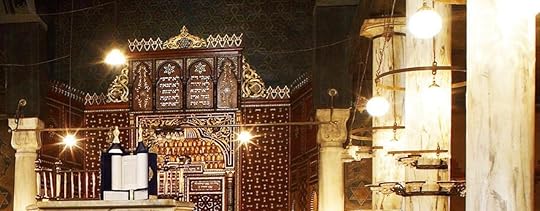
The Jewish history is so interesting? Like super interesting i’m so planing to read more about this beautiful religion
The book had Quraan verses, Torah verses. The author, represented both religions so beautifully!
Resting his forehead against the cool metal, Ali offered a prayer to the great saint and to her great-great-great grandfather, Th prophet Muhammad. He prayed to the one true God, who has many names, Allah, Deus, Elohim-, but could not be divided.
I get so protective when someone mis-represent my country or my religion, these 2 subjects are an off-limit for me. But Michael did a wonderful job representing both! In the 3 periods he chose, he talked and described perfectly Egypt in them!
i even learned a thing or 2 about my country’s history!
Chapeau


November 6, 2019
" The Last Watchman of Old Cairo" is a book that I will remember. The story and writing captivated me, transporting me to both historic and modern day Cairo. The story centers around Joseph, who is a graduate student at Berkley. He was raised in the U.S. by a Jewish mother, herself born in Egypt. His father is a Muslim Egyptian living in Cairo. Joseph himself identifies with neither religion. After his father's death, Joseph travels to Cairo to learn more about his father and his family's history. He also wants to unravel the mystery behind an ancient remnant of a written letter that arrived from Egypt after his father's death.
The reader learns that Joseph's paternal family have been hired watchmen of the Ibn Ezra Synagogue from the 11th century up into modern times. His father was the last watchman in a long line. He and Joseph's mother met as young teenagers in the courtyard of the temple. She and her family fled to Paris when Nasser expelled the Jews from Egypt.
The book also contains two other story lines. In the 11th century, Ali is recruited to be the first watchman of the temple. The reader connects with him and discovers what his life is like. The last story line features twin sisters, Agnes and Margaret, who are British and Christian and travel to Egypt looking for historic religious texts. This is in the 19th century. The sisters are eccentric, extremely bright and in their own ways, charming.
I found the stories to be fascinating. After finishing the book, I watched a book talk by the author on Youtube. Listening to Lukas answer questions about his book further added to my enjoyment.
Soon after, I was also able to attend the play, "The Band's Visit" at the Cleveland Play House!
The reader learns that Joseph's paternal family have been hired watchmen of the Ibn Ezra Synagogue from the 11th century up into modern times. His father was the last watchman in a long line. He and Joseph's mother met as young teenagers in the courtyard of the temple. She and her family fled to Paris when Nasser expelled the Jews from Egypt.
The book also contains two other story lines. In the 11th century, Ali is recruited to be the first watchman of the temple. The reader connects with him and discovers what his life is like. The last story line features twin sisters, Agnes and Margaret, who are British and Christian and travel to Egypt looking for historic religious texts. This is in the 19th century. The sisters are eccentric, extremely bright and in their own ways, charming.
I found the stories to be fascinating. After finishing the book, I watched a book talk by the author on Youtube. Listening to Lukas answer questions about his book further added to my enjoyment.
Soon after, I was also able to attend the play, "The Band's Visit" at the Cleveland Play House!

January 14, 2018
Time for some armchair traveling. This time not only geographically, but temporally, with this lovely work of historical fiction revolving (via three interconnected timelines) around a legendary Torah scroll. Back in the day when Egyptians might have been somewhat more tolerant, there was a thriving Jewish community there, eventually forced to flee the country during the foreign cleansing of 1956. There was a magnificent synagogue and watched over by generations of a Muslim family. Now the last of that watchman dynasty, an American born to a Jewish mother, a young man culturally and religiously ambivalent, to uncover the mysteries of the sacred texts. This was great, actually. I wasn't familiar with the author, merely intrigued by the plot, but now having read this, I'd be very interested to read his other book. There's something irresistible in a well researched story (albeit one with some fictional accoutrements) where the author's passion for his subject comes across so strongly, in this case via the protagonist, who in the end in his own way becomes a watchman/protector in his own right. All three narratives worked well individually and met together in a cohesive plot, the characters were well developed and engaging, the descriptions very vivid (the author has actually lived locally during the turmoil of 2000) and while it may not present a sort of place you'd want to actually visit, from the safety of your favorite reading corner it's a great trip and well worth the time. I learned a few things and was thoroughly entertained throughout. Very enjoyable read. Thanks Netgalley.

December 26, 2017
This is just a sweet novel, with a Judaica and historical angle that I found compelling enough that I finished this in a day. At the center of the book is the ancient Ibn Ezra synagogue in Cairo, and we get three stories that revolve around this building. First and second, the narrator Joseph traces his family's connections to the synagogue, which stretch over generations back to an ancestor story. Third, we have the story of twin sisters who, with help of scholar Solomon Schechter, rescue the treasures of Ibn Ezra. Just beautiful!

March 18, 2019
The Last Watchman of Old Cairo is the story of the al-Raqb family, watchmen of the Ibn Ezra synagogue in Cairo. The book contains three intertwined stories. One takes place a thousand years ago when Ali, a muslim becomes the first night watchman of the synagogue, and is charged with protecting the synagogue, its geniza (a storage area for religious and secular texts which, because they contain the name of God cannot be destroyed) and maybe (although he is not sure of its existence) the Ezra Scroll, a perfect Torah. Another story is the historical event on which the novel revolves: the discovery and subsequent removal of the documents in the genezia (comprising a 1000 year history of Jewish Middle-Eastern life) to Cambridge University by twin widowed English sisters, Agnes Lewis and Margaret Gibson, and scholar Solomon Schecter. There is also mention of the watchman at that time, Muhammad al-Raqb, who helps them. The final story is that of Joseph (Yuseph) al-Raqb, a half-Jewish, half-muslim graduate student in the US. Joseph’s father was a descendent of Muhammad al-Raqb. He lives in Eqypt, while Joseph lives with his mother in the US. Ahmed’s death is the catalyst for the novel. After Ahmed’s death, Joseph receives a package which contains a fragment of ancient parchment. There is no explanation for why he was sent this item, nor what it means, and this leads him on a search for this past. There are themes of forbidden (Jewish-Muslim and homosexual) love, the importance of letters/documents, justice, forgiveness, and mysticism throughout all three stories. I found the stories interacted well and formed an enjoyable narrative. The descriptions of Cairo throughout the centuries are particularly compelling.

October 19, 2025
This is a wonderful fictional novel centred around the al-Raqb family and spanning a thousand years. In present times, Joseph is a literature student, the son of a Jewish mother and a Muslim father. Soon after his father passes away, Joseph receives a package through the post containing information about the history of his family. His investigation into the tangled mystery of his father's family begins.
A thousand years earlier, Ali al-Raqb becomes the first watchman of the revered Ezra synagogue in Old Cairo. Ali is an orphan and is employed to guard the sacred texts at the synagogue including the magical Ezra Scroll. Some of these texts have gone missing.
The widowed twin sisters, Mrs Agnes Lewis and Mrs Margaret Gibson, arrive in Cairo in 1897 and are the third strand of the story. Having visited the Ezra synagogue, they are determined to rescue the remaining texts and take them back to Cambridge University so their contents can be researched. How they achieve this is a remarkable commentary of those times.
This is a fascinating story that had me entranced from the beginning. I had never heard of either the story or the author before and does show how browsing through books at a second-hand bookshop can provide the most wonderful discoveries.
A thousand years earlier, Ali al-Raqb becomes the first watchman of the revered Ezra synagogue in Old Cairo. Ali is an orphan and is employed to guard the sacred texts at the synagogue including the magical Ezra Scroll. Some of these texts have gone missing.
The widowed twin sisters, Mrs Agnes Lewis and Mrs Margaret Gibson, arrive in Cairo in 1897 and are the third strand of the story. Having visited the Ezra synagogue, they are determined to rescue the remaining texts and take them back to Cambridge University so their contents can be researched. How they achieve this is a remarkable commentary of those times.
This is a fascinating story that had me entranced from the beginning. I had never heard of either the story or the author before and does show how browsing through books at a second-hand bookshop can provide the most wonderful discoveries.

July 5, 2020
من يذكر الآن يهود القاهرة؟ كيف يمكن أن يحكي عنهم الآن كاتب مصري؟! أتذكر عددًا من الروايات التي تناولت اليهود في بلدان عربية مختلفة، وكانت بأقلام أصحابها (ربما يحضرني الآن أيضًا يهود الإسكندرية لمصطفى نصر) ..
ولكن أن يكتب روائي أمريكي يهودي عن القاهرة القديمة، فإن لذلك الأمر وقع خاص، لا يقتصر على فكرة الاستشراق والنظرة الغربية لمصر والمصريين، بل لكونه في الأساس أكاديمي متخصص في دراسة الشرق الأوسط من جهة، كما أن روايته فازت بالجازة القومية للكتاب اليهودي عام 2018.
ولكن ماذا سيقول هذا الكاتب عن مصر، ولماذا يعود بالتاريخ آلاف السنوات؟ وهل سينجح بالفعل في نقلنا إلى ذلك العالم البعيد عنّا ومانيًا وبعيد عنه مكانيًا، ويستطيع بالفعل أنينقل لنا هذه الأجواء العربية المصرية الخالصة؟! ربما كانت هذه الأسئلة وغيرها قبل أن أمسك بالرواية، حينما سمعت عنها وتعرفت على موضوعها، ولكن ما إن تشرع في قراءة الصفحة الأولى ومع الحادثة التي تجري في البداية حتى تجد نفسك متورطًا بالكامل في عالم الرواية، الذي ستكتشف بعد صفحات أنه مقسّم إلى ثلاث فترات زمنية، بثلاث رواة مختلفين، ومع كل حكاية من الحكايات يكتمل نسيج الرواية.
لا نعلم يقينا حتى الآن أين يقبع السر؟ ما الذي يجذبنا إلى حكاية وينفرنا من أخرى، كيف تكون رواية ما سلسلة وشيقة، لا يمكنك أن تتركها حتى تعود إليها، كنت أحسب في البداية أن هذا الأمر يحدث فقط مع الروايات العربية، بدافع من غواية اللغة مثلاً، ولكن ثم روايات أخرى مترجمة يتقن كاتبها صياغتها، وتأتي ترجمتها يسيرة واضحة، فيحدث معها هذا الاندماج التام مع الحكاية والأبطال والشخصيات، حتى إنك لا تود لها أن تنتهي فعلاً!
من أيام الحاكم الفاطمي "المستنصر بالله" تبدأ الرحلة مع أول حارس/رقيب لمعبد بن عزرا اليهودي في القاهرة القديمة الشاب الصغير "علي المرواني" الذي يحمل على عاتقه هم حماية المعبد وما فيه، إلى السيدتان "أجنيس ومارجريت" اللتان يحضران إلى مصر في عهد الاحتلال الإنجليزي في مهمة رسمية لإنقاذ وثائق الجنيزة في معبد بن عزرا من أيدي العابثين. وصولاً إلى جوزيف الراقب الذي تعيده وفاة والده أحد أحفاد علي المرواني إلى معبد بن عزرا والقاهرة في عصرها الحديث ليجمع أشلاء هذه الحكايات ويعرضها أمامنا.
رحلة طويلة وشاقة، وانتقالات في الزمان والمكان، ومع كل ذلك استطاع الكاتب أن يربط الخيوط الثلاثة، وأن ينقل لنا عوالم كل جانبٍ منهم باقتدار، فعشنا مع علي الصبي الصغير حيرته وبحثه عن حبيبته، كما راقبنا تردد الأختين وسعيهم الحثيث للوصول إلى الكنز المخبوء في المعبد، ودرنا مع يوسف في شوارع القاهرة بحثًا عن شارع جمال الدين، حتى يجد الرجل الذي سيدله على بقية الحكاية.
استطاع الكاتب أن ينقل لنا بشفافية وذكاء مشاعر أبطاله وحيرتهم وأفكارهم، وجعلنا نتعاطف مع كل خطوةٍ يخطونها وكل حركةٍ يقومون بها ويدورن حولها، ولعل "الحيرة" هي أكثر المعاني التي جمعت أبطال هذه الرواية، ليس فقط الحيرة فيما يقومون به، بل في جدوى هذا الذي يؤخذون إليه، لم يتجاهل واحدٍ منهم الدور المنوط به، بل وربما بالمصادفة أحيانًا قام به على أكمل وجه، إلا أنهم ظلوا مسكونين بهذه الحيرة التي تبدو هم وجودي دائم، لم يختلف مع اختلاف الزمان والمكان والشخصيات!
يحسب للكاتب أيضًا وهو المتورط في رحلة طويلة للبحث عن وثائق تاريخية، أن تلك الوثائق والمخطوطات والرسائل لم تسحب البساط من سرد الرواية وتفاصيلها، وبقي حضورها في حدود الضرورة، وكم كان جميلاً الجزء الخاص بالرسائل التي تبادلها الحبيبان أحمد الراقب وصديقته التي ستصبح أم ابنه يوسف، ورغم ذلك لم يستغرق عرضها إلا ما احتاجت إليه الرواية لكي تكشف لنا تفاصيل هذه العلاقة الغريبة والجميلة في الوقت.
في النهاية يبقى أن الرواية استطاعت أن تنقل لنا هذا العالم بكل ثراءه وزخمه، وربما يبدو غريبًا أن الراوي كان قادرًا على وصف القاهر بعين المقيم فيها، وليس بعين غريبة، بل إنه يصف مرور يوسف الراقب على المقابر وساكنيها كأنه يراهم اليوم، ليس من شكٍ أن حضوره للقاهرة أثناء دراسته الجامعية عام 2000 تركت لديه أثرًا كبيرًا، وليس من شكٍ أيضًا أنه يتابع ما يحدث في مصر بكثب.
يجب أن نشير أيضًا إلى أن موضوع وثائق الجنيزة اليهودية، بتفاصيله التي وردت في الرواية مثبت في كتاب نشر في المجلس القومي للترجمة عام 2017 بترجمة سعيد العكش، هنا عرض موجز له
((جاء اكتشاف شختر لجنيزا القاهرة بالمصادفة حيث عرضت عليه سيدتان من اسكتلندا أوراق مخطوط قديم حصلتا عليه من بائع عاديات فى القاهرة أثناء تواجدهما بمصر ، وفحص شختر الأوراق وعرف أنهما من مخطوط عبرى قديم مفقود لكتاب الحكمة “لابن سيرا”. وحرص شختر على الحصول عليه فحضر إلى القاهرة بتأييد ودعم مادى من شارلز تيلور الأستاذ بكلية سان جونز فى كمبريدج. وبخطاب توصية من الحاخام الأكبر ليهود بريطانيا إلى ممثل الحكومة الإنجليزية فى مصر والحاخام الأكبر بمصر “أهارون بن شمعون” ولرئيس الجالية اليهودية فى مصر آنذاك “يوسف قطاوى باشا” لتسهيل مهمته حيث قام بدخول الحجرة ونقل محتوياتها إلى جامعة كمبريدج بإنجلترا، وقد شكلت محتوياتها وثائق مهمة فى المؤسسات العلمية والأكاديمية ببعض الدول الأوربية والولايات المتحدة الأمريكية. وبذلك لم يكن شختر هو المكتشف الحقيقى للجنيزا كما يدعى اليهود ولكن كان المخطط والمنفذ الحقيقى لعملية نقل هذه الوثائق المهمة وخروجها من أرض مصر بمباركة القائمين على الجالية اليهودية، وبمعاونة سلطات الاحتلال الإنجليزى))
يبقى أن نشكر الصديقة العزيزة إيناس التركي على ترجمتها المتقنة للرواية، وحماسها للرواية وموضوعها الذي انتقل إلي، وجعلني أشعر بكل هذه المتعة.
March 15, 2018
I loved the mixing of old Egypt, colonial Egypt and modern Egypt, woven together like a tapestry. “A fragmented account of fathers and sons, cousins and strangers, grief, forgiveness and forbidden love. This lovely novel brings to life a family of guardians and their stories.

May 3, 2020
This was a good read, you get a glimpse into a part of history that is not very well known (the Jewish population in Egypt) seen through one family across centuries. The book is told through different characters separated by hundreds of years, you can tell how culture changes before your very own eyes through the eyes of these characters. I enjoyed the read and the point of view of the most current main character who reminds us of how we are also connected to the past and our families all through time. I highly recommend this as a light read.
October 31, 2017
The book was most enjoyable to read. The author knew his subject well and wrote with great passion. People who enjoy reading about multi-cultural stories will like this book. It is the al-Raqb family history of the men through thousands of years of being the watchmen for the Ibn Ezra Synagogue in Old Cairo.

December 30, 2019
A decent little page-turner with Cairo playing a starring role across a millennia. Occasionally, approaches that span multiple interconnected narratives across cultures and generations can feel a little jarring, but Lukas has handled it well. We're heading to Cairo in a few months, and this novel has increased my anticipation an enthusiasm markedly.

July 8, 2018
Make sure to enter my giveaway of a signed copy on my Instagram page!
You can also find this review on my book blog.
When it comes to this book what I fell for was the cover because if you look at it you will fall in love with it too. The synopsis of this book is the second thing that drew me because it sounds so mysterious and I love that it’s set in Egypt.
The Last Watchman of Old Cairo is a story about a young man called Joseph who receives a package after the death of his father which carries a lot of mystery around it and makes Joseph wonder why was this package sent to him by his father as well as pose a question: what family secrets hide in it. We have three storylines the first one is about the first watchman called Ali al-Raqb set thousand years earlier where we learn more about sacred texts which were guarded, the second one set in 1897 where we follow two twin sisters, Margaret and Agnes on their journey to uncover many secrets revolving around sacred texts disappearing and finally we have Joseph and his journey to find out more about his family history and the meaning behind the package he’s received. All of their stories are linked and each chapter alternates between them.
What first caught my eye is the gay main character which I am so grateful for. Joseph was a very intelligent character whose journey through Cairo made me read on and on. Usually I always favour the LGBTQ+ character in books but the characters who warmed my heart were Margaret and Agnes – both of them were brilliant and I loved their personalities. I love how the story progressed when it comes to Ali, how he found a better place for himself as a watchman and found purpose in life. The Last Watchman of Old Cairo offered a lot of history which I appreciate and enjoyed reading. I feel like Joseph’s story could’ve been fleshed out better because even though it was interesting it felt flat compared to the other two.
The Last Watchman of Old Cairo is a book about a man called Joseph who after the death of his father receives a mysterious package addressed to him [sent by his father] which opens up a world of unanswered questions and family secrets.
I would like to thank Penguin Random House International for providing me with a free copy of this book in exchange for an honest review. All opinions written are my own and weren’t influenced by anything.
You can also find this review on my book blog.
When it comes to this book what I fell for was the cover because if you look at it you will fall in love with it too. The synopsis of this book is the second thing that drew me because it sounds so mysterious and I love that it’s set in Egypt.
The Last Watchman of Old Cairo is a story about a young man called Joseph who receives a package after the death of his father which carries a lot of mystery around it and makes Joseph wonder why was this package sent to him by his father as well as pose a question: what family secrets hide in it. We have three storylines the first one is about the first watchman called Ali al-Raqb set thousand years earlier where we learn more about sacred texts which were guarded, the second one set in 1897 where we follow two twin sisters, Margaret and Agnes on their journey to uncover many secrets revolving around sacred texts disappearing and finally we have Joseph and his journey to find out more about his family history and the meaning behind the package he’s received. All of their stories are linked and each chapter alternates between them.
What first caught my eye is the gay main character which I am so grateful for. Joseph was a very intelligent character whose journey through Cairo made me read on and on. Usually I always favour the LGBTQ+ character in books but the characters who warmed my heart were Margaret and Agnes – both of them were brilliant and I loved their personalities. I love how the story progressed when it comes to Ali, how he found a better place for himself as a watchman and found purpose in life. The Last Watchman of Old Cairo offered a lot of history which I appreciate and enjoyed reading. I feel like Joseph’s story could’ve been fleshed out better because even though it was interesting it felt flat compared to the other two.
The Last Watchman of Old Cairo is a book about a man called Joseph who after the death of his father receives a mysterious package addressed to him [sent by his father] which opens up a world of unanswered questions and family secrets.
I would like to thank Penguin Random House International for providing me with a free copy of this book in exchange for an honest review. All opinions written are my own and weren’t influenced by anything.
Displaying 1 - 30 of 449 reviews