

What do you think?

جزوه های گام نو #6
Che cosa è il Terzo Stato?
(WHAT IS THE THIRD ESTATE?) Edited by Edme Champion. With an Introduction by Peter Campbell and We print this, the most famous pamphlet published during the French Revolution, on the basis of the critical edition by Edme Champion of 1888. Sieyes' pamphlet appeared first in January 1789. Four editions were published in the same year and only the last one carried the name of the author. Champion has preceded Le Tiers Etat by Sieyes' Essai sur les Privileges, which is also included in this volume. It was published anonymously in November 1788 during the second Assembly of the Notables which was consulted for the convocation of the Assembly of the Estates General. The echo of the Tiers Etat was tremendous; its publication certainly contributed greatly to the destruction of the French state based on estates and paved the way for a more representative state structure, however long and painful it was to establish it. All French historians of the Revolution have written on the Tiers Etat: Mignet, Thiers, Louis Blanc, Sorel, Taine; amongst German historians Sybel should be mentioned for his exemplary impartiality. Champion's introduction, though suggestive, is superseded by Otto Brandt's pages on the Tiers Etat which introduce the German edition of Was ist der Dritte Stand?, Berlin, 1924. The latter edition indicates also all the variants of Sieyes' pamphlet. We attach Sainte-Beuve's essay from his Causeries du Lundi which is a masterpiece. French Text Two Volumes in One
144 pages, Paperback
First published January 1, 1789
About the author
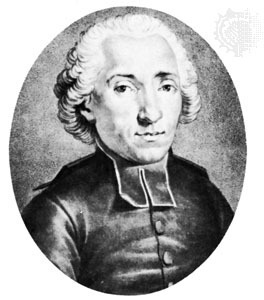
Emmanuel Joseph Sieyès
78 books11 followersMost commonly known as the Abbé Sieyès, was a French Roman Catholic abbé, clergyman and political writer, Second Consul of France during Napoleonic era, one of the first members of what would become the Academy of Moral and Political Sciences of the Institute of France.
Abbé Sieyès was one of the chief political theorists of the French Revolution, and also played a prominent role in the French Consulate and First French Empire. His 1789 pamphlet What is the Third Estate? became the manifesto of the Revolution, helping to transform the Estates-General into the National Assembly in June 1789. In 1799, he was the instigator of the coup d'état of 18 Brumaire (9 November), which brought Napoleon Bonaparte to power. He also coined the term "sociologie" in an unpublished manuscript, and made significant theoretical contributions to the nascent social sciences.
Despite Sieyès' embrace of Enlightenment thinking, he was ordained to the priesthood in 1773. In spite of this, he was not hired immediately. He spent this time researching philosophy and developing music until about a year later in October 1774 when, as the result of demands by powerful friends, he was promised a canonry in Brittany. Unfortunately for Sieyès, this canonry went into effect only when the preceding holder died. At the end of 1775, Sieyès acquired his first real position as secretary to the bishop of Tréguier where he spent two years as deputy of the diocese. It is here that he sat in the Estates of Brittany and became disgusted with the immense power the privileged classes held. In 1780, the bishop of Tréguier was transferred to the bishopric of Chartres. He became aware of how easy it was for nobles to advance in ecclesiastical offices compared to commoners. Sieyes was an ambitious man; therefore, he resented the privileges granted to the nobles within the Church system and thought the patronage system was a humiliation for commoners. Sieyès accompanied him there as his vicar general where he eventually became a canon of the cathedral and chancellor of the diocese of Chartres.
While remaining in ecclesiastical offices, Sieyès maintained a religious cynicism at odds with his position. By the time he took his orders to enter priesthood, Sieyès had "freed himself from all superstitious sentiments and ideas." Even when corresponding with his deeply religious father, Sieyès showed a severe lack of piety for the man in charge of the diocese of Chartres.[8] It is theorised that Sieyes accepted a religious career not because he had any sort of strong religious inclination, but because he considered it the only means to advance his career as a political writer.
Abbé Sieyès was one of the chief political theorists of the French Revolution, and also played a prominent role in the French Consulate and First French Empire. His 1789 pamphlet What is the Third Estate? became the manifesto of the Revolution, helping to transform the Estates-General into the National Assembly in June 1789. In 1799, he was the instigator of the coup d'état of 18 Brumaire (9 November), which brought Napoleon Bonaparte to power. He also coined the term "sociologie" in an unpublished manuscript, and made significant theoretical contributions to the nascent social sciences.
Despite Sieyès' embrace of Enlightenment thinking, he was ordained to the priesthood in 1773. In spite of this, he was not hired immediately. He spent this time researching philosophy and developing music until about a year later in October 1774 when, as the result of demands by powerful friends, he was promised a canonry in Brittany. Unfortunately for Sieyès, this canonry went into effect only when the preceding holder died. At the end of 1775, Sieyès acquired his first real position as secretary to the bishop of Tréguier where he spent two years as deputy of the diocese. It is here that he sat in the Estates of Brittany and became disgusted with the immense power the privileged classes held. In 1780, the bishop of Tréguier was transferred to the bishopric of Chartres. He became aware of how easy it was for nobles to advance in ecclesiastical offices compared to commoners. Sieyes was an ambitious man; therefore, he resented the privileges granted to the nobles within the Church system and thought the patronage system was a humiliation for commoners. Sieyès accompanied him there as his vicar general where he eventually became a canon of the cathedral and chancellor of the diocese of Chartres.
While remaining in ecclesiastical offices, Sieyès maintained a religious cynicism at odds with his position. By the time he took his orders to enter priesthood, Sieyès had "freed himself from all superstitious sentiments and ideas." Even when corresponding with his deeply religious father, Sieyès showed a severe lack of piety for the man in charge of the diocese of Chartres.[8] It is theorised that Sieyes accepted a religious career not because he had any sort of strong religious inclination, but because he considered it the only means to advance his career as a political writer.
Ratings & Reviews
Friends & Following
Create a free account to discover what your friends think of this book!
Community Reviews
Displaying 1 - 30 of 30 reviews

July 2, 2014
Document original sur Gallica :
http://gallica.bnf.fr/ark:/12148/bpt6...
Ce petit texte, écrit par l'abbé Joseph Sieyès, est un document capital de la révolution française: écrit en janvier 1789, il annonce de manière nette et précise la couleur et le programme de la révolution à venir: principe de souveraineté basé sur la nation, création de l'Assemblée Nationale, abolition des privilèges, réforme de la justice et des impôts. Ce Tiers-Etat, il cherche à le faire peser dans la balance politique par rapport aux ordres privilégiés. Désormais, il faudrait sérieusement compter avec lui, et non pas cantonner le mérite aux emplois subalternes, et récompenser la naissance par principe, fût-elle incompétente.
C'est qu'en France, contrairement à l'Angleterre, la noblesse est une caste fermée. Si certains aspirent à y rentrer, et payent fort cher pour cela, ce n'est jamais suffisant ni pour eux, ni pour leurs descendants, et les vexations viennent régulièrement leur rappeler qu'ils ne font pas parti de la même race. Pour Sieyès, c'est assez! Le principe de la souveraineté, c'est la nation. Il faut choisir, soit c'est la réunion, et les nobles sont réintégrés dans la nation avec les mêmes droits que les autres, soit s'ils s’obstinent, il faudra qu'ils rentrent dans les bois et les marais de Germanie d'où ils sont sortis; mais il n'est plus question de souffrir une situation issue de la conquête, du droit du plus fort, et qui ne peut même plus se maintenir par cette dernière raison.
En plus de cette question de principe, sur les inégalités d'accès aux places, d'inégalité de traitement en justice, d'inégalité d'influence politique, il y a le poids des circonstances: le soutien à la guerre d'indépendance des États-Unis a permis de prendre une revanche sur l'Angleterre, mais il a coûté horriblement cher, alors que la désastreuse guerre de Sept Ans n'avait même pas été épongée. Les ministres se succèdent sans réussit à juguler l’hémorragie des finances publiques. Les plus scrupuleux se font renvoyer car leurs mesures sont insupportables aux riches, les plus adroits trichent sur les comptes et se font aduler, mais la tromperie ne peut durer qu'un temps: il faut payer, et le plus logique serait que les plus privilégiés fassent pour une fois un effort: impossible! Par deux fois, l'assemblée des notables échoue, les demandes de la couronne sont rejetées, contraignant le Roi et son ministre à convoquer les États généraux. Quand les nobles se rendent compte de ce qu'ils ont déclenché il est déjà trop tard: pour n'avoir pas voulu lâcher ne serait-ce qu'un peu, certains perdront tout, d'autres s'enrichiront immensément, mais l'ordre des choses va être définitivement secoué, et pas que pour la France.
C'est très intéressant de regarder le détail du texte de Sieyès, car il a eu un retentissement considérable, et jette une vive lumière à la fois sur les grandes avancées qui allaient être réalisées, mais aussi sur les limites et les manques: les femmes sont écartées sans discussion de toute citoyenneté, comme elles le seront par l'immense majorité des révolutionnaires. Leur temps n'est pas encore venu. La démocratie n'est également pas du tout à l'ordre du jour: au contraire, c'est un épouvantail que l'on veut fuir à tout prix; la solution, c'est des représentants qui tirent leur légitimité du soutien des citoyens. Également, c'est assez intéressant de voir les réflexions par rapport au système anglais: considérer que la France doit trouver un système politique appliqué à ses besoins et non pas bêtement copier celui de ses voisins me semble raisonnable, d'autant que celui-ci n'est guère exempt de défaut. Un document à regarder.

April 9, 2020
منطقی بنظر میآید که حول و حوش انقلاب فرانسه، زمانی که فئودالیسم جایش را به سرمایهداری داده بود، دیگر اشراف به مثابه انگلهای جامعه نگریسته شوند. بر همین اساس نویسندهی این جزوه گامی پیشتر مینهد و خواستار مجلسی است از خود مردم و طبقهی سوم، یعنی همهی ملت غیر از درباریان و روحانیان؛ هرچند همچنان بدون زنان و مهاجران و بیچیزان. قانون اساسی این مجلس حق اضافهای به کسی نمیدهد؛ پس اگر بدون امتیازات ویژه، تلاش کردید و نابرابر شدید، نوش جانتان.

admire-rather-than-read
August 23, 2017Excerpts can be found on Fordham University's Internet Modern History Source Book site, along with many other public domain original source documents
May 17, 2023
Sieyes beskrivning av läget innan franska revolutionen, och hans position som dess "chefsideolog" förklarar många av de problem som Frankrike dragits med sedan dess. Hans tes är att samhällets gemensamma intresse är samma sak som det effektiva och goda, och att detta vilar på mänskliga, allmänna, rättigheter. Genom att göra rättigheter ahistoriska gör Sieyes ett misstag. Han förutsätter att människor existerar utan varandra, och att denna autonomi gör att lagar är onödiga. Jag ser mig som en nyliberal, men till och med jag ser skillnaden mellan anarki och ett fungerande samhälle.

February 28, 2026
« Le Tiers État, dira-t-on, ne peut pas former les États généraux. Eh ! tant mieux ! Il composera une Assemblée nationale. » Aura 🔥🔥🔥📈📈

August 10, 2025
Rhetorically genius, written in a time when people still knew how to write charismatically.

September 16, 2026
Better than a history book if you want to know why the French revolution happened. When they say words can change the world this is surely one of the examples

to-keep-reference
December 16, 2015Entre el final del siglo dieciocho y el comienzo del diecinueve, finalmente emergió acabadamente el concepto de soberanía nacional en el pensamiento europeo. En la base de esta figura definitiva del concepto había un trauma –la Revolución Francesa– y la resolución de ese trauma –la celebración y apropiación reaccionaria del concepto de nación. Los elementos fundamentales de esta reconfiguración desplazada del concepto de nación que lo transformaron en una verdadera arma política pueden hallarse en forma sumaria en la obra de Emmanuel-Joseph Sieyés. En su magnífico y difamatorio tratado ¿Qué es el Tercer Estado? enlazó el concepto de nación con el de Tercer Estado, es decir, la burguesía. Sieyés intentó conducir el concepto de soberanía hacia atrás, a sus orígenes humanistas y redescubrir sus posibilidades revolucionarias. Y lo que es más importante para nuestros propósitos, el intenso compromiso de Sieyés con la actividad revolucionaria le permitió interpretar el concepto de nación como un concepto político constructivo, un mecanismo constitucional.
Imperio Pág.80-81
Imperio Pág.80-81
April 13, 2023
Super intéressant et compréhensible. Les nobles sides eyes

January 25, 2026
This very powerful pamphlet was one of the pieces of rhetoric that sparked the French Revolution. I admire it greatly, with its argument about the importance of the Third Estate and how the Third Estate is really the only important group in France. The only productive group at least.
There is a lot of plans for political order in here. The copy my professor posted online has some sections removed, no doubt the most boring political sections. No matter the odd boring politicking. The powerful language in here about the Third Estate is good enough.
There is a lot of plans for political order in here. The copy my professor posted online has some sections removed, no doubt the most boring political sections. No matter the odd boring politicking. The powerful language in here about the Third Estate is good enough.
September 20, 2020
É uma obra panfletária. Interessante pelo valor histórico e pelas ideias que traduziam inovações sentidas no seio da sociedade francesa da época - representatividade, poder constituinte, igualdade formal etc. Leitura mesmo curta se torna um pouco cansativa pela repetição dos conceitos (afinal, trata-se de um panfleto).
Read
April 16, 2026Basically the French Revolution’s “Communist Manifesto”, but aimed at Feudalism rather than Capitalism. Incredibly bold pamphlet that started the whole thing and probably the first piece of revolutionary theory out there.
“What is the Third Estate? Everything.
What has it been until now in the political order? Nothing.
What does it want to be? Something.”
“What is the Third Estate? Everything.
What has it been until now in the political order? Nothing.
What does it want to be? Something.”

September 30, 2020
Ideal si se quiere tener una perspectiva de cívica de la nación o si se quieren entender de dónde parte Carl Schmitt para elaborar sus teorías de la constitución. Además el libro está bastante bien estructurado y es muy explicativo.

April 14, 2025
extrem bedeutendes werk der französischen revolution! er selbst sagt das seine forderungen unzureichend sind und dem kann ich nur zustimmen! mal abgesehen davon, wer mit der 'politischen repräsentation des dritten standes' überhaupt gemeint ist.... (spoiler: nur männer)

August 7, 2025
Testo importantissimo! Un manifesto della borghesia rivoluzionaria.
Importante anche per analizzare come i problemi etici di cui la società borghese è caratterizzata erano già presenti nella forma di semi nella teoria. Si sente già la divisione fra terzo e quarto stato.
Importante anche per analizzare come i problemi etici di cui la società borghese è caratterizzata erano già presenti nella forma di semi nella teoria. Si sente già la divisione fra terzo e quarto stato.
May 21, 2017
시대상황이 강하게 반영되어 있어 지금 현실에서는 약간 과하게 느껴지는 부분이 있고 수사학적인 부분에서 정돈되지 못하고 불필요한 사족이 있다. 하지만 철학의 역할을 이야기하는 부분은 흥미롭고, 지침으로서의 민주주의의 원칙을 이야기하는 부분은 현대 복잡다기화된 민주주의에서 한번쯤 돌이켜볼만한 내용이라고 생각한다.

Read
December 27, 2020Read for school (SOSC). Unrated

January 8, 2022
หนังสือที่เป็นจุดเริ่มต้นของการปฏิวัติฝรั่งเศสอันลือชื่อ น่าแปลกใจที่เหตุการณ์สำคัญระดับโลกแบบนี้ กลับไม่ค่อยได้ถูกกล่าวถึงในแบบเรียนของไทย

November 8, 2022
2 + 2 = 5

September 18, 2023
a sassy little revolutionary, but apparently women are tramps and beggars only and therefore should not be allowed to vote. 4 stars.


February 25, 2025
eats sooo hard
August 3, 2026
Not sure if I read this version, but was still abridged.

February 14, 2026
Casually the basis of representative democracy and the concept of nation as we know it today. We love to see it.

July 25, 2021
Este libro es explosivo desde el inicio, es una buena referencia histórica de lo que ocurre un poco antes del juramento del juego de pelota del que derivaría la Convención Nacional y posteriormente la revolución francesa.
El abate aquí da cuenta de la discriminación que sufre el tercer estado durante la reunión de los estados generales que el Rey Luis XVI había convocado, cosa que acrecienta el descontento entre el pueblo francés.
Las frases más icónicas se encuentran al inicio. Qué es el tercer estado: TODO. Qué lo han dejado ser hasta el momento: NADA. Qué es lo que aspira: ALGÚN DÍA SER ALGO.
Además en el texto brinda las aproximaciones matemáticas en la extensión de cada estamento. Por lo que le deja muy en claro al lector que el TERCER ESTADO, o sea el pueblo común, abarca más del 90% de todo el reino, por lo que queda en claro que son los más, y que sin embargo son los más pobres y explotados que sostienen a la aristocracia y religión que son tumores.
Además hace las cuentas sobre cuánto ingreso monetario tiene la iglesia y los nobles, ascendiendo las sumas a cantidades muy grandes, las cuales se encuentran cumuladas en muy pocas manos.
El abate aquí da cuenta de la discriminación que sufre el tercer estado durante la reunión de los estados generales que el Rey Luis XVI había convocado, cosa que acrecienta el descontento entre el pueblo francés.
Las frases más icónicas se encuentran al inicio. Qué es el tercer estado: TODO. Qué lo han dejado ser hasta el momento: NADA. Qué es lo que aspira: ALGÚN DÍA SER ALGO.
Además en el texto brinda las aproximaciones matemáticas en la extensión de cada estamento. Por lo que le deja muy en claro al lector que el TERCER ESTADO, o sea el pueblo común, abarca más del 90% de todo el reino, por lo que queda en claro que son los más, y que sin embargo son los más pobres y explotados que sostienen a la aristocracia y religión que son tumores.
Además hace las cuentas sobre cuánto ingreso monetario tiene la iglesia y los nobles, ascendiendo las sumas a cantidades muy grandes, las cuales se encuentran cumuladas en muy pocas manos.

September 16, 2018
The fiery pamphlet published by Emmanuel-Joseph Sieyes at the dawn of the French Revolution. While its contributions to political theory are probably minimal in the long run, its argument that the Third Estate's role constitutes the whole of the nation and therefore deserves the concomitant legal recognition in the affairs of the state (it hasn't had such recognition before) made a strong case for the democratizing aim of the revolution. You can certainly feel the rush of revolutionary energy here that would define the revolution in France and give it the elan that made it such a epoch-making event in world history.

June 8, 2021
Crucial para entender el concepto de representación política

July 17, 2022
Such a powerful piece of history.

March 31, 2023
Enfin terminé ! Sieyes j'en ai ras le pompon (2 étoiles quand même pcq le mec était malgré tout visionnaire et ses idées révolutionnaires mdr)

September 25, 2024
C'était long. Enfin quand votre université vous donne ça comme recommendation de lecture pour l'été, vous faites un petit effort. (La prochaine fois j'en ferai pas).
Displaying 1 - 30 of 30 reviews