

What do you think?

Dear Friend, from My Life I Write to You in Your Life
In her first memoir, award-winning novelist Yiyun Li offers a journey of recovery through literature: a letter from a writer to like-minded readers.
“A meditation on the fact that literature itself lives and gives life.”—Marilynne Robinson, author of Gilead
“What a long way it is from one life to another, yet why write if not for that distance?”
Startlingly original and shining with quiet wisdom, this is a luminous account of a life lived with books. Written over two years while the author battled suicidal depression, Dear Friend, from My Life I Write to You in Your Life is a painful and yet richly affirming examination of what makes life worth living.
Yiyun Li grew up in China and has spent her adult life as an immigrant in a country not her own. She has been a scientist, an author, a mother, a daughter—and through it all she has been sustained by a profound connection with the writers and books she loves. From William Trevor and Katherine Mansfield to Søren Kierkegaard and Philip Larkin, Dear Friend is a journey through the deepest themes that bind these writers together.
Interweaving personal experiences with a wide-ranging homage to her most cherished literary influences, Yiyun Li confronts the two most essential questions of her identity: Why write? And why live?
Praise for Dear Friend, from My Life I Write to You in Your Life
“A work of arresting revelations . . . A writer of meticulous reasoning, probing sensitivity, candor, and poise, [Yiyun] Li parses mental states with psychological and philosophical precision in a beautifully measured and structured style born of both her scientific and literary backgrounds.”—Booklist
“Li has stared in the face of much that is beautiful and ugly and treacherous and illuminating—and from her experience she has produced a nourishing exploration of the will to live willfully.”—The Washington Post
“Li’s transformation into a writer—and her striking success (she is the winner of a MacArthur ‘genius’ grant, among other prestigious awards)—is nothing short of astonishing. . . . For someone who says that ‘pain was my private matter’ and considers ‘invisibility’ a ‘luxury,’ writing about these experiences cannot have been easy. . . . Immeasurable loss hovers just behind these pages, but in sacrificing her first tongue, Li tenuously acquires in her adopted one some legible form of ‘self.’ English, Li’s first language in writing, is the only one in which she could have told this story, one in which Li says she feels, finally, ‘invisible but not estranged.’”—The New York Times Book Review
“Li is an exemplary storyteller and this account of her journey back to equilibrium, assisted by her closest companion, literature, is as powerful as any of her award-winning fiction, with the dark fixture of her Beijing past at its centre.”—Financial Times
“Every writer is a reader first, and Dear Friend is Li’s haunted, luminous love letter to the words that shaped her. . . . Her own prose is both lovely and opaque, fitfully illuminating a radiant landscape of the personal and profound.
“A meditation on the fact that literature itself lives and gives life.”—Marilynne Robinson, author of Gilead
“What a long way it is from one life to another, yet why write if not for that distance?”
Startlingly original and shining with quiet wisdom, this is a luminous account of a life lived with books. Written over two years while the author battled suicidal depression, Dear Friend, from My Life I Write to You in Your Life is a painful and yet richly affirming examination of what makes life worth living.
Yiyun Li grew up in China and has spent her adult life as an immigrant in a country not her own. She has been a scientist, an author, a mother, a daughter—and through it all she has been sustained by a profound connection with the writers and books she loves. From William Trevor and Katherine Mansfield to Søren Kierkegaard and Philip Larkin, Dear Friend is a journey through the deepest themes that bind these writers together.
Interweaving personal experiences with a wide-ranging homage to her most cherished literary influences, Yiyun Li confronts the two most essential questions of her identity: Why write? And why live?
Praise for Dear Friend, from My Life I Write to You in Your Life
“A work of arresting revelations . . . A writer of meticulous reasoning, probing sensitivity, candor, and poise, [Yiyun] Li parses mental states with psychological and philosophical precision in a beautifully measured and structured style born of both her scientific and literary backgrounds.”—Booklist
“Li has stared in the face of much that is beautiful and ugly and treacherous and illuminating—and from her experience she has produced a nourishing exploration of the will to live willfully.”—The Washington Post
“Li’s transformation into a writer—and her striking success (she is the winner of a MacArthur ‘genius’ grant, among other prestigious awards)—is nothing short of astonishing. . . . For someone who says that ‘pain was my private matter’ and considers ‘invisibility’ a ‘luxury,’ writing about these experiences cannot have been easy. . . . Immeasurable loss hovers just behind these pages, but in sacrificing her first tongue, Li tenuously acquires in her adopted one some legible form of ‘self.’ English, Li’s first language in writing, is the only one in which she could have told this story, one in which Li says she feels, finally, ‘invisible but not estranged.’”—The New York Times Book Review
“Li is an exemplary storyteller and this account of her journey back to equilibrium, assisted by her closest companion, literature, is as powerful as any of her award-winning fiction, with the dark fixture of her Beijing past at its centre.”—Financial Times
“Every writer is a reader first, and Dear Friend is Li’s haunted, luminous love letter to the words that shaped her. . . . Her own prose is both lovely and opaque, fitfully illuminating a radiant landscape of the personal and profound.
225 pages, Kindle Edition
First published February 21, 2017
About the author
Yiyun Li
72 books2,368 followersYiyun Li is the author of seven books, including Where Reasons End, which received the PEN/Jean Stein Book Award; the essay collection Dear Friend, from My Life I Write to You in Your Life; and the novels The Vagrants and Must I Go. She is the recipient of a MacArthur Fellowship, Guggenheim Fellowship, and Windham-Campbell Prize, among other honors. A contributing editor to A Public Space, she teaches at Princeton University.
Ratings & Reviews
Friends & Following
Create a free account to discover what your friends think of this book!
Community Reviews
Displaying 1 - 30 of 582 reviews

Read
March 2, 2017I'm not going to finish this book and I'm not going to rate it. I couldn't quite figure out what I was reading -- a memoir, thoughts about other authors, snippets of disconnected thoughts about life, death and writing? But it's hard for me to be too be harsh and give it a low rating, because Li appears to have written her book in the context of a serious depression, including more than one hospitalization. This book seems to be her attempt to figure things out through reflections on her life and other writers, but to me as a reader it felt aimless and impenetrable. At one point, Li writes of another author "Reading her is like trudging through a frozen snowfield in the dark. Even though her words seem to have been written out of the wish to communicate, together they take on a frustrating opaqueness." Exactly! Maybe Li's book will make more sense to others, but it wasn't for me. Thank you to Netgalley and the publisher for an opportunity to read an advance copy.

June 13, 2017
This memoir by Yiyun Li of her struggle with depression made me extremely uncomfortable. Not simply the despair and confusion that is so evident in the writing as well as in the format itself (there is no formal structure per se but rather a loose collection of experiences, recollections of books and writers important to her, and random thoughts) but rather I couldn't escape from the feeling that I was reading something I shouldn't be.
If a troubled person allows you the briefest glimpse into their inner turmoil and darkness, should you take them up on it? As somebody who asks himself many of the questions Li grapples with here, I couldn't imagine being able to describe some of the things she does here, and certainly not with the incredible writing she has been gifted.
What she produces are the words of a conflicted person who is struggling but at other times at peace with herself.
This duality is reflected in the former when she says:
"I wished that life could be reset, but reset from when?"
Li at times wishes she had a different life (even if it isn't the career in immunology that she left behind to become a writer) even if she doesn't know what form it would take, but what would that life look like?
And in the latter when during her hospitalisation following a suicide attempt a nurse acknowledges her sadness but wants to know why she is sad. To which Li responds:
"Can't I just be left alone in my sadness?"
The more I read, the more I admired this sentiment. Li has felt this sadness her whole life. And her whole life people have presumed to be able to take it away from her or that it is even something she is able to discard. What she is saying here, and in the memoir as a whole, is that sometimes she doesn't need to be understood, pitied, or fixed.
By the end of this memoir, I came away feeling somewhat in awe not only of her talent in attempting to express the inexpressible (even if she wasn't always successful) and with a deep respect for her willingness to expose her loneliness and confusion to a wide audience. I sincerely hope doing so brought her some of the peace and comfort I felt while reading it.
If a troubled person allows you the briefest glimpse into their inner turmoil and darkness, should you take them up on it? As somebody who asks himself many of the questions Li grapples with here, I couldn't imagine being able to describe some of the things she does here, and certainly not with the incredible writing she has been gifted.
What she produces are the words of a conflicted person who is struggling but at other times at peace with herself.
This duality is reflected in the former when she says:
"I wished that life could be reset, but reset from when?"
Li at times wishes she had a different life (even if it isn't the career in immunology that she left behind to become a writer) even if she doesn't know what form it would take, but what would that life look like?
And in the latter when during her hospitalisation following a suicide attempt a nurse acknowledges her sadness but wants to know why she is sad. To which Li responds:
"Can't I just be left alone in my sadness?"
The more I read, the more I admired this sentiment. Li has felt this sadness her whole life. And her whole life people have presumed to be able to take it away from her or that it is even something she is able to discard. What she is saying here, and in the memoir as a whole, is that sometimes she doesn't need to be understood, pitied, or fixed.
By the end of this memoir, I came away feeling somewhat in awe not only of her talent in attempting to express the inexpressible (even if she wasn't always successful) and with a deep respect for her willingness to expose her loneliness and confusion to a wide audience. I sincerely hope doing so brought her some of the peace and comfort I felt while reading it.

January 2, 2022
In the first part of the book I found myself kind of angry with Li, for being so sad, for writing as if she was in the right about life and death, for her rejecting attachment. And then as the book goes on, I felt more and more identified with her relationship to books, to fiction, to writers lives, to diaries, to literature. I cannot say it is an easy book, since she is pretty depressed most of the time, but there is something about her change in tone which makes it also a hopeful book, even while it being about deppression and suicide, and then, about life. She chose the best way to go through her own sadness, by finding herself in writing, as she has obviously done. But I am now left with a strange mix of melancholy and hopefulness. Even when she rejects attachment, there is something sweet in her own way of attachment, through books and language. I will look for her fiction now, since I now want to know her fictional characters.

December 26, 2018
"Una parola che detesto usare in inglese è I: io. È melodrammatica. In cinese, una lingua grammaticalmente meno rigida, è possibile costruire una frase il cui soggetto sia un pronome personale implicito, saltando così l’imbarazzante io, oppure si può sostituirlo con un noi. Vivere non è una faccenda originale."
Avevo letto alcuni racconti di Yiyun Li, ("Mille anni di preghiere", Einaudi 2007): è una straordinaria raccontatrice di storie. C'è un racconto che si intitola Immortalità che da solo varrebbe il libro.
Questo è un libro diverso, intimo, privato e pubblico, meraviglioso, toccante, il mondo visto come un enorme noi, il desiderio di smetterla con l'io, starsene di tanto in tanto da soli, e soprattutto con la letteratura, Catherine Mansfield, Ivan Turgenev, William Trevor, Elizabeth Bowen, Philippe Larkin, Thomas Hardy, Marianne Moore.
"Per un po’, per distrarmi, lessi i taccuini di Katherine Mansfield. Caro amico, dalla mia vita scrivo a te nella tua, diceva a un certo punto. Piansi leggendo questa frase. Mi ricorda il ragazzo di tanti anni fa che nelle sue lettere continuava a spedirmi i disegni dei suoi sogni. Mi ricorda anche perché non voglio smettere di scrivere. I libri che uno scrive – passati, presenti e futuri – non cercano forse di dire la stessa cosa: Caro amico, dalla mia vita scrivo a te nella tua?"
"Mi sarebbe piaciuto che mi definissero una sognatrice se avessi saputo come sognare. La sensazione di essere degli impostori, a quanto pare, arriva da sé, e di quelli a cui non capita mai di provarla non mi fido. Non mi dispiacerebbe essere presa per molte cose che non sono: una persona timida, una persona allegra, una persona fredda. Ma non voglio che mi si consideri una sognatrice quando sono così lontana dall’esserlo davvero".
"Alcuni critici hanno sottolineato il fatto che i miei romanzi non sono abbastanza politici. Un ragazzo mi ha contestato durante una lettura pubblica, criticando il mio disinteresse per la scrittura politica. In Cina un giornalista mi disse che la maggior parte degli scrittori pensa di avere una responsabilità storica verso il nostro tempo. Perché non soddisfare tale aspettativa? chiedono, e la mia risposta, se mai dovessi darne una, sarebbe questa: Ho passato buona parte della mia vita a respingere i copioni che mi venivano assegnati, in Cina e in America; il rifiuto di lasciarmi determinare dalla volontà altrui è la mia sola e unica dichiarazione politica".
Un racconto di Yuyun Li si intitola Kindness, le chiedono se è autobiografico (non lo è) ma a Yuyun Li non importa più da tempo se gli altri pensano che ciò che scrivi sia autobiografico o meno, a queste domande risponde come capita, ciò che le importa è mostrare come la solitudine sia "l'impossibilità di parlare con un altro nella propria lingua privata".
Nel racconto una bambina chiede a suo padre di comprarle due pulcini a un venditore ambulante, suo padre l'avverte che i due pulcini sono così piccoli che non sopravviveranno.
"Con una scatola da scarpe e dei giornali strappati costruii una casetta per i pulcini, a cui diedi da mangiare chicchi di miglio ammollati nell’acqua; poi, il giorno dopo, siccome avevano l’aria di stare male, somministrai loro dell’aspirina sciolta nell’acqua. Morirono due giorni dopo; quello che avevo chiamato Punto, e marchiato con dell’inchiostro sulla fronte, se ne andò per primo, seguito da Fungo. Rubai due uova in cucina mentre mio padre era da un vicino per aiutarlo con un lavandino che perdeva – mia madre in quel periodo non si vedeva spesso in giro – e le ruppi cautamente eliminando tuorlo e albume; ma nonostante tutti i miei tentativi non ci fu verso di rimettere i pulcini nei gusci, e ancora oggi ho davanti agli occhi il mezzo guscio sulla testa di Punto, che come un buffo cappellino gli copriva la macchia d’inchiostro.
Da allora ho imparato che la vita è così, ogni giorno finisce come un pulcino che non si lascia rinfilare nell’uovo."
Avevo letto alcuni racconti di Yiyun Li, ("Mille anni di preghiere", Einaudi 2007): è una straordinaria raccontatrice di storie. C'è un racconto che si intitola Immortalità che da solo varrebbe il libro.
Questo è un libro diverso, intimo, privato e pubblico, meraviglioso, toccante, il mondo visto come un enorme noi, il desiderio di smetterla con l'io, starsene di tanto in tanto da soli, e soprattutto con la letteratura, Catherine Mansfield, Ivan Turgenev, William Trevor, Elizabeth Bowen, Philippe Larkin, Thomas Hardy, Marianne Moore.
"Per un po’, per distrarmi, lessi i taccuini di Katherine Mansfield. Caro amico, dalla mia vita scrivo a te nella tua, diceva a un certo punto. Piansi leggendo questa frase. Mi ricorda il ragazzo di tanti anni fa che nelle sue lettere continuava a spedirmi i disegni dei suoi sogni. Mi ricorda anche perché non voglio smettere di scrivere. I libri che uno scrive – passati, presenti e futuri – non cercano forse di dire la stessa cosa: Caro amico, dalla mia vita scrivo a te nella tua?"
"Mi sarebbe piaciuto che mi definissero una sognatrice se avessi saputo come sognare. La sensazione di essere degli impostori, a quanto pare, arriva da sé, e di quelli a cui non capita mai di provarla non mi fido. Non mi dispiacerebbe essere presa per molte cose che non sono: una persona timida, una persona allegra, una persona fredda. Ma non voglio che mi si consideri una sognatrice quando sono così lontana dall’esserlo davvero".
"Alcuni critici hanno sottolineato il fatto che i miei romanzi non sono abbastanza politici. Un ragazzo mi ha contestato durante una lettura pubblica, criticando il mio disinteresse per la scrittura politica. In Cina un giornalista mi disse che la maggior parte degli scrittori pensa di avere una responsabilità storica verso il nostro tempo. Perché non soddisfare tale aspettativa? chiedono, e la mia risposta, se mai dovessi darne una, sarebbe questa: Ho passato buona parte della mia vita a respingere i copioni che mi venivano assegnati, in Cina e in America; il rifiuto di lasciarmi determinare dalla volontà altrui è la mia sola e unica dichiarazione politica".
Un racconto di Yuyun Li si intitola Kindness, le chiedono se è autobiografico (non lo è) ma a Yuyun Li non importa più da tempo se gli altri pensano che ciò che scrivi sia autobiografico o meno, a queste domande risponde come capita, ciò che le importa è mostrare come la solitudine sia "l'impossibilità di parlare con un altro nella propria lingua privata".
Nel racconto una bambina chiede a suo padre di comprarle due pulcini a un venditore ambulante, suo padre l'avverte che i due pulcini sono così piccoli che non sopravviveranno.
"Con una scatola da scarpe e dei giornali strappati costruii una casetta per i pulcini, a cui diedi da mangiare chicchi di miglio ammollati nell’acqua; poi, il giorno dopo, siccome avevano l’aria di stare male, somministrai loro dell’aspirina sciolta nell’acqua. Morirono due giorni dopo; quello che avevo chiamato Punto, e marchiato con dell’inchiostro sulla fronte, se ne andò per primo, seguito da Fungo. Rubai due uova in cucina mentre mio padre era da un vicino per aiutarlo con un lavandino che perdeva – mia madre in quel periodo non si vedeva spesso in giro – e le ruppi cautamente eliminando tuorlo e albume; ma nonostante tutti i miei tentativi non ci fu verso di rimettere i pulcini nei gusci, e ancora oggi ho davanti agli occhi il mezzo guscio sulla testa di Punto, che come un buffo cappellino gli copriva la macchia d’inchiostro.
Da allora ho imparato che la vita è così, ogni giorno finisce come un pulcino che non si lascia rinfilare nell’uovo."

July 18, 2022
Audiobook….read by Jenifer Ikeda
….5 hours and 35 minutes
“Feelings carry value like currency”.
This memoir is about the authors battle with suicidal contrivances.
Yiyun Li a beautiful lyrical writer.
Her sentences are powerfully exquisite—sad, honest…..
….slowly revealing memories of her childhood (not in any chronological order) and expressing her thoughts and feelings—-about trying to figure out what it was she was hiding from herself.
“I have been asked throughout my life: What are you hiding? I don’t know what I am hiding, and the more I try to deny it, the less trustworthy people find me”.
“I have spent much of my life turning away from the scripts given to me, in China and in America; my refusal to be defined by the will of others is my one and only political statement”.
“Her pain was her private matter. She thought if she could have understood them, she might have felt hopeful”.
“She had only wanted to stay in visible… but in there—in the hospital—invisibility was a luxury”.
These essays are written with gusto — passionate sincerity.
….5 hours and 35 minutes
“Feelings carry value like currency”.
This memoir is about the authors battle with suicidal contrivances.
Yiyun Li a beautiful lyrical writer.
Her sentences are powerfully exquisite—sad, honest…..
….slowly revealing memories of her childhood (not in any chronological order) and expressing her thoughts and feelings—-about trying to figure out what it was she was hiding from herself.
“I have been asked throughout my life: What are you hiding? I don’t know what I am hiding, and the more I try to deny it, the less trustworthy people find me”.
“I have spent much of my life turning away from the scripts given to me, in China and in America; my refusal to be defined by the will of others is my one and only political statement”.
“Her pain was her private matter. She thought if she could have understood them, she might have felt hopeful”.
“She had only wanted to stay in visible… but in there—in the hospital—invisibility was a luxury”.
These essays are written with gusto — passionate sincerity.

February 19, 2018
In 2012, Chinese-American author Yiyun Li was hospitalized for depression and suicidal ideations. Out of this breakdown, after enough time had passed, Li was able to write about and share her experiences through this collection of essays. Not all of the essays are explicitly about her depression, but there are often glimmerings of a long history of mental illness throughout her life which she retells with what feels like a lot of emotional distance – perhaps out of a fear of getting too close to her past again.
Li investigates her life and her mental illness through the literature she reconnected with after her brush with suicide – Stefan Zweig, William Trevor, Elizabeth Bowen, Marianne Moore, Katherine Mansfield (from whose notebooks she lifted the title of this essay collection), John McGahern. Like many writers, she found solace in the words of others, seeing how they lived their lives and how she could find her way back to herself. Like the other essays about her mental illness, she does not seem to fully embrace her own narrative – rather, she seems to always talk about her experiences from a distance, though it’s evident that literature has long been a driving force and a saving grace for her.
Through writing about other authors, she meanders through her thoughts by investigating what it is to be a writer, and, more specifically, what it is to be a writer of autobiography and memoir. “A writer can deny that she is autobiographical. But what is revealed and what is concealed expose equally” (p101). She allows that a writer’s choice to share and/or not share has equal value in terms in what the reader gets out of the writing – the writer is always revealed in the end. This holds true in my perception of Li’s writing, no matter how much distance she seems to want to put between herself and her words. Her essays are often difficult to pinpoint a specific thesis and the reader is taken on a bit of a journey over the course of the reading experience in order to see where Li finally lands in the end. She touches on a lot of quality truths about life, and writing, and what it means to exist, but it takes a while for her to expose the many layers which comprise her essays and land on her final thoughts.
I read this because I was searching for personal essays which were unusual, touched on difficult subjects, or simply had a strong female voice. Li's collection touches on all of that criteria which I found helpful, while also giving me a different insight into the world of writing:
Li investigates her life and her mental illness through the literature she reconnected with after her brush with suicide – Stefan Zweig, William Trevor, Elizabeth Bowen, Marianne Moore, Katherine Mansfield (from whose notebooks she lifted the title of this essay collection), John McGahern. Like many writers, she found solace in the words of others, seeing how they lived their lives and how she could find her way back to herself. Like the other essays about her mental illness, she does not seem to fully embrace her own narrative – rather, she seems to always talk about her experiences from a distance, though it’s evident that literature has long been a driving force and a saving grace for her.
For years I have had the belief that all my questions will be answered by the books I am reading. Books, however, only lead to more books.p164
Through writing about other authors, she meanders through her thoughts by investigating what it is to be a writer, and, more specifically, what it is to be a writer of autobiography and memoir. “A writer can deny that she is autobiographical. But what is revealed and what is concealed expose equally” (p101). She allows that a writer’s choice to share and/or not share has equal value in terms in what the reader gets out of the writing – the writer is always revealed in the end. This holds true in my perception of Li’s writing, no matter how much distance she seems to want to put between herself and her words. Her essays are often difficult to pinpoint a specific thesis and the reader is taken on a bit of a journey over the course of the reading experience in order to see where Li finally lands in the end. She touches on a lot of quality truths about life, and writing, and what it means to exist, but it takes a while for her to expose the many layers which comprise her essays and land on her final thoughts.
I read this because I was searching for personal essays which were unusual, touched on difficult subjects, or simply had a strong female voice. Li's collection touches on all of that criteria which I found helpful, while also giving me a different insight into the world of writing:
Details preserved by memory can be dull, significant only to the one remembering, but it is the mundane that remains mysterious.p177

March 9, 2019
Perché leggiamo?
Libro indefinibile. Intimo e impalpabile. Domande che si susseguono a domande in un rincorrersi di pensieri. L'autrice davanti a sé stessa e ai suoi autori preferiti, si denuda, traduce in lingua pubblica quello che dice a sé stessa in lingua privata.
"Non abbiamo la capacità di sentire pienamente i sentimenti di un’altra persona; e questo è un dato di fatto, che vale democraticamente per tutti"
Perché leggiamo romanzi o scritti che sono frutto della fantasia di una persona magari pure di un'epoca passata?
"quando leggiamo le parole private di qualcuno, quando partecipiamo ai suoi momenti più vulnerabili, quando le sue parole esprimono i nostri sentimenti con più eloquenza di quanta potremmo mettere in campo noi, come possiamo continuare a considerare quel qualcuno un estraneo?"
"Chiudo i miei diari e ripongo i libri sugli scaffali, ma essi continuano a dimostrare la mia permanenza. A differenza della vita e dei sentimenti degli esseri umani, non sono scritti con l’inchiostro simpatico."
Lo scrivere come trasmissione di umanità nei secoli. Una sorta di passaggio di testimone tra scrittore e lettore, tra scrittore e scrittore. Una corsa che non ha un traguardo. Una staffetta che continua ad aver senso finché l'uomo avrà voglia di conoscere l'uomo. Se stesso e gli altri nella propria essenza.
"I libri che uno scrive – passati, presenti e futuri – non cercano forse di dire la stessa cosa: Caro amico, dalla mia vita scrivo a te nella tua? È lunga la strada da una vita all’altra, eppure perché scrivere se non per quella distanza, se non per lasciar andare le cose, e rimpiazzare ogni prima con un dopo?"
Un libro che ogni lettore che desidera districarsi tra le proprie motivazioni interiori dovrebbe leggere.
Libro indefinibile. Intimo e impalpabile. Domande che si susseguono a domande in un rincorrersi di pensieri. L'autrice davanti a sé stessa e ai suoi autori preferiti, si denuda, traduce in lingua pubblica quello che dice a sé stessa in lingua privata.
"Non abbiamo la capacità di sentire pienamente i sentimenti di un’altra persona; e questo è un dato di fatto, che vale democraticamente per tutti"
Perché leggiamo romanzi o scritti che sono frutto della fantasia di una persona magari pure di un'epoca passata?
"quando leggiamo le parole private di qualcuno, quando partecipiamo ai suoi momenti più vulnerabili, quando le sue parole esprimono i nostri sentimenti con più eloquenza di quanta potremmo mettere in campo noi, come possiamo continuare a considerare quel qualcuno un estraneo?"
"Chiudo i miei diari e ripongo i libri sugli scaffali, ma essi continuano a dimostrare la mia permanenza. A differenza della vita e dei sentimenti degli esseri umani, non sono scritti con l’inchiostro simpatico."
Lo scrivere come trasmissione di umanità nei secoli. Una sorta di passaggio di testimone tra scrittore e lettore, tra scrittore e scrittore. Una corsa che non ha un traguardo. Una staffetta che continua ad aver senso finché l'uomo avrà voglia di conoscere l'uomo. Se stesso e gli altri nella propria essenza.
"I libri che uno scrive – passati, presenti e futuri – non cercano forse di dire la stessa cosa: Caro amico, dalla mia vita scrivo a te nella tua? È lunga la strada da una vita all’altra, eppure perché scrivere se non per quella distanza, se non per lasciar andare le cose, e rimpiazzare ogni prima con un dopo?"
Un libro che ogni lettore che desidera districarsi tra le proprie motivazioni interiori dovrebbe leggere.

Read
October 9, 2019Meh.

October 17, 2020
Loneliness is the inability to speak with another in one's private language.
Dear Friend, what a way to title a book. Yiyun immediately lures her reader with this phrase, this title. We're all friends in the struggles we share, and personal essay writers knows how to make readers participants. Maybe it is because "a glimpse into the depth of other people's misfortunes makes us cling to the hope that suffering is measurable. There are more sorrowful sorrows, more despondent despondencies."
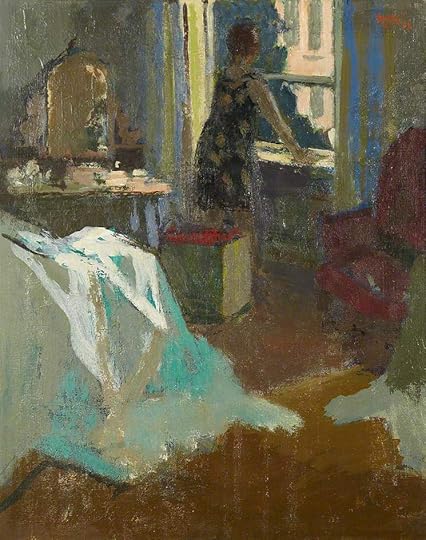
Image: Charles James McCall (1907-1989)
It's always interesting, how much memoir acts an opened window from one person's life to another's. This is my second Yiyun Li book. I also read Kinder Than Solitude but I enjoyed this read more. This is a collection written as the author battled suicidal depression and hospital stays, a book with glimpses of how disorienting and isolating mental health struggles can be. Yet the author does not detail her struggles, nor dwell on them. So I won't suggest reading to find inner thoughts or details on surmounting. In fact, Li is very uncomfortable with the 'I' in writing, so this may alienate some personal essay readers. I advise reading this for how her thoughts on literature are illuminated.
Although melancholy, this is also a pensive read. It is a collection of linked essays that shows how books can be life-saving, how books can shape a person's life. I enjoyed learning new things about books and authors, like how, in Katherine Mansfield's journal, she claimed she loved Chehkov so much she wanted to "adopt a Russian baby and name him Anton." I also didn't know that Turgenev's POEMS IN PROSE was written towards the end of his career. I learned that Philip Larkin, while on his deathbed, asked that his journals be destroyed. Li's contemplative read of Elizabeth Bowen's The Death of the Heart reminds me that it is still sits on my shelf to be read.
Although completely different, this book somehow reminded me of Reading Lolita in Tehran: A Memoir in Books for all the wonderful discoveries I made alongside each author. Maybe I love books about books because sometimes I'd rather live a life of books. I empathize with authors who see books as tools for coping through difficult circumstances. I finished this book and immediately got a copy of Reading Turgenev because it was endearing to read how Trevor's writing (later friendship) changed and shaped Li's life.
Dear Friend, what a way to title a book. Yiyun immediately lures her reader with this phrase, this title. We're all friends in the struggles we share, and personal essay writers knows how to make readers participants. Maybe it is because "a glimpse into the depth of other people's misfortunes makes us cling to the hope that suffering is measurable. There are more sorrowful sorrows, more despondent despondencies."
Image: Charles James McCall (1907-1989)
It's always interesting, how much memoir acts an opened window from one person's life to another's. This is my second Yiyun Li book. I also read Kinder Than Solitude but I enjoyed this read more. This is a collection written as the author battled suicidal depression and hospital stays, a book with glimpses of how disorienting and isolating mental health struggles can be. Yet the author does not detail her struggles, nor dwell on them. So I won't suggest reading to find inner thoughts or details on surmounting. In fact, Li is very uncomfortable with the 'I' in writing, so this may alienate some personal essay readers. I advise reading this for how her thoughts on literature are illuminated.
Although melancholy, this is also a pensive read. It is a collection of linked essays that shows how books can be life-saving, how books can shape a person's life. I enjoyed learning new things about books and authors, like how, in Katherine Mansfield's journal, she claimed she loved Chehkov so much she wanted to "adopt a Russian baby and name him Anton." I also didn't know that Turgenev's POEMS IN PROSE was written towards the end of his career. I learned that Philip Larkin, while on his deathbed, asked that his journals be destroyed. Li's contemplative read of Elizabeth Bowen's The Death of the Heart reminds me that it is still sits on my shelf to be read.
Although completely different, this book somehow reminded me of Reading Lolita in Tehran: A Memoir in Books for all the wonderful discoveries I made alongside each author. Maybe I love books about books because sometimes I'd rather live a life of books. I empathize with authors who see books as tools for coping through difficult circumstances. I finished this book and immediately got a copy of Reading Turgenev because it was endearing to read how Trevor's writing (later friendship) changed and shaped Li's life.

April 2, 2017
This is actually not a memoir, but rather an overall exploration of literature and criticism: “Dear Friend, from My Life I Write You In Your Life” is the first book of non-fiction by Chinese American writer and award winning novelist Yiyun Li. Throughout the book Li injected brief details from her life, writing career, showing the lingering effects and impact of her mental illness. Li resides in Oakland, California with her husband and sons.
Arriving in the U.S. from China, Li felt like a new and liberated person. Leaving her career as a scientist, she would graduate from the prestigious Iowa Writer’s Workshop, doing most of her early writing between midnight and 4:00 AM. Li began by sharing brief details of her lonely childhood in the family apartment in Beijing. Family responsibilities likely included helping care for mentally unstable mother; her father was described as “fatalistic” and “stoic”—teaching Li meditation when she was 11. Li’s sister was in medical school during the Tiananmen Square Protests/Massacre (1989) and came to the aid of individuals during the hunger strikes in Beijing.
Early on, literature played an important role in Li’s life, her book is a testament to the therapeutic effects of literary influence, direction, and solace with the connection of literary figures having similar situations as our own. Li traveled to midland Ireland, to study the prolific novelist John McGahern (1934-2006): he had lived in “quiet desperation” partially isolated from others.
Thomas Mann was sharply critical of the double suicide of Austrian novelist/playwright Stefan Zweig (1881-1942) with his second wife Lotte Altmann. Li recalled the suicidal urge and the intense need to stop pain. Vague references were made throughout the book of Li’s mental health hospitalizations, which seemed like nearby shadowy background occurrences.
Russian novelist Ivan Turgenev (1818-83) had never married, instead obsessively loved a beautiful opera singer and befriended her husband. Many of the author’s and poet’s Li profiled were lesser known single, solitary, individuals, and her inspiration from their work was easily recognized: though readers may not personally relate, agree, or identify with her subject matter or views.
For example Li wrote...“A writer and reader should never be allowed to meet. They live in different time frames. When a book takes on a life for a reader it is already dead for the writer.” It was a good thing that Irish author William Trevor (1928-2016) didn’t share this view: he corresponded with Li, and met her for lunch in Boston in 2007. Li had his first note to her framed, and is one of her most prized possessions.
Although Li’s books have been translated in over 20 languages, Li realized a “private salvation” in “disowning” her native language, and felt that many Chinese (from China and the west) viewed her as a “cultural traitor” for not producing more writing in Chinese. During her mental episodes of un-wellness, Li dreamt of her life in Beijing, becoming an American citizen in 2007. This book took about two years to produce and must be read (and re-read) carefully. Li’s thought process was often difficult to follow, her reflections could be bleak and depressing, and it was easier to feel sympathetic towards her. Li teaches creative writing at the University of California. Honestly not recommended for the common reader—this book would be very beneficial for literary mental health study and/or research. ~With appreciation to the Seattle Public Library.
Arriving in the U.S. from China, Li felt like a new and liberated person. Leaving her career as a scientist, she would graduate from the prestigious Iowa Writer’s Workshop, doing most of her early writing between midnight and 4:00 AM. Li began by sharing brief details of her lonely childhood in the family apartment in Beijing. Family responsibilities likely included helping care for mentally unstable mother; her father was described as “fatalistic” and “stoic”—teaching Li meditation when she was 11. Li’s sister was in medical school during the Tiananmen Square Protests/Massacre (1989) and came to the aid of individuals during the hunger strikes in Beijing.
Early on, literature played an important role in Li’s life, her book is a testament to the therapeutic effects of literary influence, direction, and solace with the connection of literary figures having similar situations as our own. Li traveled to midland Ireland, to study the prolific novelist John McGahern (1934-2006): he had lived in “quiet desperation” partially isolated from others.
Thomas Mann was sharply critical of the double suicide of Austrian novelist/playwright Stefan Zweig (1881-1942) with his second wife Lotte Altmann. Li recalled the suicidal urge and the intense need to stop pain. Vague references were made throughout the book of Li’s mental health hospitalizations, which seemed like nearby shadowy background occurrences.
Russian novelist Ivan Turgenev (1818-83) had never married, instead obsessively loved a beautiful opera singer and befriended her husband. Many of the author’s and poet’s Li profiled were lesser known single, solitary, individuals, and her inspiration from their work was easily recognized: though readers may not personally relate, agree, or identify with her subject matter or views.
For example Li wrote...“A writer and reader should never be allowed to meet. They live in different time frames. When a book takes on a life for a reader it is already dead for the writer.” It was a good thing that Irish author William Trevor (1928-2016) didn’t share this view: he corresponded with Li, and met her for lunch in Boston in 2007. Li had his first note to her framed, and is one of her most prized possessions.
Although Li’s books have been translated in over 20 languages, Li realized a “private salvation” in “disowning” her native language, and felt that many Chinese (from China and the west) viewed her as a “cultural traitor” for not producing more writing in Chinese. During her mental episodes of un-wellness, Li dreamt of her life in Beijing, becoming an American citizen in 2007. This book took about two years to produce and must be read (and re-read) carefully. Li’s thought process was often difficult to follow, her reflections could be bleak and depressing, and it was easier to feel sympathetic towards her. Li teaches creative writing at the University of California. Honestly not recommended for the common reader—this book would be very beneficial for literary mental health study and/or research. ~With appreciation to the Seattle Public Library.

September 15, 2017
Not what I was expecting at all. I thought it'd be a gently discursive series of themed essays, a delightfully readable act of philanthropy/altruism, a stocking filler full of Buddhist koans etc. It is instead a very bleak and insightful memoir full of harrowing truths, quotable misery and hard-won wisdom. It's blackly funny, and very sad. And she visits William Trevor, always good.

March 18, 2019
“Ci sono voluti circa due anni per scrivere questo libro, e il periodo di preparazione è durato altrettanto: un anno di discesa nella più nera disperazione, un altro di isolamento frutto di quella disperazione.”
In queste parole di epilogo c’è l’essenza e la sostanza di cui è fatto questo memoir/diario letterario/riflessione sulla scrittura. Un’opera rispettabilissima, densa di pensiero profondo ma allo stesso tempo scivoloso, perché impenetrabile, costituita da sintesi e distillati che rappresentano per il lettore soltanto l’inizio di una possibile trasferta nel cosiddetto territorio del diavolo, come definiva Flannery O’Connor il mistero di scrivere.
Ma molti altri sono i temi: lo sradicamento dal luogo di origine (Li è cinese che vive negli Stati Uniti); l’adozione di una lingua di scrittura diversa da quella materna e, per inciso, i problemi con una madre onnipervasiva; la lingua privata e la lingua pubblica; la memoria e la sua cancellazione; la fuga dalla scrittura autobiografica; la scelta della letteratura in alternativa alla scienza; la malattia, la cura e la (forse vana) ricerca della felicità. Infine il rapporto con gli scrittori amati, quelli del passato come Mansfield, Turgenev e Zweig e quelli contemporanei che Li ha conosciuto: Trevor fra tutti.
Molte, anche troppe, le parti che ho sottolineato. Alla fine non so che cosa ne rimarrà.
Di sicuro la sensazione di una inquietudine sottile, quella che percorre queste pagine, mascherata da uno stile pulito, impeccabile; una tristezza profonda che si prevede senza speranza; un allenamento all’assenza attraverso la scrittura; un nucleo di dolore irrisolto e di nostalgia senza oggetto. Ovviamente si tratta di impressioni personali e risonanze del tutto soggettive...però, però...per essere più oggettivi: in poco più di un centinaio di pagine la parola morte ricorre 79 volte, la parola suicidio 38.
Forse l’errore è stato leggere questo libro immediatamente dopo Salvare le ossa e passare da una scrittura fisica, emotiva, a una molto cerebrale e astratta. Una doccia gelata, insomma.
Ma ecco: è andata così. Mentre Ward mi ha scombussolato, Li mi ha lasciato sostanzialmente indifferente. Ma, viste le circostanze attenuanti, le darò di sicuro un’altra chance.
In queste parole di epilogo c’è l’essenza e la sostanza di cui è fatto questo memoir/diario letterario/riflessione sulla scrittura. Un’opera rispettabilissima, densa di pensiero profondo ma allo stesso tempo scivoloso, perché impenetrabile, costituita da sintesi e distillati che rappresentano per il lettore soltanto l’inizio di una possibile trasferta nel cosiddetto territorio del diavolo, come definiva Flannery O’Connor il mistero di scrivere.
Ma molti altri sono i temi: lo sradicamento dal luogo di origine (Li è cinese che vive negli Stati Uniti); l’adozione di una lingua di scrittura diversa da quella materna e, per inciso, i problemi con una madre onnipervasiva; la lingua privata e la lingua pubblica; la memoria e la sua cancellazione; la fuga dalla scrittura autobiografica; la scelta della letteratura in alternativa alla scienza; la malattia, la cura e la (forse vana) ricerca della felicità. Infine il rapporto con gli scrittori amati, quelli del passato come Mansfield, Turgenev e Zweig e quelli contemporanei che Li ha conosciuto: Trevor fra tutti.
Molte, anche troppe, le parti che ho sottolineato. Alla fine non so che cosa ne rimarrà.
Di sicuro la sensazione di una inquietudine sottile, quella che percorre queste pagine, mascherata da uno stile pulito, impeccabile; una tristezza profonda che si prevede senza speranza; un allenamento all’assenza attraverso la scrittura; un nucleo di dolore irrisolto e di nostalgia senza oggetto. Ovviamente si tratta di impressioni personali e risonanze del tutto soggettive...però, però...per essere più oggettivi: in poco più di un centinaio di pagine la parola morte ricorre 79 volte, la parola suicidio 38.
Forse l’errore è stato leggere questo libro immediatamente dopo Salvare le ossa e passare da una scrittura fisica, emotiva, a una molto cerebrale e astratta. Una doccia gelata, insomma.
Ma ecco: è andata così. Mentre Ward mi ha scombussolato, Li mi ha lasciato sostanzialmente indifferente. Ma, viste le circostanze attenuanti, le darò di sicuro un’altra chance.

Read
March 9, 2020An Author Disconnected from the Present
I feel more than the usual unease about the uncharitable things I want to say about this book, because the book is a modestly recounted meditation about a period of suicidal depression. As Michael Hofmann says in the "London Review of Books," Yiyun Li's book is "intimate, but not personal; or personal, but not private"(June 2017), and it is as literary as Pessoa or Vila-Matas. There are any number of complimentary things that could be said about her attempts at honesty and truth.
A fair amount of the book is about writers, and readers, and the literary life, and it is very much concerned with communities and possibilities for understanding and empathy. But I felt consistently excluded from the book's imaginary roster of readers, because the writers who engage her imagination, both as models for her own writing and as lives she can hope to understand, are so conservative. The book ends with a partial list of writers she has mentioned; they include Austen, Chekhov, Hardy, Hemingway, Tolstoy, Mansfield, and Turgenev. There are a few moderns, mainly Larkin (d. 1985) and Moore (d. 1972).
Li opens and closes the book with stories about her friendship with the Irish authors William Trevor and John McGahern. Those choices epitomize my unhappiness. They were both excellent writers, but also among the most conservative of their generation. Not only are the modernists missing (Joyce is hardly mentioned), but so is the entire last fifty years of Irish fiction. Surely Li knows many of them personally, since she teaches at Princeton and has attended writers' events for decades. But modernists, pstmodernists, and younger writers do not impinge on her imagination, despite the fact that many have written about the same issues that preoccupy her in this book. (I'm thinking of Enright and McBride in particular.)
The authors she reads are this book's main interlocutors, much more prominent than the scattered (and often susprisingly painful) memories of her mother, her friends, or her fellow patients. It makes sense that what matters most are the authors' letters, not their fiction, because this book is about imaginative connections between lives, and not the craft of fiction. In that sense it may not be cogent to complain that Li cites mainly 19th and early 20th century writers. But younger writers, postmodern writers, contemporary writers, also write letters, and novels about letters. Li could just as easily have found her issues there.
This is why I feel compelled to make this complaint, and why I sense I am excluded from the otherwise accommodating field of this book's imagined readers. In my own field, the history of art, there is a history of modern Chinese artists responding to the more conservative strains of modernism: Matisse instead of Picasso, the School of Paris instead of surrealism, neoromanticism instead of conceptual art, and so on. Even now the traces of those preferences can be found in art academies and in work that does not participate in the uniform expectations of the international art market. I can't help but see Yiyun Li as part of that same phenomenon, but whatever the reasons, her choices exclude me from the roster of writers I am invited to imagine she might engage. And that's a pity, because her book could only have been written in the 21st century. Its honesty about suicide, its affinity to autofiction, its fragmented self-questioning, all make it contemporary, but the literary world that provides its stories ended in the last century.
*
Since I raised this question, I'll make a brief and very tentative attempt at an answer. The kinds of ruminations and observations that apparently sustained her, at least on the page (as opposed to what might have been said and thought in the hospital, a site we are not allowed to witness), have a certain character. They flow easily into one another, forming loosely enchained chapters bound by themes. There's an elegance to that, and it's an elegance that may very well have been healing, but it is far from the more fragmented, disconnected, dissociative forms of the imagination in other books written under pressure of suicidally strong thoughts, such as Beckett's "Watt," Handke's "Sorrow Beyond Dreams," or Bachmann's "Malina." The more contemporary the writer, the more extreme the forces that work against the sort of mellifluous prose in this book. The back cover endorsements on my copy of Li's book include one by Marilynne Robinson, perhaps the current height of trust in seamlessly unfurling prose. But I am only guessing here.
I feel more than the usual unease about the uncharitable things I want to say about this book, because the book is a modestly recounted meditation about a period of suicidal depression. As Michael Hofmann says in the "London Review of Books," Yiyun Li's book is "intimate, but not personal; or personal, but not private"(June 2017), and it is as literary as Pessoa or Vila-Matas. There are any number of complimentary things that could be said about her attempts at honesty and truth.
A fair amount of the book is about writers, and readers, and the literary life, and it is very much concerned with communities and possibilities for understanding and empathy. But I felt consistently excluded from the book's imaginary roster of readers, because the writers who engage her imagination, both as models for her own writing and as lives she can hope to understand, are so conservative. The book ends with a partial list of writers she has mentioned; they include Austen, Chekhov, Hardy, Hemingway, Tolstoy, Mansfield, and Turgenev. There are a few moderns, mainly Larkin (d. 1985) and Moore (d. 1972).
Li opens and closes the book with stories about her friendship with the Irish authors William Trevor and John McGahern. Those choices epitomize my unhappiness. They were both excellent writers, but also among the most conservative of their generation. Not only are the modernists missing (Joyce is hardly mentioned), but so is the entire last fifty years of Irish fiction. Surely Li knows many of them personally, since she teaches at Princeton and has attended writers' events for decades. But modernists, pstmodernists, and younger writers do not impinge on her imagination, despite the fact that many have written about the same issues that preoccupy her in this book. (I'm thinking of Enright and McBride in particular.)
The authors she reads are this book's main interlocutors, much more prominent than the scattered (and often susprisingly painful) memories of her mother, her friends, or her fellow patients. It makes sense that what matters most are the authors' letters, not their fiction, because this book is about imaginative connections between lives, and not the craft of fiction. In that sense it may not be cogent to complain that Li cites mainly 19th and early 20th century writers. But younger writers, postmodern writers, contemporary writers, also write letters, and novels about letters. Li could just as easily have found her issues there.
This is why I feel compelled to make this complaint, and why I sense I am excluded from the otherwise accommodating field of this book's imagined readers. In my own field, the history of art, there is a history of modern Chinese artists responding to the more conservative strains of modernism: Matisse instead of Picasso, the School of Paris instead of surrealism, neoromanticism instead of conceptual art, and so on. Even now the traces of those preferences can be found in art academies and in work that does not participate in the uniform expectations of the international art market. I can't help but see Yiyun Li as part of that same phenomenon, but whatever the reasons, her choices exclude me from the roster of writers I am invited to imagine she might engage. And that's a pity, because her book could only have been written in the 21st century. Its honesty about suicide, its affinity to autofiction, its fragmented self-questioning, all make it contemporary, but the literary world that provides its stories ended in the last century.
*
Since I raised this question, I'll make a brief and very tentative attempt at an answer. The kinds of ruminations and observations that apparently sustained her, at least on the page (as opposed to what might have been said and thought in the hospital, a site we are not allowed to witness), have a certain character. They flow easily into one another, forming loosely enchained chapters bound by themes. There's an elegance to that, and it's an elegance that may very well have been healing, but it is far from the more fragmented, disconnected, dissociative forms of the imagination in other books written under pressure of suicidally strong thoughts, such as Beckett's "Watt," Handke's "Sorrow Beyond Dreams," or Bachmann's "Malina." The more contemporary the writer, the more extreme the forces that work against the sort of mellifluous prose in this book. The back cover endorsements on my copy of Li's book include one by Marilynne Robinson, perhaps the current height of trust in seamlessly unfurling prose. But I am only guessing here.

February 24, 2018
I chose Dear Friend... to read something different than I usually would. Having now finished it, I find it difficult to form a coherent opinion because it was a difficult read, in that I never felt like I understood the perspective of the author. It is a book of essays by a Chinese author who writes only in English, has twice attempted suicide, and exhibits a preference for reading the letters of other writers. This made it hard work to get through, but nevertheless still satisfying in its way.
However, it is just this difficulty that I feel made it well worth my while – it opened my mind to a perspective that I otherwise would never have encountered. But at no point was it a fun read or an entertaining one, except that I did occasionally enjoy the references to other books. I will probably seek out the work of these authors she refers to, and she hopefully includes a list of books after the main text. I truly appreciated this pleasant surprise feeling as if it had been done for me. So, maybe the author and I do have something in common, after all.
However, it is just this difficulty that I feel made it well worth my while – it opened my mind to a perspective that I otherwise would never have encountered. But at no point was it a fun read or an entertaining one, except that I did occasionally enjoy the references to other books. I will probably seek out the work of these authors she refers to, and she hopefully includes a list of books after the main text. I truly appreciated this pleasant surprise feeling as if it had been done for me. So, maybe the author and I do have something in common, after all.

March 16, 2017
To understand Dear Friend, from My Life I Write to You in Your Life by Yiyun Li, you have to understand the context in which it came to be written. I struggle with how to rate this book. On the one hand, I have enormous respect for the author's struggle with mental health. On the other hand, the book reads as a therapeutic outlet for the author rather than a memoir to be shared with others. I bear witness to the struggle, wish her well, and move on.
Read my complete review at http://www.memoriesfrombooks.com/2017...
Reviewed for NetGalley
Read my complete review at http://www.memoriesfrombooks.com/2017...
Reviewed for NetGalley

January 10, 2017
The same quality of Yiyun's fictional prose tiptoeing through my brain, then settling in for thoughts long after, lives in her nonfiction writing. This is a beautiful collection of essays exploring her bouts of depression and suicidal thoughts. Part memoir, part lit crit, all wonderful writing. This book will definitely find itself among my stack of books to be revisited annually.

January 7, 2017
It’s an honor to be invited to review any book by Random House and Net Galley, and so when the email came, I accepted without hesitation; I thank them for thinking of me and wish I could honestly recommend this one. Others have referred to this memoir, whose title is taken from a quote by Katharine Mansfield, as “exquisite, intimate, and lyrical”, and the author has won awards for her novels. I looked carefully to see if I could locate the genius in this book, but it eluded me completely.
The intimacy of the work is surely apparent. In essence, this is a mental health memoir, and the author writes of her fight with depression, her multiple suicide attempts and hospitalizations, of the expectation of others that she should continue to live when she didn’t want to. It’s brave writing, although mental health battles are now a fairly mainstream topic, but I am unable to find anything tangible to engage my interest.
My only real pleasure is in discovering that Li is already a successful writer; had it been a debut, I would have been scared silly. After all, if I say I don’t like the book, will the writer harm herself? What if I simply dodge the whole thing and let it get lost in the shuffle; will it happen then as well? But in seeing that this is someone with an established career and a wall full of accolades, probably the displeasure of one humble blogger won’t create a great deal of trauma.
The whole thing is bleak. The writer reminds us repeatedly that her life is private, that no one has the right to know any of its details and all I can think is, so what are we doing here, exactly?
Those that have read and enjoyed Li’s novels may find more to hang their hats on than I have found. All I know is that it is painful to read, has no beginning, middle or end that I can find, and is devoid of the literary qualities that can sometimes make a sad book enjoyable. I can’t recommend it.
The intimacy of the work is surely apparent. In essence, this is a mental health memoir, and the author writes of her fight with depression, her multiple suicide attempts and hospitalizations, of the expectation of others that she should continue to live when she didn’t want to. It’s brave writing, although mental health battles are now a fairly mainstream topic, but I am unable to find anything tangible to engage my interest.
My only real pleasure is in discovering that Li is already a successful writer; had it been a debut, I would have been scared silly. After all, if I say I don’t like the book, will the writer harm herself? What if I simply dodge the whole thing and let it get lost in the shuffle; will it happen then as well? But in seeing that this is someone with an established career and a wall full of accolades, probably the displeasure of one humble blogger won’t create a great deal of trauma.
The whole thing is bleak. The writer reminds us repeatedly that her life is private, that no one has the right to know any of its details and all I can think is, so what are we doing here, exactly?
Those that have read and enjoyed Li’s novels may find more to hang their hats on than I have found. All I know is that it is painful to read, has no beginning, middle or end that I can find, and is devoid of the literary qualities that can sometimes make a sad book enjoyable. I can’t recommend it.

April 30, 2017
This rating system doesn't allow me to say what I mean about "Dear Friend." There were sections that blew me away. I love the way Yi describes her relationships with books and authors. Some of these, like William Trevor, are alive and become actual friends, friends that Yi meets and corresponds with. Others, like Katherine Mansfield are friends she knows only through their writing. Mansfield's phrase is actually borrowed for the title of this book. Trevor's books allow and perhaps inspire Yi to become a writer rather than the scientist she came to the United States to be.
English is Yi's chosen language as a writer. She leaves Chinese behind, and does not permit her books to be translated into Chinese. I sense the importance words hold for her, and the labyrinth that words create for her. I often got lost as I read. I kept going because there are passages which are often so beautiful. Here's one, describing a childhood memory that she includes in her novella, Kindness: she sees a peddler selling spring chicks and begs her father to buy one. They are not a rich family and her father is distressed. Two women, seeing her weeping, buy her two chicks although her father warns her "the chicks are too young to last more than a day or two." She feeds and cares for them, names them, gives them aspirin dissolved in water when they begin to get sick. After they die, she goes to the kitchen, steals two eggs, carefully cracks them, wipes out the yolk and white, and "No matter how hard I tried, I could not fit the chicks back into the shells."
"I have learned since then that life is like that, each day ending up like a chick refusing to be returned to the eggshell."
I loved the chapter about the author's visit to the Irish home of John Mc Gahern, a writer she is fascinated by. She writes about the startling realization that a story he has told, an unmistakeable event from someone else's life had left unequivocal evidence. McGahern's life was lived among his people, his books written among his people. His characters, real and fictional, are no better than their creator, who-again, unlike many of his brilliant countrymen-wastes no time in seeking originality..."The people and the language and the landscape were like my breathing," Mc Gahern writes.
What was tough for me is the abstract way that Yi describes her psychological state during several periods of depression.
Here's an example: To be more than one, and be several, and to live with the consequence, is inevitable. One can err the opposite way, and the belief in being nothing used to seem to me the most logical way to live. Being nothing is being invisible and replaceable; being nothing to others means remaining everything to oneself. Being nothing is one way to battle the autoimmune condition of the mind, and this is closest to my friend's silence. Yet silence is not melodrama, or at least is not presenting itself to be.
I was either enthralled or utterly perplexed and distanced as I read this book. For those who already have read and loved Li's books, this book gives a deep sense of her emotional life, and her life as a reader. The latter was what intrigued me. It seems as though her emotional life is still to raw to share in a way that connects, at least with m.
English is Yi's chosen language as a writer. She leaves Chinese behind, and does not permit her books to be translated into Chinese. I sense the importance words hold for her, and the labyrinth that words create for her. I often got lost as I read. I kept going because there are passages which are often so beautiful. Here's one, describing a childhood memory that she includes in her novella, Kindness: she sees a peddler selling spring chicks and begs her father to buy one. They are not a rich family and her father is distressed. Two women, seeing her weeping, buy her two chicks although her father warns her "the chicks are too young to last more than a day or two." She feeds and cares for them, names them, gives them aspirin dissolved in water when they begin to get sick. After they die, she goes to the kitchen, steals two eggs, carefully cracks them, wipes out the yolk and white, and "No matter how hard I tried, I could not fit the chicks back into the shells."
"I have learned since then that life is like that, each day ending up like a chick refusing to be returned to the eggshell."
I loved the chapter about the author's visit to the Irish home of John Mc Gahern, a writer she is fascinated by. She writes about the startling realization that a story he has told, an unmistakeable event from someone else's life had left unequivocal evidence. McGahern's life was lived among his people, his books written among his people. His characters, real and fictional, are no better than their creator, who-again, unlike many of his brilliant countrymen-wastes no time in seeking originality..."The people and the language and the landscape were like my breathing," Mc Gahern writes.
What was tough for me is the abstract way that Yi describes her psychological state during several periods of depression.
Here's an example: To be more than one, and be several, and to live with the consequence, is inevitable. One can err the opposite way, and the belief in being nothing used to seem to me the most logical way to live. Being nothing is being invisible and replaceable; being nothing to others means remaining everything to oneself. Being nothing is one way to battle the autoimmune condition of the mind, and this is closest to my friend's silence. Yet silence is not melodrama, or at least is not presenting itself to be.
I was either enthralled or utterly perplexed and distanced as I read this book. For those who already have read and loved Li's books, this book gives a deep sense of her emotional life, and her life as a reader. The latter was what intrigued me. It seems as though her emotional life is still to raw to share in a way that connects, at least with m.

February 19, 2019
questo libro costringe a riflessioni e speculazioni che, nella mia squinziaggine, non sono in grado di sostenere.

April 7, 2018
“In an ideal world I would prefer to have my mind reserved for thinking, and thinking alone. I dread the moment when a thought trails off and a feeling starts. . .”
Yiyun Li’s Dear Friend, From My Life I write to You in Your Life—a collection of reflections and reminiscences written over a two year period of apparently deep despair and hospitalizations—shocks in its revelatory honesty and self-awareness. Her honesty is all the more shocking by her professed desire to erase the I in her writing: ”“When I gave up science I had a blind confidence that in writing I could will myself into a nonentity.”
Li’s reflections on her depression lie at the heart of Dear Friend. How could any sensate reader read those reflections without both experiencing both fright and sympathy, both undoubtedly unwanted by the author? Here: ”Often I think that writing is a futile effort; so is reading, so is living.” And here: “These essays were started with mixed feelings and contradictory motives. I wanted to argue against suicide as much as for it, which is to say I wanted to keep the option of suicide and I wanted it to be forever taken away from me.“
But Li’s reflections in Dear Friend extend beyond her depression. Memory—with its distortions and lack of reliability—is a frequent theme. The unreliability and distortions of memory is a frequent theme. Our perceptions of this present, Li tells us, are less prone to distortion than our perceptions of the past: “There are many ways to carry the past with us: to romanticize it, to invalidate it, to furnish it with revised or entirely fictionalized memories. The present does not surrender so easily to manipulation.”
Most enjoyable to me in Dear Friend, if not most wrenching, are Li’s comments on reading, readers’ relationships with authors, and other authors. For Li, a reward in reading lies in erasing the I: ”To read oneself into another person’s tale is the opposite of how and why I read. To read is to be with people who, unlike those around us, do not notice one’s existence.” The search for understanding in reading, for Li, extends equally to what’s been written and expressed and what remains unwritten and unexpressed: ”there is a truth that is truer in the unexpressed; having spoken, I am apprehensive that I no longer have a claim to that truth.” Li expands puts a different twist on this in her lovely chapter on William Trevor: “In interviews Trevor says that he writes ‘out of curiosity and bewilderment.’ What does not make sense is what matters.”
Yiyun Li’s spare, unadorned, forceful writing perfectly suited for Dear Friend, From My Life I Write to You in Your Life. With Dear Friend, Li adds yet an additional dimension to her impressive and prize-winning fiction, A Thousand Years of Good Prayers (2006) and Gold Boy, Emerald Girl (2011)—her two stellar short story collections—and The Vagrants (2010) and Kinder Than Solitude, (2015) her fine novels. And for those who treasure William Trevor, Li’s final chapter Reading William Trevor is a treasure unto itself.
I thank Random House and LibraryThing for making this review copy available to me.
Yiyun Li’s Dear Friend, From My Life I write to You in Your Life—a collection of reflections and reminiscences written over a two year period of apparently deep despair and hospitalizations—shocks in its revelatory honesty and self-awareness. Her honesty is all the more shocking by her professed desire to erase the I in her writing: ”“When I gave up science I had a blind confidence that in writing I could will myself into a nonentity.”
Li’s reflections on her depression lie at the heart of Dear Friend. How could any sensate reader read those reflections without both experiencing both fright and sympathy, both undoubtedly unwanted by the author? Here: ”Often I think that writing is a futile effort; so is reading, so is living.” And here: “These essays were started with mixed feelings and contradictory motives. I wanted to argue against suicide as much as for it, which is to say I wanted to keep the option of suicide and I wanted it to be forever taken away from me.“
But Li’s reflections in Dear Friend extend beyond her depression. Memory—with its distortions and lack of reliability—is a frequent theme. The unreliability and distortions of memory is a frequent theme. Our perceptions of this present, Li tells us, are less prone to distortion than our perceptions of the past: “There are many ways to carry the past with us: to romanticize it, to invalidate it, to furnish it with revised or entirely fictionalized memories. The present does not surrender so easily to manipulation.”
Most enjoyable to me in Dear Friend, if not most wrenching, are Li’s comments on reading, readers’ relationships with authors, and other authors. For Li, a reward in reading lies in erasing the I: ”To read oneself into another person’s tale is the opposite of how and why I read. To read is to be with people who, unlike those around us, do not notice one’s existence.” The search for understanding in reading, for Li, extends equally to what’s been written and expressed and what remains unwritten and unexpressed: ”there is a truth that is truer in the unexpressed; having spoken, I am apprehensive that I no longer have a claim to that truth.” Li expands puts a different twist on this in her lovely chapter on William Trevor: “In interviews Trevor says that he writes ‘out of curiosity and bewilderment.’ What does not make sense is what matters.”
Yiyun Li’s spare, unadorned, forceful writing perfectly suited for Dear Friend, From My Life I Write to You in Your Life. With Dear Friend, Li adds yet an additional dimension to her impressive and prize-winning fiction, A Thousand Years of Good Prayers (2006) and Gold Boy, Emerald Girl (2011)—her two stellar short story collections—and The Vagrants (2010) and Kinder Than Solitude, (2015) her fine novels. And for those who treasure William Trevor, Li’s final chapter Reading William Trevor is a treasure unto itself.
I thank Random House and LibraryThing for making this review copy available to me.

Read
March 17, 2021Emily and her books
Se vuoi tenerti aggiornato sulle mie letture e recensioni...
♥ Instagram
♥ Youtube
♥ Altri link utili
Trigger warning: depressione, suicidio
« Provare sentimenti in una lingua d'adozione è difficile, ma farlo nella mia lingua natale mi è impossibile. »
È difficile scrivere una recensione riguardo a Caro amico dalla mia vita scrivo a te nella tua dato il peso che ha questa lettura. L'autrice Yiyun Li ha scritto questo memoir ha scritto questo memoir in seguito ai due tentativi di suicidio avvenuti nel 2012..
Ho deciso di evitare di dare un voto al libro, invece vorrei condividere con voi le sensazioni che ha suscitato in me.
Ho faticato a leggerlo: all’inizio pensavo fosse perché non riuscivo a concentrarmi."Forse non ho il giusto livello di attenzione? Sono io stupida che non riesco a stare dietro allo stile dell'autrice?" La lettura continuava e io facevo sempre più fatica, finché una mattina mi sono alzata e ho passato l'intera giornata con un peso al petto. Nonostante io pensassi di non comprendere ciò che stavo leggendo, avevo assimilato nel profondo ciò che provava l’autrice.
Ho pensato di non finire il libro. Non era possibile che io stessi così male per una lettura. Ho deciso, però, di non demordere. La seconda metà del libro è risultata più “comprensibile” e ho ritrovato anche serenità nel leggerlo. Proprio come l’autrice, man mano che prosegue nella scrittura, ritrova un senso alla sua esistenza, al suo essere lettrice e scrittrice.
Yiyun Li ci racconta episodi di vita quotidiana, ricordi d’infanzia e le letture dei suoi autori preferiti: Katherine Mansfield, di cui il titolo è una citazione ai suoi diari, Nabokov, George Eliot, Turgenev… A piccoli sprazzi comprendiamo che gran parte della sua sofferenza proviene dall’infanzia e dai rapporti familiari, ma c’è anche un senso di inadeguatezza nel suo essere scrittrice, difficoltà nel capire quale sia la sua identità divisa fra Cina e Stati Uniti.
Non approfondirà queste sofferenze né cercherà di trovare una soluzione: forse perché non vuole, forse perché non c'è una vera soluzione al suo malessere. Il suo memoir si rivela non solo uno sguardo al periodo più buio della sua vita, ma anche un elogio alla lettura: leggere e “conversare” con autori lontani come fuga dal presente, ma anche come sostegno.
Se vuoi tenerti aggiornato sulle mie letture e recensioni...
♥ Youtube
♥ Altri link utili
Trigger warning: depressione, suicidio
« Provare sentimenti in una lingua d'adozione è difficile, ma farlo nella mia lingua natale mi è impossibile. »
È difficile scrivere una recensione riguardo a Caro amico dalla mia vita scrivo a te nella tua dato il peso che ha questa lettura. L'autrice Yiyun Li ha scritto questo memoir ha scritto questo memoir in seguito ai due tentativi di suicidio avvenuti nel 2012..
Ho deciso di evitare di dare un voto al libro, invece vorrei condividere con voi le sensazioni che ha suscitato in me.
Ho faticato a leggerlo: all’inizio pensavo fosse perché non riuscivo a concentrarmi."Forse non ho il giusto livello di attenzione? Sono io stupida che non riesco a stare dietro allo stile dell'autrice?" La lettura continuava e io facevo sempre più fatica, finché una mattina mi sono alzata e ho passato l'intera giornata con un peso al petto. Nonostante io pensassi di non comprendere ciò che stavo leggendo, avevo assimilato nel profondo ciò che provava l’autrice.
Ho pensato di non finire il libro. Non era possibile che io stessi così male per una lettura. Ho deciso, però, di non demordere. La seconda metà del libro è risultata più “comprensibile” e ho ritrovato anche serenità nel leggerlo. Proprio come l’autrice, man mano che prosegue nella scrittura, ritrova un senso alla sua esistenza, al suo essere lettrice e scrittrice.
Yiyun Li ci racconta episodi di vita quotidiana, ricordi d’infanzia e le letture dei suoi autori preferiti: Katherine Mansfield, di cui il titolo è una citazione ai suoi diari, Nabokov, George Eliot, Turgenev… A piccoli sprazzi comprendiamo che gran parte della sua sofferenza proviene dall’infanzia e dai rapporti familiari, ma c’è anche un senso di inadeguatezza nel suo essere scrittrice, difficoltà nel capire quale sia la sua identità divisa fra Cina e Stati Uniti.
Non approfondirà queste sofferenze né cercherà di trovare una soluzione: forse perché non vuole, forse perché non c'è una vera soluzione al suo malessere. Il suo memoir si rivela non solo uno sguardo al periodo più buio della sua vita, ma anche un elogio alla lettura: leggere e “conversare” con autori lontani come fuga dal presente, ma anche come sostegno.

September 1, 2023
The author’s memoir about her struggles with depression and suicidal thoughts. She writes about her life, rocky relationship with her mother, growing up in Beijing, insight into the Tiananmen Square protest, time in the Chinese Army, moving from China to America, shift from scientist to writer, decision to write in English, and why she avoids writing autofiction. It comprises a series of essays targeted at a specific memory or part of her life. I particularly enjoyed her observations about writers, the importance of books in her life, and the many literary references. There are a few sections that veer into philosophy. She writes with candor about her depression, hospitalizations, and attempts at suicide. I hope writing it has helped her gain peace of mind and move in a more positive direction. I picked this book up on the strength of the author’s recent fiction, The Book of Goose, which I highly recommend.

February 27, 2020
Read 2/3. This is nor your rainy afternoon cozy reading. This is the writing of someone who thinks that nothingness is the place to be.
The prose is difficult. Since she both hates disclosing herself and is compelled to do it, Li obscures and retracts in just about every paragraph.
It is also extremely painful. I will return to it because i admire this writer tremendously, but i need to be in a sunnier space. I think she may be the most erudite, deepest, most nihilistic writer today.
The prose is difficult. Since she both hates disclosing herself and is compelled to do it, Li obscures and retracts in just about every paragraph.
It is also extremely painful. I will return to it because i admire this writer tremendously, but i need to be in a sunnier space. I think she may be the most erudite, deepest, most nihilistic writer today.

August 11, 2017
I really struggled with this - Li tries hard to keep a lot of herself out of these vaguely autobiographical essays (dealing partly with her depression) and in the end I felt so distanced that it was hard to engage.
February 20, 2026
second attempt (a few days later) after reading this book in 2026
I feel like I haven’t done this book justice, so I’m making another attempt.
This is a book that is difficult to define, its approach to the subject of living and suicide is done objectively. I can see why Yiyun Li has written it like this; throughout the book she discusses the meaning and interpretation of words. She’s talking about these subjects without talking about them directly, like it's a process to grasp a clearer picture. The ending of this book is hopeful.
I like how Yiyun Li looks at the world, and reading this was also an insight for me of what books can come to mean, especially for someone who has been reading from a young age as her.
first attempt after reading this book in 2026
(3.5*)
Of the 8 essays here, I liked the first 4, in all of them what I enjoyed the most was the non-linear structure and the way Yiyun Li shared her life in fragments. I say essays and not memoir because this structure and how each one discusses ideas philosophically, looking at memories, language (including interpretation of words), and the idea of the self, and suicidal thoughts. All this is done through Yiyun Li’s reading journey, as her discussions blur the lines between the books she reads and her own life. Her frankness here also highlights her courage.
I feel like I haven’t done this book justice, so I’m making another attempt.
This is a book that is difficult to define, its approach to the subject of living and suicide is done objectively. I can see why Yiyun Li has written it like this; throughout the book she discusses the meaning and interpretation of words. She’s talking about these subjects without talking about them directly, like it's a process to grasp a clearer picture. The ending of this book is hopeful.
I like how Yiyun Li looks at the world, and reading this was also an insight for me of what books can come to mean, especially for someone who has been reading from a young age as her.
first attempt after reading this book in 2026
(3.5*)
Of the 8 essays here, I liked the first 4, in all of them what I enjoyed the most was the non-linear structure and the way Yiyun Li shared her life in fragments. I say essays and not memoir because this structure and how each one discusses ideas philosophically, looking at memories, language (including interpretation of words), and the idea of the self, and suicidal thoughts. All this is done through Yiyun Li’s reading journey, as her discussions blur the lines between the books she reads and her own life. Her frankness here also highlights her courage.

October 31, 2021
I read “Dear Friend, from My Life I Write to You in Your Life” by Yiyun Li almost in one sitting, sensing all the time that I was meant to read it at this moment in my life because it is the book written for me. If there was any way for one person to enter the mind of another, I would be convinced Li entered mine. She shared so many thoughts and observations which I have planted in my brain and nurtured for years; Americans would say it is spooky, but coming from Central Europe I would call Li my spiritual soulmate.
Yiyun Li wrote her essays when experiencing depression and recovering from a suicidal attempt. These are stunningly written, with remarkable precision, clarity, tremendous warmth and empathy reflections on her friendships with authors - alive then, like William Trevor, or long dead, like Katherine Mansfield or Ivan Turgenev. Li ponders on her attitude to Chinese and English and distances herself gracefully to the callousness of others who denied her ownership of English, claiming it would always be a foreign language to her, or who tried to force upon her stories she ‘should’ write.
I was moved to tears reading about Li’s attitude to attachment as this is the core of my own Buddhist beliefs: “(…) I have resisted forming an attachment to any object, or any place. I wished then and I wish now that I had never formed an attachment to anyone in the world either. I would be all kindness”. I am also deeply touched by her elegant descriptions of the meaning of solitude in life as I could write the same, had I Li’s talent for structuring thoughts so beautifully: “It must be a miscomprehension - though I have been unwilling to give it up - that one’s life could be lived as a series of solitary moments. In between, time spent with other people is the time to prepare for their disappearance. That there is an opposite perspective I can only understand theoretically. The time line is also a repetition of one’s lapse into isolation. It’s not others who vanish, but from others one vanishes”.
The quietness of one’s life, the uneventfulness, refraining from imposing oneself on others or interfering in others’ lives - Li contemplates her choices and their implications, often in reference to literature and other people’s attitudes, which I found utterly fascinating. Then there is memory and melodrama, and rearranging the past as a way of preserving self - and the next question arrises: Can one live without the self? Li’s essays are like a marvellous Zen koan and she proves to me over and over again that a journey within one’s mind is the most adventurous and interesting one.
Naturally Yiyun Li speaks of death too. Of “seeking solace in the peace brought by death”, and I felt at peace engaging in a conversation - as I read “Dear Friend…” as if I was in a conversation with the author - with a wise person who doesn’t shy away from sensitive topics but who treats them matter-of-factly, as they deserve to be treated. The same applies to her reflecting on her relationship with her mother and her demands, especially in relation to her mother’s wish to be included in Li’s writing or the pressure she puts on her daughter to write in Chinese so that she can read Li’s works.
“Dear Friend…” is the book I will be returning to and I will look into it as if into the mirror seeing how I have grown and whether I could add to the conversation. I could wish for nothing more from it.
Yiyun Li wrote her essays when experiencing depression and recovering from a suicidal attempt. These are stunningly written, with remarkable precision, clarity, tremendous warmth and empathy reflections on her friendships with authors - alive then, like William Trevor, or long dead, like Katherine Mansfield or Ivan Turgenev. Li ponders on her attitude to Chinese and English and distances herself gracefully to the callousness of others who denied her ownership of English, claiming it would always be a foreign language to her, or who tried to force upon her stories she ‘should’ write.
I was moved to tears reading about Li’s attitude to attachment as this is the core of my own Buddhist beliefs: “(…) I have resisted forming an attachment to any object, or any place. I wished then and I wish now that I had never formed an attachment to anyone in the world either. I would be all kindness”. I am also deeply touched by her elegant descriptions of the meaning of solitude in life as I could write the same, had I Li’s talent for structuring thoughts so beautifully: “It must be a miscomprehension - though I have been unwilling to give it up - that one’s life could be lived as a series of solitary moments. In between, time spent with other people is the time to prepare for their disappearance. That there is an opposite perspective I can only understand theoretically. The time line is also a repetition of one’s lapse into isolation. It’s not others who vanish, but from others one vanishes”.
The quietness of one’s life, the uneventfulness, refraining from imposing oneself on others or interfering in others’ lives - Li contemplates her choices and their implications, often in reference to literature and other people’s attitudes, which I found utterly fascinating. Then there is memory and melodrama, and rearranging the past as a way of preserving self - and the next question arrises: Can one live without the self? Li’s essays are like a marvellous Zen koan and she proves to me over and over again that a journey within one’s mind is the most adventurous and interesting one.
Naturally Yiyun Li speaks of death too. Of “seeking solace in the peace brought by death”, and I felt at peace engaging in a conversation - as I read “Dear Friend…” as if I was in a conversation with the author - with a wise person who doesn’t shy away from sensitive topics but who treats them matter-of-factly, as they deserve to be treated. The same applies to her reflecting on her relationship with her mother and her demands, especially in relation to her mother’s wish to be included in Li’s writing or the pressure she puts on her daughter to write in Chinese so that she can read Li’s works.
“Dear Friend…” is the book I will be returning to and I will look into it as if into the mirror seeing how I have grown and whether I could add to the conversation. I could wish for nothing more from it.

January 4, 2017
This memoir is a string of thoughts, unanswerable questions, philosophical explorations and personal pain.
The author tells us of her own misunderstandings and attempts to understand life. It's written in an eloquent, flowing way- nothing jars and this makes it easy to read, even though the material is so dense.
There is no spiritual thread, rather, the author draws on the works of those authors she has most loved. Some of these authors she knew personally, or made deliberate contact with so that she could meet them and she writes about these encounters in the book.
Many of the authors she was drawn to battled with mental illness and a number of them took their own lives. Pretty much all of them wrote about existential problems and the pain and futility of life - at least, that's how I interpreted it, since (with the exception of Hardy) I have not read Li's long list of favourite authors myself.
In this memoir, some passages are highly personal and these are the ones which worked best for me. In particular, I liked to read about Li's childhood in China and her troubled relationship with her mother and her ultimate abandonment of her mother tongue.
Li has a rare insight into the soul of others and the troubles of a nation, be that America or China.
I also liked to read of her early memories of America and life as a new immigrant.
What worked less well for me were the lengthy passages where she quotes the works of other authors.
I found this a touching book, though ultimately, it wasn't really for me.
I received a copy of this book from NetGalley.
The author tells us of her own misunderstandings and attempts to understand life. It's written in an eloquent, flowing way- nothing jars and this makes it easy to read, even though the material is so dense.
There is no spiritual thread, rather, the author draws on the works of those authors she has most loved. Some of these authors she knew personally, or made deliberate contact with so that she could meet them and she writes about these encounters in the book.
Many of the authors she was drawn to battled with mental illness and a number of them took their own lives. Pretty much all of them wrote about existential problems and the pain and futility of life - at least, that's how I interpreted it, since (with the exception of Hardy) I have not read Li's long list of favourite authors myself.
In this memoir, some passages are highly personal and these are the ones which worked best for me. In particular, I liked to read about Li's childhood in China and her troubled relationship with her mother and her ultimate abandonment of her mother tongue.
Li has a rare insight into the soul of others and the troubles of a nation, be that America or China.
I also liked to read of her early memories of America and life as a new immigrant.
What worked less well for me were the lengthy passages where she quotes the works of other authors.
I found this a touching book, though ultimately, it wasn't really for me.
I received a copy of this book from NetGalley.
July 26, 2024
Qué cosa tan profunda y maravillosa este conjunto de ensayos. Toda la lectura me pareció una invitación a reflexionar sobre temas complejos como las relaciones familiares, el cambio de vida (de idioma, de país, de trayectoria profesional), la salud mental, todo escrito en una prosa bellísima. Y la recopilación de citas de libros/autores a lo largo del libro ni les digo, increíble. Estoy encantada de conocer la pluma de Yiyun Li. Les recomiendo mucho este libro.

July 27, 2024
Creo que la narración es producto de una mente brillante; sin embargo, por momentos llega a ser tan intensa y a rondar tan de cerca el nihilismo que resulta desgastante. Me quedo con muchísimas frases que encantan y revelan, pero no exactamente con este tono de la vida.
Displaying 1 - 30 of 582 reviews