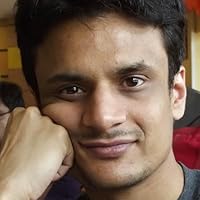
Now in paperback, the highly praised second collection by Vijay Seshadri, winner of the 2003 James Laughlin Award from the Academy of American Poets
We hold it against you that you survived. People better than you are dead, but you still punch the clock. Your body has wizened but has not bled —from “Survivor”
Vijay Seshadri is a Brooklyn, New York-based Pulitzer Prize winning poet, essayist, and literary critic. He won the 2014 Pulitzer Prize for his poetry book 3 Sections.
Seshadri has been an editor at The New Yorker, as well as an essayist and book reviewer in The New Yorker, The New York Times Book Review, The Threepenny Review, The American Scholar, and various literary quarterlies. He has received grants from the New York Foundation for the Arts, National Endowment for the Arts, the John Simon Guggenheim Memorial Foundation; and area studies fellowships from Columbia University.[3] As a professor and chair in the undergraduate writing and MFA program at Sarah Lawrence College he has taught courses on 'Non-Fiction Writing', 'Form and Feeling in Nonfiction Prose', 'Rational and Irrational Narrative', and 'Narrative Persuasion'.
We hold it against you that you survived. People better than you are dead, but you still punch the clock. Your body has wizened but has not bled
its substance out on the killing floor or flatlined in intensive care or vanished after school or stepped off the ledge in despair.
from "Survivor"
Vijay Seshadri's The Long Meadow is a thin volume of competent poetry. Seshadri uses an enviable array of vocabulary and unique perspectives to light his poems. While reading, I find them interesting; when I close the book and walk away, nothing--not a line, not an image, not even a provocative thought--remains. Without this brief review as a reminder, I'm sure I would forget I even read this volume in a month or so.
Even so, I am intrigued enough to seek out Seshadri's Pulitzer-prize winning collection 3 Sections. The Long Meadow is his second collection, and perhaps he better uses his gifts to create more substantive verse.
Before we turn away in shock and horror, though, we shouldn't fail to acknowledge again that at one time when he would pick up a stick to draw the birds stopped their singing and waited in anticipation, when he drew an arabesque in the sand, the earth itself shivered with delight.
Vijay Seshadri read as part of my Visiting Author's Series on 9/9/2005. This is a version of my spoken introduction for him:
In “The Long Meadow,” many of Vijay Seshadri’s poems take simple ideas or observations, and stretch them backward and forward seemingly beyond what should be their breaking point. But, because of Vijay’s strong guiding hand, he manages to give us regular, powerful shocks--of recognition of ourselves in things, and recognition of the essence of the things themselves, never before considered.
A poem that begins with a furrow in a hill gets linked not only to its physical beginnings as “a notch in a sheer cliff,” but also eventually to the very fact of human existence, all the while never unnecessarily calling attention to the momentousness of the poem; it sneaks up on you, and takes your breath away.
Vijay writes of moments where great choices hang in the balance; a life may lead one way to hope and possibility, or another to danger or despair. But also, especially in the second section of “The Long Meadow” he reveals a lightness, wit and easy humor, which does not lessen in any way the dramatic power of the poems elsewhere, but reveals the astonishing breadth of the author. His range simply confirms what those who have encountered his poetry already know: In sports parlance, he seems to be able to do it all, and mightily well at that.
I can't quite pinpoint what it is I love best about his writing. His simple evocation of the here and now or the ancient past. My favorite was his free verse story about his father's Civil War fixation. Good reading.
I liked this one while not being blown away by it. Definitely enjoyed the long prose poem piece about his father's strange interest in the American Civil War.
Picked it up at Wind City Books - probably the best thing about Casper, Wyoming. When I bought it, the gentleman there told me that his favorite poem by Seshadri was not included in this collection - that poem was why he had ordered it in for the store and he was disappointed that it wasn't there. And so he gave me a printout of it so that I would be able to read it for myself. The poem was "Family Happiness" and I have to agree that I liked it better than anything in this collection as well. That just means that I will pick up other books by this poet in the future.
I include this anecdote to show the reasons that you should support your local independent bookstore. And to remind myself to do the same despite my mammoth Amazon.com wishlist.
"I like the sense of play in these poems. He makes very skillful use of rhyme in several of the poems "Immediate City," "Survivor" and "North" for example. There is a mystery to most of these poems. They are also funny. Then there is the long prose poem "The Nature of the Chemical Bond," which is unlike anything else in the book.
However, I have to say that most of the poems didn't quite resonate with me, did not strike that deep chord of recognition, except for "Anima," which I found haunting. Many of the poems have scientific vocabulary and significance, an area in which I am sorely lacking. I gave it 3 stars because of Anima. Otherwise, I am afraid it would have been just 2.
For some reason it reminds me of Michelle Cliff's short story book A Store of a Million Items. They both approach the feelings of childhood and probably from a similar time period of the early to mid sixties."