Jump to ratings and reviews
Rate this book

O Reino #3

Jerusalém

Rate this book
Excerto
Como as substâncias se separavam logo à partida, entre as que avançavam com a vontade própria e as que esperavam com a obediência estática (e nisso dividiam-se como alguns homens). Os sapatos eram a obediência pura, a escravidão mesquinha, enojavam-lhe naquele momento; a sabujice destes materiais em relação ao homem. Nenhum cão é tão sabujo como estas substâncias.
Não há possibilidade de diálogo entre substâncias que nascem logo em campos opostos, em campos, não inimigos, que isso seria pensar na possibilidade de elevação do homem que agarra na arma para combater; ali, pelo contrário, o afastamento não era entre substâncias inimigas ou entre dois predadores que se preparam para combater por um pequeno território; tratava-se simplesmente de passividade absoluta de um lado, e do outro energia forte, que constrói ou destrói, mas que modifica sempre. Não somos uma coisa que espera, murmura Mylia, enquanto avança a passos fortes para a igreja.

256 pages, Paperback

First published January 1, 2005

79 people are currently reading
2922 people want to read

About the author

Gonçalo M. Tavares

113 books976 followers
Gonçalo M. Tavares was born in Luanda in 1970 and teaches Theory of Science in Lisbon.
Tavares has surprised his readers with the variety of books he has published since 2001. His work is being published in over 30 countries and it has been awarded an impressive amount of national and international literary prizes in a very short time. In 2005 he won the José Saramago Prize for young writers under 35. Jerusalém was also awarded the Prêmio Portugal Telecom de Literatura em Língua Portuguesa 2007 and the LER/Millenium Prize. His novel Aprender a rezar na Era de Técnica has received the prestigious Prize of the Best Foreign Book 2010 in France. This award has so far been given to authors like Salmon Rushdie, Elias Canetti, Robert Musil, Orhan Pamuk, John Updike, Philip Roth, Gabriel García Márquez and Colm Tóibín. Aprender a rezar na Era da Técnica was also shortlisted for the renowned French literary awards Femina Étranger Prize and Médicis Prize and won the Special Price of the Jury of the Grand Prix Littéraire du Web Cultura 2010. In 2011, Tavares received the renowned Grande Prêmio da Associação Portuguesa de Escritores, as well as the prestigious Prémio Literário Fernando Namora 2011. The author was also nominated for the renowned Dutch Europese Literatuurprijs 2013 and was on the Longlist of the Best Translated Book Award Fiction 2013.

Gonçalo M. Tavares nasceu em 1970. Os seus livros deram origem, em diferentes países, a peças de teatro, peças radiofónicas, curtas-metragens e objectos de artes plásticas, vídeos de arte, ópera, performances, projectos de arquitectura, teses académicas, etc.
Estão em curso cerca de 160 traduções distribuídas por trinta e dois países. Jerusalém foi o romance mais escolhido pelos críticos do Público para «Livro da Década».
Em Portugal recebeu vários prémios, entre os quais, o Prémio José Saramago (2005) e o Prémio LER/Millennium BCP (2004), com o romance Jerusalém (Caminho); o Grande Prémio de Conto da Associação Portuguesa de Escritores «Camilo Castelo Branco» (2007) com Água, Cão, Cavalo, Cabeça (Caminho). Recebeu, ainda, diversos prémios internacionais.

Ratings & Reviews

What do you think?
Rate this book

Friends & Following

Create a free account to discover what your friends think of this book!

Community Reviews

5 stars
1,192 (31%)
4 stars
1,573 (42%)
3 stars
735 (19%)
2 stars
176 (4%)
1 star
58 (1%)
Displaying 1 - 30 of 333 reviews
Profile Image for هدى يحيى.
Author 12 books17.9k followers
December 22, 2020

لكل محبي الجنون
هذه الرواية لكم

**********

هذه رواية لا يحب مؤلفها أشخاصه
ولا يريد من قراءه أن يحبونها بأي شكل
ربما هو تعبير عن قرفه من البشرية بصفة عامة

لا شخصية هنا يمكنك أن تتعاطف معها
كلهم مخابيل بطريقتهم الخاصة
وهم ليس إلا انعكاس للخبل الذي يتصف به مؤلفها بطريقة أو بأخرى :D

هذه ليست انتقادات أبدا
الرواية مفعمة بالشطط والجنون
مليئة بالأحداث اللامنطقية طبقا لحكمنا كبشر على الأشياء
لكنها حقا حقا اعجبتني

لا أستطيع أن أقول أنني أحببتها
لكنها أثارت إعجابي
أعجبني الجو العام .. الرمزية .. الجنون المهيمن على الأجواء
هذا العالم الذي صنعه تافاريس وجعلني أصدقه .. أكرهه .. وأعجب به

رواية لا يكتفي أحد بقراءتها مرة واحدة
المتعة لا تنتهي مع اكتشافك لكل ما حملها الكاتب من عجائب
يرتفع حاجباك دهشة كلما تبدت لك إحدى حيله الخفية
ولا يسعك سوى الإعجاب بهذا المؤلف المخبول الشديد الموهبة
...
Profile Image for Jim Fonseca.
1,163 reviews8,486 followers
October 1, 2023
Much of this novel is set in a psychiatric asylum. Characters transition in and out of the asylum during the story and we are never quite sure at any given time if those who are in should be out and those who are out should be in.

The basic story is that a mentally unstable woman has a hard life.

description

While institutionalized A murder of a young boy occurs and someone is sentenced for the murder, but it's not the murderer. And the real murderer is not one of those who have been previously institutionalized.

What does that tell us about how accurately this system of institutionalization functions? Will prison be any worse than the asylum for these damaged, borderline-functioning folks? That is pretty much the plot.

I wish I could say that there is a certain beauty in the lives of these damaged people but I don't see it. Their lives are marginal and their stories are depressing. Every character in the book is profoundly sad. The characters go through the motions of living a life with their damaged capacities.

What we do get are beautiful writing and some philosophical nuggets (Noble-prize winner Jose Saramago has raved about Tavares' writing):

"To be sick is to have made a mistake."

"Working as a gravedigger means seeing your own future."

"An animal that knew how to distance itself from empty pleasures would have a great biological advantage over human beings..."

"At eighteen, Mylia already knew how to humiliate men."

"...a single bullet weighs more than ten thousand words."

"...the world inside and the world outside [the asylum] were like two separate languages - without a single phoneme in common."

description

This is a good read although I prefer another novel I have read and reviewed by this author, Learning to Pray in the Age of Technique. While the work is translated from the Portuguese, there is no local color so it's not clear where the novel is set; obviously the intention of the author.

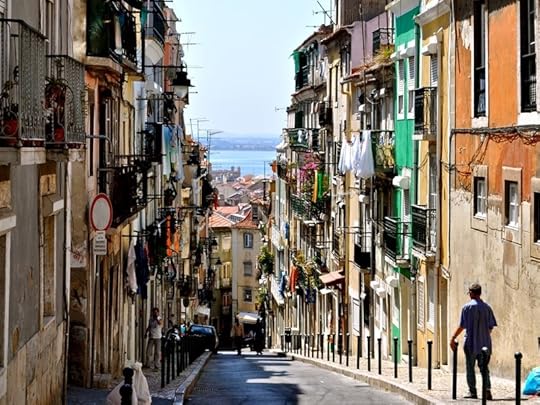
photo of Lisbon from eseb2013.com
photo of the author from wook.pt

[Edited, spoilers hidden 9/30/23]
Profile Image for Guille.
1,004 reviews3,272 followers
September 22, 2024

La historia se inicia en una iglesia. En ella, a las cuatro de la mañana, se le niega la entrada a Mylia por no ser horas.

Una historia con un título tomado del Salmo 137 de la Biblia, cuyos versos finales reproduzco a continuación:
Cómo cantar un cántico del Señor en tierra extraña.
¡Si me olvido de ti, Jerusalén, que se me seque la mano derecha!
¡Que se me pegue la lengua al paladar si no me acuerdo de ti,
si no pongo a Jerusalén en la cumbre de mis alegrías!

Señor, toma cuenta de nuestros enemigos
cuando decían de Jerusalén: ¡Arrasadla hasta sus cimientos!
¡Capital de Babilonia, criminal,
quién pudiera pagarte los males que nos has hecho,
quién pudiera estrellar tus hijos contra las piedras!
Muchos de ustedes serán conscientes de que la Biblia es como el refranero, cualquier cosa que se quiera hacer o pensar en ella encontrarán una frase que la respalde. Es más, los mismos versículos pueden significar una cosa o su contraria dependiendo de quién los interprete. Justamente es lo que ocurre con este Salmo cuyo significado no puede ser más cristalino para mí, y creo que también lo es para dos de los personajes de la novela que toman el verso subrayado como una especie de mantra en sus vidas: el salmo es una exhortación para no olvidar nunca los crímenes de los que se ha sido víctima y un reclamo de venganza. O, dicho de otro modo, exhorta a las víctimas a no renunciar a ser verdugos. Así, el horror se combatiría con horror.

No es la única forma de enfrentarse al mal. El profesor Theodor Busbeck personifica en la novela un tipo de racionalidad que busca regularidades históricas para comprenderlo y, quizás, dominarlo.
“Un pueblo débil, es decir «sin posibilidad de poner en situación de peligro a un ejército invasor», no debería considerarse «un pueblo bondadoso», pues los hechos no se debían a una cuestión de bondad por un lado, el de las víctimas, y de maldad por el otro, el de los verdugos o los que ejecutaban el terror. Se trataba sencillamente de una cuestión de posibilidad y no de voluntad o deseo. Un pueblo débil respecto de otro podía pasar rápidamente —es decir, en términos históricos, en menos de un siglo— a ser un pueblo fuerte por haberse fortalecido durante ese periodo de tiempo o, sencillamente, por haberse acercado a un pueblo todavía más débil.”
Si el horror es una consecuencia forzosa del enfrentamiento entre fortaleza y debilidad no hay responsabilidad ni culpa y, por tanto, no ha lugar para la venganza. El equilibrio de horrores se restablecerá en cuanto cambien las fortalezas relativas de los pueblos.
Frente a esta racionalidad de Theodor, y de la de otro siniestro personaje, Gomperz, autoritario y represivo gerente del sanatorio psiquiátrico Georg Rosenberg, se encuentran el resto de los personajes de la novela, todos ellos víctimas, algunos también verdugos, todos ellos con alguna tara.

En el fondo, ¿existe la maldad? ¿qué es la maldad? ¿la maldad y la bondad coexisten en cada uno de nosotros?, “¿puede alguien que se siente entusiasmado con su colección de sellos, o con el hallazgo de un nuevo elemento de la astronomía, meterse al día siguiente en el papel de quién origina el horror?”, ¿es el horror algo que podamos racionalizar? ¿Es producto de alguna tara? ¿El horror es producto de la locura? ¿Qué es estar loco? ¿Es la inmoralidad un síntoma de locura?

Soy de la opinión de que la literatura es mucho más eficaz planteando preguntas que respondiéndolas y que plantearse la pregunta es ya el inicio de la respuesta. Jerusalén es un ejemplo claro de esta gran literatura, de esa a la que el buen lector debería dedicarse, porque, parafraseando al propio Tavares, los ojos del lector solo deberían dirigirse a “lo que es espeso, lo que es fundamental. Lo urgente debe coincidir con lo esencial, con lo que altera de arriba abajo.”
Profile Image for BlackOxford.
1,095 reviews70.3k followers
July 8, 2020
Whose War? What Rationality?

In modern ethical theory, the medieval idea of Just War is still considered a thing worthy of serious consideration. The theory is that the decisions to go to war as well as how to conduct it are subject to rational criteria which can be applied coherently to past and future national conflict.

But of course Just War theory is entirely fatuous for the simple reason that there has never been nor never will be a war that isn't justified by its participants. This is obvious to all but the ethical theorists, who presume that the criteria of rationality they specify might somehow prevent or motivate action. On the contrary, the criteria provided in the theory are used to justify whatever action is taken, giving the framework of argument, as it were, in public debate. As one of Tavares's characters muses, "...every crime is perfectly justifiable when inspired by being sad."

Rationality in other words, that Jerusalem (the reference is to the 137th Psalm) where the human mind is worshipped, is a rather more slippery idea than many of us want to admit. And it is this theme of the fluid, often contradictory character of what we glibly call the rational that is the theme of Tavares's book. Tavares teaches (or taught) epistemology at university. It's not surprising therefore that he uses a technique not dissimilar from that used by Iris Murdoch in her last novel, Jackson's Dilemma, in which characters represent Heideggerian existentialist categories. Tavares personalises philosophical theories of rationality and then watches them collide.

The main character, Theodor, is a prototypical medieval rationalist who believes that there is a coherent order to the universe that is prior to an understanding by human beings. This leads him to a necessary belief in an ordering God, but also into some rather problematic positions.

Theodore is obsessed with both the Holocaust and mental illness as chapters in the long 'history of horror' that is the world. He is aware however that his presumption that these things are rational, that is they lead to an ultimate good, are either blasphemous or indicative of an inherent evil in the universe. He also knows that presuming a rationality to phenomena like the Holocaust is a bad idea since by finding reasons for such a thing, one justifies it. This is the same problem as with Just War theory. The fact that so many otherwise ordinary people participated in the Holocaust proves that human rationality (and indeed God) is not something to be touted but to be feared.

Theodor's wife, Mylia, is a schizophrenic, who like the other patients in the local mental hospital (the physical location of Jerusalem), has her own unique and rather interesting theory of rationality, a Heraclitan theory of becoming which is neatly summarised with regard to eggs: "Eggs, all eggs, contained a kind of concrete, material altruism that Mylia couldn't find in anything else in the world. Eggs appear because they want to disappear. They appear because they want to reappear as something else." God is the cosmos finding itself.

Other characters have other ideas of rationality and divinity. Hinnerk, the war-damaged veteran believes there is no underlying rationality in the world and consequently lives in a state of fearful paranoia. For him words, as the foundation of rationality, are essentially meaningless; there is no God. Mylia's disabled son, Kaas, is unable to use words and therefore has no real idea of what rationality might be. For him God is a malevolent, vengeful mystery who is the source of his disability. Gompertz, the administrator of the mental hospital, is the vulgar pragmatist for whom rationality is merely conventional behaviour; God, we might say, is 'best practice'. Hanna, the prostitute, gives no thought whatsoever to rationality in her unexplainable, Christ-like devotion to the homicidal Hinnerk; she simply believes.

Each of these stances carries with it an associated ethic - moralistic, hedonistic, sacrificial, self-sacrificial, and so on. So ethical crises occur continuously as the characters interact during stressful events. The result is a sort of tour through the mind of Jorge Luis Borges or Henry James. The reader isn't sure whom to trust, with whom to empathise. And I think this is precisely Tavares's point. The rational ain't as rational as it's made out to be, not in war, not in life.
Profile Image for brian   .
247 reviews3,890 followers
March 25, 2012
when the 'easy riders and raging bulls' generation was making their mark, a common critique was that the films reflected their creators lack of knowledge of the real world: that the director's reference points were other films rather than real life. while ford, hawks, and lang were out there wrasslin' horses, fightin' nazis, and bagging dames, depalma knew life only as defined by welles & hitchcock, scorsese experienced reality through the prism of powell/pressburger, and coppola knew nothing he wasn't taught by visconti. allow me to apply this critique, which i felt wildly unfair overstated and irrelevant, to tavares. and i suppose borges is to blame.

borges, that gamechanging mindblowing labyrinth-creating genius. borges, that chubby mama's boy who created entire genres predicated on the inside of a book as the totality of the universe. experience be damned! if one reads the sea wolf, he's a seaman! if he reads hard rain falling, he's already had his salad tossed.

there are those books which have greatness flitting all around their edges, but lack the real stink of human sin. such is jerusalem. tavares's characters are literary creations before anything else: each possesses a trait, an idiosyncrasy (a physical deformity, rough backstory, mental obsession, sexual proclivity, etc) which defines them, and tavares does all he can to reinforce the idea that people are nothing beyond a few prominent characteristics. for me, it feels an arid investigation; a means to circumvent a true(r) understanding of human behavior, of the human condition.

that said: when jerusalem soars, it reaches heights few books even know exist. i hit jerusalem with 3 stars as i - borgesically - stack it against tavares's as yet unwritten books. the pain, suicide, cannibalism, molestation, disease, and (vollmannesque) theory of historical horror in jerusalem are all interesting, but one can't deny the whiff of literary calculation.
Profile Image for Nelson Zagalo.
Author 15 books466 followers
March 6, 2019
"Jerusalém" (2004), de Gonçalo M. Tavares, situa-se num espaço de ação restrito, delimitado por um círculo de personagens que se organizam numa estrutura detetivesca, baseada na formula de mistério (que oferece informação a conta-gotas, para nos agarrar pela ânsia por respostas a quem?, quando?, como? e porquê?), e fá-lo imensamente bem, já que se sente dificuldade em pousar o livro depois de o começar. A particularidade da obra decorre do modo como sobre esta narração tipo é injectado um conjunto de conceitos complexos — o mal, a racionalidade, a loucura e a religião — que nunca chegam propriamente a ser detalhados. O autor opta por trabalhar as ideias de modo simbólico por forma a alargar o seu significado, mas também para poder fugir ao registo de ensaio e manter-se na circunscrição do romance.

Assim, temos um livro com capacidade para chegar a um público alargado, já que a leitura é facilitada pela enorme capacidade de retenção da nossa atenção, embora muito desse público chegue ao final sem saber muito bem o que fazer com todas as respostas que entretanto o autor lhes parece oferecer. Primeiro porque as respostas são-no apenas no que à trama diz respeito, já o simbólico é deixado completamente em aberto, criando um conflito no leitor, entre o recorte perfeito da trama e a indefinição do seu significado. Para quem ouse ler nesse simbolismo, encontrará as suas próprias respostas aos problemas enunciados, e é isso que o autor espera, quem não o ousar ficará à porta do livro.

Como em todo o artefacto simbólico, as leituras que se fazem do significado da obra dependem mais da experiência e mundo do leitor do que daquilo que o autor coloca no artefacto. As pistas espalhadas ao longo das 250 páginas levantam em nós associações de ideias, fazem-nos trabalhar para a compreensão do que estamos a ler. Cada personagem é uma peça do puzzle de Tavares, mas este nunca a coloca no seu lugar, cria-as e fá-las dançar na nossa frente, instiga-nos a colocá-las no tabuleiro por nós imaginado. Todas as peças estão interligadas, o que nos diz que fazem todas parte de um mesmo quadro, mas aquilo que as liga são meras ações de causa-efeito, o que importa é o que cada um representa nesse quadro — o médico visionário e o médico carrasco, a mulher louca e o amante louco, o filho que não é filho e o assassino. Todos são meros humanos, dotados de imperfeição, comportando significado, ainda que simbólico, sobre o modo como o mal acontece, de onde surge e como se sustenta.

“Eis a fórmula: falta algo ao homem normal, ao homem saudável, e ele — como qualquer criança – procura encontrar o que lhe falta, principalmente porque esta sensação confunde-se com a sensação de roubo: alguém ou algo me levou uma parte — parte, continuemos a chamar-lhe assim, espiritual — então o homem normal, o homem saudável, vai à procura do ladrão e do objecto roubado, mas neste caso ele não percebe aquilo que lhe foi roubado, não conhece a forma e o conteúdo da substância que agora faz falta. Descobrir o que fora roubado a nível espiritual, era, para Theodor, um objectivo indispensável. O homem saudável quer encontrar Deus, diz Theodor Busbeck de modo mais directo." in "Jerusalém", Gonçalo M. Tavares

No final, percebemos que é uma obra talhada em busca da perfeição, que tudo está como está, da primeira à última página, com um objetivo concreto. Nada é dito ao acaso, tudo é perfeitamente racionalizado, ainda que tudo pareça nascido da loucura (repare-se no discurso exacerbado pela repetição), e só esta dicotomia granjearia nota máxima. Mas na verdade o artefacto falha em elevar-se acima da aparência de perfeição, pela falta de robustez nos conceitos que defende, já que não são suficientemente aprofundados. Fica tudo demasiado à superfície, com as leituras a surgir completamente divergentes. É um livro de 250 páginas, mas com mais espaços em branco do que de texto, de modo que na verdade não chega a passar das 100 páginas. Os livros não se medem em número de palavras, mas os temas também não são todos iguais, e tratar assuntos desta complexidade em tão breves resenhas de ideias, serve apenas no abrir de portas. Como o livro faz parte uma série — "O Reino", composto de 4 livros incluindo este — é provável que a leitura da série completa dê acesso a algo que só este livro não consegue dar. Vi entretanto que os 4 livros que compõem a série "O Reino" — "Um Homem Klaus Klump", "A máquina de Joseph Walser", "Jerusalém", "Aprender a rezar na Era da Técnica" — foram editados, em 2017, num único livro (800 pp.), o que deverá fazer pleno sentido.


Publicado no VI:
https://virtual-illusion.blogspot.com...
Profile Image for Os Livros da Lena.
298 reviews319 followers
October 16, 2022
REVIEW | Livros de Maio | Jerusalém, de Gonçalo M. Tavares ⭐️⭐️⭐️⭐️⭐️
31/2020
Foi a primeira vez que li Gonçalo M. Tavares e fiquei totalmente rendida! 🤓📖📚
O Mestre Saramago disse que há um antes e um depois de Gonçalo M. Tavares. Não podia concordar mais!
Adorei a escrita do autor. Este foi o primeiro que li e vou querer ler tudo.
A história de Jerusalém é uma história fabulosa, tem uma narrativa arrebatadora, densa, intensa, que nos faz querer acompanhar o fado de cada uma das personagens, acompanhá-las na sua dor e tentar, de alguma maneira, apaziguá-la.
Mylia, uma personagem profunda e dolorosa, tão cheia de dor.
Gomperz é, na minha opinião, a personagem mais revoltante e desumana da obra.
Ernst, o homem que a vida deixou viver apenas quando se tornou fraco.
Hinnerk, a personagem que prova a empiria do karma, que ele existe e é perfeito na sua existência.
Que obra tão cheia! Gonçalo M. Tavares entrou directamente para o meu top 10 de autores portugueses contemporâneos favoritos.
Profile Image for Teresa.
1,492 reviews
August 16, 2017
Quase vinte e quatro horas depois de ter terminado o livro, ainda não sei o que pensar e dizer sobre isto.

É original.
Lê-se bem e depressa.
A escrita é bonita.
Tem muitas personagens: uma mulher esquizofrênica (?); um potencial suicida; um médico - e marido cruel - que ambiciona descobrir uma fórmula que calcule o futuro da humanidade; uma prostituta; um psicopata; uma criança deficiente. Uns resumos sobre loucos internados num hospício; uns textos sobre prisioneiros de um campo de concentração (não tenho a certeza, pareceu-me...). Em resumo: uma enciclopédia do Mal e da Loucura em fichas curtas.

Eu, que até sou uma choramingas, deveria ter ficado seriamente perturbada com tanto horror mas, fiquei completamente indiferente.
Será que o objectivo deste livro é demonstrar que quando a violência e a desgraça são uma constante, quem assiste habitua-se e fica insensível?

E o raio das estrelas? Cinco ou uma? Um-dó-li-tá...
Profile Image for João Carlos.
670 reviews316 followers
December 18, 2016

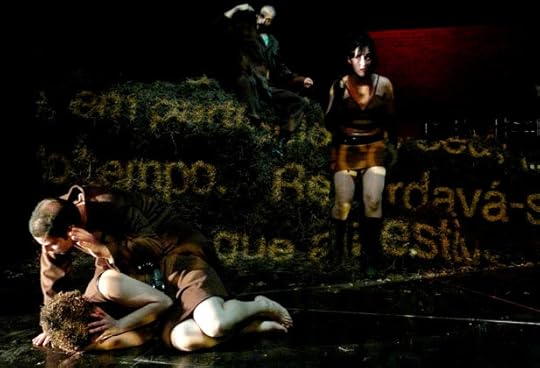
Jerusalém - Peça teatral pelo grupo Teatro O Bando


”Jerusalém” (2004) - tem trinta e dois capítulos, com numeração romana, cada capítulo tem o nome de uma ou mais personagens e está subdividido em partes numeradas, à excepção dos capítulos IX Os loucos e XV Europa 02 - é o terceiro livro da denominada tetralogia O Reino, com ”Um Homem: Klaus Klump” (2003) e ”A Máquina de Joseph Walser (2004), respectivamente, primeiro e segundo volume, sendo que ”Aprender a Rezar na Era da Técnica” (2007) é o quarto.
Numa madrugada de uma cidade sem nome, cinco pessoas, três homens, Ernst, Theodor e Hinnerk e duas mulheres, Mylia e Hanna, saem das suas casas, um pouco à deriva, quase como sonâmbulos, procurando consolo para o seu sofrimento físico e psicológico.
As cinco personagens estão interligadas numa teia narrativa que vai sendo construída e unificada – no espaço e no tempo - através de flashbacks que vão explicando o seu comportamento, as suas angústias e as suas preocupações, na ânsia de se poderem libertar do sofrimento, da dor, do desespero e do mal.
Mais tarde surge um miúdo com doze anos de idade, Kaas, criado como filho do Dr. Theodor Busbeck, um reputado médico psiquiatra e investigador, mas os seus progenitores são Mylia (ex-mulher de Theodor) e Ernst Spengler que o conceberam no Hospício Georg Rosenberg, quando ambos o frequentaram para tratarem da esquizofrenia.
O reputado médico Theodor Busbeck pretende fazer um “ (…) estudo que resultasse num gráfico – um único gráfico que resumisse, que permitisse estabelecer uma relação entre o horror e o tempo. Perceber se o horror está a diminuir ao longo dos séculos ou a aumentar. Se é estável. (…) Chegando ao gráfico do horror distribuído pelo tempo poderia então começar a pensar em algo ainda mais importante: a fórmula.” (Pág. 50 – 51); é neste contexto que Gonçalo M. Tavares teoriza sobre questões morais e filosóficas, sobre a natureza do mal e da crueldade; mas também reflexiona sobre a palavra ou as palavras como Hinnerk Obst, um ex-combatente de guerra, em determinado momento refere: ”Havia como que enterrado os grandes discursos, ou tiradas, num fosso. As palavras aborreciam-no. Não apenas os adjectivos, os próprios substantivos que designavam coisas do mundo concreto, e mesmo os verbos. Desistira das palavras.”. (Pág. 95)
Gonçalo M. Tavares constrói um romance invulgar, mantendo sempre um suspense surpreendente; o leitor tenta antever e antecipar o desfecho de cada uma das partes ou dos capítulos, porque existe uma indicação prévia, o nome do protagonista ou dos protagonistas da acção; no entanto, o comportamento imprevisto ou intempestivo das personagens deixa-nos expectantes no desfecho seguinte, suscitando a incerteza e a ansiedade. Concluindo, o leitor acaba por ser interveniente na narrativa provocando uma intensa reacção ao se associar à inquietude e à agonia das personagens.
”Jerusalém” é um romance sombrio e brilhante.
Profile Image for Paulo Rodrigues.
253 reviews18 followers
May 21, 2023
Jerusalém de Gonçalo M. Tavares
prémio literário José Saramago em 2005

Apesar de todas as personagens serem  importantes nesta obra  tudo gira em torno  de  Mylia,  esquizofrénica, que casa com Theodor, o médico que a tenta curar .
Cada uma das pessoas  que passam pela vida de Mylia encarna uma das temáticas que nos são apresentadas a partir dos seus comportamentos, dores e angústias  . Theodor, médico que paralelamente  investiga os horrores que  ao longo da História aconteceram no mundo como o Holocausto. Ernst também ele esquizofrénico, com  deficiência física e psicológica, Hinnerk, marcado pela guerra, homem  assustador,que anda sempre armado, Hanna, a prostituta, que  vive num constante estado de medo, Kass, o menino com deficiência motora, e problemas de fala, e  Gomperz, o gestor do hospício, autoritário e repressivo.
Com variados temas a construir esta narrativa entregues através de  metáforas e labirintos literários que fundem as personagens, e ligam as histórias entre si. Escrita de forma cruelmente verídica ,e  apontamentos subtis de  humor, a narrativa  desenvolve-se  a partir do que vamos sabendo de  todas estas pessoas  em avanços e recuos no tempo .
Todas estas temáticas vão sendo deixadas ao longo do livro como se fossem  peças de vários puzzles espalhadas no chão, e nós leitores vamos absorvendo todas as partes e tentamos construir este quadro de várias camadas e multicolor  .
A loucura e o absurdo da  vida humana, a gradual destruição do corpo e da mente, a banalidade do mal, a solidão e a dor, seja mental ou física.
Tudo isto é-nos dado em partes separadas e avulsas para depois  encaixarem  perfeitamente umas nas outras.
As últimas 20/30 páginas parecem tiradas de um Thriller daqueles que nos sustém a respiração, e só voltamos a respirar normalmente  quando chegámos ao fim, e ficamos a interrogar-nos, o que foi isto ?
Ler este livro fez-me sentir  uma explosão de  emoções e sentimentos  que poucos livros e escritores  me fazem sentir,tudo isto em apenas 250 páginas de uma autêntica obra de arte, e uma escrita muito perto da perfeição .
O Gonçalo M. Tavares entrou diretamente para o meu top de escritores.
Leiam vale muito a pena
Profile Image for Ritinha.
712 reviews136 followers
January 10, 2018
Há aqui uma escrita cerebral (no pior sentido do termo) e propositada para «mostrar trabalho», mas com o viço de eficiência inútil que é um cão a ladrar dentro de casa, na sala com melhor acústica. É capaz, sabe fazer, mas não chega onde é suposto.
Neste Jerusalém tudo é calculado para leituras abertas, numa escrita que talvez pretenda emular Kafka mas se fica por um «Saramago menor».
Outro elemento que muito me irritou foi a ambição. Do uso de nomes e contextos a colocarem a acção numa Europa Central do imaginário comum ao título, também ele de passo maior que a perna.
Este é também um livro machista (e até misógino): as personagens femininas são dominadas pelas masculinas, algumas daquelas são loucas, outras realizam condutas morais reprováveis, estando todas elas subtraídas ao domínio dos contextos da sua existência (o domínio masculino atravessa toda a narrativa).
As temáticas são artificiais e tornam as personagens pobres, vazias, clichés: o médico que não tem em si nada mais de característico além de ser médico é exemplo-tipo da fraca densidade das personagens.
Por tudo isto e mais alguma coisa, Saramago apenas tinha razão em invejar o autor por ter apenas 35 anos. [O Jerusalém recebeu o Prémio Saramago, e consta que, aquando da atribuição, o Saramago disse: “é um grande livro, que pertence à grande literatura ocidental. Gonçalo M. Tavares não tem o direito de escrever tão bem apenas aos 35 anos: dá vontade de lhe bater!”]
Profile Image for Mariel.
667 reviews1,209 followers
December 20, 2012
Hinnerk lived in constant fear of his fellow men- and yet, how many times, when he passed them on the street, had people said (and so casually... as though reciting their address or giving directions): look at that one, he has the face of a killer.
Hinnerk lowered his head so he wouldn't hear.



Mylia. Ernst, Mylia, Gomperz. Mylia, Theodor. Mylia, Theodor, Kaas, Kass, Mylia, Ernst, Hinnerk. Hinnerk, Hanna. Theodor, Hanna. Mylia, Ernst, Hinnerk. Wanted: someone no one will look at. The floor doesn't move under the feet in this foot forward order of backwards slow-motion running. I had the feeling of reading a script with erasing words before you get to the important part where you lived. There are no small parts, only fodder for the everyone digs everyone's grave in a twisted version of group effort. Mariel was here written in chalk on the wall instead of Mylia's hunger that reminds her she's not dead yet. Don't look at Hinnerk, look at the table where the prostitute Hanna has left the money on the table. He could be a de facto pimp. Does he feel like her pimp, or is she just his means of living and don't think about it too much. I liked the acknowledgement that the roles were loose in this way, a don't think about it too much. That was better than the character introductions before the chapter like a casting call. They weren't always there, sometimes there would be no name announcements at all, and then it felt like just being hungry and you at least weren't dead. I had less of the measured silence like a man behind the curtain (maybe a Dogme '95 director, maybe a Lars Von Trier) in these chapters. Hanna could be a night owl by proxy, not sleeping. Could bes instead of represent park benches for the homeless cause. Hinnerk has bags under his eyes for nightmares. His nightmares are the stuff of the nightmares kids have like going down a roller coaster and throwing your hands in the air for the thrill of screaming together. The singer on stage says throw your hands in the air. The police say put your hands in the air where I can see them. The bags fill with pus to protect his scars from their permanent damage. It could be post traumatic stress from war but it feels like not ripping off a band-aid to me. A shadow, ghostly. Mylia is the stand-in for a schizophrenic. She diagnosed herself. She saw a part and said that she had what it takes to hit all of the right notes. The first scene of a church after everyone has already gone to bed, save for the night guard for the part because he doesn't fit snug in a bed bug, becomes the scene after a lot of other scenes. Walk in and walk off. I have to pee RIGHT NOW pee dance to invite the it is raining guns and mayhem. Mylia is waiting for her final curtain call before she goes back stage and relives the highlights of bright lights, big city. Follow Hanna's short skirt into a hotel room. Everyone is going to their place. Kaaaaaaaaas Buckbeaaaaaaaaaaaaaak on little legs to his death. They say I'm a killer and I'm a gonna kill this Busbeaaaaak. So goes the wisdom like corn thrown onto the ground by the farmer kills the hen peckers. Deny your mother, deny your son goes the circle of life song from Mylia and Kaas. They took him, anyway. "No" is what Kaas says when meeting his mother for the first time upon the release from the white collar mental asylum lorded over by Gomperz and all of his lesser puppets. In my mental stage the nurses are played by oompa loompas. This will happen to you if... You shouldn't have done this... If musical chairs started up and everyone scrambled for their places would anyone know where they belonged in this book? No, she is not my mother. No, I don't know that handsome face. She looked twenty five under the street lights, would Theodor say if questioned about his latest sexual acquisition around the water cooler.

Theodor had this grand scheme of predicting the future man on man atrocities on a large scale by staring at photographs of the holocaust. It is like staring at yourself in a mirror until your face balloons into a giant pus bag to prevent yourself from permanent scarring. It was completely ridiculous this idea that the world would set to zero if all of the players walked off the set in single file like pawns off of a chess board. He is surprised that the countries deemed as future victims were pissed off. I would have wondered if the victims didn't get let off the hook for their own crimes because of this (like Israel for decades). Society loves preemptive measurements and wouldn't it be neat to marginalize someone based on what they were going to do? I can feel the collective look away pulse when I see it. Why did these people pull the hoodie jacket over their own eyes? I feel societal hope slip away. Theodor the great doctor WANTED it to as if he could wipe away all the chalk boards. He says. Speeches on a dark stage. Where was the he's alive wrist touching pulse? I didn't like the stage pulling feeling of Jerusalem. There wasn't gravity denying them to their fates. Dehumanization eaten up in the machine. It's a refusal to fill out your blood and heart beat to say look at them and not ask why YOU feel that way. No, I don't know them. Not mine. I liked what I liked until I tried to live there and couldn't. The holders of the keys sing the neon colored oompa loompa Greek chorus of this is what happens when you aren't people are people. What can you get out of a bunch of photographs if you want to see what it looks like when the lights are out. Bodies, meat, suits. Lights go down. The sun dies. The moon is hiding. Open up the church and pee because you killed someone you didn't. They'll watch you and you aren't a person in prison and you will like this better because you feel more private as a forgotten person than you did as a non-person in a mental asylum. What if someone wanted to look you in the eye, not scoop up your bodily profits? What then?

I'm so tired so this book went threw me like a ghost that cannot touch anything.
Profile Image for jeremy.
1,202 reviews309 followers
June 20, 2009
gonçalo tavares may very well be, in the coming months and years, the world's hottest literary sensation. born in 1970, the portuguese writer published his first book in 2002, and has since gone on to write well over a dozen more. his works have already been translated into nearly twenty-five languages and he is quickly amassing quite the collection of literary awards. as well, he has drawn high praise from a diverse array of prominent authors, including josé saramago and enrique vila-matas.

jerusalem is the first of his books to appear in english translation within the united states (some of his books can be found in english, but as yet have only been published in india). winner of the prestigious portugal telecom prize (2007) and the josé saramago prize (2005), jerusalem is a magnificent and powerful work of fiction. slim in length, yet resounding in effect, jerusalem explores the interplay of a half dozen lives touched by violence, madness, duty, control, self-criticism, and doubt. the character's lives intersect unexpectedly, lending the narrative the necessary thrust to allow the reader to consider the repercussions of history and human nature on the individual. with commanding prose and a thrilling plot, jerusalem is an important work, and, perhaps, an early effort from a literary master in the making.

during the ceremony bestowing the award that bears his name, saramago said, "jerusalem is a great book, and truly deserves a place among the great works of western literature. gonçalo m. tavares has no right to be writing so well at the age of 35. one feels like punching him."

other works by tavares have been highly lauded, and will presumably (and hopefully) find their way into english translation soon. amongst these are the other three books of his "kingdom" series (which includes jerusalem): um homem: klaus klump (klaus klump: a man), a máquina de joseph walser (joseph walser's machine), and aprender a rezar na era da técnica (learning to pray in the age of technology). his "neighborhood" series has also garnered considerable acclaim: o senhor valéry, o senhor henri, o senhor brecht, o senhor juarroz, o senhor calvino, o senhor kraus, o senhor walser, o senhor eliot, o senhor breton, o senhor swedenborg, and o senhor salinger. the "neighborhood" series is apparently comprised of short stories related to and inspired by the author named in the book's title. if all that were not enough, tavares has also written poetry and drama.

gonçalo tavares, arguably the most prolific writer in recent memory, is poised for great things. no living writer has enjoyed so quick an ascendancy, and it appears his imagination and talent are limitless. saramago has said "...there is very much a before gonçalo m. tavares and an after... i've predicted that in thirty years' time, if not before, he will win the nobel prize and i'm sure my prediction will come true. my only regret is that i won't be there to give him a congratulatory hug."
Profile Image for Eylül Görmüş.
754 reviews4,669 followers
March 9, 2023
"Tanışmayan iki kişi arasındaki en kısa karşılaşmada, bu iki kişi birbirlerine tek sözcük etmeseler bile, ötekinin entelektüel yeterliliğini anlamak için bakışını dikkatle gözlemek yetecektir. Söyledikleri yeterli değildir, hepsi sadece iyi bir bellekten ibaret olabilir. Kendine bir ortak arıyorsan kulaklarını kapat ve gözlerine dikkat et, hareket ediş biçimlerine; derinliklerine, nasıl şeylerin üzerine atıldıklarına, bir nesneyi nasıl görüp kavradıklarına, onun içine nasıl girdiklerine, içinden nasıl çıktıklarına ya da nasıl orada kaldıklarına. Gözlerin dünyadaki güzergâhı, aklın güzergâhıdır."

Saramago'nun hakkında "henüz 35 yaşında bu kadar iyi yazmaya hakkı yok; insanın onu dövesi geliyor" dediği birini okumamam takdir edersiniz ki düşünülemezdi; pek övülen romanı Kudüs ile Portekizli yazar Gonçalo M. Tavares'le tanışmış oldum.

Kudüs tarifi zor bir roman açıkçası. Çünkü hem anlatımı parçalı, hem anlattıkları. Zira bir delilik öyküsü okuyoruz; aslında deliliklerinden değil de toplumun delilikle imtihanını veremeyişinden parçalanmış zihinlerin öykülerini - dolayısıyla evet, sanırım sözcük "parçalı" değil "paramparça" olmalı. Paramparça bir kitap bu; iyi anlamda.

Akıl hastanesindeki iki ana karakterimiz Mylia ve Ernst'in dışında bir de kontrol edilemez bir kötülük taşıyan Hinnerk, bence harika çizilmiş fahişe Hanna, toplumun tüm ikiyüzlülüklerini bünyesinde toplamış doktor Gomperz, küçük Kaas ve vahşetin toplumlara ne yaptığını inceleyen Theodor var. Kısacık bir kitaptaki bunca karakterin her birinin bu kadar akılda kalıcı olması ancak büyük bir yazarın kotarabileceği bir iş. Kudüs herkesin seveceği bir roman değil bence ama aykırı, çok katmanlı ve müthiş zengin bir metin okumak istiyorsanız buyrunuz. Theodor'un vahşete dair sözleriyle bitirmek istiyorum:

"Vahşet azalıyorsa, yüz nesil sonra daha mutlu olacağımız sonucuna varabiliriz, ama vahşet artıyorsa, bu Tarih sona erecektir ve son vahşet dalgası arkasında hiçbir şey bırakmayacaktır. Ve bundan sonra daha iyi, daha etik bir Tarih ortaya çıkabilir. Her iki varsayım da bize iyimserlik aşılıyor, ama eğer vahşet sabitse, o zaman hiç umut yok demektir. Hiç. Her şey böyle sürer gider."
Profile Image for Jonfaith.
2,145 reviews1,745 followers
December 28, 2012
Jerusalem is a feast of ashes. It is a wet repast. The cracking sounds stones make when thrown into the night. Jerusalem is a noir: a Double Indemnity staged in a psychotic ward. This is a cess pit for dreams. Abandoned visions soak into one another. Much like nightmares, the setting is uncertain, somehow fluid. The witnesses bear the barks: the limps, the bags under the eyes, the feeble cries. What could possibly eclipse the spread sheet of Atrocity? Only the howls, agonies and hunger of the disavowed rise to the Savior's ear.

I appreciate the structure of the novel, the feigns and asides which propel the bizarre cast forward, always forward, toting baggage and damage like no one's business. The shifts in perspective sustain the tension. Somehow that isn't the point. It doesn't mater who dies or who pulled the trigue.

Jerusalem was a well appreciated holiday gift, a disturbing excursion for a winter's day
Profile Image for Maria Ferreira.
227 reviews50 followers
March 28, 2019
Jerusalém? Não entendi o porquê deste título, uma vez que esta palavra aparece apenas uma única vez, no meio de uma frase.

Estou com alguma dificuldade em compreender este autor, certamente por mea culpa. Não me sinto atraída pelas histórias que conta, noto alguma ausência de detalhes, falta descrição aos espaços, falta detalhes físicos e emocionais nas personagens. O que alguns escritores têm em demasia em GMT peca por defeito.

Em Jerusalém temos várias personagens, mas todas são caraterizadas de um modo superficial, dois médicos, um casal de esquizofrénicos, um assassino e uma prostituta, sabemos apenas o nome das personagens, e quem é o quê, mas sinto falta de algo mais, para que possamos sentir as personagens vivas.

A ação decorre não sabemos onde, apenas temos os nomes dos personagens, das ruas, do hospício numa língua estrangeira, se ao leitor fosse dada a informação do local da história, a envolvência seria maior, poderíamos pensar na história e situá-la segundo os hábitos e tradições do próprio espaço e do próprio povo, a sua ausência deixa toda a história em aberto, não é a mesma coisa esta ação passar no norte da Europa ou no sul da América.

A historia fala de um médico (não sabemos exatamente a sua especialidade, deduzo eu que seja psiquiatra) que desenvolve uma investigação académica. Uma mulher a quem os médicos lhe retiraram a possibilidade de ser mãe sem o seu consentimento. Dois assassinatos, uma criança e um adulto e um hospício. Muitos assuntos pouco explorados.

A escrita por capítulos faz-me lembrar a escrita de Dan Brown, termina o capítulo em suspense e ficamos desejosos de saber o que vem a seguir, prende o leitor ao livro, neste contexto, creio que GMT esteve muito bem.
Profile Image for Chad Post.
251 reviews302 followers
July 7, 2012
Open Letter had a chance to publish this book and didn't. Totally kills me. Granted, we only had a sample and a desire to do some of "The Neighborhood" books first, but still. If there's a top heart-wrenching moment in publishing, it's when the book you put your heart into gets bitch-slapped by the NY Times. If there's a second worst wrenching moment of the publishing heart, it's reading a book you passed on and fucking loving it.

This is spacial modernism at its best. I'm not sure exactly what I mean by that, but it seems like the most appropriate term to sum up what I thought of this book. Each chapter opens with a list (between one and many) of characters appearing in that character. Then, in short, direct, anti-poetic statements it describes the lives and movements of a strangely connected set of people who are all out on the streets between 3am and 5am on a fateful night in May.

Opening with the near climax, the book traces its way back through the lives of these characters who include a psychologist whose father never respected him, the psychologist's insane wife, her son, her lover, a prostitute, and a man with anger issues and a penchant for guns.

As the book evolves, you see the characters movements almost like pieces on a chessboard as their paths cross in ways that builds a palpable sense of doom and catastrophe . . .

Anyway, read 20 pages of this. (Maybe Dalkey has a sample somewhere? Can't seem to find one, but their website makes my eyes bleed.) After you do, you'll want to read more. I wish we had way back when so that I could be 5-starring one of our own publications. Ah well.
Profile Image for MJ Nicholls.
2,274 reviews4,848 followers
August 26, 2014
Tavares is Portugal’s latest literary lion, winning prestigious Portuguese awards for his bleak and poetic novels about morally complex characters.

This short book connects six or seven people—murderer, schizophrenic, doctor, prostitute, mental patient and handicapped boy—weaving their stories together through clever leaps in structure and time.

Each story is incredibly bleak, with smouldering insights into the human mind, although the fragmented narrative occasionally loses focus when Tavares expands on irrelevant details. The stories are threadbare in their construction: most chapters taking up one or two pages, with the longer sections filled with internal detail or long-winded information.

The one ‘stable’ character, the doctor Theodor, completes an eight-volume tome on the history of human suffering—an all-too-apt irony given the unremitting bleakness of these stories. The world is bleak, the people crooks and maniacs, and fate is sadistic bitch.

Not a Christmas stocking filler.
Profile Image for Alma.
751 reviews
July 8, 2020
"Havia sido operada uma vez, depois outra, quatro vezes operada. E agora aquilo. Aquele ruído no centro do corpo, no miolo. Estar doente era uma forma de exercitar a resistência à dor ou a apetência para se aproximar de um deus qualquer."
Profile Image for Jonathan.
1,009 reviews1,229 followers
July 15, 2019
Very good indeed. Will be diving into more of his work.
Profile Image for ESRAA MOHAMED.
878 reviews347 followers
December 31, 2017
الرواية جميلة أبدع الكاتب في طريقة سرد الأحداث لتجد نفسك في آخر سطر واقفا في مشهد أول سطر خطئي الوحيد قرائتها علي فترة زمنية طويلة كل ما تريده بعد الانتهاء منها هو إعادتها مرة أخري لتتعمق في عوالم الشخصيات ... الدكتور العقلاني الذي يثبت وجود شعرة بين الجنون والعبقرية الذي يفسر كل شيء بالعلم والمنطق والمعادلات فالأحاسيس والمشاعر بالنسبة له عبارة عن تفاعلات كيميائية ليجد نفسه افتتن بالمرأة الحالمة المؤمنة بعالم الأرواح والعلاقات الإنسانية .... يجعلك الكاتب تعيش المخاوف والشكوك لكل شخص طريقة تحوله من إنسان إلي وحش كاسر لمجرد إشباع شعور غامض يعتريهم مكتشفا الشيطان الكامن بداخلهم حتي لو بدوا مشتتين وتائهين .... تداخل المشاعر وإحساس بالضياع لكل من في الرواية حتي من فقدوا منطقهم وعقلهم المجانين تائهين ... هينريك وهانا وعلاقتهم الغامضة وإرنست وميليا وعلاقتهم الشغوفة وثيودور وجومبرز وصداقتهم اللدودة وكاس الفتي الضحية لكل هؤلاء ... كل هؤلاء ستعيش ألامهم حتي لو اعتبرتهم من أهل الشر ستجد نفسك تشعر بالشفقة تجاههم ...
" لا يوجد ما يسمي بدولة أو شعب كُتب عليه المعاناة ولا شعوب وهبت عبقرية خاصة تسبب العناء لغيرها ، إن اخترت لحظة تاريخية معينة أو عام ما وحللتها من منظور شامل ستتعرف علي خلل في ميزان المعاناة التي توضع فيها أمة معينة "
" كان علي نفس القدر من الإساءة أن يتم تصنيفك كمستبد مستقبلي أو كضحية مستقبلية "


استمتعوا ...
دمتم قراء ... ❤❤❤
Profile Image for David.
1,682 reviews
February 2, 2017
This book has been highly recommended or reviewed by many of my GR friends so perhaps I had high expectations. Yet literally from the first few pages I was hooked and although I started it late one night and finished it the next day, it should be a one sitting read.

Simply put, WOW.

Perhaps its not the most pleasant of themes but the way the story moves along, the startling characters, and yes, maybe even the theme of the insane asylum, made this book impossible to put down. Dreary, bleak and yet weirdly satisfying to read. Weird because I typically don't enjoy this type of dark books. However I just ordered Klaus Klump.

Very, very good. Thank you to my GR friends once again.
Profile Image for Nikos Tsentemeidis.
428 reviews310 followers
April 17, 2017
Φαίνεται πως ο συγγραφέας έχει ταλέντο. Γράφει ιδιαίτερα και με τράβηξε από την αρχή. Ωστόσο ήταν λίγο αχρωμος, ίσως και η ιστορία δεν μου άρεσε πολύ. Θα τον ξαναδιαβάσω, όμως σε καμία περίπτωση δεν είναι ο νέος Saramago, όπως διαφημίζεται, τουλάχιστον όχι ακόμα.
Profile Image for Inês Sousa.
211 reviews36 followers
Read
November 12, 2023
Acho que é a primeira vez que não vou dar estrelas a um livro porque estou ainda perdida. Todo o livro foi um labirinto para mim, toda a história foi um relatar de acontecimentos que estão interligados, ainda que de uma forma temporal diferente. As personagens eram todas estranhas, loucas vá, mas que não são fáceis de esquecer.

Uma das coisas que consigo elogiar já é a forma como o autor dividiu os capítulos, ajudando o leitor ao mencionar as personagens em cada início, no título. De resto... ainda estou a pensar.

Opinião alargada em breve.
Profile Image for Jim Elkins.
361 reviews454 followers
Read
December 10, 2023
A fitful imagination

It is easy to agree with Saramango's opinion, quoted on the cover: "Tavares has no right to be writing so well at the age of 35. One feels like punching him!"

Still, there are many faults. Tavares plans very carefully, and he likes to hint at his planning in the novel's structure. But the numbered sections, Roman-numbered chapters, and chapter titles consisting of the names of the characters in each chapter, don't add expressive power or momentum: they read like devices that helped the author organize the author's material, or, worse, signs left in the text to indicate the work that went into it.

Many of the numbered sections read like exercises in writing for the theater: they have a dramatis personae, a stage for the action, an unexpected ending. The sections can be more like set pieces than prose poems, more like fragments for a novel than parts of a novel about fragmentation.

Tavares's psychological insights also come in bursts: a paragraph, a page, two or three pages at most. They do not always accumulate into the sense that characters are changing. This is not a representation of the world as a fragmented place, and because it isn't, it reads as a limitation of Tavares's imagination. I care for each of the characters in a fitful way: perhaps during an intense or insightful page-long description, and then again, differently, at some later moment in the book. But my care, and my memory of the characters, doesn't grow -- except artificially, when some characters are shown to have suffered in many different ways at different moments in their lives.

Tavares has a deficient sense of the relation between fate, evil, and will. The book presents itself as a meditation on those themes, but he seems to think that a series of coincidences, in which characters wander and then meet in unpredictable ways, does the work of philosophic inquiry. Actually it usually means nothing, because he doesn't draws consequences or build on the apparently random meetings. Some are surrealistic (a woman gets the chance to point a gun at the murderer of her child, without knowing who he is), some are fatalistic, others seem to be about the inexorable nature of evil (a theme that one of the characters researches in an inappropriately quantitative manner), and still others are apparently about the world's randomness and the powerlessness of will. But none of the intersections of characters can function to support any of those various perspectives, both because all the implied meanings are mixed in together, and also because Tavares neither develops them nor sets them against one another. He prefers to draw the contrasts and let them imply meaning: a common strategy in literature and the visual arts in the wake of surrealism. What's needed is a position, a theory, a sense of the author's sense of the relation between fate, evil, will, and associated themes: a dose of Canetti, for example.
Tavares also has an amazing strength: he can imagine and express the relation between the body and its thoughts more closely than many other novelists. The characters in this novel who have spent time in a mental asylum often remember their experiences in the most unusual ways. One person tries to punch another, but finds he can't:

"Ernst's so-called attack was sabotaged not only by his general lack of coordination, but also by what you might call a condition of incompetence... the physical therapy [in the asylum] wasn't focused, naturally, on building strength, since strength is disruptive, but on consistency of pressure, on equilibrium -- his muscles, in fact, had been tamed, made into daydreamers: contemplative, patient. Thus, against his will, if Ernst wanted to grab hold of something, he found it wasn't so easy to let go again, and if he wanted to push something, he didn't press and then release, but kept pushing, regrouping, and then pushing again." (p. 170)

When I first wrote this review, after Jerusalem came out, I said that passages like this one would bring me back to the Tavares novels Dalkey was promising. They haven't.
Profile Image for Cem Aykaç.
15 reviews3 followers
August 5, 2017
Çok iyi roman.

Parçalı anlatının böylesini daha önce görmedim; böylesini kurgulamak, atlamadan yazmak, bu işi bu kadar iyi kıvırmak çok zor olsa gerek.

Deliliğin sınırları ile savaşın, orospuluğun, piçliğin, sakatlığın, hayal kırıklığının, hırsın, iktidarın, arzunun ve insana dair "normal" addedilmeyen ne varsa onun kesiştiği, bulmanın çok zor olduğu, dokunanın çok şeye dokunduğu küçücük bir noktada duruyor bu roman.

Alabildiğine evrensel. Hiç yerellik barındırmıyor. Ancak sosyolojiden ziyade feslefe ile uğraşan bir kişinin yaratabileceği kadar evrensel.

Başta tarih, tarih felsefesi, bilim felsefesi ve psikoloji olmak üzere insana dair birçok disiplini ihtiva eden ama bir o kadar da bilimsellikten uzak...

Bu roman okunmalı, okunmayı hak ediyor.

Yazarın okumadığım ve çevirilen diğer bir kitabı "Teknik Çağında Dua Etmeyi Öğrenmek" ise sadece adıyla bile okunmayı hak ediyor. Ki içinden neler çıkar kim bilir.

Profile Image for Larnacouer  de SH.
890 reviews198 followers
April 6, 2024
Okurun zihnini katmanlarıyla zorlayan acayip akıcı bir kurgu Kudüs. Akıl hastalığı temalı okumaları zaten çok seviyorum ama söz konusu Tavares olunca seviye yine zirvelerde.
Profile Image for Ricardo Lourenço.
Author 5 books34 followers
July 29, 2010
Parte integrante de uma tetralogia denominada O Reino, este Jerusalém é mais um passo essencial no objectivo de Gonçalo Tavares em “perceber o mal, como é que ele surge, em que situações se desenvolve e manifesta”. Assim, a sua capa preta não se trata de uma mera opção estética, mas sim de um primeiro sinal transmitido aos leitores sobre o seu conteúdo, antes mesmo de o desfolharem.

Jerusalém destaca-se pela ausência de linearidade narrativa, entrecortando os acontecimentos decorrentes na madrugada de 29 de Maio, com o passado e o futuro das personagens neles envolvidas. Neste aspecto Tavares é exemplar, unindo todos os fragmentos de forma coerente, o que simplifica a tarefa de acompanhar a complexidade cronológica, de modo a que o leitor dedique a sua atenção à análise subjacente à história, sem nunca perder o seu sentido de orientação.

“Apesar do medo da própria cabeça e do que ela poderia empurrar para dentro dos seus actos, Theodor era absolutamente saudável, em qualquer parâmetro que fosse considerado. Fisicamente, mentalmente e espiritualmente. Estas três categorias eram, aliás, para Theodor uma espécie de pontos cardeais indispensáveis à existência, e, em particular, à existência com saúde.”

Os limites da sanidade são explorados através das personagens que, com a possível excepção do médico Theodor, apresentam falhas a nível físico ou psicológico, algo que conjugado com um discurso despido de eufemismos, nos rodeia de uma perturbadora atmosfera que põe a nu características da natureza humana que nem sempre nos apraz verificar. O próprio Theodor orienta os seus esforços para estudar a História do horror da humanidade, procurando identificar uma tendência que lhe permita representar graficamente a sua evolução e, acima de tudo, prever o seu comportamento futuro.

“A História do horror é a substância determinante da História; e qualquer História tem uma normalidade, nada existe sem normalidade. E tal como se vê nas folhas quadriculadas de um electrocardiograma a saúde ou a doença de um homem, eu verei no gráfico, resultado dos meus estudos, a saúde e a doença, não de um único homem, não de um único indivíduo, mas dos homens no seu conjunto; do colectivo, da totalidade do mais relevante e abjecto comportamento humano.”

Com esta racionalidade científica contrasta a aleatoriedade presente ao longo do romance, a transcendência “como um imperativo de sanidade e de racionalidade absoluta” em oposição à ausência de transcendência na trágica representação da realidade. Poucos são os momentos que quebram o ambiente sombrio, esperanças que rapidamente se desvanecem, frágeis ilusões de felicidade que cedo se estilhaçam.

“O ovo, qualquer ovo, era para Mylia um material perturbante. O que mais rapidamente muda, o que é composto de maior desassossego, o que existe já para ser outra coisa. Havia em qualquer ovo uma espécie de altruísmo material, concreto, que ela não via em mais nenhuma coisa do mundo. Aparecer porque se quer fazer aparecer outra coisa. O altruísmo material era o altruísmo moral e não havia outro. O espírito não é generoso, o imaterial não é generoso: que pode perder o que não existe?”

Perturbante é muito provavelmente a melhor palavra para descrever Jerusalém. É certo que presentemente a violência começa a atingir o nível de banalidade, levando a uma onda de indiferença perante a reincidente crueldade que nos assola, mas Gonçalo Tavares consegue neste romance fazer-nos repensar não só a nossa ideia do mundo, mas também, e como qualquer bom livro, a nossa ideia sobre nós próprios.

“O sobrevivente de um campo de concentração disse:
«Os homens normais não sabem que tudo é possível.» Theodor sublinhou a frase.”
Profile Image for Nuno R..
Author 6 books72 followers
July 8, 2019
"Jerusalém" is built as a series of very precise overlapping sketches. The language, refined in the previous books, is sharp and direct. The structure suits the story very well, in almost a cinematic way, we go back and forth in time, see scenes from different characters' points of view and the author always keeps the narrative compass well aligned. The subject is hard for me to address. In a modest way, I will say that it made me think of Haneke's movie "The White Ribbon". The movie is about the origin of cruelty. Origin both meaning a time before the unimaginable evil and a time before adulthood. Tavares' book seems like an fictional essay about the cruelty in humans after the bringing of evil into the world. The ability to cause suffering and rationalize it, "humanize" it, exists in the narrative as a matter of fact. As it is in adults and matured societies. It's a hard read, a brilliant book. And we will need a lot more like this one. We migth always need more.
Displaying 1 - 30 of 333 reviews

Can't find what you're looking for?

Get help and learn more about the design.