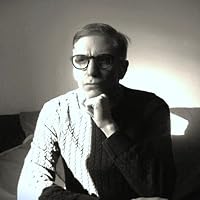
Employing a short story format which finds an autobiographical thread, this book links together disparate times and loves in the author's life, a reassertion and reassembly of his identity in literary format. It presents an account of the author's memories, dreams and desires.
Born Kurt Erich Suckert, he was an Italian journalist, dramatist, short-story writer, novelist and diplomat.
Born in Prato, Tuscany, he was a son of a German father and his Lombard wife, the former Evelina Perelli. He studied in Rome and then, in 1918, he started his career as a journalist. He fought in the First World War, and later, in 1922, he took part in the March on Rome.
He later saw he was wrong in supporting fascism. That is proved by reading Technique du coup d`etat (1931), where Malaparte attacked both Adolf Hitler and Mussolini. This book was the origin of his downfall inside the National Fascist Party. He was sent to internal exile from 1933 to 1938 on the island of Lipari.
He was freed on the personal intervention of Mussolini's son-in-law and heir apparent Galeazzo Ciano. Mussolini's regime arrested Malaparte again in 1938, 1939, 1941, and 1943 and imprisoned him in Rome's infamous jail Regina Coeli. His remarkable knowledge of Europe and its leaders is based upon his own experiences as a correspondent and in the Italian diplomatic service.
In 1941 he was sent to cover the Eastern Front as a correspondent for Corriere della Sera. He wrote articles about the front in Ukrania, but the fascist dictatorship of Mussollini censored it. But later, in 1943, they were collected and brought out under the title Il Volga nasce in Europa (The Volga Rises in Europe). Also, this experience provided the basis for his two most famous books, Kaputt (1944) and The Skin (1949).
Throughout the night the wounded sea moaned under my window, then towards dawn, he started to sing, his warm and soft voice arouse in the unripe air, until the sky covered itself in rosy scales, and in front of the mountains of Sicily a big red fish leapt in the horizon, lighting up with a sweet and violent light the quiet shores, the blue mountains, and the white sails in the sea. * Then the clear sky returns: and I sit sadly and deserted, and think of the pains I suffered, the friends I lost, the humiliations I have undergone. And a rested pride makes me turn my eyes to those aspects of nature that a limpid and calm light makes sharper, lonelier, and purer.
I feel wounded: and the day is also wounded. He gently bleeds from the wound that the first evening shade inflicts on his rosy flesh. And the evening is already upon us. A warm and tender evening, broken by the lightning of storms fleeing across the horizon. A dying blue sky rests on the green mountains, on the wandering white clouds. This is the hour when the consciousness of time, and the horror of eternity, reveal themselves in a courage that is tired yet more serene, in a melancholia that is not turned to past things but to future ones. * Again from the shadow of this black tree, I sat along the shore, looking for the first star in the red sunset over the sea. And I listened to the evening wind wake up the leaves one by one: softly murmuring all together, the murmur gradually becoming more distant. This is the time of our daily death: the instant in which fate appears to man like a law foreign to his life, something detached from him, with no power over his conscience or good fortune. Every day, at this time, we start to die. This death of time and nature, this universal sunset, does not occur externally to us but deep within our spirit. The light extinguishes itself slowly. As if the world loses consciousness of itself. And man forgets the happy sorrows, the guilty fortunes, the cruel game of days and seasons.
As the shadows of evening rise from the mountainsides and descend from valley to valley sliding silently over the waters, becoming higher and denser during the fading light, until the night subsides into the sea with a silent rumble; like this, from deep within our spirit, the shadows of old memories rise, vain images rush from the most distant horizons of our lives until the conscience of our good fortune, of our thoughts and acts subsides within ourselves.
In these last moments of the day, all that one is aware of about one's death always emerges in our spirit with a new voice and new facets. Coming from the bright eddies in the sky, from the valleys and the marine abysses, always at this hour we are reached by the memories, the call of our most secret voices.
This book is a world away from Malaparte's more famous World-War-II duo of Kaputt and La Pelle (The Skin), and showcases his ability to write in the short-story format, which he pulls off with relative ease. These stories play around with realism and dreams, and on a personal level are close to Malaparte's own experiences and memories. He was a supremely talented writer, and should rank up there with the greatest Italian writers of the 20th century. Oh, and he designed his own stunning house built into the cliffs on the isle of Capri, which is still one of the great modern feats of architecture.
This is a book to be read over and over again. Reading these poetic short stories reminds me of the experience of dreaming. They lift the spirit and warm the heart ( and make one want to take a vacation in Italy). Pages glow with intimate love for nature. The enchanting prose (beautifully translated by Robin Monotti Graziadei) evokes memories of childhood and innocence. Its great to read on a tube in London, stories are short and they help you not to succumb to city's attempts to ossify the feelings and to numb the senses. I recommend this to anyone who searches for beauty and truth in dreams and the natural world, especially the Italian landscape.
A collection of (very) short stories (most of them are about 5 pages long), this book is an absolute must read for anybody who enjoys beautiful writing. Each story is like a gentle stroll, with multiple very poetic descriptions of nature in general and Malaparte's native Tuscanny in particular. Often quirky and surreal, these tales are also deeply moving, poetical and life enhancing.