

What do you think?
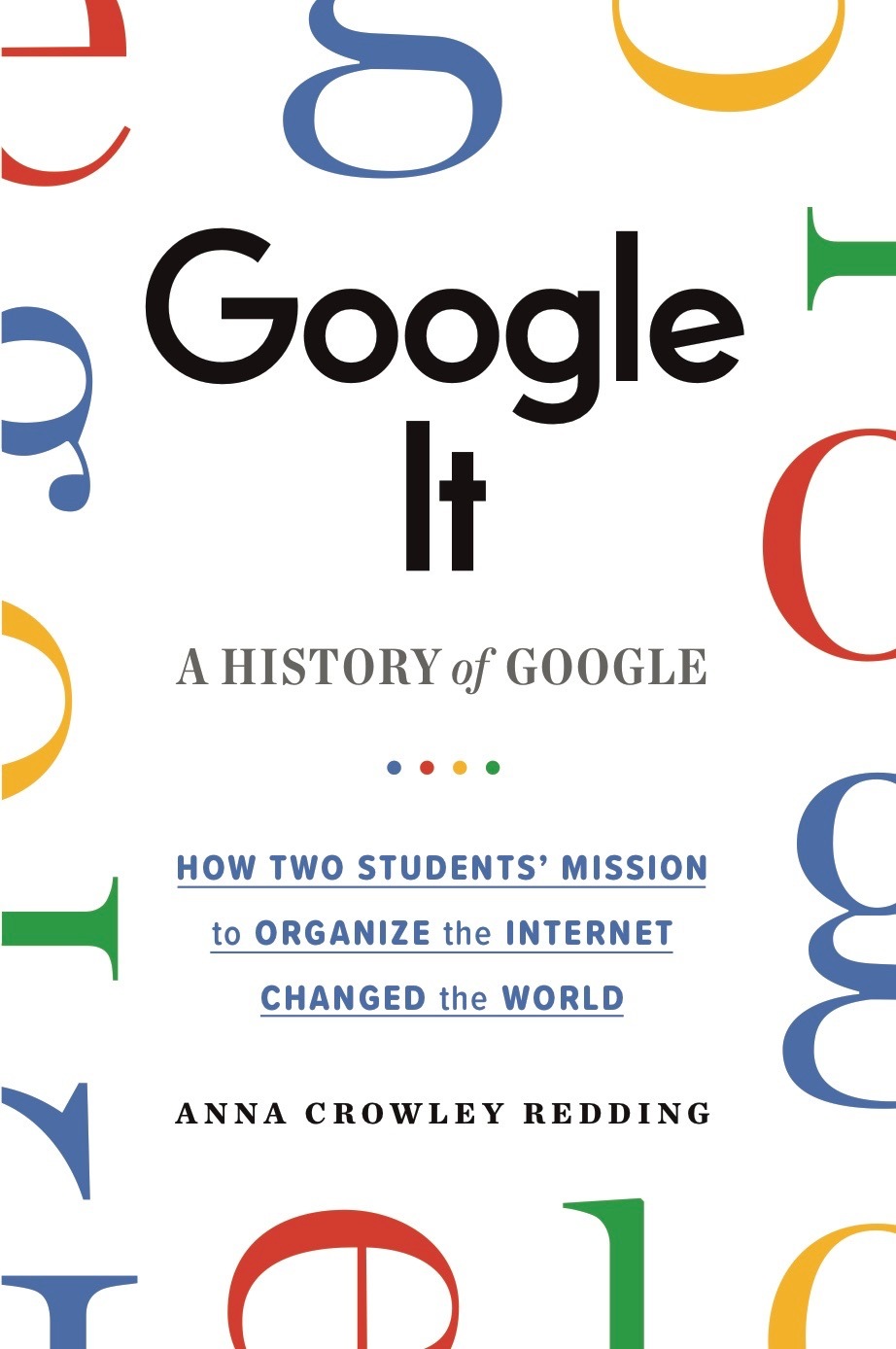
Google It: A History of Google
Think. Invent. Organize. Share. Don't be evil. And change the world.Larry Page and Sergey Brin started out as two Stanford college students with a wild They were going to organize the world's information. From that one deceptively simple goal, they created one of the most influential and innovative companies in the world. The word “google” has even entered our vocabulary as a verb. Now, find out the true history of Google—from its humble beginnings as a thesis project made out of “borrowed” hardware and discount toys through its revolution of the world's relationship with technology to a brief glimpse of where they might take us next. In Google It, award-winning investigative reporter Anna Crowley Redding shares an inspiring story of innovation, personal and intellectual bravery, and most importantly, of shooting for the moon in order to change the world.
229 pages, Kindle Edition
Published August 14, 2018
About the author
Anna Crowley Redding
14 books50 followersBefore diving into the deep end of writing books, Anna Crowley Redding’s first career was as an Emmy-award winning investigative television reporter, anchor, and journalist. The recipient of multiple Edward R. Murrow awards and recognized by the Associated Press for her reporting, Anna now focuses her stealthy detective skills on digging up great stories for young readers — which, as it turns out, is her true passion. Anna's books have been translated into Russian and Czech.
Ratings & Reviews
Friends & Following
Create a free account to discover what your friends think of this book!
Community Reviews
Displaying 1 - 30 of 138 reviews

December 28, 2018
4.75 INSPIRING STARS! minds will be blown, jaws dropped, brains buzzed, and hearts warmed!
P.S. I, for one, can't LIVE without Google! My whole life is on my Google Keep. Period.
What's It Talking About
Who's It Talking About
Former president of technologies at Google, former (general) president at Google, current president of Alphabet and director of special projects (aka moonshots); a programming prodigy and engineering pioneer!
Former president of products at Google, former CEO of Google, current CEO of Alphabet; he came up with the name (and idea) of—the masterfully named—BackRub, leading to Google (misspelling of Googol)
How's It Talking About It
It might be mostly targeted towards young adults with using the light tone instead of a serious history recording voice, but it is in no way limited to any age at all.
I already knew a lot of Google's history and much about work at Google and its current state before I picked this up, and yet this was such an engaging gleefully informative read, containing many things I did not know.
With stories, pictures of the nineties until today, and notes so that you will not need to Google anything while reading Google It!
If you want to know how it came to this point and where we're headed, if you want an inspiring read to move you to pursue your ideas, pick up this fast read with nostalgic pictures and hilarious writing!
“You have to be a little bit silly about the goals you are going to set. There is a phrase I learned in college called, ‘Having a healthy disregard for the impossible.’ That really is a good phrase. You should try to do things that most people would not.”I feel light and jubilant and full of life ... I could walk out of that door now, looking to the distant impossible horizon, without batting an eye!
“We often talk about how brilliant a visionary Steve Jobs was, but there are probably millions of people just as brilliant as he was. The difference is that they likely didn’t grow up with great parents, amazing teachers, and an environment where innovation was the norm. Also they didn’t live down the street from Steve Wozniak.It all started with Larry Page, Sergey Brin, a 40-GB LEGO computer (which collapsed into hundreds of pieces), and BackRubbing stuff (yes, you heard me right, they first named it BACKRUB; Larry Page's genuis everyone...)
“Economically, we don’t need more jobs. We need more Steve Jobs. When we set everyone free, we enable the outliers everywhere. The result will be an unprecedented boom in human creativity and ingenuity.”
In 1997, the world was saved from a terrible fate: Back-Rubbing everything for all of eternity!and ended with millions of people, Google, Alphabet, Waymo, Verily, and many more companies and projects that would swiftly change our world to the point of being unrecognisable!Hey, can you BackRub movie times for Friday night?Wow. Let’s have a moment of gratitude for the fact that Larry and Sergey faced the ugly truth: BackRub was a terrible name.
Hey, BackRub Barack Obama.
On the outside of the garage, a handwritten sign read, Google World Headquarters.No, wait: it hasn't ended yet. In fact, it's not gonna end any time soon. Never, probably.
Inside, even more important words came together to form Google’s mission statement: “To organize the world’s information and make it universally accessible and useful.”
It became clear that Google had another mission: improving the user’s experience of … life itself. Yeah, just that.With a light tone, Anna Crowley Redding, investigative television reporter and journalist, gives an engaging overall account of the history of Google and how it evolved from a search engine to become a life style.
P.S. I, for one, can't LIVE without Google! My whole life is on my Google Keep. Period.
What's It Talking About
But even more important is the idea that everyone, no matter wealth or geographic location, should have access to information.With Google, it's always been about the user, cause “The user is always right”; from that first homework to multimillionaire company, they wanted to achieve one thing, and stood by it and nothing else.
It’s how humans learn: careful study mixed with trial and error (and more trial and error). Could a machine learn that way?But it's not just about businesses and companies, it's about innovation, creativity, determination, and taking risks!
What if the ideas for solutions were only limited by your mind, and maybe not even that?And a workplace to dream of; one that values its employees as much as its users, a place where fun enters the workplace for the first time in full!
You can leave the suit in your closet. Don’t have a suit? Don’t buy one. The Google dress code is simply that you must wear something. And employees keep it casual, usually just jeans and T-shirts. Some Googlers have even shown up for work in bathrobes.It says of failures and successes, and of doing the crazy and impossible.
“And try to silence out the voices that say, ‘Well, there are actually a thousand start-ups trying to do what you are doing,’” he says, because your start-up, your particular effort might be the one that pays off. Or perhaps you’ll learn something that will pay off during your next project.It's about not giving up. And it's about the power of will, and learning from your mistakes.
To readers everywhere, especially those of you who are finding your way through difficult circumstances or struggling to confront a tsunami of society-driven labels, this book is for you and all that you are truly capable of. Believe it.
Who's It Talking About
In 2017, when US President Donald Trump announced an immigration order banning travel to the United States from several Muslim-majority countries, Sergey joined the crowd of protesters at San Francisco’s airport, saying, “I am here because I am a refugee.”Meet Sergey Brin, Russian immigrant, Honorary MBA from IE Business School who abandoned his PhD from Stanford to found Google Inc.
Former president of technologies at Google, former (general) president at Google, current president of Alphabet and director of special projects (aka moonshots); a programming prodigy and engineering pioneer!
Like any web surfer worth their weight in ones and zeroes, Larry first used BackRub to search … his own name.Larry Page, American technology lover, Honorary Doctor of Engineering from University of Michigan and Honorary MBA from IE Business School who also abandoned PhD from Stanford to found Google Inc.
Former president of products at Google, former CEO of Google, current CEO of Alphabet; he came up with the name (and idea) of—the masterfully named—BackRub, leading to Google (misspelling of Googol)
The only thing the two agreed on was their opinion of the other. In a word? Obnoxious.Yes, well, that says a LOT about how perfectly they got along and did not agrue one tidbit! (Couldn't talk without arguing...but I didn't tell you that)
As soon as Andy saw what Google could do, he looked at Larry and Sergey and said, “Well, I don’t want to waste time. I’m sure it’ll help you guys if I just write a check.”And so many great investors that saved the two young founders many times over, with also now-out-of-business companies that had a chance and, sadly (or perhaps not), lost it.
Explorer Geoff Mackley said, “You only realize how insignificant humans are when you are standing next to a giant lake of fiery boiling rock.”
How's It Talking About It
“Banner ads are amazing. The louder, the flashier, the better,” said no one. Ever.Redding has an absolutely amusing writing, using hilarious examples and language.
It might be mostly targeted towards young adults with using the light tone instead of a serious history recording voice, but it is in no way limited to any age at all.
I already knew a lot of Google's history and much about work at Google and its current state before I picked this up, and yet this was such an engaging gleefully informative read, containing many things I did not know.
With stories, pictures of the nineties until today, and notes so that you will not need to Google anything while reading Google It!
If you want to know how it came to this point and where we're headed, if you want an inspiring read to move you to pursue your ideas, pick up this fast read with nostalgic pictures and hilarious writing!
“The ideal searcher would be something with human intelligence and all [the] knowledge in the world. Currently, humans have the former and computers have the latter—well, close to it—so you do have to sift through search results. In the future, who knows…”

August 5, 2021
★★★½
Out of the many books written about Google, this is a good book for a layman to understand and get a quick overview of Google.
Simple and easy writing, introducing the world of Google and everything under [and over ;)] its umbrella.
Editing is crisp, just enough info provided to get you acquainted with the idea and their inception. Not delving much deeper into the technical knowhows and stuff.
In addition, there are plenty of small conversational style notes to explain each and every techie term.
Fast paced and fun read.
Overall:
Recommended for a quick overview of multiple ideas within Google.
Avoid if you are looking for depth on any of the topics. The Google Story: Inside the Hottest Business, Media and Technology Success of Our Time captures the history more elaborately.
Going by the diversity and awesomeness Google is going through - I'm sure there's more to come :)
Out of the many books written about Google, this is a good book for a layman to understand and get a quick overview of Google.
Simple and easy writing, introducing the world of Google and everything under [and over ;)] its umbrella.
Editing is crisp, just enough info provided to get you acquainted with the idea and their inception. Not delving much deeper into the technical knowhows and stuff.
In addition, there are plenty of small conversational style notes to explain each and every techie term.
Fast paced and fun read.
Overall:
Recommended for a quick overview of multiple ideas within Google.
Avoid if you are looking for depth on any of the topics. The Google Story: Inside the Hottest Business, Media and Technology Success of Our Time captures the history more elaborately.
Going by the diversity and awesomeness Google is going through - I'm sure there's more to come :)

August 21, 2018
Richie’s Picks: GOOGLE IT: A HISTORY OF GOOGLE by Anna Crowley Redding, Feiwel & Friends, August 2018, 240p., 978-1-250-14822-3
“I want my MTV”
-- Sting, appearing on Dire Straits’ “Money for Nothing” (1985). Back in the 1980s, I watched a lot of MTV. These days, I get my music video fix anytime I want to by visiting Google’s YouTube website.
I wanted to know what year that song was released, so I googled it.
Meet Sergey Brin and Larry Page, the founders of Google:
“In 2009, thirty years after Sergey and his family arrived in the United States, Sergey gave $1 million to the agency that helped his family escape Russia and resettle in Maryland. In 2017, when US President Donald Trump announced an immigration order banning travel to the United States from several Muslim-majority countries, Sergey joined the crowd of protesters at San Francisco’s airport saying, ‘I am here because I am a refugee.’”
“Larry’s father was a computer science and artificial intelligence professor at Michigan State University. Talk about a pioneer! His mother had a master’s degree in computer science and worked as a database consultant…’I think I was the first kid in my elementary school to turn in a word-processed document,’ Larry recalled in an interview.”
In the 1990s, as PhD students at Stanford, Sergey and Larry teamed up on a thesis project in which they sought to determine the relative popularity of each of the then-clunky 10 million pages on the web.
“...Your popularity isn’t measured by how many people you like; it’s by how many people like you.
Studying the structure of the internet, Larry discovered a similar truth. It’s not how many sites you link to that matters. What matters is how many sites link to your page. The more sites that link to you, the more relevant, substantial, and credible your site is.”
Borrowing and stealing computer hardware from around the Stanford University campus in order to get started, Larry and Sergey embarked upon the academic project that eventually became Google, now a behemoth company whose products I rely upon on a daily--often hourly--basis:
I’m drafting this review in a Google doc, which is stored in my Google Drive. I access it by using Chrome, the Google web browser installed in my Chromebook laptop. When the review is complete, I’ll use my Google mail account to send it to various listservs. I took a break from working on the review when Google Calendar reminded me to head off to my dental appointment. And no matter what I’m working on, I constantly use Google’s search engine to get answers to my questions.
Having spent the majority of my life before Larry and Sergey created Google, I really appreciate being able to retrieve information at home, day or night, whenever I have a question or a notion.
Anna Crowley Redding has written a fantastic, comprehensible history of Google that most American middle school and high school students will be able to follow, despite the fact that it includes many revolutionary and mind-blowing technical and information-related concepts. It’s fun and exciting to read, not only about where Google came from but, also, where it’s heading. Copious graphics, sidebars, and photos enliven and enhance the presentation.
We learn how today’s Google can afford to devote time and money to “moonshots”-- attempts to solve any number of human problems without worrying whether a particular quest will lead to a successful, money-making product. I am awed by the breadth of projects described by the author that are currently underway at Google
For many young readers, GOOGLE IT will also provide a great introduction to concepts about creating and growing businesses that kids don’t typically encounter in their reading.
Google is a constant in the lives of today’s young people and GOOGLE IT explains, in an appealing and understandable fashion, how this company became an everyday presence.
Richie Partington, MLIS
Richie's Picks http://richiespicks.pbworks.com
https://www.facebook.com/richiespicks/
richiepartington@gmail.com
“I want my MTV”
-- Sting, appearing on Dire Straits’ “Money for Nothing” (1985). Back in the 1980s, I watched a lot of MTV. These days, I get my music video fix anytime I want to by visiting Google’s YouTube website.
I wanted to know what year that song was released, so I googled it.
Meet Sergey Brin and Larry Page, the founders of Google:
“In 2009, thirty years after Sergey and his family arrived in the United States, Sergey gave $1 million to the agency that helped his family escape Russia and resettle in Maryland. In 2017, when US President Donald Trump announced an immigration order banning travel to the United States from several Muslim-majority countries, Sergey joined the crowd of protesters at San Francisco’s airport saying, ‘I am here because I am a refugee.’”
“Larry’s father was a computer science and artificial intelligence professor at Michigan State University. Talk about a pioneer! His mother had a master’s degree in computer science and worked as a database consultant…’I think I was the first kid in my elementary school to turn in a word-processed document,’ Larry recalled in an interview.”
In the 1990s, as PhD students at Stanford, Sergey and Larry teamed up on a thesis project in which they sought to determine the relative popularity of each of the then-clunky 10 million pages on the web.
“...Your popularity isn’t measured by how many people you like; it’s by how many people like you.
Studying the structure of the internet, Larry discovered a similar truth. It’s not how many sites you link to that matters. What matters is how many sites link to your page. The more sites that link to you, the more relevant, substantial, and credible your site is.”
Borrowing and stealing computer hardware from around the Stanford University campus in order to get started, Larry and Sergey embarked upon the academic project that eventually became Google, now a behemoth company whose products I rely upon on a daily--often hourly--basis:
I’m drafting this review in a Google doc, which is stored in my Google Drive. I access it by using Chrome, the Google web browser installed in my Chromebook laptop. When the review is complete, I’ll use my Google mail account to send it to various listservs. I took a break from working on the review when Google Calendar reminded me to head off to my dental appointment. And no matter what I’m working on, I constantly use Google’s search engine to get answers to my questions.
Having spent the majority of my life before Larry and Sergey created Google, I really appreciate being able to retrieve information at home, day or night, whenever I have a question or a notion.
Anna Crowley Redding has written a fantastic, comprehensible history of Google that most American middle school and high school students will be able to follow, despite the fact that it includes many revolutionary and mind-blowing technical and information-related concepts. It’s fun and exciting to read, not only about where Google came from but, also, where it’s heading. Copious graphics, sidebars, and photos enliven and enhance the presentation.
We learn how today’s Google can afford to devote time and money to “moonshots”-- attempts to solve any number of human problems without worrying whether a particular quest will lead to a successful, money-making product. I am awed by the breadth of projects described by the author that are currently underway at Google
For many young readers, GOOGLE IT will also provide a great introduction to concepts about creating and growing businesses that kids don’t typically encounter in their reading.
Google is a constant in the lives of today’s young people and GOOGLE IT explains, in an appealing and understandable fashion, how this company became an everyday presence.
Richie Partington, MLIS
Richie's Picks http://richiespicks.pbworks.com
https://www.facebook.com/richiespicks/
richiepartington@gmail.com

July 6, 2021
WOW, just wow. I have been really curious about Google and its story and this book was the best book. Using simple style of writing, this book captured my mind and made me so enthusiastic while ready. One of the things I liked about it was the small notes that explained words, talked about people, companies, etc. I can't recommend it enough. Some of the stories were mind-blowing that left me thinking "How did they think of that? How could they do that?". It's a 5 out of 5 book, hands down.

August 22, 2018
This was an excellent read. Being an educator, I can think of a 100 ways to motivate students with this book. The writing is concise And the explanations easy to understand. I would buy a classroom set. The way the story of Larry and Sergei is told gives the reader an in-depth view of the “Don’t Give Up” attitude those men have. My most impressive fact was how they encourage others to think outside the box. Totally enjoyed this read.

August 7, 2018
Looking for an ideal “all school read”? Choose “Google It: A History of Google.” Want to inspire a reluctant teen reader? Match them with “Google It.” Know anyone who is interested in learning about innovation, technology, corporate America, economics, or US History from 1999 through present? “Google It” is the book that will make all the elements of any Social Studies Class synthesize into meaningful matter for today’s Millennials. In fact, Anna Crowley Redding’s book accomplishes exactly what Google set out to do: "Organize the world’s information and make it universally accessible and useful.”
This book reveals the author’s keen understanding of pre-teen and Middle School readers; high-interest information is delivered in a conversational voice. In addition to explaining Google’s Search Engine Development, the author also traverses the origins of gmail, Youtube, Google Earth, Khan Academy and numerous other tech-based developments. As the book progresses, readers learn about projects that are currently under development and likely to become part of our world in the near future.
I was pleased to see that so many innovators, investors, and inventors were highlighted along the way. A breadth of students will find role models with whom they can connect. I value that Anna Crowley Redding respected diversity and inclusion by highlighting Susan Wojcicki several times in the book, and that Google’s initiative of “Howard West” was included with full recognition that the company was striving toward much-needed diversity in their company and in the field of engineering.
“Google It: A History of Google” is undeniably a “five star” nonfiction pick for readers, teachers, libraries and families around the world. ~ ARC via Netgalley ~ Review by Lisa Brennan, Middle School Librarian @noveltalk
This book reveals the author’s keen understanding of pre-teen and Middle School readers; high-interest information is delivered in a conversational voice. In addition to explaining Google’s Search Engine Development, the author also traverses the origins of gmail, Youtube, Google Earth, Khan Academy and numerous other tech-based developments. As the book progresses, readers learn about projects that are currently under development and likely to become part of our world in the near future.
I was pleased to see that so many innovators, investors, and inventors were highlighted along the way. A breadth of students will find role models with whom they can connect. I value that Anna Crowley Redding respected diversity and inclusion by highlighting Susan Wojcicki several times in the book, and that Google’s initiative of “Howard West” was included with full recognition that the company was striving toward much-needed diversity in their company and in the field of engineering.
“Google It: A History of Google” is undeniably a “five star” nonfiction pick for readers, teachers, libraries and families around the world. ~ ARC via Netgalley ~ Review by Lisa Brennan, Middle School Librarian @noveltalk

January 1, 2019
Wow. I picked this book up from the library as a joke because it was lying there on display and I was like, "hahaha a YA book about Google? Uhhh yeah why not I can laugh with my cousin about it."
And that. Was. The. Best. Decision. Ever.
Now I feel so knowledgeable about Google. Ah, it feels so nice to finally know things...
Y'all should read this!! Seriously!!
And schools should teach history the way this book taught me Google history!!!!
PS This is a demonstration of good advertising because I low-key want to work at Google now (although if I'm being honest, I'd probably hate it after a day)
And that. Was. The. Best. Decision. Ever.
Now I feel so knowledgeable about Google. Ah, it feels so nice to finally know things...
Y'all should read this!! Seriously!!
And schools should teach history the way this book taught me Google history!!!!
PS This is a demonstration of good advertising because I low-key want to work at Google now (although if I'm being honest, I'd probably hate it after a day)

August 25, 2021
I imagined this book being read by 2K kids and later and I realised the tone of the book was intentional. How else do you explain to them how landline telephone calls worked or driving to a new city/locality work? So, in that way this is a very informative book.
The first part of the history of Google was for trivia buffs. Had I not read the Google Story this section would have been impressive.
Google is actively shaping the blueprint of future and I loved the moonshot chapters and the current researches (as of 3 years ago). Redefining the realm of possibility is a lot of responsibility and hatsoff to this organization for doing this consistently.
Informative and recommended for people born in the Google era.
The first part of the history of Google was for trivia buffs. Had I not read the Google Story this section would have been impressive.
Google is actively shaping the blueprint of future and I loved the moonshot chapters and the current researches (as of 3 years ago). Redefining the realm of possibility is a lot of responsibility and hatsoff to this organization for doing this consistently.
Informative and recommended for people born in the Google era.
Read
April 24, 2019A conversational, fun, and sassy read for preteen to adult, Google It! is a wonderful introduction to Larry Page and Sergey Brin, Google’s founders, from their first meeting to today. Google has always excelled at asking “What if?” and pursuing possibilities. The last section discusses Google’s research and development projects and gives us a glimpse of what's to come—things like computer-assisted medical diagnostics, personal flying cars, computers in your jacket, stratospheric balloons to provide Internet access to the remotest locations, personal genetic information that unlocks the secrets of a long and healthy life, and more. If you have a choice between a paper or electronic version, choose the paper. It will be easier to distinguish the plentiful sidebars from the main text.

January 2, 2020
kick off my 2020 with this book.
perghh best betul baca buku ni. lepas je aku baca buku ni, perspektif aku terhadap semua produk google terus berubah sebab aku tahu backstory produk2 tersebut eg: gmail, youtube, maps, earth, etc.
buku ni tak detail mana tapi konten dia menarik dan mampu ignite aku untuk baca buku yang explain google dengan lebih detail.
penulisan dia pun menarik, takde jargon2 pelik. so memang sesuai dibaca oleh semua orang.
perghh best betul baca buku ni. lepas je aku baca buku ni, perspektif aku terhadap semua produk google terus berubah sebab aku tahu backstory produk2 tersebut eg: gmail, youtube, maps, earth, etc.
buku ni tak detail mana tapi konten dia menarik dan mampu ignite aku untuk baca buku yang explain google dengan lebih detail.
penulisan dia pun menarik, takde jargon2 pelik. so memang sesuai dibaca oleh semua orang.

August 2, 2021
Was a wonderful eye opener. Started it as part of a challenge and never expected to like it,but like I did. The birth, nurturing and growing up of Google was like a fairy tale...and I am amazed at all the things that encompass google , and which I never knew
I have already recommended this book to my son, and am sure that he will enjoy it more.
I have already recommended this book to my son, and am sure that he will enjoy it more.

July 5, 2021
No wonder this book’s target is for ages 12-18. The explanations are easy to understand. A conversational, fun and sassy read for preteen to adult. Good for educators and teachers.

August 15, 2020
Some fascinating facts about how Google became Google with moments of inspiration.

March 28, 2021
This book explains how google started, collaboration with different firms, their current and future projects

December 29, 2018
This was a super interesting look at how Google has evolved and the world events that led to different advancements. The writing is conversations, with anecdotes and humor sprinkled in. I liked the theme of embracing failure throughout! Definitely recommend!

September 20, 2018
This would be a good introduction to Google and the development of technology for just about anyone. I knew some of the content but overall it was informative and had an interesting layout. The book was type set to mimic the hyperlink environment so if something was referred to there was a box explaining what the term meant. At first, it was annoying but with time it fit with the subject matter. I think this would be an important read for teens for two reasons. The history of Google and the work they attempt (and succeed) on in other areas of information is important for students to understand as to how we got to this point in time. The second reason is the attitude the Page and Brin bring to learning, failing and succeeding. In this age of standardized testing where failure is not an option that is a refreshing tale for everyone. Additionally, the work also placed the rise of Google within the rise of other tech companies so it provided a concise view of the development of the information age we now live in. This work was not academic although it is sourced adequately.
September 4, 2018
I've been in the world of communications, computers and software for over 50 years. There have been many great stories that I have seen unfold in the people and companies that I've known as a friend, employee, user or customer. Few of these companies have been fortunate to have had a talented author chronicle their beginnings, their growth and acclaim. Anna Crowley Redding has done this for Google, a world-changing phenomenon. Her telling of the Google story starts at the beginnings of Google, recounting how Larry Page and Sergey Brin met and developed a powerful friendship and technical melding. It continues through their 'ah ha' moment regarding Google's approach to 'search', how it wildly took off and how the company evolved. Her book is fast-based and an easy read. It's a great story, well told. I recommend it!

April 28, 2018
I learned so much I didn't know about Google from this terrific book. (For example, did you know one of the founders came to the U.S. as a refugee? That had to have helped inform their choice to use "Don't be evil" as their company motto!)
It's fascinating, chock-full of facts, and laid out in a very engaging and accessible manner that makes sure you're always laughing or amazed. Easy to pick up and read in short bursts and jump around if that's your preference, but also a quick read if you want to blaze through and get a sense of how Google came to exist and why and how they do all the things they do.
Highly recommend!
It's fascinating, chock-full of facts, and laid out in a very engaging and accessible manner that makes sure you're always laughing or amazed. Easy to pick up and read in short bursts and jump around if that's your preference, but also a quick read if you want to blaze through and get a sense of how Google came to exist and why and how they do all the things they do.
Highly recommend!

September 10, 2018
For those of us who remember life before Google, the first half of the book is a stroll down memory lane. Redding does a great job of pointing out just how radically the internet and Google have changed our everyday lives. She takes corporate history and makes it interesting for young teen and adult readers alike. The book seems a bit less sharp when describing recent history of the company, probably because so many of Google's current initiatives are shrouded in a level of secrecy. Still, a highly enjoyable and education read.

January 16, 2019
As human beings living in the twenty-first century, we have all experienced Google in some form. Google is a powerful search engine that is used over 3.5 billion times a day. The book Google It: A History of Google by Anna Crowley Redding is a book that dives deep into the history and origins of the company and shares the stories of the people that turned a college thesis project into a multi-billion dollar company.
Redding uses a variety of methods to capture the reader’s attention which makes the book an enjoyable read. The book incorporates the main story of Google with informative images, sidebars, and information boxes along with the usage of insert pages to explain certain topics in more detail without disrupting the rhythm of the story. The first section describes what life was like before Google, a time hard to fathom for younger generations. This section especially shows the ability of the author to paint a vivid image in the reader’s mind of the setting that the story occurs in. This section is followed by the stories of Larry Page and Sergey Brin, the founders of Google. Google started as a doctoral thesis project at Stanford University. The book describes the start of the company and how their system works I personally understand many computer-related terms, but I believe this book breaks down how Google’s system works in terms most people can understand. Redding then continues on with the story discussing the rapid growth of Google. It shares an interesting fact that I find mind-boggling saying “They used up over half of Stanford’s bandwidth.” The next section talks about the name change. Originally Google was called “BackRub”. Imagine asking Back Rub what today’s weather is like. That would be weird. They wanted to change the name to “Googol” after the number googolplex. They accidentally bought the rights to “Google” instead of “Googol” so Google it would be. The book goes on to discuss how Google had become more than a project. It had become a full company. The next chapters discuss the financial side of Google. While Google had millions of users, they were losing money. They did not want to clutter the page with advertisements like other sites so they used hidden methods of advertising. After this section, the first pop-ups off of Google are discussed such as Google Shopping and Google News. After this section is part two to the Google story.
The author discusses the expansion of the company in this section. Redding starts by discussing Google headquarters. I was intrigued to discover that the idea of 20-Time comes from Google. For all of you who don’t know what 20-Time is, it is where twenty percent of your time at work, in a class, or in other places is devoted to letting you explore passions or ideas that you have with virtually no restraints on what you can do. This created some of Google’s main businesses such as G-Mail, Google News, and Google Shopping. After this Google Earth and Google Maps are introduced in the book. This section is interesting as it shares stories of cool discoveries made from Google Earth or Google Maps such as the time someone used them to find dinosaur fossils. The chapter following talks about the time when Google grew exponentially. Google acquired YouTube and started developing software for smartphones. The software they made for phones was called Android. Android is used by over 85 percent of people in the world making it one of Google’s main successes. The next section is about changes to Google to allow for more accurate searches. The tech behind it is explained in the book, but you’ll have to read it to find out more for yourself. The last few sections discuss the innovations in artificial intelligence (AI). AI is the main topic until the end of the book.
I enjoyed this book because it was incredibly informational and thorough while not becoming ‘dry’ or slow moving. Google It moves at a fast pace like a traditional piece of fiction would. It is told as a story and all of the information is shared as a story as opposed to cramming as many facts into a book as possible. The book is well researched and is laid out in chronological order which makes it easy to comprehend. I personally liked how the book was not wordy and can easily be read without having to guess what is being said. Redding wrote a nonfiction book about a topic that everyone knows of, but not everyone knows about. When thinking about what I did not like about this book I struggled to think of any drawbacks. It is extremely well-written, fast moving, and factual, and can easily keep the reader engaged. The only issue I find with this book is its simplicity. I would prefer to have seen this book be a little more complex considering the subject area, but if that is the only issue I have with it I think the author wrote an incredible book. Even though the book has many strengths, the best part of this book is the humor inside. The book is filled with humor that helps the reader understand better what is happening. “Warning! You’re gonna need eye drops and sunglasses for this trip in the time machine... Help! The web is attacking my eyes!”
I would recommend this book to most people. Even many of those types of people who despise non-fiction like they despise Brussel sprouts or spinach will enjoy this book. This is a book that would be fun to read as a class book. It gives information that everyone can learn something new from and delivers a positive message of hard work paying off and of determination. The mantra of Google is “Don’t be evil”, and this book is anything but evil.
Redding uses a variety of methods to capture the reader’s attention which makes the book an enjoyable read. The book incorporates the main story of Google with informative images, sidebars, and information boxes along with the usage of insert pages to explain certain topics in more detail without disrupting the rhythm of the story. The first section describes what life was like before Google, a time hard to fathom for younger generations. This section especially shows the ability of the author to paint a vivid image in the reader’s mind of the setting that the story occurs in. This section is followed by the stories of Larry Page and Sergey Brin, the founders of Google. Google started as a doctoral thesis project at Stanford University. The book describes the start of the company and how their system works I personally understand many computer-related terms, but I believe this book breaks down how Google’s system works in terms most people can understand. Redding then continues on with the story discussing the rapid growth of Google. It shares an interesting fact that I find mind-boggling saying “They used up over half of Stanford’s bandwidth.” The next section talks about the name change. Originally Google was called “BackRub”. Imagine asking Back Rub what today’s weather is like. That would be weird. They wanted to change the name to “Googol” after the number googolplex. They accidentally bought the rights to “Google” instead of “Googol” so Google it would be. The book goes on to discuss how Google had become more than a project. It had become a full company. The next chapters discuss the financial side of Google. While Google had millions of users, they were losing money. They did not want to clutter the page with advertisements like other sites so they used hidden methods of advertising. After this section, the first pop-ups off of Google are discussed such as Google Shopping and Google News. After this section is part two to the Google story.
The author discusses the expansion of the company in this section. Redding starts by discussing Google headquarters. I was intrigued to discover that the idea of 20-Time comes from Google. For all of you who don’t know what 20-Time is, it is where twenty percent of your time at work, in a class, or in other places is devoted to letting you explore passions or ideas that you have with virtually no restraints on what you can do. This created some of Google’s main businesses such as G-Mail, Google News, and Google Shopping. After this Google Earth and Google Maps are introduced in the book. This section is interesting as it shares stories of cool discoveries made from Google Earth or Google Maps such as the time someone used them to find dinosaur fossils. The chapter following talks about the time when Google grew exponentially. Google acquired YouTube and started developing software for smartphones. The software they made for phones was called Android. Android is used by over 85 percent of people in the world making it one of Google’s main successes. The next section is about changes to Google to allow for more accurate searches. The tech behind it is explained in the book, but you’ll have to read it to find out more for yourself. The last few sections discuss the innovations in artificial intelligence (AI). AI is the main topic until the end of the book.
I enjoyed this book because it was incredibly informational and thorough while not becoming ‘dry’ or slow moving. Google It moves at a fast pace like a traditional piece of fiction would. It is told as a story and all of the information is shared as a story as opposed to cramming as many facts into a book as possible. The book is well researched and is laid out in chronological order which makes it easy to comprehend. I personally liked how the book was not wordy and can easily be read without having to guess what is being said. Redding wrote a nonfiction book about a topic that everyone knows of, but not everyone knows about. When thinking about what I did not like about this book I struggled to think of any drawbacks. It is extremely well-written, fast moving, and factual, and can easily keep the reader engaged. The only issue I find with this book is its simplicity. I would prefer to have seen this book be a little more complex considering the subject area, but if that is the only issue I have with it I think the author wrote an incredible book. Even though the book has many strengths, the best part of this book is the humor inside. The book is filled with humor that helps the reader understand better what is happening. “Warning! You’re gonna need eye drops and sunglasses for this trip in the time machine... Help! The web is attacking my eyes!”
I would recommend this book to most people. Even many of those types of people who despise non-fiction like they despise Brussel sprouts or spinach will enjoy this book. This is a book that would be fun to read as a class book. It gives information that everyone can learn something new from and delivers a positive message of hard work paying off and of determination. The mantra of Google is “Don’t be evil”, and this book is anything but evil.

August 13, 2018
This book is great for any Internet lover! Full of fun facts while accurately describing the development of this powerhouse company. I loved this book and think it will spark an interest in young readers.

October 30, 2018
Excellent, perfectly digestible read about Google and its humble beginnings.

September 6, 2019
From the first page, a fascinating read about the two men who "wanted to organize the internet" for their dissertation projects and ended up "changing the world" when they created Google. I did not realize how much "Google" influences my life and how much more it may do so in the future; and I did not realize how Googlers learned as they went, always in pursuit of helping their users. In the beginning, you could only use Google to search text based info on the web, but then when everyone wanted to see an image of Jennifer Lopez’s dress at the 2000 Grammy Awards, Google figured out how we could search images. When 9-11-2001 happened, everyone wanted to search the web for current news, but Google only updated key words (based on new postings) every 24 hours at that point so when you searched Twin Towers, you weren’t seeing the news necessarily; they figured out how to change that.
Redding chronicles not only how Google (originally "Backrub") took off (Lego Duplo blocks were involved), but what they are doing to move us toward the future (think health, space travel, driverless cars and more). She does this in a conversational tone that YA (plus 5th-8th grade) readers will be drawn to and with a clear writing style that unpacks some difficult concepts.
Two DOWN POINTS to consider (but not deal breakers) -
1) The quality of the photos is not great and some of the text is printed on a dark background with the print that is too pale to read well. I think there were some design decisions - how do we break up the text? how do we make it YA appealing? - that may have gotten in the way.
2) While there are a few points in the book, where Redding explores how some have criticized Google for failing their users in some way and Google has responded by making changes, Redding's perspective for the most part is a sort of 'feel good about Google' and 'Isn't Google amazing?' conversation. YA readers need to be aware of this and consider what the author has left out. A reoccurring note in the book is the internal MOTTO at Google of "DON'T BE EVIL"; as I was reading this news broke about YouTube, a subsidiary of Google, collecting children’s personal information without their parents’ consent and then about Google possibly violating the Sherman Anti-trust Act that outlaws monopolistic business practices. Readers should look for other perspectives or read additional sources to learn more about Google.
On a similar note, the author describes how people who work at Google get 20% of their time to work on projects of their own choice (this is how we got Gmail). There has been some debate in the press in the last few years (but beginning prior to the publication of this book) over whether, in reality, this is true. It’s very hard to make that time for professional inquiry of your own when you have an overwhelming job at Google. Some think the 20% independent inquiry time Google says they give employees is primarily a way the company promotes itself.
I’m not saying that Google is BAD. I’m just saying that a reader needs to be aware of the author’s apparent perspective and of the perspective the reader begins to develop as they read this book (because of reading this book). Looking for other perspectives should be encouraged. (Personally, as a child of the 80s where you could only find info at the library, I LOVE everything Google has done for my life.)
NOT A DEAL BREAKER. I’d STILL RECOMMEND THIS TO YOUR STUDENTS. I'd book talk this and leave in the classroom library to be snatched up. You could put this in the hands of a savvy 5th-6th grade reader or a striving high school reader. IT’S THAT WELL WRITTEN.
SUGGESTIONS FOR BOOK TALKING – You wouldn’t need to do much.
1) I might read aloud the first couple of pages – where Redding places you in the 1980s and you realize how hard life was without Google ;).
2) Or you could share a few interesting facts or pose a few questions like:
Did you know that before Google was Google, the owners called it BackRub?
Did you know the first server they built included Lego Duplo blocks?
And the company’s second location was a friend’s garage?
And when Sergey and Larry, the creators, wanted to celebrate, they would do it at Burger King? Even when someone had just written them a check of $100,000 to help them get started?
And now there are billions of users of Google?
Redding chronicles not only how Google (originally "Backrub") took off (Lego Duplo blocks were involved), but what they are doing to move us toward the future (think health, space travel, driverless cars and more). She does this in a conversational tone that YA (plus 5th-8th grade) readers will be drawn to and with a clear writing style that unpacks some difficult concepts.
Two DOWN POINTS to consider (but not deal breakers) -
1) The quality of the photos is not great and some of the text is printed on a dark background with the print that is too pale to read well. I think there were some design decisions - how do we break up the text? how do we make it YA appealing? - that may have gotten in the way.
2) While there are a few points in the book, where Redding explores how some have criticized Google for failing their users in some way and Google has responded by making changes, Redding's perspective for the most part is a sort of 'feel good about Google' and 'Isn't Google amazing?' conversation. YA readers need to be aware of this and consider what the author has left out. A reoccurring note in the book is the internal MOTTO at Google of "DON'T BE EVIL"; as I was reading this news broke about YouTube, a subsidiary of Google, collecting children’s personal information without their parents’ consent and then about Google possibly violating the Sherman Anti-trust Act that outlaws monopolistic business practices. Readers should look for other perspectives or read additional sources to learn more about Google.
On a similar note, the author describes how people who work at Google get 20% of their time to work on projects of their own choice (this is how we got Gmail). There has been some debate in the press in the last few years (but beginning prior to the publication of this book) over whether, in reality, this is true. It’s very hard to make that time for professional inquiry of your own when you have an overwhelming job at Google. Some think the 20% independent inquiry time Google says they give employees is primarily a way the company promotes itself.
I’m not saying that Google is BAD. I’m just saying that a reader needs to be aware of the author’s apparent perspective and of the perspective the reader begins to develop as they read this book (because of reading this book). Looking for other perspectives should be encouraged. (Personally, as a child of the 80s where you could only find info at the library, I LOVE everything Google has done for my life.)
NOT A DEAL BREAKER. I’d STILL RECOMMEND THIS TO YOUR STUDENTS. I'd book talk this and leave in the classroom library to be snatched up. You could put this in the hands of a savvy 5th-6th grade reader or a striving high school reader. IT’S THAT WELL WRITTEN.
SUGGESTIONS FOR BOOK TALKING – You wouldn’t need to do much.
1) I might read aloud the first couple of pages – where Redding places you in the 1980s and you realize how hard life was without Google ;).
2) Or you could share a few interesting facts or pose a few questions like:
Did you know that before Google was Google, the owners called it BackRub?
Did you know the first server they built included Lego Duplo blocks?
And the company’s second location was a friend’s garage?
And when Sergey and Larry, the creators, wanted to celebrate, they would do it at Burger King? Even when someone had just written them a check of $100,000 to help them get started?
And now there are billions of users of Google?

October 19, 2018
GOOGLE IT!: A History of Google provides a young adult friendly overview of the past, present and, even future of Google, and readers likely won’t have to Google a thing while reading! I selected the term “overview” intentionally as it touches on one of my criticisms of the book. However, the book also has numerous positive qualities worth touting.
First, it utilizes a narrative nonfiction writing style that makes the reading accessible and engaging. The type of nonfiction writing in GOOGLE IT in no way resembles the dry, confusing and unreadable writing, the kind that is often found in textbooks, that is usually associated with nonfiction. Redding follows a narrative strand throughout the book presenting the story of Google and its founders.
Second, Redding appeared to keep her targeted audience at the front of her mind as she wrote as the facts that she included, the analogies she used and the tone that often comes across in her writing will likely appeal to young adults. For example, when writing about Larry and Sergey needing money to keep Google going and the process of looking for investors, Redding used an analogy about an older sibling making a deal with a younger sibling that results in making of money on the part of the younger sibling, but with a total succession of control to the older sibling. “How about I give you TWENTY WHOLE DOLLARS, they say, if you do my chores for a year?” (p. 64; pagination is from the advanced reading copy).
The third, and perhaps most significant, positive quality of GOOGLE IT is that it highlights the story of two graduate students who achieved the seemingly impossible task of organizing all the world’s information. And who continue to not be limited in their vision of what is possible by what was previously considered impossible. Throughout the book Redding encourages readers not to limit themselves or their dreams to the possible. By sharing the story of Google and Larry and Sergey, she provides role models for limitless thinking.
I have two major criticisms about GOOGLE IT; the first of which could probably be chalked up to the copy I read being an advanced reading copy, but the second cannot be as easily brushed away. As stated the copy that I read for review was an advanced reading copy (ARC) and it clearly states on ARCs that “This is an uncorrected proof.” However, throughout my reading of GOOGLE IT I stumbled upon grammatical error after error, which severely detracted from my reading. It is my sincere hope that these errors were fixed before the final copy was published. Along those same lines, I found some of the print too faint to read or without enough contrast to the background. Like the grammatical errors, this could be a result of it being an ARC as it was printed on newsprint type paper that likely is of a lesser quality than the final paper with which the book was produced. This issue could also be a result of my old age and deteriorating eyesight!
My second, and more important, criticism of the book is that Redding doesn’t appear to present a balanced story of Google, Larry and Sergey. The information that is provided and the light with which it is presented is overwhelmingly positive or neutral at best. The potentially problematic issues surrounding Google, its founders and its business practices are not thoroughly presented from all sides. The author blurb on the back of the book states that Redding was previously an investigative journalist, but she doesn’t seem to apply any of that balanced reporting to this book. I question whether this is because she intended this to be a book for young adults and didn’t think that this audience could draw its own conclusions about the issues after reading a balanced book.
Even with my two criticisms of the book, it is definitely a book that I will recommend to others.
First, it utilizes a narrative nonfiction writing style that makes the reading accessible and engaging. The type of nonfiction writing in GOOGLE IT in no way resembles the dry, confusing and unreadable writing, the kind that is often found in textbooks, that is usually associated with nonfiction. Redding follows a narrative strand throughout the book presenting the story of Google and its founders.
Second, Redding appeared to keep her targeted audience at the front of her mind as she wrote as the facts that she included, the analogies she used and the tone that often comes across in her writing will likely appeal to young adults. For example, when writing about Larry and Sergey needing money to keep Google going and the process of looking for investors, Redding used an analogy about an older sibling making a deal with a younger sibling that results in making of money on the part of the younger sibling, but with a total succession of control to the older sibling. “How about I give you TWENTY WHOLE DOLLARS, they say, if you do my chores for a year?” (p. 64; pagination is from the advanced reading copy).
The third, and perhaps most significant, positive quality of GOOGLE IT is that it highlights the story of two graduate students who achieved the seemingly impossible task of organizing all the world’s information. And who continue to not be limited in their vision of what is possible by what was previously considered impossible. Throughout the book Redding encourages readers not to limit themselves or their dreams to the possible. By sharing the story of Google and Larry and Sergey, she provides role models for limitless thinking.
I have two major criticisms about GOOGLE IT; the first of which could probably be chalked up to the copy I read being an advanced reading copy, but the second cannot be as easily brushed away. As stated the copy that I read for review was an advanced reading copy (ARC) and it clearly states on ARCs that “This is an uncorrected proof.” However, throughout my reading of GOOGLE IT I stumbled upon grammatical error after error, which severely detracted from my reading. It is my sincere hope that these errors were fixed before the final copy was published. Along those same lines, I found some of the print too faint to read or without enough contrast to the background. Like the grammatical errors, this could be a result of it being an ARC as it was printed on newsprint type paper that likely is of a lesser quality than the final paper with which the book was produced. This issue could also be a result of my old age and deteriorating eyesight!
My second, and more important, criticism of the book is that Redding doesn’t appear to present a balanced story of Google, Larry and Sergey. The information that is provided and the light with which it is presented is overwhelmingly positive or neutral at best. The potentially problematic issues surrounding Google, its founders and its business practices are not thoroughly presented from all sides. The author blurb on the back of the book states that Redding was previously an investigative journalist, but she doesn’t seem to apply any of that balanced reporting to this book. I question whether this is because she intended this to be a book for young adults and didn’t think that this audience could draw its own conclusions about the issues after reading a balanced book.
Even with my two criticisms of the book, it is definitely a book that I will recommend to others.

May 9, 2019
Who doesn’t love a good backrub? I know it seems odd that I am opening up my letter today talking about something other than books and literary things. Stay with me though, I can explain. I am sure you have heard of the multi-billion dollar company, Google. But did you know that its original name was “Backrub” (no joke)? Well I sure didn’t. If you are even slightly curious about this piece of Google history, then I urge you to check out Anna Crowley Redding’s hot new YA book, Google It: A History of Google. From Google’s modest beginning run out of a friend’s garage, to its current home in a three million square foot office complex on 68 acres of land, Crowley Redding takes her readers on a behind the scene adventure on how Google really came to be.
While reading Google It, readers will quickly discover that Google started off as a thesis project for Stanford University students, Larry Page and Sergey Brin. Crowley Redding dives right in by sharing how Page and Brin’s first computer server storage rack was built out of second hand “lego type” building blocks. She continues with how Jennifer Lopez’s infamous dress at the 2000 Grammy Awards was responsible for the creation of Google Images, how the events of September 11th prompted the development of Google News, and how automatic spell corrections during Google Search came about from the constant misspelling of Britney Spears’ name. This and so much more can be found between the covers of this incredible book.
The structure of Crowley Redding’s book is superb. She provides excellent sidebars that offer a plethora of fun tidbits for readers to enjoy. Crowley Redding introduces Page and Brin’s story in perfect chronological order starting from their individual childhoods to the future of Google. Her writing style is accessible and easy to digest for young adult and adult readers alike.
We are living in an age where technology is a part of our everyday lives. The days of looking up information in books and encyclopedias are long gone. It is so easy to take for granted how fast we can access information of any kind with a click of a mouse and how our cars practically drive themselves on auto pilot because of Google Maps. Google It will no doubt highlight the advancements Google has made in the past 25+ years. Most importantly though, Larry Page and Sergey Brin’s true story will show you how impossible ideas can turn into something completely possible, influential and life changing for all of mankind. Their story of hard work and determination will inspire young ones to build the unimaginable with their plastic building blocks, code the next big video game and take us to places far far away.
Google It, by Anna Crowley Redding is a book for now. It is not only a book filled with mind blowing information, but a book filled with dreams and inspiration. This story truly belongs on everyone’s bookshelf.
Read it, love it, share it, and for goodness sake……..GOOGLE IT!!!!!
Enjoy!!!!
https://www.dearmrhemingway.com/blog/...
While reading Google It, readers will quickly discover that Google started off as a thesis project for Stanford University students, Larry Page and Sergey Brin. Crowley Redding dives right in by sharing how Page and Brin’s first computer server storage rack was built out of second hand “lego type” building blocks. She continues with how Jennifer Lopez’s infamous dress at the 2000 Grammy Awards was responsible for the creation of Google Images, how the events of September 11th prompted the development of Google News, and how automatic spell corrections during Google Search came about from the constant misspelling of Britney Spears’ name. This and so much more can be found between the covers of this incredible book.
The structure of Crowley Redding’s book is superb. She provides excellent sidebars that offer a plethora of fun tidbits for readers to enjoy. Crowley Redding introduces Page and Brin’s story in perfect chronological order starting from their individual childhoods to the future of Google. Her writing style is accessible and easy to digest for young adult and adult readers alike.
We are living in an age where technology is a part of our everyday lives. The days of looking up information in books and encyclopedias are long gone. It is so easy to take for granted how fast we can access information of any kind with a click of a mouse and how our cars practically drive themselves on auto pilot because of Google Maps. Google It will no doubt highlight the advancements Google has made in the past 25+ years. Most importantly though, Larry Page and Sergey Brin’s true story will show you how impossible ideas can turn into something completely possible, influential and life changing for all of mankind. Their story of hard work and determination will inspire young ones to build the unimaginable with their plastic building blocks, code the next big video game and take us to places far far away.
Google It, by Anna Crowley Redding is a book for now. It is not only a book filled with mind blowing information, but a book filled with dreams and inspiration. This story truly belongs on everyone’s bookshelf.
Read it, love it, share it, and for goodness sake……..GOOGLE IT!!!!!
Enjoy!!!!
https://www.dearmrhemingway.com/blog/...

June 17, 2019
Overall, this is a fun and fascinating read about the history, mission, and future plans of Google written specifically for YA audiences but with appeal for anyone! I love the way this book presents quick interesting facts. Interestingly, this print book uses blue ink not black, and various modern fonts with chunks of information on pages that mimic webpages. In the past, webpages tended to mimic print books. Today, print books often mimic webpages. Information is chunked. Fonts are various sizes. Backgrounds are different shapes and shades. Text is interspersed with images, shapes, shades, and colors.
I was fascinated to read a simplified and short version history of how Sergey Brin and Larry Page collaborated to create BACKRUB, the early version of Google. The fact that there was not enough bandwidth to even try out their algorithm until they begged, borrowed and stole (the use of) computers which were still operating with modems, is impressive. This book made me reflect on my personal life experience and learning process with regard to the internet and world wide web. My how Google has changed so very many basic parts of our lives. How quickly we adapt. For one who grew up going to encyclopedias to find answers, to now asking Alexa or using my iPhone to search for immediate answers to questions about almost anything, I cannot imagine living without Google. For one with no sense of direction, I certainly cannot imagine living without Google Maps.
The most intriguing part of this book was about the future projects of Google (or Alphabet, the parent company) that leaves no stone unturned. From robotics, drones, driver-less cars, flying cars, to space exploration, healthcare, and clothes that are connected to the internet, the sky is not even the limit for the creativity and innovation that Google brings to our world. Fascinating stuff to read and think about.
While the book does not answer questions about possible negative effects of Google as a monopoly, of serious copyright issues, of Google's effect on public education, the thought provoking information presented here deserves a 4 plus rating and high recommendation to YA students and adults alike.
I was fascinated to read a simplified and short version history of how Sergey Brin and Larry Page collaborated to create BACKRUB, the early version of Google. The fact that there was not enough bandwidth to even try out their algorithm until they begged, borrowed and stole (the use of) computers which were still operating with modems, is impressive. This book made me reflect on my personal life experience and learning process with regard to the internet and world wide web. My how Google has changed so very many basic parts of our lives. How quickly we adapt. For one who grew up going to encyclopedias to find answers, to now asking Alexa or using my iPhone to search for immediate answers to questions about almost anything, I cannot imagine living without Google. For one with no sense of direction, I certainly cannot imagine living without Google Maps.
The most intriguing part of this book was about the future projects of Google (or Alphabet, the parent company) that leaves no stone unturned. From robotics, drones, driver-less cars, flying cars, to space exploration, healthcare, and clothes that are connected to the internet, the sky is not even the limit for the creativity and innovation that Google brings to our world. Fascinating stuff to read and think about.
While the book does not answer questions about possible negative effects of Google as a monopoly, of serious copyright issues, of Google's effect on public education, the thought provoking information presented here deserves a 4 plus rating and high recommendation to YA students and adults alike.

June 27, 2021
Hurry with this book! I found this to be fascinating and fun to read; I learned so much about not only the surprising history of Google but also what they are up to "now" (as of 2018). Because things change so fast in tech and especially with Google, half the book will be old news soon, so I recommend reading it now. The audience seems to me to be Grades 8-12? But I loved it. I think Redding does a good job of providing context to show how impressive certain feats were, as in how things were BEFORE Google maps. Sometimes, with these reminders, I can't believe we had time to think, relax, or breathe before Google made everything so much easier on us. And now I look forward to Google succeeding in their quest to extend our lives 100 more years. :)
I'd have recommended this for Battle of the Books, high school version, if I'd read it in time.
P.S. My only complaint is that the format is inaccessible to readers who are visually impaired. Much of the text is small white font on dark blue pages (it actually hurt my eyes to read) and sidebars that were white small font on a LIGHT blue background which was unreadable to me without magnification technology. Not an inclusive choice, book designers!
I'd have recommended this for Battle of the Books, high school version, if I'd read it in time.
P.S. My only complaint is that the format is inaccessible to readers who are visually impaired. Much of the text is small white font on dark blue pages (it actually hurt my eyes to read) and sidebars that were white small font on a LIGHT blue background which was unreadable to me without magnification technology. Not an inclusive choice, book designers!

December 5, 2018
An attractive review of Google's accomplishments and how they revolutionized various fields, but acknowledging the company's flaws could have gone deeper than flatly citing "controversy" and moving on to more gee-wiz praise. Segments written in blue-on-blue text add a challenge for the eyes. Here's a shortcut: Larry and Sergey are dreamers who don't believe in limits, which is why Google changes the world and we peons simply read about it.

August 18, 2025
So cool to learn about Google and how it started - and how much it's changed the world! The author painted a good picture of the pre-Google world and it's crazy to think about how much easier finding info has become thanks to the homework-turned-company.

January 23, 2019
62 - 2019
Displaying 1 - 30 of 138 reviews