

What do you think?
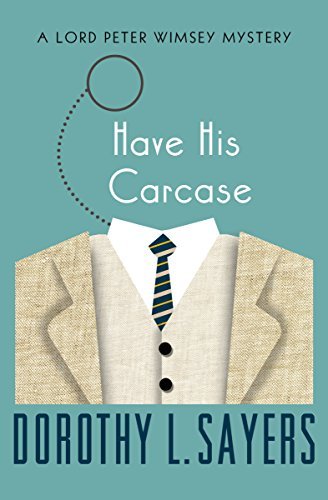
Lord Peter Wimsey #8
Have His Carcase
The second Dorothy L. Sayers classic to feature mystery writer Harriet Vane, Have His Carcase. Harriet’s discovery of a murdered body on the beach before it is swept out to sea unites her once more with the indomitable Lord Peter Wimsey, as together they attempt to solve a most lethal mystery, and find themselves become much closer than mere sleuthing partners in the process.
499 pages, Kindle Edition
First published January 1, 1932
About the author
Dorothy L. Sayers
926 books3,121 followersThe detective stories of well-known British writer Dorothy Leigh Sayers mostly feature the amateur investigator Lord Peter Wimsey; she also translated the
Divine Comedy
of Dante Alighieri.
This renowned author and Christian humanist studied classical and modern languages.
Her best known mysteries, a series of short novels, set between World War I and World War II, feature an English aristocrat and amateur sleuth. She is also known for her plays and essays.
https://en.wikipedia.org/wiki/Dorothy...
This renowned author and Christian humanist studied classical and modern languages.
Her best known mysteries, a series of short novels, set between World War I and World War II, feature an English aristocrat and amateur sleuth. She is also known for her plays and essays.
https://en.wikipedia.org/wiki/Dorothy...
Ratings & Reviews
Friends & Following
Create a free account to discover what your friends think of this book!
Community Reviews
Displaying 1 - 30 of 1,190 reviews

April 9, 2018
Elizabeth George wrote an introduction to this novel upon its reissue in 2003 and I found it very moving. She talks about Dorothy L. Sayers’ willingness to explore so many different and interesting areas of life – from bell ringing to unusual uses of arsenic to architecture, cryptology, vinology, and so many others that we either never hear about any more or hear about only rarely. Then she goes on to say, ”What continues to be remarkable about Sayers’ work, however, is her willingness to explore the human condition.”
And that, my friends is what draws me back again and again to reading her novels.
In addition, despite the fact that women in novels were (at the time) popularly showcased as sweet, innocent, somewhat dim-witted domestic goddesses, Dorothy L. Sayers was brave enough to write against the stream. The women in her books are strong, smart, independent and very capable on many levels. In other words, they are very real people rather than fantasies.
This novel is the first one where Harriet Vane plays a major role. First, she finds the body, then she takes actions that are brilliant and time-saving. By the time Lord Peter gets there, all there is left for him to do is form a partnership with Harriet to try and figure out who did the deed and why. Well, that – and his daily proposals of marriage to Harriet. Two novels after they meet and he is still convinced she must marry him and she is just as determined not to. Their relationship adds a lot of spice and interest to an already fascinating murder case.
While I will leave you to discover it for yourself, I will say that it is one of Dorothy L. Sayers’ most complex plots yet. Lord Peter and Harriet Vane are up against a very intelligent adversary and there is even a chapter devoted to a specific code used in a certain communication to the victim. As the chapter moves on, we follow Lord Peter and Harriet on their quest to crack the code. There are even diagrams showing how they eventually deduced the solution, and it is brilliant.
This is one of the best novels I have read in this series. It has all the ingredients one could wish for in a great mystery story. And just when I thought we had it all figured out, the whole mixture gets shaken up again and we all put our thinking caps back on for more effort. By “we”, I am of course talking about Lord Peter, Harriet, and myself. I have no idea how she did it, but Dorothy L. Sayers had me involved as if I were somewhere right in the middle of the sleuthing process.
This was an excellent read and would be particularly enjoyable for all fans of Dorothy L. Sayers’ writing – and particularly her Lord Peter Wimsey series.
And that, my friends is what draws me back again and again to reading her novels.
In addition, despite the fact that women in novels were (at the time) popularly showcased as sweet, innocent, somewhat dim-witted domestic goddesses, Dorothy L. Sayers was brave enough to write against the stream. The women in her books are strong, smart, independent and very capable on many levels. In other words, they are very real people rather than fantasies.
This novel is the first one where Harriet Vane plays a major role. First, she finds the body, then she takes actions that are brilliant and time-saving. By the time Lord Peter gets there, all there is left for him to do is form a partnership with Harriet to try and figure out who did the deed and why. Well, that – and his daily proposals of marriage to Harriet. Two novels after they meet and he is still convinced she must marry him and she is just as determined not to. Their relationship adds a lot of spice and interest to an already fascinating murder case.
While I will leave you to discover it for yourself, I will say that it is one of Dorothy L. Sayers’ most complex plots yet. Lord Peter and Harriet Vane are up against a very intelligent adversary and there is even a chapter devoted to a specific code used in a certain communication to the victim. As the chapter moves on, we follow Lord Peter and Harriet on their quest to crack the code. There are even diagrams showing how they eventually deduced the solution, and it is brilliant.
This is one of the best novels I have read in this series. It has all the ingredients one could wish for in a great mystery story. And just when I thought we had it all figured out, the whole mixture gets shaken up again and we all put our thinking caps back on for more effort. By “we”, I am of course talking about Lord Peter, Harriet, and myself. I have no idea how she did it, but Dorothy L. Sayers had me involved as if I were somewhere right in the middle of the sleuthing process.
This was an excellent read and would be particularly enjoyable for all fans of Dorothy L. Sayers’ writing – and particularly her Lord Peter Wimsey series.

May 4, 2015
EXCERPT: She was within a few yards of the rock now, gazing up at the sleeper. He lay uncomfortably bunched up on the extreme seaward edge of the rock, his knees drawn high and showing his pale mauve socks. The head, tucked closely down between the shoulders, was invisible.
'What a way to sleep!' said Harriet. 'More like a cat than a human being. It's not natural. His head must almost be hanging over the edge. It's enough to give him apoplexy. Now, if I had any luck, he'd be a corpse, and I should report him and get my name in the papers. That would be something like publicity. "Well Known Woman Mystery-Writer Finds Corpse on Lonely Shore." But these things never happen to authors. It's always some placid laborer or night-watchman who finds corpses. . . '
ABOUT THIS BOOK: Mystery writer Harriet Vane, recovering from an unhappy love affair and its aftermath, seeks solace on a barren beach -- deserted but for the body of a bearded young man with his throat cut.
From the moment she photographs the corpse, which soon disappears with the tide, she is puzzled by a mystery that might have been suicide, murder or a political plot.
With the appearance of her dear friend Lord Peter Wimsey, she finds a reason for detective pursuit -- as only the two of them can pursue it.
MY THOUGHTS:😍😍😍😍.5 stars for this delightful Whimsey novel that had my brain bouncing all about my head, rather like the ball inside a pinball machine!
We have an older woman, desperate for love; her younger lover who wants an empire; and a son who sees his inheritance disappearing into the clutches of a gigolo. And so the scene is set for a murder. Simple? It could have been, but.......
This is one of the most complicated murders I have ever read. But also one of the most entertaining. We have the involvement of the Russians, a little reminiscent of the missing Russian Princess Anastasia, and a whole plethora of red herrings for Lord Peter and Miss Vane to fish through.
The missing .5 of a star is due to the numerous pages devoted to cipher codes, which I admit to skimming. With that small exception, this remains one of my favorite Lord Peter Wimsey novels.
THE AUTHOR: Dorothy Leigh Sayers was a renowned British author, translator, student of classical and modern languages, and Christian humanist.
Dorothy L. Sayers is best known for her mysteries, a series of novels and short stories set between World War I and World War II that feature English aristocrat and amateur sleuth Lord Peter Wimsey. However, Sayers herself considered her translation of Dante's Divina Commedia to be her best work. She is also known for her plays and essays.
DISCLOSURE: I own my copy of Have His Carcase by Dorothy L. Sayers, published by Open Road Media. I read this book in 2016 as part of a Goodreads Group Read. All opinions expressed in this review are entirely my own personal opinions.
Please refer to my Goodreads.com profile page or the about page on sandysbookaday.wordpress.com for an explanation of my rating system. This review and others are also published on my blog sandysbookaday.wordpress.com https://sandysbookaday.wordpress.com/...
'What a way to sleep!' said Harriet. 'More like a cat than a human being. It's not natural. His head must almost be hanging over the edge. It's enough to give him apoplexy. Now, if I had any luck, he'd be a corpse, and I should report him and get my name in the papers. That would be something like publicity. "Well Known Woman Mystery-Writer Finds Corpse on Lonely Shore." But these things never happen to authors. It's always some placid laborer or night-watchman who finds corpses. . . '
ABOUT THIS BOOK: Mystery writer Harriet Vane, recovering from an unhappy love affair and its aftermath, seeks solace on a barren beach -- deserted but for the body of a bearded young man with his throat cut.
From the moment she photographs the corpse, which soon disappears with the tide, she is puzzled by a mystery that might have been suicide, murder or a political plot.
With the appearance of her dear friend Lord Peter Wimsey, she finds a reason for detective pursuit -- as only the two of them can pursue it.
MY THOUGHTS:😍😍😍😍.5 stars for this delightful Whimsey novel that had my brain bouncing all about my head, rather like the ball inside a pinball machine!
We have an older woman, desperate for love; her younger lover who wants an empire; and a son who sees his inheritance disappearing into the clutches of a gigolo. And so the scene is set for a murder. Simple? It could have been, but.......
This is one of the most complicated murders I have ever read. But also one of the most entertaining. We have the involvement of the Russians, a little reminiscent of the missing Russian Princess Anastasia, and a whole plethora of red herrings for Lord Peter and Miss Vane to fish through.
The missing .5 of a star is due to the numerous pages devoted to cipher codes, which I admit to skimming. With that small exception, this remains one of my favorite Lord Peter Wimsey novels.
THE AUTHOR: Dorothy Leigh Sayers was a renowned British author, translator, student of classical and modern languages, and Christian humanist.
Dorothy L. Sayers is best known for her mysteries, a series of novels and short stories set between World War I and World War II that feature English aristocrat and amateur sleuth Lord Peter Wimsey. However, Sayers herself considered her translation of Dante's Divina Commedia to be her best work. She is also known for her plays and essays.
DISCLOSURE: I own my copy of Have His Carcase by Dorothy L. Sayers, published by Open Road Media. I read this book in 2016 as part of a Goodreads Group Read. All opinions expressed in this review are entirely my own personal opinions.
Please refer to my Goodreads.com profile page or the about page on sandysbookaday.wordpress.com for an explanation of my rating system. This review and others are also published on my blog sandysbookaday.wordpress.com https://sandysbookaday.wordpress.com/...

August 4, 2020
Well, this installment was far superior to the previous The Five Red Herrings. Although there is a bunch of code-breaking which I allowed to just flow by me as I did all the train schedule details in that previous volume. The difference was very much due to Miss Harriet Vane, an intelligent and spirited match for Wimsey.
In fact, it is her sharp observations on the station of women during this time period that made the book for me. She realizes that, if she remains single, it doesn't matter how well she does for herself writing detective novels, she will always be an object of pity and derision. Hell, we're barely past that state even in 2020! I can't tell you how many people are ready to twist an ankle in their hurry to pity me! Despite the fact that I have traveled a great deal, supported myself quite successfully, and arranged to retire at a reasonably young age. But because I've never married, some would consider my life a failure. It makes me laugh, but it seems to make Harriet bitter. She realizes, while watching Mrs. Weldon, that marriage and widowhood may not rescue a woman from this fate.
I think the author herself was coming to realize this situation for herself. She was educated, supporting herself (and an illegitimate son), writing successful novels that are chock full of witty observations and complicated plots, but she was still a woman and therefore not admitted into the top circles of the literary field. It didn’t help that she wrote mysteries, part of the despised genre fiction. That snobbery remains strong.
I love Harriet ogling Wimsey when he dons a bathing costume to search around the infamous Flatiron Rock, where Harriet discovered the corpse that gets this story rolling. She reluctantly (?) teams up with His Lordship when he makes his appearance on the scene, and we witness her gradual conversion (or Peter wearing down her objections) to matrimony. Mind you, she hasn't consented just yet!
Well written, if a bit convoluted, but I did appreciate the final conclusions re: time of death, and kicked myself for not thinking of the solution! One got so used to thinking of the murder victim as a poser, it was hard to think that he might just have some basis for his beliefs!
Cross posted at my blog:
https://wanda-thenextfifty.blogspot.c...
In fact, it is her sharp observations on the station of women during this time period that made the book for me. She realizes that, if she remains single, it doesn't matter how well she does for herself writing detective novels, she will always be an object of pity and derision. Hell, we're barely past that state even in 2020! I can't tell you how many people are ready to twist an ankle in their hurry to pity me! Despite the fact that I have traveled a great deal, supported myself quite successfully, and arranged to retire at a reasonably young age. But because I've never married, some would consider my life a failure. It makes me laugh, but it seems to make Harriet bitter. She realizes, while watching Mrs. Weldon, that marriage and widowhood may not rescue a woman from this fate.
I think the author herself was coming to realize this situation for herself. She was educated, supporting herself (and an illegitimate son), writing successful novels that are chock full of witty observations and complicated plots, but she was still a woman and therefore not admitted into the top circles of the literary field. It didn’t help that she wrote mysteries, part of the despised genre fiction. That snobbery remains strong.
I love Harriet ogling Wimsey when he dons a bathing costume to search around the infamous Flatiron Rock, where Harriet discovered the corpse that gets this story rolling. She reluctantly (?) teams up with His Lordship when he makes his appearance on the scene, and we witness her gradual conversion (or Peter wearing down her objections) to matrimony. Mind you, she hasn't consented just yet!
Well written, if a bit convoluted, but I did appreciate the final conclusions re: time of death, and kicked myself for not thinking of the solution! One got so used to thinking of the murder victim as a poser, it was hard to think that he might just have some basis for his beliefs!
Cross posted at my blog:
https://wanda-thenextfifty.blogspot.c...

June 10, 2016
This is the eighth book featuring Lord Peter Wimsey. We first meet Harriet Vane, crime writer and previously on trial for murder, in, “Strong Poison.” She then vanished in the next novel, “Five Red Herrings,” which I struggled with, and so I was pleased to become re-acquainted with her in this story.
The book opens with Harriet Vane on a walking tour, when she finds the body of a man on a beach. His throat has been cut and, with the tide coming in, Harriet attempts to contact the police – but this involves such a long journey that the body has vanished by the time she manages to alert anyone. The next morning the police and press are all gathered at the seaside watering place where Harriet is staying, and then Lord Peter Wimsey arrives.
The victim turns out to be a Russian professional dancer who, not only was paid to dance with the elderly ladies who visit the hotel, but had actually proposed marriage to one of them – a very wealthy, and seemingly heartbroken lady, named Mrs Weldon. As the investigation unfolds though, nothing seems to be clear cut – there are disappearing witnesses, letters in ciphers and even tales of Bolsheviks…
I enjoyed this far more than the previous, “Five Red Herrings.” Harriet Vane was more involved in this plot, but she did not take over and Lord Peter Wimsey had a large part in the investigation. Dorothy L.Sayers did not only create a fantastic sleuth in Wimsey, but gave him a good array of friends and family to flesh out the books; so we have the intrepid Bunter tailing a suspect and a mention of his new brother in law, Parker, as well as lots of local police input. Overall, an enjoyable addition to the series and I look forward to reading on.
The book opens with Harriet Vane on a walking tour, when she finds the body of a man on a beach. His throat has been cut and, with the tide coming in, Harriet attempts to contact the police – but this involves such a long journey that the body has vanished by the time she manages to alert anyone. The next morning the police and press are all gathered at the seaside watering place where Harriet is staying, and then Lord Peter Wimsey arrives.
The victim turns out to be a Russian professional dancer who, not only was paid to dance with the elderly ladies who visit the hotel, but had actually proposed marriage to one of them – a very wealthy, and seemingly heartbroken lady, named Mrs Weldon. As the investigation unfolds though, nothing seems to be clear cut – there are disappearing witnesses, letters in ciphers and even tales of Bolsheviks…
I enjoyed this far more than the previous, “Five Red Herrings.” Harriet Vane was more involved in this plot, but she did not take over and Lord Peter Wimsey had a large part in the investigation. Dorothy L.Sayers did not only create a fantastic sleuth in Wimsey, but gave him a good array of friends and family to flesh out the books; so we have the intrepid Bunter tailing a suspect and a mention of his new brother in law, Parker, as well as lots of local police input. Overall, an enjoyable addition to the series and I look forward to reading on.

December 10, 2022
LPW Buddy Read through 2022/23
4.5 ⭐️
Now I remember as a child my mother had paperbacks of a number of the Dorothy L Sayers Lord Peter books on a shelf and I always used to look at their bright colours. Later as a teenager I investigated those brightly covered books and thoroughly enjoyed the stories that I read. 40+ years later I remember little of the stories, but I am certain that I never read this story, as it was a complete unknown to me.
And a really enjoyable unknown it was as well. A great story, with some wonderful interaction between LPW and the love of his life Harriet Vane. This story starts with Harriet Vane on a walking holiday discovering a dead body perched on a rock in the middle of a seaside bay where the tide is out. It appears to be suicide as there are no footprints leading away from the rock, but it is a mystery as to why he is there and why he would commit suicide.
The body gets washed out to sea before the police can get involved and so the inquest is delayed and so Harriet Vane has to stay locally as the discoverer of the body.
Lord Peter hears about this state of affairs through his friends in the press and motors down to assist , only to discover that it could be murder after all, but why and by whom ?
All in all an excellent story with a number of twists and turns, some excellent deduction from Lord Peter, some wonderful detective work by Bunter and wonderful interplay of characters.
4.5 ⭐️
Now I remember as a child my mother had paperbacks of a number of the Dorothy L Sayers Lord Peter books on a shelf and I always used to look at their bright colours. Later as a teenager I investigated those brightly covered books and thoroughly enjoyed the stories that I read. 40+ years later I remember little of the stories, but I am certain that I never read this story, as it was a complete unknown to me.
And a really enjoyable unknown it was as well. A great story, with some wonderful interaction between LPW and the love of his life Harriet Vane. This story starts with Harriet Vane on a walking holiday discovering a dead body perched on a rock in the middle of a seaside bay where the tide is out. It appears to be suicide as there are no footprints leading away from the rock, but it is a mystery as to why he is there and why he would commit suicide.
The body gets washed out to sea before the police can get involved and so the inquest is delayed and so Harriet Vane has to stay locally as the discoverer of the body.
Lord Peter hears about this state of affairs through his friends in the press and motors down to assist , only to discover that it could be murder after all, but why and by whom ?
All in all an excellent story with a number of twists and turns, some excellent deduction from Lord Peter, some wonderful detective work by Bunter and wonderful interplay of characters.

September 23, 2026
4.5★
"Excuse me my lord," said Inspector Umpelty, "but we've wasted a good half hour now speculating about what these people might have done or meant to do."
I have been saying for a while that Sayers is my favourite Golden Age author - & at her best she is indeed wonderful - but for consistency, I think I need to be boring & declare Agatha Christie the winner. The above quote is a good example of why.
It literally took me half an hour to read the exposition that the above quote is from! Christie is shorter & snappier (normally) with her explanations.
This is not to say that Sayers's wordiness is always unwelcome! The beginning of the book has Wimsey's love interest on a solitary walking holiday. I both admired her independence & had a nostalgic smile for a quiet world now gone. Of course Harriet being Harriet she
& I enjoyed Wimsey's dialogue with Harriet! I always found Ngaio Marsh's treatment of Alleyn & Troy pretty cringe, but Sayer's has a light touch with her couple's dialogue & I'm enjoying watching them inch closer to an understanding is delightful - contemporary readers must have looked forward to this in each new Wimsey novel.
Other places - not so much. The listing of each suspect was lengthy & slowed the story down (& I had to minimise the text on my Kindle to fit the columns in.) & for a worrying time I thought this was going to turn into a
So enjoyable & well worth the read, but overlong.
"Excuse me my lord," said Inspector Umpelty, "but we've wasted a good half hour now speculating about what these people might have done or meant to do."
I have been saying for a while that Sayers is my favourite Golden Age author - & at her best she is indeed wonderful - but for consistency, I think I need to be boring & declare Agatha Christie the winner. The above quote is a good example of why.
It literally took me half an hour to read the exposition that the above quote is from! Christie is shorter & snappier (normally) with her explanations.
This is not to say that Sayers's wordiness is always unwelcome! The beginning of the book has Wimsey's love interest on a solitary walking holiday. I both admired her independence & had a nostalgic smile for a quiet world now gone. Of course Harriet being Harriet she
& I enjoyed Wimsey's dialogue with Harriet! I always found Ngaio Marsh's treatment of Alleyn & Troy pretty cringe, but Sayer's has a light touch with her couple's dialogue & I'm enjoying watching them inch closer to an understanding is delightful - contemporary readers must have looked forward to this in each new Wimsey novel.
Other places - not so much. The listing of each suspect was lengthy & slowed the story down (& I had to minimise the text on my Kindle to fit the columns in.) & for a worrying time I thought this was going to turn into a
So enjoyable & well worth the read, but overlong.


April 11, 2019
Harriet Vane is going on a walking-tour of the coasts when she stumbles across the throat-slit corpse of Paul Alexis Goldschmidt. Realizing the sea is coming in for high tide and threatens the crime scene, she collects evidence and photographs and hikes her way to phone the police—and the press because she's well aware of how the story could be spun if she doesn't get ahead of it.
Her only mistake: the press rat her out to Lord Peter Wimsey who arrives at the coastal village the next day, ready to investigate this body of Vane's (pun...somewhat intended). And then: all the PLOT, CLUES and ALIBIS you could ever want, and then some.
(Is this entire review me quoting huge swathes of this book? MAYBE IT IS.)
1. NOTHING ELSE MATTERS:
2. I think one of my favorite things in this is Harriet so clearly refusing to engage with her lust because she is just AWARE of Peter in a way that vaguely bothers her but not enough to make her STOP LOOKING, y'know? 'And he strips better than I should have expected,' she admitted candidly to herself. 'Better shoulders than I realized and, thank Heaven, calves to his legs.' GORL WHY YOU THANKING HEAVEN FOR CALVES IF YOU AIN'T PLANNING TO PUT THEM TO USE I ASK YOU.
(and then she goes on to ogle him as he rides the horse: Harriet mechanically picked up his hat and stood squeezing the crown absently in and out, with her eyes on the flying figure. I MEAN I FEEL IT IN THE AIR TONIGHT.)
3. I am also dying at the fact that the thing that truly slays Harriet Vane is the realization that PETER WIMSEY KNOWS HOW TO RIDE A HORSE. Harriet was silent. She suddenly saw Wimsey in a new light. She knew him to be intelligent, clean, courteous, wealthy, well-read, amusing and enamored, but he had not so far produced in her that crushing sense of utter inferiority which leads to protestation and hero-worship. But she now realized that there was something godlike about him. He could control a horse. AND THEN SHE GOES ON TO IMAGINE HIM ON A BIG OLD HORSE AND PUTS HERSELF ON AN EVEN BIGGER STEED "AT HIS SIDE, AMID THE RESPECTFUL ADMIRATION OF THE ASSEMBLED NOBILITY AND GENRTY." SHE WANTS TO BE HIS PARTNER, YO.
The fact that his horse-riding (something that is a presumed norm for someone in his station) is what truly stops Harriet Vane in her tracks is...beautifully sad, encompassing (what she views as) the unbreachable divide between them. Because Harriet Vane, too, is intelligent and clean and can be courteous when she chooses and is well-read and perhaps not wealthy but not entirely a pauper, and—but horses! A new world!
4. Harriet literally has so many feelings about how she feels and also how PETER should be feeling and it's just A LOT: Silence for a few moments. Harriet felt that Wimsey ought to be saying, 'How well you dance.' Since he did not say it, she became convinced that she was dancing like a wax doll with sawdust legs. Wimsey had never danced with her, never held her in his arms before. It should have been an epoch-making moment for him.
And honestly the ENTIRE fight but specifically: The fact that, until five minutes earlier, she had felt perfectly happy and at ease with this man, before she had placed both him and herself in an intolerable position, she felt somehow as one more added to the list of his offenses. She looked round for something really savage to do to him. OH HARRIET YOU ANGRY, INJURED STARFISH.
AND THE PICNIC when she very much asks herself WHAT WOMAN COULD POSSIBLY NOT PICK LORD PETER HONESTLY nevermind why she's so cranky to Lord Peter IT DOESN'T MATTER: The curious inhibitions which caused her to be abrupt, harsh, and irritating with Lord Peter did not seem to trouble her in dealing with Henry Weldon. [... Henry Weldon] really imagined that, placed between Lord Peter and himself, a woman could possibly—well, why not? How was he to know? It wouldn't be the first time that a woman had made a foolish choice.
5. Lord Peter is in this, too, I guess, and he proposes ALL OVER THE PLACE ("Miss Vane, Harriet, if I may call you so, will you marry me and look after my socks, and, incidentally be the only woman-novelist who ever accepted a proposal of marriage in the presence of a superintendent and inspector of Police?" / "Not even for the sake of the headlines.") and also races to make sure Harriet is OK after suffering the 'disgusting embraces' of a potential murderer.
(Also this because WHAT EVEN IS THIS MAN: Wimsey raised his eyebrows, or, to be more accurate, the one eyebrow which was not occupied in keeping his monocle in place.)
Her only mistake: the press rat her out to Lord Peter Wimsey who arrives at the coastal village the next day, ready to investigate this body of Vane's (pun...somewhat intended). And then: all the PLOT, CLUES and ALIBIS you could ever want, and then some.
(Is this entire review me quoting huge swathes of this book? MAYBE IT IS.)
1. NOTHING ELSE MATTERS:
"By all means," said Harriet. "Where do you come from?"CAN YOU BELIEVE?
"From London—like a bird that hears the call of its mate."
"I didn't—" began Harriet.
"I didn't mean you. I meant the corpse. But still, talking of mates, will you marry me?"
"Certainly not."
"I thought not, but I felt I might as well ask the question. Did you say they had found the body?"
2. I think one of my favorite things in this is Harriet so clearly refusing to engage with her lust because she is just AWARE of Peter in a way that vaguely bothers her but not enough to make her STOP LOOKING, y'know? 'And he strips better than I should have expected,' she admitted candidly to herself. 'Better shoulders than I realized and, thank Heaven, calves to his legs.' GORL WHY YOU THANKING HEAVEN FOR CALVES IF YOU AIN'T PLANNING TO PUT THEM TO USE I ASK YOU.
(and then she goes on to ogle him as he rides the horse: Harriet mechanically picked up his hat and stood squeezing the crown absently in and out, with her eyes on the flying figure. I MEAN I FEEL IT IN THE AIR TONIGHT.)
3. I am also dying at the fact that the thing that truly slays Harriet Vane is the realization that PETER WIMSEY KNOWS HOW TO RIDE A HORSE. Harriet was silent. She suddenly saw Wimsey in a new light. She knew him to be intelligent, clean, courteous, wealthy, well-read, amusing and enamored, but he had not so far produced in her that crushing sense of utter inferiority which leads to protestation and hero-worship. But she now realized that there was something godlike about him. He could control a horse. AND THEN SHE GOES ON TO IMAGINE HIM ON A BIG OLD HORSE AND PUTS HERSELF ON AN EVEN BIGGER STEED "AT HIS SIDE, AMID THE RESPECTFUL ADMIRATION OF THE ASSEMBLED NOBILITY AND GENRTY." SHE WANTS TO BE HIS PARTNER, YO.
The fact that his horse-riding (something that is a presumed norm for someone in his station) is what truly stops Harriet Vane in her tracks is...beautifully sad, encompassing (what she views as) the unbreachable divide between them. Because Harriet Vane, too, is intelligent and clean and can be courteous when she chooses and is well-read and perhaps not wealthy but not entirely a pauper, and—but horses! A new world!
4. Harriet literally has so many feelings about how she feels and also how PETER should be feeling and it's just A LOT: Silence for a few moments. Harriet felt that Wimsey ought to be saying, 'How well you dance.' Since he did not say it, she became convinced that she was dancing like a wax doll with sawdust legs. Wimsey had never danced with her, never held her in his arms before. It should have been an epoch-making moment for him.
And honestly the ENTIRE fight but specifically: The fact that, until five minutes earlier, she had felt perfectly happy and at ease with this man, before she had placed both him and herself in an intolerable position, she felt somehow as one more added to the list of his offenses. She looked round for something really savage to do to him. OH HARRIET YOU ANGRY, INJURED STARFISH.
AND THE PICNIC when she very much asks herself WHAT WOMAN COULD POSSIBLY NOT PICK LORD PETER HONESTLY nevermind why she's so cranky to Lord Peter IT DOESN'T MATTER: The curious inhibitions which caused her to be abrupt, harsh, and irritating with Lord Peter did not seem to trouble her in dealing with Henry Weldon. [... Henry Weldon] really imagined that, placed between Lord Peter and himself, a woman could possibly—well, why not? How was he to know? It wouldn't be the first time that a woman had made a foolish choice.
5. Lord Peter is in this, too, I guess, and he proposes ALL OVER THE PLACE ("Miss Vane, Harriet, if I may call you so, will you marry me and look after my socks, and, incidentally be the only woman-novelist who ever accepted a proposal of marriage in the presence of a superintendent and inspector of Police?" / "Not even for the sake of the headlines.") and also races to make sure Harriet is OK after suffering the 'disgusting embraces' of a potential murderer.
(Also this because WHAT EVEN IS THIS MAN: Wimsey raised his eyebrows, or, to be more accurate, the one eyebrow which was not occupied in keeping his monocle in place.)

November 20, 2010
After reading Gaudy Night and hearing Peter and Harriet refer to "the Wilvercombe affair", I was intrigued and naturally wanted to read more about these two crazy kids solving another mystery. Rather misleadingly, the book that details this case is not called "The Wilvercombe Affair", and doesn't even have the word Wilvercombe in the title. It's called "Have His Carcase", because Dorothy Sayers wants to make us work for our fun, dammit.
Anyway, the mystery in a nutshell: Harriet Vane, a couple years after she is found innocent of murdering Philip Boynes, goes on a walking holiday by herself. She's wandering along the beach one day when she spots what looks suspiciously like a dead body. Because she is Harriet Vane, and this is a Sayers mystery, here's what she thinks next: "Now, if I have any luck, he'd be a corpse, and I should report him and get my name in the papers. ...'Well-Known Woman Detective-Writer Finds Mystery Corpse on Lonely Shore.' But these things never happen to authors. It's always some placid laborer or night-watchman who finds corpses."
Of course it's actually a corpse, and Harriet, realizing quite sensibly that she can't move the body and that the tide might come in before she can find help, photographs the crime scene and looks for evidence. It looks a lot like a suicide, but a Highly Suspicious One. When there's something strange / In your neighborhood / Who you gonna call?
LORD PETER!
Yes, his lordship the delightful Peter Wimsey skips into town, and he and Harriet start solving the mystery while having marvelous romantic tension, witty banter, and one explosive fight that was very upsetting for me, even though I've read Gaudy Night and know it all turns out okay.
Let me repeat what I say in every single Dorothy Sayers review that I write: I. Love. Peter. Wimsey. He is absolutely divine, and I won't just let you take my word for it and will let him speak for himself.
First, to Harriet: "And I could kiss you for it. You need not shrink and tremble. I am not going to do it. When I kiss you, it will be an important event - one of those things which stand out among their surroundings like the first time you tasted li-chee. It will not be an unimportant sideshow attached to a detective investigation."
And then, to a man who insults Harriet: "Manners, please! ...You will kindly refer to Miss Vane in a proper way and spare me the boring nuisance of pushing your teeth out at the back of your neck."
(Madeline, from the balcony: "OH SNAP!")
Advice for a future reader, however: make sure you read the Harriet-Peter mysteries in the correct order, so you can fully appreciate them in a way I wasn't quite able to. Strong Poison is first, then Have His Carcase, and then Gaudy Night. Also I think there's another one that takes place after Gaudy Night, but I'm not sure.
Anyway, the mystery in a nutshell: Harriet Vane, a couple years after she is found innocent of murdering Philip Boynes, goes on a walking holiday by herself. She's wandering along the beach one day when she spots what looks suspiciously like a dead body. Because she is Harriet Vane, and this is a Sayers mystery, here's what she thinks next: "Now, if I have any luck, he'd be a corpse, and I should report him and get my name in the papers. ...'Well-Known Woman Detective-Writer Finds Mystery Corpse on Lonely Shore.' But these things never happen to authors. It's always some placid laborer or night-watchman who finds corpses."
Of course it's actually a corpse, and Harriet, realizing quite sensibly that she can't move the body and that the tide might come in before she can find help, photographs the crime scene and looks for evidence. It looks a lot like a suicide, but a Highly Suspicious One. When there's something strange / In your neighborhood / Who you gonna call?
LORD PETER!
Yes, his lordship the delightful Peter Wimsey skips into town, and he and Harriet start solving the mystery while having marvelous romantic tension, witty banter, and one explosive fight that was very upsetting for me, even though I've read Gaudy Night and know it all turns out okay.
Let me repeat what I say in every single Dorothy Sayers review that I write: I. Love. Peter. Wimsey. He is absolutely divine, and I won't just let you take my word for it and will let him speak for himself.
First, to Harriet: "And I could kiss you for it. You need not shrink and tremble. I am not going to do it. When I kiss you, it will be an important event - one of those things which stand out among their surroundings like the first time you tasted li-chee. It will not be an unimportant sideshow attached to a detective investigation."
And then, to a man who insults Harriet: "Manners, please! ...You will kindly refer to Miss Vane in a proper way and spare me the boring nuisance of pushing your teeth out at the back of your neck."
(Madeline, from the balcony: "OH SNAP!")
Advice for a future reader, however: make sure you read the Harriet-Peter mysteries in the correct order, so you can fully appreciate them in a way I wasn't quite able to. Strong Poison is first, then Have His Carcase, and then Gaudy Night. Also I think there's another one that takes place after Gaudy Night, but I'm not sure.

July 10, 2013
Carrying on with my chronological read through this excellent series, and weirdly this has changed my opinion on this title. I didn’t love it before, but now, seeing the developments Sayers features not only in Wimsey but also in the interactions between him and Vane, I enjoyed it much more. There is the banter of course while the two are investigating this rather complex murder mystery, but also their own perceptions and feelings.
My paperback edition also included an introduction by Lee Child, positing how Sayers may have changed her approach to her detective, finding now solace in this writing since real life was problematic...
My paperback edition also included an introduction by Lee Child, positing how Sayers may have changed her approach to her detective, finding now solace in this writing since real life was problematic...

May 28, 2025
Life lessons:
check the facts, the columns on which your life, your theories, your stories are built on. A continuous occasional check therein after might not be a bad thing.

August 26, 2018
It's good but at times in this the Harriet/ Lord Peter banter just got too, too for me. Come on, I know she keeps him off for years yet, but her push/pull gets a bit arrogant and conceited to say the least.
The case is good but this one for me was just overlong. Bunter is off on his own doing some inquiries too. And travel abounds all around. The part at the beginning when Harriet is just "thinking" on her walk was 5 star.
I like these more when they are majority "in company" I think. Having read about 1/2- I don't seem to like the roving ones as much as the ones with 7 or 8 characters at "dinner" or some event or house party or hunt etc. Some of the language is truly dated and it holds completely different meanings now- but that was not a deterrent to me, just an observation. Dago being a favorite and meaning more than just being French or dark Mediterranean or Italian but beyond that "foreign" - only in capital letters.
To tell you the truth, this one with all the varying logistics for "no footprints" and "fresh blood" etc. in 25 different "maybes"- started to bore me. Not my favorite, but not the poorest- at least this one raised some witty eye brows and didn't have half the dialogue in dialect.
There's a pivotal point within all of this crux that I am fairly sure differs (now in this decade, with more chemical and elemental property's knowledge about the biologic) from the forensics established here in this tale as "true" in the late 1920's. I might be wrong. Yet in time when I have more access, I'm going to look it up or ask a doctor who has done autopsies. Hmmmm!
The case is good but this one for me was just overlong. Bunter is off on his own doing some inquiries too. And travel abounds all around. The part at the beginning when Harriet is just "thinking" on her walk was 5 star.
I like these more when they are majority "in company" I think. Having read about 1/2- I don't seem to like the roving ones as much as the ones with 7 or 8 characters at "dinner" or some event or house party or hunt etc. Some of the language is truly dated and it holds completely different meanings now- but that was not a deterrent to me, just an observation. Dago being a favorite and meaning more than just being French or dark Mediterranean or Italian but beyond that "foreign" - only in capital letters.
To tell you the truth, this one with all the varying logistics for "no footprints" and "fresh blood" etc. in 25 different "maybes"- started to bore me. Not my favorite, but not the poorest- at least this one raised some witty eye brows and didn't have half the dialogue in dialect.
There's a pivotal point within all of this crux that I am fairly sure differs (now in this decade, with more chemical and elemental property's knowledge about the biologic) from the forensics established here in this tale as "true" in the late 1920's. I might be wrong. Yet in time when I have more access, I'm going to look it up or ask a doctor who has done autopsies. Hmmmm!

December 22, 2020
The plotting is brilliant, and a great example of how a single detail can trigger, domino-like, an unimaginable cascade of errors, misunderstandings, and unexpected consequences, all of which, when skilfully handled, greatly contribute to the making of a delightfully complicated and clever plot, especially in murder mysteries. In the case at hand, it was the execution, I think, which spoiled it all for me. At one point, the investigation started dragging, and I found myself wanting to skip to the end. This is a particularly bad sign, for me, because in mysteries I normally enjoy the chase as much as the denouement. With Have His Carcase, I didn't care nearly enough. Also, there are so few Wimsey/Vane moments! Although the few that are there are really lovely and thoughtful and heart-wrenching, honestly.
In this regard, allow me to express my deep admiration for Sayers' characterization of Harriet Vane. She is free-spirited and independent, keenly aware and critical of the double standards and difficulties which women have to face in her society, and Sayers clearly meant to use her as a mouthpiece for these concerns (but never in an overly didactic or moralistic sort of way). And yet, she isn't at all ashamed to take notice of how fit Wimsey looks in his bathing suit when they go hunting for clues on the shore, and Sayers isn't ashamed to openly let us know that yes, she's ogling him, something the matter with that? This was written in 1932. And I think it's all to Sayers' credit that Harriet's character, so genuine and fierce and unapologetic, still feels so fresh and refreshing today.
So, all in all, while this is not the best Wimsey I've read so far, it definitely has its moments. And I hear the next books, especially Nine Tailors and Gaudy Night, are the very best of Sayers', so I'm staying hopeful.
In this regard, allow me to express my deep admiration for Sayers' characterization of Harriet Vane. She is free-spirited and independent, keenly aware and critical of the double standards and difficulties which women have to face in her society, and Sayers clearly meant to use her as a mouthpiece for these concerns (but never in an overly didactic or moralistic sort of way). And yet, she isn't at all ashamed to take notice of how fit Wimsey looks in his bathing suit when they go hunting for clues on the shore, and Sayers isn't ashamed to openly let us know that yes, she's ogling him, something the matter with that? This was written in 1932. And I think it's all to Sayers' credit that Harriet's character, so genuine and fierce and unapologetic, still feels so fresh and refreshing today.
So, all in all, while this is not the best Wimsey I've read so far, it definitely has its moments. And I hear the next books, especially Nine Tailors and Gaudy Night, are the very best of Sayers', so I'm staying hopeful.

October 6, 2022
thoroughly fun. murder and bolsheviks and horses galloping madly across the sands.
(plus Peter's constant, "...and oh by the way WILL YOU MARRY ME?"s will never fail to delight me)
(plus Peter's constant, "...and oh by the way WILL YOU MARRY ME?"s will never fail to delight me)

July 25, 2012
Where I got the book: my bookshelf. Continuing my re-read of the Wimsey books.
The plot: novelist Harriet Vane takes a walking vacation along the south coast of England to work on the plot of her latest murder mystery, but finds the body of a young man instead. Her suitor Lord Peter Wimsey is quickly on the scene, but the investigators are puzzled. All the signs seem to point to a particular perpetrator, but his alibi for the time of death is rock solid. Something is wrong with the picture--but what?
Having waded through Five Red Herrings, I now feel like I'm on the downhill slope of this reading marathon. And what delights are before me--Have His Carcase, Murder Must Advertise, The Nine Tailors and Gaudy Night are, imho, the Golden Age of the Wimsey books.
Sayers simply seems to hit her stride with Have His Carcase and the energy doesn't quit till Busman's Honeymoon, where Wimsey and Vane simply become too quotation-ridden to be believable. One of the beauties of Have His Carcase is the introduction of the inside of Harriet Vane's head, which is a delightfully down-to-earth counterpart to Wimsey's flights of fancy. She is practical, forthright and yet never overly wonderful--her insecurities and mistakes are laid bare for all to see, and she's definitely not always reasonable where Wimsey is concerned. The introduction of a fully-rounded character into the Wimsey books forces Sayers to make Wimsey himself more vulnerable, even as the list of his accomplishments stretches toward the exaggerated.
The only place where my attention flags a bit in this book is the long explanation of the code-cracking, although it is very clever and no doubt puzzle buffs must thoroughly enjoy it. I noticed, for the first time, that my 1977 edition was typeset the old-fashioned way, making the code grids rather wobbly. I'm so glad I kept it, because it reminds me of how books used to be before all this newfangled computer stuff came in. I would truly like to own the yellow-jacketed Gollancz hardbacks (the form in which I discovered the series, in my school library) but I imagine they are collector's items and priced accordingly.
If I thought really hard about this novel I would probably discover its flaws; Sayers herself cheerfully admitted that she screwed up sometimes. But I was too busy reading it...
The plot: novelist Harriet Vane takes a walking vacation along the south coast of England to work on the plot of her latest murder mystery, but finds the body of a young man instead. Her suitor Lord Peter Wimsey is quickly on the scene, but the investigators are puzzled. All the signs seem to point to a particular perpetrator, but his alibi for the time of death is rock solid. Something is wrong with the picture--but what?
Having waded through Five Red Herrings, I now feel like I'm on the downhill slope of this reading marathon. And what delights are before me--Have His Carcase, Murder Must Advertise, The Nine Tailors and Gaudy Night are, imho, the Golden Age of the Wimsey books.
Sayers simply seems to hit her stride with Have His Carcase and the energy doesn't quit till Busman's Honeymoon, where Wimsey and Vane simply become too quotation-ridden to be believable. One of the beauties of Have His Carcase is the introduction of the inside of Harriet Vane's head, which is a delightfully down-to-earth counterpart to Wimsey's flights of fancy. She is practical, forthright and yet never overly wonderful--her insecurities and mistakes are laid bare for all to see, and she's definitely not always reasonable where Wimsey is concerned. The introduction of a fully-rounded character into the Wimsey books forces Sayers to make Wimsey himself more vulnerable, even as the list of his accomplishments stretches toward the exaggerated.
The only place where my attention flags a bit in this book is the long explanation of the code-cracking, although it is very clever and no doubt puzzle buffs must thoroughly enjoy it. I noticed, for the first time, that my 1977 edition was typeset the old-fashioned way, making the code grids rather wobbly. I'm so glad I kept it, because it reminds me of how books used to be before all this newfangled computer stuff came in. I would truly like to own the yellow-jacketed Gollancz hardbacks (the form in which I discovered the series, in my school library) but I imagine they are collector's items and priced accordingly.
If I thought really hard about this novel I would probably discover its flaws; Sayers herself cheerfully admitted that she screwed up sometimes. But I was too busy reading it...

January 10, 2011
I would say ‘another Lord Peter mystery,’ but it’s more accurate to say, ‘a Sayers book, marking the transitional point in the series where we stop having Lord Peter mysteries.’ And start having Peter-and-Harriet books, I mean.
Not as enjoyable as I was expecting. Peter and Harriet are, of course, rubbing along very complexly here, with suppressed romantic sentiment (mostly Peter, but not all) and resentment (mostly Harriet, but not all). There is only one real eruption between them; the rest of the time they take carefully calculated shots, watch each other too closely, and very rarely get wrapped up in the puzzle and accidentally slide towards partnership.
And the puzzle. I realize that the endless back-and-forth with layered theories and time tables and who-done-its and how-done-its is how this book works. It’s all about how mysteries are made, with Harriet applying her writer’s eye to the problem of constructing a solution that isn’t just possible, but balanced and right. Unfortunately, I find that style with the endless theorizing extremely tedious. But I think my real problem is that after all that commentary, those layered narratives and fictions, Peter does what Peter does – what a golden age detective does – and tootles off into the sunset, crime and victim(s) slotted in as just another pretty puzzle, just another story. That sort of thing rubs me exactly the wrong way. It’s the opposite of the modern TV crime drama problem, where every episode has a connection to the investigator’s tragical past so that the investigator is the real victim. It’s not like I’m fond of that, but in the golden age tradition, there were no victims at all, because it’s just an intellectual game. And this book didn’t interrogate that, the way it did most other parts of the mystery form.
Not as enjoyable as I was expecting. Peter and Harriet are, of course, rubbing along very complexly here, with suppressed romantic sentiment (mostly Peter, but not all) and resentment (mostly Harriet, but not all). There is only one real eruption between them; the rest of the time they take carefully calculated shots, watch each other too closely, and very rarely get wrapped up in the puzzle and accidentally slide towards partnership.
And the puzzle. I realize that the endless back-and-forth with layered theories and time tables and who-done-its and how-done-its is how this book works. It’s all about how mysteries are made, with Harriet applying her writer’s eye to the problem of constructing a solution that isn’t just possible, but balanced and right. Unfortunately, I find that style with the endless theorizing extremely tedious. But I think my real problem is that after all that commentary, those layered narratives and fictions, Peter does what Peter does – what a golden age detective does – and tootles off into the sunset, crime and victim(s) slotted in as just another pretty puzzle, just another story. That sort of thing rubs me exactly the wrong way. It’s the opposite of the modern TV crime drama problem, where every episode has a connection to the investigator’s tragical past so that the investigator is the real victim. It’s not like I’m fond of that, but in the golden age tradition, there were no victims at all, because it’s just an intellectual game. And this book didn’t interrogate that, the way it did most other parts of the mystery form.

December 25, 2014
2024 Review - 4 stars
The code breaking still eluded me but I enjoyed the plot much more this re-read. It is a bit bloated, but the dynamic between Lord Peter and Harriet is my favorite.
2014 Review - 3 stars
While I totally love Lord Peter Wimsey and Harriet Vane, this book got tedious. It's too long. I skimmed through the code breaking portion because it made my head swim (it was also late at night, not the wisest time to solve a mystery)
A great mystery, though, fun to read and track. I look forward to more!
The code breaking still eluded me but I enjoyed the plot much more this re-read. It is a bit bloated, but the dynamic between Lord Peter and Harriet is my favorite.
2014 Review - 3 stars
While I totally love Lord Peter Wimsey and Harriet Vane, this book got tedious. It's too long. I skimmed through the code breaking portion because it made my head swim (it was also late at night, not the wisest time to solve a mystery)
A great mystery, though, fun to read and track. I look forward to more!

May 21, 2026
A great installment in the Vane-Wimsey saga, but y'all this was so long for being about a single murder. Interesting resolution and absolutely no dénouement. Enjoyable and atmospheric, though, to kick off summer reading!

February 18, 2018
Apparently I have read this before! I had vague senses of deja vu at the various reveals, and even at some of the jokes and now I know why! I kept dismissing it bc there was so much I didn’t remember- including the ultimate solution thank goodness. This just goes to show you when I don’t write a review it all fades from my mind.
My three star opinion is a bit changed. With context and many more Wimsey books under my belt and a few more years in age, I’d want to give it another (I won’t for a reason I give below, but I’d like to). I suspect that my three star opinion was based on the pacing, the fact that this goes on rather (as Wimsey himself would say), and is a bit too fascinated with what I expect she’d call local color for someone reading many decades and a continent away. I wasn’t hearing the accent she was trying to evoke, and the slices of country life and characters she sketched in passing are done so frequently in interwar novels that I read that it did not feel worth the time she gave it. I also felt that she did let Peter spin out a few too many full “here’s how it might have happened, but didn’t” red herring stories.
Undoubtedly clever, all of it. Turns of phrase that made me smile. The best of that sort of thing was when she let her writing just be pages of free association allusions, threaded through Peter’s speech and her narrative structure. If you’ve raised yourself on Brit lit classics, it’s quite a lovely performance. The best part was when she did that bit with them on the shore as Russian novel dialogue. That was my literal LOL of the book- because unlike the provincial characters she sketches, I can hear that and hear the layers under it, but I don’t think I would have needed to to find it funny. The part where she lets herself talk about the impossibility of casting Richard III and the part where Wimsey makes up rhymes for the policeman to remember. The same. The codes part was great. There were several of those bright spots I loved.
Not to mention there’s some very female gaze scenes where Harriet is allowed to appreciate Peter’s body openly in addition to his mind. And the fight they have about why he came down to help her felt like they may as well have been speaking naked. He reminded me of a couple of extremely smart men I dated or almost dated in high school and college, and how when the feeling switch flips... the kind of people underneath are often incredible. I know the core of this guy, with a few less tinsel decorations on him.
But again... all the things I said above are true. I found myself impatient by the end. And here we come to the other reason I’m not raising the star rating: There is also, you should be aware, a very casual use of the N word early on, and by a character who we’re not exactly supposed to respect as the sharpest, but who ends up on Team Good, with enough merit in him, were that excused, to be regarded with fond tolerance. Which is, indeed, how the characters regard him. To be fair, she also goes out of her way to make fun of xenophobic and yet pro-empire people in the court scenes at the end, and on a couple of chance witnesses in between. I don’t love that it was very much in the spirit that some northern Democrats speak about southern stereotypes in the south, but for her class and education, seems about par.
Anyway. Some dazzling, lovely moments. Delightful to see Harriet again. I love her more and more as I age. When she’s loose and free and has had a few, or is completely buckled down laser focus with Wimsey, I love it. It’s just the rest, you know. You can’t discount it.
My three star opinion is a bit changed. With context and many more Wimsey books under my belt and a few more years in age, I’d want to give it another (I won’t for a reason I give below, but I’d like to). I suspect that my three star opinion was based on the pacing, the fact that this goes on rather (as Wimsey himself would say), and is a bit too fascinated with what I expect she’d call local color for someone reading many decades and a continent away. I wasn’t hearing the accent she was trying to evoke, and the slices of country life and characters she sketched in passing are done so frequently in interwar novels that I read that it did not feel worth the time she gave it. I also felt that she did let Peter spin out a few too many full “here’s how it might have happened, but didn’t” red herring stories.
Undoubtedly clever, all of it. Turns of phrase that made me smile. The best of that sort of thing was when she let her writing just be pages of free association allusions, threaded through Peter’s speech and her narrative structure. If you’ve raised yourself on Brit lit classics, it’s quite a lovely performance. The best part was when she did that bit with them on the shore as Russian novel dialogue. That was my literal LOL of the book- because unlike the provincial characters she sketches, I can hear that and hear the layers under it, but I don’t think I would have needed to to find it funny. The part where she lets herself talk about the impossibility of casting Richard III and the part where Wimsey makes up rhymes for the policeman to remember. The same. The codes part was great. There were several of those bright spots I loved.
Not to mention there’s some very female gaze scenes where Harriet is allowed to appreciate Peter’s body openly in addition to his mind. And the fight they have about why he came down to help her felt like they may as well have been speaking naked. He reminded me of a couple of extremely smart men I dated or almost dated in high school and college, and how when the feeling switch flips... the kind of people underneath are often incredible. I know the core of this guy, with a few less tinsel decorations on him.
But again... all the things I said above are true. I found myself impatient by the end. And here we come to the other reason I’m not raising the star rating: There is also, you should be aware, a very casual use of the N word early on, and by a character who we’re not exactly supposed to respect as the sharpest, but who ends up on Team Good, with enough merit in him, were that excused, to be regarded with fond tolerance. Which is, indeed, how the characters regard him. To be fair, she also goes out of her way to make fun of xenophobic and yet pro-empire people in the court scenes at the end, and on a couple of chance witnesses in between. I don’t love that it was very much in the spirit that some northern Democrats speak about southern stereotypes in the south, but for her class and education, seems about par.
Anyway. Some dazzling, lovely moments. Delightful to see Harriet again. I love her more and more as I age. When she’s loose and free and has had a few, or is completely buckled down laser focus with Wimsey, I love it. It’s just the rest, you know. You can’t discount it.

June 21, 2020
Much better book than its off-putting title; the only worse novel title I know, Gogol’s Dead Souls, another comic novel whose title denies comedy. (See my review.) While the sequel Gaudy Night finds dozens of suspects but few murders, this one begins with a beach picnic punctuated by a body.
Sayers often cited as a great mystery writer, but she should also be known as a comic novelist, hilarious at points of high tension. Walking miles from her reluctant discovery to find police and report, Harriet Vane overtakes various people who later feature as suspects; but not one old, deaf man whom Vane asks,
“Has he got a telephone?”
“Not till tonight. He’s over Heathbury market..”
“A telephone,” she repeated,”Has he got a telephone?”
“Oh, ay, you’ll find her somewhere about.”
When she fails to flag a passing car, “Oh bother! I might have stopped that if I hadn’t wasted my time on this old idiot.”
“You’r quite right, miss,” agreed Old Father William, catching the last words with the perversity of the deaf, “Madmen I call ‘em. There ain’t no sense in racketing along at the pace” (20).
When Harriet Vane confesses she was kissed by a murderer, the son of the older woman who had fallen for her young dance teacher (also, the carcase), Lord Peter despairs, “Tell me who this bone-headed, dissipated murderer is, who can’t even keep to his murdering”(234).
Sayers’ learning did not cease as an Oxford language major. Here she writes an impenetrable chapter decoding cipher, refers often to harnesses and horses (a “cob,” short-legged riding horse, “gees” are…), she tallies the minute differentiations of Lord Peter’s wine preferences, and even car mechanics. (Since my grandfather traded a dozen chickens for a 1917 Model T, I know about magnetos mentioned.) I sense she studied these as she wrote. Much about barbers here, and an old-fashioned straightedge razor such as the one I inherited from my Maine grandfather.
As always in English mysteries, a wealth of British slang, especially about dress—“mufti” for a police officer in civilian dress (47). “Saloon” for “limousine,” “Reach-me-down” for “hand-me-down”(suit, 171), “pantiles” for “tiles” though Chief Inspector asks what the devil they are (287).
Query: Did Prohibition in the U.S. hinder detection and help crime? Lord Peter Wimsey interrogates in pubs, and Sayers opines, “it’ll be black day for detectives when beer is abolished”(347).
Delighting me, a Shakespearean for forty years, Wimsey often uses the Bard in everyday speech, as “seeking the bubble reputation even in the cannon’s mouth”(404) from HV, my most cited article arguing H5 is comedy, ending like his others in marriage but adding regional accents of the Welsh Fleuellen, the Irish soldier Macmorris, the Scot Ramy, and of course the French.
Sayers’ writing always adds insight, as in her imaginative verbs. Skeptical of film, she writes “The film shuddered to its close”(388).
Sayers often cited as a great mystery writer, but she should also be known as a comic novelist, hilarious at points of high tension. Walking miles from her reluctant discovery to find police and report, Harriet Vane overtakes various people who later feature as suspects; but not one old, deaf man whom Vane asks,
“Has he got a telephone?”
“Not till tonight. He’s over Heathbury market..”
“A telephone,” she repeated,”Has he got a telephone?”
“Oh, ay, you’ll find her somewhere about.”
When she fails to flag a passing car, “Oh bother! I might have stopped that if I hadn’t wasted my time on this old idiot.”
“You’r quite right, miss,” agreed Old Father William, catching the last words with the perversity of the deaf, “Madmen I call ‘em. There ain’t no sense in racketing along at the pace” (20).
When Harriet Vane confesses she was kissed by a murderer, the son of the older woman who had fallen for her young dance teacher (also, the carcase), Lord Peter despairs, “Tell me who this bone-headed, dissipated murderer is, who can’t even keep to his murdering”(234).
Sayers’ learning did not cease as an Oxford language major. Here she writes an impenetrable chapter decoding cipher, refers often to harnesses and horses (a “cob,” short-legged riding horse, “gees” are…), she tallies the minute differentiations of Lord Peter’s wine preferences, and even car mechanics. (Since my grandfather traded a dozen chickens for a 1917 Model T, I know about magnetos mentioned.) I sense she studied these as she wrote. Much about barbers here, and an old-fashioned straightedge razor such as the one I inherited from my Maine grandfather.
As always in English mysteries, a wealth of British slang, especially about dress—“mufti” for a police officer in civilian dress (47). “Saloon” for “limousine,” “Reach-me-down” for “hand-me-down”(suit, 171), “pantiles” for “tiles” though Chief Inspector asks what the devil they are (287).
Query: Did Prohibition in the U.S. hinder detection and help crime? Lord Peter Wimsey interrogates in pubs, and Sayers opines, “it’ll be black day for detectives when beer is abolished”(347).
Delighting me, a Shakespearean for forty years, Wimsey often uses the Bard in everyday speech, as “seeking the bubble reputation even in the cannon’s mouth”(404) from HV, my most cited article arguing H5 is comedy, ending like his others in marriage but adding regional accents of the Welsh Fleuellen, the Irish soldier Macmorris, the Scot Ramy, and of course the French.
Sayers’ writing always adds insight, as in her imaginative verbs. Skeptical of film, she writes “The film shuddered to its close”(388).

October 3, 2024
Harriet Vale on a walking holiday discovers a body on top of a rock called the Devil’s Flat-Iron on a deserted beach. The man has had his throat cut fairly recently as the blood has not clotted. Harriet then has to find a telephone and embarks on a comical journey meeting a deaf old man in a hilarious cross purposes conversation.
Lord Peter Wimsey is soon on the scene to assist in the investigation. Is it a suicide or murder? The story reveals several suspects and they all appear to have ironclad alibis. The victim a Russian dancer at a local hotel had delusions of grandeur and was going to marry a woman 35 years his senior to the horror of her son Henry Weldon.
I found the chapter on code breaking and ciphers tedious but did enjoy the humorous byplay between Wimsey and Harriet with his continual marriage proposals turned down.
SPOILERS AHEAD
The complicated time line for the ironclad alibi was resolved ingeniously. The victim Paul Alexis had hemophilia so when Harriet found him and the blood had not clotted out it appeared he had died within a few minutes but in reality it was a few hours ago. The disguises of Morecamb as Bright an itinerant barber and Henry as Perkins added to the complexity.
I enjoyed this story especially the humor and how the plot all made sense in the end.
Lord Peter Wimsey is soon on the scene to assist in the investigation. Is it a suicide or murder? The story reveals several suspects and they all appear to have ironclad alibis. The victim a Russian dancer at a local hotel had delusions of grandeur and was going to marry a woman 35 years his senior to the horror of her son Henry Weldon.
I found the chapter on code breaking and ciphers tedious but did enjoy the humorous byplay between Wimsey and Harriet with his continual marriage proposals turned down.
SPOILERS AHEAD
The complicated time line for the ironclad alibi was resolved ingeniously. The victim Paul Alexis had hemophilia so when Harriet found him and the blood had not clotted out it appeared he had died within a few minutes but in reality it was a few hours ago. The disguises of Morecamb as Bright an itinerant barber and Henry as Perkins added to the complexity.
I enjoyed this story especially the humor and how the plot all made sense in the end.
This entire review has been hidden because of spoilers.

September 20, 2008
After her highly-publicized near-conviction in the murder trial of her former lover (in Strong Poison), mystery writer Harriet Vane decides to get away from it all by taking a solitary walking tour in the countryside. While lunching on the beach, she stumbles upon a corpse. There are no one else's footprints in the sand, but other evidence suggests this was not suicide...
Harriet doesn't want to ask Lord Peter, who cleared her name once before, to do it a second time, but he shows up anyway. As the two investigate the young dancer's death, one odd detail and after another piles up and the case becomes more complicated rather than less.
This is the type of mystery that has a lot of precise time calculations and decoding of ciphers, which I'm not too interested by, but the dialogue is tightly written and often quite funny. Sayers has a remarkable ability to shift quickly and smoothly from snide asides one moment and intense emotion a minute later.
Harriet doesn't want to ask Lord Peter, who cleared her name once before, to do it a second time, but he shows up anyway. As the two investigate the young dancer's death, one odd detail and after another piles up and the case becomes more complicated rather than less.
This is the type of mystery that has a lot of precise time calculations and decoding of ciphers, which I'm not too interested by, but the dialogue is tightly written and often quite funny. Sayers has a remarkable ability to shift quickly and smoothly from snide asides one moment and intense emotion a minute later.

September 1, 2025
Harriet and Lord Peter are again delightful, the case is a lot of fun and full of turns and there is so much humor in the book as well.

July 30, 2012
I really loved rereading this one. I knew I would, when I revisited the opening lines...
The way Harriet and Peter interact is brilliant (and oh, how good it is to have Harriet saying no to Peter so determinedly, neither falling in love with him instantly because he's that perfect, nor agreeing to him to stop him pestering her which it is implied she did with her previous lover, nor playing him for a fool: she is as honest as she can be about how she feels and doesn't feel, and he doesn't expect or want to play on the clichés of gratitude and so on either), and their (sometimes strained) partnership as a crime-solving duo is awesome. Bunter gets some very good moments too, and the whole scenario is satisfyingly convoluted.
Granted, if you've read it before, you do get the urge to shake Peter for making certain assumptions, and the code-breaking part becomes even more boring, but overall, it stands up well to a second (or third) reading.
The best remedy for a bruised heart is not, as so many people seem to think, repose upon a manly bosom. Much more efficacious are honest work, physical activity, and the sudden acquisition of wealth. After being acquitted of murdering her lover, and indeed, in consequence of that acquittal, Harriet Vane found all three specifics abundantly at her disposal; and although Lord Peter Wimsey, with a touching faith in tradition, persisted day in and day out in presenting the bosom for her approval, she showed no inclination to recline upon it.
The way Harriet and Peter interact is brilliant (and oh, how good it is to have Harriet saying no to Peter so determinedly, neither falling in love with him instantly because he's that perfect, nor agreeing to him to stop him pestering her which it is implied she did with her previous lover, nor playing him for a fool: she is as honest as she can be about how she feels and doesn't feel, and he doesn't expect or want to play on the clichés of gratitude and so on either), and their (sometimes strained) partnership as a crime-solving duo is awesome. Bunter gets some very good moments too, and the whole scenario is satisfyingly convoluted.
Granted, if you've read it before, you do get the urge to shake Peter for making certain assumptions, and the code-breaking part becomes even more boring, but overall, it stands up well to a second (or third) reading.

October 23, 2018
"Smells of the lamp," remarks Harriet at one point. On another occasion she bridles at having her characters make love to each other (making love '30s-style, that is). It's hard to avoid the impression that these are Dorothy L Sayers's covert howls of protest at a story that's boring her to tears. She's brought back Harriet Vane but doesn't know what to do with her. (It's not until she writes the part of Hilary Thorpe in The Nine Tailors that the lightbulb goes on and she sees where to fit Harriet in.)
The trouble is, this is a sudoku of a mystery, and we know Sayers can do much better. There's no real reason for us to care about the murder - if it is a murder. Sayers toys with having Harriet accused of the crime, but then realizes she already did that in Strong Poison and it's a dead end. Lord Peter runs to and fro being frivolous and annoying, now and again bristling in a manly way as Sayers feels she must jettison his silly-assness if he's ever to be a suitable suitor for Harriet.
I learned a bit about codes and forgot the solution to the crime almost as soon as I closed the book. Peter and Harriet allude to the uncertainty that their recondite solution will lead to a successful trial. Sayers must have felt like she was pulling teeth writing this book. Fortunately, she found a fresh enthusiasm for the characters in later novels. Just don't start with this one or you'll never go on to the high point of Gaudy Night.
The trouble is, this is a sudoku of a mystery, and we know Sayers can do much better. There's no real reason for us to care about the murder - if it is a murder. Sayers toys with having Harriet accused of the crime, but then realizes she already did that in Strong Poison and it's a dead end. Lord Peter runs to and fro being frivolous and annoying, now and again bristling in a manly way as Sayers feels she must jettison his silly-assness if he's ever to be a suitable suitor for Harriet.
I learned a bit about codes and forgot the solution to the crime almost as soon as I closed the book. Peter and Harriet allude to the uncertainty that their recondite solution will lead to a successful trial. Sayers must have felt like she was pulling teeth writing this book. Fortunately, she found a fresh enthusiasm for the characters in later novels. Just don't start with this one or you'll never go on to the high point of Gaudy Night.

December 21, 2019
You can call me Wimsy cuz I’m obsessed with Harriet Vane

June 22, 2024
This is the seventh novel featuring Lord Peter Wimsey and was first published in 1932. It is also the second novel in which Harriet Vane appears and the events in the novel are part of Wimsey's courtship to wed Miss Vane. The novel follows the events of
Strong Poison
, the first novel to feature Miss Vane who has still refused to marry Wimsey. The novel starts out with Vane taking a walking tour along the Southwest coast of England. After eating her lunch near the sea and taking a nap, she discovers a body of a man lying on an isolated rock who is bleeding out from having his throat cut by a razor lying close to the body. Because the blood is still wet and running, it appears that he was killed just prior to Vane's discovery of the body. Vane sees no one else in sight who could have killed him so did the man commit suicide? Lord Peter finds out about the body and rushes to the scene to start the investigation along with Harriet. So is the death really suicide? Of course, Wimsey feels otherwise but can he and Harriet prove murder?
This one was really a very convoluted murder mystery with a myriad of false clues and alibis. How could the man have been murdered if there was no one there at the time of death immediately before Harriet discovered the body? The story involves some interesting characters including the murdered man who is a Russian immigrant and was working as a dancer at a nearby hotel (the novel states that he is a gigolo because he dances with older women and in fact was engaged to one). The story also involves some mysterious letters that were written in code that may be the clue needed to solve the case. I thought this one was a little long and somewhat contrived but overall still enjoyable. I have been binge reading the Wimsey novels and I look forward to more . . . will Wimsey and Vane eventually get together?
This one was really a very convoluted murder mystery with a myriad of false clues and alibis. How could the man have been murdered if there was no one there at the time of death immediately before Harriet discovered the body? The story involves some interesting characters including the murdered man who is a Russian immigrant and was working as a dancer at a nearby hotel (the novel states that he is a gigolo because he dances with older women and in fact was engaged to one). The story also involves some mysterious letters that were written in code that may be the clue needed to solve the case. I thought this one was a little long and somewhat contrived but overall still enjoyable. I have been binge reading the Wimsey novels and I look forward to more . . . will Wimsey and Vane eventually get together?

September 19, 2011
I’ve read this a few times, but guess I never reviewed it. A favorite Lord Peter mystery, this intricate case finds him hastening to the seaside to assist Harriet Vane in investigating a brutal murder that could be a suicide.
Harriet, last seen in Strong Poison being tried for the murder of her former lover, is trying to get away from it all. I enjoyed getting inside her head at the beginning of this mystery; she’s trying not to become cynical but has definitely grown a thicker skin - her recent horrifying brush with the law has upset her life, obviously, but to her chagrin has also lead to a certain notoriety, no bad thing for a mystery writer. Her books are selling well, she finds herself wealthier than she’s ever been. She’s been working hard and writing, is in fact in the middle of a book - but clear her head she must, so packs her backpack and sets off on a solo walking tour. All is going well until she nods off on a deserted beach over her picnic lunch, and wakes to find a gruesomely slain body on a nearby rock.
The tide is rushing in, she can’t recall the nearest phone, so she takes pictures and learns as much as she can through observation - a nasty task, as his throat is deeply cut, and he’s still bleeding.
Good thing she’s conscientious, as it takes a few hours walking to get to a phone - ah, the simpler days! Anyway, Lord Peter descends to lend a hand, and I really enjoyed the scenes of the two characters working on the case, and thrashing out their relationship…Harriet’s no dummy and knows Peter came running because she’d be viewed as a suspect. But they work very well together and I enjoy the intelligent rapport. The time spent rehashing alibis and cipher methods became a bit tedious, but I’ve always been in awe of Sayers formidable intellect and intricate plotting.
One of the few examples where the tv version (with Edward Petherbridge as Lord Peter) was better than the book, only because all of the cipher talk. It’s a very dense and convoluted story, which is why I’ve only read it a few times, but I very much enjoyed it - this time I was thrilled to find the audiobook brilliantly narrated by Ian Carmichael on YouTube, which added tremendously to my enjoyment! I’ve seen him as Wimsey, and although he seemed much too old, his voice is lovely for Lord Peter.
Harriet, last seen in Strong Poison being tried for the murder of her former lover, is trying to get away from it all. I enjoyed getting inside her head at the beginning of this mystery; she’s trying not to become cynical but has definitely grown a thicker skin - her recent horrifying brush with the law has upset her life, obviously, but to her chagrin has also lead to a certain notoriety, no bad thing for a mystery writer. Her books are selling well, she finds herself wealthier than she’s ever been. She’s been working hard and writing, is in fact in the middle of a book - but clear her head she must, so packs her backpack and sets off on a solo walking tour. All is going well until she nods off on a deserted beach over her picnic lunch, and wakes to find a gruesomely slain body on a nearby rock.
The tide is rushing in, she can’t recall the nearest phone, so she takes pictures and learns as much as she can through observation - a nasty task, as his throat is deeply cut, and he’s still bleeding.
Good thing she’s conscientious, as it takes a few hours walking to get to a phone - ah, the simpler days! Anyway, Lord Peter descends to lend a hand, and I really enjoyed the scenes of the two characters working on the case, and thrashing out their relationship…Harriet’s no dummy and knows Peter came running because she’d be viewed as a suspect. But they work very well together and I enjoy the intelligent rapport. The time spent rehashing alibis and cipher methods became a bit tedious, but I’ve always been in awe of Sayers formidable intellect and intricate plotting.
One of the few examples where the tv version (with Edward Petherbridge as Lord Peter) was better than the book, only because all of the cipher talk. It’s a very dense and convoluted story, which is why I’ve only read it a few times, but I very much enjoyed it - this time I was thrilled to find the audiobook brilliantly narrated by Ian Carmichael on YouTube, which added tremendously to my enjoyment! I’ve seen him as Wimsey, and although he seemed much too old, his voice is lovely for Lord Peter.

Read
April 11, 2026‘Have His Carcase’ disappointed me. I never expected to set a Lord Peter Wimsey book aside, especially one with Harriet Vane in it, but after struggling through the book for almost four months and only reaching 38%, I had to admit to myself that finishing it had become a chore rather than a pleasure.
The reality was that, most of the time, this book bored me.
I bought ‘Have His Carcase’ because I liked Harriet Vane when I met her in ’Strong Poison’ and in ‘Gaudy Night’ (my favourite Sayers novel so far), so I was initially pleased that the book started with Harriet Vane, finding the body of a murdered man while she was holidaying alone at the seaside. I wanted to see what she, a crime writer recently accused and acquitted of murder, would make of a real crime scene. At first, she lived up to my expectations. She kept her head, gathered evidence and tried to work out what had happened to the man. Knowing that the crime scene and the body would soon be swept away by the tide, she set off to get help. That was when things started to go wrong for me.
I think that her long and fruitless wanderings in the country lanes and her difficulties in getting the authorities to take her seriously were meant to be amusing, but I found them overlong and tedious. Her initial attempts to discover the identity of the dead man worked better, but the exposition still felt slow and clumsy to me.
Things picked up a bit when Wimsey arrived. I enjoyed the banter between the two of them and the way Harriet kept Wimsey at a distance while he continued to be besotted with her.
Even so, the account of Wimsey’s pursuit of the origins of the razor that killed the dead man, while sometimes amusing, told me far more than I have ever felt the need to know about gentlemen’s barbers and cutthroat razors.
I continued to be amused by the descriptions of the sharp-edged way that the apparently mild-mannered Wimsey sees the world, for example, when he first meets the rather unpleasant son of a woman who had expected to marry the murdered man, we get this biting description:
"Wimsey, summing him up with the man of the world’s experienced eye, placed him at once as a gentleman-farmer, who was not quite a gentleman and not much of a farmer."
I enjoyed the scene where Harriet, rather to her surprise, discovers that Wimsey is a good dancer, and I was hoping that the book would settle into an interesting collaboration between the two of them.
Sadly, the next thing that happened was a protracted conversation between Vane and Wimesy on the methodology of investigation. I found myself mired in an extended, laborious review of the facts in this rather dull murder, which put an end to such interest as I’d been able to muster.
I realised that I no longer cared who killed the man on the rock or why, and that what I wanted most was to be done with the book. So, I set it aside.
I haven’t given up on Harriet Vane. I’ll meet her again when I read ‘Busman’s Honeymoon’ later this year.
The reality was that, most of the time, this book bored me.
I bought ‘Have His Carcase’ because I liked Harriet Vane when I met her in ’Strong Poison’ and in ‘Gaudy Night’ (my favourite Sayers novel so far), so I was initially pleased that the book started with Harriet Vane, finding the body of a murdered man while she was holidaying alone at the seaside. I wanted to see what she, a crime writer recently accused and acquitted of murder, would make of a real crime scene. At first, she lived up to my expectations. She kept her head, gathered evidence and tried to work out what had happened to the man. Knowing that the crime scene and the body would soon be swept away by the tide, she set off to get help. That was when things started to go wrong for me.
I think that her long and fruitless wanderings in the country lanes and her difficulties in getting the authorities to take her seriously were meant to be amusing, but I found them overlong and tedious. Her initial attempts to discover the identity of the dead man worked better, but the exposition still felt slow and clumsy to me.
Things picked up a bit when Wimsey arrived. I enjoyed the banter between the two of them and the way Harriet kept Wimsey at a distance while he continued to be besotted with her.
Even so, the account of Wimsey’s pursuit of the origins of the razor that killed the dead man, while sometimes amusing, told me far more than I have ever felt the need to know about gentlemen’s barbers and cutthroat razors.
I continued to be amused by the descriptions of the sharp-edged way that the apparently mild-mannered Wimsey sees the world, for example, when he first meets the rather unpleasant son of a woman who had expected to marry the murdered man, we get this biting description:
"Wimsey, summing him up with the man of the world’s experienced eye, placed him at once as a gentleman-farmer, who was not quite a gentleman and not much of a farmer."
I enjoyed the scene where Harriet, rather to her surprise, discovers that Wimsey is a good dancer, and I was hoping that the book would settle into an interesting collaboration between the two of them.
Sadly, the next thing that happened was a protracted conversation between Vane and Wimesy on the methodology of investigation. I found myself mired in an extended, laborious review of the facts in this rather dull murder, which put an end to such interest as I’d been able to muster.
I realised that I no longer cared who killed the man on the rock or why, and that what I wanted most was to be done with the book. So, I set it aside.
I haven’t given up on Harriet Vane. I’ll meet her again when I read ‘Busman’s Honeymoon’ later this year.

August 5, 2017
This one has so much of my catnip! Harriet Vane, on a walking tour of the West Country. English country village life. A beach. Witty banter and sexual tension between the principal players. And it has a terrific opening sentence:
Harriet, while on her walking tour, spies a lovely deserted beach whereon to eat her lunch. It's a warm day and as it often does, her meal has a soporific effect and she falls asleep. She's awakened by a cry that she first interprets as being emitted by a seagull filching her sandwich remains. She goes dancing and capering along the beach for the sheer joy of life and comes near a large flat rock. She notices something on the rock that she initially thinks is seaweed, then a sleeping man, and finally, she sees that the man is dead, with his throat cut from ear to ear.
What follows is a very complicated murder investigation, full of alibis and disguises and secret identities. And yet it is very interesting, unlike Five Red Herrings. I do admit to skimming over the cipher bits - we have computers nowadays to crack codes.
Still not as much of Bunter and Charles Parker - and no Dowager Duchess - as I would like, but I did adore the letter that Charles wrote to Peter.
Some of the witty and intelligent banter between Peter and Harriet:
*******
They have been searching the beach for any clues to the murder and now meet to review and discuss their findings. Harriet found, among other things, half a Bible.
Peter: All right; keep it; we'll call it a clue. How about the Holy Writ?
Harriet, in a marked manner: You can keep that; it might be good for you.
Peter: Very well. (In a still more marked manner) Shall we begin with the Song of Songs?
****
Peter: Oy!
Harriet: Hullo!
Peter: I just wanted to ask whether you'd given any further thought to that suggestion about marrying me.
Harriet (sarcastically): I suppose you were thinking how delightful it would be to go through life like this together?
Peter: Well, not quite like this. Hand in hand was more my idea.
Harriet: What is that in your hand?
Peter: A dead starfish.
Harriet: Poor fish!
Peter: No ill-feeling, I trust.
Harriet: Oh, dear, no.
*****
Some more memorable bits:
'What about Miss Vane?' demanded Wimsey, sharply. Then he thought: 'Damn being in love! I'm losing my lightness of touch.'
*******
Strong opinions on immigration are nothing new. Here, a juror at the coroner's inquest shares his thoughts:
*******
"...six foot of elm with brass handles."
(I haven't heard this euphemism for a coffin or death before.)
*****
(Peter) 'My back aches, and a drowsy numbness stills My brain, as though of hemlock--'
This is a misquote of Ode to a Nightingale
"My heart aches, and a drowsy numbness pains/My sense, as though of hemlock I had drunk..."
*******
'Ain't she the snail's ankles?' asked Mr. da Soto, admiringly.
*******
"Mademoiselle, I tell you frankly that to have a healthy mind in a healthy body is the greatest gift of le bon Dieu, and when I see so many people who have clean blood and strong bodies spoiling themselves and distorting their brains with drugs and drink and foolishness, it makes me angry."
*******
(Peter) 'Tell them to bring up a bottle of Scotch and a siphon and some beer, for malt does more than Milton can to justify God's ways to man.' - reference to Paradise Lost and A.E. Housman's A Shropshire Lad
*******
'You don't want ever again to have to depend for happiness on another person.' (Peter)
'That's true. That's the truest thing you've ever said.' (Harriet)
*******
(Peter to Harriet) 'Grateful! Good God! Am I never to get away from the bleat of that filthy adjective? I don't want gratitude. I don't want kindness. I don't want sentimentality. I don't even want you to love – I can make you give me that - of a sort. I want common honesty.'
...
'Why do you suppose I treat my own sincerest feelings like something out of a comic opera, if it isn't to save myself the bitter humiliation of seeing you try not to be utterly nauseated by them? Can't you understand that this damned dirty trick of fate has robbed me of the common man's right to be serious about his own passions?'
*******
"...useful as a raincoat under machine-gun fire."
*******
Wimsey considered, rightly, that when a woman takes a man's advice about the purchase of clothes, it is a sign that she is not indifferent to his opinion.
*******
(Peter) '... he drove me to the indescribable vulgarity of reminding him who I was and why I did not require anybody's money.'
*******
Harriet checks Lord Peter out in his bathing suit. '...he strips better than I should have expected...Better shoulders than I realized, and, thank Heaven, calves to his legs.'
Wimsey, who was rather proud of his figure, would hardly have been flattered could he have heard this modified rapture, but for the moment he was happily unconcerned about himself.
*******
"...sleek with breakfast, sunshine and sentiments..."
*******
'I'm getting old,' said Lord Peter. 'My hair is turning grey over the temples.'
Mr. Endicott emitted a concerned cluck. 'But that's nothing...Many ladies think it looks more distinguished that way.'
This is still true nearly 90 years later.
*******
'It is a little early to be sure, but I always drive more mellowly on a pint of beer.'
Whoops! Better not say this today!
*******
...said Harriet. 'Where did you come from?'
'From London -- like a bird that hears the call of its mate.'
'I didn't-' began Harriet.
'I didn't mean you. I meant the corpse. But still, talking of mates, will you marry me?'
'Certainly not.'
'I thought not, but I felt I might as well ask the question.'
*******
"A solitary rock is always attractive. All right-minded people feel an overwhelming desire to scale and sit upon it."
One of my favorites of the series!
The best remedy for a bruised heart is not, as so many people seem to think, repose upon a manly bosom. Much more efficacious are honest work, physical activity, and the sudden acquisition of wealth.
Harriet, while on her walking tour, spies a lovely deserted beach whereon to eat her lunch. It's a warm day and as it often does, her meal has a soporific effect and she falls asleep. She's awakened by a cry that she first interprets as being emitted by a seagull filching her sandwich remains. She goes dancing and capering along the beach for the sheer joy of life and comes near a large flat rock. She notices something on the rock that she initially thinks is seaweed, then a sleeping man, and finally, she sees that the man is dead, with his throat cut from ear to ear.
What follows is a very complicated murder investigation, full of alibis and disguises and secret identities. And yet it is very interesting, unlike Five Red Herrings. I do admit to skimming over the cipher bits - we have computers nowadays to crack codes.
Still not as much of Bunter and Charles Parker - and no Dowager Duchess - as I would like, but I did adore the letter that Charles wrote to Peter.
‘Talking of bigamy, Mary sends her love and wants to know whether you are any nearer committing monogamy yet. She says I am to recommend it to you out of my own experience, so I do so—acting strictly under orders. Affectionately yours, CHARLES.’
Some of the witty and intelligent banter between Peter and Harriet:
'Miss Vane, Harriet, if I may call you so, will you marry me and look after my socks, and, incidentally be the only woman-novelist who ever accepted a proposal of marriage in the presence of a superintendent and inspector of police?'
'Not even for the sake of headlines.'
*******
They have been searching the beach for any clues to the murder and now meet to review and discuss their findings. Harriet found, among other things, half a Bible.
Peter: All right; keep it; we'll call it a clue. How about the Holy Writ?
Harriet, in a marked manner: You can keep that; it might be good for you.
Peter: Very well. (In a still more marked manner) Shall we begin with the Song of Songs?
****
Peter: Oy!
Harriet: Hullo!
Peter: I just wanted to ask whether you'd given any further thought to that suggestion about marrying me.
Harriet (sarcastically): I suppose you were thinking how delightful it would be to go through life like this together?
Peter: Well, not quite like this. Hand in hand was more my idea.
Harriet: What is that in your hand?
Peter: A dead starfish.
Harriet: Poor fish!
Peter: No ill-feeling, I trust.
Harriet: Oh, dear, no.
*****
Some more memorable bits:
'What about Miss Vane?' demanded Wimsey, sharply. Then he thought: 'Damn being in love! I'm losing my lightness of touch.'
*******
Strong opinions on immigration are nothing new. Here, a juror at the coroner's inquest shares his thoughts:
'With 2 million British-born workers unemployed, [I think] it a scandalous thing that this foreign riff-raff was allowed to land at all.'
*******
"...six foot of elm with brass handles."
(I haven't heard this euphemism for a coffin or death before.)
*****
(Peter) 'My back aches, and a drowsy numbness stills My brain, as though of hemlock--'
This is a misquote of Ode to a Nightingale
"My heart aches, and a drowsy numbness pains/My sense, as though of hemlock I had drunk..."
*******
'Ain't she the snail's ankles?' asked Mr. da Soto, admiringly.
*******
"Mademoiselle, I tell you frankly that to have a healthy mind in a healthy body is the greatest gift of le bon Dieu, and when I see so many people who have clean blood and strong bodies spoiling themselves and distorting their brains with drugs and drink and foolishness, it makes me angry."
*******
(Peter) 'Tell them to bring up a bottle of Scotch and a siphon and some beer, for malt does more than Milton can to justify God's ways to man.' - reference to Paradise Lost and A.E. Housman's A Shropshire Lad
*******
'You don't want ever again to have to depend for happiness on another person.' (Peter)
'That's true. That's the truest thing you've ever said.' (Harriet)
*******
(Peter to Harriet) 'Grateful! Good God! Am I never to get away from the bleat of that filthy adjective? I don't want gratitude. I don't want kindness. I don't want sentimentality. I don't even want you to love – I can make you give me that - of a sort. I want common honesty.'
...
'Why do you suppose I treat my own sincerest feelings like something out of a comic opera, if it isn't to save myself the bitter humiliation of seeing you try not to be utterly nauseated by them? Can't you understand that this damned dirty trick of fate has robbed me of the common man's right to be serious about his own passions?'
*******
"...useful as a raincoat under machine-gun fire."
*******
Wimsey considered, rightly, that when a woman takes a man's advice about the purchase of clothes, it is a sign that she is not indifferent to his opinion.
*******
(Peter) '... he drove me to the indescribable vulgarity of reminding him who I was and why I did not require anybody's money.'
*******
Harriet checks Lord Peter out in his bathing suit. '...he strips better than I should have expected...Better shoulders than I realized, and, thank Heaven, calves to his legs.'
Wimsey, who was rather proud of his figure, would hardly have been flattered could he have heard this modified rapture, but for the moment he was happily unconcerned about himself.
*******
"...sleek with breakfast, sunshine and sentiments..."
*******
'I'm getting old,' said Lord Peter. 'My hair is turning grey over the temples.'
Mr. Endicott emitted a concerned cluck. 'But that's nothing...Many ladies think it looks more distinguished that way.'
This is still true nearly 90 years later.
*******
'It is a little early to be sure, but I always drive more mellowly on a pint of beer.'
Whoops! Better not say this today!
*******
...said Harriet. 'Where did you come from?'
'From London -- like a bird that hears the call of its mate.'
'I didn't-' began Harriet.
'I didn't mean you. I meant the corpse. But still, talking of mates, will you marry me?'
'Certainly not.'
'I thought not, but I felt I might as well ask the question.'
*******
"A solitary rock is always attractive. All right-minded people feel an overwhelming desire to scale and sit upon it."
One of my favorites of the series!

August 30, 2024
More like 3.5 stars but rounded up for the delightful banter between Harriet and Lord Peter- not to mention his persistent marriage offers and the inevitable “certainly not!” Harriet reply! The murder mystery plot is one of the most convoluted ones I have come across in some time- I truly despaired it ever being solved. But solved it is- and in a quite unique manner. Sayers is a great mystery writer but this could’ve used some editing.
Displaying 1 - 30 of 1,190 reviews