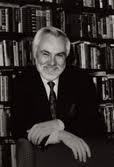
Qualcuno vi ruba un tesoro che vale, diciamo, un milione di dollari. Ma voi siete assicurati e la Compagnia dovrà indennizzarvi. Semplice, no? Ma i ladri si fanno vivi con la Compagnia: sono pronti a restituire il tesoro dietro pagamento di un riscatto. Duecentocinquantamila dollari. E la Compagnia, in molti casi, abbocca. Ma ci vuole l’"intermediario", un personaggio di cui entrambe le parti si fidino. Philip St. Yves esercita proprio questa professione e si può dire che ne ha già viste di belle, ma stavolta lo aspettano certi imprevisti!... Tanto per cominciare, non è sparito soltanto il tesoro (un libro più unico che raro, del valore, appunto, di quasi un milione di dollari), ma hanno anche rapito un detective al quale era stato affidato. Ben presto l’operazione ricupero si trasforma in un duello mortale e lo stesso Philip è travolto, suo malgrado, da un tornado di violenza nel quale non rimane incolume nemmeno il prezioso librone.
Ross Thomas was a prolific author of crime fiction and over the course of his career, he wrote five novels using the pseudonym Oliver Bleeck, featuring a character named Philip St Ives. This is the last in the series, published in 1976.
St. Ives is a former newspaper man who is now a professional go-between. If someone is kidnapped, for example, St. Ives will serve as the contact between the kidnappers and the people paying the ransom. In this case, an extremely rare and valuable book, Pliny's Historia Naturalis has been stolen. The book was on loan to the Library of Congress in Washington, D.C., but the woman who owns the book and who lives in California, is having financial problems and decides to take the book back and sell it to relieve her difficulties.
The woman dispatches a well-regarded private detective to retrieve the book from the Library of Congress and bring it to California. But soon after collecting the book, the detective disappears and the book along with him. The book is heavily insured and the kidnappers/thieves offer to sell the book back to the insurance company and to release the kidnapped detective for a quarter of a million dollars. The insurance company agrees to the terms and calls in St. Ives to handle the exchange.
Inevitably, everything goes sideways and St. Ives must try to somehow put it all back together again. It's a fun read and a good plot, although the reader will usually be at least a few pages ahead of the major twists and turns. I love Ross Thomas's voice and St. Ives is a smart, urbane guy with a nice sense of humor and an interesting way of looking at the world. This is a relatively short read and a fun way to spend an evening.
No Questions Asked is a solid mystery/suspense. It's probably not going to stick with me over the long term, but I enjoyed reading it, and will look for more by the same author.
Note: The rest of this review has been withdrawn due to the changes in Goodreads policy and enforcement. You can read why I came to this decision here.
In the meantime, you can read the entire review at Smorgasbook
Last year I tried to work my way through all of Ross Thomas' thrillers. There were so many I couldn't finish them all in just 12 months. This was one of the few I didn't get around to reading before Dec. 31. It's the last in a series of five books that Thomas wrote (under an assumed name) about former newspaper columnist turned professional go-between Philip St. Ives, a debonair, self-deprecating fellow who's adept at delivering ransoms for stolen merchandise or kidnap victims.
This time around the MacGuffin is a 500-year-old book weighing about 40 pounds. St. Ives is all set to hand over $250,000 to get the book back, but the exchange goes wrong and he's sapped and sent sprawling on the ground. Then the guy who smacked him grabs the suitcase full of cash and sticks it in the backseat of a car, but before he can get into the front seat, a cop St. Ives knows pops up and shoots him dead.
St. Ives, needing the money, follows up on the situation and after questioning a few people figures out who's telling the truth and who's bluffing. As usual with a Thomas thriller, you get sharp dialogue, vivid characterization and cynical twists in the plot. I could see the solution to this one coming a couple of miles away, but stuck with it because A) it's short -- fewer than 200 pages and B) see the aforementioned sharp dialogue etc.
I'm genuinely sorry that this is the last St. Ives adventure, and that I've only got three other Thomas books left to read. Maybe in a few years I will have forgotten enough of their plots to read them all over again.
Sadly - the author - Oliver Bleeck(aka Ross Thomas is no longer with us. This story is snappy but a little dated due to its age - so no cell phones etc.
No Questions Asked, bk5 of Philip St.Ives series, 1976, by Ross Thomas (pen name Oliver Bleeck).
Finally, I got around to reading book5 in the St.Ives series, published 1976. Now 1926, 50 years later: Ross Thomas’ humor and wry perspective on the upper echelons of American society, the underbelly world of crooks and cons, and their connections. Philip St.Ives is the perfect intermediary, aka the go-between for both sets…
Lawyer call. “Myron Greene sighed again. It must have been either his third or fourth sigh, but I was no longer counting. The moustache was new. At least I hadn’t seen it before and knew he was waiting for me to say something about it and I was trying very hard not to. We played little games like that with each other. —“the second call I received this morning, again quite early, I might add, was from Washington.” “Ah,” I said. “What does ‘ah’ mean?” “I don’t know,” I said. “I suppose it means that the plot thickens… —especially if it’s from the CIA or the State Department or somebody jazzy like that.” “It was from the Library of Congress… from the Chief of the Rare Book Division… —wanted to make it quite clear that the book in question had only been on deposit with the Library and that the owner had insisted on withdrawing it, using his own security measures…. “So somebody stole it after it left the Library?”
Thief rings up. “It must have been long distance, too, but I’m not absolutely sure. It had that funny kind of hum that long distance has. It was from a woman or a man who was trying to sound like a woman —She said that you had been recommended by the insurance company, but she didn’t know anything about you. The thief wanted to know one more thing… —what to call you. I said she could call you Mr. St. Ives or Philip or even Phil, if you grew really chummy. She said she didn’t mean your name, -what you did for a living. I told her she could think of you as a professional intermediary.” “You should have told her what I really am, she says she’s a thief, which almost makes her part of the family.” “You mean go-between?” “That’s right, Myron. Go-between.”
Washington DC, April. —there’s a theory for most everything. —DC cabby: — “thinking of closing the government offices early. They’re just thinking about it though,” he said. “By the time they make up their mind it’ll be five o’clock and there’ll be six inches of snow on the ground.” —“We didn’t use to have weather like this. Only in the past two or three years. —we used to have pretty good weather. You know what I think caused it? Watergate.” —“That’s a thought.” —“Way I figure it, Watergate got people all steamed up, -it really affected the temperature of their bodies, and all this steam had to go someplace, so it went up and made clouds and so that’s why we got a lot more rain and snow now than we used to.”
Another cabby thought. —“That there’s the new FBI building. Guess who they named it after?” “Bobby Kennedy.” —“Nah. J. Edgar Hoover. You know what he really was, don’tcha? He was the biggest fag in town, that’s what he was. Jack Kennedy found out about it, and that’s why Hoover had him shot down there in Dallas.”
Library of Congress. “Hawkins Gamble Laws III was probably one of the politest men I ever met in my life…— how he could best be of service? “The first thing you might tell me, is what was stolen from whom.” I used whom because I thought that if I had said who it would have made him uncomfortable, —he himself spoke a kind of mandarin English, touched up with plenty of commas and semicolons, which you don’t run across too often in the United States unless you subscribe to The Economist... “The book that was stolen was what?” “Pliny’s Historia Naturalis,” the first scientific classic to be printed. Pliny the Elder, of course, was Gaius Plinius Secundus, the Roman naturalist, encyclopedist, and writer who lived from A.D. 23 to 79. —This first edition that we’re speaking of was one of the earliest books to be printed in Venice by Johaness de Spira.;—the eighteenth of September, 1469– only one hundred of the books were printed. The one that was stolen, is the only one printed on vellum is in much better condition than ours” [40 lbs. worth] — “A Lt. Fastnaught is in charge of the investigation… The owner is a she, Ms. Maude Goodwater. Does the name Joiner Goodwater mean anything to you?” —It was placed on deposit with us a little more than ten years ago with the tacit understanding that upon Mr. Goodwater’s death it would become part of our permanent collection.” [But for…] “He got taken by every slick operator who came along?” “Not only that, but he began to have serious tax problems. What the slick operators, as you call them, didn’t get, the tax people and the lawyers did” … —“What did he go through—a couple of hundred million?” “Something like that, I think.” “And now the Pliny book is about all that’s left, except that it’s been stolen.”
Ok, That’s the set-up… including a fabulous DC snowstorm botched exchange of book for money. Now for some more humor and wry observation —which seems as fresh to me in 2026, as it was in 1976? But then, maybe, I’m not so fresh myself…
“a natural gambler. There aren’t many of them” “What’s the composition of one?” —“Almost total self-acceptance. That’s one. You combine that with an almost complete lack of guilt, throw in a good mind, an inclination toward risk-taking, and you come up with a successful gambler—or almost a successful anything else, except possibly a poet. You could almost gamble for a living, you know.”
“You interested in politics?” “I vote,” I said. “But that’s about all—unless you count a growing feeling of despair.”
“There must be far lonelier spots than a cheap motel room in a strange city after midnight, but just then I couldn’t think of any. I turned on the television set and looked at the network news and marveled, as I always did, at how much money was spent on bringing so little news to so many.”
“The voice was a little slurred, but not too much, …”How are your Fastnaught.” —“So this lawyer of yours—Myron Greene—he’s a Jew, ain’t he? Anyway this Jew lawyer of yours, and that’s what I’d get if I needed a lawyer, a smart Jew one—” — “His name used to be O’Malley, but he changed it.” —“I told you I was gonna call you and that’s what I’m doing. —what I’m looking forward to— the look on your face.” “Incredulity mixed with awe.” “Huh?” I’ll see you in about fifteen minutes.” “Fastnaught,” I said. “You forgot something.” “What?” “You forgot to tell me where you are.” —
“I could still see what was going to happen next. I was going to get flattened —wasn’t anyplace to go or any time to run because two tons of Detroit craftsmanship was about to slam into me and kill me so I did the only thing I could do. I fell into the pool, could say I dived or jumped but I didn’t. I just fell. You get just as wet that way.”
“Now I run a business here and I’ve got to run it efficiently or else I’m gonna be out on the street nickel-and-diming it and scratching around —which from what I understand is sort of what you do, isn’t it?” “I couldn’t have described it better myself.”
The Finalé— still April, but on the west coast. “The rain fell steadily, a hard, soaking April rain that would make things green. —At five minutes until three… not far from the Colorado Avenue entrance to the Santa Monica pier. I got out and went around to the trunk, unlocked it, and took out the cheap attaché case. The rain still fell steadily as I turned up the collar of the coat that had belonged to the late Jack Marsh,” …— Read the book and find out…the Ending with a final exchange and decisions of our Go-between St. Ives. Plus a bonus query on Ethics to consider?
If Ross Thomas was around today, what wry humor he would share with us, and what questions he’d provoke?
This 1976 novel is the last of the Philip St. Ives books written by Ross Thomas under the pseudonym of Oliver Bleeck. The series goes out on a highnote.
St. Ives is a professional go-between. He arranges the switch in kidnappings or buying back stolen goods. He gets hired to help recover a very rare copy of Pliny's "Historia Naturalis". He gets paid 10% of the payoff amount as his fee.
Thomas/Bleeck writes clean fast-moving prose. The story is told by St. Ives in the classic noir voice of a wise guy with a core of honor. He has a very good feel for Washington DC. He can capture a character by describing their office. He knows which restaurants mean what.
The switch goes wrong, and St. Ives sets off to straighten it out. He has a group of lowlifes and connected people he calls on. There is a DC cop who may or may not be crooked. A very annoyed insurance company investigator gets involved and the whole mess gets wrapped up in a way that makes sense.
This is a fun, well-constructed thriller. I regret that it took this long to try this series and I regret that there are none left for me to read.
I’ve finished all the Oliver Bleeck novels and all are rock solid. This one is no exception and doesn’t feel like a tidy conclusion to the series.
Speaking of series, these books would be a great source for a miniseries. The structure might start to become way too familiar. “Oh gee, I wonder if this exchange of ransom for hostage (person or valuable object) will not go well?” “I wonder if Philip St. Ives will bed down with this female character though the attraction doesn’t seem established?” “Boy, this lawyer of Phil’s sure gets fed up with his attitude!” Still, if it retains any of that 70’s update to hard boiled, I’d watch every second.
For sheer entertainment value, this book worked for me. It zips along, and the reading experience is sort of like seeing a movie. I agree with other readers who find this below Thomas' best in that it lacks the wit and more creative plot that he usually creates. But the plot holds together, and several of the characters (esp Doc Amber) are effective in a literary sense.
Solid pandemic escapism, if not memorable. I would really be at 3.5 stars, but rounded it upwards because I am a fan of Thomas' work.
Ross Thomas is a mystery/detective author I was unfamiliar with, found through the review by James Thane, an author I follow. Interesting characters, solid plot, witty dialogue, specific descriptions of streets and buildings in NY, LA, and Washington DC, and references to 1970s politics make for a thoroughly enjoyable quick read. I definitely will look for other books in the Phillip St. Ives series.
Another in Ross Thomas's series writing as Oliver Bleeck. A stolen book from the Library of Congress. Nice scene setting in DC including a shot at the Hirshhorn...and then LA. There's a super obvious tip off as to who the bad guy is early on: the bad guy is smart enough that it wouldn't have happened. So with this glitch I'm knocking my rating down to 3 1/2 stars.
A good simple thriller for a lesser writer but not up to Thomas' standards; I can see why it was originally released under the Oliver Bleek name. It is missing a goodly amount of Thomas' usual snappy sarcastic dialogue that we come for and suffers from a less plausible albeit far simpler plot than is normal in his work. 2.75 stars.
The final Philip St. Ives mystery, and the final unread novel of Ross Thomas (for me). I think this was written after he moved to LA, it has one of the best depictions of alcoholism destroying someone I have read in crime fiction. You can tell Thomas was done with the character but didn't quite know how to leave him, I think the ending was a bit shoe-horned.
As I work my way through Ross Thomas' works, I thought I'd try one of his 'writing as Oliver Bleeck'... Excellent. Philip St. Ives is a character much like the one from the old TV series 'The Saint'... This story surrounds the theft of an old collectable book of great value. In another's hands, I would be bored by this story, but Thomas makes it very compelling.
So I read all 25 Ross Thomas novels over about 3 months. Quite an accomplishment, if I say so myself, not least for him--not sure I've ever read another genre author whose tics didn't start to bother me after a while. (Well, maybe the chin thing. Guy has a fixation on chins. Every single character in every book gets some description of his/her chin. Never seen that before.) Thomas basically wrote every novel for 1945 Cary Grant, or someone not quite as handsome or verbose as 1945 Cary Grant: his protagonists are uniformly laconically witty late-30s men of the world who have had some success in something difficult and quasi-political but basically don't love money or social prestige very much and thus enjoy semi-anonymous lives on the fringes of the powerful. They're suave, poised, know what to wear and what to drink, as well as a lot about a lot of things most people don't, and they always see 5 steps ahead of whatever manipulators surround them, which tends to help when every novel climaxes with a series of escalating double- and triple-crosses and hedges against same.
Yeah, it's a formula, but boy, is he good at it. I would especially recommend, among his better-known novels, The Fools In Town Are On Our Side (his longest, where he Ross Thomases Red Harvest and throws in bonus plotlines in 1930s Shanghai), Chinaman's Chance (neatest interlocking of crosses), Out on the Rim (more of same, plus Philippine atmospherics), and The Fourth Durango (kind of a western set in a small California town).
Of the lesser-known novels, I particularly liked The Seersucker Whipsaw (how postcolonial African politics can be made just as corrupt as American politics), The Porkchoppers (how union politics inherently are just as corrupt as postcolonial African politics), Twilight at Mac's Place (Charade with a CIA memoir), Missionary Stew (how the US screwed over Central America), The Money Harvest (most interesting plotline I've ever read about crop reports, and no, I haven't read any others), and The Mordida Man (extremely tricky Libyan plotline). The Singapore Wink (just felt like his heart wasn't in it), Yellow-Dog Contract (great setup, confusing resolution), and The Backup Men (feels kinda minor) struck me as least good. People loved Briarpatch (won the Edgar in 1985), but I thought it was just OK; nice Texas atmospherics, though. Of the five novels he wrote as Oliver Bleeck, I enjoyed The Brass Go-Between (more cynical takes on African politics and American politics) and No Questions Asked (rehearsal for Mac's Place). Really, though, you can't go wrong wherever you dip in.
It always amazes me that none of the great thrillers of the early 70s (Westlake's The Hot Rock, Perry's Metzger's Dog, which is so Westlake-y it makes you wonder if "Thomas Perry" was his second pseudonym, any of these Thomas novels) was made into an equally great movie. It was the time and the place for exactly those atmospherics.
"How come you're holding your head like that?" "It's what's called a faintly quizzical angle," I said. "People in books do it a lot."
With an interesting and logical plot, a likeable protagonist, and quite competent writing, Ross Thomas' "No Questions Asked" (1976) would be a great mystery/crime novel if not for the fact that I have read many almost identical books. I do not quite see the point of reading essentially the same thing all over again, unless one faces a three-hour flight and the bookstand does not offer any other choices.
Philip St. Ives, an ex-reporter, is a professional go-between, who makes his living serving as an intermediary in transactions that for various reasons cannot be conducted in the open. This time a valuable old book by Pliny, Historia Naturalis, has been stolen, the thieves want quarter of a million dollars for its return, and the company that insured the book hires Mr. St. Ives to deliver the money and get the book back. Obviously, things do not go smoothly, and our hero is left without the book or the money but with a dead body on his hands. The plot - which moves to Los Angeles - remains plausible to the very end, and includes a satisfying denouement.
Readers who like prose by all kinds of Raymond Chandler's imitators will enjoy this book. There is a lot of cliché macho talk like the fragment quoted in the epigraph, when the narrator is trying to recover after getting clobbered, and a lot of cliché humor inspired by emulators of Chandler's style. Bottom line: good book, but I have read it before. Many times!
Philip St. Ives is a professional “go-between,” working in roles ranging from detective to mediator to surveyor. Consequently, he finds himself down on his luck and in various dangerous situations in this fifth novel of Thomas’s Philip series, all written under the pseudonym Oliver Bleeck. A story illustrative of Thomas’s talented exposition, character development, and mystery plot construction, No Questions Asked is requisite reading for genre fans and readers who seek a fun, entertaining read.
Described by the New York Times Book Review as “America’s best storyteller,” Ross Thomas now available in digital form. A two-time Edgar award-winning writer and master of tongue-in-cheek spy fiction. During almost three decades of his life, Thomas wrote an average of a book a year. As much of his writing is inspired by his work as foreign correspondent, political strategist, and service in World War II, Thomas was one of our nation’s most respected and beloved authors of political thrillers.
A very good and engaging mystery. Thomas does and excellent job of painting the scenes and interacting the characters. The "Go-Between" is very well thought out and the mystery is solid.
This is also a tight book that tells the story with little extraneous scenes. There is one sex scene that seems odd in the context of the rest of the story. Wondering if the publisher pushed for the scene and that it was later added.
The extra characters kind of makes the bad person, or people, an easy choice, though there are a few shifts in the story that keeps the reader guessing and that makes a great mystery.
This book is a page-turner, but it's somewhat disappointing for a confirmed Ross Thomas fan. Yes, this is by Thomas, writing as Oliver Bleeck. Its style is very much Thomas', but it isn't as cleverly plotted as his best works and neither the hero nor the villain is especially interesting. This is my first book written under the Bleeck name. I'll read another in the hope that it will attain the four-star status of Thomas' other thrillers.