Juliet is adorably clueless. The spy-guys stuffy and charadesque. All of them: So. Very. British. (Or it could be just me stereotyping the world, if so, then I'm sorry!)
The humour appropriately dry. The atmosphere noirish, just a bit, to add in enough grit and some patina of time that feels to have passed between the reader and the plotline origins.
Just what I love to read occasionally.
PS. Mangling Russian dishes didn't improve the novel. By 'Verushka' a 'vatrushka' probably was meant. Took me ages to guess. Why the hell couldn't the writer just call it a pie or a cheese pie or a Russian cheese pie? The book gained no extra authenticity whatsoever from making it sound as if they were all eating someone called Vera (Faith!) in an endearing form!
Q:
I was beginning to think that you were lost.’
‘But now I am found,’ (c)
Q:
‘Joy is an admirable goal,’ Juliet said. ‘Completely unobtainable, of course.’ (c)
Q:
Older men of a certain type were drawn to her. They seemed to want to improve her in some way. Juliet was almost thirty and didn’t feel she needed much more improvement. The war had seen to that. (c)
Q:
... had been employed as an Announcer. It had a capital letter. (‘A woman!’ everyone said, as if they’d never heard a woman speak before.) (c)
Q:
The cat, a ginger one – they were the worst type of cat, in Juliet’s opinion – had jumped up on the desk and bitten her – quite sharply, so that she couldn’t help but give a little yelp of pain. It then proceeded to roll around on the desk before rubbing its face on the microphone and purring so loudly that anyone listening must have thought there was a panther loose in the studio, one that was very pleased with itself for having killed a woman. (c)
Q:
... forlornly earnest about even the most trivial things... (c)
Q:
Juliet supposed that any one of those things – the war, philosophy, Vienna – was capable of making you both forlorn and earnest, and perhaps badly dressed too ... (c)
Q:
Did she understand what that meant? ... It meant that she was about to lose the only person who loved her. She was seventeen and her grief for herself was almost as great as her grief for her mother. ... her mother’s death had revealed that there was no metaphor too ostentatious for grief. It was a terrible thing and demanded embellishment. (c)
Q:
Her mother had represented a form of truth for her, something that Juliet knew she had moved away from in the decade since her death. (c)
Q:
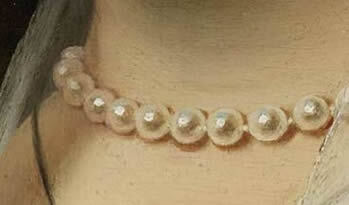
Inside each pearl there was a little piece of grit. That was the true self of the pearl, wasn’t it? The beauty of the pearl was just the poor oyster trying to protect itself. From the grit. From the truth. (c)
Q:
Thinking had always been her downfall. (c)
Q:
But wasn’t artistic endeavour the final refuge of the uncommitted? (c)
Q:
Juliet used to think that someone who seemed as ordinary as Godfrey Toby must be harbouring a secret – a thrilling past, a dreadful tragedy – but as time had gone by she’d realized that being ordinary was his secret. It was the best disguise of all really, wasn’t it? (c)
Q:
I should have followed him, she thought. But he would have lost her. He had been rather good at evasion. (c) Wow. Lovely phrase, it could mean both physical and intellectual stuff.
Q:
‘Do you like Beethoven, sir?’ she asked.
‘Not particularly,’ he said, seemingly puzzled by the question. ‘He makes for a good paperweight though.’ (c)
Q:
Choice, it seemed, was one of the first casualties of war. (c)
Q:
‘Juliet?’ the man said contemplatively. ‘As in Romeo and Juliet? Very romantic.’ He laughed as if this was some kind of private joke.
‘I believe it was actually a tragedy, sir.’
‘Is there a difference?’ (c)
Q:
She didn’t like that supercilious eyebrow and so she gave her unfathomable father a promotion. ‘An officer.’ (c)
Q:
… a Bedford bus pulled up in front of Juliet. …
The driver opened the door and shouted over to her, ‘MI5, love? Hop in.’ So much for secrecy, she thought. (c)
Q:
‘Juliet.’
‘Oh, bad luck. I bet everyone’s always asking you where Romeo is. (c)
Q:
‘Well, Pa always said I’d end up behind bars.’
And that was how Juliet’s career in espionage began. (c)
Q:
It would be menials who would win this war, she thought, not girls in pearls. (c)
Q:
The Four Hundred, the Embassy, the Berkeley, the Milroy, the Astoria ballroom – there was no end to the entertainment to be had during a war. (c) I’ve a feeling I might know why Hitler went as far as he did, around the Europe.
Q:
… he spoke Swahili (What was the point of that, Juliet wondered? Unless you were a Swahili, of course) (c)
Q:
Juliet was waiting to be seduced by him. By anyone really, but preferably him. It was turning into a rather long wait. (c)
Q:
It seemed that she had acquired all the drawbacks of being a mistress and none of the advantages – like sex. (She was becoming bolder with the word, if not the act.) For Perry, it seemed to be the other way round – he had all the advantages of having a mistress and none of the drawbacks. Like sex. (с)
Q:
Juliet felt rather ashamed, as her mind had been on what dress to wear this evening rather than bottomless pits of evil. The war still seemed like a matter of inconvenience rather than a threat (c)
Q:
She imagined him creeping up on some poor unsuspecting hedgehog and giving it the fright of its life. (c)
Q:
‘Today is Friday, Miss Armstrong.’
‘All day, sir.’
‘And tomorrow is Saturday.’
‘It is,’ she agreed. Was he going to name all the days of the week, she wondered? (c)
Q:
The prospect of more tea was tedious, she had drunk enough with Mrs Scaife to sink HMS Hood. (c)
Q:
It was an analphabetic jumble, rather like being given an insight into the chaotic workings of a cat’s brain... (c)
Q:
‘Can I do something, sir?’ she asked.
‘You can’t help me,’ he said bleakly. ‘No one can.’
‘Are you having a spiritual crisis?’ she hazarded – tenderly, as seemed befitting for spiritual crises... (c)
Q:
Perry gave a wretched kind of sob and, unable to think of anything else, Juliet made a cup of tea and placed it silently on the carpet next to him, where he remained in supplication. She shut the door quietly and got on with her work. It turned out that discovering a man on his knees, weeping, was a surprisingly effective deterrent to romantic feelings about that man. (c)
Q:
...she plucked ‘Middlesbrough’ out of thin air. ‘Wonderful,’ she heard someone whisper. People always said they wanted the truth, but really they were perfectly content with a facsimile. (c)
Q:
‘You should know it,’ Hartley said. ‘Why don’t you know it?’
‘Perhaps because I don’t actually work for you any more, you know. You’re not even paying me, just expenses. And you’re obviously incompetent or I would know it.’ (c)
Q:
She feared that she was beginning to tread the wilder shores of her imagination. (c)
Q:
She didn’t feel she had the fortitude for all those Tudors, they were so relentlessly busy – all that bedding and beheading.
Q:
Did people hunt flamingos? It was a bird Juliet had never given any thought to and now it seemed to be perched on every corner. No, not perched – they didn’t perch, did they? Too big, probably. And the legs would be too long. You needed short legs for perching or you would be unbalanced, especially if you had a predilection for standing on one leg. Juliet sighed and wondered if one day she would think herself to death. (c)
Q:
She was dressed in an odd assortment of black garments, as if she had simply raided her wardrobe for everything in that colour and then piled it all on. She looked like a large, rather distressed bat.(с)
Q:
But then what constituted real? Wasn’t everything, even this life itself, just a game of deception? (c)
Q:
You had to ask yourself, which was better – to have sex with any number of interesting (albeit possibly evil) men (and some women too, apparently), to be glamorously decadent, to ingest excessive amounts of drugs and alcohol and die a horrible but heroic death at a relatively young age, or to end up in Schools Broadcasting at the BBC? (c)
Q:
And that was that. Juliet’s war.
…
‘Oh, my dear Juliet,’ he laughed. ‘One is never free. It’s never finished.’ (c)
Q:
… Juliet seized her chance.
She was the deer. She was the arrow. She was the queen. She was the contradiction. She was the synthesis. Juliet ran (c)
Q:
It was a nice lie and she thanked him silently for it. He always had such good manners. She expected it wasn’t a matter of sides at all, it was probably much more complicated than that. (c)
Q:
She wished she could see her son one last time. Remind him to live his life well, tell him that she loved him. Tell him that nothing mattered and that that was a freedom, not a burden. (c)