

What do you think?

Batman: Shadow of the Bat (Collected Editions) #3
Batman: Shadow of the Bat Vol. 3
Spinning out of BATMAN: KNIGHTFALL, Jean-Paul Valley is a new breed of Batman. Knowing the streets of Gotham wouldn't be safe without a Dark Knight, an injured Bruce Wayne handed Jean-Paul his cowl. With this cowl comes the responsibility of taking care of an entire city. This is a burden not all are fit to bear.
Unlike Bruce Wayne, Jean-Paul's brutality towards the denizens of Gotham's criminal underbelly knows no bounds. Dead set upon both proving himself as the new Dark Knight and seeking revenge against Bruce Wayne's enemies, this new Batman begins a campaign to clean up Gotham's streets once and for all. When an epic battle with Clayface begins, Jean-Paul is pushed to his breaking point. Will Jean-Paul's brutal methods work, or will he his new power drive him to madness?
Writer Alan Grant (DETECTIVE COMICS) continues his celebrated run on BATMAN: SHADOW OF THE BAT, joined by Bret Blevins (New Mutants), Bob Smith (CATWOMAN) and others in these stories about the men and women in the shadow…the shadow of the bat! Collects BATMAN: SHADOW OF THE BAT #24-31, #0, and ANNUAL #2.
Unlike Bruce Wayne, Jean-Paul's brutality towards the denizens of Gotham's criminal underbelly knows no bounds. Dead set upon both proving himself as the new Dark Knight and seeking revenge against Bruce Wayne's enemies, this new Batman begins a campaign to clean up Gotham's streets once and for all. When an epic battle with Clayface begins, Jean-Paul is pushed to his breaking point. Will Jean-Paul's brutal methods work, or will he his new power drive him to madness?
Writer Alan Grant (DETECTIVE COMICS) continues his celebrated run on BATMAN: SHADOW OF THE BAT, joined by Bret Blevins (New Mutants), Bob Smith (CATWOMAN) and others in these stories about the men and women in the shadow…the shadow of the bat! Collects BATMAN: SHADOW OF THE BAT #24-31, #0, and ANNUAL #2.
316 pages, Kindle Edition
First published January 16, 2018
About the author
Alan Grant
1,762 books145 followersAlan Grant was a Scottish comic book writer known for writing Judge Dredd in 2000 AD as well as various Batman titles during the late 1980s and early 1990s. He is also the creator of the character Anarky.
Alan Grant first entered the comics industry in 1967 when he became an editor for D.C. Thomson before moving to London from Dundee in 1970 to work for IPC on various romance magazines. After going back to college and having a series of jobs, Grant found himself back in Dundee and living on Social Security. He then met John Wagner, another former D.C. Thompson editor, who was helping put together a new science fiction comic for IPC, 2000 A.D., and was unable to complete his other work. Wagner asked Grant if he could help him write the Tarzan comic he was working on; so began the Wagner/Grant writing partnership.
The pair eventually co-wrote Judge Dredd. They would work on other popular strips for the comic, including Robo-Hunter and Strontium Dog using the pseudonym T.B. Grover. Grant also worked on other people's stories, changing and adding dialogue, most notably Harry Twenty on the High Rock, written by Gerry Finley-Day. Judge Dredd would be Grant's main concern for much of the 1980s. Grant and Wagner had developed the strip into the most popular in 2000AD as well as creating lengthy epic storylines such as The Apocalypse War. Grant also wrote for other IPC comics such as the revamped Eagle.
By the late 1980s, Grant and Wagner were about to move into the American comic market. Their first title was a 12-issue miniseries called Outcasts for DC Comics. Although it wasn't a success, it paved the way for the pair to write Batman stories in Detective Comics from issue 583, largely with Norm Breyfogle on art duties across the various Batman titles Grant moved to. After a dozen issues, Wagner left Grant as sole writer. Grant was one of the main Batman writers until the late 1990s. The pair also created a four issue series for Epic Comics called The Last American. This series, as well as the Chopper storyline in Judge Dredd, is blamed for the breakup of the Wagner/Grant partnership. The pair split strips, with Wagner keeping Judge Dredd and Grant keeping Strontium Dog and Judge Anderson. Grant and Wagner continue to work together on special projects such as the Batman/Judge Dredd crossover Judgement on Gotham. During the late 1980s, Grant experienced a philosophical transformation and declared himself an anarchist. The creation of the supervillain Anarky was initially intended as a vehicle for exploring his political opinions through the comic medium. In the following years, he would continue to utilize the character in a similar fashion as his philosophy evolved.
Grant's projects at the start of the 90s included writing Detective Comics and Strontium Dog, but two projects in particular are especially notable. The first is The Bogie Man, a series co-written by Wagner which was the pair's first venture into independent publishing. The second is Lobo, a character created by Keith Giffen as a supporting character in The Omega Men. Lobo gained his own four issue mini series in 1990 which was drawn by Simon Bisley. This was a parody of the 'dark, gritty' comics of the time and proved hugely popular. After several other miniseries (all written by Grant, sometimes with Giffen as co-writer), Lobo received his own ongoing series. Grant was also writing L.E.G.I.O.N. (a Legion of Super-Heroes spin-off) and The Demon (a revival of Jack Kirby's charac
Alan Grant first entered the comics industry in 1967 when he became an editor for D.C. Thomson before moving to London from Dundee in 1970 to work for IPC on various romance magazines. After going back to college and having a series of jobs, Grant found himself back in Dundee and living on Social Security. He then met John Wagner, another former D.C. Thompson editor, who was helping put together a new science fiction comic for IPC, 2000 A.D., and was unable to complete his other work. Wagner asked Grant if he could help him write the Tarzan comic he was working on; so began the Wagner/Grant writing partnership.
The pair eventually co-wrote Judge Dredd. They would work on other popular strips for the comic, including Robo-Hunter and Strontium Dog using the pseudonym T.B. Grover. Grant also worked on other people's stories, changing and adding dialogue, most notably Harry Twenty on the High Rock, written by Gerry Finley-Day. Judge Dredd would be Grant's main concern for much of the 1980s. Grant and Wagner had developed the strip into the most popular in 2000AD as well as creating lengthy epic storylines such as The Apocalypse War. Grant also wrote for other IPC comics such as the revamped Eagle.
By the late 1980s, Grant and Wagner were about to move into the American comic market. Their first title was a 12-issue miniseries called Outcasts for DC Comics. Although it wasn't a success, it paved the way for the pair to write Batman stories in Detective Comics from issue 583, largely with Norm Breyfogle on art duties across the various Batman titles Grant moved to. After a dozen issues, Wagner left Grant as sole writer. Grant was one of the main Batman writers until the late 1990s. The pair also created a four issue series for Epic Comics called The Last American. This series, as well as the Chopper storyline in Judge Dredd, is blamed for the breakup of the Wagner/Grant partnership. The pair split strips, with Wagner keeping Judge Dredd and Grant keeping Strontium Dog and Judge Anderson. Grant and Wagner continue to work together on special projects such as the Batman/Judge Dredd crossover Judgement on Gotham. During the late 1980s, Grant experienced a philosophical transformation and declared himself an anarchist. The creation of the supervillain Anarky was initially intended as a vehicle for exploring his political opinions through the comic medium. In the following years, he would continue to utilize the character in a similar fashion as his philosophy evolved.
Grant's projects at the start of the 90s included writing Detective Comics and Strontium Dog, but two projects in particular are especially notable. The first is The Bogie Man, a series co-written by Wagner which was the pair's first venture into independent publishing. The second is Lobo, a character created by Keith Giffen as a supporting character in The Omega Men. Lobo gained his own four issue mini series in 1990 which was drawn by Simon Bisley. This was a parody of the 'dark, gritty' comics of the time and proved hugely popular. After several other miniseries (all written by Grant, sometimes with Giffen as co-writer), Lobo received his own ongoing series. Grant was also writing L.E.G.I.O.N. (a Legion of Super-Heroes spin-off) and The Demon (a revival of Jack Kirby's charac
Ratings & Reviews
Friends & Following
Create a free account to discover what your friends think of this book!
Community Reviews
Displaying 1 - 12 of 12 reviews

July 20, 2018
Shadow of the Bat takes on the Jean-Paul Valley Batman. It's full of fugly art by Bret Blevins. His characters all look they are molded out of mud and have shifty looks to their faces. The Brian Stelfreeze covers are pretty amazing though. The latter half of the book is plagued by crossovers where 3/4th of the story is missing. Go read Batman:Knightsend and Batman: Zero Hour instead if you are interested in those stories. Finally is an unidentified Elseworlds where Batman is a fascist who was raised by the Scarecrow after his parents died. It's very depressing and dark.

February 6, 2023
Batman: Shadow Of The Bat Vol. 3 collects issues 0, 24-31 and Annual 2 of the DC Comics series written by Alan Grant with art by Vince Giarrano, Bret Blevins, Bob Smith, Tom Raney, and Joe Stanton.
The Knightfall epic continues in this volume of SotB with a series of self contained issues and mini arcs focusing on Jean-Paul Valley as Batman before he breaks the biggest Batman commandment - no killing. Bruce Wayne returns to Gotham to take back the mantle of the Bat but unfortunately as this last Knightfall arc crossed over with the Batman and Detective Comics titles, only a portion of the story is collected here.
I found the self contained Azrael Batman issues some of the better Knightfall stories so it was fun to revisit. It was still incredibly welcome to have Bruce back even those the few Bruce Wayne Batman issues collected in this volume are pretty bad. The art is just okay throughout the volume with many pages looking rushed.
The Knightfall epic continues in this volume of SotB with a series of self contained issues and mini arcs focusing on Jean-Paul Valley as Batman before he breaks the biggest Batman commandment - no killing. Bruce Wayne returns to Gotham to take back the mantle of the Bat but unfortunately as this last Knightfall arc crossed over with the Batman and Detective Comics titles, only a portion of the story is collected here.
I found the self contained Azrael Batman issues some of the better Knightfall stories so it was fun to revisit. It was still incredibly welcome to have Bruce back even those the few Bruce Wayne Batman issues collected in this volume are pretty bad. The art is just okay throughout the volume with many pages looking rushed.

June 18, 2018
The collection of stories in Batman: Shadow of the Bat, Volume 3 mostly plays as a showcase of writer Alan Grant and artist Bret Blevins. By and large, These are stories pulled from the Knightfall storyline with Azrael as he nears his reign as Batman, with a sprinkle of Zero Hour tales included.
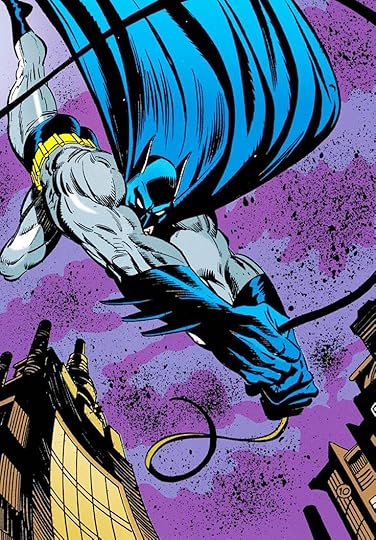
Overall, I think I enjoyed this collection more over the second volume. The multiparty entry “Creatures of Clay” is the highlight of this volume showing two clay-people (Preston Payne and Lady Clayface) in love just trying to make it in this crazy world.
I also enjoyed the mini-arc of Bruce Wayne’s struggle to regain the helm of Batman from Azrael. It starts with Commissioner Gordon’s frustration with the new Batman ("The Long Dark Night"), continues with Bruce Wayne’s reconditioning and Azrael’s complete decent into madness ("Manimal: Proving Ground"), and mostly wraps up with a confrontation between Wayne and Valley ("Wild Knights: Wild City"). There are a few stories that deal with the alternate realty of the DC Universe Zero Hour storyline which are okay, but a little out of context without the "Crisis in Time" event being accounted for. The final entry "The Tyrant" is an interesting alternative reality concept with Batman and Dr. Crane in cahoots as saviors of Gotham, but is ultimately weakened by muddy artwork.
Ultimately, it’s a good sampling of Batman 90’s lore and a great showcase of Blevin’s craftsmanship.
Overall, I think I enjoyed this collection more over the second volume. The multiparty entry “Creatures of Clay” is the highlight of this volume showing two clay-people (Preston Payne and Lady Clayface) in love just trying to make it in this crazy world.
I also enjoyed the mini-arc of Bruce Wayne’s struggle to regain the helm of Batman from Azrael. It starts with Commissioner Gordon’s frustration with the new Batman ("The Long Dark Night"), continues with Bruce Wayne’s reconditioning and Azrael’s complete decent into madness ("Manimal: Proving Ground"), and mostly wraps up with a confrontation between Wayne and Valley ("Wild Knights: Wild City"). There are a few stories that deal with the alternate realty of the DC Universe Zero Hour storyline which are okay, but a little out of context without the "Crisis in Time" event being accounted for. The final entry "The Tyrant" is an interesting alternative reality concept with Batman and Dr. Crane in cahoots as saviors of Gotham, but is ultimately weakened by muddy artwork.
Ultimately, it’s a good sampling of Batman 90’s lore and a great showcase of Blevin’s craftsmanship.

Read
August 26, 2021Azrael is one of the cracks through which everything that would ultimately undo DC first got its claws in – a spiky, edgy, rework of a big character; major changes reversed and characters brought back from what looked like a permanent change in a way which made it that little bit harder to invest in future stories. And yet, when you're only reading Alan Grant's sections of the saga, it's not actually that bad. Think of it as the equivalent to listening to the bits of the Doors where the schtick actually worked, and managing to put the vast majority of bands they influenced from your mind. The art helps, of course, especially when Vince Giarrano depicts a Gotham of nighted, lunatic architecture, where even regular people (such as they are) are nightmares, shark-like grins in jet-black silhouettes. A nightmare world all too similar to our own, where 50 dollars to the starving mother of a baby becomes 300 to the local connection becomes 30,000 to the prospective parents who kid themselves that their adoption was an altruistic act. The awfulness of it all, while always retaining a certain grand guignol tinge and thus never tipping into the sheer miserable bullshit that has put me right off modern Batman comics, helps explain Azrael's gradual decline and fracturing, the way his zeal to save innocents and live up to the mantle of the Bat eventually tip him over the edge. Granted, the story can't altogether dodge the thing I hate about Batman as a character. When Gordon starts whinging about the new Batman's methods, Azrael very sensibly points out that he's only allowed the death of one man, responsible for at least 25 murders and whom the authorities are seemingly incapable of keeping imprisoned, and it's not like Batman has ever operated within the law, so where's the problem? And then still saving Gordon when the old man takes a swing and nearly falls off the roof, because he wants to make clear that he does care about decent human life, which is precisely why he's fine with letting an unrepentant killer – called Abattoir, FFS - die. And yes, that also meant the death of an innocent the killer had imprisoned couldn't be prevented, but this is very much a thumb on the scales, and given how many lives would have been saved if Bruce had killed Abattoir before the most recent escape, I'd say the numbers are still in Azrael's favour. All the same, it's fascinating seeing him shouting "ONE TRUE BATMAN!" while he subsequently refuses to return the mantle to Wayne, given the way variations on that phrase have now become associated with characters played on screen by multiple actors who finally find the right casting.
And then, with Bruce back in the cowl, we flip tone entirely to a story in which a comedy version of Alfred turns up through what's allegedly a time anomaly despite the fact he's clearly from another universe altogether, even though there weren't meant to be any by that point, but it's still an amusing diversion from the moodiness and it's not like Zero Hour made much sense anyway. This is what makes the series work, the way it's confident enough in itself to switch gears like that, rather than desperately trying not to let any cracks appear in that facade of seriousness. Hell, it even lets me forgive Bruce musing "Once again the shadow of the Bat falls between me and those I love", even though it looks like he's escaped from that Tumblr which puts the title into films' dialogue, because at least here there's a chance the laugh is intended.
And then, with Bruce back in the cowl, we flip tone entirely to a story in which a comedy version of Alfred turns up through what's allegedly a time anomaly despite the fact he's clearly from another universe altogether, even though there weren't meant to be any by that point, but it's still an amusing diversion from the moodiness and it's not like Zero Hour made much sense anyway. This is what makes the series work, the way it's confident enough in itself to switch gears like that, rather than desperately trying not to let any cracks appear in that facade of seriousness. Hell, it even lets me forgive Bruce musing "Once again the shadow of the Bat falls between me and those I love", even though it looks like he's escaped from that Tumblr which puts the title into films' dialogue, because at least here there's a chance the laugh is intended.

February 2, 2022
This lacklustre collection of Batman adventures by Alan Grant doesn't convince, most of the short tales are unmemorable, accompanied by horrible art. However, the cover art is the only redeeming feature here. The tales are short, which generally consisted of Batman beating his enemies up.
The only noteworthy story in this collection is the last story where Batman assumes the role of a fascist enforcer in fighting the villains who were the rebels, not that Batman isn't already a fascist.
The artwork is generally poor, hastily drawn without much care, much in the vein of early comics. The cover, however, is an excellent rendition of Batman.
The only noteworthy story in this collection is the last story where Batman assumes the role of a fascist enforcer in fighting the villains who were the rebels, not that Batman isn't already a fascist.
The artwork is generally poor, hastily drawn without much care, much in the vein of early comics. The cover, however, is an excellent rendition of Batman.
December 30, 2019
A big disappointment saved only by the inclusion of the annual.
On the surface everything seems well - thr book collects issues 24-31 and annual #2. However, this was the time of the epic crossover Knightfall saga and not a single story arc here has a start or finish. It's a full three hundred pages of story parts. If you're not into collecting, better buy the Knightquest collected book, you will find the exact same stories intact and coherent.
The only saving grace here is the annual. It's a good Elseworlds story where young Bruce Wayne is saved in the alley where his parents were murdered by none other than Dr. Jonathan Crane himself. Overall, avoid if possible.
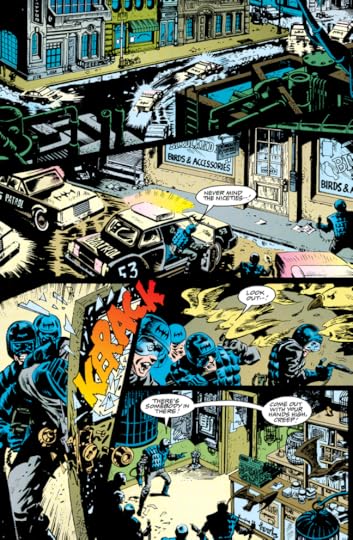
On the surface everything seems well - thr book collects issues 24-31 and annual #2. However, this was the time of the epic crossover Knightfall saga and not a single story arc here has a start or finish. It's a full three hundred pages of story parts. If you're not into collecting, better buy the Knightquest collected book, you will find the exact same stories intact and coherent.
The only saving grace here is the annual. It's a good Elseworlds story where young Bruce Wayne is saved in the alley where his parents were murdered by none other than Dr. Jonathan Crane himself. Overall, avoid if possible.

July 21, 2021
Three stars only for this collection, because it DIDN'T feature the whole collection - NOTHING more infuriating than to have to go into my own books to fill in holes in the story. Since it WAS a collection of Shadow Of The Bat stories, and NOT a retelling of the Knightfall Aftermath, this can be forgiven, but still...
March 16, 2023
The biggest problem with this collection is that most stories don't have a beginning or end and forces you to get the continuation out of the book. The azrel storybeing the most affectedafter being the biggest storylinein the book it doesn't get it ending issue #677. Overall great stories with amazing plot twist.
May 21, 2024
A great series.
Great series with great art and wonderful lessons. I miss comics that were created with love. The artists and writers took their craft serious and it shows. Lots of heart and thought throughout this whole series. I loved it.
Great series with great art and wonderful lessons. I miss comics that were created with love. The artists and writers took their craft serious and it shows. Lots of heart and thought throughout this whole series. I loved it.

August 26, 2023
Overall, I didn't like volume 3 as much as the previous two volumes. Azrael as Batman is not my favorite (there are many issues that show exactly why he doesn't make a good Batman), and I skipped a few of the stories that were also included in the Knightfall storyline. Still, some of the stories were alright, like "The Immigrant: Rosemary's Baby" and "Joe Public: The Birth of a Hero." Despite only knowing Clayface from the Batman: the Animated Series show, I liked "Creatures of Clay: Diary of a Lover" and "Creatures of Clay: Child's Clay", as well as the follow-up "Commissioner Gordon: The Long Dark Night", where Gordon has to find a hostage that Azrael!Batman didn't rescue. I think my favorite story in this volume is "The Beginning of Tomorrow!", which has duel plots: explaining how Bruce became Batman (i.e. his trainings) and the fear criminals feel knowing Batman will find them. The weirdest stories are "The Battling Butler", which comes out of nowhere and has no connection to another story (to my knowledge), and "The Tyrant", which is a what-if story that made me ask myself "what am I reading?!"

December 16, 2021
Tercer volumen de la colección, que conseguí bastante después que los dos primeros. Creo que sólo me queda pendiente el final.
Displaying 1 - 12 of 12 reviews