In a time of political turmoil and religious upheaval, Richard Sibbes sought to consistently apply the riches of Reformation theology to his hearers’ lives. He emphasized the security of God’s covenant, the call for assurance of salvation, and the place of the heart in the Christian life. In The Affectionate Theology of Richard Sibbes , Dr. Mark Dever gives readers a penetrating look into the life and theology of this fascinating figure.
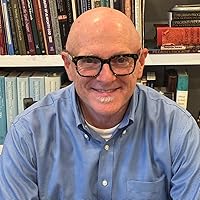
Mark E. Dever serves as the senior pastor of Capitol Hill Baptist Church in Washington, DC. Since his ordination to the ministry in 1985, Dr. Dever has served on the pastoral staffs of four churches, the second being a church he planted in Massachusetts. Prior to moving to Washington in 1994, Dr. Dever taught for the faculty of Divinity at Cambridge University while serving two years as an associate pastor of Eden Baptist Church.
In an effort to build biblically faithful churches in America, Dr. Dever serves as the executive director for 9Marks (formerly The Center for Church Reform, CCR) in Washington, D.C. 9Marks encourages pastors of local churches look to the Bible for instruction on how to organize and lead their churches. Dr. Dever also teaches periodically at various conferences, speaking everywhere from South Africa to Brazil to the United Kingdom to Alabama. Feeling a deep burden for student ministry, Dr. Dever often addresses student ministry groups at campuses throughout the country. He has also taught at a number of seminaries, including Beeson Divinity School in Birmingham, AL, The Southern Baptist Theological Seminary in Louisville, KY, and Trinity Evangelical Divinity School in Deerfield, IL. Dr. Dever’s scholarly interests include Puritanism and ecclesiology.
Dr. Dever currently serves as a trustee of The Southern Baptist Theological Seminary; he also serves as a member of the board, vice-chairman, and chairman of the Forum for the Alliance of Confessing Evangelicals. From 1995 until 2001, he served on the steering committee for Founders Ministries, a pastoral movement for biblical teaching and healthy church life within the Southern Baptist Convention. As Guest Senate Chaplain for two weeks in 1995, Dr. Dever opened the daily sessions of the United States Senate in prayer. He is a member of the American Society of Church History and the Tyndale Fellowship. He also held the J.B. Lightfoot Scholarship at Cambridge University from 1989 to 1991.
The long line of Godly men series is a series of books which I have greatly enjoyed reading and picking up this volume on Richard Sibbes by Mark Dever I was somewhat disappointed.
To be fair to Dever he makes clear in the introduction that this book was largely his Phd thesis, edited slightly and put out for publication under a different title. For me it read too much like a Phd thesis, the extensive footnoting was annoying (but understandable given the background), the terms used were technical without much explanation (again understandable). For me the book would have needed a bit more editing or re writing before being published as an accessible introduction to Sibbes.
In saying that it was a short book which could be read in a few hours, I learned a lot more about Sibbes than I knew at the start and would buy and give it to a few of my friends in the Episcopalian church so it is not all bad.
I am grateful to netgalley.co.uk and Reformation Trust for a copy of this book to review.
Though it does not flow like the others in the series, tis is a great read and a fascinating book. That could be because it is an abridgement of Dever's dissertation on Sibbes. It could be that Sibbes does not have the pinache of the other subjects in the series: Luther, Calvin, Whitefield, Edwards, Knox. The point is made that Sibbes remained a loyal son of the Anglican Church and a Conformist. Assurance and Conscience, as well as covenant theology run througout the book. Dever delivers a thougtful and balanced presentation of a Puritan many might not be acquainted with.
Someone who was before this book completely unknown to me. Good insights both into that paradox between santifying works and resting in our justification. As well, getting along with other church folks. Worth a read.
The Long Line of Godly Men Profiles is a series published by Reformation Trust that has been educating and inspiring Christians for over ten years. Steven Lawson serves as the series editor and oversees one of the more significant projects that we have seen in recent years. This excellent series introduces readers to pastors and theologians from different generations - men like Calvin, Edwards, Luther, Tyndale, and Spurgeon. Each book stands alone each one offers a treasure chest of biblical resources - historical, biblical, theological, and pastoral. The latest offering is no exception as Dr. Mark Dever introduces the life, ministry, and theology of Richard Sibbes.
The Affectionate Theology of Richard Sibbes is a short biographical sketch of the influential pastor. In Dever’s words, Sibbes was “the quintessential Puritan.” The aim of the author is to present Sibbes in a clear light and prove historical and theological clues along the way that will portray him in a proper light. In a final sense, Dever’s goal in this work is to “recover Sibbes as a historical and theological whole.”
Dever traces the ministerial career of Richard Sibbes and alerts readers to some of the high points of controversy along the way. One of the dominant themes is that tension that existed in the 17th-century Elizabethan era between the conformists and the non-conformists.
Three specific pastoral matters that occupied the attention of Sibbes was the centrality of the heart, assurance of salvation, and the role of the conscience. Dever introduces each subject and highlights the various points that were emphasized by Sibbes.
The Affectionate Theology of Richard Sibbes has a more academic feel than most of the other books in the Long Line of Godly Men Series. Students interested in the Puritan era and 17th century England will find Dever’s observations interesting and illuminating. Dever’s fine work should be welcomed and applauded.
I’m giving it 3 stars not because it was a bad book or uninteresting but because, in the first half, Dever includes many historical names, places, and events that are unfamiliar to me. Someone with a better understanding of the political and theological landscape of 17th century England would likely enjoy it more. This is a fault with my own lack of knowledge, not with Dever. The second half was a well-researched description of Sibbes’ theology even as it’s surrounded by some debate. Dever gives helpful and convincing arguments for seeing Sibbes as a cautious, reformed conformist who pursued unity wherever possible but not at all costs. So, the 3 stars reflect my enjoyment of and engagement with the book and not the quality of the content or research.
Mark Dever did his doctoral dissertaion on Sibbes, and this book is derived from it. This has been edited down for a more general audience to make it more accessible, even if it is a bit unfamiliar in its scholarly language at times. I appreciate the historical context provided and how Dever connected it to Sibbes' writings and preaching. Highly recommended, particularly for those interested in church history.
I had high hopes for this one after reading the volume from this series on Calvin. It may have been those high hopes working against me, but this one read like the edited PhD dissertation that it is. It's informative. It's encouraging. It's not the most winsome thing I've read.
With one proviso, an excellent introduction to the theology and ministry of the "heavenly doctor," Richard Sibbes (1577-1635). One of twelve volumes in the "Long Line of Godly Men Profiles," it is serves as a worthy entry, but it reads quite different. The series, overall, a very helpful introduction into the lives of God's faithful and their unique qualities in God's blessing and are written with the average layperson in mind. This volume is a condensation of Mark Dever's doctoral dissertation, and you can tell it. It will require a little more work to digest, compared to the other installments in the set. This is my reason for giving it only four stars. Even though it required more work, I still recommend it for reading. I especially enjoyed the chapter on the "Assurance of Salvation," and found it very worthwhile (I had already been considering a sermon on the subject, and after reading it walked away with the thought for three).
The Affectionate Theology of Richard Sibbes by Mark Dever
Reformation Trust Publishing
Ligonier Ministries Christian , Religion & Spirituality Pub Date 01 Mar 2018
I am reviewing a copy of The Affectionate Theology of Richard Sibbe's through Reformation Trust Publishing/ Ligonier Ministries and Netgalley :
Richard Sibbes lived in a time of both political turmoil and religious upheaval but despite that he continually applied the reformation theology to his hearers lives.
Richard Sibbes emphasized the security of God's Covenant, the call for assurance of Salvation, and where ones heart should be in the Christian Life.
The Affectionate Theology of Richard Sibbes brings light to this fascinating figure of the Reformation!
I give The Affectionate Theology of Richard Sibbes five out of five stars!
Unlike other books in this series, Dever’s contribution is adapted from a previous work on the subject that was adapted to the current form.
Subsequently, the historical and biographical aspects are lengthier than what is typical for the Long Line series. This wouldn’t ordinarily be a bad thing, aside from the fact that Sibbes’ life isn’t exactly the most interesting life from that period.
Perhaps the most interesting aspects of his life are his curious commitment to conformity in an age of increasing non-conformity among Puritans. The most fascinating question of his life (or, at least, the one receiving the most attention) is whether or not he was removed from his position as prior biographies have argued.
Since half the book is taken up with biography, it isn’t quite as much the page-turner except for those who have a prior interest in things of that nature. However, the second half is more readable and undeniably edifying.
The final four chapters deal with Sibbes on theology such as Calvinism and Covenant, the centrality of the heart, and - particularly - assurance, and the conscience. The latter two chapters should be read even if one finds the book’s first half too difficult and unapproachable.
I enjoyed it, but I believe it may be a step down in the popular approachability which has been a hallmark of this series to date.
This book was compiled and edited from Dever’s PhD thesis on Richard Sibbes. The editing was poorly done resulting in disjointed thoughts, unfinished points and page after page of rambling that left me wondering, ‘what does all this have to do about Sibbes’? Undoubtedly Dever’s full thesis was coherent but the editor failed to distill the key points about Sibbes life and theology into a readable book. That being said, the later chapters about Sibbes theology do include many direct quotations from his extensive ‘works’ which were helpful in developing my understanding of how Sibbes lived out his ‘conformist’ theology in an era of nonconformity with the Church of England
I've read many of these small biographies, and I have to say that I found the writing/style of this one to be the most difficult. The reason is obvious, as Dever openly admits at the beginning that this was his dissertation which he turned into a book with little editing. Unfortunately this made the book read like a dissertation defense rather than a tangible overview of Sibbes' life. That being said, the information I learned about Sibbes, the era, and the church in this age was invaluable and interesting. I only wish it were written in a more accessible manner for the general public.
“Worldly things are good in themselves and are used to sweeten our pathway to heaven. It do not let them become your master.”
“Preaching was the chariot that carried Christ throughout the world.”
“Ones love indicates it’s God.”
Just a few quotes from this book. This series is a great intro into the life and theology of these men. I enjoyed Dever’s just as much if not more than the usual author of the series.
This is a scaled down version of Mark Dever's thesis on Sibbes. As a result it's more technical and academic than other books in the same series. Nevertheless, you do get the benefit of a clear picture of Sibbes' historical context as well as a helpful synthesis of the key elements of his theology, with plenty of primary source quotations.
I read this for academic work so I'm giving it five stars- looking forward to reading the unabridged version.
Mais um excelente livro da coleção Homens Piedosos, editora Fiel. Dessa vez escrito por Mark Dever, que tratou de um puritano não tão conhecido, mas que fez diferença na época em que viver e até hoje faz, mesmo que não com tanto material disponível. A história de Richard e sua contribuição com o cristianismo são incríveis, destaque para mim dos capítulos que falam sobre a consciência.
Just finished this book about Puritan Richard Sibbes, written by Pastor Mark Dever. Here is the last sentence: “Reflecting a lifetime of fruitful experience, it is understandable that in his will Sibbes should commend his soul to God ‘with humble thankes that he hath vouchsafed I should be borne and live in the best tymes of the gospel.’”
An excellent and helpful introduction. While it reads like what it is (a summary of a thesis), it not only opens up Sibbes’ context and thought, examines him from an objective pout of view, and encourages the believer in their faith in Christ.
Having read "A Bruised Reed" and much of "The Glorious Feast of the Gospel" both by Richard Sibbes, I was delighted to see this book! A great short biography along with exploring some of Sibbes beliefs. The chapter on Assurance was really good!
Though not a terribly in depth biography, this is an excellent over view and introduction to a lesser known theologian. Quite interesting, and has me adding one of his books to my 'to read' list.