

What do you think?

Chappaquiddick: Power, Privilege, and the Ted Kennedy Cover-Up
"An achievement of reportorial diligence, this book tells a story that the most imaginative crime novelist would have been hard put to invent. It is a tale of death, intrigue, obstruction of justice, corruption and politics." — People Magazine
A young woman leaves a party with a wealthy U.S. senator. The next morning her body is discovered in his car at the bottom of a pond.
This is the damning true story of the death of campaign strategist Mary Jo Kopechne at Chappaquiddick and of the senator—37-year-old Senator Ted Kennedy—who left her trapped underwater while he returned to his hotel, slept, and made phone calls to associates. It is the story of a powerful, privileged American man who was able to treat a woman's life as disposable without facing real consequences. And it is the story of a shameful political coverup involving one of the nation's most well-connected families and its network of lawyers, public relations people, and friends who ensured Ted Kennedy remained a respected member of the Senate for forty more years.
Originally published in 1988 under the title Senatorial Privilege , this book almost didn't make it into print after its original publisher, Random House, judged it too explosive and backed out of its contract with author Leo Damore. Mysteriously, none of the other big New York publishers wanted to touch it. Only when small independent publisher Regnery obtained the manuscript was the book's publication made possible and the true story of the so-called "Chappaquiddick Incident" finally told. This new edition, Chappaquiddick , is being released 30 years after the original Senatorial Privilege to coincide with the nationwide theatrical release of the movie Chappaquiddick starring Jason Clarke, Kate Mara, Ed Helms, Bruce Dern, and Jim Gaffigan.
A young woman leaves a party with a wealthy U.S. senator. The next morning her body is discovered in his car at the bottom of a pond.
This is the damning true story of the death of campaign strategist Mary Jo Kopechne at Chappaquiddick and of the senator—37-year-old Senator Ted Kennedy—who left her trapped underwater while he returned to his hotel, slept, and made phone calls to associates. It is the story of a powerful, privileged American man who was able to treat a woman's life as disposable without facing real consequences. And it is the story of a shameful political coverup involving one of the nation's most well-connected families and its network of lawyers, public relations people, and friends who ensured Ted Kennedy remained a respected member of the Senate for forty more years.
Originally published in 1988 under the title Senatorial Privilege , this book almost didn't make it into print after its original publisher, Random House, judged it too explosive and backed out of its contract with author Leo Damore. Mysteriously, none of the other big New York publishers wanted to touch it. Only when small independent publisher Regnery obtained the manuscript was the book's publication made possible and the true story of the so-called "Chappaquiddick Incident" finally told. This new edition, Chappaquiddick , is being released 30 years after the original Senatorial Privilege to coincide with the nationwide theatrical release of the movie Chappaquiddick starring Jason Clarke, Kate Mara, Ed Helms, Bruce Dern, and Jim Gaffigan.
672 pages, Paperback
First published April 2, 2018
Ratings & Reviews
Friends & Following
Create a free account to discover what your friends think of this book!
Community Reviews
Displaying 1 - 30 of 91 reviews

November 26, 2018
If you really like historical events and you really like getting into the nitty-gritty details, this is the book for you. If you are a casual historian and prefer just to get an overview of the facts in a Wikipedia article or one hour show on the history channel, this is not the book for you!
I am usually kind of in the middle, and the subject matter definitely comes into play, when I try to figure out how much I want to get into a historical topic. Helter Skelter (about the Manson murders) was twice as long but kept me engaged the whole way. This in-depth investigation into the Chappaquiddick scandal, for me, was quite a bit of overkill. I am pretty sure that most of the details had been revealed one-third of the way into the book. After that point it was just a lot of rehashing. And, the rehashing was not for the layman – this book got into all the legal and political issues very intensely.
With all that said, I did not find the book to be boring. For me, political scandal and its far reaching effects can be very interesting. I will say that the fact that this happened almost 50 years ago was a plus for me (I think some of the more recent political scandal books are still a bit too real and raw– I am just not ready for the emotions that go with them). But, anything prior to 2000 is fair game! However, despite being not boring, because there was a lot of repetition, I did find myself zoning out each time the rehashing began.
This book will likely speak more to people who lived through this scandal. I was born 8 years after it happened, so I did not get to live through the media frenzy surrounding another Kennedy-related tragedy after the two Kennedy assassinations. Also, if I had been living then and seeing how a car accident could have such a huge impact from local politics all the way up until the presidency, I would likely have wanted to know more about it.
In summary, I do recommend for history and political scandal buffs. If you don’t like the thought of investing a lot of time on a topic like this, I recommend finding a documentary or reading the Wikipedia article instead – there just isn’t enough here for me to try and convince you that you should try it.
I am usually kind of in the middle, and the subject matter definitely comes into play, when I try to figure out how much I want to get into a historical topic. Helter Skelter (about the Manson murders) was twice as long but kept me engaged the whole way. This in-depth investigation into the Chappaquiddick scandal, for me, was quite a bit of overkill. I am pretty sure that most of the details had been revealed one-third of the way into the book. After that point it was just a lot of rehashing. And, the rehashing was not for the layman – this book got into all the legal and political issues very intensely.
With all that said, I did not find the book to be boring. For me, political scandal and its far reaching effects can be very interesting. I will say that the fact that this happened almost 50 years ago was a plus for me (I think some of the more recent political scandal books are still a bit too real and raw– I am just not ready for the emotions that go with them). But, anything prior to 2000 is fair game! However, despite being not boring, because there was a lot of repetition, I did find myself zoning out each time the rehashing began.
This book will likely speak more to people who lived through this scandal. I was born 8 years after it happened, so I did not get to live through the media frenzy surrounding another Kennedy-related tragedy after the two Kennedy assassinations. Also, if I had been living then and seeing how a car accident could have such a huge impact from local politics all the way up until the presidency, I would likely have wanted to know more about it.
In summary, I do recommend for history and political scandal buffs. If you don’t like the thought of investing a lot of time on a topic like this, I recommend finding a documentary or reading the Wikipedia article instead – there just isn’t enough here for me to try and convince you that you should try it.

August 25, 2019
Why did Ted Kennedy flee the scene of his wrecked car with his dead friend inside?
This book exposes SENATORIAL PRIVILEGE at its finest. Leo Damore’s account is bursting with facts that account for what happened that mysterious night when Ted Kennedy and Mary Jo Kopechne left a party together in 1969 only to find one of them dead the next morning.
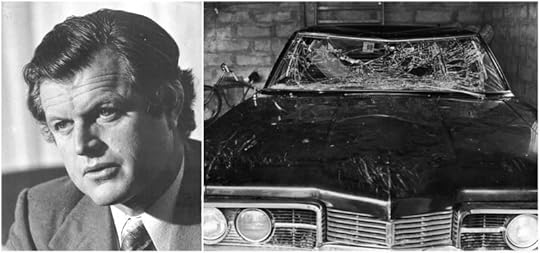
Why was he found casually strolling about town early the next morning, rather than reporting the incident?
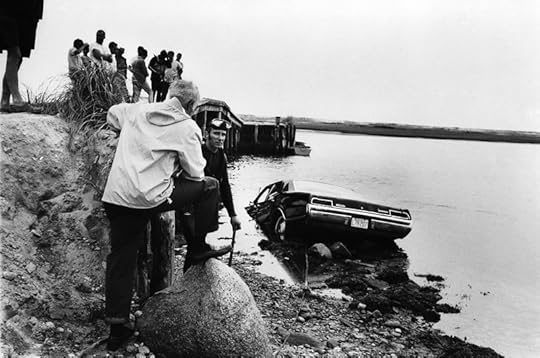
In this account, the reader is thrown into the mystery of that July night that would absorb the news for the rest of the summer of 69’. Starting with the days leading up to the party, Leo Damore shows a detailed break-down of all the evidence that has been accounted for to-date. From different witness reports that were accumulated that night, to the delayed autopsy report, to the court proceedings, Leo Damore presents the evidence that was surfaced after-the-fact while also questioning the evidence that would never be examined.
Was Mary Jo already dead before the car accident? Who was driving? Were they having an affair?
The beautiful Mary Jo:
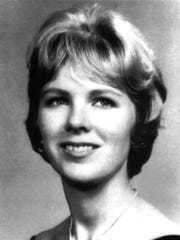
Before the book begins, I recommend reading the “Chronology” found in the beginning which presents a quick timeline of events from June 5, 1968- November 27, 1970. Also, I found the “Cast of Characters” at the beginning extremely helpful. The end of the book provides photocopies of reports, statements to the chief of police, etc.
I recommend it to lovers of conspiracies, true crime, and Kennedy fanatics. **However, it is an arduous read and is not for your casual reader. Literally, the author includes everything and everyone that could be linked to this crime. Though I really liked it, I felt like there was too much and at different points the information could have been condensed. And, the rigorous 600+ pages are written in the typical non-fiction tone. **
More on this topic:
Chappaquiddick according to the Washington Post
What Really Happened: A Play-by-play
This book exposes SENATORIAL PRIVILEGE at its finest. Leo Damore’s account is bursting with facts that account for what happened that mysterious night when Ted Kennedy and Mary Jo Kopechne left a party together in 1969 only to find one of them dead the next morning.
Why was he found casually strolling about town early the next morning, rather than reporting the incident?
In this account, the reader is thrown into the mystery of that July night that would absorb the news for the rest of the summer of 69’. Starting with the days leading up to the party, Leo Damore shows a detailed break-down of all the evidence that has been accounted for to-date. From different witness reports that were accumulated that night, to the delayed autopsy report, to the court proceedings, Leo Damore presents the evidence that was surfaced after-the-fact while also questioning the evidence that would never be examined.
Was Mary Jo already dead before the car accident? Who was driving? Were they having an affair?
The beautiful Mary Jo:
Before the book begins, I recommend reading the “Chronology” found in the beginning which presents a quick timeline of events from June 5, 1968- November 27, 1970. Also, I found the “Cast of Characters” at the beginning extremely helpful. The end of the book provides photocopies of reports, statements to the chief of police, etc.
I recommend it to lovers of conspiracies, true crime, and Kennedy fanatics. **However, it is an arduous read and is not for your casual reader. Literally, the author includes everything and everyone that could be linked to this crime. Though I really liked it, I felt like there was too much and at different points the information could have been condensed. And, the rigorous 600+ pages are written in the typical non-fiction tone. **
Chappaquiddick according to the Washington Post
What Really Happened: A Play-by-play

June 18, 2018
A trend I've noticed: Books written by investigative reporters are really, really good. Chappaquiddick is no exception. The book behind the (relatively unpublicized) film, Leo Damore's book is an extremely detailed accounting of the night Ted Kennedy committed manslaughter and the weeks and years after where he got away with it. His reporting shows the political workings that allowed for him to escape such a charge and the PR that was done to cover it up. It's unsatisfying in that, in the end, we still don't know what happened at Chappaquiddick and with Kennedy's death in 2009, we likely never will. What Damore does make clear, though, is that any account told by Kennedy over the years was most certainly not the truth.

August 3, 2020
This has to be one of the most concise books written on Chappaquiddick. Leo Damore did not leave any details out. He also would give both sides to a story. If he wrote facts about one side of the story, he also wrote about the other side. Some say this book destroyed Mr. Damore's life. Shame on anyone involved in that. He told a story from the FACTS.
I despise politics and think they should all get what is coming to them, on both sides. Not a one does any good for the people, but they sure do reap in the money for themselves. They act like they are untouchable and do not have to abide by the rules they make for us. I don't know when politics became so corrupt but they did. Kennedy was also morally corrupt and I believe the only reason he kept getting reelected was on the memories of his brothers. That is sad on all accounts.
I despise politics and think they should all get what is coming to them, on both sides. Not a one does any good for the people, but they sure do reap in the money for themselves. They act like they are untouchable and do not have to abide by the rules they make for us. I don't know when politics became so corrupt but they did. Kennedy was also morally corrupt and I believe the only reason he kept getting reelected was on the memories of his brothers. That is sad on all accounts.

Read
December 20, 2018“That girl,” “the girl,” and even “a spinster,” within hours of her death MaryJo Kopchne’s name seemed to disappear from discussion of the circumstances that led to that death. Unlike the man driving the car she was not notably wealthy, from a powerful family, or a man. She was disposable.
We will never know if MaryJo Kopchne could have been saved if the driver of the car had immediately reported the accident, rather than concealing it for over eight hours. We will never know exactly what arithmetic he did in his head when he walked away from the wreck, but we do know the foundation that arithmetic was based on. It was based on the belief that women are disposable and less important than the men they prop up and serve.
It is an attitude that is displayed in the account of an of the drivers’s brother, then president, summoning a young woman he had had a relationship with and ordering her to blow his brother. I echo her sentiment, “I beg your pardon Mr. President?”
While the driver may never have actually articulated the thought even to himself everything about the life he lived had taught him to view MaryJo Kopchne’s life as less important than his his own. It is an attitude that we have seen over and over in the men who “lead” our country and make our laws. And change is coming much to slow because I can’t see this story playing out any differently today.
We will never know if MaryJo Kopchne could have been saved if the driver of the car had immediately reported the accident, rather than concealing it for over eight hours. We will never know exactly what arithmetic he did in his head when he walked away from the wreck, but we do know the foundation that arithmetic was based on. It was based on the belief that women are disposable and less important than the men they prop up and serve.
It is an attitude that is displayed in the account of an of the drivers’s brother, then president, summoning a young woman he had had a relationship with and ordering her to blow his brother. I echo her sentiment, “I beg your pardon Mr. President?”
While the driver may never have actually articulated the thought even to himself everything about the life he lived had taught him to view MaryJo Kopchne’s life as less important than his his own. It is an attitude that we have seen over and over in the men who “lead” our country and make our laws. And change is coming much to slow because I can’t see this story playing out any differently today.

July 14, 2018
This took me forever to finish because it was unbelievably boring. It could have been very good if it was condensed. Instead, the author chose repeat things two and three times and drag the story out so much I wanted to give up 1/3 of the way through.
February 9, 2022
The story of the power of the Kennedy name. Ted Kennedy is dead now. God is his judge.
June 9, 2025
What is there left to say? Tragedy.

August 12, 2018
I knew a little about Chappaquiddick before this book. Ted Kennedy was in a car accident a young woman died and his political future was changed and any hopes of a presidency dashed as a result. The release of the movie by the same name piqued my interest so I decided to give this book a listen. Upon getting through the introduction I thought about giving it up. It read like conspiracy theory crazy person who hated Kennedys and democrats. But once past the introduction it was a well thought out balanced story. It follows the moment of the crash the investigation and subsequent inquiry which read like a courtroom drama like any murder trial. I found it heartbreaking to learn that Mary Jo probably survived under water and didn't die instantly. Also interesting is that her family seems to not hold any real grudge against Ted Kennedy but believes it was an accident, at least her mother does. I came away believing that while it was most likely an accident, with no malice intended the circumstances leading up to and events following the accident are suspicious. Was Kennedy drunk? Was he speeding? Why did he leave without reporting the accident when he could've saved her? Did he really swim to try and save her? Was he really in shock and forgot about the accident. It's truly a twisted tale, with tons to unravel and while we may never really know the truth of what happened there's no doubt Ted Kennedy got away a few crimes and that money and power can buy anything.

March 22, 2019
Over 600 pages of a very detailed account of the mishandling of the Chappaquiddick death of Mary Jo Kopechne. By this account, most people in the justice system overlooked questions and details, failed to get an autopsy, gave Kennedy the benefit of the doubt, refused to challenge him or make him accountable, or otherwise just covered up details in the case in order to protect Kennedy. The truth went down in that car and Kennedy went to the grave not revealing everything he knew about the accident and what happened right before and after the accident.
Ted Kennedy was haunted by Chappaquiddick, his presidential aspirations were destroyed as a result of the lingering questions surrounding the tragic death of Mary Jo. It is amazing that Ted Kennedy was able to remain a US Senator following this tragedy.
One thing that has always bothered me is that people refer to Chappaquiddick as a Kennedy tragedy, when in fact, this was Mary Jo's tragedy. Her life and death were diminished to nothing and everything was done to protect Ted Kennedy from the aftermath. For all of Ted Kennedy's supposed fight to help the underdog's in society, he used his wealth and status to escape a proper investigation.
I became interested in this book after watching the movie. I highly encourage people to read this book, and watch the movie for a more informed look at this event from history. If not for Chappaquiddick, Ted Kennedy may have become president!
Ted Kennedy was haunted by Chappaquiddick, his presidential aspirations were destroyed as a result of the lingering questions surrounding the tragic death of Mary Jo. It is amazing that Ted Kennedy was able to remain a US Senator following this tragedy.
One thing that has always bothered me is that people refer to Chappaquiddick as a Kennedy tragedy, when in fact, this was Mary Jo's tragedy. Her life and death were diminished to nothing and everything was done to protect Ted Kennedy from the aftermath. For all of Ted Kennedy's supposed fight to help the underdog's in society, he used his wealth and status to escape a proper investigation.
I became interested in this book after watching the movie. I highly encourage people to read this book, and watch the movie for a more informed look at this event from history. If not for Chappaquiddick, Ted Kennedy may have become president!

February 28, 2021
Way too long. Kept waiting for the ball to drop and talk about some explosive evidence, and instead got the same 4 facts and “mysteries” talked about over and over and over again. Honestly couldn’t have even filled a 30 minutes Unexplained Mysteries episode. Read the cliff notes.

February 23, 2025
3.5 informative but so dense
May 7, 2018
Chappaquiddick: Power, Privilege, and the Ted Kennedy Cover-Up by Leo Damore is well researched and explaining of the events of Chappaquiddick. Compared to the time of the event there are more available information. The more details that become known makes one wonder how many things have been gloss over or completely covered up by companies such as news or important people over the course of history. It was an interesting account that kept your attention. I liked the detail and that it was so well researched.
I received a copy thru a Goodreads Giveaway.
I received a copy thru a Goodreads Giveaway.

January 17, 2022
Damore's account of Ted Kennedy's fall from grace is both well-researched and almost completely incomprehensible. He digs up new revelations (the most notable from Kennedy's cousin, Joe Gargan, a trade-off that apparently requires painting Gargan in the most flattering light imaginable), but the story is so confusingly rendered, and its innumerable characters' motivations so poorly explained, that it's impossible to get a proper handle on either the tragedy or the cover-up. An injustice was clearly done, but the nature and the scale of it remains maddeningly out of focus.
April 11, 2018
Hard to believe that once we believed in Camelot, we believed in the Kennedys, we believed what we could do for our country. As stupid, petty and vulgar this abuse of power was back in the 1970's, look at today.

November 12, 2018
Extremely interesting book. Fascinating example of how fame, money and power can get you out of anything. Thank goodness this pathetic creature, Ted Kennedy, never became President.

September 27, 2019
This book's original title, "Senatorial Privilege," better conveys Damore's basic thesis about Chappaquiddick: Ted Kennedy got away with manslaughter by being a Kennedy. His account is thorough, disturbing, and overflowing with passionate indignation. It's hard not to find Damore's anger infectious.
The most damning thing here is probably the timeline. Kennedy says he left the party at 11:15pm with Mary Jo Kopechne in order to take her back to the hotel by ferry. But Mary Jo hadn't told the other Boiler Room Girls at the party-- who shared her hotel room-- that she was leaving, nor did she bring her purse or room key. Implicitly, Kennedy's whole story hinges on the crucial fact that the ferry stopped running at 12am; if the incident happened later than that, he didn't have any (non-scandalous) justification for driving around at night with a beautiful young woman who wasn't his wife. But at 12:40am, a deputy in a marked car saw Kennedy's Oldsmobile driving down a dirt road to a cemetery with a male driver and a female passenger. The deputy approached the sedan, but the Oldsmobile raced away toward Dike Bridge (where it was later found flipped and submerged in the water, with Mary Jo's body inside). There's good reason, meticulously reconstructed here, to believe that Kennedy was drunk when he fled from the deputy. Regardless, the deputy's testimony puts the car's submersion at about 12:45am. Kennedy returned to the party on foot after the crash. Gargan, Kennedy, and Paul Markham went to the scene and unsuccessfully tried to get Mary Jo from the car (they couldn't because the tides were strong at that time). According to Joe Gargan's inquest testimony, they tried for 45 minutes, stopping after 2am. By 2:30am, Kennedy was back at the hotel in dry clothes, arguably trying to set up an alibi.
Damore ruthlessly exposes the inconsistencies in Kennedy's account(s), but he doesn't speculate too much about what Kennedy and Mary Jo might have been up to if not trying to make the ferry. He's respectful of Mary Jo and spends significant time trying to establish that-- whatever happened that night-- she was more than just a "secretary" or an unmarried blond who wasn't wearing underwear (as many reports seem to summarize her). He even includes comments from her parents about how "an examination" showed she was "a maiden lady." (Why your parents would have such an examination done on you in your late 20s is another question.) He's fairly easy on the secondary characters, too, particularly Gargan and Markham. Both knew about Mary Jo's death before the police, but didn't call anyone because Kennedy promised he would take care of it himself-- an omission that has resulted in much criticism against them personally. Still, Damore obviously believes that the car's submersion created an air bubble in which Mary Jo lived for some time, and he presents quite a bit of convincing evidence that she could've been saved if help had been timely sought; she had time after the crash to crawl into the back seat of the car and adopt a pose consistent with trying to breathe the last from a diminishing pocket of air, and she died of drowning rather than any impact injuries. The diver who ultimately retrieved her body did so in mere minutes, and has always insisted that he could've saved her if he'd been called right away. As it was, Kennedy didn't report the crash until the next morning, after it had already been discovered. (Again, Damore offers some damning evidence that Kennedy intended to blame Mary Jo for the crash by pretending he hadn't been in the car, or that he hoped Gargan or someone else might take the blame for him.)
It's clear that Damore had access to many witnesses close to the case, including Gargan, and he exposes angles that appear to have been new at the time of publishing (for example, that Kennedy had a mole in the DA's office and knew all the inquest questions in advance). It might be fair to say that Damore's anger here stems more from Kennedy's crass arm-twisting and (largely successful) attempts to thwart the criminal-justice system than from his initial conduct. As we read, e.g., that Kennedy paid for the Boiler Room Girls' attorney, who in turn constructed the girls' inquest testimony to corroborate Kennedy's and each other's to the point of unbelievability, that frustration makes sense.
The book closes with a brief analysis of Chappaquiddick's effect on Kennedy's political career. Damore concludes, I think with the majority of commentators, that it was catastrophic to his presidential aspirations. That didn't interest me as much as the legal/criminal aspects of the case, but it seems to have been Damore's way of softening the blow of his thesis-- a way of saying that Kennedy suffered some repercussions, even if he evaded a manslaughter conviction. It's easy to see why this book caused such a sensation in 1988, when it first came out. Even now, it contains a lot of information about the incident that I'd never heard before and found shocking. (Not that I considered myself an expert, by any means; I had a skimmed-the-Wikipedia-article level of knowledge prior to reading this.) It shows a little more authorial emotion than I typically like in my nonfiction, but it's certainly a fast and interesting read.
The most damning thing here is probably the timeline. Kennedy says he left the party at 11:15pm with Mary Jo Kopechne in order to take her back to the hotel by ferry. But Mary Jo hadn't told the other Boiler Room Girls at the party-- who shared her hotel room-- that she was leaving, nor did she bring her purse or room key. Implicitly, Kennedy's whole story hinges on the crucial fact that the ferry stopped running at 12am; if the incident happened later than that, he didn't have any (non-scandalous) justification for driving around at night with a beautiful young woman who wasn't his wife. But at 12:40am, a deputy in a marked car saw Kennedy's Oldsmobile driving down a dirt road to a cemetery with a male driver and a female passenger. The deputy approached the sedan, but the Oldsmobile raced away toward Dike Bridge (where it was later found flipped and submerged in the water, with Mary Jo's body inside). There's good reason, meticulously reconstructed here, to believe that Kennedy was drunk when he fled from the deputy. Regardless, the deputy's testimony puts the car's submersion at about 12:45am. Kennedy returned to the party on foot after the crash. Gargan, Kennedy, and Paul Markham went to the scene and unsuccessfully tried to get Mary Jo from the car (they couldn't because the tides were strong at that time). According to Joe Gargan's inquest testimony, they tried for 45 minutes, stopping after 2am. By 2:30am, Kennedy was back at the hotel in dry clothes, arguably trying to set up an alibi.
Damore ruthlessly exposes the inconsistencies in Kennedy's account(s), but he doesn't speculate too much about what Kennedy and Mary Jo might have been up to if not trying to make the ferry. He's respectful of Mary Jo and spends significant time trying to establish that-- whatever happened that night-- she was more than just a "secretary" or an unmarried blond who wasn't wearing underwear (as many reports seem to summarize her). He even includes comments from her parents about how "an examination" showed she was "a maiden lady." (Why your parents would have such an examination done on you in your late 20s is another question.) He's fairly easy on the secondary characters, too, particularly Gargan and Markham. Both knew about Mary Jo's death before the police, but didn't call anyone because Kennedy promised he would take care of it himself-- an omission that has resulted in much criticism against them personally. Still, Damore obviously believes that the car's submersion created an air bubble in which Mary Jo lived for some time, and he presents quite a bit of convincing evidence that she could've been saved if help had been timely sought; she had time after the crash to crawl into the back seat of the car and adopt a pose consistent with trying to breathe the last from a diminishing pocket of air, and she died of drowning rather than any impact injuries. The diver who ultimately retrieved her body did so in mere minutes, and has always insisted that he could've saved her if he'd been called right away. As it was, Kennedy didn't report the crash until the next morning, after it had already been discovered. (Again, Damore offers some damning evidence that Kennedy intended to blame Mary Jo for the crash by pretending he hadn't been in the car, or that he hoped Gargan or someone else might take the blame for him.)
It's clear that Damore had access to many witnesses close to the case, including Gargan, and he exposes angles that appear to have been new at the time of publishing (for example, that Kennedy had a mole in the DA's office and knew all the inquest questions in advance). It might be fair to say that Damore's anger here stems more from Kennedy's crass arm-twisting and (largely successful) attempts to thwart the criminal-justice system than from his initial conduct. As we read, e.g., that Kennedy paid for the Boiler Room Girls' attorney, who in turn constructed the girls' inquest testimony to corroborate Kennedy's and each other's to the point of unbelievability, that frustration makes sense.
The book closes with a brief analysis of Chappaquiddick's effect on Kennedy's political career. Damore concludes, I think with the majority of commentators, that it was catastrophic to his presidential aspirations. That didn't interest me as much as the legal/criminal aspects of the case, but it seems to have been Damore's way of softening the blow of his thesis-- a way of saying that Kennedy suffered some repercussions, even if he evaded a manslaughter conviction. It's easy to see why this book caused such a sensation in 1988, when it first came out. Even now, it contains a lot of information about the incident that I'd never heard before and found shocking. (Not that I considered myself an expert, by any means; I had a skimmed-the-Wikipedia-article level of knowledge prior to reading this.) It shows a little more authorial emotion than I typically like in my nonfiction, but it's certainly a fast and interesting read.

January 27, 2026
This book was WILD! Recommended by a friend (whose book club is focused solely on the Kennedys this year) and I'm honestly surprised this got published. The information shared about Leo Damore at the beginning was awful, but it is so clear that this book was so carefully researched and people still had a lot to say. There is SO MUCH information included and this read more like a novel than a description of a tragic incident in 1969. If you've got the time and the patience, would recommend.

August 4, 2021
I would say this, for an average book it might be a good place to start for those who toss the word "privilege" around to see an example of real privilege on display.

February 10, 2023
A good read to see how the rich and powerful get away with murder.
October 21, 2024
This is an excellent book about the incident that ruined Ted Kennedy's hopes of becoming president. It is a very in depth well written book about Chappaquiddick and the boiler room girl Mary Jo Kopechne.
April 25, 2019
This book reads like a police report.
Leo Damore clearly was worried about the effect this book would have. So, he crossed every "t" and dots every "i." He goes so far as to report when maintenance workers knocked on the door during clandestine meetings. Despite the fact that those maintenance workers never come up again.
If you read this book you will learn what was proven about Chappaquiddick, which wasn't much. But you will go through quite a slog to get to every single interesting detail.
Leo Damore clearly was worried about the effect this book would have. So, he crossed every "t" and dots every "i." He goes so far as to report when maintenance workers knocked on the door during clandestine meetings. Despite the fact that those maintenance workers never come up again.
If you read this book you will learn what was proven about Chappaquiddick, which wasn't much. But you will go through quite a slog to get to every single interesting detail.

October 31, 2018
4 stars for the level of research and detail that went into this book. If you’re looking for something that reads like a novel, this is more complex. There are so many facts, allegations, names, dates, lies, and questions that in the end, the truth is as murky as the waters where the whole scene started. It’s a revealing commentary on how power and money are used both wittingly and unwittingly to protect people in positions of power. Some who didn’t realize the power they held (in terms of their knowledge of that night) may have inadvertently protected potentially guilty parties by making false assumptions willing goodness on those parties. Nevertheless, it’s a fascinating window into the weekend when men landed on the moon and one young woman’s life ended mysteriously and tragically.
June 4, 2018
The story of Chappaquiddick has always fascinated me, as I remember watching the news as a fourteen-year-old and trying to understand the whole story. This book, however, is too long (553 pages), too detailed, and too poorly edited to recommend it to anyone. What it did show was the terrible selfishness and self-protectionism of Ted Kennedy and his entourage, and the absolute waste of the life of Mary Jo Kopechne in a totally avoidable tragedy. The cover-up, and the refusal of so many to believe that Kennedy had done anything wrong, is disgusting.
October 2, 2018
still too many damn questions and general Kennedy ass kissing. at least it acknowledged there was a cover up and identified the key players, but it was very toothless considering the loss of life. the tragedy is not and has never been that Ted Kennedy never became president. The tragedy is that Mary Jo Kopechne is dead and a group of white men conspired to make sure that a priveleged, drunk, philandering momma's boy never faced the consequences. we dodged a huge bullet with that one.

July 22, 2018
This is a thorough look at Kennedy’s fecklessness at Chappaquiddick, and the general ensuing coverup. It isn’t terribly well written but it is very comprehensively researched and clearly presented.

September 9, 2025
This is supremely interesting investigative journalism of an egregious political coverup. Short story: Ted Kennedy was driving drunk on Martha’s Vineyard with one of his many paramours - Mary Jo Kopechne - and nearly got caught by a Deputy Sheriff. In a pathetic effort to run from the police, he sped off down Dike Road and ran his car off a bridge. Had Kennedy done the right thing, found the nearest house, and reported the accident, then Kopechne would still be alive and Kennedy he would’ve likely been elected President in the 1970s. But he didn’t. Kennedy spent the next 10 hours inexplicably wandering around, feigning shock, developing a sham alibi, and scheming to avoid blame, even implicating two close friends under the guise of attorney-client privilege. In the meantime, Kopechne was almost certainly alive in the submerged car for several of those 10 hours, choking on her own carbon dioxide in an air pocket until she tragically expired.
Most readers who’ve spent any time on the Kennedy family or have seen the excellent movie Chappaquiddick know the basics of this story, but Damore goes much deeper. In the weeks and months following the accident, an enormous contingent of law enforcement on Martha’s Vineyard and in Boston and Washington mount a deplorable and very illegal effort to exonerate Kennedy and keep his Presidential hopes alive, all while ignoring the dead girl and two parents grieving the senseless and entirely preventable loss of their daughter.
Damore provides excruciating detail on the legal maneuvering surrounding the sham inquest that was meant to answer questions but proved nothing more than carefully rehearsed stage acting by numerous players. He covers further legal motions which might have resulted in the exhumation and autopsy of Kopechne had the judge in Pennsylvania not been a Kennedyphile (Note: Kennedy went out of his way to ensure the autopsy didn’t happen in the immediate aftermath of the accident - a cause of death determination of suffocation rather than drowning would’ve been devastating to his sham case and likely earned him a justified manslaughter indictment). Finally, Damore covers many obvious gaps in the legal proceedings and several occasions of flagrant witness tampering and obstruction of justice. Indeed, when the grand jury attempted to begin their own investigation after the sham inquest, they were blocked at every turn by the DA (who was concerned about his own political future) and the judge (who was near retirement and didn’t care enough to hang Kennedy), thus rendering any further investigation impossible.
In the last few chapters, Damore covers the aftermath of Chappaquiddick and its lasting effects on Kennedy’s political aspirations. I found it amazing that Kennedy had the audacity to preach obstruction of justice ethics to President Nixon only five years after Kennedy’s Chappaquiddick defense team obstructed justice six ways to Sunday in order to render him blameless in the eyes of the law. But we’re going to ignore that; obstruction of justice was a privilege afforded only to the “Lion of the Senate.”
While dry in some parts - especially concerning the detail of numerous legal motions prior to the inquest - this account is thorough, ground-breaking, and completely shocking. It is no surprise that Damore was unable to find a mainstream publishing house for this book, and when it was published, he faced such backlash from the Kennedy establishment that he resorted to alcoholism and suicide. He was effectively martyred for telling the true and unabridged story of Chappaquiddick - an accident that either should’ve turned out differently or placed Senator Edward M. Kennedy behind bars.
Most readers who’ve spent any time on the Kennedy family or have seen the excellent movie Chappaquiddick know the basics of this story, but Damore goes much deeper. In the weeks and months following the accident, an enormous contingent of law enforcement on Martha’s Vineyard and in Boston and Washington mount a deplorable and very illegal effort to exonerate Kennedy and keep his Presidential hopes alive, all while ignoring the dead girl and two parents grieving the senseless and entirely preventable loss of their daughter.
Damore provides excruciating detail on the legal maneuvering surrounding the sham inquest that was meant to answer questions but proved nothing more than carefully rehearsed stage acting by numerous players. He covers further legal motions which might have resulted in the exhumation and autopsy of Kopechne had the judge in Pennsylvania not been a Kennedyphile (Note: Kennedy went out of his way to ensure the autopsy didn’t happen in the immediate aftermath of the accident - a cause of death determination of suffocation rather than drowning would’ve been devastating to his sham case and likely earned him a justified manslaughter indictment). Finally, Damore covers many obvious gaps in the legal proceedings and several occasions of flagrant witness tampering and obstruction of justice. Indeed, when the grand jury attempted to begin their own investigation after the sham inquest, they were blocked at every turn by the DA (who was concerned about his own political future) and the judge (who was near retirement and didn’t care enough to hang Kennedy), thus rendering any further investigation impossible.
In the last few chapters, Damore covers the aftermath of Chappaquiddick and its lasting effects on Kennedy’s political aspirations. I found it amazing that Kennedy had the audacity to preach obstruction of justice ethics to President Nixon only five years after Kennedy’s Chappaquiddick defense team obstructed justice six ways to Sunday in order to render him blameless in the eyes of the law. But we’re going to ignore that; obstruction of justice was a privilege afforded only to the “Lion of the Senate.”
While dry in some parts - especially concerning the detail of numerous legal motions prior to the inquest - this account is thorough, ground-breaking, and completely shocking. It is no surprise that Damore was unable to find a mainstream publishing house for this book, and when it was published, he faced such backlash from the Kennedy establishment that he resorted to alcoholism and suicide. He was effectively martyred for telling the true and unabridged story of Chappaquiddick - an accident that either should’ve turned out differently or placed Senator Edward M. Kennedy behind bars.
This entire review has been hidden because of spoilers.
July 18, 2018
With the relatively recent release of the Chappaquiddick movie, I thought it would be good to try to read about the events of that fateful night and the subsequent investigation before I would try to rent the movie. This book recounts the events leading up to and following the night of July 19th, 1969, when a car ran-off the bridge in the small island town of Chappadquiddick. That night, one woman would die in the car, while the male driver would survive. What made the story historic was that the driver was Ted Kennedy, a US Senator and part of one of the greatest political family in American history.
In this book, the events of that night are examined, and much of what follows does not put the Senator in a good light. From the near 10 hours from the accident to when he called the police, to the debates and disputes over the cause of death, the actions taken, or not taken by local officials...it is a scandal that one might more expect coming from a Hollywood thriller rather than a small Massachusetts island town. What probably should have been a clear manslaughter case ended up only in a lost driver's license for Kennedy, and a lot of unanswered questions for the victim's family (Mary Jo Kopechne).
There is a family angle for this book to me, as my great uncle was the doctor first called to the scene to be the on-sight medical examiner. Like all other officials, he is put through the ringer, where his decisions about cause of death, not ordering an immediate autopsy and being scapegoated by the local DA put an unassuming doctor right smack in the middle of a major political scandal. I never met the man, but I did see my great aunt a couple of times, and her temper, language and fierce defense of her husband are legendary within the family. I don't know if his actions were all right or wrong (the book is somewhat ambivalent), but he certainly did not seek out the attention that he eventually received.
With political scandals a common occurrence, this book offers insight into one the biggest. Kennedy didn't lose his office, but any hopes of being a true Presidential contender, like his older brothers, died with Kopechne. Hard to see that scandal playing out the same way today, especially in a time of social media (although the trial would be just as much, if not more so, a media firestorm). Kennedy and his team/family could probably have not suppressed the evidence like they did, and this book probably get published sooner and by a major publishing house. Don't know yet if the book rates better than the movie, but this is a solid book for reading or listening.
In this book, the events of that night are examined, and much of what follows does not put the Senator in a good light. From the near 10 hours from the accident to when he called the police, to the debates and disputes over the cause of death, the actions taken, or not taken by local officials...it is a scandal that one might more expect coming from a Hollywood thriller rather than a small Massachusetts island town. What probably should have been a clear manslaughter case ended up only in a lost driver's license for Kennedy, and a lot of unanswered questions for the victim's family (Mary Jo Kopechne).
There is a family angle for this book to me, as my great uncle was the doctor first called to the scene to be the on-sight medical examiner. Like all other officials, he is put through the ringer, where his decisions about cause of death, not ordering an immediate autopsy and being scapegoated by the local DA put an unassuming doctor right smack in the middle of a major political scandal. I never met the man, but I did see my great aunt a couple of times, and her temper, language and fierce defense of her husband are legendary within the family. I don't know if his actions were all right or wrong (the book is somewhat ambivalent), but he certainly did not seek out the attention that he eventually received.
With political scandals a common occurrence, this book offers insight into one the biggest. Kennedy didn't lose his office, but any hopes of being a true Presidential contender, like his older brothers, died with Kopechne. Hard to see that scandal playing out the same way today, especially in a time of social media (although the trial would be just as much, if not more so, a media firestorm). Kennedy and his team/family could probably have not suppressed the evidence like they did, and this book probably get published sooner and by a major publishing house. Don't know yet if the book rates better than the movie, but this is a solid book for reading or listening.

February 19, 2019
This book goes into exhaustive detail on the Kennedy incident, the investigation and cover up. While it wasn't boring, I probably wouldn't have made it through if I didn't listen to this as an audiobook.
Damore mostly lays out the facts and doesn't spend too much time forcing his own conclusions on you. What I found interesting is the power of the press. Even though several of the officials really didn't want to investigate Kennedy, the press put so much pressure on him that they felt like they had too. Now that didn't mean he was convicted of anything serious, but the incident was investigated and the information released to the public.
I think what happened is pretty clear. Senator Ted Kennedy spent the evening at a party and had quite a bit to drink. He leaves with Mary Jo Kopechne. Probably for immoral purposes, though that doesn't particularly matter as no one disputes that Kennedy was an adulterer. While driving they saw a police officer. Kennedy was with another woman at night in a car, probably drunk, and driving without a license. He doesn't want to be stopped so he speeds off. He drives off the bridge, is barely able to make it out of the car. He tries to rescue Mary Jo but isn't able to. At this point it probably gives her up for dead, as he thought he almost drowned escaping.
There is a possibility that she could have survived for hours after the event, and everyone involved should have reported the accident right away, and bare the blame for failing to do so. But it's fair to assume that they thought she was dead.
Kennedy walked back to the house (choosing not to stop at various lit houses along the way) Goes back with two friends, they can't rescue the girl either. Kennedy at this point wants to cover up the incident by claiming she was driving the car. The others tell him he can't, as they know. So he says he will report the accident, and swims the channel back to his hotel. There he doesn't report the accident until the next morning, when his friends arrive shocked that he hadn't. In fact, he had instead called his lawyers and even tried to set up some alibis to show that he was at the hotel all night.
From there you see several investigators who were rather incompetent, and some were very biased towards Kennedy. All in all, he was quite lucky to get away as easily as he did.
There is a lot of profanity in the quotes in this book.
Damore mostly lays out the facts and doesn't spend too much time forcing his own conclusions on you. What I found interesting is the power of the press. Even though several of the officials really didn't want to investigate Kennedy, the press put so much pressure on him that they felt like they had too. Now that didn't mean he was convicted of anything serious, but the incident was investigated and the information released to the public.
I think what happened is pretty clear. Senator Ted Kennedy spent the evening at a party and had quite a bit to drink. He leaves with Mary Jo Kopechne. Probably for immoral purposes, though that doesn't particularly matter as no one disputes that Kennedy was an adulterer. While driving they saw a police officer. Kennedy was with another woman at night in a car, probably drunk, and driving without a license. He doesn't want to be stopped so he speeds off. He drives off the bridge, is barely able to make it out of the car. He tries to rescue Mary Jo but isn't able to. At this point it probably gives her up for dead, as he thought he almost drowned escaping.
There is a possibility that she could have survived for hours after the event, and everyone involved should have reported the accident right away, and bare the blame for failing to do so. But it's fair to assume that they thought she was dead.
Kennedy walked back to the house (choosing not to stop at various lit houses along the way) Goes back with two friends, they can't rescue the girl either. Kennedy at this point wants to cover up the incident by claiming she was driving the car. The others tell him he can't, as they know. So he says he will report the accident, and swims the channel back to his hotel. There he doesn't report the accident until the next morning, when his friends arrive shocked that he hadn't. In fact, he had instead called his lawyers and even tried to set up some alibis to show that he was at the hotel all night.
From there you see several investigators who were rather incompetent, and some were very biased towards Kennedy. All in all, he was quite lucky to get away as easily as he did.
There is a lot of profanity in the quotes in this book.
July 16, 2022
And one more Chappaquiddick book is now under my belt. The main actors, even beyond Mary Jo, are dropping away one by one from illness and old age. It has now been 53 years, after all, since the Kennedy car went off Dike Bridge. It looks like every last man and woman present at the party on Chappaquiddick plans to go to their grave without correcting the record, even just the record of what they personally saw and heard that night, which may well be...not much. I don't for one minute think any of them, including Ted Kennedy, wished Mary Jo any harm. But once they realized she was in the car and she was dead, and there was nothing that could be done to change THAT, the focus switched to salvaging Ted Kennedy's political career by any lies possible. The truth, whatever it was, probably would have done them better, but by the time they realized what a tangled web they had woven with their omissions, deceit, and outright lies, some of those lies having been uttered under oath, they considered it too late to backtrack. They hadn't killed Mary Jo. Quite possibly even Kennedy had not been the unintentional instrument of her death, not even accidentally. So, they stuck to their stories, and when they felt it necessary, they tweaked their stories here and there to fit the narrative they were trying to create. They had the full weight of the Kennedy power and fortune behind them or they'd have never gotten away with it. I don't think Ted Kennedy got away with murder or manslaughter. I think he got away with lies and prevarication, and probably perjury, and that's just wrong. Mary Jo's parents deserved to know as much as Kennedy and the others at that party knew about the last moments of their daughter's life. And there should not be one legal system for the rich and powerful, and another for the rest of us.
Displaying 1 - 30 of 91 reviews