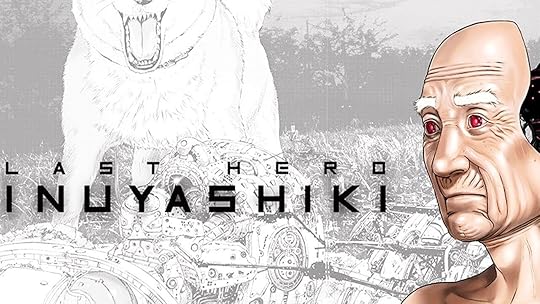
¡Un meteorito amenaza con destruir la Tierra! Los gobiernos más poderosos del mundo han intentado todo lo posible sin conseguir cambiar su órbita. Inuyashiki no puede quedarse de brazos cruzados y decide tomar cartas en el asunto...
Hiroya Oku (奥浩哉 Oku Hiroya, born September 16, 1967 in Fukuoka, Fukuoka) is a mangaka who is the creator of Gantz, Zero-One and HEN, all of which have been serialized in Young Jump. He has finished working on his most renowned manga, Gantz, which began in July 2000. His manga often contain explicit violence and gore, as well as sexual situations.
He won the second prize of the Youth Manga Awards in 1988, under the penname Yahiro Kuon.
He designed a character for Namco Bandai's Xbox 360 and Playstation 3 fighting game, Soulcalibur IV named Shura.
So this was the final volume of this Hiroya Oku jam where the story took an oblique turn with a possible extinction event taking centre stage and forcing not just Ichiro Inuyashiki, but also Hiro Shishigami to make some big decisions. It does feel that this manga was not planned from beginning to end, and it sort of came to an abrupt end, an end that could have been predicted but an end that was made that much better by focusing just as much on the supporting cast than our super powered leads; and of course the great art. An 8 out of 12 Four Star read, but to be honest overall a Three Star rated series in my opinion. 2025 read
In the end, the antagonist revealed a small glimpse of humanity.
As for Inuyashiki, he remained true to himself, protecting everyone as the hero he had always been.
Two people received extraordinary powers and chose different paths. One sought only destruction and death, behaving like a god but feared as a demon. The other used his powers for good and was praised as a god.
We all have the capacity for good and evil. It’s our choice which path to follow.
The characters remain true to the arcs they are on, but I still feel the plot went slightly awry in the final volumes with the introduction of an outside threat that literally references and steals from one of the most mocked movies of all time . It worked best when it was a character study of a hero and a villain, two opposite ways of dealing with great power. I still love the themes of finding hope and the hero within, but I'm not sure redemption and sacrifice needed to be part of it too.
Overall, this is a series full of very decompressed storytelling that is best read as quickly as possible. And that is very possible as each volume took me between 10 to 15 minutes. So look for a library that has the whole series and check them all out in one or two big batches.
The art is amazing and very cinematic. It would adapt well to a Hollywood blockbuster. Just don't let the heroes get off the bus like in the movie SPEED and ruin the ending with a stupid subway ride.
(Oh, fun side game: Count how many times characters cry in the course of the series. I don't think I've ever seen so much sobbing in a superhero sci-fi thriller.)
Gran manga del que me despido tristemente, ya que lo he disfrutado muchísimo y se lee excesivamente rápido por el poco diálogo que tiene (no exagero cuando digo que un tomo te lo lees en 20 minutos o menos). Recomendaría este manga a todo aquel que quisiera leer una buena historia y no tenga demasiado tiempo para leer. Hay varias razones por las cuales no le doy cinco estrellas, entre ellas que me hubiese gustado que dieran explicaciones o razones al hecho de que el protagonista se convierta en una máquina (aunque esto tampoco me molesta demasiado, pues conforme leía la historia me interesaba saber cómo avanzaba más que darle una explicación al hecho de convertirse en máquina). Otra razón sería que el dibujo, desde mi punto de vista, es el típico de manga estándar. Con esto me refiero a que prefiero otros mangas con un dibujo más personal, como pueden ser los de Hajime Isayama (Ataque a los titanes), Kengo Hanazawa (I am a hero), Tsutomu Nihei (Biomega o Blame) o Eiichiro Oda (One Piece).
And that is the end to this strange and weird series by the creator of Gantz.
We went from street level gangs, to mass murders, to saving the world. Talk about jumping around in genres. Inuyashiki must make a choice to save humanity with his powers. A asteroid is heading to earth and Donald Trump has declared we're all dead and to rape and kill as much as you like after failed attempts to stop the meteor. So Inuyashiki heads up to try and save everyone.
I actually enjoyed this somber volume. It's more a look into what makes us happy and why we do what we do. The action scenes are small but man, in this volume they are drawn wonderfully. Especially a shot of Inuyashiki giving it everything to try and stop the meteor. I also enjoyed a lot of the small character moments and even the bitter sweet ending.
This series wasn't great all the time. It remained pretty good but not great. And I'll probably remember it but can't help but wish it was slightly better. Still I'll it a 3.5 as a series, and this one a 4.
what's more heartbreaking is that the protagonist died not having his family as his final thought, but imagining to hug his dog, because he knews his dog has been loyal to him and has loved him ever since it was adopted by him.
Fifty-eight-year-old Ichiro Inuyashiki is down on his luck and still struggling to find a place in the world after living for so long. He’s constantly ignored, disrespected and put down by his dissatisfied family and judgmental peers regardless of how much effort he puts into trying to give them everything he can to make them happy. He’s too depressed and afraid to stand up for himself and he struggles to find a reason to keep living such an unfulfilling life. Things seem to brighten up for him after he adopts a cute and affectionate dog he names Hanako, but his happiness is instantly robbed from him when he learns from his doctor that he’s been diagnosed with cancer and has less than three months left to live.
Ready to run away from all of his responsibilities and burdens, Ichiro takes a long walk away from home with Hanako and stops to take a rest under the night sky in an empty park to gather his thoughts. Just when things seem like they’ve reached their lowest point, a UFO of all things comes crashing down to earth and lands right on top of the frail old man and a nearby bystander. It seems to be an unfortunate end for Ichiro, until he wakes up completely unscathed and feeling healthier than ever. Hanako is still by his side when he awakes, and both of them know that something isn’t quite right. It seems that the aliens driving the UFO took pity on the poor old man and performed an emergency operation to bring him back from the dead, upgrading his body with their superior technology and leaving him with a few new tricks up his sleeve to keep him safe from harm, such as enhanced vision, hearing, strength, durability and the ability to fly.
With his new and improved hearing capabilities, Ichiro overhears a group of young thugs ganging up on homeless people and beating them to death with baseball bats in the distance. He instinctively rushes to the aid of their next victim and gives the kids the scare of their life after awakening his new superhuman abilities. The homeless man is saved and the kids are brought to justice. For the first time in his life, Ichiro feels like his existence actually means something.
After saving the homeless man, Ichiro takes control of his life with his newfound abilities by using them to save thousands of innocent people from death and violence. After living through one tragedy after another, Ichiro finally finds his purpose, becoming a hero of the people and earning the love and respect he’s desperately wanted since he was a young boy.
Unknown to Ichiro however, the boy that happened to be at the park on the night of the incident went through a similar procedure. The antagonist is a sociopathic teenage boy named Hiro Shishigami, who was blessed with the same godlike powers as Ichiro after having his body reconstructed by the aliens. Unlike the kind old man however, Hiro has no intentions of using his powers for good. And so begins an unlikely battle between a heroic, lovable grandpa and a young genocidal maniac.
Inuyashiki explores what happens when people suddenly gain the power of gods. Some people use it to turn their lives around, other people use it to take revenge on the world. Power doesn’t always corrupt a person, there are a few genuinely good souls out there that put their power and influence to good use. Ichiro is a humble man that only feels alive when he saves other people from death and despair, he uses his power out of love for humanity and only wishes to be loved in return. He’s fragile and reliant on others, but he’s selfless and heroic all the same.
Hiro only feels alive when he sees other lives come to an end. He hates the world and he feels nothing towards others, with the exception of his mother, a single friend from school and a girl he develops surprisingly warm feelings for. This is where his sociopathic tendencies begin to get more complex, because he genuinely seems capable of having strong feelings toward a select group of people. He also cries for fictional characters when reading his favorite books and he even breaks down in tears when bad things happen to the few people he cares about. His unpredictable nature makes him a terrifying and fascinating individual, breaking the definition of a pure sociopath or psychopath.
That being said, I don’t think I’ve ever seen a more interesting hero/villain dynamic than that of a sweet old grandpa and a demented teenager. One thing I absolutely loved about the dark subject matter of the story is that the extreme violence and psychological horror elements throughout the series were taken very seriously. It’s never done just for shock value or being over the top, even though there are quite a few incredibly disturbing moments. Every single time someone dies or a cruel act is performed, the characters always take the time to reflect on the aftermath of the consequences of what happened and gives you enough time to soak in the pain.
Ichiro values human life, and even sheds tears when he has no choice but to use violence against irredeemable criminals that refuse to surrender to justice. Even Hiro begins to reflect on his life choices and abuse of his superhuman powers after the consequences of his actions catch up to him and transform his unstoppable rampage into an ocean of guilt, regret and self-loathing. Not a single act goes unpunished in this series, and the way these actions linger in the characters' minds and forces them to take a second look at themselves is masterfully done.
It’s a very original take and criticism on the superhero genre. Heroes and villains are criticized in equal measure. You can rarely do something good without having a few negative consequences that go along with it, and the opposite can also be true. It portrays society in a nihilistic, yet very believable way by cleverly integrating parodies of twitter drama and forum-based chat sites such as 4chan, where everyone is desensitized to kindness and cruelty and get off on dehumanizing each other from behind the safety of a computer monitor. If a superhero or a supervillain were to appear in this day and age, many people would probably shrug off their actions because they’ve been so desensitized by internet culture and ultra-violent media. People can hear about school shootings and terrorist attacks that killed thousands of innocent people on the news everyday and not bat an eye because they’ve heard the same old story so many times before. As sad as it may sound, sometimes people just come to expect the absolute worst from the world and they grow numb to the shocking events that transpire every moment. The satirical yet harsh social commentary benefits the adult superhero narrative to great effect.
Inuyashiki isn’t all doom and gloom, however. It’s actually a very heartwarming tale about being able to overcome your status as an outcast, accepting your role in the world and coming to terms with your past in order to change your life around for the greater good. I think the ending really hits home with these themes and messages, and it sure as hell sent me through an emotional roller coaster.
If there’s one thing to take away from this series, it’s that everyone has a hero inside of them waiting for their chance to shine. No matter how feeble, meaningless or cruel your past actions may have been, there’s always a new opportunity waiting just around the corner if you ever decide to make a change for the better and bring something good into the world. These acts of kindness might not make up for the things you’ve done in the past, but there’s no denying that they have the potential to make the future a brighter place for someone else. No matter how insignificant they may seem, every little action, choice and sacrifice you make has the power to change the future. It’s never too late to start doing the right thing.
Se trata de un manga de supertipos que parece muy influenciado por la peli indi de superhéroes "Chronicle" (a su vez muy influenciada por "Akira") con unas gotas de "Astroboy", "Miracleman" y el "Authority" de Brian Hitch. Aquí Oku introduce un matiz original, de los dos protagonistas que se transforman en superrobots al caerles un meteorito o nave extraterrestre encima, uno es un chaval de instituto, Shishigami y el otro es Inuyashiki, un señor mayor, un salaryman gris e invisible al que su familia no respeta. Oku emplea a sus protagonistas como yin-yang para examinar la naturaleza humana, la capacidad para hacer el bien y el mal y cual de ambas cosas nos define mejor, con un puntillo de ¡abajo la juventud! entre carca y gracioso. Lamentablemente, tras varios giros de argumento muy divertidos, la historia se va quedando sin fuerzas hasta un decepcionante final, un deus ex machina lacrimógeno, sin aprovechar las posibilidades que el planteamiento ofrecía (la historia de Inuyashiki está completamente desaprovechada y el peso del argumento lo acaba llevando Shishigami). Y es que no hay nada como convertirse en una supermáquina de destrucción masiva para recuperar el amor y el respeto de tu familia.
Respecto al dibujo, Oku me ha parecido un jeta, pero un jeta muy inteligente, gracias al tratamiento por ordenador de los fondos fotografiados oculta algunas carencias en perspectiva, proporciones y anatomía y, apoyándose en la tradicional narrativa a prueba de bombas del tebeo comercial japonés y su imaginación visual, acaba por conseguir un resultado muy apañao y hasta espectacular en ocasiones.
Tremenda obra maestra, 20/10 y GOD. De saber que Oku dejaba la artillería pesada para el final, hubiera sido menos severo con un par de tomos anteriores. Definitivamente es una historia para leer más de una vez.
SÚPER ACLARACIÓN: Jamás recomendaría esta obra para alguien que no ha leído antes Gantz o algo de Hiroya Oku. Creo que es más disfrutable cuando tienes una idea del estilo de Oku y ubicas este manga en su contexto. En todo caso, recomendaría siempre empezar por Gantz, del cual siempre digo (a propósito de las obras de shonen más populares de la actualidad) "Gantz lo hizo antes".
Fácilmente pudo haber terminado en el volumen 8... el volumen 9 y el 10 fueron una manera tonta de alargar la historia y darle un final épico que no logró tener a mi parecer.
En cuanto a todo el manga, es entretenido sí, pero no es nada de otro mundo, pudo haber estado mejor.
Une série très inégale, qui aurait pu avoir 5 volumes de moins mais qui sait toucher les cordes sensibles de manière juste. Dommage que l'entre deux soit toujours si plat.
Inuyashiki by Hiroya Oku: A Flawed Yet Thought-Provoking Sci-Fi Parable
Inuyashiki is a bold and often unsettling manga that sees Hiroya Oku grappling with questions of mortality, empathy, and the digital age through the lens of science fiction. Serialized in Evening magazine between 2014 and 2017 and collected in ten volumes, the series presents a story that is at once intimate and grandiose, contemplative and violent. It has moments of brilliance but is also hampered by structural inconsistencies and tonal dissonance that keep it from reaching its full potential.
The story begins with Ichirō Inuyashiki, a 58-year-old salaryman who is socially invisible, disrespected by his family, and recently diagnosed with terminal cancer. His life changes when he is accidentally killed and resurrected by an alien force, which replaces his body with a powerful cyborg construct. In parallel, a teenage boy, Hiro Shishigami, is also transformed by the same event—but while Ichirō uses his powers to save lives, Hiro becomes a mass-murdering nihilist who treats humans as disposable. The series then follows their diverging paths, setting up an ideological conflict between selfless humanity and sociopathic detachment.
Oku's central conceit—a moral polarity between two newly empowered beings—offers a fertile ground for philosophical reflection. Ichirō’s struggle is moving and sincere. Despite his superhuman abilities, his compassion and pain feel real. Watching him use his powers to stop crimes and comfort victims lends the story its emotional anchor. Hiro, by contrast, is deeply disturbing. His acts of violence—cold, methodical, and often directed at innocent families—are graphic and hard to digest, yet they provoke urgent questions about isolation, emotional numbness, and unchecked resentment in youth.
The manga is visually strong, consistent with Oku’s signature style. He continues to use digital models for background design, lending the world a grounded, hyper-realistic texture that contrasts effectively with the fantastical events playing out in the foreground. Action scenes are kinetic and brutal, and emotional beats are amplified by expressive character work and dramatic framing.
That said, Inuyashiki suffers from tonal inconsistency. The early volumes succeed in cultivating a slow, reflective mood, but the pacing becomes erratic in the second half, with increasingly implausible plot escalations and a somewhat rushed conclusion. Hiro’s motivations—while intriguing in early chapters—never fully crystallize into a coherent psychological arc. The narrative occasionally flirts with social commentary, especially regarding media spectacle, generational apathy, and urban alienation, but these threads are often abandoned or left underexplored.
Oku also has a tendency to insert juvenile or exploitative elements—some sexualized imagery and a few adolescent gags—that clash with the otherwise mature and somber themes. While this may be part of his authorial voice, in Inuyashiki it detracts from the emotional weight of the story and undercuts its more serious philosophical ambitions.
In conclusion, Inuyashiki is a fascinating but uneven work. Its premise is powerful, its execution visually striking, and its core characters—particularly Ichirō—are handled with emotional sensitivity. But the series is held back by narrative unevenness, tonal shifts, and a reliance on shock that feels gratuitous at times. For readers who appreciate dark science fiction with moral complexity and high-concept premises, Inuyashiki remains worth reading—just don’t expect it to maintain the same focus or emotional resonance throughout.
Saya memang berencana membuat review dua volume terakhir manga ini dalam satu review saja. Membuat review pervolume itu ternyata banyak memberi spoiler, jenderal hahahaha.... Well, saya ngga berharap ending manga ini akan seperti ini. Saya sempat berhenti sesaat membaca lanjutannya karena sesuatu dan lain hal, dan ketika saya kembali lagi, saya shock dengan banyaknya gambar kurang senonoh yang terpampang di beberapa halamannya. Eeehhh, apakah saya salah buka manga? Ternyata tidak. Setelah saya kembali membuka volume sebelumnya, saya baru ingat dengan kemunculan Donald Trump di satu chapter. Saya pikir itu hanya intermezzo saja, tapi ternyata apa yang dikatakan Trump itu membawa akhir Inuyashiki menjadi kurang menarik buat saya..
Well, natural disaster adalah sesuatu yang normal, tapi tiba tiba muncul di konflik antara Ichirou dan Hiro, yang saya harapkan bakal bertarung kembali dengan lebih sengit lagi, tidak terjadi. Si penulis cenderung membuat sosok keji Hiro menjadi pahlawan, bersama sama Ichirou. Kenapa tidak dari awal saja mereka menjadi pahlawan alih-alih bertarung satu sama lain? Lagipula, saya pikir dari awal, si penulis kurang mendalami karakter dari semua karakter disini, kecuali Ichirou. Emosi Ichirou terlihat jelas di awal. Sementara Hiro, sebelumnya bahkan tidak begitu jelas kenapa ia menjadi sosok keji seperti itu. Jika background broken home-nya menjadi sebab, saya rasa itu kurang kuat. Belum lagi, sebelumnya ia menjadi tameng bagi Andou, sahabatnya yang menjadi objek bully. Mengapa ia tidak menjadi pahlawan saja alih-alih merusak keluarga harmonis dengan membunuh Mereka atau berseteru dengan kepolisian? Pengakuannya pada Shion, cewek yang nembak dirinya, bahwa ia merasa lebih hidup setelah membunuh itu juga kurang nendang alasannya. Perasaannya pada Shion juga tidak terlalu jelas, apakah ia membalas perasaan Shion? Mungkin iya, tapi tidak terlalu tergambar dengan jelas, kecuali ketakutan nya di bagian akhir kisah ketika bencana alam itu akan terjadi, dan dia menjadi penyelamat bagi Shion dan neneknya, serta Andou.
Meski kurang puas dengan endingnya, saya cukup puas dengan ending beberapa karakter disini, seperti Mari, putri semata wayang Ichirou, heartbreaking sih. Pamitan Ichirou terhadap Mari tidak begitu dramatis dibanding kegelisahan Hanako, anjing setia milik Ichirou. Airmata dleweran Mari tidak bisa membuat airmata saya ikut mengalir. Tapi kejaran Hanako membuat saya mewek :(
Overall, saya sangat menikmati kisah ini, aside from the lack of character description. Gambarnya cantik, detail, dramatis, dan seru. Semoga bisa menonton live action-nya di bioskop April nanti.
Tengo sentimientos encontrados con esta obra. Por una parte me parece que tiene una idea muy original y explora conceptos muy interesantes. Por otro lado, creo que presenta unas ideas geniales pero no las explota todo lo que podría. Es una historia muy corta que se lee de una sentada fácilmente y eso está bien pero creo que se podría haber sacrificado un poco el ritmo de la historia (que es bastante bueno en general) para detenerse a profundizar en esas ideas que podrían haber dado para un puñado de tomos más.
En general estoy satisfecho pero de haber tenido estos conceptos en mis manos siento que habría hecho las cosas de forma muy diferente. No es por esto por lo que no le doy las cinco estrellas, eso sería muy egocéntrico por mi parte (que no esté hecho como yo lo haría no significa que no esté bien hecho igualmente), sino porque también me ha faltado que se pare un poco a profundizar en sus personajes secundarios que apenas están definidos.
Por lo demás, una obra disfrutable y diferente a lo habitual dentro del género y que merece la pena leer, que además se hace en apenas unas horas.
Inuyashiki è stata la prima opera con la quale ho conosciuto Hiroya Oku ed i suoi disegni incredibilmente puliti e futuristici. Il manga è composto da soli 10 volumi dalla facile lettura, caratteristica che poi ho scoperto appartenere anche ad altre opere più complesse dello stesso, ed ha una trama che prevede due diramazioni: quella di Inuyashiki (protagonista) e quella di Hiro Shishigami, un giovane ragazzo giapponese. Una delle caratteristiche che mi ha colpito, che a quanto pare è propria di Oku, è il lasciarti in sospeso con alcuni quesiti; ti presenta la storia per com'è andata senza darti troppe spiegazioni in merito, sembra quasi che attraverso il disegno ti racconti un semplice episodio contornato da ambientazioni realistiche riprodotte in maniera impeccabile. Personalmente ho apprezzato l'opera, ho notato un Oku leggermente diverso da Gantz, più maturo. Per una piacevole lettura serale è l'ideale.
En realidad el final me gustó, el sacrificio de Hiro, mostró sentimientos humanos hacia la chica, la abuelita y su amigo, pero desde el principio no comprendí porque su afán en matar a todos, si bien, después con la muerte de su madre, se crea un motivo de odio hacia la humanidad, desde que comienza con los asesinatos no le veía razón, o por lo menos, me parace que no se dijo o quedó claro.
Entrañable el sufrimiento de Inuyashiki, me llegó al corazón su decisión final, todo por el amor que le tiene a su familia. Me quedo con la conversación que tiene con el hijo, y su resolución al encontrar el motivo de su vida.
Mari ganó el concurso, y es un guiño al cáncer de su padre.
Inuyashiki es un buena historia, aunque en medio se vuelve un tanto llena de acción pero no desarrollo de personajes, mi gran problema fueron las motivaciones de Hiro, porque el dibujo es muy bueno, el espero que hay en los fondos es maravilloso, cada detalle, cada sombra.
This entire review has been hidden because of spoilers.
El final no ha sido tan malo como esperaba, pero tampoco creo que sorprenda a nadie... ya viendo la portada uno espera que va a haber un intento de redención de Sishigami, redención que en mi opinión no merece.
Poniendo la historia en perspectiva me quedo con la que creo que es la intención del autor más allá de las grandes escenas de acción, poner en valor la pérdida de valores de la juventud japonesa en oposición a las anteriores generaciones que simbolizan una cultura del esfuerzo y el sacrificio que se ha perdido.
Resulta bastante artificioso el cambio en la actitud de la familia de Inuyashiki que al enterarse de lo que ha estado haciendo para salvar a miles de personas al fin parecen valorarle, cuando anteriormente no era suficiente que se hubiera dejado la vida y la salud en sacar adelante a la familia. No parece extraño que el último recuerdo del yayo sea para Hanako.
Everything was starting to look up and go right for Inuyashiki. His family was treating him like a person again, he had the ability to heal and revive the injured and dying, and Shishigami wasn't about to destroy the world. Then a giant asteroid comes and threatens the entire planet.
This ending...I both love and hate it. I hate it because I wanted a happy ending where Inuyashiki could live peacefully with his family. I love it because it's still a perfect ending, even though it's the bitterest of bittersweet. I've only known these characters for ten, super fast to read volumes and I wanted to cry. I did not expect a story about mega weapon cyborgs to be so emotional.
An amazing series. Highly recommend it. 12/10 would binge read again.
Tengo esto abandonadísimo pero es que ultimamente me estoy centrando en leer mangas y poco mas. Eso sí, los dos que me he leido son maravillosos. Empiezo con este, Last Hero Inuyashiki, creado por Hiroya Oku que es el autor de Gantz. Se nota esto ultimo mucho en el modo en el que el autor trata a los personajes, poniendolos al limite de su humanidad y me parece que en este manga lo hace a la perfección. Tiene uno de los mejores villanos que me he encontrado en muchísimo tiempo y me parece que la historia en general es muy redonda. Sólo he leido Gantz e Inuyashiki de este autor pero puedo decir que esta última es su obra maestra.
Non ho parole per descriverlo: l'ultimo capitolo di Inuyashiki è sicuramente prevedibile e poco approfondito, ma emoziona e lascia il segno. Il mondo è in pericolo e solo un eroe, l'ultimo eroe in effetti, è in grado di salvarlo. E il commiato è dolce e amaro allo stesso tempo: un abbraccio invisibile, uno sguardo mnemonico alle persone e poi agli oggetti quotidiani che si lasciano indietro, un flacone di sapone liquido sul lavandino, un vaso di rose profumate, la scala percorsa tante volte sovrappensiero, una vecchia bicicletta con le rotelle dimenticata in cortile... L'addio è struggente, ma il sacrificio indispensabile.
This entire review has been hidden because of spoilers.
Je pense que ce tome est un poil en dessous des autres mais je mets quand même 5 étoiles parce que cette série a été un plaisir à suivre. Ce dernier tome retourne sur de la pure SF et n'est pas très original...
Pour moi, la série est un mélange de SF et de sujets de société et c'est son atout.
Uf, a ese final no me lo veía venir de ninguna manera. Sarcasmo aparte, el final, aunque predecible, estuvo cargado de emoción y cierra los pocos arcos que se venían desarrollando a través de los tomos.
Se lee básicamente como un homenaje a la cultura occidental, los comics, el cine, pero enmarcados dentro de la cultura oriental. Es interesante, auqnue no sea una historia memorable, salvo por la elección del personaje principal, el viejo Ikari Inuyashiki, que fue lo mejor de la historia (Y Hayako, obviamente).