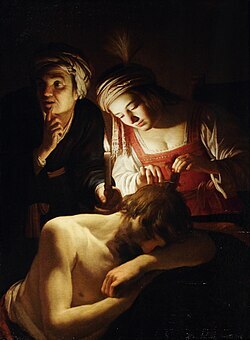
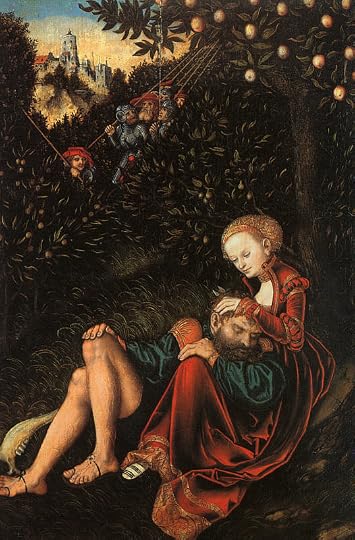
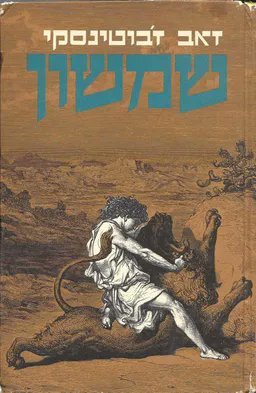
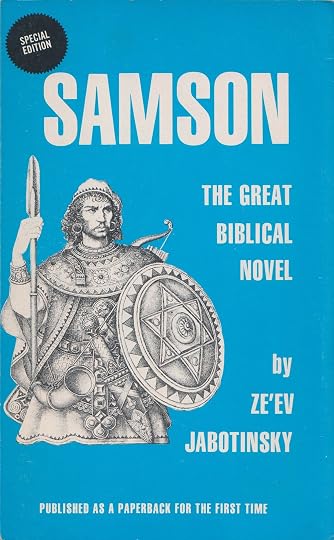
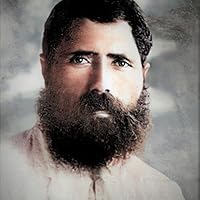
שמשון הוא הראשון מבין שני רומנים (השני הוא "חמשתם") פרי עטו של זאב ז´בוטינסקי, שהיה לא רק מנהיג ציוני דגול אלא גם איש תרבות: עיתונאי, פובליציסט, נואם מחונן, מתרגם, משורר וסופר. הוא התחיל לכתוב את שמשון ב-1919, בתקופה שבה שהה בארץ ישראל, וכתיבתו הושלמה ב-1926, בפריז. זהו תרגומו השלישי של הרומן, בעברית עכשווית, שנעשה בידיו האמונות של פטר קריקסונוב.
על בסיס הסיפור המקראי יצר ז´בוטינסקי אלגוריה עזת ביטוי שפועלת בכמה מישורים אקטואליים. את התחבולה הספרותית הזאת נקטו גדולי סופרי אירופה וביניהם אוסקר ויילד ("שלומית"), תומס מאן ("יוסף ואחיו") ומיכאיל בולגקוב ("האמן ומרגריטה"). כמוהן ניצל גם הוא מסגרת קלאסית ויצק בה תכנים חדשים.
במרכז הרומן עומדים דמותו של שמשון ויחסיו עם הפלישתים. ז´בוטינסקי ראה בשמשון גיבור ומנהיג טבעי שצמח בתקופה היסטורית קודרת אשר בה "אין מלך בישראל [ו]איש הישר בעיניו יעשה". המחבר רומז לאנאלוגיה בין תקופת השופטים לתקופת המנדט הבריטי ולמכשולים שהציבה אנגליה בדרך להקמת בית לאומי לעם ישראל בארץ ישראל.
על רקע נופי הארץ משורטטת ביד אמן דמותו של שמשון - הגיבור, השופט והנזיר. זהו נזיר מוזר המתמכר לקסמן של נשים פלישתיות; נהנתן המבלה בנעימים עם חבריו הפלישתים; קנא המשלח אש בשדות הפלישתים; גיבור הנושא את שערי עזה על כתפיו.
מעל הכל שמשון הוא תלמיד חרוץ הלומד את סוד כוחם של הפלישתים המציקים לאחיו בני שבט דן. וממקום כלאו הוא שולח מסר-צוואה לאחיו:
* קיבצו ברזל * שימו עליכם מלך * לימדו לצחוק
הרומן שמשון הוא יצירת אמנות מרתקת ובו בזמן הצהרה נוקבת של שמשון ושל ז´בוטינסקי על הדרך חסרת הפשרות שבה בחרו ללכת.
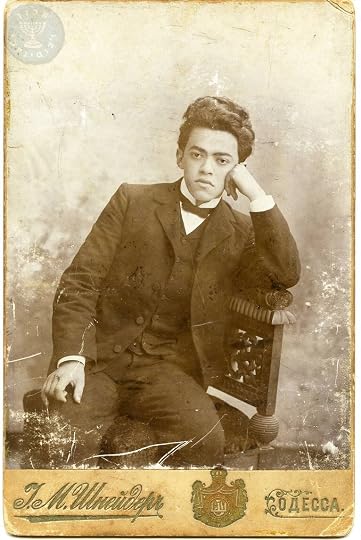
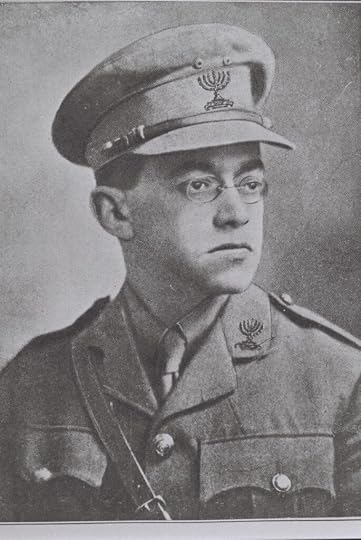
Ze'ev (Vladimir) Jabotinsky (זאב ז'בוטינסקי) was born Vladimir Yevgenyevich (Yevnovich) Zhabotinsky in Odessa, Russian Empire (modern Ukraine) into an assimilated Jewish family. His father, Yevno (Yevgeniy Grigoryevich) Zhabotinsky, hailed from Nikopol, Ukraine. He was a member of the Russian Society of Sailing and Trade and was primarily involved in wheat trading. His mother, Chava (Eva Markovna) Zach (1835–1926), came from Berdychiv. Jabotinsky's older brother (Myron) died in childhood. His sister, Tereza (Tamara Yevgenyevna) Zhabotinskaya-Kopp, founded a private, female secondary school in Odessa. In 1885 the family moved to Germany due to his father's illness, returning a year later after his father's death.
Raised in a Jewish middle-class home, Jabotinsky was educated in Russian schools. Although he studied Hebrew as a child, he wrote in his autobiography that his upbringing was divorced from Jewish faith and tradition. Chava Zhabotinskaya opened a store in Odessa selling stationery, and enrolled young Vladimir in the city's gymnasium. Jabotinsky did not finish school, having become involved in journalism. In 1896 he began writing articles for a major local Russian newspaper, the Odessa Leaflet, and was sent to Italy and Switzerland as a correspondent. He also worked with the Odessa News. Jabotinsky was a childhood friend of Russian journalist and poet Korney Chukovsky, and attended Chukovsky's 1903 wedding to Maria Goldfeld.
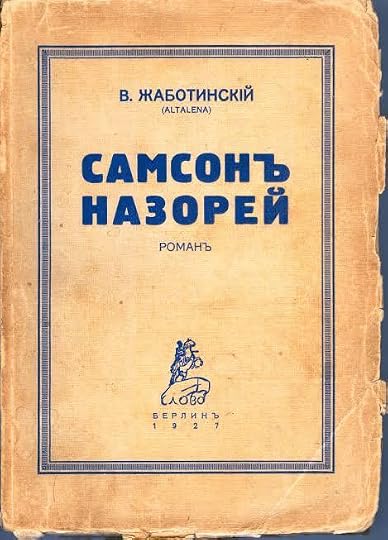
Jabotinsky wrote under the pseudonym "Altalena" ("swing" in Italian)(also "Old Italian" in Yiddish). His dispatches from Italy earned him recognition as an up-and-coming Russian-language journalist. He was a student at the Sapienza University of Rome law school, but did not graduate. In the summer of 1901 he returned to Odessa and began working as a journalist at the newspaper Odessa's News (Russian: Одесские новости). Later he edited newspapers in Russian and Hebrew.
He married Yohana Galperina in October 1907. They had one child, Eri Jabotinsky, who later became a member of the Irgun-inspired Bergson Group. Eri Jabotinsky briefly served in the 1st Knesset of Israel; he died on June 6, 1969.
When Ze’ev Jabotinsky chose the biblical book of Judges as the canvas for his 1927 novel Samson, his intent was far from a sentimental retelling of ancient myth. Instead, he repurposed the legendary judge into an intricate, urgent political manifesto for the modern Jewish psyche. To achieve this, Jabotinsky intentionally abandoned the ornate, romantic prose typical of early twentieth-century literature. His language is striking in its calculated simplicity—a lean, unembellished style that refuses to treat storytelling as a mere exercise in aesthetic consumption. Jabotinsky does not write to be merely appreciated; he writes to construct. Rather than relying on superficial rhetoric, he builds a dense network of structural metaphors to map out the psychological scaffolding of an idealized, sovereign, and self-confident society. Crucially, this blueprint is never cheapened by a caricature of the adversary. Jabotinsky avoids the trap of depicting the Philistines as foolish or weak; on the contrary, they are presented as a highly organized, technologically superior, and culturally dazzling civilization. By elevating the enemy, Jabotinsky raises the stakes of his manifesto: Israel cannot defeat Philistia through blind luck or moral superiority alone. Survival demands that they look past the glittering surface of foreign cultures, confront their own internal submissiveness, and learn to out-organize, out-discipline, and out-think their oppressors.
By shifting our critical lens away from mere plot summaries and overt historical parallels, we begin to see how Jabotinsky deploys a complex web of internal metaphors to chart the painful path from psychological captivity to national rebirth. This psychological journey begins in the domestic sphere.
Samson’s mother, Hazl, embodies the defensive, risk-averse psyche of the diaspora. Her anxieties are focused entirely on safety, ordinary comfort, and family survival within a hostile world—functioning as a metaphor for an assimilationist middle class that fears ideological disruption and grand ambitions. Her instinct is to tame Samson, preferring a safe, unremarkable son over a world-altering hero. This domestic retreat is reinforced by the way Jabotinsky systematically subverts traditional Jewish Midrash. He strips away its passive, purely supernatural elements, reinterpreting biblical events not as arbitrary miracles performed by a distant deity, but as the logical consequences of human agency, political strategy, and national willpower. The divine mandate is secularized; holiness is redefined not as ritualistic piety, but as an unyielding drive for self-determination.
Spatial geometry in the novel further deepens this psychological conditioning. The wild, uncultivated foothills of Dan represent an untamed, chaotic liberty that is paradoxically paralyzed by an internal fear and division. Conversely, the highly organized, grand architecture of Philistine cities like Gaza and Timnah offers a comfortable, aesthetic freedom. This urban luxury acts as a golden cage, using cultural elegance to seditiously lull the Israelites into accepting their own gradual assimilation.
Within these spaces, language itself becomes dynamic. Words and riddles are treated as weapons, mirroring Jabotinsky's own background as a linguist and journalist who believed political rhetoric shapes reality. Even Samson's hair is reinterpreted: rather than a magical source of divine power, it becomes a symbol of unyielding pride and a refusal to bow to foreign standards. To lose it means adopting the mindset of a slave long before the scissors ever touch the scalp.
Indeed, Jabotinsky explicitly wove his own complex personality into his protagonist. Both author and hero were larger-than-life figures caught between two worlds. As a witty maverick, Jabotinsky was an erudite, multilingual intellectual who loved art, humor, and sophistication; similarly, he highlights Samson’s love for riddles, trickery, and grand feasts. Yet both remained living paradoxes—deeply cosmopolitan and appreciative of foreign refinement, while remaining fiercely loyal to their own people. Like a tragic prophet, Jabotinsky often felt isolated from mainstream political leadership while foreseeing deep tragedy ahead, positioning Samson as a prophet of national survival warning a people too blind to see the threats around them.
This tension between cultural attraction and political reality plays out directly through the women in Samson's life. Semadar represents the beautiful, aristocratic facade of dominant foreign civilizations. Samson’s deep infatuation with her reflects the intellectual desire to integrate into the upper echelons of a prestigious society, making her violent, sudden rejection of their union Jabotinsky's stark warning: the pursuit of acceptance through cultural mimicry is a dangerous illusion that ultimately ends in existential rejection.
Where Semadar represents the aesthetic trap, Elinoar embodies the cold, analytical threat of foreign intellectualism. She approaches Samson not with passion, but as a complex national riddle to be thoroughly studied, deconstructed, and neutralized. She represents the danger of adopting an outsider's hyper-rational, detached worldview, which strips a nation of its unique destiny and leaves it intellectually disarmed. Delilah then functions as the ultimate executioner of this intellectual subversion, serving as the concrete application of Elinoar’s cold calculations. By identifying the exact root of Samson's power, she transforms his sovereign strength into a simple puzzle to be picked apart, representing the operational stage of assimilation where vital identity markers are methodically dismantled under the guise of intimacy.
The physical consequences of passivity are etched directly onto the body of Samson's father, Manoah. His scar stands as a visceral trace of historical trauma. Because the Philistine attacker was ultimately killed by Manoah’s slave rather than Manoah himself, the scar becomes a powerful metaphor for the dangers of delegated defense, highlighting the profound moral failure of relying on foreign protectors or mercenaries for physical survival. This trauma acts as a psychological catalyst, proving that survival without independent self-reliance is merely a temporary accident of circumstance.
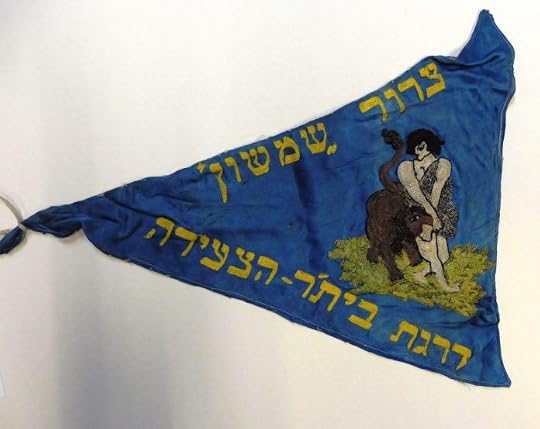
To overcome this dependency, a new force must emerge. Enter the Shu'alim (Jackals)—Samson’s raw, unrefined, and marginalized followers, mirroring Jabotinsky's vision of disciplined youth militias like Betar. Initially undisciplined, they possess a fierce loyalty. During Samson's long, tense wedding ceremony, they rapidly adapt, learning to read hidden signals and maintain tactical vigilance under the enemy's nose. They represent the vital transition from raw, disorganized courage into a highly disciplined, unified vanguard capable of covertly out-organizing a superior occupying force.
Before his death, Samson delivers a tripartite blueprint for national survival, with each element functioning as a distinct pillar of sovereignty. The command to "get iron" is a direct narrative manifestation of Jabotinsky’s foundational 1923 essay The Iron Wall—a literal and metaphorical call for military readiness that demands the total rejection of diaspora defenselessness in favor of an unyielding, self-reliant defense. The command to "choose a king" addresses the desperate need for centralized leadership and ironclad discipline, urging a fractured political landscape to forge a singular, sovereign authority. Finally, the mandate to "learn to laugh" calls for the cultivation of supreme inner confidence, demanding that a nation look down upon its oppressors with an amused, unshakeable superiority.
This laughter is inextricably bound to Jabotinsky’s foundational concept of Hadar—an untranslatable Hebrew term combining majesty, outer dignity, chivalry, and absolute self-respect. In the face of intense persecution, laughter is not a sign of levity; it is a weapon of profound psychological defiance. By laughing at danger and systemic degradation, the oppressed reclaim moral and existential superiority over the oppressor, replacing a victim mentality with an aristocratic pride that refuses to be humiliated.
Samson’s eventual blindness elevates his physical mutilation into the novel's central philosophical turning point. His betrayal by the Philistines—who were his intimate companions just moments prior—functions on a macro-political scale to shatter the dangerous mirage of superficial diplomacy. Forcible deprivation of sight strips away the deceptive, glittering surface of foreign aesthetics that had long led him astray. Confined to darkness, Samson undergoes a deep moral refinement; he turns away from deceptive allurements to converse with children, who symbolize a pure, uncorrupted essence. His blindness paradoxically grants him true, clear-sighted political vision, allowing him to perceive his relationship with his occupiers for what it truly is: an absolute, existential struggle that cannot be negotiated away.
Against this clarity stands the haunting figure of Elinoar’s child presented at the end of the narrative—one of Jabotinsky’s most devastating warnings. The child is not a harmonious bridge between two cultures; instead, it has been entirely absorbed and socialized by Philistine civilization. It represents the ultimate tragedy of assimilation: the literal theft of lineage and potential by a dominant host culture, standing as a chilling reminder that military victories are hollow if a nation loses the cultural battle for the minds of the next generation.
Ultimately, the collapse of the Temple of Dagon is reframed from a passive divine miracle into a calculated, highly complex act of supreme national willpower. Samson uses his newly refined clarity to turn the very monument of imperial domination into a crucible of defiance. By pulling down the pillars, he does not throw a blind, desperate tantrum; rather, he systematically destroys the physical and psychological architecture of deception that had kept his people subjugated. It is a terrifying, deliberate choice of collective resistance over a slow, comfortable slide into cultural erasure.
By treating the biblical narrative not as an inviolable sanctuary of passive miracles but as a dynamic laboratory for political thought, Jabotinsky’s Samson strips away the comfortable illusions of survival through submission. The novel’s dense web of internal metaphors constructs a harrowing yet urgent path toward national reclamation. Through the visceral trauma of Manoah’s scar, the wild spatial dynamics of Dan, and the tragic hybridity of Elinoar’s child, Jabotinsky exposes the existential peril of relying on foreign protectors or seeking validation in the glittering culture of an oppressor. True liberation, the novel argues, is a painful process of internal transformation—requiring a transition from raw, undisciplined loyalty to a mature state of absolute self-reliance, and a blindness to superficial seductions in order to achieve a clear-sighted understanding of power. When Samson finally pulls down the pillars of Dagon, he shatters the entire architectural apparatus of cultural captivity. His final legacy—to gather iron, choose a king, and learn to laugh—redefines identity not by historical vulnerabilities, but by an aristocratic, unshakeable pride. In the end, Jabotinsky leaves his readers with a striking manifesto: a nation’s truest defense is not merely the physical walls it builds, but the psychological iron it forges within itself, anchored by an enduring sense of Hadar that refuses to bow to any empire.
Jabotinsky picks up an old riddle and gives it a fresh crop of hair. Samson steps off the biblical page still strong in the arms and shaky in judgment, but the twentieth century adds a fresh layer, plain politics, largely absent from the ancient text.
Vladimir Jabotinsky, born in Odessa, spent his early years as a journalist and orator before he founded the Revisionist wing of Zionism. He wrote this book in Russian, first as installments for the paper Rassvet, later gathered into a single volume around 1926 and 1927. Few political leaders sit down and produce a genuine piece of fiction. Fewer still produce one this energetic. His Samson grows restless among his own people and drawn toward the Philistines, admired here for order, wine, iron tools, and disciplined ranks, a portrait far kinder than the usual sketch of brutes. The enemy owns civilization, roads, and government, while the tribes of Israel own faith, songs, and squabbling.
Samson wants both worlds and gets crushed between them, first by love, then by betrayal, then by his own missing self-control. The hair grows back, the eyes stay gone, and a final push against two pillars turns personal disaster into a lesson for a nation still short on iron of its own to forge. Along the way, Samson carries off the gates of Gaza on his shoulders, an early lesson in leaving a party without asking to leave, and ties torches to the tails of foxes, each scene carrying an appetite for mischief closer to an Odessa street fable than a Sunday school lesson.
The old riddle about sweetness pulled from strength gets restaged as the entire point of the book, real power for a scattered people comes only after the honey of culture gets pulled from the carcass of old habits. As the story closes, blind and chained, Samson offers his people three blunt instructions, gather iron, choose a leader, and learn to laugh. Small words, large weight, spoken right before the roof comes down.
Readers in Odessa and beyond met this book already primed by decades of debate over emancipation, revolution, and the shape a Jewish future should take. A hero built from muscle instead of study offered a jolt against the older image of frail scholarship huddled in narrow streets. Young readers of the era, many soon to join Betar, took Samson's hunger for strength as an instruction manual disguised as an old story.
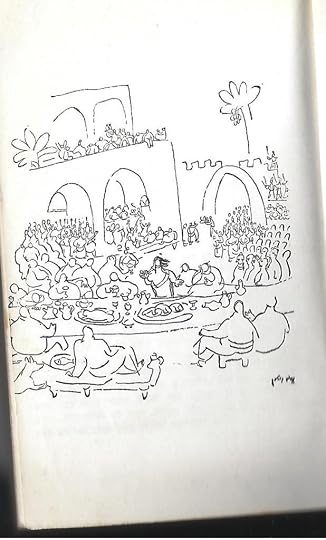
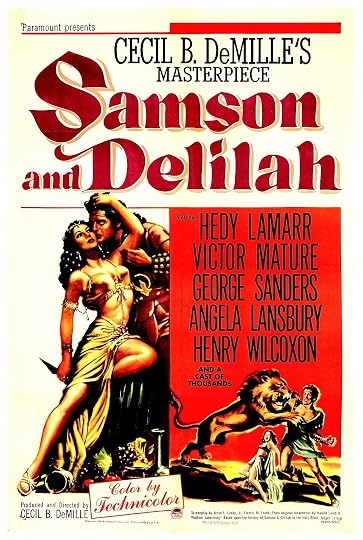
The book fed directly into a movement, gave the Revisionist wing an origin myth with real style, and traveled far enough to place its author's name on the Hollywood screenplay credits for Cecil B. DeMille's later Samson and Delilah. Few Jewish books from the interwar Russian sphere reached that far past their original readership. Fewer still produced a hero readers wanted to imitate, beyond keeping him in memory. Picture the feast at Timnah first, where Samson turns a wedding party into a puzzle contest, wagering thirty changes of clothing on a line about sweetness born from strength. A future Betari would clock that trade instantly, since bragging rights and bold stakes built the whole youth-movement style.
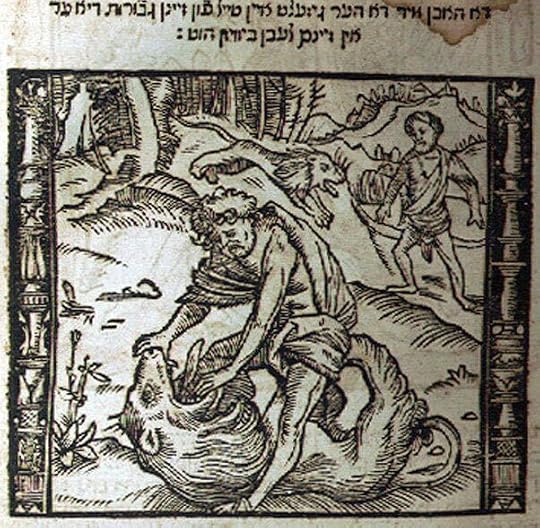
Then comes the honey itself, pulled from a lion's carcass on the road, proof that a threat, once beaten, can still feed the people who beat it. The fox-tail torches follow, three hundred pairs set loose through Philistine grain, a scene built entirely from mischief and nerve rather than brute muscle alone, closer to sabotage than to a straightforward brawl. After that stands the jawbone fight, one man against a thousand armed neighbors, a scene practically built for a recruitment poster given its plain arithmetic of resolve beating numbers.
Right alongside it sits the gate of Gaza, hauled uphill on Samson's shoulders while the city guards search for him behind bolted doors, a joke about the uselessness of walls against a will strong enough to carry them away bodily. Move further along and there's the cave assembly near Etam, tribal elders gathering to hand their own judge over to the enemy rather than risk a fight, a scene that stings on purpose and dares a reader to feel the shame in it. The mill scene in Gaza carries its own weight too, a blind man turning a grindstone among mocking guards while his hair grows back in the dark, patience rendered as a private kind of training rather than surrender. Set beside that grim labor stands the earlier image of his mother building an extra room with her own hands after a broken engagement, quiet stubbornness on a smaller scale that still argues for the same nerve shown later on a larger stage.
Last comes the temple itself, arms braced against two pillars, a personal ending turned into a national lesson about paying a heavy price on your own terms rather than a light one on someone else's. Locks grow back. Borders stay fixed only if someone forges them anew.
Jabotinsky opens with Victor Hugo's boast about Ruy Blas, the claim that every detail of that play answers to a checkable historical fact, down to the queen's household budget. Then he turns the boast on its head. His preface offers a plain trade: full freedom from the framework of the Judges account and from whatever archaeology might supply. Across the whole book, Jabotinsky almost never lifts a biblical verse whole, choosing paraphrase over quotation, so as a reader raised on the Hebrew original I kept meeting rhythms half recognized, phrases bent a few degrees off true.
The clearest case sits in Delilah's mouth. Judges gives her four words at the moment of betrayal, an old cry with an archaic ring, calling the Philistines down on Samson by name. Jabotinsky's Delilah says something plainer, closer to speech a person might use across a table: Samson, the Philistines are coming. The trade lowers the register on purpose, pulling a mythic warning down into a domestic one, and the shift turns her into somebody speaking to a lover in a room rather than an oracle pronouncing doom.
A companion move happens with the wedding riddle. The biblical proverb about the eater yielding food and the strong yielding sweetness gets folded into a phrase Jabotinsky repeats through the book like a refrain, among the Philistines, sweetness comes from cruelty. What began as a one-time trick at a feast becomes a standing claim about an entire civilization, voiced by several speakers at several points, until the riddle stops being a riddle and starts reading as doctrine.
The last line carries the heaviest freight. Judges has Samson pray for strength, then declare he will die with the Philistines, a line addressed to an enemy nation in general terms. Jabotinsky gives him different words, let my soul die together with you. The address goes first to Delilah, to Elinoar and to their infant son, and only after them to the Philistine crowd. A single pronoun swap moves the climax from a soldier's vow of vengeance to a lover's farewell.
Jabotinsky pairs that change with another: the Philistine nobles caught under the collapsing roof meet the fall without a flicker of fear, holding the composure Samson claims for himself. Judges leaves them laughing and jeering before the roof comes down. Jabotinsky lets them die with dignity equal to his hero's, so the final scene is a shared end among equals who happened to stand on opposite sides of a wall.
Jabotinsky invents an entire Philistine mythology to carry the political weight, and he plants clues about its parentage rather than announcing them. The god Dagon gets a mother, Rhea Diktina, stitched from two half remembered Greek names, Rhea the mother of gods and Diktina the fisherman's nymph of Crete, so the Philistine pantheon reads as an offshoot of the Aegean world rather than a Semitic rival to the God of Israel.
A warrior named Akhtur turns up across many chapters before the late reveal that his name is a Philistine mouthful of Hector, borrowed straight out of the Iliad and marched east. The trick ties the Philistines to Greece. Their culture is an early colonial outpost of Europe washed up on the coast of Canaan centuries before the word Europe existed.
Jabotinsky, a Revisionist Zionist leader composing in the mid 1920s under British rule in Mandate Palestine, builds his Philistines as stand ins for imperial Britain, disciplined, proud of an old lineage, holding power through iron weapons and cohesion beyond numbers. Samson's ambition, voiced across many conversations with Elinoar and with Philistine officers alike, runs toward learning the colonizer's own craft well enough to beat the colonizer with it someday. The famous riddle about sweetness from cruelty becomes, on this reading, a case for adopting a rival's strength before turning it against the rival, an argument shared with Jabotinsky's own political program. Elinoar earns separate credit for scale. Judges introduces Delilah abruptly at chapter sixteen with a bribe from Philistine lords and gives her little history, little family, a motive that begins and ends with payment. Jabotinsky builds her an entire earlier life under a different name, a courtship, a betrayal foretold, and a vow late in the book to raise Samson's own son against Samson's own people, so that by the time the familiar name Delilah finally attaches to her the reader has spent chapters loving a person about to become an antagonist by another name.
Her Hebrew name already carries the word for night as well as the verb for weakening folded inside it, and Jabotinsky's choice to dress her first in a name built from youth and light, before letting dusk claim her, plays that etymology like an instrument, a slow sunset written into a woman's biography one syllable at a time. Judges leaves Samson's first wife nameless, the woman from Timnah whose death by fire closes an early chapter of his story. Jabotinsky names her Semadar, a word lifted from the Song of Songs for a vine in early blossom, not yet grape, and the choice folds a whole erotic vocabulary onto a character granted only a handful of scenes before her death.
The honey Samson scrapes from the lion's carcass gets similar treatment. Judges uses the honey once, as a symbol for courage and fuel for a riddle and nothing more. Jabotinsky turns the same honey into the taproot of a philosophy about sweetness rising out of violence, carried across the length of the book until a scrap of scripture becomes a governing idea. The tribes themselves get the boldest recasting. Judges closes on the flat verdict that Israel lacked a king and each person did as seemed right in personal eyes, a line read for centuries as an epitaph for a broken age. Jabotinsky's Samson hears a version of that same complaint and answers it as an engineer would, describing a people who must mix clay and straw to bake a strong brick, a mixed nation of tribes, creeds, and loyalties fused by force of leadership into something able to bear weight.
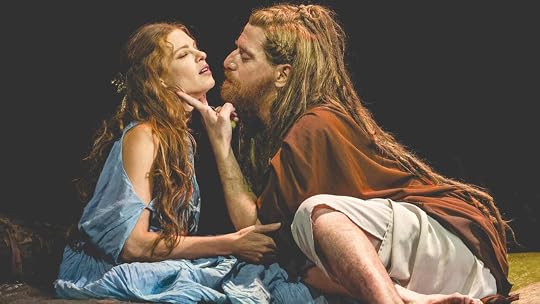
Where the biblical verse mourns disunity as decline, Jabotinsky's hero treats disunity as raw material waiting on a builder, a difference in stance more than in fact, and the difference carries the whole book's argument on its back. A leader too restless to sit inside inherited verses, forging his own iron out of an old book's honey, could hardly find a better hero, or a better excuse. The book is fairly and openly sexy for a 1926 work. Samson moves through several women (Timnah's bride, a Philistine courtesan in Gaza, the loyal Elinoar, Delilah), and Jabotinsky writes physical attraction and jealousy with real heat rather than euphemism, rich with blood and lust. It's not explicit by modern standards, but the desire is central to the plot.
Mostly it is very much Zionist, and specifically Revisionist Zionist. Jabotinsky wasn't just borrowing the Bible for color. He reshapes Samson into a man torn between admiration for a more disciplined, "civilized" enemy and loyalty to his own scattered, unarmed people, and has him conclude that Jews need three things: iron (weapons/industry), a king (centralized leadership), and the ability to laugh (resilience). That's essentially Jabotinsky's own political platform in biblical costume. It's considered a founding text of Revisionist Zionism and shaped Betar's self-image for a generation, Menachem Begin among them.
Another buddy read with the incredible GR Mahtab Safdari
Samson , who'se legendary exploits can be found in Judges (13-16) has been an inspiration to writers, poets and artists for centuries. In the Land of Israel, 1000 BCE , the Israelites are ruled by the Phillistines. Budding Israelite revolutionary Samson wants to marry Semadar , a Phillistine , though it is her younger sister Elinoar , who really wants Samson. After his marriage to Semadar , he is estranged from his wife , who he believes has betrayed him by revealing the riddle that he asked the Phillistines.
After a few months , he comes back to claim his wife , but her father has married her to someone else. This sparks Samson's rage , and in the ensuing fight , the Phillistines murder Semadar and her father , and Samson becomes a hunted man. Samson ,scorning Elinoar, becomes a guerilla and a respected judge among his people, striking fear into the hearts of the Phillistines , enemies of the Israelites. But Elinoar , now re-emerges as Delilah , captures Samsons heart , discovers his weakness and betrays him to the Phillistines. Samson is blinded by the Phillistines who use him for sport. Several years later, as a captive of the Phillistines, he regains his strength , and takes revenge , killing thousands of Phillistines , together with himself. Ze'ev Jabotinsky , Zionist leader , writer, philosopher and educator , adapts this story of Samson , in this brilliant novel , first written in 1927. It made a great impact on Jewish youth of the time , and especially on member's of Jabotinsky's Betar Movement. It inspired many later works on the story of Samson and Delilah , including the 1949 Cecil B. DeMille Paramount film starring Hedy Lamarr and Victor Mature. Jabotinsky , a genius and visionary , used this novel to communicate his thoughts on the issued facing the Jewish people at the time , and the coming fight of the Jewish Nation , for freedom and survival. The immortal message of Samson to the Israelite people before his death , rings out to the people of Israel and world Jewry today : " Collect iron , choose a king , and learn to laugh".
A powerful and ferocious allegory that spares the rod from neither Jews nor gentiles. It's both epic and deeply personal and manages to drive the reader into utter despair on both fronts. This is a book that hurts, but the pain makes you better. Hopefully.
Jabotinsky really puts life into the biblical story of Samson, while using the ancient Israel geopolitics to share his views on peoples, nations and the relations between them.
Написано, очень увлекательно, т.е. читается как добротно собранный боевик, идеальный для чтения где-нибудь на пляже. Все сюжетные линии вовремя сходятся, все персонажи вносят определенный вклад в сюжет, т.е. ничего лишнего. Финал, правда, на мой вкус, уж слишком мелодраматический. При этом общая канва собственно библейской истории из Книги Судей соблюдена. В книге полностью отсутствуют какие-либо религиозные линии: Бога в сюжете нет совсем, по Жаботинскому Самсон в Него не сильно и верит, а точнее просто об этом не задумывается. Честно, не стал бы читать книгу, если бы в честь автора не была названа одна из центральных улиц Тель-Авива и если бы автор, при этом не написал ее по-русски, но о потраченном времени не жалею.