

What do you think?

Wonder Woman (1987) (Collected Editions) #13
Wonder Woman: Ztracený ráj
WONDER WOMAN: ZTRACENÝ RÁJ
Původně vycházelo od ledna do července 2001
Do Gothamu i na Rajský ostrov dorazila válka. V Gothamu se prastaří bohové války, sváru, strachu a hrůzy znovuzrodili v tělech Batmanových nejvražednějších nepřátel. V Themysciře se dva kmeny Amazonek vyzbrojují ke střetu, který ohrožuje samotnou jejich existenci. Jedinou nadějí na spásu je princezna Diana, Wonder Woman.
NEW TEEN TITANS #38
Původně vyšlo v lednu 1984
V předvečer svatby Wonder Girl a Terry Longa se Robin (Dick Grayson) rozhodl pomoci své přítelkyni z Mladých titánů s vyšetřováním jejího původu - "Kdo je Donna Troyová?"
Původně vycházelo od ledna do července 2001
Do Gothamu i na Rajský ostrov dorazila válka. V Gothamu se prastaří bohové války, sváru, strachu a hrůzy znovuzrodili v tělech Batmanových nejvražednějších nepřátel. V Themysciře se dva kmeny Amazonek vyzbrojují ke střetu, který ohrožuje samotnou jejich existenci. Jedinou nadějí na spásu je princezna Diana, Wonder Woman.
NEW TEEN TITANS #38
Původně vyšlo v lednu 1984
V předvečer svatby Wonder Girl a Terry Longa se Robin (Dick Grayson) rozhodl pomoci své přítelkyni z Mladých titánů s vyšetřováním jejího původu - "Kdo je Donna Troyová?"
176 pages, Hardcover
First published February 1, 2002
About the author
Phil Jimenez
614 books48 followersPhilip Jiménez is an American comics artist and writer, known for his work as writer/artist on Wonder Woman from 2000 to 2003, as one of the five pencilers of the 2005–2006 miniseries Infinite Crisis, and his collaborations with writer Grant Morrison on New X-Men and The Invisibles.
Ratings & Reviews
Friends & Following
Create a free account to discover what your friends think of this book!
Community Reviews
Displaying 1 - 30 of 90 reviews

November 18, 2019
Wonder Woman teams up with Batman and their many sidekicks to face a bunch of Batman's rogues who have been possessed by Greek Gods in Gods of Gotham. Then it's civil war as the Amazons fight their lost sisters from Bana-Mighdall for control of Themyscira in Paradise Lost. Finally, the best issue is a day Lois Lane spends interviewing Wonder Woman as she tours the world helping others.
Jimenez's art is a lot better than his writing. He tends to drone on and on instead of letting his wonderfully detailed art tell the story to you. He'd rather blungeon you to death with countless pages of narration. If he ever learns to curtail himself though, he has potential. I liked how much he pulled from George Perez's WW run.
Jimenez's art is a lot better than his writing. He tends to drone on and on instead of letting his wonderfully detailed art tell the story to you. He'd rather blungeon you to death with countless pages of narration. If he ever learns to curtail himself though, he has potential. I liked how much he pulled from George Perez's WW run.

September 10, 2017

Storyline: 3
Aryworks: 5
"Gods of Gotham" was a real funny and cheesy storyline, but maybe was just going to work better in a Bats/WW series crossover.
"Paradise Island Lost" storyline was in desperate need of more than just 2 issues development, but it left me wanting to read much more about Diana's mom adventures as Wonder Woman.
Phil Jiménez's hyper-detailed artworks were so good that I thought they were made by George Pérez!!!


February 17, 2012
I seem to be falling behind the curve here. It just didn't do anything for me. I'm not a fan of the overarching storyline, with the Bana-Mighdal, which might be part of the problem. I give Jimenez huge credit for at least writing Diana's personality (and Donna's, for that matter) in a way that makes sense. I wish I didn't feel like I had to give bonus points for a writer apparently understanding the character he writes... The last issue included here is a one-off story, with Lois Lane following Diana around for a day. It's supposedly narrated by Lois's internal monologue, but it felt... off. There were times (Lois waxing poetic about how Diana smelled, for example) when I was very aware that these were not the natural thoughts of a female journalist, but written by a male comic book writer. But other than that, it was a fairly good character sketch of Diana. Her crush on Trevor Barnes was adorable. But I'm completely baffled as to why she'd confess her home country's state to Lex Luthor, president or no.
February 11, 2018
The book opens with a 3-page character list, offering at least a paragraph on each character and some basic background information.
The first story comprises issues #164-167. The Greek god Phobos has come to Gotham, disguised as a religious cult leader. His children, Deimos and Eris, come along and possess the bodies of Joker and Poison Ivy, respectively. While Batman prefers to work alone, he's aided by Wonder Woman, Troia (Donna Troy), Nightwing, Artemis, Wonder Girl (Cassie Sandsmark), Robin (Tim Drake), and Huntress. There's some good dialogue between Huntress and Artemis on the nature of faith, and why some have it and others don't. Harley Quinn, of all people, gets to play damsel in distress here.
There's also an excerpt from "Secret Files" which continues to make Donna Troy's backstory confusing to readers. Six pages and it still doesn't make much sense.
The next story covers issues #168-169, and involves two warring tribes of Amazons: those led by Queen Hippolyta and the Bana-Mighdall Amazons. At the same time, Hippolyta is also a member of the JSA as Wonder Woman. Diana, now returned from the dead, wishes her mother would make up her mind and decide to be either a queen or a superhero.
The last story, covering issue #170 is also one of the best: a day with Wonder Woman, as Lois Lane interviews her. Contains one of the best descriptions of Wonder Woman ever: "Even when she's not the room, you can feel her; it starts with the voice. Not singsong, but still melodious, alive. Accented with enough Greek to be exotic--down home enough that she might as well have grown up next to yo. She wears no makeup, no perfume but when she's in the room, it's all you can do not to close your eyes and get lost in an impossible fusion of sweet white grapes, olive oil, and sculpted bronze. Then you see her and unlike most people, whose reality never lives up to their reputation...the perfection of her blows you away. God's honest post-feminist woman with a capital W. Art in motion. Beauty."
George Perez does amazing artwork, and this volume is worth buying for the panels alone. I had the opportunity to see him in a panel about Wonder Woman at Dragon Con in Atlanta in 2016, and he stated that he was glad to see Wonder Woman finally getting the respect she deserved. Phil Jimenez is a terrific writer, and does a great job characterizing everyone here.
The first story comprises issues #164-167. The Greek god Phobos has come to Gotham, disguised as a religious cult leader. His children, Deimos and Eris, come along and possess the bodies of Joker and Poison Ivy, respectively. While Batman prefers to work alone, he's aided by Wonder Woman, Troia (Donna Troy), Nightwing, Artemis, Wonder Girl (Cassie Sandsmark), Robin (Tim Drake), and Huntress. There's some good dialogue between Huntress and Artemis on the nature of faith, and why some have it and others don't. Harley Quinn, of all people, gets to play damsel in distress here.
There's also an excerpt from "Secret Files" which continues to make Donna Troy's backstory confusing to readers. Six pages and it still doesn't make much sense.
The next story covers issues #168-169, and involves two warring tribes of Amazons: those led by Queen Hippolyta and the Bana-Mighdall Amazons. At the same time, Hippolyta is also a member of the JSA as Wonder Woman. Diana, now returned from the dead, wishes her mother would make up her mind and decide to be either a queen or a superhero.
The last story, covering issue #170 is also one of the best: a day with Wonder Woman, as Lois Lane interviews her. Contains one of the best descriptions of Wonder Woman ever: "Even when she's not the room, you can feel her; it starts with the voice. Not singsong, but still melodious, alive. Accented with enough Greek to be exotic--down home enough that she might as well have grown up next to yo. She wears no makeup, no perfume but when she's in the room, it's all you can do not to close your eyes and get lost in an impossible fusion of sweet white grapes, olive oil, and sculpted bronze. Then you see her and unlike most people, whose reality never lives up to their reputation...the perfection of her blows you away. God's honest post-feminist woman with a capital W. Art in motion. Beauty."
George Perez does amazing artwork, and this volume is worth buying for the panels alone. I had the opportunity to see him in a panel about Wonder Woman at Dragon Con in Atlanta in 2016, and he stated that he was glad to see Wonder Woman finally getting the respect she deserved. Phil Jimenez is a terrific writer, and does a great job characterizing everyone here.

May 29, 2023
My god this was awful.
I'm so disappointed.
The first story with the kids of Ares taking over Gotham's villains was kinda cool, but it was so messy and also WHY is this a WW story?! Seems like if you want vengeful gods you MUST include WW. It was also drawn out and so many characters got involved that it should have been awesome but just wasn't.
The artwork is kinda horrible - so much going on and speech bubbles everywhere so it was incredibly hard to follow. There's actually so many words and yet STILL it feels like there are gaping holes in the narrative. Execution of these stories was a complete disaster.
After the first story, we're met with chaos on Themyscira as two Amazon tribes go to war. Obviously I missed something somewhere because they're fighting with machine guns??? What the actual. Way to taint everything WW. There were apparently some shocking twists in here but the whole story was so confusing that I had no idea what was going on anyway.
Finally we have Lois Lane following WW around for a day as she goes on talk shows and things for whatever reason I missed. Lois is super hostile towards WW and the whole thing is just paragraphs of Lois narrating for almost EVERY. SINGLE. PANEL. By the end I was skimming, I just did not care at all.
I wasn't sure what to expect but it was certainly not this trash; it was so disappointing. It was a mess from start to finish - terrible artwork, no clear continuity, hard-to-follow action, and an extreme overload of words.
I wanted to love this but instead I regret even wanting to read it in the first place.
I'm so disappointed.
The first story with the kids of Ares taking over Gotham's villains was kinda cool, but it was so messy and also WHY is this a WW story?! Seems like if you want vengeful gods you MUST include WW. It was also drawn out and so many characters got involved that it should have been awesome but just wasn't.
The artwork is kinda horrible - so much going on and speech bubbles everywhere so it was incredibly hard to follow. There's actually so many words and yet STILL it feels like there are gaping holes in the narrative. Execution of these stories was a complete disaster.
After the first story, we're met with chaos on Themyscira as two Amazon tribes go to war. Obviously I missed something somewhere because they're fighting with machine guns??? What the actual. Way to taint everything WW. There were apparently some shocking twists in here but the whole story was so confusing that I had no idea what was going on anyway.
Finally we have Lois Lane following WW around for a day as she goes on talk shows and things for whatever reason I missed. Lois is super hostile towards WW and the whole thing is just paragraphs of Lois narrating for almost EVERY. SINGLE. PANEL. By the end I was skimming, I just did not care at all.
I wasn't sure what to expect but it was certainly not this trash; it was so disappointing. It was a mess from start to finish - terrible artwork, no clear continuity, hard-to-follow action, and an extreme overload of words.
I wanted to love this but instead I regret even wanting to read it in the first place.

June 11, 2017
Well this is all a bit of a mess if I'm honest. Both stories in Gotham and Themyscira (Paradise Island) were extremely messy and felt incredibly rushed - particularly the Amazon war one.
There were some redeeming moments between Batman and Wonder Woman and Artemis and Huntress in the first story, but that was about it.
In the Gotham story the idea that the gods of fear, terror and I believe revolt, taking over the mortal bodies that kind of embodied them in the forms of Scarecrow, Joker and Poison Ivy was a pretty good plot, I just don't think it was done particularly well. I also think the fact that both Poison Ivy and the Joker could overwhelm the children of Ares with their minds a bit laughable even in comic book form.
Also I didn't really see the point of Harley Quinn being in the story, it felt very much like she was shoe horned in because she was getting popular and because the Joker was kind of there.
In the Themyscira story, it was all so rushed and the story and reason behind what the protagonist had done is pretty much explained in a monologue delivered by the protagonist over the space of around 10 panels.
The artwork was just ok, though some of the cover art was absolutely stunning, but for the most part I wasn't a fan.
Overall I'm sadly disappointed.
There were some redeeming moments between Batman and Wonder Woman and Artemis and Huntress in the first story, but that was about it.
In the Gotham story the idea that the gods of fear, terror and I believe revolt, taking over the mortal bodies that kind of embodied them in the forms of Scarecrow, Joker and Poison Ivy was a pretty good plot, I just don't think it was done particularly well. I also think the fact that both Poison Ivy and the Joker could overwhelm the children of Ares with their minds a bit laughable even in comic book form.
Also I didn't really see the point of Harley Quinn being in the story, it felt very much like she was shoe horned in because she was getting popular and because the Joker was kind of there.
In the Themyscira story, it was all so rushed and the story and reason behind what the protagonist had done is pretty much explained in a monologue delivered by the protagonist over the space of around 10 panels.
The artwork was just ok, though some of the cover art was absolutely stunning, but for the most part I wasn't a fan.
Overall I'm sadly disappointed.
August 2, 2016
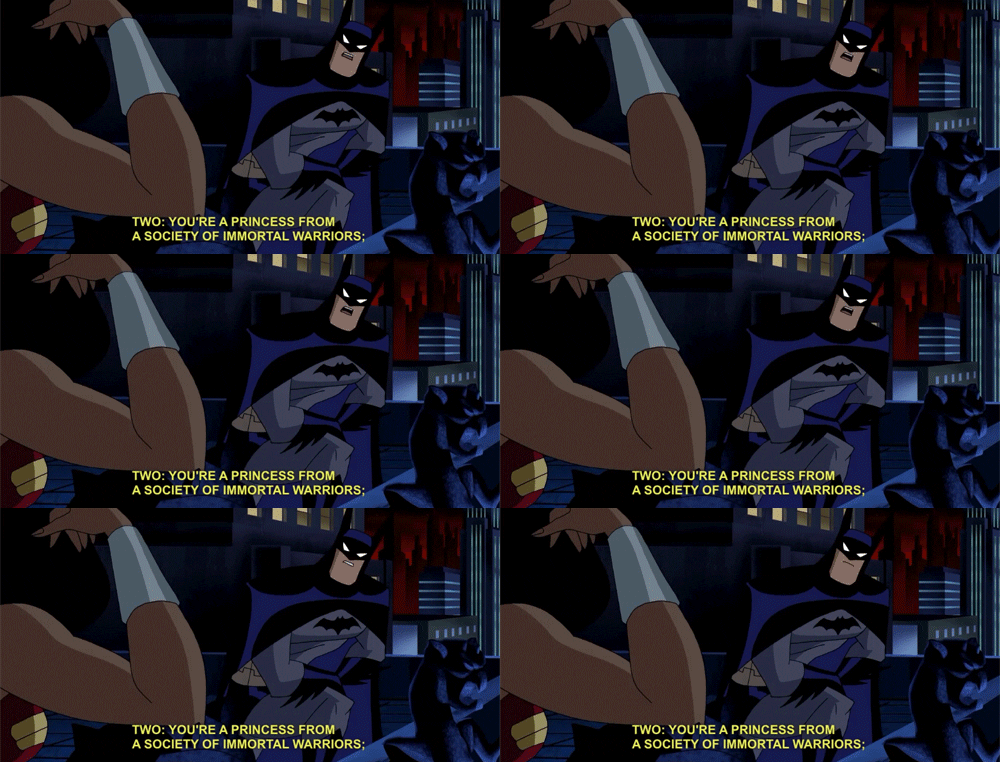
… I’m willing to accept the
consequences.🗡
Devious Greek Gods are taking possession of certain members of Batman’s Rogues Gallery, just to have them wreak havoc in Gotham City. Only Wonder Woman can save them, but will she?
 WELCOME TO HELL ON EARTH.

July 31, 2011
Another great story in the Wonder Woman book series. Well worth your time if you're a fan.

November 25, 2017
Reseña ampliada en el blog: https://girotix.blogspot.com.es/2017/...
Mi primer cómic de Wonder Woman. Sin conocer la historia ni la mitología de la amazona Diana, por lo que me pierdo detalles en cuanto a riqueza argumental, considero este tomo una lectura tan interesante como entretenida.
Se puede dividir en tres historias: La primera, una (especie de) guerra civil entre las dos tribus de amazonas en su hogar de Isla Paraíso. La segunda parte trata sobre la vida en la "sociedad del patriarcado" de Diana, vista a través de la mirada de periodista de Lois Lane (y dos historias paralelas que no cuento). Y la tercera es un crossover en que la Tierra es amenazada por Imperiex (un destructor de mundos al uso) . Esta última parte participa la Liga de la Justicia y es la más espectacular y disfrutable (a pesar de que me pierdo muchas referencias del crossover).
Me resulta curioso como el cómic resalta algunos problemas de mujeres y consigue dar un punto de vista femenino a lo superheroico. Suena un poco ridículo si pensamos que estamos ante diosas (también lo suenan las típicas bravatas de "machos" en los cómics de supertíos, no nos engañemos) y además ya sabéis los líos que se montaban los antiguos dioses griegos, y también señalar que el guionista justifica muy bien la dualidad diosa/humana de Diana.
Sería curioso de ver este personaje escrito por una mujer, aunque quizás no variaría tanto puesto que el personaje ya está bastante definido y en mi opinión el guion plasma muy bien el punto de vista femenino (pero no soy yo quien ha de decirlo, claro). Así pues, excelente el trabajo de Phil Jiménez en el guión y sobretodo en el
fantástico dibujo, que hace que el cómic merezca las cuatro estrellas.
Mi primer cómic de Wonder Woman. Sin conocer la historia ni la mitología de la amazona Diana, por lo que me pierdo detalles en cuanto a riqueza argumental, considero este tomo una lectura tan interesante como entretenida.
Se puede dividir en tres historias: La primera, una (especie de) guerra civil entre las dos tribus de amazonas en su hogar de Isla Paraíso. La segunda parte trata sobre la vida en la "sociedad del patriarcado" de Diana, vista a través de la mirada de periodista de Lois Lane (y dos historias paralelas que no cuento). Y la tercera es un crossover en que la Tierra es amenazada por Imperiex (un destructor de mundos al uso) . Esta última parte participa la Liga de la Justicia y es la más espectacular y disfrutable (a pesar de que me pierdo muchas referencias del crossover).
Me resulta curioso como el cómic resalta algunos problemas de mujeres y consigue dar un punto de vista femenino a lo superheroico. Suena un poco ridículo si pensamos que estamos ante diosas (también lo suenan las típicas bravatas de "machos" en los cómics de supertíos, no nos engañemos) y además ya sabéis los líos que se montaban los antiguos dioses griegos, y también señalar que el guionista justifica muy bien la dualidad diosa/humana de Diana.
Sería curioso de ver este personaje escrito por una mujer, aunque quizás no variaría tanto puesto que el personaje ya está bastante definido y en mi opinión el guion plasma muy bien el punto de vista femenino (pero no soy yo quien ha de decirlo, claro). Así pues, excelente el trabajo de Phil Jiménez en el guión y sobretodo en el
fantástico dibujo, que hace que el cómic merezca las cuatro estrellas.

June 12, 2017
I only read the "Paradise Island Lost" two-parter and it doesn't make me feel like tracking down the other issues in this tbh.
May 18, 2015
I grew up watching the Wonder Woman TV show, but I never read any of the comics. I really liked this one, especially the predominantly female cast. Will be reading more

September 1, 2017
4.5
I really liked this one, made me want to read a lot more about Wonder Woman.☺
I really liked this one, made me want to read a lot more about Wonder Woman.☺

August 9, 2018
Mam mieszane uczucia. Pierwsza historia, w której dzieci Aresa przejmują ciała gothamskich złoczyńców, choć pomysłowa, niekoniecznie mnie porwała. Może głównie przez to, że za mało w tym wszystkim tytułowej bohaterki, czyli Wonder Woman. O wiele lepsza wydała mi się natomiast druga opowieść w zbiorze, w której Amazonki toczą wojnę domową, a ktoś pociąga z góry za sznurki. Tutaj intryga była o wiele ciekawsza, a całość historii skupiała się na tym zakątku świata DC, który związany jest stricte z Wonder Woman. Elementy mitologii greckiej zostały wplecione tu bardzo umiejętnie, a do tego wspaniale poprowadzono wątek Hipolity, która musi dokonać wyboru rodem z greckiej tragedii. I wreszcie trzecia opowieść, czyli przedruk genezy Donny Troy. Choć znalazły się w nim pewne naiwne elementy, to bardzo podobało mi się skupienie twórców na psychice głównej bohaterki i powolne odsłanianie kolejnych kart. Aż żal, że później postać Donny przerabiano na tyle różnych sposobów, że trudno się w kolejnych opowieściach odnaleźć.
Do jednego się nie przyczepię, a są to rysunki George’a Péreza. Piękne sylwetki, kilka naprawdę dobrych pomysłów (gothamscy złoczyńcy opętani przez bogów wyglądają obłędnie) i doskonałe dopasowanie stylu do opowiadanej historii (której Pérez jest współautorem) gwarantują miłe doznania estetyczne.
Do jednego się nie przyczepię, a są to rysunki George’a Péreza. Piękne sylwetki, kilka naprawdę dobrych pomysłów (gothamscy złoczyńcy opętani przez bogów wyglądają obłędnie) i doskonałe dopasowanie stylu do opowiadanej historii (której Pérez jest współautorem) gwarantują miłe doznania estetyczne.
January 28, 2018
Phil Jimenez’ run (at least that which is collected in TPB) has great ideas, but the execution is often off, largely because the second story feels rushed. This volume is really unbalanced. Four issues are spent on the fun Gods of Gotham that, itself, doesn’t have significant ramifications for Diana, and two very rushed issues on an incredibly important development for Diana. I don’t know why Jimenez allocated his stories in this way, but it does a real disservice to the very interesting story he’s telling.
In Gods of Gotham, Ares’ children possess Gotham villains: Joker (Deimos, God of Terror), Poison Ivy (Eris, Goddess of Discord), and Scarecrow (Phobos, God of Fear). The plan is to use the credulity and despair of Max Zeus’ followers to return Ares to the world. Wonder Woman and Batman pair up in facing the main set of villains, while Artemis and Huntress team up and confront the mortal fanatics. Eventually, WW and BM are joined by Donna Troy (Troia) and Nightwing, and Robin (Tim Drake) and Wonder Girl (Cassie) pair up with Artemis and Huntress. Everyone then teams up for the final conflict. The team-ups are interesting; Artemis and Huntress have an interesting discussion about faith (although it’s pretty forced—who holds deep philosophical conversations while fighting crazed zealots?), and Jimenez does a great job showing off the friendship of Troia-Nightwing and Robin-Wonder Girl, as well as the relationships between Nightwing and Robin and Troia and Wonder Girl.
The arc doesn’t need 4 issues, however; there’s a fair amount of filler in the back-and-forth between the villains and the heroes’ setbacks before they once again appear on the road to victory.
I don’t think the filler would be so noticeable if the second arc, Paradise Lost, wasn’t comprised of only 2 issues: Loving Submission and Winds of War. There’s a prologue, “Who is Troia?”, but it is only 6-pages, and it’s really a way for Jimenez to summarize Troia’s complicated history for WW readers who don’t read Teen Titans.
Paradise Lost details the civil war between the Amazons of Themiscyra and those of Bana-Mighdall, the “lost tribe” that Messner-Loebs’ run transported to Themiscyra, resulting in an aborted civil war resolved when Circe transported everyone to a dimension overrun by demons. This arc is full of really great ideas—the tension between Hippolyta and Diana over Hippolyta’s continuing activity as Wonder Woman, even though Diana serves in that role; the tension between Hippolyta (and, to a certain extent, Diana) and the Bana-Mighdall, who feel disenfranchised and marginalized; the tension between Hippolyta and the Themiscyran Amazons, some of whom feel abandoned by their queen; and the tension between the Themiscyran and Bana-Mighdall tribes, who have differing ethos and visions for themselves and Paradise Island. Two issues isn’t nearly enough to flesh out even half of these, let alone all of them. So the story is rushed, and there are gaps in execution.
There wasn’t enough set-up of the various themes. There is a bit of the Diana-Hippolyta/Hippolyta-Artemis tensions at the beginning of Gods of Gotham. The divisions between the two tribes deserved much more development, particularly in terms of the different ways the tribes wanted to interact with the outside world. And we should also have seen more of the troubles between Hippolyta and the Themiscyrans. There are also relationships (Ipthemia-Anaya) that are not fleshed out but are important.
The lack of set-up means that the civil war feels incredibly rushed. There are also some notable gaps. One is a bit small—Donna creates a bond with some of the Bana-Mighdall by teaching them photography, which apparently they’ve never heard of. How did a tribe who designed and sold advanced weaponry not know that there are things called cameras? A more significant one is how Diana and Donna are taken out before the war starts. This is done entirely off-panel. I actually wondered if I was missing pages, as there is no explanation of how they are both defeated . Fury’s presence in the story also problematic—she plays a significant role, but she comes out of the blue, without any set-up. In light of the motivation that drives her , and Donna’s elevation as a princess of the Amazons at the start of this story, it is bizarre that Fury doesn’t show up until late in the story.
The final story is a day-in-Diana’s-life, as told through the eyes of Lois Lane, who is writing a story about her. The story allows Jimenez to show Diana in her various roles (U.N. Ambassador, social activist, philanthropist, Justice League-er), and to explore the latent tension between Lois and Diana, and their individual relationships with Clark/Kal/Superman. It’s a good story, but I wish more time had been spent on the personal dynamics between Lois and Diana. There are some nice moments between the two, as Diana gets at least a glimmer of why her relationship with Kal is so difficult for Lois to accept. But the structure of the issue (Lois writing a story) doesn’t let this develop as much as I’d like, and the resolution is too quick.
The art is very good. As many others have noted, it’s George Perez-like in terms of detail and proportion. The characters are not over-sexualized (well, no more than women typically are in comics—but certainly not as they were in the Byrne or Deodato eras). It’s a treat to look at.
In Gods of Gotham, Ares’ children possess Gotham villains: Joker (Deimos, God of Terror), Poison Ivy (Eris, Goddess of Discord), and Scarecrow (Phobos, God of Fear). The plan is to use the credulity and despair of Max Zeus’ followers to return Ares to the world. Wonder Woman and Batman pair up in facing the main set of villains, while Artemis and Huntress team up and confront the mortal fanatics. Eventually, WW and BM are joined by Donna Troy (Troia) and Nightwing, and Robin (Tim Drake) and Wonder Girl (Cassie) pair up with Artemis and Huntress. Everyone then teams up for the final conflict. The team-ups are interesting; Artemis and Huntress have an interesting discussion about faith (although it’s pretty forced—who holds deep philosophical conversations while fighting crazed zealots?), and Jimenez does a great job showing off the friendship of Troia-Nightwing and Robin-Wonder Girl, as well as the relationships between Nightwing and Robin and Troia and Wonder Girl.
The arc doesn’t need 4 issues, however; there’s a fair amount of filler in the back-and-forth between the villains and the heroes’ setbacks before they once again appear on the road to victory.
I don’t think the filler would be so noticeable if the second arc, Paradise Lost, wasn’t comprised of only 2 issues: Loving Submission and Winds of War. There’s a prologue, “Who is Troia?”, but it is only 6-pages, and it’s really a way for Jimenez to summarize Troia’s complicated history for WW readers who don’t read Teen Titans.
Paradise Lost details the civil war between the Amazons of Themiscyra and those of Bana-Mighdall, the “lost tribe” that Messner-Loebs’ run transported to Themiscyra, resulting in an aborted civil war resolved when Circe transported everyone to a dimension overrun by demons. This arc is full of really great ideas—the tension between Hippolyta and Diana over Hippolyta’s continuing activity as Wonder Woman, even though Diana serves in that role; the tension between Hippolyta (and, to a certain extent, Diana) and the Bana-Mighdall, who feel disenfranchised and marginalized; the tension between Hippolyta and the Themiscyran Amazons, some of whom feel abandoned by their queen; and the tension between the Themiscyran and Bana-Mighdall tribes, who have differing ethos and visions for themselves and Paradise Island. Two issues isn’t nearly enough to flesh out even half of these, let alone all of them. So the story is rushed, and there are gaps in execution.
There wasn’t enough set-up of the various themes. There is a bit of the Diana-Hippolyta/Hippolyta-Artemis tensions at the beginning of Gods of Gotham. The divisions between the two tribes deserved much more development, particularly in terms of the different ways the tribes wanted to interact with the outside world. And we should also have seen more of the troubles between Hippolyta and the Themiscyrans. There are also relationships (Ipthemia-Anaya) that are not fleshed out but are important.
The lack of set-up means that the civil war feels incredibly rushed. There are also some notable gaps. One is a bit small—Donna creates a bond with some of the Bana-Mighdall by teaching them photography, which apparently they’ve never heard of. How did a tribe who designed and sold advanced weaponry not know that there are things called cameras? A more significant one is how Diana and Donna are taken out before the war starts. This is done entirely off-panel. I actually wondered if I was missing pages, as there is no explanation of how they are both defeated . Fury’s presence in the story also problematic—she plays a significant role, but she comes out of the blue, without any set-up. In light of the motivation that drives her , and Donna’s elevation as a princess of the Amazons at the start of this story, it is bizarre that Fury doesn’t show up until late in the story.
The final story is a day-in-Diana’s-life, as told through the eyes of Lois Lane, who is writing a story about her. The story allows Jimenez to show Diana in her various roles (U.N. Ambassador, social activist, philanthropist, Justice League-er), and to explore the latent tension between Lois and Diana, and their individual relationships with Clark/Kal/Superman. It’s a good story, but I wish more time had been spent on the personal dynamics between Lois and Diana. There are some nice moments between the two, as Diana gets at least a glimmer of why her relationship with Kal is so difficult for Lois to accept. But the structure of the issue (Lois writing a story) doesn’t let this develop as much as I’d like, and the resolution is too quick.
The art is very good. As many others have noted, it’s George Perez-like in terms of detail and proportion. The characters are not over-sexualized (well, no more than women typically are in comics—but certainly not as they were in the Byrne or Deodato eras). It’s a treat to look at.

August 5, 2023
По-голяма тъпотия не бях чел от много отдавна. Мислех че първата история ще е дъно, пък втората ще навакса, а то се оказа, че е дъно под дъното просто.
Последните неща на DC, които четох, всичките бяха страхотни, та това ми дойде като гръм от ясно небе. Историята беше една никаква - безкраен диалог без капка адекватност, действието протяжно, клиширано... ужас. Едвам го изтраях последния брой, на инат го четох. Греда отвсякъде.
Последните неща на DC, които четох, всичките бяха страхотни, та това ми дойде като гръм от ясно небе. Историята беше една никаква - безкраен диалог без капка адекватност, действието протяжно, клиширано... ужас. Едвам го изтраях последния брой, на инат го четох. Греда отвсякъде.

September 17, 2017
Pierwsza część z walką w Gotham była fajna, ale potem wojna domowa amazonek rozczarowuje. Ot, stereotypowe kobity, które sprzeczają się bo każda wie lepiej. =_=

March 28, 2023
"I am Diana – Princess of the Amazons. I won’t be denied!"

November 25, 2021
Uy realmente me gustó tan poco. No conecté.. Demasiado quilombo y poca sustancia

July 3, 2015
If I could use one word to describe Phil Jimenez's work, it would be: Detailed. One look at the art can tell you this- and for the art, this is a huge plus. His work is some of the most beautiful I've seen in all of comics, and his Diana in particular appears godly. Every panel is jam-packed, but the reader never gets lost or overwhelmed as the words and art work together to guide the eye.
What's peculiar is how Jimenez's attention to detail carries over to the story. For one, due to the density of words and panels per page, each issue takes me up to triple the amount of time to read than the average comic issue from the same period. The pacing is such that many plot threads are constantly moving at once, and while you never lose track or get confused, you do watch every little detail as it plays out. Strangely, though, the story doesn't feel slow. While the thoroughness does make the reading experience somewhat leisurely, the story still feels like it moves closer to the "lightning-speed" the events would suggest.
"Gods of Gotham," the first story here, pulled in every supporting hero from past Wonder Woman stories and gave each one a unique voice as they teamed up with Gotham heroes. The team-ups all paired the heroes based on their respective roles in relation to the others in their community: main heroes Wonder Woman and Batman, original sidekicks Troia and Nightwing, next-gen sidekicks Wonder Girl and Robin, and "the outliers" Artemis and Huntress. The Artemis/Huntress one was my favorite, as it allowed for some particularly interesting discussion about religion. Where previous writer John Byrne re-established the Wonder Woman supporting cast of heroes, and Eric Luke after him gave each character a defined role, Jimenez solidifies their roles and plays up their distinct character traits. Teaming the Wonders up with their Gotham analogues went a long way in displaying this. Also of note here is that the villains from Greek mythology brought Wonder Woman back to her roots. This was a nice touch, though I'm glad not every one of her stories relies on Greek myths.
"Paradise Island Lost," the next story, brought us back to Paradise Island. This one was less effective for me, as it relied a great deal on characters that hadn't been the focus in over a decade's worth of issues, but again, it was solid and I was still able to follow along. The story focuses on the politics of Paradise Island and its different tribes, and while it's not the fun all-out battle of Gods of Gotham, it's still some quality reading.
The main problem with these issues (Gods of Gotham and Paradise Island Lost) is that certain characters, objects, and ideas haven't been seen since George Perez's issues, which were published over a decade before- another example of Jimenez's attention to detail. Enough is explained or can be inferred, and I'm familiar enough with the material that I was able to follow along, but it especially got difficult to keep track of certain things in the later issues (namely the Amazons and each one's specific role).
The final story is the highlight of the book for me, centering around a "Day in the Life" article that Lois Lane is writing. This single issue, more than potentially any other, shows that Jimenez understands the Wonder Woman character on a fundamental level. He knows exactly how to demonstrate all her qualities, good and bad, yet still manages to show us that she's the best. This is the greatest distillation of Diana's philosophy that I've read so far. I could see some people taking offense to Lois' jealousy in this story, but I thought it did a great job of adding some of her Silver Age characterization to the modern, complex portrayal.
All said, these dense stories are a high point in Wonder Woman's post-Crisis history. They're not the best the book has been or will be, but they're generally in the "great" range. Highly recommended if you're looking for something different from standard superhero books, or want a sample of what Wonder Woman and her supporting cast have to offer.
What's peculiar is how Jimenez's attention to detail carries over to the story. For one, due to the density of words and panels per page, each issue takes me up to triple the amount of time to read than the average comic issue from the same period. The pacing is such that many plot threads are constantly moving at once, and while you never lose track or get confused, you do watch every little detail as it plays out. Strangely, though, the story doesn't feel slow. While the thoroughness does make the reading experience somewhat leisurely, the story still feels like it moves closer to the "lightning-speed" the events would suggest.
"Gods of Gotham," the first story here, pulled in every supporting hero from past Wonder Woman stories and gave each one a unique voice as they teamed up with Gotham heroes. The team-ups all paired the heroes based on their respective roles in relation to the others in their community: main heroes Wonder Woman and Batman, original sidekicks Troia and Nightwing, next-gen sidekicks Wonder Girl and Robin, and "the outliers" Artemis and Huntress. The Artemis/Huntress one was my favorite, as it allowed for some particularly interesting discussion about religion. Where previous writer John Byrne re-established the Wonder Woman supporting cast of heroes, and Eric Luke after him gave each character a defined role, Jimenez solidifies their roles and plays up their distinct character traits. Teaming the Wonders up with their Gotham analogues went a long way in displaying this. Also of note here is that the villains from Greek mythology brought Wonder Woman back to her roots. This was a nice touch, though I'm glad not every one of her stories relies on Greek myths.
"Paradise Island Lost," the next story, brought us back to Paradise Island. This one was less effective for me, as it relied a great deal on characters that hadn't been the focus in over a decade's worth of issues, but again, it was solid and I was still able to follow along. The story focuses on the politics of Paradise Island and its different tribes, and while it's not the fun all-out battle of Gods of Gotham, it's still some quality reading.
The main problem with these issues (Gods of Gotham and Paradise Island Lost) is that certain characters, objects, and ideas haven't been seen since George Perez's issues, which were published over a decade before- another example of Jimenez's attention to detail. Enough is explained or can be inferred, and I'm familiar enough with the material that I was able to follow along, but it especially got difficult to keep track of certain things in the later issues (namely the Amazons and each one's specific role).
The final story is the highlight of the book for me, centering around a "Day in the Life" article that Lois Lane is writing. This single issue, more than potentially any other, shows that Jimenez understands the Wonder Woman character on a fundamental level. He knows exactly how to demonstrate all her qualities, good and bad, yet still manages to show us that she's the best. This is the greatest distillation of Diana's philosophy that I've read so far. I could see some people taking offense to Lois' jealousy in this story, but I thought it did a great job of adding some of her Silver Age characterization to the modern, complex portrayal.
All said, these dense stories are a high point in Wonder Woman's post-Crisis history. They're not the best the book has been or will be, but they're generally in the "great" range. Highly recommended if you're looking for something different from standard superhero books, or want a sample of what Wonder Woman and her supporting cast have to offer.

February 15, 2017
Me ha encantado tanto el guión como el dibujo (y soy muy quisquillosa con ambas cosas). Me ha gustado cómo se explica el origen de Diana, y lo que ocurre en la tierra de las amazonas. Es el primer cómic que leo de Wonder Woman, y no me ha decepcionado en absoluto. Lo recomiendo.
No obstante, me hizo gracia la historieta antigua que viene al final del tomo, porque el argumento era súper simple y del dibujo ni hablemos, pero eran otros tiempos, así que no es para tanto.
No obstante, me hizo gracia la historieta antigua que viene al final del tomo, porque el argumento era súper simple y del dibujo ni hablemos, pero eran otros tiempos, así que no es para tanto.

August 29, 2026
So, I love this book!!
The story starts with Gods of Gotham. Which I rolled my eyes at, thinking ‘this is a Wonder Woman book! Why are we in Gotham?!’ But I was wrong. This was a great way to start!
Ares’ kids are some of my favourite characters, just pure chaotic evil cartoon villains! And pairing up Diana and Bruce’s supporting casts was such a good move. Focussing on the contrasts of their experience with faith: Batman being an atheist who looks up to Diana and Clark, and Diana who worships Athena etc. Huntress, a Catholic, discussing religion with Artemis, an Amazon. It’s just great, with Ares continuing to respect his agreement with Diana (which goes on for decades. He was such a villain that he’s remembered as a great villain, even though he helps Diana out a lot, especially here!)
Then we move to Paradise Lost. I’ve now read this twice. I always forget this is a pseudo Donna Troy origin story. Beginning with her coronation. In a Captain America Civil War movie way, an adaption of this story would have the ‘bombings’ happening during that instead of at the memorial. Anyway, this a story about the Amazons and their sister tribe Bana-Mighdall thinking they’re attacking each other, and then going to war. But they’ve been tricked by their royal court witch: Magala, who has also been tricked by the demon Tisiphone. Now, I know little about Tisiphone/Fury as a character so it was a lil lacklustre seeing the villain taken out so quickly at the end. But it was visually very cool! So, I forgive that. Again, if adopted, why not make the royal court villain Circe in disguise. I don’t recognise Magala from previous stories so it’s not really a twist.
There’s also a lot of Amazon characters in this, who the story quickly just expects me to know. I could keep up, especially on my second read, but sometimes I wondered if we could trim back the character count.
Now, all my complaints over! I love that the civil war is really just an excuse to let Diana, Donna and Hippolyta have a family row. Hippolyta loves being Wonder Woman too much to commit to being Queen and the other two suggest she abdicates the throne, but also don’t want to be Queen either. They all love being superheroes in man’s world too much to commit to the island and yet expect each other to pick up the slack. It feels very real to arguments in my own family. The girls all still love each other, too, which it’s important.
This, and the Gotham story, feels like a very natural sequel to Perez’s work. Reinforcing Ares’ agreement and Diana’s mission. Reintroducing Donna Troy. Exploring what the island is like post-Wonder Woman. The civil war, simply, is about inter-grating with Man’s world.
This volume alone ends very abruptly. But gives us maybe my favourite Diana story ever. And again, I started the issue thinking ‘Ugh! Lois Lane?! A Superman charter? Where’s Etta?’ But I was wrong! It’s just such a great standalone story. But it does feel so very out of place with what just came before it.
Luckily, Paradise Found comes soon and provides a brilliant conclusion to the civil war. I just wish it had came sooner. They’re not two stories, they’re one.
Anyway, this is a jam packed comic. Some may say it’s ’over written’, but I’d say ‘we’re getting so much story for the same price as normal!’ I love Jimenez’s world of Wonder Woman, and no matter my complaints, he writes this world with so much love, care and depth that every story feels like it’s own epic saga!
Thank you Jimenez!
The story starts with Gods of Gotham. Which I rolled my eyes at, thinking ‘this is a Wonder Woman book! Why are we in Gotham?!’ But I was wrong. This was a great way to start!
Ares’ kids are some of my favourite characters, just pure chaotic evil cartoon villains! And pairing up Diana and Bruce’s supporting casts was such a good move. Focussing on the contrasts of their experience with faith: Batman being an atheist who looks up to Diana and Clark, and Diana who worships Athena etc. Huntress, a Catholic, discussing religion with Artemis, an Amazon. It’s just great, with Ares continuing to respect his agreement with Diana (which goes on for decades. He was such a villain that he’s remembered as a great villain, even though he helps Diana out a lot, especially here!)
Then we move to Paradise Lost. I’ve now read this twice. I always forget this is a pseudo Donna Troy origin story. Beginning with her coronation. In a Captain America Civil War movie way, an adaption of this story would have the ‘bombings’ happening during that instead of at the memorial. Anyway, this a story about the Amazons and their sister tribe Bana-Mighdall thinking they’re attacking each other, and then going to war. But they’ve been tricked by their royal court witch: Magala, who has also been tricked by the demon Tisiphone. Now, I know little about Tisiphone/Fury as a character so it was a lil lacklustre seeing the villain taken out so quickly at the end. But it was visually very cool! So, I forgive that. Again, if adopted, why not make the royal court villain Circe in disguise. I don’t recognise Magala from previous stories so it’s not really a twist.
There’s also a lot of Amazon characters in this, who the story quickly just expects me to know. I could keep up, especially on my second read, but sometimes I wondered if we could trim back the character count.
Now, all my complaints over! I love that the civil war is really just an excuse to let Diana, Donna and Hippolyta have a family row. Hippolyta loves being Wonder Woman too much to commit to being Queen and the other two suggest she abdicates the throne, but also don’t want to be Queen either. They all love being superheroes in man’s world too much to commit to the island and yet expect each other to pick up the slack. It feels very real to arguments in my own family. The girls all still love each other, too, which it’s important.
This, and the Gotham story, feels like a very natural sequel to Perez’s work. Reinforcing Ares’ agreement and Diana’s mission. Reintroducing Donna Troy. Exploring what the island is like post-Wonder Woman. The civil war, simply, is about inter-grating with Man’s world.
This volume alone ends very abruptly. But gives us maybe my favourite Diana story ever. And again, I started the issue thinking ‘Ugh! Lois Lane?! A Superman charter? Where’s Etta?’ But I was wrong! It’s just such a great standalone story. But it does feel so very out of place with what just came before it.
Luckily, Paradise Found comes soon and provides a brilliant conclusion to the civil war. I just wish it had came sooner. They’re not two stories, they’re one.
Anyway, this is a jam packed comic. Some may say it’s ’over written’, but I’d say ‘we’re getting so much story for the same price as normal!’ I love Jimenez’s world of Wonder Woman, and no matter my complaints, he writes this world with so much love, care and depth that every story feels like it’s own epic saga!
Thank you Jimenez!
November 30, 2025
vamos em partes
por enquanto só li os "Deuses em Gotham" decidi escrever logo, porque não estou muito acostumado com histórias da mulher maravilha e posso acabar esquecendo antes de avaliar tudo, mas vou editando e colocando minha opinião sobre cada parte
3,5 ou menos
Deuses em Gotham, não me leve a mal, eu gosto da mulher maravilha pelo o que ela representa, mas realmente nunca li um material solo dela realmente bom, e esse também não é dos melhores, é um crossover legal do Batman e da mulher maravilha, da pra a gente aproveitar como a personagem é boa, mas tem muitos problemas na história em si, e não na personagem,
apesar da arte ser interessante, o cenário interno da "igreja" acaba deixando tudo meio confuso e meio ruim de ler, a história é mediana, talvez pra quem goste de mitologia grega e seus conjuntos va aproveitar mais do que eu, infelizmente esse tema não é muito de meu interesse, então boa parte da hq foi confusa e difícil de entender, mas a base da história é que, os filhos de ares invadiram os corpos dos vilões de Gotham e agora querem transformar Gotham no "castelo"( não lembro o nome correto) de ares, é uma proposta interessante, uma hq até legal, mas achei muito arrastada, confusa e não muito boa de ler, não é aquela hq que vc termina um capítulo com um gostinho de quero mais
enfim, vou ler o "ilha perdida" e retomo, espero que dessa vez com uma visão mais positiva
4
realmente ilha perdida é muito melhor que a última história, me agradou bastante, tamanho ideal, não é cansativo; não é confusa(apesar de alguns momentos eu me perder por nao conhecer muito sobre a história de themyscira e suas vertentes, mas não acho que devo levar isso em consideração pq é mais um erro da minha parte); arte bem melhor, menos poluída e tem uma proposta muito interessante, uma guerra civil alimentada por um infiltrado é realmente algo foda, história mto boa apesar de ter um final meio broxante com a derrota extremamente fácil da Magala, mas também gostei da hipólita abrindo mão do trono,
realmente é uma história boa mas tenho a sensação de falta algo
New titans 38
nota 5
que leitura boa, a melhor de encadernado e realmente uma das HQs mais interessantes que eu já li, muito cativante, o mistério, o lado detetive do Robin, tudo é extremamente bom, não tenho nem muito o que falar sobre
por enquanto só li os "Deuses em Gotham" decidi escrever logo, porque não estou muito acostumado com histórias da mulher maravilha e posso acabar esquecendo antes de avaliar tudo, mas vou editando e colocando minha opinião sobre cada parte
3,5 ou menos
Deuses em Gotham, não me leve a mal, eu gosto da mulher maravilha pelo o que ela representa, mas realmente nunca li um material solo dela realmente bom, e esse também não é dos melhores, é um crossover legal do Batman e da mulher maravilha, da pra a gente aproveitar como a personagem é boa, mas tem muitos problemas na história em si, e não na personagem,
apesar da arte ser interessante, o cenário interno da "igreja" acaba deixando tudo meio confuso e meio ruim de ler, a história é mediana, talvez pra quem goste de mitologia grega e seus conjuntos va aproveitar mais do que eu, infelizmente esse tema não é muito de meu interesse, então boa parte da hq foi confusa e difícil de entender, mas a base da história é que, os filhos de ares invadiram os corpos dos vilões de Gotham e agora querem transformar Gotham no "castelo"( não lembro o nome correto) de ares, é uma proposta interessante, uma hq até legal, mas achei muito arrastada, confusa e não muito boa de ler, não é aquela hq que vc termina um capítulo com um gostinho de quero mais
enfim, vou ler o "ilha perdida" e retomo, espero que dessa vez com uma visão mais positiva
4
realmente ilha perdida é muito melhor que a última história, me agradou bastante, tamanho ideal, não é cansativo; não é confusa(apesar de alguns momentos eu me perder por nao conhecer muito sobre a história de themyscira e suas vertentes, mas não acho que devo levar isso em consideração pq é mais um erro da minha parte); arte bem melhor, menos poluída e tem uma proposta muito interessante, uma guerra civil alimentada por um infiltrado é realmente algo foda, história mto boa apesar de ter um final meio broxante com a derrota extremamente fácil da Magala, mas também gostei da hipólita abrindo mão do trono,
realmente é uma história boa mas tenho a sensação de falta algo
New titans 38
nota 5
que leitura boa, a melhor de encadernado e realmente uma das HQs mais interessantes que eu já li, muito cativante, o mistério, o lado detetive do Robin, tudo é extremamente bom, não tenho nem muito o que falar sobre
This entire review has been hidden because of spoilers.
December 15, 2020
Nada más empezar, aclaro que mi relación con los cómics es algo ocasional, y por eso picoteo entre series más allá de tener una linealidad. Y creo que está vez me ha pasado factura este desconocimiento.
Wonder Woman es un icono y aquí es lo que rezuma. No solo una guerrera poderosa, ya que incluso se le ha quitado su parte divina, sino que su verdadera fuerza es su espíritu. Alguien que lucha pero también encarna la verdad y la justicia. Y eso le vendrá bien cuando tanto sus enemigos, en esta ocasión los hijos de Ares, poseen los cuerpos de los villanos de Gotham City: Hiedra, Espantapajaros y, por supuesto, Joker. Esto provocará una aventura alucinógena donde no solo Wonder Woman luchará junto a Batman, sino otros personajes como Robin, Nightwing, Donna Troy, Wonder Girl, Cazadora o Artemis. Y después de esta aventura volverá a su hogar para encontrar como su madre Hipólita ha asumido su puesto como Wonder Woman pero a costa de descuidar los asuntos internos de la isla.
Creo que hay algo de torpeza en la narración de la primera mitad, especialmente en la presentación donde muchos elementos salen a flote. Quizá sea culpa mía por no seguir la serie previamente. Aún así me ha gustado bastante y tiene grandes momentos que no voy a destripar. Y tiene una de las viñetas que muestran la grandeza de Wonder Woman. Es un relato sobre la fé, en que cree cada personaje. Hay hasta una discusión teológica entre una católica y una creación de los dioses griegos. Además Batman y Wonder Woman son comparados con sus diferencias y con las razones por las que lucharan ambos juntos por la justicia.
Con la segunda mitad creo que mi falta de seguimiento me ha hecho perderme. Aún así creo que la narración aquí sí que tiene verdaderos problemas, y el conflicto y su solución demasiado forzado. Aún así, vemos a una Wonder Woman - bueno en realidad a dos - que ponen sus valores por delante de todo.
Wonder Woman es un icono y aquí es lo que rezuma. No solo una guerrera poderosa, ya que incluso se le ha quitado su parte divina, sino que su verdadera fuerza es su espíritu. Alguien que lucha pero también encarna la verdad y la justicia. Y eso le vendrá bien cuando tanto sus enemigos, en esta ocasión los hijos de Ares, poseen los cuerpos de los villanos de Gotham City: Hiedra, Espantapajaros y, por supuesto, Joker. Esto provocará una aventura alucinógena donde no solo Wonder Woman luchará junto a Batman, sino otros personajes como Robin, Nightwing, Donna Troy, Wonder Girl, Cazadora o Artemis. Y después de esta aventura volverá a su hogar para encontrar como su madre Hipólita ha asumido su puesto como Wonder Woman pero a costa de descuidar los asuntos internos de la isla.
Creo que hay algo de torpeza en la narración de la primera mitad, especialmente en la presentación donde muchos elementos salen a flote. Quizá sea culpa mía por no seguir la serie previamente. Aún así me ha gustado bastante y tiene grandes momentos que no voy a destripar. Y tiene una de las viñetas que muestran la grandeza de Wonder Woman. Es un relato sobre la fé, en que cree cada personaje. Hay hasta una discusión teológica entre una católica y una creación de los dioses griegos. Además Batman y Wonder Woman son comparados con sus diferencias y con las razones por las que lucharan ambos juntos por la justicia.
Con la segunda mitad creo que mi falta de seguimiento me ha hecho perderme. Aún así creo que la narración aquí sí que tiene verdaderos problemas, y el conflicto y su solución demasiado forzado. Aún así, vemos a una Wonder Woman - bueno en realidad a dos - que ponen sus valores por delante de todo.

July 6, 2019
Non sono propriamente un fan di Wonder Woman, anche perché in Italia non è quasi mai stata pubblicata con regolarità. Ma ho letto tutto il ciclo di Perez successivo a Crisis, che considero un capolavoro. Qui i disegni sono di Phil Jimenez, che mi aveva già impressionato in passato per la sua bravura: la conferma in pieno.
Le storie qui raccolte sono fondamentalmente tre. Prima c'è il ritorno dei figli di Ares che tentato la conquista di Gotham e ovviamente si scontrano con Batman; è una storia ben costruita che mette in scena una buona dozzina di personaggi e nel complesso riesce a far fare a tutti qualcosa. Ho trovato particolarmente divertenti le discussioni di teologia tra le eroine Artemide e Cacciatrice.
Poi segue la guerra civile tra le amazzoni, orchestrata da Arianna, sì, quell'Arianna, quella sfruttata e abbandonata da Teseo. Meno riuscita a mio parere, ma comunque una buona storia.
Poi c'è l'intervista che una gelosa Lois Lane fa a Wonder Woman, accompagnandola per quasi 24 ore di una giornata tipo dell'amazzone. Poca azione, ma nel complesso questa storia è la migliore del ciclo.
Tre stelle e mezza più una mezza per i disegni sempre ottimi.
Le storie qui raccolte sono fondamentalmente tre. Prima c'è il ritorno dei figli di Ares che tentato la conquista di Gotham e ovviamente si scontrano con Batman; è una storia ben costruita che mette in scena una buona dozzina di personaggi e nel complesso riesce a far fare a tutti qualcosa. Ho trovato particolarmente divertenti le discussioni di teologia tra le eroine Artemide e Cacciatrice.
Poi segue la guerra civile tra le amazzoni, orchestrata da Arianna, sì, quell'Arianna, quella sfruttata e abbandonata da Teseo. Meno riuscita a mio parere, ma comunque una buona storia.
Poi c'è l'intervista che una gelosa Lois Lane fa a Wonder Woman, accompagnandola per quasi 24 ore di una giornata tipo dell'amazzone. Poca azione, ma nel complesso questa storia è la migliore del ciclo.
Tre stelle e mezza più una mezza per i disegni sempre ottimi.
October 27, 2019
This is a strong book with 3 self contained stories. I like it because to shows different facets of Wonder Woman, super hero, daughter and Princess of Paradise Island and a woman on a mission to do her job, which is to bring peace to the world. My favourite one is the last section where Lois Lane shadows Wonder Woman on a typical day at her job of spreading knowledge with the over objectives of achieving world peace and showing people how they can undertake activities to sustain their life. I love the fact that Lois Lane is trying to be a professional reporter and get the story while struggling with a strong case of jealousy because she is suspicious of the relationship between Diana and Superman, her husband. The second story is set on Paradise Island and shows the tensions that exist in "Paradise" and how the Amazons struggle with living in a peaceful way when their civilisation and identities were created from a warrior culture. I thought the weakest section was the first one which is a basic straight super heroes fighting the evil story. Overall it's well drawn novel with good stories and I would recommend it.

July 7, 2018
No he leído casi nada de Wonder Woman así que siempre me alegro de agarrar un tomo que la tenga a ella como protagonista, y siempre escuché que Jimenez hizo un buen trabajo con ella, asi que doble la curiosidad.
Este tomo tiene tres historias: la primera es en Gotham, en donde tres hijos de Ares poseen al Espantapajaros, Hiedra Venenosa y el Joker con la intención de traer a Ares de vuelta. Esta historia ocupa la mayor parte del libro y creo que es la que más me aburrió, incluso teniendo un montón de superhéroes invitados como Batman, Nightwing, Robin, Donna Troy, y Wonder Girl, se sintió repetitiva y un poco aburrida.
La segunda historia es la que da el título al libro y se siente un poco apurada, con algunos problemas también, pero me pareció más interesante, con un final que trae un gran cambio al mito de Wonder Woman.
La tercera es simplemente una historia contando un poco el origen de Donna Troy y fue la que más me gusto, con su tono ochentoso y todo.
En fin, este es un volumen super desparejo pero tiene sus cosas buenas.
Este tomo tiene tres historias: la primera es en Gotham, en donde tres hijos de Ares poseen al Espantapajaros, Hiedra Venenosa y el Joker con la intención de traer a Ares de vuelta. Esta historia ocupa la mayor parte del libro y creo que es la que más me aburrió, incluso teniendo un montón de superhéroes invitados como Batman, Nightwing, Robin, Donna Troy, y Wonder Girl, se sintió repetitiva y un poco aburrida.
La segunda historia es la que da el título al libro y se siente un poco apurada, con algunos problemas también, pero me pareció más interesante, con un final que trae un gran cambio al mito de Wonder Woman.
La tercera es simplemente una historia contando un poco el origen de Donna Troy y fue la que más me gusto, con su tono ochentoso y todo.
En fin, este es un volumen super desparejo pero tiene sus cosas buenas.

September 21, 2017
Reseña de Dragoniet para el foro Psicomics:
http://psicomicsyanimacion.foroargent...
Wonder Woman: Paraíso Perdido (Salvat)
Espectacular. Es como un comic de los ´70s / 80´s pero hecho en el 2001. El promedio de viñeta por pagina es de 9 (llega a 13). Hasta tienen globos de pensamiento resumiendo lo que paso antes y nada de narración externa del personaje que saca de la historia.
Lastima que el paraíso perdido en si sean solo dos episodios, el grueso del tomo se lo lleva una historia de la Wondyfamilia y la Batifamilia peleando contra los hijos de Ares, que están poseyendo villanos de Batman e intentan convertir Gotham en un hoyo de guerra.
El dibujo de Phil Jimenez asentua esa sensación de vieja escuela.
Una lectura excelente.
http://psicomicsyanimacion.foroargent...
Wonder Woman: Paraíso Perdido (Salvat)
Espectacular. Es como un comic de los ´70s / 80´s pero hecho en el 2001. El promedio de viñeta por pagina es de 9 (llega a 13). Hasta tienen globos de pensamiento resumiendo lo que paso antes y nada de narración externa del personaje que saca de la historia.
Lastima que el paraíso perdido en si sean solo dos episodios, el grueso del tomo se lo lleva una historia de la Wondyfamilia y la Batifamilia peleando contra los hijos de Ares, que están poseyendo villanos de Batman e intentan convertir Gotham en un hoyo de guerra.
El dibujo de Phil Jimenez asentua esa sensación de vieja escuela.
Una lectura excelente.
September 18, 2026
Finalement c'est super bien !
La deuxième partie, une fois qu'on quitte Gotham pour rejoindre Themyscira, c'est de suite beaucoup plus intéressant.
La relation entre Diana, sa mère, et Donna, le rapport de Diana à Themyscira, le partage du costume et du statut de Wonder Woman, la remise en question de la légitimité de la famille royale, les rapports entre les Amazones et les Bana-Mighdalls... Tout ça c'est de la substance en plus dans le personnage de Wonder Woman, et ça sert à la caractériser correctement.
On conclut d'ailleurs ce TP sur un très bon exercice de réponse à la question "Qui est Wonder Woman ?" avec ce dernier chapitre où Lois Lane suit Diana pour une journée, les confrontant mutuellement... en les faisant dialoguer, avec un vrai dialogue... (je vise personne (si))
La deuxième partie, une fois qu'on quitte Gotham pour rejoindre Themyscira, c'est de suite beaucoup plus intéressant.
La relation entre Diana, sa mère, et Donna, le rapport de Diana à Themyscira, le partage du costume et du statut de Wonder Woman, la remise en question de la légitimité de la famille royale, les rapports entre les Amazones et les Bana-Mighdalls... Tout ça c'est de la substance en plus dans le personnage de Wonder Woman, et ça sert à la caractériser correctement.
On conclut d'ailleurs ce TP sur un très bon exercice de réponse à la question "Qui est Wonder Woman ?" avec ce dernier chapitre où Lois Lane suit Diana pour une journée, les confrontant mutuellement... en les faisant dialoguer, avec un vrai dialogue... (je vise personne (si))

November 24, 2022
Habiendo leido este tomo de Wonder Woman Paraiso perdido, se la puede entender como la mejor continuidad de la etapa de George Perez (que de hecho acompaña como guionista en unos episodios) tanto en la parte del relato como en la gráfica con su discípulo a cargo de la amazona, Phil Jimenez, dándose a conocer al mundo creando una etapa que aspiraba a la épica con dioses influyendo en la tierra de los mortales.
Primer arco en Gotham con Batman, sus aliados y enemigos y un segundo con la disputa en la tierra de las amazonas, con Hipolita tomando todas las malas decisiones que puede tomar.
Muy disfrutable a pesar del exceso de texto, algo típico de la etapa que emula.
Primer arco en Gotham con Batman, sus aliados y enemigos y un segundo con la disputa en la tierra de las amazonas, con Hipolita tomando todas las malas decisiones que puede tomar.
Muy disfrutable a pesar del exceso de texto, algo típico de la etapa que emula.
May 13, 2024
Fans of crossover stories will enjoy this run of 7 issues with Batman and Wonder Woman. Set in Gotham featuring everyone's favorite villains: Joker, Harley Quinn, Poison Ivy, and Scarecrow comes a cross between Gotham mayhem mixed with mythological stories in Wonder Woman. The story was filled with non-stop action, and when you thought your heroes were safe or winning, a twist would severe that storyline. Phil Jimenez did an incredible job in the writing and artwork, and I can't wait to see how James Gunn will portray it on screen. The secondary story "Who is Troia" showed more of the human side of Wonder Woman, and it was a good filler for the book.
Displaying 1 - 30 of 90 reviews