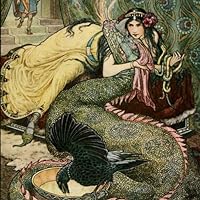
Mixing fable and fact, extraordinary and ordinary, Jennifer S. Cheng’s hybrid collection, Moon: Letters, Maps, Poems, draws on various Chinese mythologies about women, particularly that of Chang’E (the Lady in the Moon), uncovering the shadow stories of our myths — with the belief that there is always an underbelly. Moon explores bewilderment and shelter, destruction and construction, unthreading as it rethreads, shedding as it collects.
Immigration, displacement, loneliness. Womanhood, the moon, transforming. Husbands, snakes, pots and pans. You will find all these things, magic, and more in between the pages of this book. Every silent space, a breath of air waiting to be understood. Like empty vessels we wish to fill. How the body transforms, how we dig up our roots again and again only to realize that they have grown too far under the house which we have built — our lives. This book, like many of my favorites, came to me at a time when I needed it the most.
This entire review has been hidden because of spoilers.
Moon by Jennifer S. Cheng is a book of contemporary poems. The book is structured in a similar way to how a script for a play is. What I mean is that there is a prelude, then three chapters, then an interlude of about two pages, and then a final two chapters. The book’s major theme is about exploring Chinese mythology, especially Chinese myths about the moon. Also, part of the book's style is that every time there is a new chapter there is a blank page followed by a black page with a white circle in the center and in the center of the circle the title of the chapter is shown with a roman numeral before it.
One of the things about the book that I realized I liked was how the poems of each chapter group switch from being more story driven and longer to being shorter and more poem-like. For example the chapter titled I Iterations poems were more story like while II Artifacts poems were in the form of a more traditional poem. Similarly III Biography of Women in the Sea were more like fragments of short stories while IV Love letters were again more like traditional poems. The final chapter V From the voice of the lady in the moon by being more story like. Other things I liked about it when reading were how it referenced previous parts of the book. For example in the end of the third chapter the final poem ends with a line that references the prelude, “they began with the word sequestering” (Cheng 31). The reason why I liked this so much was that it gave the first three parts of the book a kind of cohesion, which is nice because when I first started reading the third chapter I found myself questioning why these poems were included. Keeping with the cohesion of the book I liked how the book in every chapter mentioned something about the story of the tragic relationship between the moon goddess Chang ‘E and her husband the archer god Hou Yi (he is not mentioned by name). The less obvious mentioning happens multiple times during the fourth chapter, the first time happens from what seems to be from Hou Yi’s perspective “Your hand in my stringy hair, your promise to visit, but by then the hills will be thick, the nights over-turning” (Chang 76). The second time happens from Cheng ‘E’s perspective “If it is true that I left you, It is also true that I will one day return” (Cheng 86). The main reason why I enjoyed this cohesion throughout the book is because I felt like It really fits the title of MOON and the theme of Chinese myth about the moon. One last thing that I wanted to mention was that I liked how the author was able to personify objects like the moon. For example in chapter three “Because she in her lull watching for the murmuring orbit of a faraway home, or a slighter confusion of the earth” (Cheng 42). The reason I liked this was that it gave me more of an emotional connection to the object that the book is focused on talking about.
My overall thoughts after reading this book are that I was very enjoyable to read and its delving into Chinese mythology was something that kept me interested and engaged. I also think that it being structured into multiple parts or chapters helps the reader understand both the story of the moon goddess Cheng ‘E and her lover god Hou Yi and their emotions during their separation and for the years after it. As for who I would recommend this book to, I would recommend it to someone who is interested in learning about Chinese mythology or just mythology in general from a unique perspective.
"The latest collection of writings from Jennifer S. Cheng comes by way of the illuminating and mythological Moon: Letters, Maps, Poems. Broken into a neatly layered and dauntingly dense five sections, a prelude, and an interlude, the book of poetry and prose draws upon a plethora of Chinese myths, most notably The Lady of the Moon, Chang’e, of which the book is named, but also including stories of Nü Wa, Tin Hau, and others. Moon represents an intelligent, matured phase of writing for the poet. Containing a mutuality of intellection and empathy, it follows its incredible predecessor, the acclaimed House A, which explored intimately the ether and disintegration of location, identity, homemaking, and familial lineage. To encounter Cheng’s newest work and ever-expanding relationship with the world via Moon is a beautifully transformative and profound reading experience."
Jennifer Cheng is a talented poet, however, the way in which the goddesses are portrayed in the poems feels like fetishization of Asian subjects for the benefit of an audience who are NOT Asian. Cheng's command of the goddesses' stories and origins at times also feel elementary and that lack of familiarity on the writer's part distract from the narrative of the poems.
Brilliant, absolutely brilliant. The only reason why it is not 5 stars is because I often found myself troubling over the format and line-breaks of several pieces. But otherwise, Jennifer S. Cheng gives us a perfect collection of poems.
This is a gorgeous book. I got it from the library and immediately returned it because I knew I had to buy it. Cheng's use of hybrid forms serves well to convey the shifting nature of her subjects.
A beautiful, hybrid text that explores women's agency, mythology, and the grappling of a self. This is an ambitious text that feels both restless, yet crafted. Very beautiful meditations throughout.
This hybrid collection is a lyrical exploration of women’s mythology and a reimagining of feminine spaces. It is a re-weaving of ancient stories about Chinese goddesses, an exploration of the body as landscape, and a deep-dive into liminal experience. It tells a big story: a romance between body and space, a map of the undefined spaces women’s bodies inhabit. Told in fragments, Moon uses a hybrid form that combines emotional and physical cartography, narrative storytelling, and lyric poetics. It re-invents these forms just like it re-invents folklore. The central thread of the book centers on the stories of the “Lady in the Moon” and various Chinese sea goddesses, or “Women In The Sea.” These women surge and disappear throughout the book, reappearing and re-telling their stories like the tides.
What Cheng delivers us in Moon is a delicate, complexly layered letter. It is both translucent and dense, a sensual story full of texture. It asks us to get inside the envelope, hold it up to the light, peel it apart, and fold it back together again. It is an invitation to participate in the telling of her myths, our own folktales, and the common stories that we as humans are all a part of.