

What do you think?

Speak: The Graphic Novel
The critically acclaimed, award-winning, modern classic Speak is now a stunning graphic novel.
"Speak up for yourself—we want to know what you have to say." From the first moment of her freshman year at Merryweather High, Melinda knows this is a big fat lie, part of the nonsense of high school. She is friendless—an outcast—because she busted an end-of-summer party by calling the cops, so now nobody will talk to her, let alone listen to her. Through her work on an art project, she is finally able to face what really happened that She was raped by an upperclassman, a guy who still attends Merryweather and is still a threat to her. With powerful illustrations by Emily Carroll, Laurie Halse Anderson's The Graphic Novel comes alive for new audiences and fans of the classic novel.
"Speak up for yourself—we want to know what you have to say." From the first moment of her freshman year at Merryweather High, Melinda knows this is a big fat lie, part of the nonsense of high school. She is friendless—an outcast—because she busted an end-of-summer party by calling the cops, so now nobody will talk to her, let alone listen to her. Through her work on an art project, she is finally able to face what really happened that She was raped by an upperclassman, a guy who still attends Merryweather and is still a threat to her. With powerful illustrations by Emily Carroll, Laurie Halse Anderson's The Graphic Novel comes alive for new audiences and fans of the classic novel.
384 pages, Kindle Edition
First published February 6, 2018
About the author
Laurie Halse Anderson
102 books17.6k followersUPDATE! Rebellion 1776 is out! The New York Times wrote, "Filled with immersive detail, expert delineations of complex characters, and both harsh and loving reality, Rebellion 1776 provides young readers with a true experience of a historic moment in time that resonates with today's world." Huzzah!
Laurie Halse Anderson is the New York Times-bestselling author of many award-winning books including the groundbreaking, modern classic Speak, a National Book Award finalist which has sold over 3.5 million copies and been translated into 35 languages.
In 2023, Anderson was named the Laureate of the Astrid Lindgren Memorial Award, long considered to be the de facto 'Nobel Prize for Children's Literature.'
A passionate spokesperson for the need to combat censorship, she has been honored for her battles for intellectual freedom by the National Coalition Against Censorship and the National Council of Teachers of English. She lives near Philadelphia. Go Birds!
Follow Laurie on Bluesky at @halseanderson.bsky.social, Instagram at halseanderson, and Facebook at lauriehalseanderson, or by visiting her website, madwomanintheforest.com.
Laurie Halse Anderson is the New York Times-bestselling author of many award-winning books including the groundbreaking, modern classic Speak, a National Book Award finalist which has sold over 3.5 million copies and been translated into 35 languages.
In 2023, Anderson was named the Laureate of the Astrid Lindgren Memorial Award, long considered to be the de facto 'Nobel Prize for Children's Literature.'
A passionate spokesperson for the need to combat censorship, she has been honored for her battles for intellectual freedom by the National Coalition Against Censorship and the National Council of Teachers of English. She lives near Philadelphia. Go Birds!
Follow Laurie on Bluesky at @halseanderson.bsky.social, Instagram at halseanderson, and Facebook at lauriehalseanderson, or by visiting her website, madwomanintheforest.com.
Ratings & Reviews
Friends & Following
Create a free account to discover what your friends think of this book!
Community Reviews
Displaying 1 - 30 of 3,375 reviews

February 8, 2018
Content warnings: sexual assault, self-harm, depression, anxiety, PTSD, victim-shaming
I first picked up a copy of Speak at the library some time in the very early 2000s, when I wish I’d been too young to know how the world worked, the ways in which it chewed children up and spat them back out. Sadly, I was one of many children who learned these things early, and Speak made me feel acknowledged. I remember thinking, for the first time, that someone understood me, and I will never, ever let go of the special place that feeling carved out in my heart for this famous little story. When I found out that one of my favorite graphic novel artists was taking it on for a new spin, I had to have it, and I literally sat down to devour it the moment I opened the package.
Unfortunately, Laurie Halse Anderson speaks from a place of understanding and experience on this topic, but it shines through in how authentic the events of Speak feel. The story not only discusses the ramifications of rape and how Melinda views her attacker now – especially in a scenario when a victim is forced to continue interacting with their abuser – but it also touches on the depression that can come along with the event, and the ways those feelings manifest themselves for many victims: isolation, silence, anger, self-harm, anxiety, intrusive thoughts, and apathy for anything in life that isn’t crucial to survival.
While the story itself is as wonderful and haunting as it always has been, Emily Carroll’s artwork genuinely takes things to a new level. She manages to depict small things that don’t come across as so important in the text – like Melinda’s nervous tics, or the way she views herself as an endangered rabbit when the vicious wolf (her attacker) is near. When it comes to the heaviest and darkest scenes, Emily manages to convey the hurt and fear without going overboard on graphic depictions. There is one panel, in fact, that is so subtle, but left me breathless because it so perfectly portrays the helpless claustrophobia that comes with facing one’s attacker.
I could tell you, for those of you who haven’t experienced Speak before, that there’s a silver lining, or a lightly humorous subplot to cut through the grime, or a perfectly happy ending, but none of that would be true. Laurie Halse Anderson is too authentic for that. This isn’t a story about a girl who happens to have been raped; this is a book about rape, and the tragic things it can do to a survivor’s psyche. I recommend the utmost caution when proceeding with this story, in its original format or this new graphic novel style, but I also have to say that I cannot recommend this book highly enough.
“When people don't express themselves, they die one piece at a time.”
I first picked up a copy of Speak at the library some time in the very early 2000s, when I wish I’d been too young to know how the world worked, the ways in which it chewed children up and spat them back out. Sadly, I was one of many children who learned these things early, and Speak made me feel acknowledged. I remember thinking, for the first time, that someone understood me, and I will never, ever let go of the special place that feeling carved out in my heart for this famous little story. When I found out that one of my favorite graphic novel artists was taking it on for a new spin, I had to have it, and I literally sat down to devour it the moment I opened the package.
“I wonder how long it would take for anyone to notice if I just stopped talking.”
Unfortunately, Laurie Halse Anderson speaks from a place of understanding and experience on this topic, but it shines through in how authentic the events of Speak feel. The story not only discusses the ramifications of rape and how Melinda views her attacker now – especially in a scenario when a victim is forced to continue interacting with their abuser – but it also touches on the depression that can come along with the event, and the ways those feelings manifest themselves for many victims: isolation, silence, anger, self-harm, anxiety, intrusive thoughts, and apathy for anything in life that isn’t crucial to survival.
“I have never heard a more eloquent silence.”
While the story itself is as wonderful and haunting as it always has been, Emily Carroll’s artwork genuinely takes things to a new level. She manages to depict small things that don’t come across as so important in the text – like Melinda’s nervous tics, or the way she views herself as an endangered rabbit when the vicious wolf (her attacker) is near. When it comes to the heaviest and darkest scenes, Emily manages to convey the hurt and fear without going overboard on graphic depictions. There is one panel, in fact, that is so subtle, but left me breathless because it so perfectly portrays the helpless claustrophobia that comes with facing one’s attacker.
“It happened. There is no avoiding it, no forgetting. No running away, or flying, or burying, or hiding.”
I could tell you, for those of you who haven’t experienced Speak before, that there’s a silver lining, or a lightly humorous subplot to cut through the grime, or a perfectly happy ending, but none of that would be true. Laurie Halse Anderson is too authentic for that. This isn’t a story about a girl who happens to have been raped; this is a book about rape, and the tragic things it can do to a survivor’s psyche. I recommend the utmost caution when proceeding with this story, in its original format or this new graphic novel style, but I also have to say that I cannot recommend this book highly enough.

March 28, 2018
"I said no."--Melinda
11/8/18: Three times read in one year??! But this is how you can build up your Goodreads numbers, kids. . . :) In my Fall YA class we read the original 1999 by Anderson and in our discussion of the book we actually drew some of Emily Carroll's images and talked about how that felt, and what we thought illustrator Emily Carroll was trying to accomplish by adding images to the story. A couple of my students preferred the original book (with no pictures). This might be a typical English major perspective, where people usually prefer books to movies or comics versions, but nevertheless I like this a lot. The art adds a layer of real life horror to it that the book implies but leaves unsaid. The images "speak" it, which works for me because sometimes trauma can be really un-speakable, at least in words. Psychologist Robert Coles wrote a book, Children of Crisis, about his work with black children who had been traumatized in the sixties by racist treatment when they were integrating schools in the American South. The children wouldn't talk, but they drew iages of how they felt and what they experienced.
7/12/18: Just re-read this for my summer 2018 Graphic novels/comics class focused on kick-ass girls. Everyone in my class loved it and it sparked some great talk about the rarity of talking about real life issues in English classrooms. Some are future teachers and can't wait to teach it.
3/27/18: Ooh, I just finished this and can't wait to tell you about it! As I said in my review of Speak, (the version without illustrations, the YA book that was published in 1999 by Anderson), it was a landmark moment in the history of YA, a book about (teen) rape, and it changed YA and the teaching of literature in school forever. (Yes, sexual violence had been part of literature before--I Know Why the Caged Bird Sings by Maya Angelou, which is referenced in Anderson's text; and there are others--but bringing to the English classroom YA on sexual violence--and to suggest it might be a daily occurrence for teens--seemed new to me and scary and important).
Speak is now in the canon of YA and is (still) taught everywhere. The book is surprisingly bright and funny and witty and caustic when it needs to be, and scary all the way through. It tells us some important things about the culture of schooling and sexual harassment/abuse in the hallways (especially) for girls. Trigger warnings on rape and self abuse are relevant, I'll admit that, but I hope if you can read it, you will be able to get some comfort and inspiration from it. I have kids in this house in middle school, and I hope they will all read it.
This graphic novel, in this #metoo moment in history, is also a publishing landmark. We didn't maybe "need" it in graphic novel fashion, but this project joins forces of 1) a woman already lauded for her lifetime contributions to YA, who has written many celebrated novels (though none in my opinion as powerful or as personal as this one), and 2) an up-and-coming and also to-be-rock-star cartoonist and illustrator Emily Carroll (who is already an Eisner Award winner). This brings Anderson's important story back into the spotlight and/or introduces it to a new generation of girls. No, it doesn't "replace" the original, but is a very good version.
The graphic novel format is right for this book because 1) for much of the book, Melinda is essentially silent, so Carroll's/Melinda's visual images speak for her in the absence of words, and 2) Melinda's salvation happens through Mr. Freeman's art class, and 3) Carroll knows horror, and the real-life, inexpressible horror that Melinda experiences and struggles to articulate is assisted so well by a horror-maven to tell her story.
I just finished it, and I was moved again (in spite of having taught the book without pictures many many times) as I finished it. Was it perfect? No. I felt throughout that this was often more illustrated story than graphic novel (Anderson kept maybe too many of her good words in it; I think Carroll should have had an even greater hand in telling this story through the images, since Melinda was silent so long, but still, the words and images we have are great and will reach some girls and women (and boys and men, necessarily) and maybe help them to consider the original, fuller, text. But even if this is all anyone reads, it may be enough. A work of graphic art by an emerging master.
11/8/18: Three times read in one year??! But this is how you can build up your Goodreads numbers, kids. . . :) In my Fall YA class we read the original 1999 by Anderson and in our discussion of the book we actually drew some of Emily Carroll's images and talked about how that felt, and what we thought illustrator Emily Carroll was trying to accomplish by adding images to the story. A couple of my students preferred the original book (with no pictures). This might be a typical English major perspective, where people usually prefer books to movies or comics versions, but nevertheless I like this a lot. The art adds a layer of real life horror to it that the book implies but leaves unsaid. The images "speak" it, which works for me because sometimes trauma can be really un-speakable, at least in words. Psychologist Robert Coles wrote a book, Children of Crisis, about his work with black children who had been traumatized in the sixties by racist treatment when they were integrating schools in the American South. The children wouldn't talk, but they drew iages of how they felt and what they experienced.
7/12/18: Just re-read this for my summer 2018 Graphic novels/comics class focused on kick-ass girls. Everyone in my class loved it and it sparked some great talk about the rarity of talking about real life issues in English classrooms. Some are future teachers and can't wait to teach it.
3/27/18: Ooh, I just finished this and can't wait to tell you about it! As I said in my review of Speak, (the version without illustrations, the YA book that was published in 1999 by Anderson), it was a landmark moment in the history of YA, a book about (teen) rape, and it changed YA and the teaching of literature in school forever. (Yes, sexual violence had been part of literature before--I Know Why the Caged Bird Sings by Maya Angelou, which is referenced in Anderson's text; and there are others--but bringing to the English classroom YA on sexual violence--and to suggest it might be a daily occurrence for teens--seemed new to me and scary and important).
Speak is now in the canon of YA and is (still) taught everywhere. The book is surprisingly bright and funny and witty and caustic when it needs to be, and scary all the way through. It tells us some important things about the culture of schooling and sexual harassment/abuse in the hallways (especially) for girls. Trigger warnings on rape and self abuse are relevant, I'll admit that, but I hope if you can read it, you will be able to get some comfort and inspiration from it. I have kids in this house in middle school, and I hope they will all read it.
This graphic novel, in this #metoo moment in history, is also a publishing landmark. We didn't maybe "need" it in graphic novel fashion, but this project joins forces of 1) a woman already lauded for her lifetime contributions to YA, who has written many celebrated novels (though none in my opinion as powerful or as personal as this one), and 2) an up-and-coming and also to-be-rock-star cartoonist and illustrator Emily Carroll (who is already an Eisner Award winner). This brings Anderson's important story back into the spotlight and/or introduces it to a new generation of girls. No, it doesn't "replace" the original, but is a very good version.
The graphic novel format is right for this book because 1) for much of the book, Melinda is essentially silent, so Carroll's/Melinda's visual images speak for her in the absence of words, and 2) Melinda's salvation happens through Mr. Freeman's art class, and 3) Carroll knows horror, and the real-life, inexpressible horror that Melinda experiences and struggles to articulate is assisted so well by a horror-maven to tell her story.
I just finished it, and I was moved again (in spite of having taught the book without pictures many many times) as I finished it. Was it perfect? No. I felt throughout that this was often more illustrated story than graphic novel (Anderson kept maybe too many of her good words in it; I think Carroll should have had an even greater hand in telling this story through the images, since Melinda was silent so long, but still, the words and images we have are great and will reach some girls and women (and boys and men, necessarily) and maybe help them to consider the original, fuller, text. But even if this is all anyone reads, it may be enough. A work of graphic art by an emerging master.

September 15, 2019
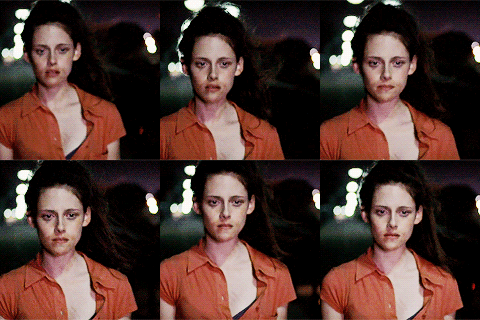
So, this movie is one of my favorite movies. I didn’t like the book as much but still gave it 5 stars. But this graphic novel was fantastic. Broke my heart, like the movie. How Mel makes it through her rape.
Mel 🖤🐶🐺🐾
Mel 🖤🐶🐺🐾

July 17, 2019
“It happened. There is no avoiding it, no forgetting. No running away, or flying, or burying, or hiding.”
The graphic novel of Speak was equal parts beautiful and devastating. The art work was wonderful, but the story hurt my heart. I haven’t actually read the book, so it was new to me. This is by no means an easy read, but I think it’s one that needs to be read.

March 17, 2020
TW: Illustrations of self-harm, rape, depression
This graphic novel version of Speak is absolutely incredible. The graphics are triggering and jarring, I felt it was quite bold to illustrate scenes of rape and self harm and it rather shocked me to see that, especially in a YA novel.
But it was also moving. I felt a lot while reading this. More so than when I had watched the film adaptation years ago. The depictions of Melinda’s wrists being held down and mouth covered were jarring and brought tears to my eyes.
I felt, even in graphic form, the content was handled very well. Where one can learn from Melinda’s story, and awareness of consent, dubious consent and coercion is experienced through a realistic situation.
This graphic novel version of Speak is absolutely incredible. The graphics are triggering and jarring, I felt it was quite bold to illustrate scenes of rape and self harm and it rather shocked me to see that, especially in a YA novel.
But it was also moving. I felt a lot while reading this. More so than when I had watched the film adaptation years ago. The depictions of Melinda’s wrists being held down and mouth covered were jarring and brought tears to my eyes.
I felt, even in graphic form, the content was handled very well. Where one can learn from Melinda’s story, and awareness of consent, dubious consent and coercion is experienced through a realistic situation.

December 28, 2017
If you're a fan of the original novel, you are going to adore the graphic novel.
The art is flawless. Every setting, character and emotion looks just how I pictured them. Kristen Stewart was great in the movie, though the Melinda depicted here is more accurate to how she briefly described herself in the book. I enjoyed the little background details, like Melinda's tree sketches on her bedroom walls and the TV in the living room during Christmas.
While I have never experienced assault myself and cannot begin to imagine what that's like, I feel the art captured depression very well. The long, quiet days that always feel like winter. Only being able to see a smudge, or an empty shell of a person in the mirror. The voices in your head. The feeling of constantly wanting to crawl in bed and not come out. Seeing those emotions expressed in the book and then vividly brought to life through pictures made me tear up...more than once. Emily Carroll did a wonderful job and I'll be checking out more of her work in the future.
Since Speak was published in 1999, making it almost 20 years old, expect to find a few up-to-date references. They're brief and definitely not obnoxious. There are references to Instagram, Nutella, and the inclusion of smart phones. The book doesn't feel dated at all to me, though a lot of teens today might find the lack of internet a little jarring. I'm glad the graphic novel gave it just a touch of modernization without feeling awkward or too "fellow kids."
All this to say, this version is amazing and I'm very happy with how everything turned out. The story is important, timeless, and its message needs to be spread. I'd highly recommend this for school libraries and anyone who was touched by Melinda's story. You won't be disappointed!
The art is flawless. Every setting, character and emotion looks just how I pictured them. Kristen Stewart was great in the movie, though the Melinda depicted here is more accurate to how she briefly described herself in the book. I enjoyed the little background details, like Melinda's tree sketches on her bedroom walls and the TV in the living room during Christmas.
While I have never experienced assault myself and cannot begin to imagine what that's like, I feel the art captured depression very well. The long, quiet days that always feel like winter. Only being able to see a smudge, or an empty shell of a person in the mirror. The voices in your head. The feeling of constantly wanting to crawl in bed and not come out. Seeing those emotions expressed in the book and then vividly brought to life through pictures made me tear up...more than once. Emily Carroll did a wonderful job and I'll be checking out more of her work in the future.
Since Speak was published in 1999, making it almost 20 years old, expect to find a few up-to-date references. They're brief and definitely not obnoxious. There are references to Instagram, Nutella, and the inclusion of smart phones. The book doesn't feel dated at all to me, though a lot of teens today might find the lack of internet a little jarring. I'm glad the graphic novel gave it just a touch of modernization without feeling awkward or too "fellow kids."
All this to say, this version is amazing and I'm very happy with how everything turned out. The story is important, timeless, and its message needs to be spread. I'd highly recommend this for school libraries and anyone who was touched by Melinda's story. You won't be disappointed!
April 12, 2022
This was my first graphic novel. It was fairly good, but most definitely targets teens. It contains some pretty good, empowering messages: Nothing can hurt you if you don't let it. Just speak your truth. Etc.

September 2, 2018
4 stars!
I read this based on a recommendation from a coworker and I really enjoyed it. Speak was a book that came out when I was in middle school and I remember reading and loving it at the time. So much so I even have the movie with Kristen Stewart on DVD. Hardcore, I know LOL.
So 15ish years later and reading the graphic novel reminded me of why I love this story and the character of Melinda and her struggle. I feel she represents a lot of girls and women, too many sadly. But she's empathic and relatable and what happened to her shouldn't happen to anyone.
I also really like how the graphic novel subtly modernized the novel, adding in cell phones and making this story up to date without being too obvious.
A solid read, I recommend it to everyone who enjoyed the original book.

Follow me on ♥ Facebook ♥ Blog ♥ Instagram ♥ Twitter ♥
I read this based on a recommendation from a coworker and I really enjoyed it. Speak was a book that came out when I was in middle school and I remember reading and loving it at the time. So much so I even have the movie with Kristen Stewart on DVD. Hardcore, I know LOL.
So 15ish years later and reading the graphic novel reminded me of why I love this story and the character of Melinda and her struggle. I feel she represents a lot of girls and women, too many sadly. But she's empathic and relatable and what happened to her shouldn't happen to anyone.
I also really like how the graphic novel subtly modernized the novel, adding in cell phones and making this story up to date without being too obvious.
A solid read, I recommend it to everyone who enjoyed the original book.
Follow me on ♥ Facebook ♥ Blog ♥ Instagram ♥ Twitter ♥

May 13, 2019
5 stars for the simple fact that this exists. It is desperately needed and in graphic novel form, it presents a different, deeper story than the original by illustrating what the silent victim-turned-survivor is feeling. Any and all resources are sorely needed to help our children navigate trauma. This book will help others heal the broken parts of themselves and feel less alone.

January 11, 2022
reading vlog: https://youtu.be/AXpfik6Q72g
Um, the illustration is ✨STUNNING✨ Emily Carroll does not MISS.
The story, while important, it slow and meandering. It creeps along and gets confusing and contradicts itself at times.
Um, the illustration is ✨STUNNING✨ Emily Carroll does not MISS.
The story, while important, it slow and meandering. It creeps along and gets confusing and contradicts itself at times.

August 13, 2021
CW- rape, depression, self-harm, toxic friends, bullying, isolation.
Nobody really wants to hear what you have to say.
Melinda is an outcast at her high school. She has no friends until she meets the new girl from Ohio, Heather, and they sort of become friends. Melinda doesn't really speak to anyone including her parents. She's the only child. Her grades are deteriorating except for art. She likes art and is trying to draw the perfect tree.
Perfect trees don't exist. Nothing is perfect, and flaws are interesting.
Be the tree.
She gets detention and she sees this guy (she thinks of him as IT) in the detention and then she starts improving her grades as she doesn't want to be around the guy. It is revealed that that guy had raped her at a party and the reason she's an outcast is because she called the cops to that party and all the kids blame her for shutting down the party.
It has to go away eventually.
Heather wants to be in a popular group so she leaves Melinda. When her ex-best friend, Rachel starts to date IT, she sends her an anonymous note but Rachel still keeps seeing the guy. Slowly Melinda starts to pick up her own pieces and starts to understand that it's not her fault.
What does it feel like to walk in a new skin?
I feel like my skin has been burned off.
I haven't read the original book and I haven't watched the movie based on this. I picked this up for my YA week and I didn't know anything about this going in. I don't know if my review is going to do any justice to how much this graphic novel moved me because wow! this was such a powerful read. I cried so much and kudos to the writer for sharing this as it is based on her own story. I wish there were more books like these as these are much much needed.
I ride like I have wings.
And art in this was anything beyond. It is all black and white and I felt the illustrations told an equally impressive and moving story as the words did. A must read for anyone and everyone.
I survived.
5 stars
Nobody really wants to hear what you have to say.
Melinda is an outcast at her high school. She has no friends until she meets the new girl from Ohio, Heather, and they sort of become friends. Melinda doesn't really speak to anyone including her parents. She's the only child. Her grades are deteriorating except for art. She likes art and is trying to draw the perfect tree.
Perfect trees don't exist. Nothing is perfect, and flaws are interesting.
Be the tree.
She gets detention and she sees this guy (she thinks of him as IT) in the detention and then she starts improving her grades as she doesn't want to be around the guy. It is revealed that that guy had raped her at a party and the reason she's an outcast is because she called the cops to that party and all the kids blame her for shutting down the party.
It has to go away eventually.
Heather wants to be in a popular group so she leaves Melinda. When her ex-best friend, Rachel starts to date IT, she sends her an anonymous note but Rachel still keeps seeing the guy. Slowly Melinda starts to pick up her own pieces and starts to understand that it's not her fault.
What does it feel like to walk in a new skin?
I feel like my skin has been burned off.
I haven't read the original book and I haven't watched the movie based on this. I picked this up for my YA week and I didn't know anything about this going in. I don't know if my review is going to do any justice to how much this graphic novel moved me because wow! this was such a powerful read. I cried so much and kudos to the writer for sharing this as it is based on her own story. I wish there were more books like these as these are much much needed.
I ride like I have wings.
And art in this was anything beyond. It is all black and white and I felt the illustrations told an equally impressive and moving story as the words did. A must read for anyone and everyone.
I survived.
5 stars

January 17, 2018
SPEAK is one of the most important books ever written for young adults. It was a first dealing with date rape, years before #MeToo . Laurie Halse Anderson captured Melinda’s quiet vulnerability and burgeoning voice with enough sarcasm to feel authentic, making Melinda’s pain even more poignant.
Because of Melinda’s artwork and art as a metaphor, SPEAK transfers seamlessly to a graphic novel. Emily Carroll’s illustrations brought the characters to life. I’ve seen the movie, listened to the audio and read the book countless times, so Carroll’s drawings could have felt “wrong” if she hadn’t imagined the people as Anderson depicted them. Carroll’s Melinda looked different than Kristen Steward in the movie and seemed different than the reader in the audio version, but she **was** just as much Melinda.
SPEAK is only the second graphic novel I’ve read, so while I’m not an expert, I can say that I LOVED it. My only complaint was that the formatting on my kindle was a bit tricky*. Viewing was landscape, which was fine, but I would have liked to be able to enlarge some of the pages with greater ease. Even my aging eyes could read all the words, but I had to strain a bit.
*i reread on my kindle app for iPad and the book was much easier in maneuver.
Because of Melinda’s artwork and art as a metaphor, SPEAK transfers seamlessly to a graphic novel. Emily Carroll’s illustrations brought the characters to life. I’ve seen the movie, listened to the audio and read the book countless times, so Carroll’s drawings could have felt “wrong” if she hadn’t imagined the people as Anderson depicted them. Carroll’s Melinda looked different than Kristen Steward in the movie and seemed different than the reader in the audio version, but she **was** just as much Melinda.
SPEAK is only the second graphic novel I’ve read, so while I’m not an expert, I can say that I LOVED it. My only complaint was that the formatting on my kindle was a bit tricky*. Viewing was landscape, which was fine, but I would have liked to be able to enlarge some of the pages with greater ease. Even my aging eyes could read all the words, but I had to strain a bit.
*i reread on my kindle app for iPad and the book was much easier in maneuver.
November 5, 2018
Cuéntalo es una novela gráfica que me ha encantando de principio a fin.
Aviso que es una historia muy dura, pero aún así muy necesaria y que me ha apasionado de principio a fin. Es difícil ya de por sí plasmar este tipo de historias, y más en una novela gráfica, pero tanto la autora ha adaptado su libro a la perfección a guión de novela gráfica y los dibujos son increíbles, y ha sido apasionante leerlo así, ya que el arte en sí es muy importante para nuestra protagonista, que después de un altercado durante el verano, todos sus compañeros la odian y la han convertido en una marginada. Ir descubriendo qué pasó y cómo eso afectó a Melinda es indescriptible.
Yo ya sabía de qué iba la historia, vi la película hace muchísimos años (protagonizada por una jovencísima Kristen Stewart) y aún así, la novela gráfica me ha sorprendido. Sin duda es MUY NECESARIA y trata temas complejos de una manera directa y sin tapujos, pero que cala muy hondo en el lector.
Sin duda os la recomiendo muchísimo. No es solo una de las mejores novelas gráficas que he leído, sino también uno de los mejores libros que he podido leer. IMPRESIONANTE.
Aviso que es una historia muy dura, pero aún así muy necesaria y que me ha apasionado de principio a fin. Es difícil ya de por sí plasmar este tipo de historias, y más en una novela gráfica, pero tanto la autora ha adaptado su libro a la perfección a guión de novela gráfica y los dibujos son increíbles, y ha sido apasionante leerlo así, ya que el arte en sí es muy importante para nuestra protagonista, que después de un altercado durante el verano, todos sus compañeros la odian y la han convertido en una marginada. Ir descubriendo qué pasó y cómo eso afectó a Melinda es indescriptible.
Yo ya sabía de qué iba la historia, vi la película hace muchísimos años (protagonizada por una jovencísima Kristen Stewart) y aún así, la novela gráfica me ha sorprendido. Sin duda es MUY NECESARIA y trata temas complejos de una manera directa y sin tapujos, pero que cala muy hondo en el lector.
Sin duda os la recomiendo muchísimo. No es solo una de las mejores novelas gráficas que he leído, sino también uno de los mejores libros que he podido leer. IMPRESIONANTE.

June 20, 2019
If ever a story seemed destined to become a graphic novel, it’s Speak, which I finally read for the first time less than two months ago, and it was everything! I feared I’d Humpty Dumpty while reading Speak, which is why it took so long for me to gather the courage to finally begin reading it. I wish I’d had a Speak to tell me I wasn’t alone when I was Melinda’s age.
I asked my library to buy this graphic novel for me and they did! I love my library! I was under the delusion that I’d read this once and then move on. Hah! As if I wasn’t going to then buy a copy for myself immediately so I could reread it to my heart’s content!
Much like my experience with the novel I kept the graphic novel near me, planning to read it all month, but once again I was afraid of Humpty Dumptying. It’s due tomorrow and someone else has reserved it so I could avoid it no longer. But like Speak before it, it was AMAZING!!!
I’m left with a cacophony of exclamations fighting to be the loudest in my head:
”Where has this graphic novel been my whole life?!”
“Everyone need to read this!”
“How different could my life have been if this had been published when I was Melinda’s age?!”
“This graphic novel is going to introduce Laurie’s story to a whole new audience!”
“The illustrations portray the aftermath of sexual assault perfectly!”
Everything I said in my Speak review stands but Emily Carroll’s illustrations have brought Melinda’s story to life in a way that, while maintaining Laurie’s sensitive portrayal, provides a whole new dimension to it, showing what life after sexual assault can look like.
You get to watch Melinda’s expressions as she attempts to navigate high school, the same high school where It walks the halls. You can’t help but see how the trauma is affecting her throughout the story. You witness her growing from a scared rabbit to someone who not only has a voice but uses it! I got to see her turkey-bone sculpture outside of my imagination and it was perfect! (Apologies for the dodgy image. I took a photo of this page in my library book.)
I’ve never done this before but I’m going to add a couple of Post-it’s before I return this book to the library. While I’d never actually deface a library book I want to add the phone number of my state’s Rape Crisis Centre to the list of resources and a little something to let future borrowers know that they’re not alone.
Content warnings include sexual and physical assaults, depression, emotional neglect, self harm, isolation, bullying and a whole bunch of high school crap that seems vitally important at the time you’re living it.
I asked my library to buy this graphic novel for me and they did! I love my library! I was under the delusion that I’d read this once and then move on. Hah! As if I wasn’t going to then buy a copy for myself immediately so I could reread it to my heart’s content!
Much like my experience with the novel I kept the graphic novel near me, planning to read it all month, but once again I was afraid of Humpty Dumptying. It’s due tomorrow and someone else has reserved it so I could avoid it no longer. But like Speak before it, it was AMAZING!!!
I’m left with a cacophony of exclamations fighting to be the loudest in my head:
”Where has this graphic novel been my whole life?!”
“Everyone need to read this!”
“How different could my life have been if this had been published when I was Melinda’s age?!”
“This graphic novel is going to introduce Laurie’s story to a whole new audience!”
“The illustrations portray the aftermath of sexual assault perfectly!”
Everything I said in my Speak review stands but Emily Carroll’s illustrations have brought Melinda’s story to life in a way that, while maintaining Laurie’s sensitive portrayal, provides a whole new dimension to it, showing what life after sexual assault can look like.
You get to watch Melinda’s expressions as she attempts to navigate high school, the same high school where It walks the halls. You can’t help but see how the trauma is affecting her throughout the story. You witness her growing from a scared rabbit to someone who not only has a voice but uses it! I got to see her turkey-bone sculpture outside of my imagination and it was perfect! (Apologies for the dodgy image. I took a photo of this page in my library book.)
I got to see what Melinda’s final tree looks like and I loved it. The only thing that could have made that image even better for me would be if a splash of colour had been added. Greyscale works perfectly for this book but a hint of colour (probably green for symbolism) would have delighted me.
I’ve never done this before but I’m going to add a couple of Post-it’s before I return this book to the library. While I’d never actually deface a library book I want to add the phone number of my state’s Rape Crisis Centre to the list of resources and a little something to let future borrowers know that they’re not alone.
Content warnings include sexual and physical assaults, depression, emotional neglect, self harm, isolation, bullying and a whole bunch of high school crap that seems vitally important at the time you’re living it.

November 19, 2019
I really flew through this one! If you enjoyed the novel Speak, this is just as good.
June 7, 2018
I want to wrap Melinda in a big, fresh out of the dryer blanket & spoon feed her chocolate ice cream while we watch The Princess Bride because she needs a friend who would do that for her!!
This story is important and strong. It's heartbreaking, but it brings to light a struggle that I personally, have never had to endure, and it's a struggle that should never leave the victim feeling powerless or ashamed or isolated.
I liked that the graphic novel didn't focus solely on what happened to Melinda at the party. It brought up normal high school issues, like cliques and rumors, and didn't try to romanticize the high school experience. I'm not going to lie, I went to a small private school my freshman and sophomore year of high school, so I was never subject to the kind of harsh insults that were hurled at Melinda. But girls can be downright cruel at that age (I know I had my moments of jealousy) & guys can be just as big of jerks, and I wanted to throw Heather down a trash chute !!!!! Sorry had to mention that 💁🏼
Only thing that I would have liked to have seen was Melinda's parents working out their issues, or talking with Melinda after finding out about what happened to her. (this may have been wrapped up in the actual novel but I wouldn't know because I haven't read it)
It ended quite abruptly for me, but at least it ended on a hopeful note.
It's moving and sad, but worth the read. And the art is superb. 🤙🏼
This story is important and strong. It's heartbreaking, but it brings to light a struggle that I personally, have never had to endure, and it's a struggle that should never leave the victim feeling powerless or ashamed or isolated.
I liked that the graphic novel didn't focus solely on what happened to Melinda at the party. It brought up normal high school issues, like cliques and rumors, and didn't try to romanticize the high school experience. I'm not going to lie, I went to a small private school my freshman and sophomore year of high school, so I was never subject to the kind of harsh insults that were hurled at Melinda. But girls can be downright cruel at that age (I know I had my moments of jealousy) & guys can be just as big of jerks, and I wanted to throw Heather down a trash chute !!!!! Sorry had to mention that 💁🏼
Only thing that I would have liked to have seen was Melinda's parents working out their issues, or talking with Melinda after finding out about what happened to her. (this may have been wrapped up in the actual novel but I wouldn't know because I haven't read it)
It ended quite abruptly for me, but at least it ended on a hopeful note.
It's moving and sad, but worth the read. And the art is superb. 🤙🏼

December 19, 2018
Cuéntalo es una novela muy dura, oscura, desgarradora, pero increíblemente necesaria que refleja perfectamente la hipocresía del mundo, del instituto, y la importancia de salir adelante y quererse a uno mismo.
Reseña: http://fiebrelectora.blogspot.com/201...
Reseña: http://fiebrelectora.blogspot.com/201...

April 1, 2018
I enjoyed this adaptation more than the original book. (I read the two back-to-back.) The adaptation flows along more quickly and Emily Carroll's art enhances the story considerably.


March 31, 2021
Wow.
I remember reading the book many many years ago, and it was kind of vague but I remember the basis of it. I don’t think I’ve ever in my life read a Graphic Novel the just exudes emotion like this.
I think the art style really highlighted so many emotions and the storytelling throughout was beautifully done. Highly highly recommend to people.
Trigger Warning for Sexual Assault, Rape, PTSD, Depression and Self Harm
I remember reading the book many many years ago, and it was kind of vague but I remember the basis of it. I don’t think I’ve ever in my life read a Graphic Novel the just exudes emotion like this.
I think the art style really highlighted so many emotions and the storytelling throughout was beautifully done. Highly highly recommend to people.
Trigger Warning for Sexual Assault, Rape, PTSD, Depression and Self Harm

March 15, 2020
I said No
A few years back my friend lent me her copy of Speak and I read it and loved it and believed it should be taught in schools.
A few months back a saw a copy Speak the graphic novel it was beautiful I knew I had to get it. I'm so glad I did. I loved this. The art in this book spoke volumes and just added a whole new layer of even more feelings to the story. I want to applaud Emily Carroll for this.
I have never been raped or close to that situation. But I have been harassed. And during the #metoo movement I decided to ask every woman I talked to if they'd ever been touched my someone without their consent; have they ever been harassed. All of them said yes. Not one said no. For some it was a stranger; a relative; a friend. But the fact it like IT in this book it does not matter who they are all that matters is that their a monster but seemingly fit into society and can put a mask of a good person; which makes it harder for people to believe you. So I just want to say to people you need to teach your children about consent and you need to believe anyone who comes forward to you. It's hard to always have proof; it's hard to talk about; so when someone takes a big brave step to talk about it and trusts you with it you listen and you believe them!
This book needs to be taught in schools all around the world.
Here's a look at that beautiful art:

___________________________
I just saw the movie Speak it came out in 2004 and Kristen Stewart did a beautiful job in it. Her acting moved me. It's surprisingly very accurate to the source material and absolutely great. If you haven't already watched it you definitely should now.
A few years back my friend lent me her copy of Speak and I read it and loved it and believed it should be taught in schools.
A few months back a saw a copy Speak the graphic novel it was beautiful I knew I had to get it. I'm so glad I did. I loved this. The art in this book spoke volumes and just added a whole new layer of even more feelings to the story. I want to applaud Emily Carroll for this.
I have never been raped or close to that situation. But I have been harassed. And during the #metoo movement I decided to ask every woman I talked to if they'd ever been touched my someone without their consent; have they ever been harassed. All of them said yes. Not one said no. For some it was a stranger; a relative; a friend. But the fact it like IT in this book it does not matter who they are all that matters is that their a monster but seemingly fit into society and can put a mask of a good person; which makes it harder for people to believe you. So I just want to say to people you need to teach your children about consent and you need to believe anyone who comes forward to you. It's hard to always have proof; it's hard to talk about; so when someone takes a big brave step to talk about it and trusts you with it you listen and you believe them!
This book needs to be taught in schools all around the world.
Here's a look at that beautiful art:
___________________________
I just saw the movie Speak it came out in 2004 and Kristen Stewart did a beautiful job in it. Her acting moved me. It's surprisingly very accurate to the source material and absolutely great. If you haven't already watched it you definitely should now.

March 7, 2018
"Sometimes I think high school is one long hazing activity. If you're tough enough to survive this, they'll let you become an adult . . . I hope it's worth it." - Melinda Sordino
Powerfully succinct graphic novel adaptation of the popular young adult best-seller, illustrated in a sparse black / white / gray format that seemed appropriate for the dark story, that is more timely than ever during the on-going issues in the entertainment industry.
Powerfully succinct graphic novel adaptation of the popular young adult best-seller, illustrated in a sparse black / white / gray format that seemed appropriate for the dark story, that is more timely than ever during the on-going issues in the entertainment industry.

December 3, 2020
"I said no."
wow, I am just wowed. this is really beautifully written and illustrated. consent is everything folks.
trigger warnings - sexual assault, PTSD, depression, victim-shaming, illustrations of self harm
wow, I am just wowed. this is really beautifully written and illustrated. consent is everything folks.
trigger warnings - sexual assault, PTSD, depression, victim-shaming, illustrations of self harm
July 31, 2018
My wife was reading the actual novel and it looked good so figured I'd borrow from the Library the graphic novel.
This is a tale of a girl going through her first year at high school. Beyond friends betraying friends, weird social issues, fitting in, and more you get a darker and deeper story here. Melinda is raped the summer before high school and she keeps it all in because it's hard to talk about the events. Physically, emotionally and honestly a survival tale, this is Melinda story of how to survive through it all.
Good: The art is great. Not to overly detail, and just enough emotions to get the bigger moments across on faces. I thought the dialog was pretty solid, a bit outdated at parts, but that's all high school lingo. I thought the ending was very powerful and gave hope in a otherwise dark story.
Bad: I thought the pacing was a bit odd. Sometimes scenes thrown in make it hard to keep interested and unneeded at times.
Overall a great story about a girl's survival through probably the worst part of her life. A 4 out of 5.
This is a tale of a girl going through her first year at high school. Beyond friends betraying friends, weird social issues, fitting in, and more you get a darker and deeper story here. Melinda is raped the summer before high school and she keeps it all in because it's hard to talk about the events. Physically, emotionally and honestly a survival tale, this is Melinda story of how to survive through it all.
Good: The art is great. Not to overly detail, and just enough emotions to get the bigger moments across on faces. I thought the dialog was pretty solid, a bit outdated at parts, but that's all high school lingo. I thought the ending was very powerful and gave hope in a otherwise dark story.
Bad: I thought the pacing was a bit odd. Sometimes scenes thrown in make it hard to keep interested and unneeded at times.
Overall a great story about a girl's survival through probably the worst part of her life. A 4 out of 5.

September 20, 2018
The art really took this from a 4 to a 5. Laurie Halse Anderson is coming to my library in two weeks so I’m definitely going to have to buy a copy of this and have her sign it.
RTC
RTC

September 26, 2021
this story was so quiet until it wasn't anymore, and maybe I teared up and wanted to scream:) (4.04)

December 19, 2025
2️⃣🌟, still the exact same as the original book (just now with cute illustrations)
───── ⋆⋅☆⋅⋆ ─────
#️⃣7️⃣0️⃣7️⃣ Read & Reviewed in 2025 🧊🏔️
Date Read: Sunday, December 14, 2025 ☃️🌨️
37th read in "Its TIMEEEE!!!!! (to read more books)" December ❄️⛄
So this comic book (with illustration) adaptation of Speak is — ok. It certainly didn't add anything new. It has all the same problems and all the same nothingness that Speak, the original book has. The only difference is — IT'S ILLUSTRATED!!! :OOOOOOOO So there's definitely more effort that is being put into this work and I also appreciate every single drawn artworks out there so 🥰🥰🥰🥰 i luv the art in here.
But when it comes to the actual story? — -...... it's still the same repetitive, poorly written trauma exploration with no character arc and character depth. I don't want to say anything here that I have already said on my Speak book review. Just... I luv the art, not what it tells.
Spice Level 🌶️: 1️⃣
Vibe ☘️: Like swallowing a fig tree (extremely dry)
Who'd Like This ❓👥: People who want a comic adaptation of — SPEAK??? of all things.
───── ⋆⋅☆⋅⋆ ─────
#️⃣7️⃣0️⃣7️⃣ Read & Reviewed in 2025 🧊🏔️
Date Read: Sunday, December 14, 2025 ☃️🌨️
37th read in "Its TIMEEEE!!!!! (to read more books)" December ❄️⛄
So this comic book (with illustration) adaptation of Speak is — ok. It certainly didn't add anything new. It has all the same problems and all the same nothingness that Speak, the original book has. The only difference is — IT'S ILLUSTRATED!!! :OOOOOOOO So there's definitely more effort that is being put into this work and I also appreciate every single drawn artworks out there so 🥰🥰🥰🥰 i luv the art in here.
But when it comes to the actual story? — -...... it's still the same repetitive, poorly written trauma exploration with no character arc and character depth. I don't want to say anything here that I have already said on my Speak book review. Just... I luv the art, not what it tells.
Spice Level 🌶️: 1️⃣
Vibe ☘️: Like swallowing a fig tree (extremely dry)
Who'd Like This ❓👥: People who want a comic adaptation of — SPEAK??? of all things.

September 30, 2018
HERE ME OUT NOTHING IS WRONG WITH THIS BOOK, IT WAS ABSOLUTELY AMAZING BUT I HAD TO RETURN IT TO THE LIBRARY SO I DIDN'T GET TO FINISH IT 😭 and there's no way of getting another copy anytime soon so I have to stop half through :/

February 10, 2018
I read this for the first time when I was 14 or 15. It was really great to read it again in graphic novel-form.

August 15, 2023
Não é fácil ler sobre violação. Por se tratar de uma criança ainda me faz mais confusão. Existem 3 respostas possíveis a um estímulo aversivo: fight, flight ou freeze. Nenhuma delas significa “sim”. Pensar nas mazelas psicológicas é algo que me assusta: ataques de pânico, depressão, mudanças de humor, PSPT..., a lista continua. O vazio em que se deve entrar... Nem imagino.
Uma das coisas que mais me fascina na vida é a diferença de perspetivas que as pessoas podem retirar de uma mesma experiência. Por vezes não se sabe o que antecedeu um certo acontecimento, mas julga-se aquilo que é diretamente observável como a verdade absoluta. A reputação de Melinda fica "arruinada" após chamar a polícia e acabar com uma festa. Pária social.
Tudo se pode tornar menos pesado quando se tem uma rede de suporte segura à nossa volta. Sem esse apoio, internaliza-se a ideia de que é desnecessário falar, de que não irá resolver nada.
É perfeitamente compreensível que as vítimas demorem anos a relatar as suas experiências. É todo um conjunto de sentimentos de culpa, vergonha, nojo, desprezo. A culpa é de quem sofreu. A vítima diz "não" e esse “não” é desmentido pelo tipo de roupa que estava a usar, pelo que bebeu, pela festa a que escolheu ir... Às vezes só por ser mulher, às vezes só porque apeteceu ao perpetrador.
Esta é mais uma prova que as BD e as GN não precisam de ser light e simples histórias. A arte a preto e branco de Emily Carroll confere um maior sentimento de terror, de desespero, de impossibilidade de fuga. Houve momentos em que foi difícil ler certas palavras por ser tudo tão escuro - escrever a preto num fundo cinzento escuro 🥲 -, e por isso podia ter diminuído a classificação. Contudo, olhando para obra como um todo, percebo o porquê.
Ao pesquisar percebi que se tratava de uma adaptação gráfica a um romance escrito anos antes, sobre a própria experiência da autora. Nunca tinha ouvido falar dela, só conhecia uma pessoa que o tinha lido.
Uma das coisas que mais me fascina na vida é a diferença de perspetivas que as pessoas podem retirar de uma mesma experiência. Por vezes não se sabe o que antecedeu um certo acontecimento, mas julga-se aquilo que é diretamente observável como a verdade absoluta. A reputação de Melinda fica "arruinada" após chamar a polícia e acabar com uma festa. Pária social.
Tudo se pode tornar menos pesado quando se tem uma rede de suporte segura à nossa volta. Sem esse apoio, internaliza-se a ideia de que é desnecessário falar, de que não irá resolver nada.
É perfeitamente compreensível que as vítimas demorem anos a relatar as suas experiências. É todo um conjunto de sentimentos de culpa, vergonha, nojo, desprezo. A culpa é de quem sofreu. A vítima diz "não" e esse “não” é desmentido pelo tipo de roupa que estava a usar, pelo que bebeu, pela festa a que escolheu ir... Às vezes só por ser mulher, às vezes só porque apeteceu ao perpetrador.
Esta é mais uma prova que as BD e as GN não precisam de ser light e simples histórias. A arte a preto e branco de Emily Carroll confere um maior sentimento de terror, de desespero, de impossibilidade de fuga. Houve momentos em que foi difícil ler certas palavras por ser tudo tão escuro - escrever a preto num fundo cinzento escuro 🥲 -, e por isso podia ter diminuído a classificação. Contudo, olhando para obra como um todo, percebo o porquê.
Ao pesquisar percebi que se tratava de uma adaptação gráfica a um romance escrito anos antes, sobre a própria experiência da autora. Nunca tinha ouvido falar dela, só conhecia uma pessoa que o tinha lido.
Displaying 1 - 30 of 3,375 reviews