Jump to ratings and reviews
Rate this book

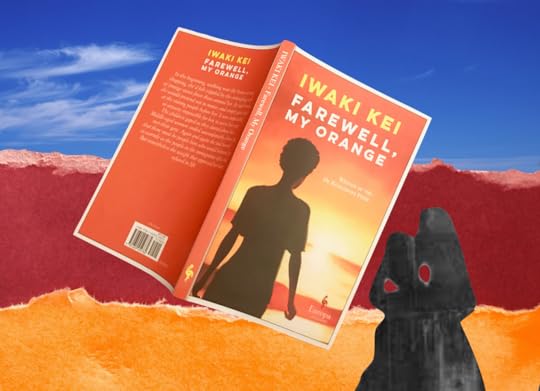
Arrivederci, arancione

Rate this book
Australia, primi anni Duemila. Salima è una rifugiata di origine africana costretta a lasciare la propria terra insieme al marito e ai figli. È analfabeta e non conosce la lingua inglese, ma è una donna forte e determinata. Spera di integrarsi, e dopo mesi di puro sconforto in cui, tra le altre cose, deve affrontare la separazione dal marito, decide di trovarsi un lavoro e frequentare una scuola di inglese.
È in questo frangente che conosce una donna asiatica, Riccio, con cui inizia una timida amicizia. La storia di Salima è intervallata dalle lettere che una donna giapponese di nome Sayuri scrive al suo vecchio professore di lingua inglese. Come Salima, anche Sayuri è emigrata in Australia. È moglie e mamma a tempo pieno, con un sogno nel cassetto: scrivere un romanzo in lingua inglese. E non si limita a sognare. Spronata dal suo ex insegnante, riprende in mano i vecchi lavori e comincia a seguire un corso di inglese. Le compagne di corso sono tutte simpatiche, ma è in particolare con una donna africana di nome Nakichi che Sayuri stringe amicizia.
Le storie di Salima e Sayuri si intrecciano così in una narrazione a voci alternate, in cui ciascuna racconta dell’altra in un gioco letterario elegante e armonioso. Un’amicizia femminile capace di scavalcare culture e tradizioni, all’insegna di un’integrazione possibile in un mondo – l’Australia – lontano tanto dalle due protagoniste quanto dal lettore, ma che nei suoi tramonti nasconde lo stesso arancione dei cieli dell’Africa e del Giappone.

160 pages, Paperback

First published August 30, 2013

13 people are currently reading
818 people want to read

About the author

Kei Iwaki

3 books4 followers
Iwaki Kei (岩城けい)was born in Osaka. After graduating from college, she went to Australia to study English and ended up staying on, working as a Japanese tutor, an office clerk, and a translator of product manuals before marrying another Japanese expatriate. The country has now been her home for 20 years and counting. Her debut work Sayonara, Orenji (Farewell, My Orange) garnered the Dazai Osamu Prize in 2013 and the Kenzaburo Ōe Prize in 2014.

From https://www.europaeditions.co.uk/auth...

Ratings & Reviews

What do you think?
Rate this book

Friends & Following

Create a free account to discover what your friends think of this book!

Community Reviews

5 stars
101 (22%)
4 stars
198 (43%)
3 stars
122 (27%)
2 stars
26 (5%)
1 star
4 (<1%)
Displaying 1 - 30 of 81 reviews
Profile Image for Mary.
476 reviews945 followers
January 26, 2021
Unfortunately, this is not the story of Trump’s impeachment.

9/24/2019 Update Or maybe it is.

1/25/2021 Update Here we go again.
Profile Image for Claire.
811 reviews366 followers
November 25, 2018
For the first fifty pages, I was a little unsure what I thought about the story, and I found the blurb a little disconcerting because it didn't seem to tie up with the names in the story I was reading.

The story centres around a young African migrant woman named Salimah, who has found herself a job in the supermarket, she has two boys and a husband who left her as soon as they arrived in this foreign country. She also attends an English class for learners of a second language, where she meets a Japanese woman named Echnida who brings her small baby to class, an older Italian woman Olive, a group of young Swedish 'nymphs' and her teacher. She makes observations about her classmates and her life, as she tries to learn the language that is her entry into this foreign place.

Alternatively the narrative includes letters written to an English teacher from a Japanese student recording details of her life in the same town, with what seem to be the same people, except the names are different. Initially this is confusing, but it was clear to me they were the same people. I couldn't figure out what the author was doing by this and actually read most of the novel thinking it was a mistake, albeit a consistent one. Of course, being a prize winning novella, it isn't a mistake.

This woman, whose letters are signed 'S' has sent a manuscript to her teacher entitled 'Francesca' the letters thank her for her input and update her on her life. Following her academic husband around has meant suspending her own university studies, something the teacher encourages her to continue with. In her first letter, she writes that she hopes she might find a teacher like her in the new town she has moved to and reflects on learning a foreign language:
"While one lives in a foreign country, language's main function is as a means of self-protection and a weapon in one's fight with the world. You can't fight without a weapon. But perhaps its human instinct that makes it even more imperative to somehow express oneself, convey meaning, connect with others."

In her next letter she has found a new class and mentions the older woman with three grown up children, who was itching to look after baby, and a woman who she thinks might be a refugee from Sudan or Somalia, who works in a supermarket and is a single mother. There is her neighbour, an illiterate truckie, who she is reading Charlotte's Web to on the stairs, an arrangement they have come to, related to the unwanted noise of another neighbour whose incessant drumming has made them unlikely allies.

Ultimately, apart from the confusion of names that slightly interferred with the initial reading experience, I actually loved this novella. After page 50 I highlighted so many pertinent passages. For me, it gave a unique insight into the lives of three women from three different cultures and countries and their experience of living in a foreign country where they don't have a complete handle on the language, through the narrative we see things from their perspective, with only a little knowledge of their background, but enough to realise that their reactions to things are going to be different from each other and also from the local population.

Over the period they know each other, something changes in their lives, and they have the opportunity to grow a little closer and develop something of a new friendship, connection. We see how this human contact and care helps them overcome the adversity of their individual situations.

Salimah is asked by the school teacher at her son's primary school to give a presentation on growing up in 'her African village', this becomes a significant project for her, that the teacher and her friend Echidna help her with. She reads to the class about her life, narrating with the simplicity of a child's story, a presentation that enraptures the children, even if it wasn't what the teacher expected.
When Salimah finished reading, the children sat in silence. The teacher frankly thought that that the story was too personal to be much use for the children's projects. But it was certainly 'an Africa you could never learn about from the class material.' What's more, after hearing the story the children were extremely quiet, and young though she was, she had learned from experience that when children are truly surprised or moved they forget how to express themselves and say nothing, so she waited for them to slowly begin to talk again.

As time passes, new developments replace old situations, opportunities arise, Salimah's son begins to be invited to playdates with a school friend, a pregnancy brings the women together and it is as if they create a community or family between them.
Suddenly everyone in the room was laughing. With her own bright laughter, Salimah felt a great gust of air that had long been caught in her throat come bursting forth, and was aware of something new approaching within her as she drew fresh breath.

It is a unique insight into the intersection of lives that are so foreign to each other and to the culture within which they now live and how the old familiar references no longer help and new connections are slowly born, without expectation. It is about the common thread of humanity that can be found, if we let go of the familiar and are open to new experiences, to helping each other without judgement.

I absolutely loved it and was reminded a little of my own experience sitting in the French language class for immigrants, next to woman from Russia, Uzbekistan, Cuba and Vietnam, women with whom I could only converse with in French and a teacher who only spoke French (or Italian). So many stories, so many different challenges each woman had to overcome to cope with life here, most of it unknown to any other, worn on their faces, mysteries the local population is unconcerned by.
Profile Image for Eric Anderson.
716 reviews3,928 followers
December 17, 2018
There’s perhaps no greater challenge to one’s sense of self than travelling to a foreign country where you don’t speak the language. This experience is so instantly disorientating and isolating that you’re forced back into a state of infantilism struggling to communicate what you mean with those around you. It also provokes self-reflection making you consider assumptions about the meaning of culture and language. Whenever I’ve spent time in a foreign country I’ve felt simultaneously energised with curiosity and very vulnerable as I pondered these issues. This experience is powerfully conveyed in Iwaki Kei’s novella “Farewell, My Orange”. The story primarily focuses on the experience of two women who move to Australia: Salimah from Nigeria and Sayuri from Japan. They meet in an English language class. Gradually they form a bond amidst their different feelings of estrangement and establish a more robust sense of independence. It’s a poignant tale of friendship that considers the ways in which meaning is filtered through language.

Read my full review of Farewell, My Orange by Iwaki Kei on LonesomeReader
Profile Image for Calzean.
2,770 reviews1 follower
February 18, 2020
The author is Japanese but has lived in Australia for 20 years. Her book has been translated from Japanese and covers the story of the friendship of a two women (and a third later on) living in a coastal town somewhere on the South East coast of Australia.
The main story traces Salimah the Nigerian refugee who arrives with her family escaping from violence and hoping for happiness. She arrives unable to speak English and enrols in a local ESL class where she first meets the Japanese Sayuri who is waiting for permanent residency with her husband and new baby. Salimah is uneducated and is soon a sole parent, Sayuri is well educated but has her own problems. There is a third friend in the 50ish Greek woman who adds an important dimension to the story.
The two main characters have their separate struggles, tragedies and hopes. They show that behind everyone there is a history and a future. The women, their work supervisor, ESL teacher and various lesser characters show the good in people. The three ladies show the strength of women for compassion, resilience and empathy.
Well written and touching. A little gem of a book.
Profile Image for Tommi.
243 reviews150 followers
January 16, 2019
Being a novel by a Japan-born author who writes about a Nigerian woman living in Australia, Iwaki Kei’s Farewell, My Orange certainly has an interesting premise, and not the least because the absence of Europe and Northern America is itself something you don’t, after all, see that often in novels in English. (Stories of, say, immigration tend to have either of them as the destination.) But the English language is at the center of this book, as Salimah, arrived from Nigeria, and Sayuri, from Japan, attend an English class in Australia, and navigate their new reality on a new continent. The language barrier does not prevent them from slowly forming a friendship, and there is something very heartwarming in the story that is hard to pinpoint exactly.

Yet I’m not saying that this is necessarily the typical sort of a “feel-good” or “uplit” novel. It contains, for instance, quite a lot of serious commentary on living as a foreigner in a new place, and it ends with a fantastic, slightly metatextual trick (which I shall not spoil in this review – just wait for it), which raises questions of cultural appropriation. There’s plenty of coping with loss, too. But the novel’s title itself signals a theme of universality, referring to the way that – excuse my Shakespeare – “the self-same sun that shines upon his court / Hides not his visage from our cottage but / Looks on alike.” Orange prevails through the novel as a color of comfort for Salimah, for whom one of the only pleasures in her new situation is the fact that the sun sets similarly no matter where you are:

Watching the sun slowly rising into the ultramarine sky, its orange tinge spreading, the trapped, despairing feeling that had been haunting her suddenly lifted. […] The orange seemed almost to drip fresh and sweet from deep within the slightly oval disc of the sun, to comfort her.

Interspersed with the narrative of Salimah and Sayuri we find an email exchange between a student and a teacher, seemingly unrelated to the main narrative, but which by the end makes much more sense in terms of the whole.

A slight tangent, but, as a northern European, I couldn’t help paying closer attention when Salimah ruminates on some of the female students from her class. I found the perspective simultaneously interesting, sad, and funny:

The nymphs had come to Australia as tourists, and they were due to go home again come summer. Those northern European countries looked after their citizens well, and they had an affluent air about them. Their happy future seemed to become tiny particles that imbued their golden hair; it was as if transparent light poured from their bodies, thought Salimah as she looked at them. The delicate wings of light at their backs seemed to unfold, and they were fairies flitting from flower to flower. Just to see them made Salimah’s heart swell gently. And then, too, their English was so good.

Farewell, My Orange is an unexpected gem of a book, one that is easy to recommend to just about anybody. It won the Ōe Kenzaburō Prize in Japan in 2014, but the English translation, from the pen of Meredith McKinney, has not received the attention it arguably deserves. Here’s to hoping that it will get a nudge from the Man Booker International Prize in a few months.
Profile Image for Emmkay.
1,394 reviews146 followers
April 18, 2021
An understated story of friendship among women immigrants to Australia, who meet in an ESL class in their country town. They consist of an African refugee supporting her two sons cutting meat and fish at the local supermarket, a young mother from Japan who has had to forgo finishing her graduate work for her husband’s career, and, less prominently, an older Italian woman whose brusque manners mask her challenges.

Interestingly, the author has lived in Australia for twenty years but wrote the novel in her native Japanese. It shared qualities with some Japanese novels I’ve read too - simply and sometimes movingly told. I found the structure (which is more complex and meta than it seems at first) and style a bit awkward from time to time, but was glad to have read it.

The observations about language throughout were especially thought-provoking (eg. “The proximity of the subject and the predicate of sentences in English makes me more daring in what I write,” “We trust our first language most because it directly expresses our culture and our ways of thought. Actually, without an absolute faith in a first language you cannot nurture a second one. But it seems to me that this second language acquisition... can actually give birth to new values and ways of expressing oneself.”). 3.5.
Profile Image for Marian.
285 reviews217 followers
February 7, 2024
I picked this up on a whim at the library because the blurb sounded so intriguing - a Japanese woman and a Nigerian woman cross paths in Australia. I was disappointed how pedestrian the book actually felt. Some traumatic events occur, yet I had a hard time connecting with them or with the characters, especially when those conflicts resolved without too much difficulty. The two protagonists were also giving a bit of Mary Sue... they hardly seemed like real women with complex personalities and flaws; they seemed more like stand-ins for the author's messages about prejudice, language, and motherhood. The messages are fine and important, but presenting them in a heavy-handed way doesn't make for great reading. (Perhaps this is a fault of the translation?) By the end of the book I was really annoyed, and overall it wasn't worthwhile for me.
Profile Image for Crazytourists_books.
640 reviews67 followers
May 4, 2021
I'll start by saying that I really loved this book!
Living in a foreign country myself and even though i am fluent to the language (there are of course moments that I can't understand what I am told), I do understand the sence of being isolated and unable to fit in and the struggle to go on with your life and provide for your kids.. And those feelings are very well described in this book.
Profile Image for Shawn Mooney (Shawn Breathes Books).
707 reviews721 followers
did-not-finish
April 15, 2021
Bailed just under half way through. I absolutely loathed the obtuse use of language in this novella with two second-language speakers of English as its main characters. It very self-consciously foregrounds learning English as the main focus of the story, yet the novella consists of linguistically preposterous dialogue and letters that strained my credulity to the breaking point.
Profile Image for Tripfiction.
2,045 reviews216 followers
December 6, 2018
A novel of AUSTRALIA, a very foreign land....


Salimah is a Nigerian who has come to Australia as a refugee. She travelled with her husband (who rapidly deserts her…) and her two boys. She gets a job cutting and packing meat and fish for a supermarket. Sayuri is the wife of a Japanese academic who has come to work at a university in small town Australia. She has a small child.

What they have in common is their lack of spoken or written English which isolates them from the local community. They attend classes to remedy this… Salimah is uneducated, Sayuri is a university graduate. Sayuri helps Salimah in her studies, and they slowly become friends. Tragedy then strikes for both of them, and their bond becomes closer. As their English improves, they gradually become better integrated – and both begin to flourish.

Farewell, My Orange demonstrates the power, and necessity, of language for someone trying to assimilate into a new existence in a very foreign land. Without language ability, it is all so much harder. With language ability, it all becomes so much easier.

Farewell, My Orange is a slim volume (only 135 pages in the edition I read), but it is a very moving account of two very different people and their struggle to become part of a community in a country they have adopted as home.

A book to make you think.
Profile Image for Deborah.
315 reviews
December 10, 2018
No surprise that this novel by Japanese author, Iwaki Kei, won the 2013 Japanese prize for literature.

Beautifully written story of two immigrants in Australia, navigating isolation and a new language.

With passages such as this: “Often, she cried as she showered. She twisted the two taps, the one with the blue circle and the one with the red circle, in a single movement, then stood stock-still under the water that spurred from the lotus-shaped shower head. At that moment when the cold and hot water blended to create the perfect temperature, the tears always came. She could feel their special warmth despite the hot water streaming over her”, Farewell My Orange is a hidden gem.
Profile Image for Angela.
99 reviews6 followers
May 4, 2019
Some books stay with you after you put them down and this is definitely one that I’ll remember. What would it be like to be an outsider? To be alone in a strange country where you don’t know the language? Or to be in a totally different culture where you don’t know what is acceptable or normal?

The women in this story do not have much in common; but in the end we find they have everything in common. Can we see past our differences to find a bond? That is our challenge and our duty.
48 reviews
November 16, 2015
The book was very simple and short, only took me 3 hours to finish. But it was well written. I was able to relate myself to those two main characters in the story. The book made me want to challenge more.
Profile Image for Karin.
1,495 reviews55 followers
January 1, 2019
I read this novella as my final book of 2018. Only 125 pages, but covers Australian immigration, racism, motherhood, second languages, the meaning of self sufficiency and work. I am not sure yet if it's a 4 or 5 star, but either way, it's really quite good.
Profile Image for Mariaelena Di Gennaro .
476 reviews140 followers
December 28, 2018
"Ho capito che non riuscire a leggere e scrivere nella propria lingua madre non è solo un disagio, porta altresì una perdita di credibilità e rispetto come essere umano.
Professore, come ben sa io e mio marito siamo venuti in questo paese con la valigia carica di sogni. Ma la realtà è davvero tosta, e anche ora che sono trascorsi sette anni dal nostro arrivo continuiamo a non avere niente. Ci tocca vivere tutti i giorni in un paese in cui ogni singola sfida avviene in lingua inglese, e per due persone che come noi non hanno né la disponibilità economica né una posizione sociale elevata, le parole rappresentano l'unico appiglio per essere trattati da esseri umani".

Un romanzo molto delicato e allo stesso tempo duro e tremendamente attuale.

Salima è una donna africana fuggita dalla povertà del proprio Paese natale insieme a suo marito e ai suoi figli. Sayuri invece è giapponese, ha da poco avuto una bambina e ha dovuto lasciare la sua terra a causa del lavoro di suo marito. La loro nuova casa sarà l'Australia, un mondo del tutto sconosciuto, così diverso da tutto ciò cui erano abituate in cui però le due donne trarranno forza l'una dall'altra, il loro incontro sarà per entrambe l'occasione perfetta per trovare il coraggio di cominciare davvero una nuova vita.
Salima e Sayuri non potrebbero essere più diverse, ma ad unirle è quella costante, dolorosa sensazione di sentirsi in ogni momento straniere nella loro nuova casa, quel vedersi sempre ai margini di una società con la quale non riescono ad entrare in sintonia, quell'essere sempre oggetto di sguardi ora curiosi, ora perplessi, ma sempre distanti da parte di chi quella terra la vive e la sente propria. La pelle nera di Salima, gli occhi a mandorla di Sayuri sono continui rimandi alla "diversità", sono richiami ad un mondo lontano che si fa fatica a comprendere e a tutto ciò si aggiunge l'enorme ostacolo della lingua inglese con la quale Sayuri, ma soprattutto Salima, devono scontrarsi. Salima è infatti analfabeta, lotta ogni giorno con una lingua incomprensibile che sente dura, feroce, inafferrabile, ma anche con le lettere, con i numeri, con la lettura e la scrittura, una lotta dalla quale sembra uscire sempre sconfitta. Le riflessioni linguistiche contenute nel romanzo sono state tra le cose che ho preferito perché le ho trovate vere, estremamente realistiche e hanno restituito perfettamente le difficoltà di chi si ritrova a dover cominciare una nuova vita in un posto che non conosce e non comprende. Non padroneggiare la lingua significa sentirsi perennemente esclusi, essere sempre soltanto degli "ospiti" e mi è piaciuto il fatto che l'autrice abbia insistito molto su questo aspetto.
Unica pecca per me è l'inserimento di un personaggio maschile che ho trovato inutile ai fini della storia e che sinceramente avrei preferito non ci fosse, dato che a mio parere non aggiunge nulla di significativo alla vicenda e a tratti la sua presenza mi sembrava quasi fastidiosa.
Si tratta di una storia che affronta diverse tematiche molto attuali, come l'emigrazione, il sogno di una vita migliore, ma anche la violenza, l'abbandono, il dolore, il sacrificio. La definirei però soprattutto una storia di coraggio, di amicizia e di rinascita e ve la consiglio assolutamente :)
Profile Image for Miles Edwin.
427 reviews69 followers
May 26, 2020
But the cultivation of the written word, the language that sustains thought, is an individual matter, a thing that endlessly changes as it’s propagated inside each person’s head. It’s like planting seeds of language deep inside the heart. It’s simple when you’re young, but with the passing years it can get difficult to dig into the hardened earth. I’m neither young nor very old yet, and my hope is that I can use not only the visual input of reading but the output of writing, however clumsy, till one day a whole forest of language has grown into the soil of my heart.

4.5

Farewell, My Orange is a tender, moving look at friendship, culture, language, and belonging. In a small town in Australia, two women meet at their English language class, one who moved from Japan seven years prior with her husband and baby, the other more recently from Africa who was abandoned by her husband shortly after arriving and left to raise their two sons by herself. Their relationship is explored in a realistic way; they don't immediately become inseparable, and it's mostly in hindsight that they realise how important they were to one another in their times of difficulty. Kei handles the subject of racism brilliantly without permitting it to take centre stage and overshadow her characters - it affects them, it's something they know is going on around them but they thrive anyway, taking pride in their identity and their own story.

I could've easily read another 100 or so pages of this book...I didn't really want it to end. The only reason it's not 5 stars is that I felt like there needed to be a little bit more. The pacing near the end was slightly rushed, in my opinion, and I wanted Kei to slow down a little and let the characters exist for a while longer.
Profile Image for Sonia Francis.
189 reviews13 followers
April 9, 2020
We have so much in common than what tears us apart.
Reading “Farewell , My Orange “ showed and told me how true that is; we as humans have one common thread running through us; family, relationships, marriages, births, death and let’s throw in seeking a better life through migration.
This novella warmed my heart and filled it up with hope for humanity.
Salima and Sayuri showed us how to come together. They showed us that death, joblessness, language differences, education, marriage and parenting has no boundaries when cracks appear in our lives. That we do what we have to do in order to survive for the sake of family.
Salima is from Nigeria, Sayuri from Japan. They meet in Australia at a supermarket and forms a friendship with a “no judgment “ bond. Tragedy enters both their lives and they look to each other for comfort and sustenance. I wish to read more of these women who did not allow language that they did not own get in the way. This novella shows us the need for each other. I love this
book.
385 reviews8 followers
April 24, 2019
This was definitely a good book to start the year with. I have always been a sucker for prose that has poetry embedded in it. In this, Salimah's constant in her shadow and her orange sun, Sayuri's untethered life in Australia and yet her connection to her teacher was just something that I kept thinking about. There were some really strong, intense moments, that just happened in the background, that ought to shock you, but instead of focusing on those events, the author chose to write about how it transformed the protagonists, and it was just beautiful. I do think it was too small a book, I wish it was longer. It filled my heart with love and hope for both these characters, and my love for poetry was reborn as well.
Profile Image for Ally.
493 reviews5 followers
February 25, 2024
“Every day another weak little language becomes extinct. English is so powerful today that any language that belongs to a land without economic or political clout must bow at the feet of this vast monster.”

I adored this book. When I first began it I did not know what to think about it or what to expect. But this novella has a fierce impact. It’s a story of being relocated in a place you do not understand and do not feel to belong on. It’s a story of language and communication. It’s a story of identity - as a person, a woman, as a piece of a larger whole - and of friendship. It’s a story of strength.
Profile Image for Jean.
411 reviews73 followers
March 14, 2020
I have never been to a country where someone wasn't readily available to interpret and decipher the language for me. This small book does an excellent job of starting the wheels of my mind turning in the direction of just such a thing. Salima is from Nigeria and Sayuri is from Japan and both have migrated to Australia and neither speak the native language.

Sayuri has a college degree and Salima is uneducated yet they become life-long friends as try they
to master a new tongue and new culture amid prejudices against them.

Beautiful story that somewhat depicts that in life we are more alike than different.


Profile Image for Lashawn .
401 reviews
September 3, 2020
The orange of Iwaki Kei, Farewell, My Orange is not citrus fruit in the title of this vivid debut novel is about the vivid color of the sunrise offers one of the key characteristics of warmth and harmony in her homeland. From the beginning, the book may not be as it appears. Many tips early on show that a reader must and should pay incredible attention to the stories told or they will misinterpret them. Printed very warmly, Farewell, My Orange provides bravery in the face of difficulty. The readers will see a moving picture of our needs for others and the promise of success and improvement.
801 reviews1 follower
March 9, 2021
So I picked this up specifically to meet a color challenge in my annual reading challenges. Turns out, it's real good. A short book, it's about immigration, tragedy, family, and most importantly language. A really well done and moving book.
Profile Image for Tessimo Mahuta.
56 reviews7 followers
August 29, 2021
A short, sharp read about the lives of two women, one Nigerian and one Japanese, who have lost their families and struggle to find solace after immigrating to Australia. Although not too much happens, Iwaki really hits hard with her straightforward prose and unflinching observations of parenthood, sacrifice, and the soft weaponisation of the English language.
Profile Image for ☆ lydiature ☆.
426 reviews86 followers
October 10, 2025
a wholesome exploration on friendship, seeking a better life in the face of adversity, and loss. really enjoyed this. i haven’t read a single book from europa editions that’s been less than 4 ⭐️ . i think they’re my favorite publisher!
Profile Image for Lyndal Phillips.
56 reviews3 followers
December 23, 2018
In Farewell, My Orange we meet two immigrant women, Salimah from Nigeria and Sayuri from Japan living in a small coastal town in Australia. The women meet in an English class at the local university and work together on the night shift at the local supermarket.
Both women experience great tragedy and demonstrate enormous fortitude in the face of adversity.
This book reminded me how empowering it is to be able to tell your own story, and how courageous it is to do so in a language that is not your own.
A debut novel of 133 pages filled with insight and beauty.
Winner of Japanese literary awards including the Ōe Kenzaburō Prize and the Dazai Osamu Prize.
Profile Image for Macushla.
51 reviews
December 17, 2021
This is the story of two women from vastly different backgrounds both navigating the terrors and joys of living as an immigrant in small town Australia.

Much of this book was really lovely. The development of the characters is mostly internalised, being told through third-person limited for Salimah and first-person epistolary format for Sayuri. Neither see much more of the other than is indicated in their individual chapters, giving them the feeling of being friendly but almost entirely separate to each other. For this reason, while friendship is referenced frequently, it would be wrong to say this was a novel about friendship.

My hackles were raised a little on the first page when Salimah, crying in the shower, gives a strange, exoticised account of her own naked body. She describes the water bouncing off her hair which is "so curly that a comb could barely get through it" after which her skin is extensively described as "black skin...sleek and glossy and fine tanned leather" before concluding with mentioning how even though she has given birth twice her curves are taut and smooth. It all comes across a little voyeuristic.
I could have forgiven this uncomfortable start if the book didn't then subsequently opine over a group of Scandinavian students as being so perfect and nymph-like that you expected to see them sprout angel wings, a subject which is revisited multiple times. Then again during a completely non-sexual scene Salimah is described as having a "slender body".
It is a very limited spoiler to say that at the end of the book it is implied that Sayuri has written the whole novel that you have just read so perhaps the jarring feeling of listening to a Japanese woman describe a Black woman's body on her behalf is canon in the story as well as the case in real life? It is worth noting that the only physical description Sayuri requires is that she is small and has pointy black hair like an echidna. Perhaps I am coming across as overly reactionary but given the way that Black women's bodies have been externally regarded throughout history there is something about the descriptions chosen that rankles.

While the themes of hope, family and resilience are reinforced throughout (if sometimes a little clumsily) Salimah's sections tended to ring slightly false to me. In contrast, Sayuri's sections seem more normally portrayed but that comes at the detriment of being a little dull and repetitive as she rehashes how distant her husband is and the intricacies of language over and over in each letter. I did sometimes wish that a couple of Sayuri's sections would deviate from the epistolary format because so much emotion is skipped when only reading casual letters written to one's English teacher.

The book is written beautifully and I do feel involved in the lives of these two women to a certain degree but for me an African woman (by the way, which country in Africa is never even mentioned, she's just 'African') written through a peephole by an Asian author has the same lack of verisimilitude as she would if written by a Caucasian author.
Author 24 books22 followers
January 27, 2024
I must be in the minority that didn't feel strongly for this book. I wanted to like it, really I did. I picked it up because I wanted a short read and I wanted to read something "different". I didn't want to read the normal stuff the bookshops will flog you in their top bestseller list; the formulaic stuff; the stuff that you go on social media and everyone tells you to read which is usually the same as the bookshop's bestseller list. I wanted to discover something great outside that and the blurb to this looked good.

Unfortunately this did not entice and it's the kind of thing that makes people think "Damn, at least the bestseller stuff is safe." Which is bad because I strongly believe in exploring different authors, outside the established top best-known ones.

OK, the good parts? I like that this is set in Australia. I like that it tries to explore the difficulties of two women who are displaced due to language problems. I found Salimah's story quite interesting at least to start off with and I felt engrossed with her having to read the weather report. I started to think about how I would approach learning a new language. I felt for her.

This a book from 2 points of view - Salimah and Sayuri. Salimah's story is third person and Sayuri is a first person POV told through letters/email. It's very clear when we're switching.

Or is it? It's meant to be through the font and the 2 different types of storytelling.

We start off with Salimah and then we dive into a letter addressed to "teacher" and signed "S".

Now, Salimah could be "S" and she goes to classes so she could have a teacher. The voice doesn't sound like her and the events in the letter don't seem to have anything to do with her but is this meant to be her later on when she has improved her English and she is doing something different with her life, a split time narrative?

No, it turns our there is someone else called S and that's Sayuri and that's revealed later. You have to read carefully and note a few clues in Salimah's description of "Echidna" and then something "S" refers to in her next letter to join the dots. But it coudl be easily passed over. Or you have to guess by reading the blurb.

This kind of annoys me. Why the confusion over the first letter? Why do some writers - Iwaki Kei is not the first person to do this - write whole sections of their book where you have no idea of the context of them and therefore have to read them thnking "Why the hell am I reading this and where does it fit in and how is it meaningful?"

Signing it "S" confuses - it could be Salimah. This means either the author intended to confuse (by choosing two names starting with S and signing letters with only an initial) or he did not intend to confuse but did not clearly set up the first letter so the reader understood where it came from.

Perhaps, like it seems with some writers, he felt this was "clever" or added something to the novel. I found it annoying. It was not a big plot twist - you find out in the next letter but it means you are floundering for the next section. This wasn't the kind of story that I felt lent itself to plot twists anyway - it's not a crime mystery or something.

OK, got that off my chest.

Sayuiri's letters are very well written. Now that's one reason they are jarring. If they were as I initially thought, Salimah's (even at a later point), they didn't really fit.

Later we find that Sayuri is a better written individual than Salimah but we don't really figure out why she is at an English class. She seems better written than some native speakers and she doesn't seem to struggle. She writes that she feels odd but this doesn't translate into her style. I found this didn't work for me - a story was told that I didn't feel flowed through the voice.

As the story was about language and how it was a barrier for the women, I wanted to feel it, not just be told it. I wasn't expecting her to be as stilted as Salimagh, but she seemed not only fluent but at ease with a large vocabulary and vernacular, and very flexible in her turns of phrase.

I think the problem is that the author wants to write in a beautiful poetic style - that is lovely and it may convey the "beautiful heartbreak" theme and the relationship of two women, but when writing in first person, it does not seem very convincing when we are told one woman is attending an English language class. Even if she is a "good writer". Perhaps the story would have been better written in entirely third person. Even if there are some ESL students who are very good at writing, the audience needs to feel drawn into this world of struggle with English and if someone who claims to be struggling with it is using it with more facility than them it may not build that world for them.

I also didn't feel like I felt the characters grow much - wither with me or on me. I liked Salimah's set up but I just wanted to hear about more things happen to her so I could go on a real journey with her. There were things that happened to Sayuri that were mentioned and then didn't get very much explored. I felt there was more potential for the character development and instead the author chose to throw little bits in there to give us an idea of the women's character but not follow the threads so we could see them evolve.
Profile Image for Yuuko.
42 reviews
October 18, 2016
移民であること、異文化の中で暮らすこと、自分のアイデンティティをどうとらえるか、などのテーマは、やはり移民である自分と重ね合わせて読むことができて面白かった。そして、読みながら混乱し始めたものの、最後まで読んで納得。なるほどね。登場人物たちのこれからの幸せを願ってしまうくらい、現実味を持ってせまって来た物語でした。
Profile Image for Kieran.
514 reviews10 followers
June 29, 2019
There isn't anything awful about this book. I just didn't really find the characters that likeable or the plot engaging until the last 3rd.
Displaying 1 - 30 of 81 reviews

Can't find what you're looking for?

Get help and learn more about the design.