

What do you think?
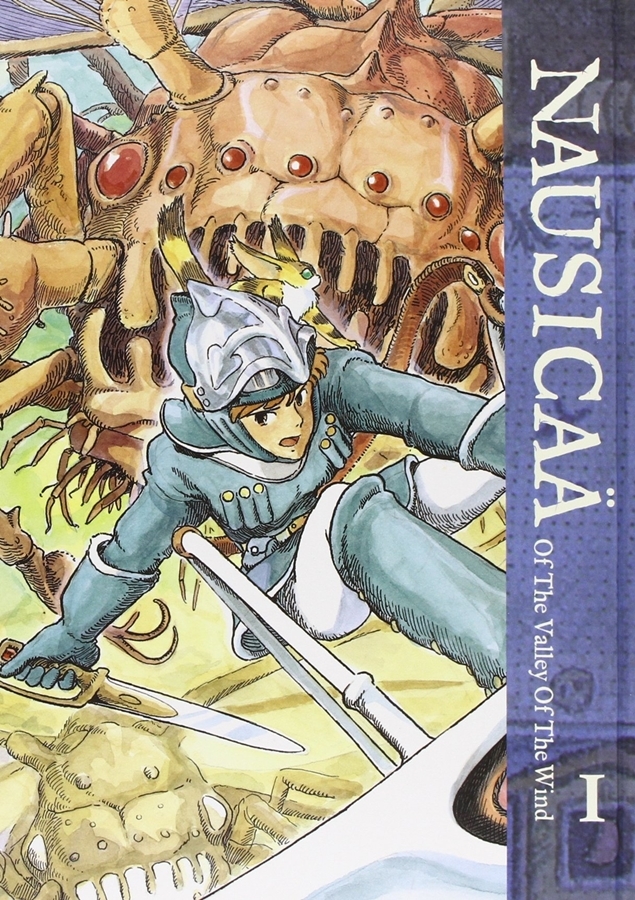
風の谷のナウシカ [Kaze no Tani no Nausicaä] #1-4
Nausicaä of the Valley of the Wind, Deluxe Edition 1
[ Box Set |
Book 1
| Book 2 ]
Nausicaä of the Valley of the Wind is an epic fantasy tale written and illustrated by legendary Studio Ghibli director Hayao Miyazaki, creator of My Neighbor Totoro, Spirited Away and Howl’s Moving Castle. A modern masterpiece, the entire series is now available in this deluxe box set containing two hardcover volumes with interior color pages and a bonus poster.
Nausicaä of the Valley of the Wind is an epic fantasy tale written and illustrated by legendary Studio Ghibli director Hayao Miyazaki, creator of My Neighbor Totoro, Spirited Away and Howl’s Moving Castle. A modern masterpiece, the entire series is now available in this deluxe box set containing two hardcover volumes with interior color pages and a bonus poster.
560 pages, Hardcover
First published November 6, 2012
About the author
Hayao Miyazaki
374 books3,654 followersHayao Miyazaki (Japanese: 宮崎 駿) is a celebrated Japanese animator, filmmaker, screenwriter, and manga artist, widely regarded as one of the most influential figures in the history of animation. He is the co-founder of Studio Ghibli, the animation studio responsible for producing many of Japan’s most beloved and internationally acclaimed animated films. Over the course of a career spanning decades, Miyazaki has developed a reputation for creating visually rich, emotionally resonant stories that often explore themes such as nature, pacifism, flight, childhood, and the human condition.
Miyazaki was born in Tokyo and developed an early interest in drawing and animation. His father’s work in the aviation industry had a significant influence on him, particularly in fostering his fascination with aircraft and flight, motifs that would become prominent throughout his later works. After studying political science and economics at university, Miyazaki began his professional career in animation when he joined Toei Animation. There, he worked under the mentorship of directors like Isao Takahata, with whom he would later form a lifelong creative partnership.
In his early years at Toei and other studios, Miyazaki contributed to several television series and animated films. He worked as a key animator and storyboard artist, gradually gaining recognition for his storytelling abilities and attention to detail. Among his early projects were contributions to series such as Heidi, Girl of the Alps and Future Boy Conan. His directorial debut in feature films came with The Castle of Cagliostro, a film adaptation of the Lupin III manga series, which already showed signs of his distinctive style and sensibilities.
Miyazaki's breakthrough came with the film Nausicaä of the Valley of the Wind, based on his own manga. The success of that film prompted the establishment of Studio Ghibli, which he co-founded with Takahata and producer Toshio Suzuki. From that point forward, Miyazaki directed and wrote many of Ghibli’s most iconic works, including My Neighbor Totoro, Kiki’s Delivery Service, Porco Rosso, Princess Mononoke, and Howl’s Moving Castle. His films are known for their hand-drawn animation, strong character development, and philosophical underpinnings.
In 2001, Miyazaki directed Spirited Away, which became one of the most critically and commercially successful animated films of all time. The film received numerous awards and international recognition, including an Academy Award for Best Animated Feature. It also became the highest-grossing film in Japanese history at the time of its release. The film’s success further solidified Miyazaki’s reputation as a master storyteller and a visionary in global cinema.
Despite announcing his retirement several times, Miyazaki repeatedly returned to filmmaking. His later works, such as Ponyo and The Wind Rises, continued to showcase his evolving themes and storytelling maturity. His most recent project, The Boy and the Heron, marked a highly anticipated return to the director’s chair and once again captivated audiences with its dreamlike visuals and emotional depth.
Miyazaki’s films are often distinguished by their complex female protagonists, environmental messages, and moral ambiguity. Rather than presenting clear-cut villains and heroes, his stories explore the nuances of human behavior and often focus on characters finding their place in the world. Throughout his career, he has received numerous accolades and honors for his contributions to the arts, including lifetime achievement awards recognizing his impact on both Japanese and international cinema.
His legacy continues to influence generations of animators and filmmakers worldwide, and Studio Ghibli remains one of the most respected names in animation.
Miyazaki was born in Tokyo and developed an early interest in drawing and animation. His father’s work in the aviation industry had a significant influence on him, particularly in fostering his fascination with aircraft and flight, motifs that would become prominent throughout his later works. After studying political science and economics at university, Miyazaki began his professional career in animation when he joined Toei Animation. There, he worked under the mentorship of directors like Isao Takahata, with whom he would later form a lifelong creative partnership.
In his early years at Toei and other studios, Miyazaki contributed to several television series and animated films. He worked as a key animator and storyboard artist, gradually gaining recognition for his storytelling abilities and attention to detail. Among his early projects were contributions to series such as Heidi, Girl of the Alps and Future Boy Conan. His directorial debut in feature films came with The Castle of Cagliostro, a film adaptation of the Lupin III manga series, which already showed signs of his distinctive style and sensibilities.
Miyazaki's breakthrough came with the film Nausicaä of the Valley of the Wind, based on his own manga. The success of that film prompted the establishment of Studio Ghibli, which he co-founded with Takahata and producer Toshio Suzuki. From that point forward, Miyazaki directed and wrote many of Ghibli’s most iconic works, including My Neighbor Totoro, Kiki’s Delivery Service, Porco Rosso, Princess Mononoke, and Howl’s Moving Castle. His films are known for their hand-drawn animation, strong character development, and philosophical underpinnings.
In 2001, Miyazaki directed Spirited Away, which became one of the most critically and commercially successful animated films of all time. The film received numerous awards and international recognition, including an Academy Award for Best Animated Feature. It also became the highest-grossing film in Japanese history at the time of its release. The film’s success further solidified Miyazaki’s reputation as a master storyteller and a visionary in global cinema.
Despite announcing his retirement several times, Miyazaki repeatedly returned to filmmaking. His later works, such as Ponyo and The Wind Rises, continued to showcase his evolving themes and storytelling maturity. His most recent project, The Boy and the Heron, marked a highly anticipated return to the director’s chair and once again captivated audiences with its dreamlike visuals and emotional depth.
Miyazaki’s films are often distinguished by their complex female protagonists, environmental messages, and moral ambiguity. Rather than presenting clear-cut villains and heroes, his stories explore the nuances of human behavior and often focus on characters finding their place in the world. Throughout his career, he has received numerous accolades and honors for his contributions to the arts, including lifetime achievement awards recognizing his impact on both Japanese and international cinema.
His legacy continues to influence generations of animators and filmmakers worldwide, and Studio Ghibli remains one of the most respected names in animation.
Ratings & Reviews
Friends & Following
Create a free account to discover what your friends think of this book!
Community Reviews
Displaying 1 - 30 of 100 reviews
April 5, 2020
The first manga I have ever read and my introduction to this large omnibus edition of Nausicaä of the Valley of the Wind from the peerless Hayao Miyazaki. I am glad that this tome is my first introduction to manga; I have watched the animated film with the same name more times than I can remember and had high expectations for the manga.
Nausicaä of the Valley of the Wind the manga exceeded all of my expectations, it has some parallels with the animated feature but is so much more. The animated feature is definitely the abridged version, the manga has so many changes including greater world building and depth into characters and their moitivations. Miyazakis formidable talent as an artist, animator & story teller are on display in this magnum opus.
Nausicaä features a sweeping epic story set in a post apocalyptic world with an ecological message. We have a strong female lead in Nausicaä, the Princess of the Valley of the Wind and her quest that is tied to a prophecy that will feature her bringing peace to the world in turmoil.
All of the traits I love in Miyazaki stories feature here in abundance; strong female characters, redeemable bad characters that have clear motivations that readers can emphasise with, science fiction elements with Miyazakis passion for planes & technology, an ecological tale with heart.
This story is gritty & far more than the escapism you would expect from an adventure Manga. Death, loss, the tragedy of war, political intrigue, in fighting royal families and power struggles are the hallmarks of Nausicaä of the Valley of the Wind. This manga is epic with the story told against the backdrop of the mystery of the Ohmu and the poisonous forest.
I definitely recommend this for anyone who appreciates Hayao Miyazakis genius. What he has achieved here far exceeds expectations and I can't wait to read the next installment. Who knew that Miyazaki is such a story teller? I guess I knew but I didn't realise that he was a 1000 page manga masterwork type of story teller...now time for part two!
Nausicaä of the Valley of the Wind the manga exceeded all of my expectations, it has some parallels with the animated feature but is so much more. The animated feature is definitely the abridged version, the manga has so many changes including greater world building and depth into characters and their moitivations. Miyazakis formidable talent as an artist, animator & story teller are on display in this magnum opus.
Nausicaä features a sweeping epic story set in a post apocalyptic world with an ecological message. We have a strong female lead in Nausicaä, the Princess of the Valley of the Wind and her quest that is tied to a prophecy that will feature her bringing peace to the world in turmoil.
All of the traits I love in Miyazaki stories feature here in abundance; strong female characters, redeemable bad characters that have clear motivations that readers can emphasise with, science fiction elements with Miyazakis passion for planes & technology, an ecological tale with heart.
This story is gritty & far more than the escapism you would expect from an adventure Manga. Death, loss, the tragedy of war, political intrigue, in fighting royal families and power struggles are the hallmarks of Nausicaä of the Valley of the Wind. This manga is epic with the story told against the backdrop of the mystery of the Ohmu and the poisonous forest.
I definitely recommend this for anyone who appreciates Hayao Miyazakis genius. What he has achieved here far exceeds expectations and I can't wait to read the next installment. Who knew that Miyazaki is such a story teller? I guess I knew but I didn't realise that he was a 1000 page manga masterwork type of story teller...now time for part two!

July 9, 2018
Review of the whole series
Consider my mind blown. Nausicaa's story touches something buried very deep inside of you. Something all humans possess, all life forms and perhaps, even all non-living things - the will to exist. It is the primal urge of all matter in the universe and it is the one thing that connects us all, despite our many superficial differences. Its a concept which is very complex and simple simultaneously and not many writers are able to touch those particular strands of existentialism in a reader. Reading Nausicaa is a reminder that "I am alive."
You are alive. And for a few moments, you become conscious of your every breadth, of every organ, of every sensation. You are hit with the brilliant realization that what an amazing thing it is to exist. These are powerful and ancient emotions. And if a book that is making you feel this is not a good book then I don't know what is.
Nausicaa is a multi-layered saga which explores concepts transcending the genre it represents. Yes, it is a sci-fi ecological fantasy driven by a mary-sue-esque heroine who is trying to save humanity from itself. Yes, it is action-packed, full of amazing world building and some of the most brilliantly written characters. That is all true. The sheer number of narrative shifts in the story is staggering. It smoothly and seamlessly traverses from being a nature fiction, to epic war fantasy, to philosophical literature, to war fantasy again, to a kids' tale, to a dystopia, to magical-realism and to so many things that I don't even have names for. There is just no way to pin-point at what the story is actually about until you have read all of it - and maybe not even then.
It's hard to write a review for a piece of work when you know you loved it but are also aware that you have probably missed alot of things that would have made you love it even more. This is the kind of book that readers look for. This is why readers read. We go through all the pain, effort and terrible books to find stories like this.
My Bookstagram
Consider my mind blown. Nausicaa's story touches something buried very deep inside of you. Something all humans possess, all life forms and perhaps, even all non-living things - the will to exist. It is the primal urge of all matter in the universe and it is the one thing that connects us all, despite our many superficial differences. Its a concept which is very complex and simple simultaneously and not many writers are able to touch those particular strands of existentialism in a reader. Reading Nausicaa is a reminder that "I am alive."
You are alive. And for a few moments, you become conscious of your every breadth, of every organ, of every sensation. You are hit with the brilliant realization that what an amazing thing it is to exist. These are powerful and ancient emotions. And if a book that is making you feel this is not a good book then I don't know what is.
Nausicaa is a multi-layered saga which explores concepts transcending the genre it represents. Yes, it is a sci-fi ecological fantasy driven by a mary-sue-esque heroine who is trying to save humanity from itself. Yes, it is action-packed, full of amazing world building and some of the most brilliantly written characters. That is all true. The sheer number of narrative shifts in the story is staggering. It smoothly and seamlessly traverses from being a nature fiction, to epic war fantasy, to philosophical literature, to war fantasy again, to a kids' tale, to a dystopia, to magical-realism and to so many things that I don't even have names for. There is just no way to pin-point at what the story is actually about until you have read all of it - and maybe not even then.
It's hard to write a review for a piece of work when you know you loved it but are also aware that you have probably missed alot of things that would have made you love it even more. This is the kind of book that readers look for. This is why readers read. We go through all the pain, effort and terrible books to find stories like this.
My Bookstagram

May 25, 2022
This series is really nothing like Miyazaki's movies - like at all. This series is bitter, angry, violent, and bleak. It's almost refreshing coming from Miyazaki, but I also totally understand why he never fully adapted it to film or made anything quite like it again.
This book almost feels like reading a more detailed storyboard. I know this is basically how Miyazaki writes all his films, but it it's really interesting just getting to absorb just his art directly. It's amazing to me how many panels he fills in a page. It's almost overwhelming from sheer scale (we're talking an average of like 9-11 per page which is a hell of a lot considering the average comfortability for drawing and reading a single comic page is 5-7 panels). Also there is no black besides the line art. If he wanted to show depth or shading, he just uses lines and screen tone. For such a bleak and devastating story about the horrors of war and ecological devastation, his art is consistently light and has that Miyazaki feel.
Looking forward to reading the second half of this, but definitely on my own time. This is series that requires you to take breaks from sheer image overload and depressing material.
This book almost feels like reading a more detailed storyboard. I know this is basically how Miyazaki writes all his films, but it it's really interesting just getting to absorb just his art directly. It's amazing to me how many panels he fills in a page. It's almost overwhelming from sheer scale (we're talking an average of like 9-11 per page which is a hell of a lot considering the average comfortability for drawing and reading a single comic page is 5-7 panels). Also there is no black besides the line art. If he wanted to show depth or shading, he just uses lines and screen tone. For such a bleak and devastating story about the horrors of war and ecological devastation, his art is consistently light and has that Miyazaki feel.
Looking forward to reading the second half of this, but definitely on my own time. This is series that requires you to take breaks from sheer image overload and depressing material.

August 26, 2020
Nausicaä Of The Valley Of The Wind is one of those manga/films duos where, like Akira, I recommend watching the film first and then reading the manga. Get a glimpse of all the cool stuff in the world of the story, and then read the true tale that wants to be told.
Our little princess who loves bugs still exists, she still deals with the Torumekians, there’s still a forest of corruption and a god warrior… but a lot changes. In the books, the war between the Dorok and Torumekian empire for more land takes center stage. Nausicaä sides with the Torumekian princess not because they force the Valley of the Wind, but because her kingdom must respect old alliances. Kushana is no longer the main villain, thank god, and she ends up being a parallel to Nausicaä instead: very loyal to her men, very against all the bloodshed in her family, yet she knows she will “always walk the bloody path”. A much better character for sure, and she’s not the only one changed for the better.
We barely see anything about the Valley itself because Nausicaä does go to war and becomes entangled in all the mess of the Dorok imperial family and Torumekian royal family. Interestingly, the story focuses a lot on biological warfare, the horrors of war (not in a gorefest kind of way, but paying attention to all the suffering nonetheless: things like the Wormhandlers pointing out the Dorok villages weren’t prepared for the man-made miasma and died, but the families put their babies in ovens in the hope someone would come rescue them), the different religions, cultural differences, whether Nihilism is a good choice or not, and the power of believing a better future you know won’t happen.
There’s also like actual telepathic powers and some basic forms of magic in this world, which help things make more sense and explain why Nausicaä can talk to the bugs and animals as well as reach people’s hearts so well.
The art is quite detailed, especially the backgrounds, and it is a feast for the eyes. There's also a lot of small details that add to the believability like the characters covering their ships with plants to hide them. These aren't things that are ever mentioned or pointed out, but you can see them nonetheless.
This is not a happy story about a girl saving her village from enraged ohmu with the power of love, but a powerful tale of how a prophecy came true and a legend walked amidst the suffering on the earth as two empires fell and humans inched ever closer to extinction.
Muito obrigada Bárbara por recomendares o filme porque acabei por adorar e depois os livros acabaram por ser ainda melhores <3
Our little princess who loves bugs still exists, she still deals with the Torumekians, there’s still a forest of corruption and a god warrior… but a lot changes. In the books, the war between the Dorok and Torumekian empire for more land takes center stage. Nausicaä sides with the Torumekian princess not because they force the Valley of the Wind, but because her kingdom must respect old alliances. Kushana is no longer the main villain, thank god, and she ends up being a parallel to Nausicaä instead: very loyal to her men, very against all the bloodshed in her family, yet she knows she will “always walk the bloody path”. A much better character for sure, and she’s not the only one changed for the better.
We barely see anything about the Valley itself because Nausicaä does go to war and becomes entangled in all the mess of the Dorok imperial family and Torumekian royal family. Interestingly, the story focuses a lot on biological warfare, the horrors of war (not in a gorefest kind of way, but paying attention to all the suffering nonetheless: things like the Wormhandlers pointing out the Dorok villages weren’t prepared for the man-made miasma and died, but the families put their babies in ovens in the hope someone would come rescue them), the different religions, cultural differences, whether Nihilism is a good choice or not, and the power of believing a better future you know won’t happen.
There’s also like actual telepathic powers and some basic forms of magic in this world, which help things make more sense and explain why Nausicaä can talk to the bugs and animals as well as reach people’s hearts so well.
The art is quite detailed, especially the backgrounds, and it is a feast for the eyes. There's also a lot of small details that add to the believability like the characters covering their ships with plants to hide them. These aren't things that are ever mentioned or pointed out, but you can see them nonetheless.
This is not a happy story about a girl saving her village from enraged ohmu with the power of love, but a powerful tale of how a prophecy came true and a legend walked amidst the suffering on the earth as two empires fell and humans inched ever closer to extinction.
Muito obrigada Bárbara por recomendares o filme porque acabei por adorar e depois os livros acabaram por ser ainda melhores <3

August 5, 2019
First of all let me start this review by saying I am a huge fan of the movie. It is one of those films that holds a special place in my heart and while I get it is not a perfect film I enjoy it for what it is. I was expecting this to be more or less a continuation of the film....It is not really that. If you have seen some of Hayao Miyazaki's other works you can tell he has a few themes he generally works with, you will find those here too. Even though this is not a movie this is still very much a Miyazaki story. (If you haven't - what are you waiting for - go watch all of studio Ghibli's films ASAP!!!)
This manga is like the film, they have a lot of things in common, a lot of the things that happen in the first 2 chapters overlap somewhat with the film...although everything was different too. The movie and the manga, while similar, should essentially be seen as 2 different tellings of the same myth. If you are like me and you've seen the film more times than you can count this will offer you a lot of new material, while also simply adding to the lore of the world we see in the film. After the second Chapter we see basically only new things, we meet new tribes, see new places, find out more about how everyone lives and interacts with eachother. It was everything I wanted from it and more.
I loved the world building so much in this story, you really get a feel for the threat and how the tensions just keep rising throughout this first volume. You follow Nausicaä as she learns to understand both what caused the corruption of the planet, as well as she learns to navigate the realities of being at war, and being forced to fight in a war, including witnessing all the death and destruction that happens. Nausicaä is very much a Miyazaki Heroine, she is capable and smart and can do things on her own, but isn't a marry sue in that she never gets hurt and doesn't lose those she loves and very often does need the help of those around her, whether that is help from master Yupa, the Omhu, or some other characters. You also have a legion of side characters, all of which are unique in their motivations and are very complex, even the villains are multidimensional, they aren't just evil to be evil. You understand their motives, you may not agree with them, but you understand them.
I can't wait to continue with Volume 2 later because this one really leaves off on a cliffhanger!
This manga is like the film, they have a lot of things in common, a lot of the things that happen in the first 2 chapters overlap somewhat with the film...although everything was different too. The movie and the manga, while similar, should essentially be seen as 2 different tellings of the same myth. If you are like me and you've seen the film more times than you can count this will offer you a lot of new material, while also simply adding to the lore of the world we see in the film. After the second Chapter we see basically only new things, we meet new tribes, see new places, find out more about how everyone lives and interacts with eachother. It was everything I wanted from it and more.
I loved the world building so much in this story, you really get a feel for the threat and how the tensions just keep rising throughout this first volume. You follow Nausicaä as she learns to understand both what caused the corruption of the planet, as well as she learns to navigate the realities of being at war, and being forced to fight in a war, including witnessing all the death and destruction that happens. Nausicaä is very much a Miyazaki Heroine, she is capable and smart and can do things on her own, but isn't a marry sue in that she never gets hurt and doesn't lose those she loves and very often does need the help of those around her, whether that is help from master Yupa, the Omhu, or some other characters. You also have a legion of side characters, all of which are unique in their motivations and are very complex, even the villains are multidimensional, they aren't just evil to be evil. You understand their motives, you may not agree with them, but you understand them.
I can't wait to continue with Volume 2 later because this one really leaves off on a cliffhanger!

August 2, 2021
Finished the first tome (half the manga), not sure when I'll get around to finishing the second though. I do want to finish, want to see if things get more fleshed out, less black and white, but just from the first half, I have to say this manga is a colossal disappointment. It gets two stars for the gorgeous artwork, and for having good messages at heart, but the whole thing just feels almost childish.
This was a disappointment for me because, on paper, it is everything I love: the imagination of Miyazaki, the environmental themes, the dying earth setting, the blend of fantasy and sci fi, the bioengineering, the should-be complex characters and flipping of stereotypes... But all these didn't come out well in writing, only in the art.
Most of the characters are shown to be more than just cut-outs upon introduction - leaders and personalities that others are willing to die for - yet I can't say any of them ever felt more than cut-outs. The most interesting character so far is Kurotawa, someone who seems craven and opportunistic at first, but who's actually shown to possess a larger inner world. I didn't feel this way for the strong women leads. Nausicaa herself is just... too childlike, which I'm sure is the point - for her to get battered and transformed from war, while still coming out a kind and selfless spirit. But she feels so straightforward and shallow, and so does her magical abilities and the bugs themselves. Bugs will get abused by humans, go on murderous rampages, then look a character in the eye and just know they're "good", and then spare them. And there's so much of this Good vs Bad stuff, plus throw in some weird Jesus shit with Nausicaa and prophesies and chosen one tropes. Maybe I'm being unfair, maybe these tropes are a point of the story, so they can be flipped in the latter half.
Really didn't enjoy this one. Felt like a poor Princess Mononoke in a lot of ways - more bloated and less nuanced. I think this is his earliest work, so that makes sense, but I didn't expect to straight up not enjoy Nausicaa.
This was a disappointment for me because, on paper, it is everything I love: the imagination of Miyazaki, the environmental themes, the dying earth setting, the blend of fantasy and sci fi, the bioengineering, the should-be complex characters and flipping of stereotypes... But all these didn't come out well in writing, only in the art.
Most of the characters are shown to be more than just cut-outs upon introduction - leaders and personalities that others are willing to die for - yet I can't say any of them ever felt more than cut-outs. The most interesting character so far is Kurotawa, someone who seems craven and opportunistic at first, but who's actually shown to possess a larger inner world. I didn't feel this way for the strong women leads. Nausicaa herself is just... too childlike, which I'm sure is the point - for her to get battered and transformed from war, while still coming out a kind and selfless spirit. But she feels so straightforward and shallow, and so does her magical abilities and the bugs themselves. Bugs will get abused by humans, go on murderous rampages, then look a character in the eye and just know they're "good", and then spare them. And there's so much of this Good vs Bad stuff, plus throw in some weird Jesus shit with Nausicaa and prophesies and chosen one tropes. Maybe I'm being unfair, maybe these tropes are a point of the story, so they can be flipped in the latter half.
Really didn't enjoy this one. Felt like a poor Princess Mononoke in a lot of ways - more bloated and less nuanced. I think this is his earliest work, so that makes sense, but I didn't expect to straight up not enjoy Nausicaa.
June 20, 2022
Es que le daría cinco estrellas solo por el personaje de la princesa Kushana. Está petadísima, las peleas políticas con los hermanos y sus batallas están de diez y ella es que está súper bien escrita aaaaaaaaAAAA
El worldbuilding de este cómic es una pasa????? Osea así sin más. Un pasote. Y las tramas secundarias todas también. Me falla un poco la narrativa de las batallas aéreas, que se hacen un poco confusas y pesadas, yo creo que hay demasiadas. También pasa que cuesta distinguir los cambios de escena. Como que no hay una separación entre los paneles que te lo marque o alguna cosa. Es como PUM otra escena.
Pero vamos, me está gustando mil
El worldbuilding de este cómic es una pasa????? Osea así sin más. Un pasote. Y las tramas secundarias todas también. Me falla un poco la narrativa de las batallas aéreas, que se hacen un poco confusas y pesadas, yo creo que hay demasiadas. También pasa que cuesta distinguir los cambios de escena. Como que no hay una separación entre los paneles que te lo marque o alguna cosa. Es como PUM otra escena.
Pero vamos, me está gustando mil

October 12, 2021
Probably the LotR equivalent in manga.

August 15, 2024
As a lover of the movie adaptation and Miyazaki's storytelling, I've been excited and daunted to dive into the original manga for Nausicaä. I tore through the first few chapters, which cover the events from the film, and then deliberately took my time with the latter ones so I could fully absorb the dense, always-growing world-building and characterizations. It can be overwhelming, admittedly, and I can't help but feel that Miyazaki might've benefited from scaling the cast down ever so slightly since the number of characters is hard to keep track of. However, the sheer creativity and lush, decadent imagination on display in every panel and page is just dizzying—a true feat of narrative and artwork that I got thoroughly lost in.
The story is so big, so mythic, and deals with lofty topics around religion, war, environmentalism, fanaticism, and many more. As dizzying as it can feel, Miyazaki's integration of theme into the story feels wholly organic. You can see his vision pulsing as he gets further into the saga he's telling, and the orchestrated chaos he wields in the enormous war sequences is second to none. I love how his artwork is so fluid, too, constantly evolving to match the scale of the scene he's drawing. His action is fast, frantic, and shocking in its bloodshed—seriously, the violence is brutal in ways I was not expecting—but he balances it out with meditative moments of reflection that allow his characters to wrestle with their role(s) in the world around them. Some of the busier panels are hard to decipher, yet even those seem intentional in how they blur the line between the figures on the page and the ensuing effects of their violence—smoke, blood, and bodies pressed so close together you can't tell where one starts and the other ends.
And, of course, there are gorgeous images aplenty, especially with all the aerial combat and flight that Miyazaki is so fond of. I lost track of how often I called my spouse over to show her a panel of an airship disappearing into the cloud or the wind effects flying off of Nausicaä's glider as she whirls through the open air. This is my first real experience with manga, which seems like the equivalent of having Lawrence of Arabia be the first movie you ever watch. It is a true stunner that I feel very lucky to have another 500+ pages to look forward to.
The story is so big, so mythic, and deals with lofty topics around religion, war, environmentalism, fanaticism, and many more. As dizzying as it can feel, Miyazaki's integration of theme into the story feels wholly organic. You can see his vision pulsing as he gets further into the saga he's telling, and the orchestrated chaos he wields in the enormous war sequences is second to none. I love how his artwork is so fluid, too, constantly evolving to match the scale of the scene he's drawing. His action is fast, frantic, and shocking in its bloodshed—seriously, the violence is brutal in ways I was not expecting—but he balances it out with meditative moments of reflection that allow his characters to wrestle with their role(s) in the world around them. Some of the busier panels are hard to decipher, yet even those seem intentional in how they blur the line between the figures on the page and the ensuing effects of their violence—smoke, blood, and bodies pressed so close together you can't tell where one starts and the other ends.
And, of course, there are gorgeous images aplenty, especially with all the aerial combat and flight that Miyazaki is so fond of. I lost track of how often I called my spouse over to show her a panel of an airship disappearing into the cloud or the wind effects flying off of Nausicaä's glider as she whirls through the open air. This is my first real experience with manga, which seems like the equivalent of having Lawrence of Arabia be the first movie you ever watch. It is a true stunner that I feel very lucky to have another 500+ pages to look forward to.

April 27, 2021
“The ancient prophecies were true…There has come the advent of the angel of light, the one who will lead you to the pure land. She who loves the forest, and talks with the insects…She who calls down the wind, and rides upon it like a bird.”
.
Hayao Miyazaki’s mind is honesty unreal. The imagination this man has. The creativity this man has.
A thrilling tale of the ruin greed and lack of care for the earth can bring.
Nausicaä though? So pure of heart. A true light. Everyone who meets her is changed.
Ready for part 2.
.
Hayao Miyazaki’s mind is honesty unreal. The imagination this man has. The creativity this man has.
A thrilling tale of the ruin greed and lack of care for the earth can bring.
Nausicaä though? So pure of heart. A true light. Everyone who meets her is changed.
Ready for part 2.

Want to Read
December 6, 2023Moving this one back to "to-read" pile, I'm clearly not reading it now and I'm not in the mood for it, better save it for later than push myself to finish it!

July 23, 2023
There's so much MORE STORY than we get from the animated movie about Nausicäa??? I had no idea!! I definitely need to revisit this story, there was so much to grasp and I fear I didn't quite get it all on my first readthrough. Definitely loved it though! Nausicäa deals with ecological warfare, the nature of life and the life of all nature, and trying to save humanity from itself, which are themes close to my heart. I can't wait to read the second part of this story now, I'm ready to see how it expands even more!
July 28, 2022
Very bleak and violent, I expected it to follow the plot of the movie more closely. Incredible art but the dialogue was questionable in a few spots — perhaps the translation? Can't say I'm really that interested in reading the second volume, I would much rather rewatch the film.

July 7, 2018
an amazing story with captivating world.

April 18, 2022
As a huge Ghibli film fan I really thought I knew where this story would go. As the rating should show I did not. As good as the movie is this book blew it away. The movie focused on Nausicaa and the valley of the wind but this manga introduced the wider world and allowed me to get to know all of the characters better than the movie did.
January 2, 2025
Speechless at the epic scale that is encapsulated in the 2d drawings of this story. Teared up multiple times. Plot can be a bit difficult to follow at times but stick with it and you will be rewarded. So genuinely impressed at mangakas... every frame and attention to detail must have taken hundreds of hours. Can't wait to finish up the story in pt 2.

July 7, 2022
Absolutely loved it!
I read far too little Manga and should do it more often. I enjoyed myself so much while reading about Nausicaa and her adventures 😍
I read far too little Manga and should do it more often. I enjoyed myself so much while reading about Nausicaa and her adventures 😍
August 21, 2022
Nausicaa is not my favorite of Studio Ghibli but I definitely still enjoy it. This manga is so much different than the movie. The manga has so much more story, different layers, and such a more depressing atmosphere than the movie. I loved all the artwork in this manga as it was all so so so beautiful. My favorite scenes were the ones that focused on the insects as I found those made for some of the most eye-catching panels.
I did find the manga is much harder to follow than the movie as there's so many different story lines it jumps to, and so many characters. Not to say you cannot understand what you're reading but it took a lot of attention being paid while reading this to fully absorb everything within the pages.
I did find the manga is much harder to follow than the movie as there's so many different story lines it jumps to, and so many characters. Not to say you cannot understand what you're reading but it took a lot of attention being paid while reading this to fully absorb everything within the pages.
July 17, 2024
If I’m siding with the insects, you know that’s good writing

February 23, 2026
Loved the movie and felt similar awe while reading the manga too. The terror and scale of war and devastation is greater in the manga but Nausicaa is still such a strong empathetic character I do feel like I’m gliding through this world and story with her. Curious about the wormhandler and forest people tribes. Excited for the next book
April 9, 2026
Even studio ghibli cannot escape making a great book worse in movie form.
I love the movie, but the book is so much better. its a shame more depth couldn't have been added, although I understand.
I love the movie, but the book is so much better. its a shame more depth couldn't have been added, although I understand.

February 5, 2023
did not really know what was going on sometimes but I loved Nausicaä + the drawings were so good, Miyazaki the GOAT! 💫💚💚

June 6, 2025
Bloated, confusing and hard to follow. Good messages at the heart of it but hagfishes through, and Nausicaä is too perfect to engage with as a protagonist in my opinion.

July 2, 2023
Required reading as far as I’m concerned. 😍

August 20, 2023
In 1984 Studio Ghibli released the film Nausicaä of the Valley of the Wind, which Hayao Miyazaki had begun creating in manga form two years earlier. He would continue working on the manga until 1994, when he would finish it. The film is at most half the story of the books.
We follow Nausicaä in her journey to understand what is causing the rage of a species of insect called the Ohmu, and on her journey we learn what causes the Ohmu’s rage. What occurs is a beautiful tale in black and white, where Nausicaä travels far, meeting factions at war, and people with different desires. The women in this story are strong and incredibly well written. Each character, actually, is well written. The important characters become incredibly well developed and we feel for each of them in their own ways. And this is only half the story, I am excited to see how volume 2 concludes Nausicaä’s story, even though I expect it to end in tears.
We follow Nausicaä in her journey to understand what is causing the rage of a species of insect called the Ohmu, and on her journey we learn what causes the Ohmu’s rage. What occurs is a beautiful tale in black and white, where Nausicaä travels far, meeting factions at war, and people with different desires. The women in this story are strong and incredibly well written. Each character, actually, is well written. The important characters become incredibly well developed and we feel for each of them in their own ways. And this is only half the story, I am excited to see how volume 2 concludes Nausicaä’s story, even though I expect it to end in tears.
November 21, 2019
🥰🥰🥰
Estoy enamorada de esta historia, finalizando la primera parte de la preciosa edición de lujo, me di cuenta que, aunque la película sea una joya, acá se muestra más el trasfondo socio-político que lleva a los enfrentamientos, el desarrollo de personajes es mucho más profundo y contamos con detalles que la película no tiene.
Estoy emocionada por empezar a leer el segundo y último tomo y ver como se sigue desenvolviendo esta maravillosa historia.
Cabe resaltar que como es una edición de lujo, es un formato precioso, sus ilustraciónes a todo color le da un toque de elegancia en cuanto a la calidad del papel, es excelente para un mejor entendimiento de los recuadros del manga.
Este magnífico box set fue uno de los regalos más hermosos que alguien hubiera podido darme, estoy más que agradecida y feliz por eso.
🥰🥰🥰
Estoy enamorada de esta historia, finalizando la primera parte de la preciosa edición de lujo, me di cuenta que, aunque la película sea una joya, acá se muestra más el trasfondo socio-político que lleva a los enfrentamientos, el desarrollo de personajes es mucho más profundo y contamos con detalles que la película no tiene.
Estoy emocionada por empezar a leer el segundo y último tomo y ver como se sigue desenvolviendo esta maravillosa historia.
Cabe resaltar que como es una edición de lujo, es un formato precioso, sus ilustraciónes a todo color le da un toque de elegancia en cuanto a la calidad del papel, es excelente para un mejor entendimiento de los recuadros del manga.
Este magnífico box set fue uno de los regalos más hermosos que alguien hubiera podido darme, estoy más que agradecida y feliz por eso.
🥰🥰🥰

February 16, 2020
The longest manga I have ever read, but it was very entertaining. The first 1/3 of the book was very similar to the movie, but then it varied greatly. It is very war heavy and sometimes hard to tell what is happening in the fighting scenes. Other than that, its a very good book with a cliffhanger ending.
September 7, 2022
Nausicaa of the Valley of the Wind is my favorite Miyazaki movie, and Nausicaa one of my favorite fictional characters. I'd been meaning to check out the manga forever. Now I finally have. To say this is different than the movie is an understatement. Aside from being much more expansive than the movie, many of the fundamental plot and character details are different. What anchors it all, though, is that Nausicaa is the same brave, compassionate heroine that she is in the movie.
The world of the manga is much bigger than the movie. In the movie, the Valley of the Wind gets caught up in the middle of a war between Tolmekia/Torumekia and Pejite/Pejitei. In the manga, the Valley of the Wind is a vassal state of Tolmekia, Pejite is another vassal state, and Tolmekia is at war with another empire called the Dorok. This is just the beginning of the differences. But a lot of the most memorable characters- Nausicaa herself, Yupa, Kushana, Kurotowa- remain the same. They just get put in a number of situations different than the movie.
That is perhaps my favorite aspect of the manga. We get to see more of these characters shine in ways we didn't get to see in the movie because we get more time with them. Kushana in particular is given way more time to shine than in the movie. We get to see that, while she may be a ruthless warrior with imperial aspirations, she is both a noble warrior and someone with understandable motivations considering her place in the imperial web of intrigue. She was cool in the movie, but in the manga she is a much more rounded (and badass) character.
Thematically, the manga remains largely the same as the movie. Pro-environment, pro-compassion, pro-peace. What's cool is, like with the characters, getting to see it played out with new situations that force tough questions about these things, especially when they are occasionally put in conflict with each other. A lot of the plot from the movie is stuff we get through in the first half of this volume (which itself is only half of the full manga story). Some of the new elements take a little getting used to (such as Nausicaa seeming like much more of a Chosen One than in the movie, where her "power" is basically just compassionate bravery), but overall it all works for me.
If you're a fan of the movies, check this manga out. Really, even if you're not, check it out anyway. The only real thing I didn't like about this manga is sometimes, due to the drawing style, the action can be hard to follow. Otherwise, though, I thought it was fantastic.
The world of the manga is much bigger than the movie. In the movie, the Valley of the Wind gets caught up in the middle of a war between Tolmekia/Torumekia and Pejite/Pejitei. In the manga, the Valley of the Wind is a vassal state of Tolmekia, Pejite is another vassal state, and Tolmekia is at war with another empire called the Dorok. This is just the beginning of the differences. But a lot of the most memorable characters- Nausicaa herself, Yupa, Kushana, Kurotowa- remain the same. They just get put in a number of situations different than the movie.
That is perhaps my favorite aspect of the manga. We get to see more of these characters shine in ways we didn't get to see in the movie because we get more time with them. Kushana in particular is given way more time to shine than in the movie. We get to see that, while she may be a ruthless warrior with imperial aspirations, she is both a noble warrior and someone with understandable motivations considering her place in the imperial web of intrigue. She was cool in the movie, but in the manga she is a much more rounded (and badass) character.
Thematically, the manga remains largely the same as the movie. Pro-environment, pro-compassion, pro-peace. What's cool is, like with the characters, getting to see it played out with new situations that force tough questions about these things, especially when they are occasionally put in conflict with each other. A lot of the plot from the movie is stuff we get through in the first half of this volume (which itself is only half of the full manga story). Some of the new elements take a little getting used to (such as Nausicaa seeming like much more of a Chosen One than in the movie, where her "power" is basically just compassionate bravery), but overall it all works for me.
If you're a fan of the movies, check this manga out. Really, even if you're not, check it out anyway. The only real thing I didn't like about this manga is sometimes, due to the drawing style, the action can be hard to follow. Otherwise, though, I thought it was fantastic.

March 14, 2022
Unfortunately, despite great worldbuilding and amazing panels, and pretty interesting story too, this was a hard read for me.
First chapter was awesome, I really remembered why I liked the anime so much.
But then second chapter starts and narrative goes all kinds of directions, which is usually okay for me in my fantasy story - explore the world, get different subplots, POVs and so on. The problem with this book is that the DRAWINGS ARE SO CONFUSING AT TIMES. And that continued throughout the whole book for me. Sometimes Asbel is drawn with black hair, sometimes he has transparent hair, which is usually the hair of Nausicaa, and then there are panels where both of them have hairs filled with colors, and I just cannot tell them apart in some panels and I start to loose narrative lines. Is that Asbel saying things? Is that Nausicaa? Sometimes some background characters appear and they look EXACTLY like Nausicaa or Asbel and I cannot understand what the heck is going on because I don't understand who's talking anymore.
Sometimes people fight (at the end of Chapter 2 I believe), but I couldn't even understand who fights whom and why and what is going on. Is that Nausicaa handling the sword or is it someone else? Whom did she kill? Or is it someone else killed someone else? I just don't know.
Is that a priest? Is that the same priest? Is that a different priest? How did he get here, he was just on the ground - and I have to retrace steps back to realize that there was a panel where some explosion happened and some limbs were drawn and it meant "such and such", but I actually couldn't understand all the intricacies of the panel and the narrative in my head did not conform to the correct events. This has been going on the entirety of the book for me.
Maybe my brain is just not used to manga panels, but some panels were so hard to understand - not only to understand what characters are talking, but what is happening too - a lot of details, explosions, body parts displayed, but they don't fall into an understandable picture for me. Sometimes I stared at the panel and thought "what the heck is pictured here? Is that a body part? Is that a weapon? What is it goddamn it"?
That said, I actually love the worldbuilding and the story of Nausicaa. Worldbuilding even more so. Absolutely fascinating world. Unfortunately hard-to-understand-panels dragged the quality of the whole book for me quite a bit. Again, maybe it is just me, not used to manga :-(
First chapter was awesome, I really remembered why I liked the anime so much.
But then second chapter starts and narrative goes all kinds of directions, which is usually okay for me in my fantasy story - explore the world, get different subplots, POVs and so on. The problem with this book is that the DRAWINGS ARE SO CONFUSING AT TIMES. And that continued throughout the whole book for me. Sometimes Asbel is drawn with black hair, sometimes he has transparent hair, which is usually the hair of Nausicaa, and then there are panels where both of them have hairs filled with colors, and I just cannot tell them apart in some panels and I start to loose narrative lines. Is that Asbel saying things? Is that Nausicaa? Sometimes some background characters appear and they look EXACTLY like Nausicaa or Asbel and I cannot understand what the heck is going on because I don't understand who's talking anymore.
Sometimes people fight (at the end of Chapter 2 I believe), but I couldn't even understand who fights whom and why and what is going on. Is that Nausicaa handling the sword or is it someone else? Whom did she kill? Or is it someone else killed someone else? I just don't know.
Is that a priest? Is that the same priest? Is that a different priest? How did he get here, he was just on the ground - and I have to retrace steps back to realize that there was a panel where some explosion happened and some limbs were drawn and it meant "such and such", but I actually couldn't understand all the intricacies of the panel and the narrative in my head did not conform to the correct events. This has been going on the entirety of the book for me.
Maybe my brain is just not used to manga panels, but some panels were so hard to understand - not only to understand what characters are talking, but what is happening too - a lot of details, explosions, body parts displayed, but they don't fall into an understandable picture for me. Sometimes I stared at the panel and thought "what the heck is pictured here? Is that a body part? Is that a weapon? What is it goddamn it"?
That said, I actually love the worldbuilding and the story of Nausicaa. Worldbuilding even more so. Absolutely fascinating world. Unfortunately hard-to-understand-panels dragged the quality of the whole book for me quite a bit. Again, maybe it is just me, not used to manga :-(

January 10, 2023
I practically grew up on Studio Ghibli, the esteemed production company helmed by Hayao Miyazaki, having started with Spirited Away when I was a little boy and slowly discovering the rest of those beautiful films throughout my childhood. Nausicaä of the Valley of the Wind was one of the last heavy hitters that I discovered on my own in high school, and while I rather enjoyed it, there were certain parts that seemed a bit lacking. Thus, imagine my surprise when I discovered that this story was originally penned as an epic manga series within the eighties. Not only did it have so much more depth and story that flourished where the anime could not, but also did so years prior from the inception of some of his greatest works like Princess Mononoke and Castle in the Sky. I was hooked from the first page.
Blending certain styles of the middle-ages era with attributes of diesel-punk design amidst a post-apocalyptic backdrop, Miyazaki produces a rich and lush world ravaged by the technological horrors of a bygone war. More science-fiction elements, such as cybernetic war robots, genetic engineering, and powerful psychic abilities are also blended into the story flawlessly and serve to further enrich the dynamic world. Much like his later works would be destined to depict, there are huge ecological themes spread throughout this tale - namely, whether humans can peacefully coexist with nature or it is collectively inevitable that grand avarice and apathy towards the environment will ultimately end us all. Unlike his other works, there are more societal cogs installed that power the framework of the story. Battles between nations, seditious plots between royalty, and survival amongst the snapping mandibles of foreign mutant insects are all explored amidst the pages and all cohesively band together to ensure an organic and thrilling flow. Common violence and dreary landscapes serve to instill an innate darkness that is more intense here than in many of his other properties.
My only qualm with this manga is the lack of coloration; normally this would not be an issue with me but some panels can be overtly abstract and take a little bit for my brain to register what is being depicted. Still, the art style is as beautiful as it is unique and impeccably demonstrates the capacity of Miyazaki.
I cannot praise this series enough and will highly recommend it to not only manga aficionados or folks that have a deep love for Studio Ghibli but many that may usually deter from this type of style in lieu for something a bit more conventional. Newcomers and veterans alike will enjoy this story, but I will also note here that the latter may notice striking similarities as well between this and other works by the author; I especially noticed many between this and the two movies I listed at the beginning of this review. I must say that it only increased my fondness for this manga more, as they as well as this have all been some of my most favorite animated movies throughout the years. Miyazaki has just recently published a new manga and after this I am quite excited to see the new approaches and directions he takes.
Blending certain styles of the middle-ages era with attributes of diesel-punk design amidst a post-apocalyptic backdrop, Miyazaki produces a rich and lush world ravaged by the technological horrors of a bygone war. More science-fiction elements, such as cybernetic war robots, genetic engineering, and powerful psychic abilities are also blended into the story flawlessly and serve to further enrich the dynamic world. Much like his later works would be destined to depict, there are huge ecological themes spread throughout this tale - namely, whether humans can peacefully coexist with nature or it is collectively inevitable that grand avarice and apathy towards the environment will ultimately end us all. Unlike his other works, there are more societal cogs installed that power the framework of the story. Battles between nations, seditious plots between royalty, and survival amongst the snapping mandibles of foreign mutant insects are all explored amidst the pages and all cohesively band together to ensure an organic and thrilling flow. Common violence and dreary landscapes serve to instill an innate darkness that is more intense here than in many of his other properties.
My only qualm with this manga is the lack of coloration; normally this would not be an issue with me but some panels can be overtly abstract and take a little bit for my brain to register what is being depicted. Still, the art style is as beautiful as it is unique and impeccably demonstrates the capacity of Miyazaki.
I cannot praise this series enough and will highly recommend it to not only manga aficionados or folks that have a deep love for Studio Ghibli but many that may usually deter from this type of style in lieu for something a bit more conventional. Newcomers and veterans alike will enjoy this story, but I will also note here that the latter may notice striking similarities as well between this and other works by the author; I especially noticed many between this and the two movies I listed at the beginning of this review. I must say that it only increased my fondness for this manga more, as they as well as this have all been some of my most favorite animated movies throughout the years. Miyazaki has just recently published a new manga and after this I am quite excited to see the new approaches and directions he takes.
Displaying 1 - 30 of 100 reviews