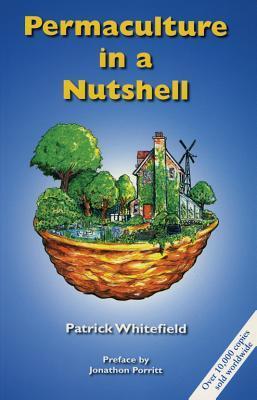
Permaculture is a creative approach to abundant and fulfilling lifestyles. It is for everyone wishing to live sustainable and tread more lightly on the Earth. Permaculture is an ecologically sound approach to providing for our needs, including our food, shelter and financial and social structures. It is based on co-operating with nature and caring for the Earth and its people. Permaculture in a Nutshell is a concise and accessible introduction to the principles and practice of permaculture in temperate climates. It covers how permaculture works in the city, the country and on the farm and explores ways in which people can work together to recreate real communities. This inspiring book clearly describes how we can live fruitfully and sustainably and is essential reading for anyone wishing to reduce their environmental impact.
This thin volume attempts to give a history and philosophy of Permaculture while including just enough technical details to satisfy readers looking for action items, but it feels very loosely put together, perhaps a rearrangement of the author's longer treatise The Earth Care Manual: A Permaculture Handbook For Britain & Other Temperate Climates.
Still, the small book is worth reading as there are few introductory books on Permaculture this size; most of the others make a philosophical point that is then followed by fifty pages of technical examples.
This was somewhat specific to an English audience, but still an informative read. I highly recommend if you know almost nothing about permaculture. Existing permaculture enthusiasts might be better suited reading something a bit more in depth or area specific. Very well written and thought out though.
Well suited for a first exposure to permaculture and highly accessible.
The main point of this book is introducing the “third way” between the western model of “chemical fertilisers and pesticides”, “machinery and the transport infrastructure” against the medieval framework, where the energy is “entirely in the form of the farmers’ own labour and that of their beasts”.
This approach puts all the emphasis on the design stage, meaning energy (either human or artificial) is reduced and the process of growing and maintenance is dealt with nature itself and supported by the symbiotic components of the land. Patrick’s first example here is the natural forest which brings about the first principle, stacking. Layers come naturally, with a high canopy of trees, lower level shrubs, herbs and ground layer vegetation. This is very different to monoculture farming which is only going to ever be half a metre high. With stacking, no inputs are needed but “sun, rain, and the rock from which it makes its own soil” compared with the “ploughing, cultivating, seeding, manuring, weeding and pest-control” dependencies by modern-day farming.
Stacking is productive because of all the useful connections that can be exploited from nature. “fungi and bacteria, which convert dead organic material into a form which can be absorbed by roots …green plants provide the fungi and bacteria with their energy needs. Insects feed off flowers and in return pollinate …aromatic herbs give off chemicals which are good for the health of their neighbours”. Later on in the book (p33) it also demonstrates how sunshine is used at different times of the year (because of the different layers and growths) and how the stacking is “reproduced below ground” to help also enrich the soil.
The traditional method, Whitefield argues, stems from the Green Revolution and its short-term principles of high yields, regardless of the inputs required. What we know today is that this approach is unsustainable (depletion in fossil fuels, desertification, pollution and climate change etc).
The benefits of this permaculture approach could mean less land required, but the author is keen to point out it should be done in parallel with matching “our consumption to need, not greed” and with policy changes in population growth.
The second chapter looks at chickens as an example to tease out other perma principles: Relative placement – putting food nearer the consumers (minimal effort) Perennial plants – as a preference over annuals so “little or no maintenance”; also they’re typically available earlier (Spring), especially if native. The nearest to this is self-seeding annuals (helpful towards no-dig) Every plant, animal or structure should have many functions – the example here being gorse: seeds for feed, nitrogen fixing, fuel for winter, pollen for bees. Diversity – probably the main element of perma – to reduce the dependencies on the ~7 staples the global population relies on today (and the risks on diseases) Biological resource – a “plan or animal that is used to fill a need that might otherwise be filled by fossil fuels”
Third chapter focuses on the city. Starts off with the wasted opportunity on the great heat that urban environments emit which could be used in growing fruit and vegetables. Being close to vegetables also means you can pluck / clip / seed-sprout plants as opposed to pulling up the whole object (required today because we consume in supermarkets hundreds of miles away from the source). This will engender growth on the organism (like pruning or pollarding does) and reduces waste (taking what you need for now).
Buildings, like agriculture, have been designed for quick-wins. Aluminium (high energy costs in production), mineral fibre insulation (carcinogenic), paints (titanium dioxide). Solutions in nature should always be appraised: wool or cork for insulation (preserved with borax), reedbeds for sewage etc.
Fourth chapter looks at the garden and how zoning puts the most needy plants in closer proximity to the gardener. Whitefield also demonstrates how viewing plants with multiple outputs you’re also adding to the yield (example of marigolds that control eelworms who target tomatoes, not just what the flower does for the soil). Sectors is also a concept introduced which define areas within the garden based on “temperature, moisture, wind and sunlight” that should be factored in with the design.
Lucerne (Alfafa) can be grown as natural “green” manure crop (instead of fossil-fuel dependent fertilisers).
Mulching is good for “killing weeds, conserve moisture …protect the soil from rain …add fertility to the soil”, “save as much as 40% of water” and “kills off the existing plant cover by excluding light”.
Weeds are helpful for increasing diversity (as they are and for introducing subsequent biomass). Example being dock and dandelion that bring up new minerals from the subsoil.
Chapter five compares small scale to modern farming (which yields 3.5 times more per square metre), yet we still continue this path: 1% of the population working on the land …thanks to the subsidy of grossly under-priced fossil fuels”. This is demonstrated when “a litre of spring water …costs as much as a litre of petrol” (now that water has become so sparse).
Trees are important in this space, for they act as a sponge rather than the soil drying out and flowing away with strong winds on farmland between harvests when exposed (particularly in US).
Permaculture can fix farmland in many ways: Acidic bogs – traditionally fixed with chemical fertilisers and plastic drainage – instead can use rock phosphate and lime, earthworms, clover to fix the nitrogen. Cheaper inputs than the traditional methods. Ploughing – disrupts the top 5cm (burying the micro-organisms or exposing to ultra violet). Traditionally, this does increase yield per hectare, but lower yield per unit of energy (i.e. costs a lot more with the tractor, plough, fuel, replenishment of the disturbed soil with fertilisers etc)
Masanobu Fukuoka is a proponent of natural solutions to these problems. Clover growing under grains, weeds “regarded as part of the ecosystem”, Ducks to deter slugs, ground always covered with mulch.
Ponds are very useful for biomass, particularly the edges (“the most productive ecosystems on Earth”), so Whitefield advocates wavy shorelines. Plus, reeds, bulrushes, reedmaces and water lilies are all edible.
In the sixth chapter, the author looks at Crystal Waters in Australia as an exemplar for Community benefits of permaculture.
In the final paragraphs (Q&A), he details the limited tenure of traditional food production: 1. 50 million people “have become unable to feed themselves due to desertification” 2. “irrigated land can suffer a gradual build-up of salt in the top soil” (because of evaporation, leaving a high concentration of salt that makes plant growth unfeasible).
Permaculture can look to fix these, by: 1. planting trees in arid landscape (to absorb water and create local rainclouds) 2. selecting native plants that takes away the need for making the soil fit the needs of the plant (with irrigation for e.g. and its subsequent salt concentrations).
Summary: A great accessible introduction to permaculture that touches on the key concepts and intent of permaculture. The author distils the key tenets and messages down into something easily digestible for the uninitiated. This is a valuable service as permaculture is such a powerful movement that the more accessible it is, the better off we are. One thing the author emphasises is that permaculture looks differently for everybody, from the farmer on acreage to someone living in an apartment, we can all implement permaculture design principles to contribute to a permacultural world. The book also has some nice illustrations to highlight some of the concepts and a list of further reading and resources at the back. Check it out!
I would recommend this book to anyone interested in design, permaculture or an earth centred lifestyle.
The main message I took from this book is through careful design centred around nature's key principles, we can eliminate a number of the key problems facing humans and the planet at the moment.
Some notable points: - The basic idea of permaculture is to create edible ecosystems using forests as inspiration when designing them.
- The ethics of permaculture are: earth care, people care and fair shares.
- Permaculture is not about turning the whole world into a productive edible ecosystem. Far from it. By adopting permaculture, we can increase the productivity of our land to such a degree that we will need much less of it, leaving far more for wilderness.
- We can never consume our way out of trouble.
- The earth can only survive in a healthy state if we match our consumption to need, not greed. This means leaving space for other species, enough food and resources for the other peoples of the world, and a clean, well-stocked planet for future generations.
- Every need should be met from many sources.
- Every plant, animal or structure should have many functions.
- Although it is possible to be cruel to animals in any kind of system, it is impossible not to be cruel in a battery system. On the other hand, it is very easy to be kind in a permaculture system, which is based on the idea of allowing the animals to do everything that comes naturally to them, and accepting this natural behaviour as a gift.
-Rather than seeing sewerage as nothing but a problem we need to see it as a resource, full of valuable organic matter and plant nutrients.
- The best fertiliser is the gardener's shadow.
- A permacultural vision of the future would include a far greater proportion of people growing at least some of their own food. Many of them would grow all of it an work part time for their other needs, some would grow a surplus for sale and others would grow nothing at all. There is no one model that fits everybody. But nobody will have to put in long and boring hours of labour to get their food. As permaculture replaces endless labour with skilful design.
we're looking to do a tiny local workshop on permaculture soon & this is a great read for introducing these ideas simply & fully --- starts from scratch & communicates the basics, the whys & hows, giving a number of detailed examples while still stressing the importance of individual cases, of intelligent design, of replacing drudgery with an eye for detail & patience & a willingness to work w/ the grain of the earth. discusses everything from personal gardens to larger farms to implementing permaculture practices in communities (the importance of connections between individuals to make communal self-reliance happen).
nothing too extreme or alienating about this one (as opposed to - for all its cuteness! - say, food not lawns), & it's a skinny-but-comprehensive little guy, so you can lend it to your suburban neighbor when she asks what you're doing to your yard. but only if it's the NICE suburban neighbor, & not the one who drinks her 48oz mcd's soda while talking trash on your strawberries, & has her family members park in front of your house all the time, & calls the borough on you because she thinks compost is gross... because you have been SO NICE to that neighbor. it's time to let it go.
A good overall view of premaculture. While I would not recommend this book for designers or individuals who have been researching or practicing permaculture for awhile, it provides a great overview for beginners or people trying to understand the basic philosophy and ethic of permaculture. Good quick read.
A really interesting and thought provoking book. Gives a good overall review of the main aspects of permaculture. Has left me wanting to know more and start a forest garden!
I liked Whitefield's book as it was concise. I will need greater detail, but it gave me some good new ideas and lots of links at the back to find out more.
Très bonne introduction à la permaculture pour les ignares. La permaculture consistue une troisième méthode d'agriculture entre la manière occidentale post industrielle (où les énergies fossiles sont indispensables pour déplacer, travailler la terre, la nourrir avec des produits chimiques etc... ce qui détruit la qualité du sol et nécessite en retour encore plus de travail) et la manière rurale pré industrielle (où le travail et la vie à la dure était nécessaire pour une vie très rude). La permaculture, par son approche "intelligente" des interactions agro-écologiques en recréant un système naturel complexe (contraire de monoculture) prétend pouvoir arriver à une certaine autonomie, sans avoir besoin de travailler 100h par semaine (plantes pérennes ou vivaces, moins de déplacement, interactions bénéfiques, pas besoin de travailler la terre ce qui l'a tue, vie plus simple, entraide...).
La notion de design permaculturel est noté et fondamentale. Cela consiste à établir un plan architectural, énergétique, calorifique, végétal et animal... d'un espace.
La permaculture est aussi loin d'être seulement un projet agricole à petite échelle, puisqu'il y a 3 notions clés: prendre soin de la terre, prendre soin des hommes et partager équitablement. Il y a aussi tout un pan social et économique: la vie en communauté, amap, entraide agricole, monnaie locale, éthique animale...
J'ai beaucoup aimé la théorie, également quelques exemples bien choisis comme le poulailler qui est à lui seul un "cas d'école". Les humains rejettent des déchets alimentaires. Les poules se nourrissent de ses rejets. Les poules font des œufs que consomment les humains, de la viande, du fumier (en détails, il y a beaucoup plus de choses comme la chaleur, fertilisation du sol, tracteur à poules...). Si l'on compare à un élevage de poules en batterie, où il y a plein de rejets, l'obligation d'acheter de la nourriture extérieure, le fumier devient un polluant...
Mais il semble quand même difficile même avec une introduction de savoir comment s'y prendre pour faire un design pragmatique, utile, simple tant il semble y avoir d'interactions et tant le système bien que prévu comme autonome à long terme, nécessite régulièrement un pilotage humain précis. Si on rajoute à tout ça, les milliers d'interactions entre les plantes, les animaux sauvages, l'eau, la nourriture, les animaux domestiques, passer de la théorie à la pratique semble toujours un vaste programme, qu'il est bien précisé dans ce livre de faire pas à pas, lentement.
This is an excellent, well set out, easily digestible primer on permaculture for the layperson. I have an interest in such sustainable systems and plan on exploring further later in my life - this book is great ‘food for thought’, inspiring general rumination on the permaculture philosophy as well as the practical agricultural applications. Permaculture is, essentially, a way of reducing a system’s inputs while increasing its yield of useful outputs, making sure practices are sustainable and just; in agricultural terms, this means replicating, where possible, natural ecosystems - no-dig gardens (preserving soil aeration and limiting erosion), no-till and no-chemical farming (using mulching and mineral-providing plants), utilising ‘waste’ material. Planning is key - plants are chosen for their potential for fruitful connections with other parts of the system, such as fruit shrubs providing forage for chickens rather than relying on processed chicken feed; outputs considered pollutants instead used productively, such as the warmth and CO2 emissions of chickens being used in a greenhouse; the concept of ‘stacking’ where multiple plants are grown in the same space to increase connections and make better use of the rain and Sun (with different plants flowering/producing at different times); and zoning (locating things needing the most attention closest) and sectoring (placing things thoughtfully in relation to external influences). Permaculture philosophy can also be applied to human relations - fostering stronger, local connections can improve outcomes for producers and consumers, with different levels of participation being possible (from direct wholesaling to Community Supported Agriculture). Lots of great examples are used which have properly clarified for me what permaculture really means and what it would/does look like in practice.
Starting to get my head around permaculture for urban food-growing purposes, and this is a nice, concise introduction. I like the way it's divided by context, including a section on permaculture growing in cities, and there are some excellent examples of garden design which demonstrate the holistic, low-energy nature of the approach. It is very introductory, however, and the projects outlined do seem a little daunting and demanding in terms of time and labour. The further reading section is good - especially as it seems that doing permaculture properly really does require a detailed understanding different plants and their ideal growing conditions.
An excellent introduction to permaculture, despite some details pertaining to a specifically British context. If you're in some other region of the world and can overlook that bit, you'll get a clear, concise description of what permaculture is and how its principles may be implemented in a farm or a garden. Prior to reading this, I thought of permaculture primarily in terms of the forest garden, but I came away thinking of it more as a holistic system whose principles may be applied to a variety of contexts. Good stuff.
"tells it straight", asthe guy from I borrowed the book said.
I've also been advised to check out the Youtube videos of Sepp Holzer, who grows oranges in the Austrian mountains or something.
Yeah, I digg this approach. Much of it I already figured out myself or read elsewhere, but it does offer a vision of a sustainable future - while the classical ideologies are increasingly becoming out of sync with reality.
I'll gift this to my father, a farmer, who doesn't believe permaculture is possible.
Mark gave me this introduction to permaculture for my birthday. Many of the ideas we already practice, but there were some useful things we shall try on our holding, and I look forward to reading one of his more detailed books with more ideas we can use. We already have some areas we have reforested and fields divided into smaller areas with banks and hedgerows, providing leaves for summer and nettles for winter fodder. A lot of ideas for better use of resources and less environmental impact.
Permaculture is a fascinating approach to sustainable agriculture. This is a good introduction for those who would like to find positive and constructive ways to move forward through our current climate change worries.
I read this book in something like an hour. I didn't learn a lot of new information from it and it wasn't a comprehensive overview, but it was a good first read for getting the idea of what permaculture is about... almost on the level of an advertisement. For any kind of specifics, one will have to look to other sources.
This is a cheap, brief and great introduction to what permaculture is and what role it can play in the city, in a village, or in your garden.
But it's certainly NOT a how-to book. You won't know how to redesign your garden after reading this book, but it does give solid recommendations at the end for further reading.
A great, concise introduction. Would fit nicely in a small, hard, nut shaped thing. In all serious, I loved the illustrations and the random ideas- like the children's garden. Wonderful starting point for a more in-depth look at permaculture.
A quick and well-organized introduction to permaculture. Would be a good first book on the subject. This was leant to me by a friend -- I took a handful of good notes but wouldn't refer to it again if I owned it.