

What do you think?

Lady Mary
By turns thrilling, dramatic and touching, this is the story of Henry the Eighth and Catherine of Aragon's divorce as you've never heard it before - from the eyes of their daughter, Princess Mary.
More than anything Mary just wants her family to stay together; for her mother and her father - and for her - to all be in the same place at once. But when her father announces that his marriage to her mother was void and by turns that Mary doesn't really count as his child, she realises things will never be as she hoped.
Things only get worse when her father marries again. Separated from her mother and forced to work as a servant for her new sister, Mary must dig deep to find the strength to stand up against those who wish to bring her down. Despite what anyone says, she will always be a princess. She has the blood of a princess and she is ready to fight for what is rightfully hers.
More than anything Mary just wants her family to stay together; for her mother and her father - and for her - to all be in the same place at once. But when her father announces that his marriage to her mother was void and by turns that Mary doesn't really count as his child, she realises things will never be as she hoped.
Things only get worse when her father marries again. Separated from her mother and forced to work as a servant for her new sister, Mary must dig deep to find the strength to stand up against those who wish to bring her down. Despite what anyone says, she will always be a princess. She has the blood of a princess and she is ready to fight for what is rightfully hers.
373 pages, Paperback
First published April 5, 2018
About the author
Lucy Worsley
32 books3,110 followersI was born in Reading (not great, but it could have been Slough), studied Ancient and Modern History at New College, Oxford, and I've got a PhD in art history from the University of Sussex.
My first job after leaving college was at a crazy but wonderful historic house called Milton Manor in Oxfordshire. Here I would give guided tours, occasionally feed the llamas, and look for important pieces of paper that my boss Anthony had lost. Soon after that I moved to the Society for the Protection of Ancient Buildings, in the lovely job for administrator of the Wind and Watermills Section. Here I helped to organise that celebrated media extravaganza, National Mills Day. I departed for English Heritage in 1997, first as an Assistant Inspector and then as an Inspector of Ancient Monuments and Historic Buildings; Bolsover Castle, Hardwick Old Hall, and Kirby Hall were my favourite properties there. In 2002 I made a brief excursion to Glasgow Museums before coming down to London as Chief Curator of Historic Royal Palaces in 2003. Yes, this is a brilliant job, but no, you can’t have it. (Bribes have been offered, and refused.)
You might also catch me presenting history films on the old goggle box, giving the talks on the cruise ship Queen Mary 2, or slurping cocktails.
***
Lucy Worsley, OBE (born 18 December 1973) is an English historian, author, curator, and television presenter.
Worsley is Joint Chief Curator at Historic Royal Palaces but is best known as a presenter of BBC Television series on historical topics, including Elegance and Decadence: The Age of the Regency (2011), Harlots, Housewives and Heroines: A 17th Century History for Girls (2012), The First Georgians: The German Kings Who Made Britain (2014), A Very British Romance (2015), Lucy Worsley: Mozart’s London Odyssey (2016), and Six Wives with Lucy Worsley (2016).
-From Wikipedia
My first job after leaving college was at a crazy but wonderful historic house called Milton Manor in Oxfordshire. Here I would give guided tours, occasionally feed the llamas, and look for important pieces of paper that my boss Anthony had lost. Soon after that I moved to the Society for the Protection of Ancient Buildings, in the lovely job for administrator of the Wind and Watermills Section. Here I helped to organise that celebrated media extravaganza, National Mills Day. I departed for English Heritage in 1997, first as an Assistant Inspector and then as an Inspector of Ancient Monuments and Historic Buildings; Bolsover Castle, Hardwick Old Hall, and Kirby Hall were my favourite properties there. In 2002 I made a brief excursion to Glasgow Museums before coming down to London as Chief Curator of Historic Royal Palaces in 2003. Yes, this is a brilliant job, but no, you can’t have it. (Bribes have been offered, and refused.)
You might also catch me presenting history films on the old goggle box, giving the talks on the cruise ship Queen Mary 2, or slurping cocktails.
***
Lucy Worsley, OBE (born 18 December 1973) is an English historian, author, curator, and television presenter.
Worsley is Joint Chief Curator at Historic Royal Palaces but is best known as a presenter of BBC Television series on historical topics, including Elegance and Decadence: The Age of the Regency (2011), Harlots, Housewives and Heroines: A 17th Century History for Girls (2012), The First Georgians: The German Kings Who Made Britain (2014), A Very British Romance (2015), Lucy Worsley: Mozart’s London Odyssey (2016), and Six Wives with Lucy Worsley (2016).
-From Wikipedia
Ratings & Reviews
Friends & Following
Create a free account to discover what your friends think of this book!
Community Reviews
Displaying 1 - 30 of 149 reviews

March 8, 2018
3.5
(I received this book in return for review by the publisher, but this doesn't affect my views and opinions)
Generally I enjoyed reading this, it flowed well and it was nice to see this side of Mary, because most historical stuff I've read/seen focuses on her reign as queen and how she was quite ruthless, so it was nice seeing the perspective of her being young, naive and vulnerable
The Tudors period was pretty crazy tbh, and I want to read more about them again and learn more. It was a nice change to read some historical fiction, and it actually taught me some stuff I didn't know before, because even though this is 'fiction' it is based on events that actually happened
The beginning and middle were pretty slow going, it picked up a little bit more in the middle, but not much really happened in some parts, which I understand, because it's based on real history, but the last section of the book was so much better, and I wish this section was longer, and the first two maybe slightly shorter, just to make the pace a little better
Each chapter or so changes time period, either through months, and sometimes years, which was kind of strange to get used to, but it was necessary I suppose to set the background of Mary's life and the events that lead up to her situation.
You don't really get to know much about what is happening in the country and court politics so much, which is kind of frustrating, because it kind of teases you with bits of information, but I think that's done purposefully, because Mary isn't told much, and just finds out little bits of information here and there and tries to figure out what's happening, so we're with Mary, not really sure what's happening around her, and not know what people's intentions are and trying to figure it out.
Overall, I enjoyed reading this!
I'd recommend reading this if you have an interest in Tudor History or Mary I :)
(I received this book in return for review by the publisher, but this doesn't affect my views and opinions)
Generally I enjoyed reading this, it flowed well and it was nice to see this side of Mary, because most historical stuff I've read/seen focuses on her reign as queen and how she was quite ruthless, so it was nice seeing the perspective of her being young, naive and vulnerable
The Tudors period was pretty crazy tbh, and I want to read more about them again and learn more. It was a nice change to read some historical fiction, and it actually taught me some stuff I didn't know before, because even though this is 'fiction' it is based on events that actually happened
The beginning and middle were pretty slow going, it picked up a little bit more in the middle, but not much really happened in some parts, which I understand, because it's based on real history, but the last section of the book was so much better, and I wish this section was longer, and the first two maybe slightly shorter, just to make the pace a little better
Each chapter or so changes time period, either through months, and sometimes years, which was kind of strange to get used to, but it was necessary I suppose to set the background of Mary's life and the events that lead up to her situation.
You don't really get to know much about what is happening in the country and court politics so much, which is kind of frustrating, because it kind of teases you with bits of information, but I think that's done purposefully, because Mary isn't told much, and just finds out little bits of information here and there and tries to figure out what's happening, so we're with Mary, not really sure what's happening around her, and not know what people's intentions are and trying to figure it out.
Overall, I enjoyed reading this!
I'd recommend reading this if you have an interest in Tudor History or Mary I :)

March 25, 2018
I’m not normally a huge fan of Tudor historical fiction- partly because in a general sense I know the Tudor period quite well. I live near Hampton Court and went to school at a place called Nonsuch ( so named by Elizabeth I) and learned about the Tudors at school. On the other hand, I dislike this period of history because of all the names. I get so confused with them all.
So Lady Mary was a real breath of fresh air because it was written for children. It was simply told. It was an aspect of Tudor history I had never considered before. Lucy Worsley says in the post script that Mary Tudor (aka Bloody Mary) has been unfairly and biasedly portrayed by anti- Catholic sentiment. Actually I believe this to be true. Mary, in her rule, is responsible for many Protestant deaths, but no more than Catholics condemned to death under her father’s rule. I hadn’t perceived it that way- more that Elizabeth was prettier and wore better dresses! I certainly never felt particularly sorry for her!
This story in this book though, happens before Mary’s reign and starts with Mary as a nine year old, when Henry is starting to sniff around Anne Boleyn. The story ends just after Edward’s birth. It was well told and although written for children, is an interesting and informative read for adults too- well this adult anyway!
So Lady Mary was a real breath of fresh air because it was written for children. It was simply told. It was an aspect of Tudor history I had never considered before. Lucy Worsley says in the post script that Mary Tudor (aka Bloody Mary) has been unfairly and biasedly portrayed by anti- Catholic sentiment. Actually I believe this to be true. Mary, in her rule, is responsible for many Protestant deaths, but no more than Catholics condemned to death under her father’s rule. I hadn’t perceived it that way- more that Elizabeth was prettier and wore better dresses! I certainly never felt particularly sorry for her!
This story in this book though, happens before Mary’s reign and starts with Mary as a nine year old, when Henry is starting to sniff around Anne Boleyn. The story ends just after Edward’s birth. It was well told and although written for children, is an interesting and informative read for adults too- well this adult anyway!

May 3, 2018
I received a copy of this book in exchange for an honest review.
Lady Mary follows the story of Mary Tudor, eldest daughter of Henry VIII, during her tumultuous teenage years as she falls from grace during the breakdown of her parent’s marriage and beyond.
I would definitely describe this as younger adult. We follow Mary from the age of 11 until 21, yet her tone and behaviour never seem to mature beyond that of a child. She’s petulant and naive, prone to fainting and just generally acting like a girl, not the dominant princess she’s raised to be. The writing is also sometimes overly simplistic in its presentation too, and lacked any real emotional complexity. Things are just described or explained ‘as is’ without any subtlety.
Secondary characters are also very black and white, almost cookie cutter images of their real historical counterparts. Anne is described as the ‘wicked lady’, forcing Mary into servitude and despair, while her mother is the proud Spanish queen. There’s no development of these characters beyond this, which I was disappointed by. Other characters are introduced before being suddenly removed from the plot incredibly quickly before we can get to know them, (namely Lady Shelton’s nephew) and felt almost like accessories to drive the plot or create some small amount of drama to make the many years of Mary’s confinement more interesting than it probably was originally.
I would have loved to see more of the relationship we see between Jane, Mary and Henry towards the end of the novel. The idea of some weird ‘family’ dynamic, having a queen so close in age to Mary and her struggles to accept and gain friendship from this woman who clearly just wanted to please the king and her new stepdaughter. Unfortunately these scenes were rather rushed after spending so many chapters seeing Mary locked away, which again I found disappointing. I also thought there was a missed opportunity to see a future Mary seize the throne after her brother’s death, which would have brought some much needed action and strength of character to Mary. Ending where it did was a little lacklustre.
Don’t get me wrong, I love this period of history, and because of that I did enjoy this. But I just found it lacking in quite a few key areas. If I was ten years younger, I probably would have lapped this up and I do think there’s a large gap in the market for historical YA of this era. It would a pleasant change of scene for me to read, it flowed well and was rather light and innocent in tone which I liked. There’s also so little written about Mary that isn’t negative that this felt very refreshing.
Perfect for younger teens interested in a queen often overshadowed by her father and younger sister.
Lady Mary follows the story of Mary Tudor, eldest daughter of Henry VIII, during her tumultuous teenage years as she falls from grace during the breakdown of her parent’s marriage and beyond.
I would definitely describe this as younger adult. We follow Mary from the age of 11 until 21, yet her tone and behaviour never seem to mature beyond that of a child. She’s petulant and naive, prone to fainting and just generally acting like a girl, not the dominant princess she’s raised to be. The writing is also sometimes overly simplistic in its presentation too, and lacked any real emotional complexity. Things are just described or explained ‘as is’ without any subtlety.
Secondary characters are also very black and white, almost cookie cutter images of their real historical counterparts. Anne is described as the ‘wicked lady’, forcing Mary into servitude and despair, while her mother is the proud Spanish queen. There’s no development of these characters beyond this, which I was disappointed by. Other characters are introduced before being suddenly removed from the plot incredibly quickly before we can get to know them, (namely Lady Shelton’s nephew) and felt almost like accessories to drive the plot or create some small amount of drama to make the many years of Mary’s confinement more interesting than it probably was originally.
I would have loved to see more of the relationship we see between Jane, Mary and Henry towards the end of the novel. The idea of some weird ‘family’ dynamic, having a queen so close in age to Mary and her struggles to accept and gain friendship from this woman who clearly just wanted to please the king and her new stepdaughter. Unfortunately these scenes were rather rushed after spending so many chapters seeing Mary locked away, which again I found disappointing. I also thought there was a missed opportunity to see a future Mary seize the throne after her brother’s death, which would have brought some much needed action and strength of character to Mary. Ending where it did was a little lacklustre.
Don’t get me wrong, I love this period of history, and because of that I did enjoy this. But I just found it lacking in quite a few key areas. If I was ten years younger, I probably would have lapped this up and I do think there’s a large gap in the market for historical YA of this era. It would a pleasant change of scene for me to read, it flowed well and was rather light and innocent in tone which I liked. There’s also so little written about Mary that isn’t negative that this felt very refreshing.
Perfect for younger teens interested in a queen often overshadowed by her father and younger sister.

February 19, 2018
4.5 stars.
Hello, my name is Trish and I’m Tudor obsessed. So reading Lady Mary by Lucy Worsley was a forgone conclusion for me. And within the pages, I discovered a fascinating blend of Tudor trickery and human insight into a character that I grew to like and admire.
***Full review in April, nearer to publication date***
Hello, my name is Trish and I’m Tudor obsessed. So reading Lady Mary by Lucy Worsley was a forgone conclusion for me. And within the pages, I discovered a fascinating blend of Tudor trickery and human insight into a character that I grew to like and admire.
***Full review in April, nearer to publication date***

April 8, 2018
Originally posted on The Nerd Daily | Review by Tasya
“Press a little harder with the pen, Mary. Your letters are all faint,” is the first sentence of Lucy Worsley’s intriguing new YA novel, Lady Mary, which follows the daughter of Henry VIII and Catherine of Aragon.
The England Tudor period has long been the center of attention in history, especially during the Henry VIII reign. You may remember him for having six wives in hopes to produce a male heir, along with how he formed the Church of England. Ironically, in the end, the throne only passed shortly to his son before passing to his daughters, Mary and Elizabeth. In fact, Elizabeth I led England to what is widely known as the golden age or Elizabethan era. Because of this, Queen Mary is often forgotten by history and dubbed “Bloody Mary” due to persecuting many in an attempt to reverse the reformation. Henry VIII and Elizabeth also persecuted many, yet neither of them received the same garish title…
Now enough with the history lessons! The forgotten Queen Mary is why I was so excited to read this book to get a glimpse at her albeit fictional life. I am always curious on how she reacted to her mother’s downfall, the following throng of mothers, and relationship with her father. Even though this book is fictional, it did offer a glimpse within these area.
If you are expecting court intrigue in this book, you will not find it. This book tells the story of Mary’s childhood over the course of her teenage years, meaning she only spent a short time at the court before being exiled by her father. I don’t usually enjoy reading from children’s perspective, but I really enjoyed Mary’s perspective. She was her father’s daughter, but at the same time, Henry always came across as though he had no child. Her mother, Catherine of Aragon, both shielded her and loved her at the same time as Catherine played a dangerous game at the court.
After their separation, Mary was immediately sent away and we could see how much she had to mature and adapt in such a short time; from being a princess, heir presumptive to the throne, she became a prisoner and lady-in-waiting. She learned how to play at court, while maintaining her childhood naivety, as seen through her several missteps throughout the book. But the point is, she learned from her mistakes and showed immense growth by the end of the book.
At the same time, the focus on the character and the chosen time period provided little room for interesting storylines to unfold. Since Mary was in exile, all the intrigue and scheming happened at court with Mary merely a pawn in battle for the Queen’s seat and the war between religions. As the title suggests, this book focuses on her time as Lady Mary and stops after Jane Seymour’s death, which means we never seen her wield her power and position to eventually get that Queen title. There are some historical characters that play an important part in the effort to restore Mary, but they only appear occasionally and other than that, not much happens except for waiting and thinking for Mary.
I truly enjoyed how this book paints a picture of monarchy status and alliance at that time. Catherine and Henry’s divorce was a messy affair due the fact that Catherine is a princess of Spain in her own right, sister of the ruler at that time. Henry’s decision to marry Anne Boleyn, who grew up in France, made the alliance between France and England seem stronger, but at the same time weakened England alliance with Spain and Rome. Not to mention the long time animosity between Spain and France. Add that Catherine’s nephew was the Emperor of the Holy Roman Empire at that time, it seemed the battle lines were drawn between the supporters of Henry and Catherine. If only we could have seen more of Catherine’s scheming somehow.
While I love the focus on characters and inner turmoil of Mary was enjoyable, I had hoped to see more intrigue and scheming, as well as some court richness being shown. The lack of storyline caused this book to be pretty unmemorable to me, as the pages and story blurred together in forming Mary’s waiting day in exile.
However, I still recommend this if you are interested in the Tudor’s era, want to learn more about the era, or just plain curious about the life of Queen Mary!
“Press a little harder with the pen, Mary. Your letters are all faint,” is the first sentence of Lucy Worsley’s intriguing new YA novel, Lady Mary, which follows the daughter of Henry VIII and Catherine of Aragon.
The England Tudor period has long been the center of attention in history, especially during the Henry VIII reign. You may remember him for having six wives in hopes to produce a male heir, along with how he formed the Church of England. Ironically, in the end, the throne only passed shortly to his son before passing to his daughters, Mary and Elizabeth. In fact, Elizabeth I led England to what is widely known as the golden age or Elizabethan era. Because of this, Queen Mary is often forgotten by history and dubbed “Bloody Mary” due to persecuting many in an attempt to reverse the reformation. Henry VIII and Elizabeth also persecuted many, yet neither of them received the same garish title…
Now enough with the history lessons! The forgotten Queen Mary is why I was so excited to read this book to get a glimpse at her albeit fictional life. I am always curious on how she reacted to her mother’s downfall, the following throng of mothers, and relationship with her father. Even though this book is fictional, it did offer a glimpse within these area.
If you are expecting court intrigue in this book, you will not find it. This book tells the story of Mary’s childhood over the course of her teenage years, meaning she only spent a short time at the court before being exiled by her father. I don’t usually enjoy reading from children’s perspective, but I really enjoyed Mary’s perspective. She was her father’s daughter, but at the same time, Henry always came across as though he had no child. Her mother, Catherine of Aragon, both shielded her and loved her at the same time as Catherine played a dangerous game at the court.
After their separation, Mary was immediately sent away and we could see how much she had to mature and adapt in such a short time; from being a princess, heir presumptive to the throne, she became a prisoner and lady-in-waiting. She learned how to play at court, while maintaining her childhood naivety, as seen through her several missteps throughout the book. But the point is, she learned from her mistakes and showed immense growth by the end of the book.
At the same time, the focus on the character and the chosen time period provided little room for interesting storylines to unfold. Since Mary was in exile, all the intrigue and scheming happened at court with Mary merely a pawn in battle for the Queen’s seat and the war between religions. As the title suggests, this book focuses on her time as Lady Mary and stops after Jane Seymour’s death, which means we never seen her wield her power and position to eventually get that Queen title. There are some historical characters that play an important part in the effort to restore Mary, but they only appear occasionally and other than that, not much happens except for waiting and thinking for Mary.
I truly enjoyed how this book paints a picture of monarchy status and alliance at that time. Catherine and Henry’s divorce was a messy affair due the fact that Catherine is a princess of Spain in her own right, sister of the ruler at that time. Henry’s decision to marry Anne Boleyn, who grew up in France, made the alliance between France and England seem stronger, but at the same time weakened England alliance with Spain and Rome. Not to mention the long time animosity between Spain and France. Add that Catherine’s nephew was the Emperor of the Holy Roman Empire at that time, it seemed the battle lines were drawn between the supporters of Henry and Catherine. If only we could have seen more of Catherine’s scheming somehow.
While I love the focus on characters and inner turmoil of Mary was enjoyable, I had hoped to see more intrigue and scheming, as well as some court richness being shown. The lack of storyline caused this book to be pretty unmemorable to me, as the pages and story blurred together in forming Mary’s waiting day in exile.
However, I still recommend this if you are interested in the Tudor’s era, want to learn more about the era, or just plain curious about the life of Queen Mary!

March 25, 2018
I got sent this book in exchange for a honest review, all my opinions are my own and thank you so much to the publishers for sending me this book!
This was a really good story about Mary Tudor. I love history so much and reading this kinda twist in the story was super fun and enjoyable.
This was a really good story about Mary Tudor. I love history so much and reading this kinda twist in the story was super fun and enjoyable.

November 16, 2018
I am both disappointed and kind of satisfied at the same time. I didn't love this as much as a I wanted to, but I feel like I liked it as much as I thought I would, if that makes sense. It was a fun and enjoyable read, and it took no time at all to get through. But it was so juvenile, and I just couldn't enjoy it. I think maybe it is a "me" thing - personal preference? If you like reading more middle grade books, then you will probably love this. There is a lot of good stuff in here, but I just wasn't fully in love with it.
T H O U G H T S
- So basically, the main problem I had with this book, as I said before, was how juvenile it was. I mean, if Mary had stayed at the age of 13 the whole way through the book, I would have expected that. But the thing is, Mary grows up. I swear, at some point she is in her twenties, yet she reads like a child. She was also very naive and kind of stupid at points and she didn't really feel real. Which is disappointing, because I am fascinated by Mary, and I would rather read about her than Elizabeth. I'm always on the look out for good books about her!
- The writing was very juvenile as well, and yes, I know this is probably aimed at younger teens, but there was no maturity in it at all, and I have read more mature sounding books that this that are written for children. It saddens me, because potentially this could have been a very good book.
- Of course, I did enjoy all the historical content in here, as always. As I said before, I love Mary, and that doesn't change even in a bad book. I also found it so easy to read and it is a book you could definitely just pick up and read in one sitting. It is definitely enjoyable. Also, I really liked the interpretation of Jane Seymour, because it was a slightly different take on her character that is usually portrayed. Jane Seymour never seems to get the best characterisation, so I was overjoyed to see some actual care put into her story.
Overall, I would recommend, but only if you can stand how juvenile it is. I know that this will not bother a lot of people, but unfortunately it did me. And if you read lots of historical books, this will probably be very light and easy to read, because I don't really think it brings much unknown information to light. It focuses more on the plot line, and makes it read as some grand adventure. I think there is an appreciation for this book, especially for younger readers who want to introduce themselves to reading and/or historical fiction. It wasn't bad; it just wasn't really my thing.
T H O U G H T S
- So basically, the main problem I had with this book, as I said before, was how juvenile it was. I mean, if Mary had stayed at the age of 13 the whole way through the book, I would have expected that. But the thing is, Mary grows up. I swear, at some point she is in her twenties, yet she reads like a child. She was also very naive and kind of stupid at points and she didn't really feel real. Which is disappointing, because I am fascinated by Mary, and I would rather read about her than Elizabeth. I'm always on the look out for good books about her!
- The writing was very juvenile as well, and yes, I know this is probably aimed at younger teens, but there was no maturity in it at all, and I have read more mature sounding books that this that are written for children. It saddens me, because potentially this could have been a very good book.
- Of course, I did enjoy all the historical content in here, as always. As I said before, I love Mary, and that doesn't change even in a bad book. I also found it so easy to read and it is a book you could definitely just pick up and read in one sitting. It is definitely enjoyable. Also, I really liked the interpretation of Jane Seymour, because it was a slightly different take on her character that is usually portrayed. Jane Seymour never seems to get the best characterisation, so I was overjoyed to see some actual care put into her story.
Overall, I would recommend, but only if you can stand how juvenile it is. I know that this will not bother a lot of people, but unfortunately it did me. And if you read lots of historical books, this will probably be very light and easy to read, because I don't really think it brings much unknown information to light. It focuses more on the plot line, and makes it read as some grand adventure. I think there is an appreciation for this book, especially for younger readers who want to introduce themselves to reading and/or historical fiction. It wasn't bad; it just wasn't really my thing.

March 30, 2018
I enjoyed this, although some of the characters are very black and white, with a slimey Thomas Cromwell and an ogress Anne Boleyn, while others (especially Henry VIII and Mary herself) didn't feel particularly real. None of Mary's religious devotion is depicted here, although her loneliness and despair are dealt with well. She also grows to adulthood through the book but her voice remains the same. This is a Young Adult novel but I think younger readers, possibly pre-teen, will enjoy it the most. Full review to follow shortly on For Winter Nights. 3-3.5 stars.

March 16, 2018
I read this book from NetGalley in exchange for a fair and honest review
Reseña en español, aquí
Reseña en español, aquí
Mary Tudor made a mistake at birth, she was a girl, and that determined the kind of life she was going to lead with a father like Henry VIII and a mother like Catherine of Aragon. It was not easy to be the daughter of these two greats. On the one hand, her father had a highly selfish vision of life, which did not prevent him from being a great political strategist. On the other hand her mother, Spanish to the core and daughter of the greatest woman of his time as was Isabel I of Castile. All that weighed on Mary’s blood.
As a child Mary noticed great indifference on the part of her father, although she herself denied that such a thing was true, as a measure of self-protection. Her mother was always by her side and certainly loved her and covered her need for affection, but she always prioritized her duties as queen, wife, (Catholic) Christian and educator. In that order. SHe instilled in Mary a strong sense of honor, virtue and dignity, she told her that a daughter of Spain never cried, that she stood firm in the face of adversity. It was probably the same lessons that Isabel of Castile gave her children, and we all know that the Spanish women are as strong or as weak as any other women. But it is important that these notions that Catherine gave her daughter got into her mind, because those were the lessons that helped young Mary survive the adversities, the negligence of her father and the cruelty of Anne Boleyn towards her.
Lucy Worsley is a famous English historian. Her work as an academic is less known to the general public but her role as a communicator is priceless. Her documentaries for the BBC are more than recommended. On this occasion she narrates the years between the time when Henry VIII repudiates Catherine of Aragon and the moments after the death of Jane Seymour, Henry’s third wife, who finally gave him a son, Edward, and died in childbirth (Divorced, beheaded, deceased…).
But Lucy Worsley does not tell the story, event after event, as if it were a textbook. Worsley focuses her book on Mary, what life meant for her after the separation from her parents, how her mother clung to her faith while preparing her revenge, how Henry separated mother and daughter under the influence of Anne Boleyn, how the lady Boleyn tried to reduce Mary from princess to servant of her own daughter Elizabeth, a baby of months. How Mary rebelled against her stepmother and thus Anne had her locked in an attic denying her more sustenance than a jug of water a day. And still Mary survived. And not only she survived the Anne’s schemes but also the betrayals and deceptions that she suffered from the right hand of the King Thomas Cromwell, a great political strategist who, nevertheless could not defeat Mary.
The book goes further, after the fall of Anne, Mary’s father call her’s to court. There she finds a second mother in Jane Seymour, the third queen, but soon loses her when she gives birth to Edward VI.
That is the story of Mary, who grows from preadolescent to young woman thanks (in want of a better word) to blows and injustices done to her, because with her parents in tug-of-war, their minds set on a kind of real-life chess; Mary was no more that a pawn without color, a marionette that they threw at each other but who also learned, grew, matured and who was constantly aware of what was happening around her. Even in moments when she was about to die of starvation, Mary watched and learned.
Mary I was known as “ Bloody Mary” for the persecution she exercised over the Protestants after the restoration she carried out of the Catholic faith. However, according to Worsley, this treatment of her figure given by later historians is unfair. For all the lessons learned from her mother and everything she learned during her father’s reign, Mary was a great queen. She did nothing that other kings did not do before or after her (for example, Henry had crushed Catholic rebellions and Elizabeth persecuted the Catholics and reinstated the Anglican faith). But the greatness of her sister Elizabeth and the power she retained eclipsed to some extent Mary’s reign. However, again according to Worsley, it is more than possible that Elizabeth learned to be queen from her sister’s example.
The book is aimed at a young audience, however anyone can read it because it does not use a condescending speechs as is usual in historical fictionalized books written for young people. What I found somewhat disconcerting is that it is written as if Worsley had transcribed a script for one of her impressive documentaries. It took me a long time to get into the story, but I persisted and in the end it was very interesting. I’m also convinced that if Lucy Worsley had read the book aloud or had told me the story herself I would have enjoyed it much more.
February 25, 2018
I would like to thank netgalley and Bloomsbury Publishing for a free copy of the book in exchange for an honest review.
I always enjoy Worsley's writing and this book is no different. It tells the story of Mary (future Mary I) during the divorce of her parents, her subsequent exile and readmittance to court. I love that it shows a story that seems to have been largely forgotten.
I always enjoy Worsley's writing and this book is no different. It tells the story of Mary (future Mary I) during the divorce of her parents, her subsequent exile and readmittance to court. I love that it shows a story that seems to have been largely forgotten.

February 19, 2024
Starting from when she was 9, Worsley's novel of Henry VIII's first daughter tells her life up to the death of Jane Seymour. Although aimed at younger readers this is an engrossing read for all those interested in the Tudor period.

April 30, 2018
I received a copy of this book for free from the publisher in exchange for an honest review! This does not affect my opinion of the book or the content of my review.
3/5 STARS
I got my Bachelor's degree in History (concentration in European History), so this book seemed right up my alley. I love historical fiction, and the Tudor period is incredibly interesting to me.
I think if I were younger, I might've enjoyed this a bit more. The story follows Mary Tudor (the woman who would become known as "Bloody Mary") from the age of nine until the age of twenty-one. The ages are written no differently, however: twenty-one year old Mary thinks and acts almost exactly the same as nine year old Mary. There is rarely any character development, and the small amount that does occur takes place mostly in the last couple pages.
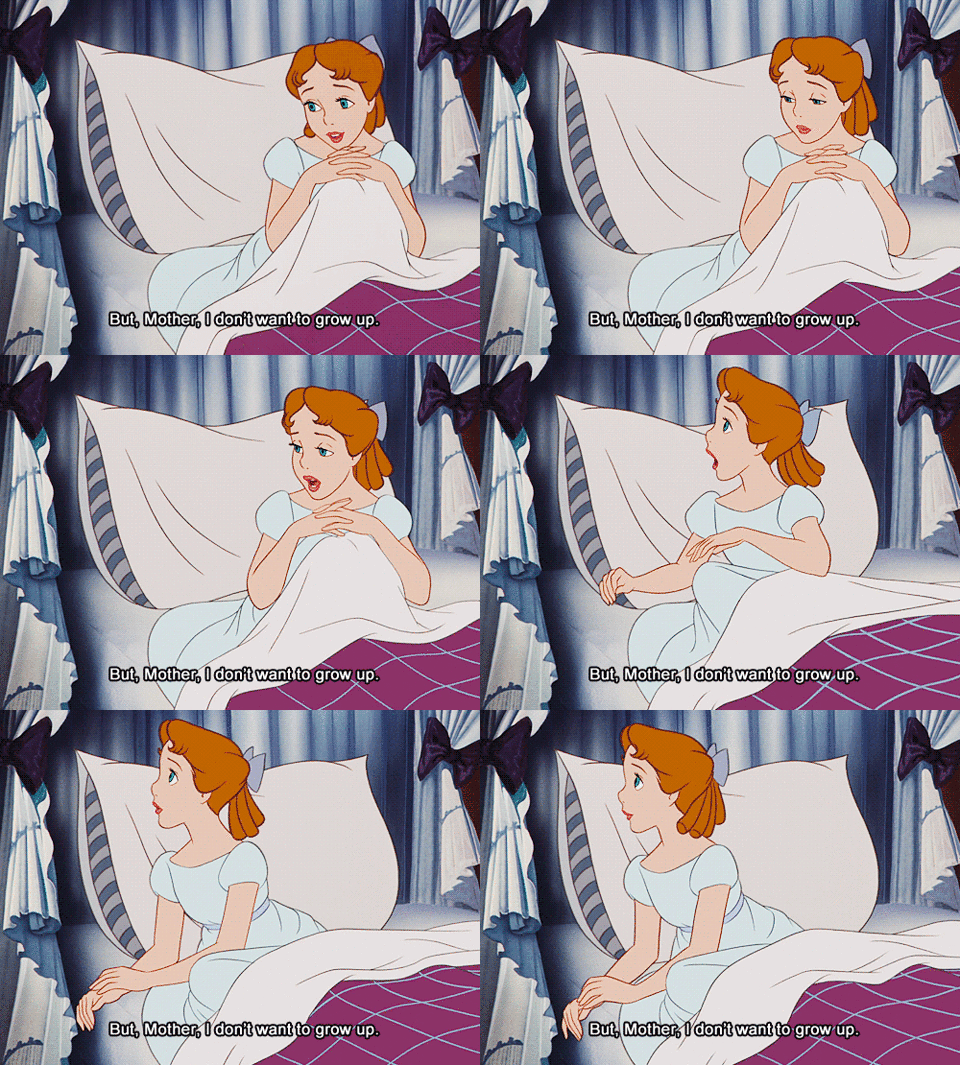
The plot or characters weren't the problem, however; the main issue I had was with the writing. Sometimes it was written simply, to the point of being overly simple. But, as this book is supposed to be for Middle Grade readers, that wasn't a problem. But then the author would throw in a complex word or phrase like "marshy quandry"and "palaver," and I stared in confusion when there was this sentence:
What happened to Middle Grade??????
Overall, while it was interesting to see Mary Tudor's story told from a unique perspective, I felt the writing slightly let down the book, with too much focus being on the historical aspects and not enough focus on telling a story in a way that flowed.
3/5 STARS
I got my Bachelor's degree in History (concentration in European History), so this book seemed right up my alley. I love historical fiction, and the Tudor period is incredibly interesting to me.
I think if I were younger, I might've enjoyed this a bit more. The story follows Mary Tudor (the woman who would become known as "Bloody Mary") from the age of nine until the age of twenty-one. The ages are written no differently, however: twenty-one year old Mary thinks and acts almost exactly the same as nine year old Mary. There is rarely any character development, and the small amount that does occur takes place mostly in the last couple pages.
The plot or characters weren't the problem, however; the main issue I had was with the writing. Sometimes it was written simply, to the point of being overly simple. But, as this book is supposed to be for Middle Grade readers, that wasn't a problem. But then the author would throw in a complex word or phrase like "marshy quandry"and "palaver," and I stared in confusion when there was this sentence:
"That woman," he said, "is a bitch. A bitch of the highest order."
What happened to Middle Grade??????
Overall, while it was interesting to see Mary Tudor's story told from a unique perspective, I felt the writing slightly let down the book, with too much focus being on the historical aspects and not enough focus on telling a story in a way that flowed.

January 2, 2019
"Perhaps, she thought, I'm only a princess when other people think that I am."
With her father being such an overpowering character and her mother the pride and joy of Spain, young Mary is often on the sidelines of history. It is not until she is older that she can make her own choices and stand up for what she believes in.
A very touching story that shows how terrifying it was to grow up in a household filled with controversial ideas and characters. What struck me the most was the epilogue. Worsley explains that history might have judged Queen Mary too harshly by labelling her "Bloody Mary". It is true that she burned a lot of protestants during her reign but her father and half-sister burned a lot of Catholics in their days of ruling and never received judging labels for their actions. It might just come down to the fact that the country was largely protestant when Bloody Mary came into being. She didn't rule with more cruelty than her father did.
I enjoyed this book very much and finished it very quickly. I am impressed that Worsley managed to turn a rather gruesome story into an interesting and age-appropriate young adult novel.
With her father being such an overpowering character and her mother the pride and joy of Spain, young Mary is often on the sidelines of history. It is not until she is older that she can make her own choices and stand up for what she believes in.
A very touching story that shows how terrifying it was to grow up in a household filled with controversial ideas and characters. What struck me the most was the epilogue. Worsley explains that history might have judged Queen Mary too harshly by labelling her "Bloody Mary". It is true that she burned a lot of protestants during her reign but her father and half-sister burned a lot of Catholics in their days of ruling and never received judging labels for their actions. It might just come down to the fact that the country was largely protestant when Bloody Mary came into being. She didn't rule with more cruelty than her father did.
I enjoyed this book very much and finished it very quickly. I am impressed that Worsley managed to turn a rather gruesome story into an interesting and age-appropriate young adult novel.

November 15, 2018
This definitely had more of a middle-grade feel to it than I expected it to. While it did make it easy to read, I feel like it was only appropriate while Mary was young, and when she hit 17-21 years old the writing should have matured. It wasn't a very detailed read, but I do appreciate how it was easy to follow, as this is history, this really happened. I liked my own understanding of Henry VIII, as I knew what would happen, so seeing the story and narrative around it was really cool. It also seemed to flesh it out a bit more for me.

March 24, 2018
4.5 STARS.
History is so often written by the ‘victors’ that it can be difficult to view historical figures in their proper perspective. Lucy Worsley, in her latest book, Lady Mary gives teen readers a window into the world of Queen Mary I (the daughter of Henry VIII and Catherine of Aragon).
King Henry VIII’s first child was the Princess Mary who later went on to become ‘Bloody Mary’ as history (perhaps unfairly) remembers her. But Mary was once a girl and what was she like?
Worsley certainly brings her alive for us in Lady Mary – at a time in history when Mary’s father cast her mother aside for the woman he would later have beheaded.
Lady Mary is a fascinating account of Mary’s teens years. It is easy to read and highly recommended for lovers of historical fiction.
History is so often written by the ‘victors’ that it can be difficult to view historical figures in their proper perspective. Lucy Worsley, in her latest book, Lady Mary gives teen readers a window into the world of Queen Mary I (the daughter of Henry VIII and Catherine of Aragon).
King Henry VIII’s first child was the Princess Mary who later went on to become ‘Bloody Mary’ as history (perhaps unfairly) remembers her. But Mary was once a girl and what was she like?
Worsley certainly brings her alive for us in Lady Mary – at a time in history when Mary’s father cast her mother aside for the woman he would later have beheaded.
Lady Mary is a fascinating account of Mary’s teens years. It is easy to read and highly recommended for lovers of historical fiction.

March 7, 2018
I received this book from NetGalley in exchange for an honest review.
Actual rating: 2.5 stars.
I really enjoy Lucy Worsley's programmes, so I was excited to try a historical novel by her, especially because I like Mary Tudor and I think her bad reputation is largely undeserved.
Unfortunately, this book did not work so well for me. First of all, it felt not very historical: the characters spoke very freely and their actions often felt too modern. The characterization of some historical figures was disappointing as well. Catherine of Aragon was portrayed as a very proud and bold woman who mainly cared about her status, and not so much for her daughter. On one hand, I appreciated Worsley's trying to paint her more strongly and not only as a meek and devoted wife, but on the other hand she didn't convince me. Anne Boleyn was instead similar to a villain from fairytales, and, while I was expecting it, it still made me roll my eyes.
The plot was also quite slow. I liked the first and the third part, but the second part dragged a lot and I felt bored at times. I think the book could have been shorter over all.
That being said, I think Mary's characterization was quite well done. She went through a lot during the book and it was easy to sympathize with her. Her desire for a normal family, and her pain at being used as a pawn by her own parents and everyone else, felt real and understandable. I also appreciated the relationships she formed with Lady Shelton, which was unexpected but well portrayed, and Jane Seymour, another character which was remarkably well portrayed despite appearing so little.
All in all, not a satisfying read for me, but I think younger readers, and maybe readers who want to start reading historical fiction, might enjoy it more.
Actual rating: 2.5 stars.
I really enjoy Lucy Worsley's programmes, so I was excited to try a historical novel by her, especially because I like Mary Tudor and I think her bad reputation is largely undeserved.
Unfortunately, this book did not work so well for me. First of all, it felt not very historical: the characters spoke very freely and their actions often felt too modern. The characterization of some historical figures was disappointing as well. Catherine of Aragon was portrayed as a very proud and bold woman who mainly cared about her status, and not so much for her daughter. On one hand, I appreciated Worsley's trying to paint her more strongly and not only as a meek and devoted wife, but on the other hand she didn't convince me. Anne Boleyn was instead similar to a villain from fairytales, and, while I was expecting it, it still made me roll my eyes.
The plot was also quite slow. I liked the first and the third part, but the second part dragged a lot and I felt bored at times. I think the book could have been shorter over all.
That being said, I think Mary's characterization was quite well done. She went through a lot during the book and it was easy to sympathize with her. Her desire for a normal family, and her pain at being used as a pawn by her own parents and everyone else, felt real and understandable. I also appreciated the relationships she formed with Lady Shelton, which was unexpected but well portrayed, and Jane Seymour, another character which was remarkably well portrayed despite appearing so little.
All in all, not a satisfying read for me, but I think younger readers, and maybe readers who want to start reading historical fiction, might enjoy it more.

February 2, 2019
I really did quite like this book! Sure it’s a little simple, but for a children’s / YA novel about Queen Mary the First it was very interesting and fast paced. It was full of intrigue and at its core was a struggling but headstrong girl who just wanted to be loved and respected.

March 4, 2018
I started reading this book because I absolutely loved the idea of taking the incredibly famous story of "Bloody Mary" and looking at it from a point of view not many people ever thought of. After I read the summary, I actually really wanted to know how Mary felt during her parents divorce. I don't think the people of that time really considered the consequence a divorce has on a child, because absolutely no one divorced back then. I love the combination of fiction and non-fiction, it's a really great mix.
Other than Mary, who is a small child at the beginning of this book and a woman at the end, there isn't much character development. her mother and father aren't that much in the picture most of the time and their character stays more or less the same. But, I love how the writing changes when Marie grows up. Sometimes it did sound a bit too young I think, Children back then grew up faster than they do know and even if Mary had been a child that lived today, it felt a bit like 9 year old Mary actually was a 6 year old.
I loved how fast paced this book was. Historical fiction can be a bit boring if the story goes too slow (at least for me it can be boring). everything happened quite fast and that made it more enjoyable and it also made it easier to focus on this book. I think sometimes it went a bit too fast and it can be a downside for other people, but I liked this ritme a lot.
I think I would have loved this book a little bit more if it the story would have ended later in her life. Now the book had quite an open ending. Of course it's not really an open ending because if you don't know how her story ends you can just read the Wikipedia page about her, but obviously that's not the same.
Blog | Tumblr | Instagram | Twitter
Other than Mary, who is a small child at the beginning of this book and a woman at the end, there isn't much character development. her mother and father aren't that much in the picture most of the time and their character stays more or less the same. But, I love how the writing changes when Marie grows up. Sometimes it did sound a bit too young I think, Children back then grew up faster than they do know and even if Mary had been a child that lived today, it felt a bit like 9 year old Mary actually was a 6 year old.
I loved how fast paced this book was. Historical fiction can be a bit boring if the story goes too slow (at least for me it can be boring). everything happened quite fast and that made it more enjoyable and it also made it easier to focus on this book. I think sometimes it went a bit too fast and it can be a downside for other people, but I liked this ritme a lot.
I think I would have loved this book a little bit more if it the story would have ended later in her life. Now the book had quite an open ending. Of course it's not really an open ending because if you don't know how her story ends you can just read the Wikipedia page about her, but obviously that's not the same.
Blog | Tumblr | Instagram | Twitter

March 13, 2018
Trigger Warnings: Neglect, parental abuse
Who knew Mary I was so closely related to Elizabeth I?? Everyone, except me it seems!

Lady Mary is a look at the life of Mary I from her childhood to her early 20s, from the beginnings of the end of Henry VIII’s first marriage through to the death of his third wife, Jane Seymour. Worsley takes the reader on a journey through Mary’s heartache and abuse at the hands of her own father and first step-mother.
Lady Mary fills in the blank spaces of history through the eyes of a young Mary desperate to prove she’s a daughter to be proud of. Unfortunately Henry VIII thinks otherwise and Mary goes through being shunned, starved, and betrayed while she holds tight to her right to call herself princess. Proving that all though her father might not consider her his rightful heir, she is every bit her mother’s daughter.
I thought Mary was strong as a character, sticking to her guns through great hardships and I loved when it was pointed out by a side character that yes, Mary’s father is an absolute prick, but that Mary’s mother wasn’t exactly always doing what’s best for her daughter, either.
I found myself rooting for Mary and hoping she would come out on top. I will admit I didn’t know all that much of the history going in. I knew Henry VIII was a dick and that there was a nine day queen at some point but that was about it.
Wasn’t it my surprise to discover that Queen Elizabeth I was Mary I’s half sister. (I know far more about Queen Elizabeth through her connection to Mary Queen of Scots thanks to my mum’s obsession with her.) It seems like Elizabeth I was perhaps plagued by Marys trying to take her crown.
Don’t judge me, I’m still new to actually enjoying history.
At times I struggled to pay attention to this book for the same reasons I struggle to pay attention to most historical novels. They tend to get bogged down in the details in a bid to make it as historically accurate as possible which I’m sure is what you should do when writing historical fiction, but for me it can quickly become boring and tedious.
However, I will give this book props because I still managed to finish it, which I would not have done if it wasn’t for the fact that it picked up greatly in the last third or so.
I would have preferred it if we had gotten to explore Mary’s life a little further, past just the death of Jane and seeing what she was like as an older sister since in this story she had little to do with her siblings.
I really loved that this book became a story about found family and tenacity and making what you can out of a horrible situation by the end.
Lady Mary left me with a thirst, to learn more about the Tudors, that I’ll be looking to quench in the near future.
—
Thank you to Netgalley for providing me an advanced reader copy in exchange for my honest review.
___
│Blog│Instagram│Twitter│Tumblr│
Who knew Mary I was so closely related to Elizabeth I?? Everyone, except me it seems!
And my father likes the idea of me, too, more than the reality. He likes telling people that I’m his daughter, and don’t I look like him, and how clever I am. But he never really asks me any questions.
Lady Mary is a look at the life of Mary I from her childhood to her early 20s, from the beginnings of the end of Henry VIII’s first marriage through to the death of his third wife, Jane Seymour. Worsley takes the reader on a journey through Mary’s heartache and abuse at the hands of her own father and first step-mother.
‘Girls like you, Princess Mary,’ Mary’s mother said, ‘Must always go to live abroad. Like I did, you know that! And you should be pleased to leave this miserable land of England, where they don’t care for girls anyway. Just look at the way your father insists that he still has no children. No children! Despite having you, a wondrous Spanish beauty.’
Lady Mary fills in the blank spaces of history through the eyes of a young Mary desperate to prove she’s a daughter to be proud of. Unfortunately Henry VIII thinks otherwise and Mary goes through being shunned, starved, and betrayed while she holds tight to her right to call herself princess. Proving that all though her father might not consider her his rightful heir, she is every bit her mother’s daughter.
I thought Mary was strong as a character, sticking to her guns through great hardships and I loved when it was pointed out by a side character that yes, Mary’s father is an absolute prick, but that Mary’s mother wasn’t exactly always doing what’s best for her daughter, either.
I found myself rooting for Mary and hoping she would come out on top. I will admit I didn’t know all that much of the history going in. I knew Henry VIII was a dick and that there was a nine day queen at some point but that was about it.
Wasn’t it my surprise to discover that Queen Elizabeth I was Mary I’s half sister. (I know far more about Queen Elizabeth through her connection to Mary Queen of Scots thanks to my mum’s obsession with her.) It seems like Elizabeth I was perhaps plagued by Marys trying to take her crown.
We cannot live in the way we want, her mother’s letter had said, but we can choose the time we die.
At times I struggled to pay attention to this book for the same reasons I struggle to pay attention to most historical novels. They tend to get bogged down in the details in a bid to make it as historically accurate as possible which I’m sure is what you should do when writing historical fiction, but for me it can quickly become boring and tedious.
However, I will give this book props because I still managed to finish it, which I would not have done if it wasn’t for the fact that it picked up greatly in the last third or so.
I would have preferred it if we had gotten to explore Mary’s life a little further, past just the death of Jane and seeing what she was like as an older sister since in this story she had little to do with her siblings.
I really loved that this book became a story about found family and tenacity and making what you can out of a horrible situation by the end.
Lady Mary left me with a thirst, to learn more about the Tudors, that I’ll be looking to quench in the near future.
—
Thank you to Netgalley for providing me an advanced reader copy in exchange for my honest review.
___
│Blog│Instagram│Twitter│Tumblr│

April 25, 2018
I received this copy from the publisher via NetGalley in exchange for an honest review.
Review in English | Reseña en español (abajo)
Lady Mary is an historical fictionalised novel told from the point of view of the young Princess Mary (third-person narrator), first daughter of Henry VIII of England, that covers the events between the ages of nine and twenty one years old in Mary's life.
Although I’m not a big fan of historical fiction, the fact that this book was written by a well-known historian and being told by Mary Tudor’s perspective made it really intriguing. Besides, I’ve always loved the Tudor period and specially the marriage between Henry VIII and Catalina of Aragon, so I though I was going to enjoy quite a lot this novel.
As I said, we are told about the events in Mary’s life as a princess: her father invalidating his marriage to Catherine of Aragon and the subsequent marriage to Anne Boleyn, the moment when Mary is removed from Court and forced to be a servant to her new sister Elizabeth, her years imprisoned and the refusal of renounce her title as Princess of England,… and although it’s an interesting piece of history, the writing style and pacing is rather dull and I was bored to tears with the story. In addition, I couldn’t empathise with the characters –especially with Lady Mary– and I expected more feelings to be included. I think I’d be better immense in the story if it was told through a first-person narrator.
Nevertheless, I’d recommend this book to a younger audience, fans of historical fiction and those who want to know a little bit more about Mary Tudor’s early years.
P. S. I'm not English, so if you see any mistakes let me know so I can correct them, please
_____
{Español}
Lady Mary es una novela histórica 'de ficción' contada desde el punto de vista de la joven princesa Mary (narradora en tercera persona), la primera hija del rey Enrique VIII de Inglaterra, donde se nos narran los acontecimientos de la vida de Mary desde que tiene nueve años hasta los veintiuno.
Aunque la ficción histórica no me llama especialmente la atención, el hecho de que este libro hubiera sido escrito por una conocida historiadora y que estuviese contado desde la perspectiva de Mary Tudor, lo hacía realmente intrigante. Además, siempre he sentido mucha curiosidad por el periodo Tudor y especialmente por el matrimonio entre Enrique VIII y Catalina de Aragón, así que pensé que iba a disfrutar mucho de esta novela.
Como he dicho, en esta novela se nos narran los acontecimientos de la vida de Mary como princesa: cuando su padre anula su matrimonio con Catalina de Aragón y su posterior matrimonio con Ana Bolena, el momento en que Mary es destituida de la Corte y obligada a servir a su nueva hermana Elizabeth, sus años 'prisionera' y su rechazo a renunciar a su titulo de Princesa de Inglaterra…, y aunque es una parte interesante de la Historia, el estilo narrativo de la escritora y el ritmo del libro es bastante plano y aburrido, lo que hizo que me cansase muy rápido de la historia. Además, no llegué a empatizar con los personajes –especialmente con Lady Mary–, y esperaba que se incluyesen más sentimientos y (un poco de salseo). Para mí, hubiera sido mucho mejor esta historia si hubiera estado contada a través de un narrador en primera persona.
Dicho todo esto, recomendaría igualmente este libro a un público joven, a los que os guste la ficción histórica y a todos aquellos a los que os apetezca conocer un poco más sobre los primeros años de vida de Mary Tudor.
Review in English | Reseña en español (abajo)
Lady Mary is an historical fictionalised novel told from the point of view of the young Princess Mary (third-person narrator), first daughter of Henry VIII of England, that covers the events between the ages of nine and twenty one years old in Mary's life.
Although I’m not a big fan of historical fiction, the fact that this book was written by a well-known historian and being told by Mary Tudor’s perspective made it really intriguing. Besides, I’ve always loved the Tudor period and specially the marriage between Henry VIII and Catalina of Aragon, so I though I was going to enjoy quite a lot this novel.
As I said, we are told about the events in Mary’s life as a princess: her father invalidating his marriage to Catherine of Aragon and the subsequent marriage to Anne Boleyn, the moment when Mary is removed from Court and forced to be a servant to her new sister Elizabeth, her years imprisoned and the refusal of renounce her title as Princess of England,… and although it’s an interesting piece of history, the writing style and pacing is rather dull and I was bored to tears with the story. In addition, I couldn’t empathise with the characters –especially with Lady Mary– and I expected more feelings to be included. I think I’d be better immense in the story if it was told through a first-person narrator.
Nevertheless, I’d recommend this book to a younger audience, fans of historical fiction and those who want to know a little bit more about Mary Tudor’s early years.
P. S. I'm not English, so if you see any mistakes let me know so I can correct them, please
_____
{Español}
Lady Mary es una novela histórica 'de ficción' contada desde el punto de vista de la joven princesa Mary (narradora en tercera persona), la primera hija del rey Enrique VIII de Inglaterra, donde se nos narran los acontecimientos de la vida de Mary desde que tiene nueve años hasta los veintiuno.
Aunque la ficción histórica no me llama especialmente la atención, el hecho de que este libro hubiera sido escrito por una conocida historiadora y que estuviese contado desde la perspectiva de Mary Tudor, lo hacía realmente intrigante. Además, siempre he sentido mucha curiosidad por el periodo Tudor y especialmente por el matrimonio entre Enrique VIII y Catalina de Aragón, así que pensé que iba a disfrutar mucho de esta novela.
Como he dicho, en esta novela se nos narran los acontecimientos de la vida de Mary como princesa: cuando su padre anula su matrimonio con Catalina de Aragón y su posterior matrimonio con Ana Bolena, el momento en que Mary es destituida de la Corte y obligada a servir a su nueva hermana Elizabeth, sus años 'prisionera' y su rechazo a renunciar a su titulo de Princesa de Inglaterra…, y aunque es una parte interesante de la Historia, el estilo narrativo de la escritora y el ritmo del libro es bastante plano y aburrido, lo que hizo que me cansase muy rápido de la historia. Además, no llegué a empatizar con los personajes –especialmente con Lady Mary–, y esperaba que se incluyesen más sentimientos y (un poco de salseo). Para mí, hubiera sido mucho mejor esta historia si hubiera estado contada a través de un narrador en primera persona.
Dicho todo esto, recomendaría igualmente este libro a un público joven, a los que os guste la ficción histórica y a todos aquellos a los que os apetezca conocer un poco más sobre los primeros años de vida de Mary Tudor.

March 9, 2018
2 stars.
There's three things this book wants to make perfectly clear:
1) Anne = slut
2) Catherine = scorned
3) Mary = victim
And that's... pretty much it. The blurb calls it thrilling and dramatic, there's nothing thrilling about this but the drama is in abundance.
Young Mary even as a child is a whiny little brat straight out of Mean Girls. Often I found myself just wanting her to shut up, and that never changed. In theory this should have been a fascinating POV of a broadly known story, no matter your source there's not a single character of this time you haven't heard of if you're into history. That being said, the characters were more caricatures than anything else.
Catherine of Aragon was portrayed as this fierce woman who cared for nothing but her husband but he was an asshole, she was bold and loud and so damn dramatic in every scene. Anne Boleyn was written as a villain - didn't shock me at all to be honest - and Mary remained a child from start to finish obsessed and mad that everyone kept calling her Lady instead of Princess.
I only enjoyed Anne Boleyn, the more the author portrayed her as this awful woman, the more I loved her.
There's three things this book wants to make perfectly clear:
1) Anne = slut
2) Catherine = scorned
3) Mary = victim
And that's... pretty much it. The blurb calls it thrilling and dramatic, there's nothing thrilling about this but the drama is in abundance.
Young Mary even as a child is a whiny little brat straight out of Mean Girls. Often I found myself just wanting her to shut up, and that never changed. In theory this should have been a fascinating POV of a broadly known story, no matter your source there's not a single character of this time you haven't heard of if you're into history. That being said, the characters were more caricatures than anything else.
Catherine of Aragon was portrayed as this fierce woman who cared for nothing but her husband but he was an asshole, she was bold and loud and so damn dramatic in every scene. Anne Boleyn was written as a villain - didn't shock me at all to be honest - and Mary remained a child from start to finish obsessed and mad that everyone kept calling her Lady instead of Princess.
I only enjoyed Anne Boleyn, the more the author portrayed her as this awful woman, the more I loved her.

February 17, 2018
Is there anything that Lucy Worsley can’t do?
She’s one of those women who, if I see that she is in any way involved, I know that I’m going to watch / read it and what’s more, I’ll love it.
I may be a year or so older than her, but when I grow up, I want to be Lucy Worsley.
This book is no different.
We have the story of King Henry Viii falling in love with Anne Boleyn, the divorce of Catherine of Aragon and how this is all seen through the eyes of Henry and Catherine’s daughter, Princess Mary.
All Mary wants is to be a family with her mother and father.
The attention to detail is as authentic as one would expect from Lucy Worsley and she does well in portraying Mary as a young woman being used as a pawn. A woman who may have been born into royalty but she still has feelings and you can’t help but root for Mary, whether you know the outcome or not.
Many thanks to Netgalley for providing a free copy of this book in return for an honest review.
She’s one of those women who, if I see that she is in any way involved, I know that I’m going to watch / read it and what’s more, I’ll love it.
I may be a year or so older than her, but when I grow up, I want to be Lucy Worsley.
This book is no different.
We have the story of King Henry Viii falling in love with Anne Boleyn, the divorce of Catherine of Aragon and how this is all seen through the eyes of Henry and Catherine’s daughter, Princess Mary.
All Mary wants is to be a family with her mother and father.
The attention to detail is as authentic as one would expect from Lucy Worsley and she does well in portraying Mary as a young woman being used as a pawn. A woman who may have been born into royalty but she still has feelings and you can’t help but root for Mary, whether you know the outcome or not.
Many thanks to Netgalley for providing a free copy of this book in return for an honest review.

March 15, 2018
I received an ARC of this book for a honest review.
What sold this book to me was a quote from the Times; "Wolf Hall for the Skins generation” - I found this quite funny after reading this book, because it feels like whoever wrote this never watched Skins before, because this book is nowhere close to this description.
I did enjoy this book. I love reading historical fiction, and I love stories about King Henry VIII. It was very interesting reading a book with Mary's point of view, specially when you know what she was like historically.
Though reading from her point of view made me quite sad. This book is history through a child/teenagers eyes, and it's just sad to think that is what she actually went through. I don't know how much of this book is historically correct, but it shows the possibility of what point of view Mary might had as a child looks like.
What sold this book to me was a quote from the Times; "Wolf Hall for the Skins generation” - I found this quite funny after reading this book, because it feels like whoever wrote this never watched Skins before, because this book is nowhere close to this description.
I did enjoy this book. I love reading historical fiction, and I love stories about King Henry VIII. It was very interesting reading a book with Mary's point of view, specially when you know what she was like historically.
Though reading from her point of view made me quite sad. This book is history through a child/teenagers eyes, and it's just sad to think that is what she actually went through. I don't know how much of this book is historically correct, but it shows the possibility of what point of view Mary might had as a child looks like.

October 2, 2019
Very enjoyable and easy to get through -read in two sittings - however I thought it was too young and since I know about the Tudor period like a lot I felt like I was spoiled... lol still love it and would recommend

June 2, 2019
It took me a while to get into this book but when I did it was amazing hearing about how tough life was in the past even for royalty.

July 1, 2021
Mary knew she had just endured another round in the fight to the death. But although she had scored a few points, it hadn't been much of a victory.
I never thought I'd say this, but Lucy Worsley... please just stick to your day job. And non-fiction.
Only marginally better than the snoozefest that is Eliza Rose purely because we follow the actual historical figure of Mary I, Worsley promises with this one to tell the "dramatic and touching story of Henry the Eighth and Catherine of Aragon's divorce as you've never heard before." But this was just overly dramatic, and even then most of it was just so, so dull.
The deal is: Henry VIII has been married to Catherine of Aragon for close to two decades, but Catherine has only produced their daughter Mary and no sons. Because of Catherine entering menopause, Henry attempts to obtain an annulment from their marriage based on the fact that she was previously his brother's widow.... and so he can shag Anne Boleyn and have a son with her. Mary, a teenager at this point, hates all of this very much, and refuses to bend to Anne's will. She is stripped of her title as Princess after her father marries Anne to become the "Lady Mary", and is subjected to become a serving woman to her newborn half-sister, Elizabeth. Mary both feigns and suffers illness while locked in Elizabeth's household at Hatfield, forbidden to talk to her dear mother, and is starved to the point where Catherine's spies have to sneak her food and shoot arrows of bacon at her. The turning point of the story comes when Thomas Cromwell comes to see Mary with the Act of Succession, that will welcome her back to court and her mother to better living conditions when she signs it, but also means that she acknowledges that her parents' marriage was never valid. Mary refuses. Catherine dies in January 1536, Anne Boleyn is beheaded in May 1536, and Elizabeth is also bastardised. Mary finally gives in, signs the Act, and is finally welcomed back to court-- and introduced to her next stepmother Jane Seymour. And yknow how the rest goes.
Of course Mary's teen life was anything but idyllic, in which she was constantly abused, depressed, and often deathly ill. But Worsley somehow manages to suck any and all feeling from this bulk of Mary's life, seeing her go day to day simply hating Anne Boleyn and how everyone was not referring to her as the Princess. There was some excitement when Mary discovers that she's not the only Catholic around in Elizabeth's "New Religion" household, but that ultimately didn't turn into anything that important. And for my one (1) defence: regarding some reviews saying how they despised this book for the smack it talks about Anne, what do you expect from a story that's literally told from the POV of a child whose mother Anne replaced? I love Anne a great deal too, but it *is* canon that she treated Mary terribly.
Next up: if the seemingly random name changes in Eliza Rose weren't enough, THEN THANK GOD WORSLEY REALISED IT WAS A BAD IDEA. All names and locations here as far as I know are correct. But that's not part of why this rating is what it is.
First of all, when Mary is recognised as royalty but still-stuck-in-Hatfield, And even worse-- of all people, it's Lady Shelton who reveals this to Mary. Then THEY become friends. Yes I realise this is fiction, because in real life Lady Shelton bullied Mary to the extent of practically spitting out to her that Mary's own mother had died, so I don't get The Point.
Finally, back at it again with Worsley behind the scenes- this time in the Acknowledgements. Apparently, Mary's entire story was written here solely so that Worlsey could add Henry VIII's famous comment to Jane Seymour about remembering what happened to his last wife. Uh. Okay. I think here it actually makes much more sense compared to how Worsley previously handled it in Eliza, but oh bOY was this another letdown. I feel that Worsley really does have presence and amazing charm when she presents history on TV, but so far my experience reading her fiction has been a drag. How does one person ace at both bringing the Tudors to life but also manages kills them all entirely in her writing?
ANYWAY. If by any chance she is somehow seeing this: I adore you, Miss Worsley! Nothing bad on your character at all; but I'm glad I finished this. Because now the only other things I shall be finishing from you are your documentaries. Loved Secrets of the Six Wives, btw.
I never thought I'd say this, but Lucy Worsley... please just stick to your day job. And non-fiction.
Only marginally better than the snoozefest that is Eliza Rose purely because we follow the actual historical figure of Mary I, Worsley promises with this one to tell the "dramatic and touching story of Henry the Eighth and Catherine of Aragon's divorce as you've never heard before." But this was just overly dramatic, and even then most of it was just so, so dull.
The deal is: Henry VIII has been married to Catherine of Aragon for close to two decades, but Catherine has only produced their daughter Mary and no sons. Because of Catherine entering menopause, Henry attempts to obtain an annulment from their marriage based on the fact that she was previously his brother's widow.... and so he can shag Anne Boleyn and have a son with her. Mary, a teenager at this point, hates all of this very much, and refuses to bend to Anne's will. She is stripped of her title as Princess after her father marries Anne to become the "Lady Mary", and is subjected to become a serving woman to her newborn half-sister, Elizabeth. Mary both feigns and suffers illness while locked in Elizabeth's household at Hatfield, forbidden to talk to her dear mother, and is starved to the point where Catherine's spies have to sneak her food and shoot arrows of bacon at her. The turning point of the story comes when Thomas Cromwell comes to see Mary with the Act of Succession, that will welcome her back to court and her mother to better living conditions when she signs it, but also means that she acknowledges that her parents' marriage was never valid. Mary refuses. Catherine dies in January 1536, Anne Boleyn is beheaded in May 1536, and Elizabeth is also bastardised. Mary finally gives in, signs the Act, and is finally welcomed back to court-- and introduced to her next stepmother Jane Seymour. And yknow how the rest goes.
Of course Mary's teen life was anything but idyllic, in which she was constantly abused, depressed, and often deathly ill. But Worsley somehow manages to suck any and all feeling from this bulk of Mary's life, seeing her go day to day simply hating Anne Boleyn and how everyone was not referring to her as the Princess. There was some excitement when Mary discovers that she's not the only Catholic around in Elizabeth's "New Religion" household, but that ultimately didn't turn into anything that important. And for my one (1) defence: regarding some reviews saying how they despised this book for the smack it talks about Anne, what do you expect from a story that's literally told from the POV of a child whose mother Anne replaced? I love Anne a great deal too, but it *is* canon that she treated Mary terribly.
Next up: if the seemingly random name changes in Eliza Rose weren't enough, THEN THANK GOD WORSLEY REALISED IT WAS A BAD IDEA. All names and locations here as far as I know are correct. But that's not part of why this rating is what it is.
First of all, when Mary is recognised as royalty but still-stuck-in-Hatfield, And even worse-- of all people, it's Lady Shelton who reveals this to Mary. Then THEY become friends. Yes I realise this is fiction, because in real life Lady Shelton bullied Mary to the extent of practically spitting out to her that Mary's own mother had died, so I don't get The Point.
Finally, back at it again with Worsley behind the scenes- this time in the Acknowledgements. Apparently, Mary's entire story was written here solely so that Worlsey could add Henry VIII's famous comment to Jane Seymour about remembering what happened to his last wife. Uh. Okay. I think here it actually makes much more sense compared to how Worsley previously handled it in Eliza, but oh bOY was this another letdown. I feel that Worsley really does have presence and amazing charm when she presents history on TV, but so far my experience reading her fiction has been a drag. How does one person ace at both bringing the Tudors to life but also manages kills them all entirely in her writing?
ANYWAY. If by any chance she is somehow seeing this: I adore you, Miss Worsley! Nothing bad on your character at all; but I'm glad I finished this. Because now the only other things I shall be finishing from you are your documentaries. Loved Secrets of the Six Wives, btw.

March 31, 2023
Auf jeden Fall ein Highlight für mich und meiner Meinung nach deutlich besser geschrieben, als "Eliza Rose". Marys Geschichte ist so tragisch, ich hab gerade am Anfang des Buches richtig mitgelitten und musste das Buch sogar kurz unterbrechen, weil sie mir so leid tat.
Ich finde Ihre Mutter einfach nur bewundernswert, unglaublich, was sie alles aushalten musste.
Der Epilog hat mir auch sehr gut gefallen, vor allem die Erklärungen zu den Protestanten und den Katholiken.
Ich finde Ihre Mutter einfach nur bewundernswert, unglaublich, was sie alles aushalten musste.
Der Epilog hat mir auch sehr gut gefallen, vor allem die Erklärungen zu den Protestanten und den Katholiken.

June 15, 2025
4,5 ⭐
Me ha gustado muchísimo. Estoy encantada de haber podido conocer más sobre la infancia y adolescencia de un personaje al que quiero tanto como es el de María I de Inglaterra, y de haberlo hecho con una historia tan atrapante y rigurosa como es la de Lucy Worsley. Además, hacía tiempo que no leía un libro en inglés y me ha costado menos de lo que pensaba, con lo cual, estoy doblemente satisfecha conmigo misma por haber elegido esta lectura. Estoy segura de que gracias a ella podré capturar mejor la esencia de la reina María para mi actual novela sobre sus últimos años de reinado.
Me ha gustado muchísimo. Estoy encantada de haber podido conocer más sobre la infancia y adolescencia de un personaje al que quiero tanto como es el de María I de Inglaterra, y de haberlo hecho con una historia tan atrapante y rigurosa como es la de Lucy Worsley. Además, hacía tiempo que no leía un libro en inglés y me ha costado menos de lo que pensaba, con lo cual, estoy doblemente satisfecha conmigo misma por haber elegido esta lectura. Estoy segura de que gracias a ella podré capturar mejor la esencia de la reina María para mi actual novela sobre sus últimos años de reinado.
June 2, 2019
It was a book which showed how Lady Mary's life would've looked like when she was a child which was interesting to see. this book also helped me learn about the lives of the first two lives of Henry the IIV's wives which i hadn't known before.

April 28, 2022
I really enjoyed this telling of Mary Tudor's life during her father's reign. I've read various books about the Tudors and very few about Mary Tudor, let alone from her point of view. Lucy Worsley has done a very good telling of this period and i look forward to reading more from her.
Displaying 1 - 30 of 149 reviews