ოთხი ათასი წლის წინ დაწერილი „სინუჰეს ამბავი“ დღეს არამარტო ძველი ეგვიპტის, არამედ მსოფლიო ლიტერატურის შედევრად არის აღიარებული. ჩვენთვის უცნობმა ავტორმა კაცობრიობის ისტორიაში პირველად მოგვითხრო არა რომელიმე ღმერთის, მეფის ან მითიური გმირის, არამედ ჩვეულებრივი ადამიანის ისტორია და აღწერა მისი გრძნობები – შიში, ნოსტალგია, ირაციონალური განცდები, რომელთა მიზეზი თვითონაც ვერ აუხსნია და დარდი, რომ მისი სიცოცხლე სამშობლოდან შორს დასრულდება. სწორედ ამიტომ „სინუჰეს ამბავი“ დღეს მოიაზრება, როგორც პირველი რომანი მსოფლიო ლიტერატურის ისტორიაში.
Books can be attributed to "Unknown" (no period) when the author or editor (as applicable) is not known and cannot be discovered. If at all possible, list at least one actual author or editor for a book instead of using "Unknown".
Books whose authorship is purposefully withheld should be attributed instead to Anonymous.
Sinuhe, a loyal servant of the pharaoh, flees when he learns that his king has died and falsely suspects that he will fall out of favor with the successor. He settles in what is now Palestinian-Syrian territory and becomes an important foreman. In his old age, homesickness gnaws. He receives the reassuring message that he has nothing to fear and returns to the Egyptian court, where he is showered with honor and wealth. That is the very brief summary of this perhaps most popular writing in ancient Egyptian times, which itself is barely 15 pages long and dates from about 1850 bce. So far, 5 papyrus copies have been found, which makes it exceptionally complete and the story is therefore easy to follow (which isn’t evident for these times). I understand why it must have been so popular in the 2nd millennium BC. The lyrics actually amount to an ode to the “Egyptian way-of-live”: nowhere in the world is life so good and the sublimity of civilization so high, that is what continuously flashes through Sinuhe's mind during his voluntary chosen exile. The text emphasizes, as was also the custom, the pharaoh's divinity and generosity. Perhaps a little too much, because to us this now comes across as pure propaganda. And the Ancient Egyptians were really good at that, just look at the bombastic inscriptions on tombs and temples. The popularity of the text among 19th century Egyptologists also had to do with its recognisability: the story of the man who leaves his country and successfully settles among foreign (Bedouin) tribes looks suspiciously like the biblical Joseph story; and Sinuhe defeating a far more powerful opponent in hand-to-hand combat in his new homeland rings a David-versus-Goliath bell. But remember, the ancient Egyptian text was put on paper at least 1,000 years before the Bible, and back then, narrative material was freely borrowed back and forth throughout the Near East region, in a complex and virtually impossible to reconstruct interaction.
PS. Only exceptionally I'm rating these ancient texts. It isn't appriopriate to judge them by our standards.
This was one of the most popular literary writings in Ancient Egypt. Experts deduce this from the fact that several copies of papyri have been found, from very different centuries. The originally written story dates from around 1850 BCE, apparently a very productive period, which is why it is also called the Golden Age of Egyptian literary culture. It is a nicely rounded story, which also contains some elements that would later recur in the biblical stories (about 1,000 years later). But it didn't appeal to me as strongly as, for example, 'The Tale of the Eloquent Peasant (Griffith Institute Publications)'. Typically, it contains some typical propagandistic elements that somewhat detract from the value of the story. A more detailed review in my History account on Goodreads: https://www.goodreads.com/review/show....
Written in first person, the braggadocious narrator is a foreigner who rose to the top echelons of Egyptian society. Curiously, it begins as an entry to his diary, and ends at his death/afterlife. As with all ancient writings, there's also some lovely prose and imagery.
Quotes : ---------
"Year 30, month 3 of the Season of Inundation, day 7."
"... Ascended to heaven and united with the sun..."
"Now, I was standing by and heard his voice, and as he spoke I was close to a conspiracy."
"An attack of thirst overtook me... I thought: 'This is the taste of death.' "
"You will be happy with me, for you'll hear the language of Egypt."
"I do not know what brought me to this land; it is like a plan of god."
"It was he who subjugated the foreign lands, while his father was within his palace..."
"Now, he is a hero who acts with his own arm, a champion without equal..."
"He doesn't let laziness near his heart."
"His joy is his attacking barbarians..."
"He doesn't repeat the slaying, as there is no one who escapes his arrow,"
"He fights having foreseen the outcome..."
"He has conquered through love, his city loves him more than itself. It rejoices over him more than over its god."
"He is a king who conquered in the egg, he was dedicated since he was born. He is one who makes those born with him plentiful. He is the unique gift of god."
"It was a good land, called Araru... It was without equal on earth. It had more wine than water. Its honey was plentiful and its moringa oil was abundant."
"One was well-disposed towards me in all respects. I showed the way to the stray, and I rescued the robbed."
"Then I carried off his property and seized his cattle. What he had planned to do to me, I did to him."
"A man leaves his land because of nakedness, while I have white and fine linen."
"For you have subjugated what the sun revolves around..."
"Yours is what this horizon veils. Yours is what the sun revolves around. The sun rises for your sake..."
"I touched the ground with my forehead..."
"I found His Majesty on the great throne in the gateway of electrum. I was stretched out on my belly and did not know myself before him."
I read this in an anthology of Middle Egyptian literature published by Yale university press. The tale was written in the 19th century BC and rivals the ancient Akkadian religious texts and also the Epic of Gilgamesh. It was composed during the Middle Kingdom and is considered the height of ancient Egyptian literature(though I would say that the later Papyrus of Ani-13th century BC- and the tale of the two brothers-11th century BC-are much better). The tale relates the story of a servant that left his master-the pharaoh- and went to live with a tribe in Palestine. He had many children there and became the chief of that tribe but eventually felt homesick and left the tribe to serve his master again. And that's the entire tale. As a tale, it's not that impressive but it's very significant as it as a portrayal of the height of the middle Kingdom through literature. I wouldn't recommend it for anyone who is not intensely interested in Egyptology.
This is a beautiful story of an Egyptian courtier, loved by the royal family, who flies when he hears the king had died, even though no accusations are made and he has nothing to do with it. He winds up in Syria with the hill-folk. After a while he becomes the trustee of the king over there, becomes head of clan, has children, and prospers. In old age, he returns to Egypt, a tad scared about how the court will receive him.
It was smitten by it. This piece of personal writing from the 18th century BC.
This entire review has been hidden because of spoilers.
Though many have given it less stars, I Bore in mind how old this manuscript is and also the the difficulty of translating it. One also has to bear in mind that much is lost in translation of a book or manuscript.So i have no regrets in giving this venture full marks.
What matters more than my being buried in the land where I was born?
The Tale of Sinuhe, dated to the 19th century BCE, is generally considered the finest prose of Egypt’s Middle Kingdom. I’m not sure why. Is it because we’ve found no better prose from that era? That or it’s the only story which isn’t just shameless propaganda or magic voodoo? The tale is a first-person account of an Egyptian aristocrat (Sinuhe) who, while on campaign in Libya, flees to Syria when the Pharaoh dies. He’s worried there will be war for the throne and he’ll be assassinated for some reason. He ends up joining nomads in the Levant and becomes very rich and successful there. Towards the end of his life he receives an invitation (pardon?) from the current Pharaoh to return to Egypt and receive the ceremonious burial he deserves. He returns, meets the awe-inspiring Pharaoh, and earns a particularly lavish funeral when he dies.
I don’t like this story; it’s boring and makes no sense (feels like much was left out). But it does have a few pluses. First is that it’s very old, rivaling the Epic of Gilgamesh’s early editions, which is cool. Second is that the first half of the tale gives an insightful look into the diplomacy of the ancient world. We have military activity and slave gathering in Libya, a potential fight for power in Egypt, an escape across the delta (and the country’s strongholds) into Syria, pastoral territory disputes in the Levant, and Egyptian views on “barbarians” (mostly negative, go figure). I like that Sinuhe is at first scared and flees, and later becomes successful, even though no detail is given in either case. I don’t like or understand why he was invited back to Egypt and given a lavish burial. I assume the Pharaoh wanted someone influential to negotiate with the nomads to the Northeast? Perhaps as a buffer? The meeting with the Pharaoh is also dull, though I expect it’s due to my impatience with the ideology (Sinuhe is literally meeting a God).
It is eye opening to see that exile and nostalgia were always part of the human condition. Egypt was known for its inclusiveness, and we definitely feel Sinuhe pining for his homeland. After all, the plains of the near-east can’t compete with the glory of Two-Lands, and no tribal chieftain can compare with a God. Too bad the story does less justice to its country than the barbarians it insults.
What matter is greater than that my corpse should be buried in the land wherein I was born?
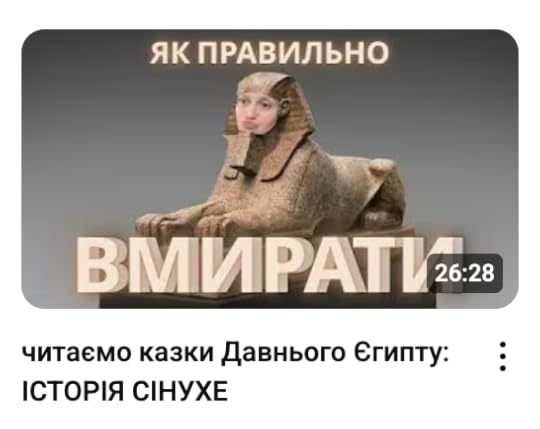
Правильна відповідь: нічого не важливіше за це для давнього египтянина. Єгипет - це шлях, Нілом і у вічність, але ніколи закордон. Там - хтонь та чужі боги. Якщо ти їдеш поза свій край, то краще заздалегідь замов похорон, а після нього можна і вирушати. Повернешся живим - класно, не повернешся - хоч відспівали як людину.
Нажаль, такої опції в героя нашої оповіді немає, бо він накивав п'ятами з батьківщини у великому поспіху (брав участь у змові проти короля Аменемхета І і боявся страти). Сінухе закордоном жив на широку ногу і в великій пошані, але на старості вирішив повернутися додому, про що, власне, і розповідає ця історія, супер-популярна за часів Середнього царства.
Нажаль, на українську вона ще не перекладена, на відміну від The Tale of the Shipwrecked Sailor, але впевнений розвиток нашої єгиптології вселяє надію на те, що це скоро зміниться.
Знайомство з нею було обумовлено моїм челенджем читання класики в хронологічному порядку і, з огляду на її малий об'єм, могло би відбутися набагато швидше, ніж за місяць після The Epic of Gilgamesh, не будь я задротом глядачем українського ютубу, який контента про Єгипет накліпав будь здоров:
- На Wild Fox Борис робить (шестигодинні) стріми на різні теми з давньої історії (також є екстракти стрімів на 1-2 години, в яких вирізані найбільш цікаві моменти з розповіді). Коли я вперше побачила цей канал, то здивувалася, мовляв, хто буде таке дивитися? Виявилося, що я (але на швидкості х2). - Шо це було – всесвітня історія - для тих, хто хоче отримати інформацію за 10-15 хвилин і з гарним візуалом. - StoryStoriya йде по шкільній програмі з всесвітньої історії, тобто її відео не містять контенту 18+ (проте іноді містять рекомендації російських істориків, що майже тотожно).
On an expedition to Libyan land, with the “Perfected God Senwosret” at the head, Sinuhe overhears that King Amenemhat I/Sehotepibre has died—the first king of the 12th Dynasty in Egypt. Not knowing how the king met his demise; Sinuhe loses his nerve from fear of infighting, and flees his duties in Egypt to later become a Bedouin. Almost dying of dehydration while fleeing east, he says, “Thirst’s attack overtook me, and I was scorched, my throat parched. I said, ‘This is the taste of death.’” He is recognized by the leader of the Syrians and is saved. The ruler of upper Retjenu “Amunenshi” welcomes Sinuhe in, saying, “You’ll be happy with me, for you’ll hear the speech of Egypt.” Amunenshi placed Sinuhe at the head of his children, gave him choice of his country, commander of his army, and married him to his eldest daughter. Summoned to battle by a “hero of Retjenu,” Sinuhe bests him, “What he planned to do to me, I did to him; I seized what was in his tent, and stripped his camp. With this I became great, and grew copious of wealth, and grew plentiful of cattle.” After gaining his riches, Sinuhe’s ultimate desire was to be accepted back into his old kingdom and be buried properly, “What matters more than my being buried in the land where I was born? This is my prayer for help, that the good event befall, that God give me grace!” It is made so in the end. The Dual King Kheperkare/Senwosret is informed of Sinuhe’s situation and commands him graciously back to Egypt. I think Sinuhe, for the most part, leaves his children behind because Egypt is not their home, but I think he is apprehensive that the invitation is a trick. The story ends cheerfully though and Sinuhe is given a royal burial. Is it an epic? Sort of, the story begins medias res like Gilgamesh, but to compare Sinuhe to Gilgamesh, I think diminishes the paradigm of an epic. Was it an adventure—an unusual and exciting, typically hazardous, experience or activity? Absolutely, it is full of near-death experiences and hazardous activities. Was it a romance? Not really, Sinuhe’s marriage was arranged. Is it a redemption story? Yes, I think it is. In an inequitable summary, Sinuhe fled his home to then be accepted back without consequence
This entire review has been hidden because of spoilers.
The tale of Sinuhe seems to me like a classic life lesson to be learned. In the text, Sinuhe leaves Egypt on an expedition only later to hear that the King has been assassinated. He flees in fear for his life and takes refuge in the Arab regions east of Egypt. Although he works his way up and becomes successful since he is educated, it seemed he was never as happy as he could be while living in Egypt. It is said he wanted to die and be buried in Egypt. This text hits home with me. I come from a family whose parents migrated here for opportunity. Much like the story, conditions were not very safe in their home country, and they had to flee for protection of their lives and better opportunity alike. Something my father always says is that he one day wants to move back to his home country and live the rest of his days there. Maybe I would need to be put in Sinuhe or my father's shoes to understand the feeling of leaving home to a foreign territory. Even with all the riches, home is where the heart is. It intrigues me personally though that Sinuhe becomes successful and well respected in Lebanon and southern Syria, yet does not want to continue his days there. A goal of mine is to become successful financially and have some sort of power to be able to affect the earth or many people in a positive manner. Even if that means I would have to leave my city behind in pursuit of it. Actually now that I think of it, I would probably never leave home for too long. Moment of realization; I now see how Sinuhe and my father feel.
Got lost in this one. I suppose I was thinking about The Prince of Egypt when Sinuhe runs away and becomes successful in a new region with new people. Like the movie, this is only the first half of the story. Then he returns. Why? More like how. He gets invited to return, and maybe his success eventually alerted the Egyptians that their missing aristocrat was in Syria, but it seems random, especially with the degree of praise and service from the Pharaoh's children he receives for the rest of his life and afterlife. He got the fancy funeral he wanted. The second half read choppy and sometimes I thought maybe he was fantasizing rather than actually returning, and that he died in Syria. Apparently not. I mildly liked the first half of the story and didn't care for the second half.
This story to me at first was not so appealing. However, upon closer examination it seemed there was more to the tale of Sinuhe then I first realized. Sinuhe was an apparently strong, virtuous character that strived against all odds to find himself rise literally from a exiled soldier, to an accomplished warrior and leader of great lands. It was not, however, his leadership skills that were of interest but of the mystery surrounding his reason to flee in the first place. Once I pondered upon this, the story seemed so much more interesting.
This entire review has been hidden because of spoilers.
This is an interesting story. Sinuhe has a lot in common with Moses - he seems to belong in the Pharaoh's palace, and there is rejoicing when he comes back to Egypt after fleeing and spending long years in other countries. But instead of having a mission and a people to save, Sinuhe is a good Egyptian, and just wants to die peacefully in his homeland. So everything goes smoothly for him.
This entire review has been hidden because of spoilers.
Quite an interesting text, though I feel like some of the glory may have been lost with the translation, this text seems a fundamental representation of one of the oldest stories known to mankind-Man hears (what he thinks is) bad news, gets the hell out of dodge, and waits for things to blow over, and it was an enjoyable read.
So many questions! What did Sinuhe overhear that made him run away? Or was that an excuse, did he really participate in the plot to assassinate the Pharaoh? If so, why did the new Pharaoh welcome Sinuhe back? I enjoyed the story very much even with all of my questions.
I remember reading this as a child it left me one of the biggest impressions. I have to say I still clearly remember many parts of it (doesn't happen often) I'm going to read it one more time to see if it was just my childhood fascination or is this just a great book.
Interesting enough as a portrayal of what was important at this time in Egypt. I also can see the similarities it has to some stories from the bible, but overall it was more intriguing than good.
The interesting thing is that when we think of Ancient Egypt we think of Pharaohs, Pyramids, and hieroglyphics, but what we don’t think of is literature. It turns out that they did have literature, but they basically weren’t carved on walls, and the only ones we happen to have are those that we have fished out of tombs (and the fact that we are still finding tombs suggests that there could be a lot more manuscripts to be uncovered).
The translator suggests that this is a fictional story, and in a way it could be, although the ancients were never really known for writing fiction. However, unlike other ancient works we have (such as Gilgamesh), this deals with normal people in Egyptian society, so in a way, it certainly does set it apart from other works. It also gives us a glimpse into a side of Egyptian life that we normally don’t see.
Anyway, I’m only looking at this story as opposed to the collection as a whole, so I will basically just focus on that. Well, the story is about a courtesan named Sinuhe who flees Egypt when the king dies. He certainly wasn’t the only person to do so, but the suggestion is that the king was assassinated, and it sounds as if the Egyptians really didn’t have the concept of the rule of law. Then again, if the kings happened to be considered gods then they would pretty much be a law unto themselves.
So, Sinuhe flees to the south and almost dies, but encounters others who are fleeing and he travels with them to Syria where he stays for most of his life. In fact, we are told how he rises in the ranks to become a tribal leader in his own right. However, as he grows older he becomes homesick. Moreso, he wants to be buried in Egypt so he reaches out to the king, who welcomes him back.
One thing that the translator doesn’t seem to consider is that this story could be an analogy of life. Egypt is considered a peaceful and stable land, and Sinuhe has been exiled. In a way you could say that life is a form of exile from the civilisation and stability of the afterlife, something that powerful Egyptians like Sinuhe would have also had access to (particularly since they would have tombs of their own). Even though he rises in power, and is quite wealthy, in exile, he still longs to return to Egypt in the same way that we long to escape this wild and chaotic world to the peace of the afterlife.
A final note is that it is interesting to see how we have similar styles in this work that we would see in the Bible, which gives us a connection between the writings in the Bible and some contemporary works. I suspect that this would have been written during the time that Israel was in exile in Egypt. Anyway, it is interesting to see how literature developed in civilisations other than the standard ones we usually equate with literature.
Fui pródigo en riquezas y rico en granados. Así obró el Dios para ser clemente con quien se había enfadado y andaba errante por otro país.
Hoy su corazón esta feliz. Un fugitivo huía en su tiempo y ahora mi fama llega a Palacio. Un vagabundo vagaba con hambre y ahora yo doy para mis vecinos. Un hombre dejó su tierra desnudo y ahora visto vestidos blancos de lino fino. Un hombre huyó por carecer de quien enviar y ahora yo soy rico en siervos. Mi casa es hermosa u mis dominios extensos pero mi memoria está en Palacio. Cualquiera de los dioses que ordenó esta huida sé clemente y colócame en la Corte. Ciertamente tu harás que yo vea el lugar donde reside mi corazón.
¿Qué cosa más grande que mi cadáver fuera enterrado en la tierra en que nací?
This entire review has been hidden because of spoilers.
reread this bc i read it in mythology class and afterwards i could not find it again for the life of me Until now THREE YEARS LATER !!! This stuck w me for 3 years !!! i loved it when we read it !! still love it !!! This is like an itch finally being scratched or putting the final piece in the puzzle or anything equally gratifying I cant say how many times i looked for this throughout the years desperately on google and never found it until now