In 1857 a young Englishwoman arrives in Port Natal from India to make a new life for her family among settlers, homesteaders, and sugar-cane farmers. She is with her daughter and the child’s ayah, and has been travelling for eleven months to join her husband, already deep in the hinterland. Her father-in-law has staked them their passage, a sum for settlement and an arrangement for the purchase of land, but there are conditions to his generosity that will have a lasting effect on the pair, and particularly on their fifth child, Cosmo, born years later. It is on the family’s sugar-cane farm that the reader begins to understand that there is something peculiar about young Cosmo, something that must be kept secret. At once an intriguing mystery and a meditation on the region’s colonial history, Under Glass is a high-stakes narrative of deception and disguise by one of South Africa’s finest novelists.
Librarian Note: There is more than one author in the Goodreads database with this name.
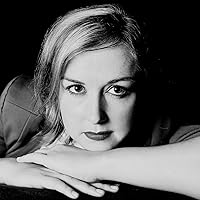
Claire Robertson is the author of The Spiral House, winner of the 2014 Sunday Times Fiction Prize and a South African Literary Award, and The Magistrate of Gower. She lives in Simon’s Town.
This book is a historical fiction, set in the years from 1857 to 1878. History gives depth to travellers' enjoyment. I thought 'Under Glass' might even be similar to 'The Side of the Sun at Noon' by Hazel Crampton, but it wasn't. Crampton explores a historical happening, whereas Roberston immerses her reader into the lives of fictitious, yet probable historical characters.
In which way is CLAIRE ROBERTSON qualified to set a book in the mid nineteenth century? She has spent the past 30 years as a journalist. She has won awards for her reporting and for her two previous novels. Under Glass (2018) is her 3rd novel.
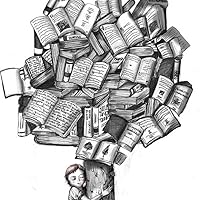
The COVER shows exotic plants, flowers, fruit, insects, even a snake under glass. However, the specimens erupt from the enclosure and all is encircled by the tail-end of a snake. What intrigues would such a book reveal? What has to be hidden?
The STRUCTURE of the book is complex: two parts with an Interregnum. Some sections have names, others are merely numbered. Surely this must have a purpose.
I summarised the book as I READ it. This allowed me to really get to grips with each character, sort out the time warp and work through the challenging structure if the book.
To ORIENTATE you, I'll mention some of the physical situations in which the settler family finds itself: • the voyage to Port Natal • D'Urban's society • sugar cane farming and milling • interaction with locals • army camp • botanical work And much more.
Robertson has created CHARACTERS that support each other as they are fleshed out. They don't change their spots, but generate sympathy and frustration in the reader as they continue on their predictable (yet not boring) way.
The first section belongs to COSMO. A first person voice introduces himself (or is it herself)? Immediately duplicity and secrecy raise their heads. Throughout the book, Cosmo speaks of things that seem not have occurred yet in the sections that follow. Cosmo is the family's conscience and mirror. Cosmo is 'under glass', yet cannot be contained due to natural growth.
MRS CHETWYN is the main protagonist as she maps everything from the property, her seedlings and the family. She directs and decides and allows each family member to play his or her role.
GRIFFIN is an invisible person, dressed in flowing saris, who shadows Cosmo perpetually. She is Mrs Chetwyn right hand.
MACQUAIRIE initially explains what importance botany has in colonial life. Then he becomes Mrs Chetwyn's botanical mentor, eventually sowing more than plant seeds in her glass house.
FUZE is Mr Chetwyn's right hand. Fuze's insights into the family's doings, contrasted against his own culture's criteria, gives the reader the picture of a rejected man who recognises pain in other beings.
MISS OAK is a botanical artist whose keen eyes immediately pick up the dissemblance in the family. She becomes Cosmo's confidant, although never a word is spoken directly.
Many other characters give endearing support to Mrs Chetwyn's plans. The sisters, neighbours, visitors, workers, lawyer, clergy - all add to the depth of the story.
Robertson speaks to various evergreen THEMES through her characters.
1. Race issues: Mr Berriball's laughing remark to the black manager of the sugar mill, Fuze: 'Well of course YOU don't know' (p.271) after Fuze had been explaining the workings of the mill to the uncomprehending Mr Berriball for a week.
2. Colonisation issues: '... nine out of every ten native soldiers will be armed with neither rifle nor spear, but with shovels and cutlasses; the colony's men will be ditch diggers and land pirates' (p.296).
3. Land claim issues: Mrs Chetwyn's query as to the previous owner is vaguely answered by Mr Chetwyn with 'The king' - 'Their king' (p.130).
4. Sexual issues: In the greenhouse, a strange sex scene unfolds: 'In the light of what lacks, she reads her marriage bed and values it at the moment she would be judged by most to be disregarding it' (p.249).
5. Loss of identity: When Fuze decides to join the British Army to fight against the Zulu: 'Are we to go as cowards go, with rifles against spears'? (p.296).
6. Deceipt: Revealed by Cosmo (still not born in the mainstream story!) as he comments on the family interaction during the Christmas smous' visit: 'I, who have been taught to be so careful of my humours, am driven out of my reason by the doubled nature of others' (p.176). The ultimate deceipt when Mr Chetwyn is told that he may 'Call it son' (p.195), and while he celebrates his son's birth, Mrs Chetwyn begins 'by denying to herself that it is as it is and who is to prove otherwise? (p.196).
7. Social status: '... the Chetwyns had not had so much as a cinder bucket or roasting jack to their name before outfitting for this colonial task ...'. (p.43).
8. Patriarchy: Three girls do not impress the Chetwyn's father.
9. Personal growth - could one call it breaking the mould or challenging societal rules: All settlers are in Africa to reinvent themselves. Even Mrs Chetwyn perhaps 20 years old, is much surprised when she sees herself as 'this brave self she is being' (p.65).
The TEXT itself is enjoyable. Here's one example. Guess what's being described? '... not scissioned, then, but fruited: an orchid, one, pleated in the centre, dully purple' (p.279). Not so easy to identify, read out of context. Fortunately, Robertson allows the sisters to think: '... no different ... than that of little craal boys' (p.279) to ensure you have the answer.
Perhaps I was tired (as Under Glass is a demanding read), but I found the ENDING rather flat: the fiesty Mrs Chetwyn, now twenty years older, has mellowed. And as she (once again!) maps what to tell their heir, she decides to create 'sympathetic fictions' (p.299) and seems to drift away in her memories. However, I can't think of an alternative ending, so I shouldn't complain.
Otherwise, only two CRITICISMS arise in my mind: • What does 'kafula' mean? Obviously a derogatory remark when read in the context. • And where is Malabar? Google didn't have satisfactory answers to either question.
In CONCLUSION, if you enjoy historical animation laced with human frailties, then Under Glass is just your ticket into an era gone by, yet with themes that are everpresent.
I thought this was great. Have been reading a lot of South African literature recently (I'm from the UK), and this was one of my favourites. The writing is a good balance of poeticism with readability. And an interesting storyline with a good, if slightly predictable twist.
An excellent and intricate historical fiction, with interesting twists and turns. Truly brilliant with passages that one wants to underline and memorize !
This is the first book I've read from the highly-rated Claire Robertson, a former winner of the Sunday Times fiction prize.
Honestly, I struggled in the beginning. The setup - the first 100 pages - felt a bit tedious to me. But once the 'mystery' that is central to the book starts to reveal itself, I was intrigued enough to fly through the other two-thirds of the novel.
The story concerns the Chetwyns, an English family that buys land for sugarcane farming during the mid-1800s in Natal, at the height of the colonial era. It is told mostly from the viewpoint of Mrs Chetwyn, interspersed with that of her fifth and last child, the boy Cosmo and a couple of pages concerning the viewpoint of Fuze, a Zulu man who acts as a kind of foreman and general assistant to Mr Chetwyn.
The title refers to Mrs Chetwyn's botanical pursuits, her growing fascination with growing things from scratch, whether vegetables or flowers or trees. She eventually builds a kind of greenhouse made from glass to see whether some plants grow better that way. There is an analogy between growing the plants and her growing flock: four girls (two of them twins) and then Cosmo, upon whose shoulders rests the knowledge that he will inherit the very profitable farm one day, as Mr Chetwyn's father owns the actual land and will only pass it on to a male heir.
There is a beauty in the way Robertson describes the horticultural aspect of the book. It contrasts with the way Mrs Chetwyn's story is told in the third person and Cosmo's in the first person. This lends the story a certain strangeness. It also makes it harder to identify and sympathise with Mrs Chetwyn.
As the plot progresses it becomes clear that there is a strange secret about Cosmo and when it is revealed, I was horrified.
Despite the long setup - which is interesting to those wishing to read some well-researched descriptions of colonial life - it is worth sticking it out to get to the rest of the book.
Under Glass is a masterpiece of post-colonial literary fiction from an author who is fast becoming a national treasure. Metaphors are beautifully and subtly layered throughout the narrative, with gender, sexuality, race and class explored deftly and to remarkable effect. In her usual style, Robertson immerses us in the environment - this time the rich green landscape of Durban and the Natal coast prior to colonisation - though we never shake the uneasy sense, expressed by the character of Mrs Chetwin, of a place "recently vacated". Amazingly, she has also managed to write a deeper, more descriptive and evocative novel while also producing more of a page-turner than her previous works. Anyone with an interest in the origins of settler-colonial societies will find this book fascinating, but it also has a lot to say about contemporary South Africa.
'There are questions for Mrs Chetwyn to answer; perhaps there ought to be charges. Instead, she rehearses for her son the story of his settler family, for when he is old enough to be schooled in the sympathetic fictions.' Mrs Chetwyn, whose first name we don't get to know, is the central character in Claire Robertson's latest novel. She arrives in 1857 in Port Natal from India to make a new life for her family. It is at once an intriguing mystery and a meditation on Kwazulu Natal. The style and wording of the carefully crafted sentences are in line with the Victorian setting of the story. It is not a book you can read fast, you need to read every word to truly capture the beauty of the story. Beautifully written, definitely thumbs up from me.
The book had relevance for me as I grew up in Durban, so loved the historical setting of this novel. The story unravels shockingly, and I admire the authors antiquated yet appropriate writing style, and her construction of core characters. The botanical aspect was beautifully written. An excellent historical novel, allusive and full of innuendo.
Very good historical fiction with a twist that reveals itself quite early on however the mystery lies in how this tangled web resolves. Would make a good movie I think.
Mrs Chetwyn arrived in Africa with her young daughter amid a storm. Her husband went ahead, and while she fears they may not reach the shore, he hunts. Once safely ashore in Natal, she began the arduous journey of making a life in a foreign country. Chetwyn was promised assistance from his father, yet the couple soon discovers that any land which they purchase will belong to them only if they produce an heir. Yet Mrs Chetwyn’s second and third pregnancies produce girls.
Determined to try again for the security of the family, Mrs Chetwyn becomes pregnant once more. Cosmo, the fifth child of the pair, was the answer to their prayers – a son to whom the land could be left; a savior of the family, arriving at precisely the right time. Surrounded by the women in his family, he is a prized possession, with both his person and the weight balanced precariously upon his shoulders watched and guarded obsessively.
As Cosmo grows, so does his responsibility as sole son and heir. All the while, the family’s farm flourishes, and Mrs Chetwyn’s garden, gifted to her in unknown seeds by an enthusiastic botanist, becomes her sole escape and private sanctuary.
I was almost weary of reading Under Glass, for colonial-era literature can be tricky to navigate, the waters surrounding the topic both muddy and deep, yet Claire Robertson avoids all the usual pitfalls of literature of this type. Her focus on language and race is only as a foundation for an enchanting story, and not a focus point that dwarfs the plot. The plot itself is akin to the specimens in Mrs Chetwyn’s garden – multifaceted and eager to unfurl as petals on an exotic plant. Robertson has a talent for presenting the unexpected, and for shepherding the reader into a world beyond their own.
Under Glass is unpredictable, poetic, and deeply thrilling. It is a story of more than new beginnings and the family which casts them – it breaks borders between loves won and lost, secrets hidden and revealed, and circumstances beyond one’s control. A worthy read for any literary fan, Under Glass will find a home on any shelf, and certainly be cherished there.
Under Glass by Claire Robertson is published by Umuzi, an imprint of Penguin Random House South Africa.
3.5 stars. Started off well, but fell off near the end. With ancestors who arrived in South Africa in a similar fashion, I enjoyed the chronicle of settler life in the beginning.