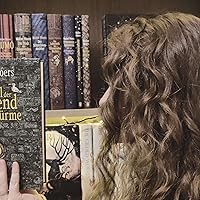
William, Mary and Alice arrive at their magical Golden Valley for the summer holidays. But the lazy tranquillity is soon shattered when developers announce plans to turn it into an adventure park. When the children turn to Stephen Tyler, the Magician, for help he tells them they must decide for themselves how to prevent the destruction of the valley. But the children face a threat from the past as well as the present. Morden, the magician’s evil assistant, is becoming more powerful and will stop at nothing to ensure the developers carry out their plans.
William Corlett (8 October 1938 - 16 August 2005), was an English children's writer, best known for his quartet of novels, The Magician's House, published between 1990 and 1992.
Corlett was born in Darlington, County Durham. He was educated at Fettes College, Edinburgh, then trained as an actor at the Royal Academy of Dramatic Art. He worked as an actor while embarking on a literary career during the 1960s, and wrote plays and adult novels as well as the children's novels for which he is particularly remembered. Several of his works were adapted for the screen.
Later in life he came out as gay, and it was from his partner, Bryn Ellis, that he gained some of his inspiration for The Magician's House. Corlett died of cancer at Sarlat in France.
"However many millions of people are born - there are no two who are entirely the same. An unlimited number of variations on a theme. It is our uniqueness that is the gold in us; it is our striving to be the same that is the dross."
Third in The Magicians House Quartet. Was not my favourite of the four but still enjoyable and discusses some good themes for a children's book. The emphasis on nature and protecting it seems even more relevant today.
The characters are realistic, no perfect and saintly children. They bicker, argue, get scared but ultimately have good hearts and a heros spirit.
It had all the right ingredients -- evil villains, magic, time travel, but somehow the story didn't gel for me.
Perhaps that's the problem of reading the third book in a series, when you haven't read the two preceding it or the one that follows, but this was the only one available in the library.
I liked that this book got on with things, while still leaving things unanswered -- for example, why the Magician wants the valley to remain as it is. It was interesting to see Morden playing a more active part, too: the second book felt more like an interlude, an opportunity for the children to learn and grow more without a real bad guy (the badger baiters don't really count because they're ordinary people, in my mind -- not able to do magic like Morden, the Magician and the children).
A great children's book with a good plot and interesting themes to help children develop into great adults. I want to read the other ones from the series.