

What do you think?

Cathay: A Critical Edition
Ezra Pound's Cathay (1915) is a masterpiece both of modernism and of world literature. The muscular precision of images that mark Pound's translations helped establish a modern style for American literature, at the same time creating a thirst for classical Chinese poetry in English. Pound's dynamic free-verse translations in a modern idiom formed the basis for T.S. Eliot's famous claim that Pound was the "inventor of Chinese poetry for our time." Yet Pound achieved this feat without knowing any Chinese, relying instead on word-for-word "cribs" left by the Orientalist Ernest Fenollosa, whose notebooks reveal a remarkable story of sustained cultural exchange.
This fully annotated critical edition focuses on Pound's astonishing translations without forgetting that the original Chinese poems are masterpieces in their own right. On the one hand, the presentation of all that went into the final Cathay makes it possible for the first time to appreciate the magnitude and the nuances of Pound's poetic art. At the same time, by bringing the final text together with the Chinese and Old English poems it claims to translate, as well as the manuscript traces of Pound's Japanese and American interlocutors, the volume also recovers practices of poetic circulation, resituating a Modernist classic as a work of world literature.
The Pound text and its intertexts are presented with care, clarity, and visual elegance. By providing the first accurate and unabridged transcriptions of Fenollosa's notebooks, along with carefully edited Chinese texts, the volume makes it possible to trace the movements of poetic ideas and poetic expression as they veer toward and away from Pound's creations. In supplying the full Fenollosa texts, the volume overturns decades of scholarship that has mystified Pound's translation process as a kind of "clairvoyance," displaying instead the impressive amount of sinological learning preserved in Fenollosa's hard-to-read notebooks and by detailing every deviation from the probable sense of the originals. The edition also supplies exhaustive historical, critical, and textual notes, clarifying points that have sometimes lent obscurity to Pound's poems and making the process of translation visible even for readers with no knowledge of Chinese.
Cathay: A Critical Edition includes the original fourteen Chinese translations as well as Pound's unique version of "The Seafarer," which is fully annotated alongside its Anglo-Saxon source. Also included are Pound's fifteen additional Chinese translations from Lustra and other contemporary publications, his essay "Chinese Poetry" (1919), a substantial textual Introduction, and original essays by Christopher Bush and Haun Saussy on international modernism, the mediation of Japan, and translation.
The meticulous treatment and analysis of the texts for this landmark edition will forever change how readers view Pound's "Chinese" poems. In addition to discoveries that permanently alter the scholarly record and force us to revise a number of critical commonplaces, the critical apparatus allows readers to make fresh discoveries by making available the specific networks through which poetic expression moved among hands, languages, and media.
Ultimately, this edition not only enables us more fully to appreciate a canonical work of Modernism but also resituates the art of Pound's translations by recovering the historical circulations that went into the making of a multiply authored and intrinsically hybrid masterpiece.
This fully annotated critical edition focuses on Pound's astonishing translations without forgetting that the original Chinese poems are masterpieces in their own right. On the one hand, the presentation of all that went into the final Cathay makes it possible for the first time to appreciate the magnitude and the nuances of Pound's poetic art. At the same time, by bringing the final text together with the Chinese and Old English poems it claims to translate, as well as the manuscript traces of Pound's Japanese and American interlocutors, the volume also recovers practices of poetic circulation, resituating a Modernist classic as a work of world literature.
The Pound text and its intertexts are presented with care, clarity, and visual elegance. By providing the first accurate and unabridged transcriptions of Fenollosa's notebooks, along with carefully edited Chinese texts, the volume makes it possible to trace the movements of poetic ideas and poetic expression as they veer toward and away from Pound's creations. In supplying the full Fenollosa texts, the volume overturns decades of scholarship that has mystified Pound's translation process as a kind of "clairvoyance," displaying instead the impressive amount of sinological learning preserved in Fenollosa's hard-to-read notebooks and by detailing every deviation from the probable sense of the originals. The edition also supplies exhaustive historical, critical, and textual notes, clarifying points that have sometimes lent obscurity to Pound's poems and making the process of translation visible even for readers with no knowledge of Chinese.
Cathay: A Critical Edition includes the original fourteen Chinese translations as well as Pound's unique version of "The Seafarer," which is fully annotated alongside its Anglo-Saxon source. Also included are Pound's fifteen additional Chinese translations from Lustra and other contemporary publications, his essay "Chinese Poetry" (1919), a substantial textual Introduction, and original essays by Christopher Bush and Haun Saussy on international modernism, the mediation of Japan, and translation.
The meticulous treatment and analysis of the texts for this landmark edition will forever change how readers view Pound's "Chinese" poems. In addition to discoveries that permanently alter the scholarly record and force us to revise a number of critical commonplaces, the critical apparatus allows readers to make fresh discoveries by making available the specific networks through which poetic expression moved among hands, languages, and media.
Ultimately, this edition not only enables us more fully to appreciate a canonical work of Modernism but also resituates the art of Pound's translations by recovering the historical circulations that went into the making of a multiply authored and intrinsically hybrid masterpiece.
364 pages, Hardcover
First published January 1, 1915
About the author
Ezra Pound
555 books1,051 followersEzra Weston Loomis Pound was an American expatriate poet, critic and intellectual who was a major figure of the Modernist movement in early-to-mid 20th century poetry.
Pound's The Cantos contains music and bears a title that could be translated as The Songs—although it never is. Pound's ear was tuned to the motz et sons of troubadour poetry where, as musicologist John Stevens has noted, "melody and poem existed in a state of the closest symbiosis, obeying the same laws and striving in their different media for the same sound-ideal - armonia."
In his essays, Pound wrote of rhythm as "the hardest quality of a man's style to counterfeit." He challenged young poets to train their ear with translation work to learn how the choice of words and the movement of the words combined. But having translated texts from 10 different languages into English, Pound found that translation did not always serve the poetry: "The grand bogies for young men who want really to learn strophe writing are Catullus and François Villon. I personally have been reduced to setting them to music as I cannot translate them." While he habitually wrote out verse rhythms as musical lines, Pound did not set his own poetry to music.
Pound's The Cantos contains music and bears a title that could be translated as The Songs—although it never is. Pound's ear was tuned to the motz et sons of troubadour poetry where, as musicologist John Stevens has noted, "melody and poem existed in a state of the closest symbiosis, obeying the same laws and striving in their different media for the same sound-ideal - armonia."
In his essays, Pound wrote of rhythm as "the hardest quality of a man's style to counterfeit." He challenged young poets to train their ear with translation work to learn how the choice of words and the movement of the words combined. But having translated texts from 10 different languages into English, Pound found that translation did not always serve the poetry: "The grand bogies for young men who want really to learn strophe writing are Catullus and François Villon. I personally have been reduced to setting them to music as I cannot translate them." While he habitually wrote out verse rhythms as musical lines, Pound did not set his own poetry to music.
Ratings & Reviews
Friends & Following
Create a free account to discover what your friends think of this book!
Community Reviews
Displaying 1 - 30 of 84 reviews

September 23, 2014
Who would have guessed that one of the transformative books of modern English poetry would be a slim volume consisting of fourteen poems from ancient China, translated by a man with little knowledge of the Chinese language, who relied upon the disorganized notes of a deceased professor who specialized in Japanese?
Yet such is Cathay (1915). This small work of genius is one reason—among many—that T.S. Eliot declared Ezra Pound to be “more responsible for the twentieth-century revolution in poetry than is any other individual.”
Ezra Pound and the other poets of Imagism (a movement he himself created in 1912), were resolved to write only about the concrete, to use few words, to describe and not explain, and to seek a verbal music subtler than the Victorian metronome. (Their anthology Des Imagistes [1914] shows the brave but tentative movements they made in this direction.)
Pound admired the clarity and immediacy of ancient Greek lyrics, and imitated them with considerable success. Yet the rhythms of his own verse had not yet shaken off his youthful bumptiousness or the insistent metrics of Browning, and Imagism itself still lacked good ground in which to grow. When, in 1913, the widow Mary McNeill Scott Fenolossa shared with him her husband Ernest's notes on Chinese and Japanese literature, the twenty-eight-year-old Pound recognized in the spare, image-centered poems of Rihaku (Japanese for "Li Po") an ancient yet vital tradition that would not only help him write better poetry but would also strengthen the Imagist impulse, giving it nourishment and roots. It did both, and in the process permanently enriched the language.
Although Cathay is a glimpse into an “exotic” culture, its opening strikes a contemporary note. Published on April 6th of 1915, six months after trench warfare commenced on the Western Front, it begins with the war-weary “Song of the Bowmen of Shu”:
We grub the first fern shoots,
When anyone says "Return,” we are full of sorrow.
Sorrowful minds, sorrow is strong, we are hungry and thirsty.
Our defence is not made sure, no one can let his friend return.
We grub the old fern stalks.
Of the fifteen poems included here, all share an elegiaic melancholy and a music both deft and strange, and five of them are masterpieces of English poetry: "The Beautiful Toilet," “The River Merchant's Wife: a Letter,” "The Jewel Stairs' Grievance," “The Exile's Letter,” and “The Seafarer” (the only non-Chinese poem here, a translation from Old English, it was probably included to let the British know that at one time their own language had been capable of this sort of thing too.)
This is a delightful book, and an important one, for it not only helped transform English free verse into the flexible instrument of today, but also exalted the poet-translator over the scholar-translator and influenced--for good and ill--the West's ideas of “The Orient.”
All that, in a pamphlet of twenty-eight pages.

May 31, 2021
In April 1915, Cathay was essentially a book of war, using Fenollosa's notes to provide a system of parallels and a structure of speech. Its exiled archers, abandoned women, devastated dynasties, departures to distant places, lonely border guards, and glories remembered from afar, cherished memories. They were selected from the wide variety of notebooks for a sensitivity susceptible to the torn Belgium and tormented London. [Cathay's poems] say, as much of Pound's work says, all of this happened before and always continues to happen.
Introduction by Gualter Cunha
Introduction by Gualter Cunha

January 25, 2018
Ezra Pound cheated.
At the turning of the twentieth century everything had been done in literature or, at least, it seemed that way at the time. The writers that emerged in the early decades had to find a way to assert their own identities; they had to find a way to cast aside the shackles of established Victorian literary traditions and create something of their own.
So how exactly do writers “make it new” as Pound famously said? James Joyce and Virginia Woolf did all sorts of creative things with narrative and language, but what did Pound do?
He cheated, of course.
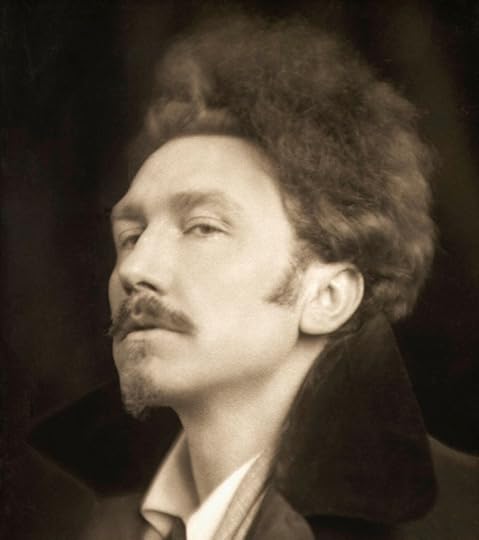
Pound’s new poetry, if we can call it Pound’s, were translations from traditional Chinese verse. Granted, translation is an extremely difficult process especially when you don’t actually know the language (like Pound didn’t.) So he used the journals of his former friend (and translator) and edited the notes into poetry. Pound was open about it; he knew it wasn’t his own work exclusively, but it did make him famous and propel his literary career. Although he didn’t undertake the translations, he placed the words as per the imagist mode he helped to develop. There was no rhythm or rhyme, just simple true to life images on each line.
I sound critical of Pound here, but I am not. For what Pound’s little pamphlet of poems did was transform the literature of the age. He brought the orient into the western cannon, the REAL orient. This wasn’t some western novelist’s backwards depiction of it or a romantic poet’s exotic sexualised fantasy, some semi-racist work born of cultural prejudices: this was the REAL thing. This was a glimpse of China, and for western readers it was the first time they would have seen a fair portrayal of such a thing in literature. A new literary age had emerged with the focus on portraying real life accurately, and Pound had set the tone for poetry. Even Edward Said, the renowned scholar and cultural critic who wrote Orientalism, praised Pound for his lack of ignorance in regards to the east: a ridiculously strong compliment from such a man.
There are fourteen poems altogether. They seem simple on the surface; the diction is basic and the content dispassionate. Pound was a huge believer that the poet should be detached from the poem, the poem itself should be the art: a piece of writing free form any of the author’s opinions or prejudices. Here is a good example:
Taking Leave of a Friend
"Blue mountains to the north of the walls,
White river winding about them;
Here we must make separation
And go out through a thousand miles of dead grass.
Mind like a floating wide cloud,
Sunset like the parting of old acquaintances
Who bow over their clasped hands at a distance.
Our horses neigh to each others
as we are departing."

Simple isn’t it? Read from it what you will, though I take much from it. Look at the colours and the adjectives. Look at how the distance is really created within the poem. And look at the bareness of what it presents to the reader. It’s poetry that doesn’t give you everything: you need to find it.
So with this I consider my first stage of dissertation number two prep complete. I know what I’m writing on. I have my chapters vaguely outlined, I just need to read a whole host of literary criticism and develop my arguments. Lots of reading ahead, and more Pound ahead.
At the turning of the twentieth century everything had been done in literature or, at least, it seemed that way at the time. The writers that emerged in the early decades had to find a way to assert their own identities; they had to find a way to cast aside the shackles of established Victorian literary traditions and create something of their own.
So how exactly do writers “make it new” as Pound famously said? James Joyce and Virginia Woolf did all sorts of creative things with narrative and language, but what did Pound do?
He cheated, of course.
Pound’s new poetry, if we can call it Pound’s, were translations from traditional Chinese verse. Granted, translation is an extremely difficult process especially when you don’t actually know the language (like Pound didn’t.) So he used the journals of his former friend (and translator) and edited the notes into poetry. Pound was open about it; he knew it wasn’t his own work exclusively, but it did make him famous and propel his literary career. Although he didn’t undertake the translations, he placed the words as per the imagist mode he helped to develop. There was no rhythm or rhyme, just simple true to life images on each line.
I sound critical of Pound here, but I am not. For what Pound’s little pamphlet of poems did was transform the literature of the age. He brought the orient into the western cannon, the REAL orient. This wasn’t some western novelist’s backwards depiction of it or a romantic poet’s exotic sexualised fantasy, some semi-racist work born of cultural prejudices: this was the REAL thing. This was a glimpse of China, and for western readers it was the first time they would have seen a fair portrayal of such a thing in literature. A new literary age had emerged with the focus on portraying real life accurately, and Pound had set the tone for poetry. Even Edward Said, the renowned scholar and cultural critic who wrote Orientalism, praised Pound for his lack of ignorance in regards to the east: a ridiculously strong compliment from such a man.
There are fourteen poems altogether. They seem simple on the surface; the diction is basic and the content dispassionate. Pound was a huge believer that the poet should be detached from the poem, the poem itself should be the art: a piece of writing free form any of the author’s opinions or prejudices. Here is a good example:
Taking Leave of a Friend
"Blue mountains to the north of the walls,
White river winding about them;
Here we must make separation
And go out through a thousand miles of dead grass.
Mind like a floating wide cloud,
Sunset like the parting of old acquaintances
Who bow over their clasped hands at a distance.
Our horses neigh to each others
as we are departing."
Simple isn’t it? Read from it what you will, though I take much from it. Look at the colours and the adjectives. Look at how the distance is really created within the poem. And look at the bareness of what it presents to the reader. It’s poetry that doesn’t give you everything: you need to find it.
So with this I consider my first stage of dissertation number two prep complete. I know what I’m writing on. I have my chapters vaguely outlined, I just need to read a whole host of literary criticism and develop my arguments. Lots of reading ahead, and more Pound ahead.

August 26, 2021
Na stranu prenaduvana akademska drama oko Paundovih prevoda kineske poezije i sva osporavanja proistekla iz činjenice da Ezra nije znao kineski, „Kitaj” ostaje svedočanstvo toplog zagrljaja evropskog modernizma i drevne kineske lirike. Imažizam i kineska klasika, ruku pod ruku, iako je vremenski raspon između više od milenijuma. Prevod i treba da bude dodir, a ne mrtvilo oživljeno fusnotama u fusnoti. Stoga, „Pismo žene rečnog trgovca” može da se prevodi još 1000 puta, i tačnije i preciznije, ali će mnogima za vek i vekova ostati da ti leptirovi u parovima, žuti od avgusta, zadaju bol, i bude svest o starenju.
Paund je antologiju sastavljao i oblikovao sa težnjom da bira one pesme čije se značenje može izvući samo kroz implicitne sugestije. Imamo sjajnu površinu – predmete, pejzaže, upečatljive detalje – a na čitaocu je da pretpostavi/otkrije šta leži iza površine. Nagoveštaji se pretvaraju u otkrovenja. Paund je u kasnijem eseju „Kineska poezija” tvrdio da se sa ovakvim stihovima možemo igrati Konana Dojla ako hoćemo. Ja uglavnom nisam želeo, jer logička dedukcija nije svojstvena mom načinu čitanja poezije, više sam se intuitivno prepuštao detaljima, elegantnim u svojoj jednostavnosti i prolaznim u svojoj svevremenosti, - pokreti dugih rukava na pijanom upravniku koji pleše, ispuštanje glasova noćnih ptica i noćnih žena po baštama, stabla koja izbijaju kroz oplatu, smočene svilene čarape od rose, odraz na vodi zelenih obrva opijenih, našminkanih devojaka pred sumrak i sve ono nabreklo u svetu što me je ovog avgustovskog četvrtka uljuljkivalo u laži da je preda mnom još 10000 leta, jeseni, zimi i proleća.
Rastanak na reci Kijang
Ko-đin odlazi zapadno od Kokakuroa,
dimni cvetovi magle se po reci.
Njegovo usamljeno jedro zamazuje daleko nebo.
i sada vidim samo reku,
dugi Kijang što doseže nebesa.
Paund je antologiju sastavljao i oblikovao sa težnjom da bira one pesme čije se značenje može izvući samo kroz implicitne sugestije. Imamo sjajnu površinu – predmete, pejzaže, upečatljive detalje – a na čitaocu je da pretpostavi/otkrije šta leži iza površine. Nagoveštaji se pretvaraju u otkrovenja. Paund je u kasnijem eseju „Kineska poezija” tvrdio da se sa ovakvim stihovima možemo igrati Konana Dojla ako hoćemo. Ja uglavnom nisam želeo, jer logička dedukcija nije svojstvena mom načinu čitanja poezije, više sam se intuitivno prepuštao detaljima, elegantnim u svojoj jednostavnosti i prolaznim u svojoj svevremenosti, - pokreti dugih rukava na pijanom upravniku koji pleše, ispuštanje glasova noćnih ptica i noćnih žena po baštama, stabla koja izbijaju kroz oplatu, smočene svilene čarape od rose, odraz na vodi zelenih obrva opijenih, našminkanih devojaka pred sumrak i sve ono nabreklo u svetu što me je ovog avgustovskog četvrtka uljuljkivalo u laži da je preda mnom još 10000 leta, jeseni, zimi i proleća.
Rastanak na reci Kijang
Ko-đin odlazi zapadno od Kokakuroa,
dimni cvetovi magle se po reci.
Njegovo usamljeno jedro zamazuje daleko nebo.
i sada vidim samo reku,
dugi Kijang što doseže nebesa.

Read
October 26, 2013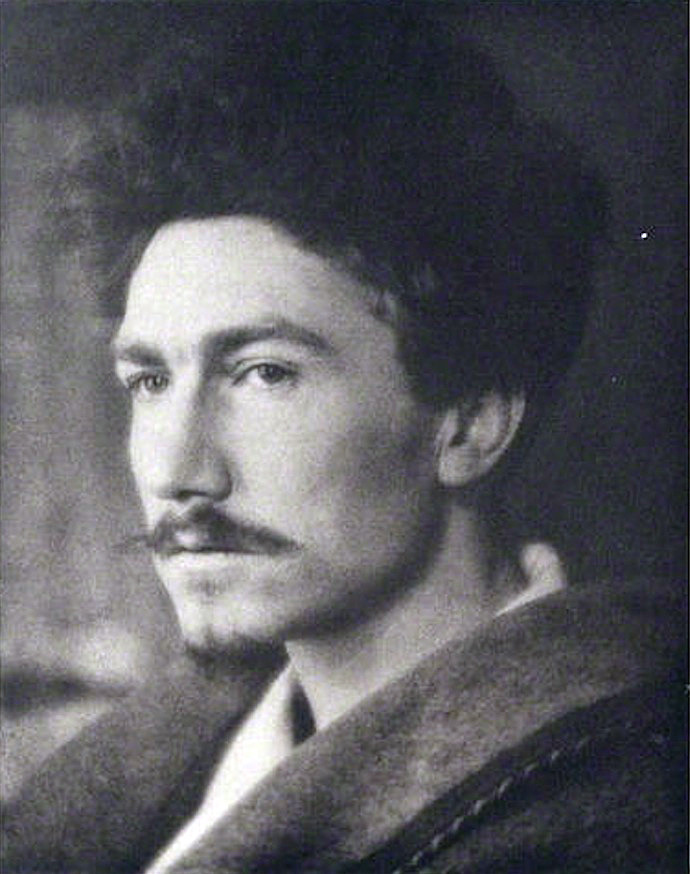
Ezra Pound (1913)
Ezra Pound (1885 – 1972) had his fingers in many pies, some of which were hot enough to burn him badly. One of these pies was the translation of poetry into English. Over his lifetime he published translations from at least 10 different languages, though of some of these, like Chinese, he had only a very weak grasp. However, he did have the papers of the great cultural explorer Ernest Fenollosa (1853–1908) which included more or less literal translations of poems by the great T'ang dynasty poet Li Po (Li Bai) and others.(*) On the basis of these notes Pound wrote the "translations" published in his Cathay (1915). Needless to say, sinologists object to these "translations", but they are without a doubt fine English poems.
His "translations" are also of great significance for readers like myself who are ignorant of the Chinese language and know well that they will never have the time and energy required to learn one of the most difficult languages on earth, because Pound's translations provided the initial impetus to the now extensive tradition of English language translations of Chinese poetry. As T.S. Eliot wrote, "Chinese poetry, as we know it today, is something invented by Ezra Pound." Of course, this is no longer true because great poet-scholars like Arthur Waley started producing real translations from the Chinese.(**)
It is for these reasons I want to draw your attention to these poems. To give you a taste of their poetic quality I will quote a few; and to give you a sense of how they are approximate, I will quote some versions by other translators of the shorter poem. The first poem is by Qu Yuan (343–278 BCE), identified by his Japanese name, Kutsugen, in this book. It is a lament by a soldier for whom the campaign has gone on much too long.
Song of the Bowmen of Shu
Here we are, picking the first fern-shoots
And saying: When shall we get back to our country?
Here we are because we have the Ken-nin for our foemen,
We have no comfort because of these Mongols.
We grub the soft fern-shoots,
When anyone says "Return", the others are full of sorrow.
Sorrowful minds, sorrow is strong, we are hungry and thirsty.
Our defence is not yet made sure, no one can let his friend return.
We grub the old fern-stalks.
We say: Will we be let to go back in October?
There is no ease in royal affairs, we have no comfort.
Our sorrow is bitter, but we would not return to our country.
What flower has come into blossom?
Whose chariot? The General's.
Horses, his horses even, are tired. They were strong.
We have no rest, three battles a month.
By heaven, his horses are tired.
The generals are on them, the soldiers are by them.
The horses are well trained, the generals have ivory arrows and quivers
ornamented with fish-skin.
The enemy is swift, we must be careful.
When we set out, the willows were drooping with spring,
We come back in the snow,
We go slowly, we are hungry and thirsty,
Our mind is full of sorrow, who will know of our grief?
Remarkably, the answer 2,300 years later is: I will. And you?
Here are versions by different translators of a poem by Li Po. By Pound:
The Jewel Stairs' Grievance
The jewelled steps are already quite white with dew,
It is so late that the dew soaks my gauze stockings,
And I let down the crystal curtain
And watch the moon through the clear autumn.
By David Hinton:
Jade-Staircase Grievance
Night long on the jade staircase, white
dew appears, soaks through gauze stockings.
She lets down crystalline blinds, gazes out
through jewel lacework at the autumn moon.
By Tony Barnstone:
Grievance at the Jade Stairs
The jade steps are whitening with dew.
My gauze stockings are soaked. It's so late.
I let down the crystal blind
and watch the glass clear autumn moon.
The full text of Cathay can be found here:
http://archive.org/stream/cathayezrap...
The full text is also included in Pound's New Selected Poems and Translations (New Directions) which I recommend strongly to anyone new to Pound.
(*) Rihaku is the Japanese name for Li Po. Fenollosa lived in Japan and learned about Chinese language and literature from Japanese masters. This is why most of the proper names in Pound's translations are Japanese instead of Chinese.
(**) As a matter of fact, Pound was instrumental in getting Waley's first translations into print.
Read
August 19, 2026Sometimes sheer magic happens when two poets are talking through the centuries:
From A Bridge at Ten Shin:
By Li Bao interpreted by Pound
From A Bridge at Ten Shin:
The lords go forth from the court, and into far
borders.
They ride upon dragon-like horses,
Upon horses with head-trappings of yellow metal,
And the streets make way for their passage.
Haughty their passing,
Haughty their steps as they go in to great banquets,
To high halls and curious food,
To the perfumed air and girls dancing,
To clear flutes and clear singing;
To the dance of the seventy couples;
To the mad chase through the gardens.
Night and day are given over to pleasure
And they think it will last a thousand autumns,
Unwearying autumns.
For them the yellow dogs howl portents in vain,
And what are they compared to the Lady Riokushu,
That was cause of hate!
Who among them is a man like Han-rei
Who departed alone with his mistress,
With her hair unbound, and he his own skiffsman!
By Li Bao interpreted by Pound

August 18, 2019
merhaba abilerim ablalarım gene büyük konuşmaya geldim, ama Pound hakkında değil; Ülküjüm Tamer hakkında. Hadsiz diyenler olacaktır djskalşs
Kapaktan başlayalım. Çin'in dağlarını, tepelerini, rüzgarını, sisini, ırmağını, dalgasını işte bu minimalist çizgilerle; tek bir seferde ancak böyle ifade edebilirsiniz. Ş A H A N E! Yılın kapak tasarımı ödülü falan verilmesi lazım. Kapağa bir arkadaş şahane dedi; ona sormadım neden öyle düşünüyor diye, ama ben ilk tepki olarak bir imgeci için minimalist tercih etmektendir sanırım, demiştim. Sonra, bir dönüp bakınca jeton düştü.
Şiirler; çok eski Çin şiirlerinin Rihanku çincesinden, Fenollosa'nın notlarından ve prof Mori ile Ariga'nın çözdüğü yazılardan imiş; öyle diyor Pound. Bu metinlerden yararlanarak, (sanırım neredeyse) hiç Çince bilmeyen Pound bu şiirleri çeviriyor 1915'te.
Çevirilerde yanlışlar varmış.
Çevirilerde hatalar varmış.
Çevirilerde doğru olmayanlar varmış.
Bunu buradan ve daha bir kaç başka kaynaktan öğrendim.
Peki çeviriden ziyade bunu Ezra Pound'un yapan ya da böyle Ülkü Tamer deyimiyle "başyapıt" yapan neymiş?
Bilmiyorum, çok üstüne okumadım; modern İngiliz şiiri ve çeviri dünyasının tümünü etkilediği ve antik Çin şiirini modern zamanlara kazandırdığı için gibi sebepler söylemekteler. Ama bana sorarsanız;
çevirdiği şiirin dilini bilmeyen ki dikkat edilmeli bunlar antik Çin şiiri, modernist imgeci bir Amerikalı kalkıp bu şiirleri çeviriyor, oradan buradan yararlandığı metinlerle, kelimeden kelimeye çeviriyle.
Ben şairin şiirinden çıkıp üslup, kafiye, ritim için çevirmenin şiirine dönüşen şiirden haz etmem demiştim. Ama burada, bunları bilince iş biraz deneysel kopya şiire dönüşüyor, bir deneme gibi, yeniden şiir gibi.
Mesela uzun bir şiir olan "The River Song" linkten öğrendiğime göre iki ayrı şiirmiş. Ama bilmem kasti mi, yoksa öyle mi sanmış Pound bunu bir şiir olarak çevirmiş. Ama baktığınızda şiirin ilk dizeleri ile son dizeleri öyle uyumlu ve bağlantılı ki.
Şimdi size çeviri ve dilin ve diğer zıkkımların gücünü göstermek istiyorum.
"Poem by the Bridge at Ten-Shin"in ilk dizesi "March has come to the bridge head,"; burada "march"ın hem "mart ayı" hem "marş adım" hem de "hudut, sınır, sınır bölgesi" gibi anlamlarıyla kullanılmadığına anca orijinale bakarak karar verebilirsiniz. Tamer de 3. ay olan "mart" olarak kullanmış.
Peki orijinalde? Buyrun Cathay: A Critical Edition sf.138 (şiirin adını aratın). Evet, 3. ayı yılın.
Bu baskı size vocab çeviri, şiir burda ne demek istemiş, Pound'un çevirisi ile olması gerek çeviri, çevrinin orijinali yani çinçesi ve her şiir sonunda verilen bol dipnotlu bir beni ağlatan baskı, ama sınırlı erişim maalesef.
Yani bazen haklı olmayabilirsiniz aşırı-yorumculuğun lüzumsuzluğu ama güzelliği :D
Savaş ve pastorali de sevmeyen biri olarak bunu niye sevdim bilmiyorum ama şiirler çoğunlukla savaşı, kentleri, mekanları konu alan pastoral tatta yer yer hüzünlü şiirler. Sanırım bu şiirleri sevip sevmemem "e yani şimdi" dedirtmiyorsa bana geçebiliyor; ya da belki insanı düşünmeye sevk eden "bir alegori, bir melankoli, bir metafor gördüm sanki" varsa. Pastoral oluşu, sadece bir manzara tanımı değil de size pek çok ip uçları veren "şeyler" olması; düz düz, betimlemeden ibaret şiirler değil (şiir çevirisi değil yani).
Çeviri ile derdim şu; Pound çok fazla "and" kullanıyor, hem tekrirde hem cümlecikler arasında; Ülkü'cüm Tamer hiçbirinde çevirmemiş, "and" hiç yok gibi davranmış. Çünkü bazı başka yerlerde Pound'un "and" kullanmadığını görebiliyorsunuz. Keşke bir mucize olsa da 'neden ülkü'cüm tamer' diye sorabilseydim. Ya benim kaçırdığım bişi var, ya da bilemicem. Çünkü "and" bizde de olduğu gibi şiirde aslında vurucu bir teknik olarak kullanılabiliyor ki bence Pound da öyle yapmış. Ve ben yanlış hatırlamıyorsam üç beş okuduğum başka Pound'da da görmüştüm benzerini.
Mesela yine "Poem by the Bridge at Ten-Shin" şiirinde 11. dizede "portal" varken 12.'de "gate" var; Ülkü'cüm ikisini de "kapı" diye çevirmiş, edisyondakinde de çeviri olarak "gate" demekteler; peki Ülkü'cüm orijinale ya da bu/benzeri kitaba baktı mı?
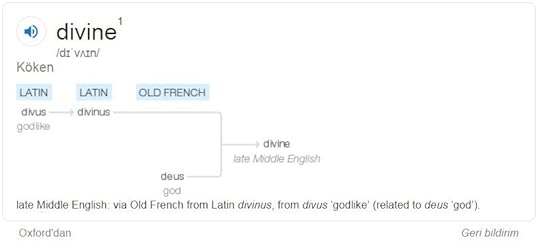
Hiç anlam veremediğime geliyorum şimdi. "Leave-Taking Near Shoku" şiirinde 11. dizede "diviners" kelimesi ülkü'cüm tarafından "bakıcı" olarak çevrilmiş.
Kelime kökünü aşağıda verdim, çünkü 'acaba kökten mi' dedim baktım yoo.
Sonra aklıma uçuk bişi geldi; kahin = falcı = geleceği gören ≡ geleceğe bakan ⇒ bakıcı yapmış olamaz diye düşünüyorum ama ülkü'cüm yapmış olabilir. Fikri olan benimle paylaşabilir.
"Exile's Letter" şiirinin 7. dizesi (8.yi de veriyorum tam olsun diye) "And with them, and with you especially/There was nothing at cross purpose" iken çeviri "Ne onlarla, ne de seninle aramızda/Anlaşmazlık diye bir şey yoktu" şeklinde çevrilmiş. Ülkü'cüm neden "özellikle seninle" demek istememiş çözemedim; çünkü şiirin konusu, tekrarla ayrı düşen iki arkadaştan birinin bu durumu dış mekanı da betimleyerek anlatması.
Bir hata olarak gördüğüm değil not olarak; "The City of Choan" şiirinin 2. dizesi "The phoenix are gone, the river Hows on alone." ve çevirisi "Anka kuşları gitti, ırmak yalnız akıyor." İnternette arayın "Hows" yerine "flows"un geçtiği yerler de var, "Hows" da. Verdiğim edisyon da "flows" diye almış ki ülkü'cüm de ikinciye göre çevirmiş. Bu diğer kaynaklarda da gördüğüm "Hows" nerden çıktı bilemiyorum, belki Pound'un baskısındaki bir hatadan yayılmıştır.
Şahaneler; "Poem by the Bridge at Ten-Shin", "Lament of the Frontier Guard", "Exile's Letter", "The City of Choan", "Taking Leave of a Friend" ve şahaneler şahanesi "Senin Poem by Kakuhaku" oldu benim için. O şiirin de son mısralarıyla bitirelim muhabbeti.
"Ama siz, kahrolası tatarcıklar sürüsü,
Bir kaplumbağanın bile yaşını bilmezsiniz!"
Cathay de ingilizcede alternatif historical China demek imiş.
xoxoxo
iko

November 6, 2018
Ezra Pound, İngilizce şiirin seyrini önemli oranda etkileyen, alışılmadık bir edebiyat figürü. İmgeci şiirin (1912) öncüsü sayılan Pound, Hemingway, Eliot ve Joyce gibi birçok yazara destek olmuş. Çalkantılı hayatına, İkinci Dünya Savaşı'nda faşist İtalya'yı destekleyen bir tutumu bile ekleyen Pound, birçok yazar tarafından her daim el üstünde tutulan biri olmuş.
Yazarın 1915 yılında yayımlanan "Cathay" adlı şiir kitabı da kendisine yakışacak düzeyde alışılmadık. Cathay (Kıtay, Hıtay), Çin anlamına gelen bir kelime. Çince bilmeyen Pound, Japon sanat tarihinde uzman bir Amerikalı olan merhum Ernest Fenollosa'nın notlarından faydalanarak, antik Çin döneminden kalma şiirlere tercüme benzeri bir yeniden yorumlama yapıyor. Kitaba edebiyat tarihindeki önemini veren de bu. Bir tercümeden ziyade yeniden oluşturulmuş, Pound'a ait sayılabilecek bir eser oluşu.
"O ayrılışa ne kadar üzüldüğümü sorarsan:
Baharın sonunda yaprakların düşmesi gibi bir şey bu,
Düğümler içinde dolanıp bükülerek.
Konuşmanın ne yararı var, konuşmanın sonu yok,
Yürekteki şeylerin sonu yok."
Yabancı dile ne kadar hakim olunursa olsun, şiir gibi saf ve öz bir ifade biçiminin sadece anlamsal bir tercümesinin mümkün olduğunu düşünüyorum. Çevrilen metin de şiirsel olabilir ama artık aynı şiir değildir. Bu yaklaşımla baktığımda, Pound'un bu girişimini, anlamsal olarak tam bir karşılıktan ziyade kendi perspektifinden deneysel bir algılama çalışması olması sebebiyle bir çeviriden daha şiirsel buluyorum. Editör Elyesa Koytak'ın dediği gibi "...kelimelerin nereden geldiğinden çok, nereye gittiği önemlidir."
"Yola çıktığımızda baharla sarkıyordu söğütler,
Karda dönüyoruz,
Ağır ağır gidiyoruz, açız, susadık,
Kafamız üzüntüyle dolu, acımızı kim anlar?"
Genelde karşımıza çıkan veya okumayı tercih ettiğimiz şiirlere pek benzemeyen bu çalışmayı dilimize kazandıransa pek değerli Ülkü Tamer.
"Mücevherli basamaklar şimdiden çiğle epey ağarmış,
Öylesine geçti ki, tül çoraplarıma işlemiş çiğ,
Billûr perdeyi de indiriyorum
Ayı da gözlüyorum duru güz arkasında."
Daha genel ve bildiğimiz anlamda şiirler okumak isteyen okuyucuya (mesela ben) anlamlandırma temelinde biraz zorlayıcı gelebilecek "Cathay"ı, özellikle İngilizce şiirin değişim aşamalarından birini gözlemlemek isteyen ve şiir tarihine ilgi duyan okurlara öneririm.
Yazarın 1915 yılında yayımlanan "Cathay" adlı şiir kitabı da kendisine yakışacak düzeyde alışılmadık. Cathay (Kıtay, Hıtay), Çin anlamına gelen bir kelime. Çince bilmeyen Pound, Japon sanat tarihinde uzman bir Amerikalı olan merhum Ernest Fenollosa'nın notlarından faydalanarak, antik Çin döneminden kalma şiirlere tercüme benzeri bir yeniden yorumlama yapıyor. Kitaba edebiyat tarihindeki önemini veren de bu. Bir tercümeden ziyade yeniden oluşturulmuş, Pound'a ait sayılabilecek bir eser oluşu.
"O ayrılışa ne kadar üzüldüğümü sorarsan:
Baharın sonunda yaprakların düşmesi gibi bir şey bu,
Düğümler içinde dolanıp bükülerek.
Konuşmanın ne yararı var, konuşmanın sonu yok,
Yürekteki şeylerin sonu yok."
Yabancı dile ne kadar hakim olunursa olsun, şiir gibi saf ve öz bir ifade biçiminin sadece anlamsal bir tercümesinin mümkün olduğunu düşünüyorum. Çevrilen metin de şiirsel olabilir ama artık aynı şiir değildir. Bu yaklaşımla baktığımda, Pound'un bu girişimini, anlamsal olarak tam bir karşılıktan ziyade kendi perspektifinden deneysel bir algılama çalışması olması sebebiyle bir çeviriden daha şiirsel buluyorum. Editör Elyesa Koytak'ın dediği gibi "...kelimelerin nereden geldiğinden çok, nereye gittiği önemlidir."
"Yola çıktığımızda baharla sarkıyordu söğütler,
Karda dönüyoruz,
Ağır ağır gidiyoruz, açız, susadık,
Kafamız üzüntüyle dolu, acımızı kim anlar?"
Genelde karşımıza çıkan veya okumayı tercih ettiğimiz şiirlere pek benzemeyen bu çalışmayı dilimize kazandıransa pek değerli Ülkü Tamer.
"Mücevherli basamaklar şimdiden çiğle epey ağarmış,
Öylesine geçti ki, tül çoraplarıma işlemiş çiğ,
Billûr perdeyi de indiriyorum
Ayı da gözlüyorum duru güz arkasında."
Daha genel ve bildiğimiz anlamda şiirler okumak isteyen okuyucuya (mesela ben) anlamlandırma temelinde biraz zorlayıcı gelebilecek "Cathay"ı, özellikle İngilizce şiirin değişim aşamalarından birini gözlemlemek isteyen ve şiir tarihine ilgi duyan okurlara öneririm.

October 28, 2020
The River-Merchant’s Wife: A Letter
While my hair was still cut straight across my
forehead
I played about the front gate, pulling flowers.
You came by on bamboo stilts, playing horse,
You walked about my seat, playing with blue plums.
And we went on living in the village of Chokan:
Two small people, without dislike or suspicion.
At fourteen I married My Lord you.
I never laughed, being bashful.
Lowering my head, I looked at the wall.
Called to, a thousand times, I never looked back.
At fifteen I stopped scowling,
I desired my dust to be mingled with yours
Forever and forever, and forever.
Why should I climb the look out?
At sixteen you departed,
You went into far Ku-to-Yen, by the river of swirling
eddies,
And you have been gone five months.
The monkeys make sorrowful noise overhead.
You dragged your feet when you went out.
By the gate now, the moss is grown, the different
mosses,
Too deep to clear them away!
The leaves fall early this autumn, in wind.
The paired butterflies are already yellow with
August
Over the grass in the West garden,
They hurt me,
I grow older,
If you are coming down through the narrows of the
river Kiang,
Please let me know beforehand,
And I will come out to meet you,
As far as Cho-fu-Sa.
While my hair was still cut straight across my
forehead
I played about the front gate, pulling flowers.
You came by on bamboo stilts, playing horse,
You walked about my seat, playing with blue plums.
And we went on living in the village of Chokan:
Two small people, without dislike or suspicion.
At fourteen I married My Lord you.
I never laughed, being bashful.
Lowering my head, I looked at the wall.
Called to, a thousand times, I never looked back.
At fifteen I stopped scowling,
I desired my dust to be mingled with yours
Forever and forever, and forever.
Why should I climb the look out?
At sixteen you departed,
You went into far Ku-to-Yen, by the river of swirling
eddies,
And you have been gone five months.
The monkeys make sorrowful noise overhead.
You dragged your feet when you went out.
By the gate now, the moss is grown, the different
mosses,
Too deep to clear them away!
The leaves fall early this autumn, in wind.
The paired butterflies are already yellow with
August
Over the grass in the West garden,
They hurt me,
I grow older,
If you are coming down through the narrows of the
river Kiang,
Please let me know beforehand,
And I will come out to meet you,
As far as Cho-fu-Sa.

March 15, 2017
I believe the last time I read some of Ezra Pounds' poetry was when I was majoring in English. It was a long time ago.
Ezra Pound was an innovator in modern poetry and a very controversial figure in the arts and also politically.
Cathay is the English version of the name Catai, which is another name for China. The poems in Cathay are translations, some say interpretations and others claim actual but imperfect translations of poems by the ancient Chinese poet Li Bai/Li Bo (701–762). In the collection Rihaku who is mentioned is Li Bai. Cathay is considered by some to be Pounds' masterwork.
I enjoyed all of the poems in this small collection except The Seafarer which to me was completely out of place. It's an old English poem, and in my opinion just didn't fit into the group.
Cathay's poems are beautiful like far away and exotic silk paintings. In my mind's eye I can see the people and the landscapes of old China. These poems remind me of some of William Carlos Williams' Chinese themed poems which and poems in my last year's read Pilgrim of the Clouds.
https://www.goodreads.com/review/show...
The collection ended too soon. I enjoyed these poems.
Cathay can be read free online at the following link, and it can also be downloaded to Kindle.
http://www.gutenberg.org/ebooks/50155
Ezra Pound was an innovator in modern poetry and a very controversial figure in the arts and also politically.
Cathay is the English version of the name Catai, which is another name for China. The poems in Cathay are translations, some say interpretations and others claim actual but imperfect translations of poems by the ancient Chinese poet Li Bai/Li Bo (701–762). In the collection Rihaku who is mentioned is Li Bai. Cathay is considered by some to be Pounds' masterwork.
I enjoyed all of the poems in this small collection except The Seafarer which to me was completely out of place. It's an old English poem, and in my opinion just didn't fit into the group.
Cathay's poems are beautiful like far away and exotic silk paintings. In my mind's eye I can see the people and the landscapes of old China. These poems remind me of some of William Carlos Williams' Chinese themed poems which and poems in my last year's read Pilgrim of the Clouds.
https://www.goodreads.com/review/show...
The collection ended too soon. I enjoyed these poems.
Cathay can be read free online at the following link, and it can also be downloaded to Kindle.
http://www.gutenberg.org/ebooks/50155

August 15, 2018
This webpage has about half a dozen other translations of "The River Merchant's Wife - A Letter" including one made in 1976 by Wai-Lim Yip who made a study of Pound's work: Ezra Pound's Cathay.
If anything, comparing these other translations with Pound's is proof of Ezra Pound's talent!
If you are coming down through the narrows of the river Kiang,
Please let me know beforehand,
And I will come out to meet you
As far as Chō-fu-Sa.
If anything, comparing these other translations with Pound's is proof of Ezra Pound's talent!
If you are coming down through the narrows of the river Kiang,
Please let me know beforehand,
And I will come out to meet you
As far as Chō-fu-Sa.

Read
March 15, 2021"Atlarımız birbirine kişniyor
biz ayrılırken."
biz ayrılırken."

September 3, 2020
I like to think that Cathay is the book that launched a thousand ships and burned the topless towers of English poetry. Seemingly artless, deceivingly simple and slyly direct, this single book did more for free verse than all the barbaric yawps of myself Walt Whitman.
In a few decades, meter, form, rhyme and rhetoric were firmly ensconced in the trash heap. Serious poetry, experimental poetry, literary poetry were strictly meter-free zones. Teenagers writing love notes hardly deign to write in verse today.
But Pound’s book is an amazing work – a classic in every sense. It is a must-read for those who love poetry and those who don’t. The River Merchant’s Wife is an acknowledged masterpiece. Among the greatest poetry books of the 20th century, it far outstrips Eliot’s pedantic The Waste Land. Had Pound put down the pen upon its final period, we might have all been happier.
In an earlier review, I accused Pound of “deliberately mistranslating” these poems. (I was subject to the common prejudices.) But this critical edition showed me that I was wrong. Pound made a few mistakes, but not many. He took every inch he could take in his translation, but stayed on course. Particularly as one great artist translating another great artist.
This edition is an excellent companion to Pound’s poems. It provides the notes and cribs used by Pound and does a good job talking about the original Chinese forms. (There’s some irony to English free verse being concocted from an ancient formal poetry.) I would have liked to have more information about the verse forms.
Almost word by word you can even create your own translation. Try to do better than Pound!
The inclusion of The Seafarer, as odd as that was, is also an education. Seeing how he used homophonics totally changed my view of Pound’s translation.
I’m hoping Mr. Billings will do something similar for Pound’s translation of the Book of Songs. (Hint. Hint.) That translation is not nearly as good, but I’ve always found it compelling.
In a few decades, meter, form, rhyme and rhetoric were firmly ensconced in the trash heap. Serious poetry, experimental poetry, literary poetry were strictly meter-free zones. Teenagers writing love notes hardly deign to write in verse today.
But Pound’s book is an amazing work – a classic in every sense. It is a must-read for those who love poetry and those who don’t. The River Merchant’s Wife is an acknowledged masterpiece. Among the greatest poetry books of the 20th century, it far outstrips Eliot’s pedantic The Waste Land. Had Pound put down the pen upon its final period, we might have all been happier.
In an earlier review, I accused Pound of “deliberately mistranslating” these poems. (I was subject to the common prejudices.) But this critical edition showed me that I was wrong. Pound made a few mistakes, but not many. He took every inch he could take in his translation, but stayed on course. Particularly as one great artist translating another great artist.
This edition is an excellent companion to Pound’s poems. It provides the notes and cribs used by Pound and does a good job talking about the original Chinese forms. (There’s some irony to English free verse being concocted from an ancient formal poetry.) I would have liked to have more information about the verse forms.
Almost word by word you can even create your own translation. Try to do better than Pound!
The inclusion of The Seafarer, as odd as that was, is also an education. Seeing how he used homophonics totally changed my view of Pound’s translation.
I’m hoping Mr. Billings will do something similar for Pound’s translation of the Book of Songs. (Hint. Hint.) That translation is not nearly as good, but I’ve always found it compelling.

March 22, 2017
Ezra Pound'a çevirilerinden başlamış olmakla beraber bunun güzel bir deneyim olduğu kesin.Özellikle "the river-merchant's wife: a letter" şiiri..Uzakdoğu (ki kitapta Çin'den örnekler görüyoruz) şiirinin süsten uzaklığı seçilmiş şiirler tarafından da gösteriliyor.
Ülkü Tamer'in çevirisi ve İngilizce-Türkçe metinlerin birarada verilmesi de ayrı bir güzellik..
Ülkü Tamer'in çevirisi ve İngilizce-Türkçe metinlerin birarada verilmesi de ayrı bir güzellik..

January 14, 2026
The Clouds have gathered, and gathered,
and the rain falls and falls
The eight ply of the heavens
are folded into one darkness,
And the wide, flat road stretches out.
I stop in my room toward the East, quiet, quiet,
I pat my new cask of wine.
My friends are estranged, or far distant,
I bow my head and stand still.
There is a great vitality to these poems. The starting point that you see later translators returning to time and time again. I'd almost call it a bit of an awakening
and the rain falls and falls
The eight ply of the heavens
are folded into one darkness,
And the wide, flat road stretches out.
I stop in my room toward the East, quiet, quiet,
I pat my new cask of wine.
My friends are estranged, or far distant,
I bow my head and stand still.
There is a great vitality to these poems. The starting point that you see later translators returning to time and time again. I'd almost call it a bit of an awakening
August 15, 2023
hard to capture on Goodreads how often I read these poems... before anyone says anything YES I am fully aware that Pound was a fascist freak, but unfortunately his personal failings can’t change the fact that something in these “translations” is just so emotional and immediate to me (pls note they are NOT real translations nor were they ever claimed to be by Pound, this is a common and irritating misconception that drives me insane lol). I carry this book around with me everywhere like it’s my meds. One time a bookseller in Toronto was so offended by my love for a few stupid fake Chinese poems written by “that fkn Nazi” he put me in the basement of his store and told me to find something better to read. It didn’t work.
Anyway, this particular read-through happened during my concussion era and I stg it cured me.
Anyway, this particular read-through happened during my concussion era and I stg it cured me.

January 23, 2021
PERDÓN NO LE TENGO RESPETO INTELECTUAL AL QUE NO LE GUSTE POUND
January 19, 2022
didn’t love the collection bc it felt weird he put the seafarer (anglo saxon) in with all the ancient chinese poetry BUTTTTTT
oh my god it’s beautiful i felt things reading this imagism works so WELL with these POEMS Ughhhhhh
oh my god it’s beautiful i felt things reading this imagism works so WELL with these POEMS Ughhhhhh

June 16, 2021
Hayatımda ilk defa şiir kitabı okudum. Çin klasiklerinin etkisinin hüküm sürdüğü şiirlerdeki hoş ifadeler ilgimi uyandırdı.
Bu kısacık kitapta hem İngilizce hem de Türkçe çevirilerinin karşılıklı yer alması da epey cazip. Kıyaslama yapmak ya da şiirleri pekiştirerek okumak için çok anlamlı bir basım olmuş.
En başta da belirttiğim gibi şiir tecrübem yok fakat bende uyandırdığı hislerden ötürü ben oldukça beğendim! ♥️
Bu kitabın şayet kapağını görmeden okuma şansım olsaydı jaguar yayınlarının emeği olduğunu şıp diye anlardım.
Kaliteli yayıncılık!
Bu kısacık kitapta hem İngilizce hem de Türkçe çevirilerinin karşılıklı yer alması da epey cazip. Kıyaslama yapmak ya da şiirleri pekiştirerek okumak için çok anlamlı bir basım olmuş.
En başta da belirttiğim gibi şiir tecrübem yok fakat bende uyandırdığı hislerden ötürü ben oldukça beğendim! ♥️
Bu kitabın şayet kapağını görmeden okuma şansım olsaydı jaguar yayınlarının emeği olduğunu şıp diye anlardım.
Kaliteli yayıncılık!
November 2, 2012
This collection is widely known as one of the few successful instances of the translated poetry:
...
The Jewel Stairs' Grievance (Li Po)
The jewelled steps are already quite white with dew,
It is so late that the dew soaks my gauze stockings,
And I let down the crystal curtain
And watch the moon through the clear autumn.
...
...
The Jewel Stairs' Grievance (Li Po)
The jewelled steps are already quite white with dew,
It is so late that the dew soaks my gauze stockings,
And I let down the crystal curtain
And watch the moon through the clear autumn.
...

April 7, 2016
Cathay...
1- Ezra Pound için alınmalı...
2- Ülkü Tamer'in duru çevirisi için okunmalı...
3- Kapak tasarımına dönüp dönüp bakılmalı...
Hemen okunmalı, tekrar dönülmeli, orijinal dili ile karşılıklı tekrar okunmalı...
Jaguar kitap güzel edebiyat ürünleri vermeye devam ediyor...
1- Ezra Pound için alınmalı...
2- Ülkü Tamer'in duru çevirisi için okunmalı...
3- Kapak tasarımına dönüp dönüp bakılmalı...
Hemen okunmalı, tekrar dönülmeli, orijinal dili ile karşılıklı tekrar okunmalı...
Jaguar kitap güzel edebiyat ürünleri vermeye devam ediyor...
Read
January 27, 2022
"O ayrılışa ne kadar üzüldüğümü sorarsan:
Baharın sonunda yaprakların düşmesi gibi bir şey bu,
Düğümler içinde dolanıp bükülerek." (s.39)
Baharın sonunda yaprakların düşmesi gibi bir şey bu,
Düğümler içinde dolanıp bükülerek." (s.39)

August 4, 2019
‘A Vivid Waiting’
Is the phrase Ezra Pound employed to describe a story from James Joyce’s ‘Dubliners’ (1914) which he thought ‘something better than a story’ (Berryman, J. 1949) and an apt way to describe the experience of reading Pound’s ‘Cathay’ (1915). Something better than a translation, ‘Cathay’ gives us pause to reflect on what constitutes poetry’s general appeal. How is it that Pound, universally recognised as a great poet, often proves so difficult to read? Even in ‘Cathay’, where brevity and crisp imagist logic means that a reader can grasp the whole with barely a glance at the endnotes, there’s a certain stark dullness to what’s spelled out. The battles and the carousing are in the past, the danger and the loss is in the future, and the reader is left weirdly bell-jarred inside an air-tight present without any obvious sources of momentum.
Encountering Pound for the first time as a teenager, I struggled to suspend my disbelief. Is Pound’s universal recognition a strange case of the emperor’s new words? Was Pound’s immense prestige only a result of a critical cabal bent on justifying their own expertise, when actually it’s just a matter of preferring one set of subjective word-choices over another? The suspicion that poetry was a racket spontaneously evolving from the shared likes and dislikes of a small academic elite didn’t make me feel cheated so much as disappointed: that great poems might not magically catapult you into the ecstasies of the imagination a sour lesson to learn. Nevertheless, I resolved to study the mechanism of leverage: I could be wrong.
‘Cathay’ is the medieval name for what we now know as northern China, and the title immediately signals Pound’s understanding of translation as something thoroughly dependent upon a translator’s worldview. This dependence is particularly acute here given that Pound knew very little Chinese and 'Cathay’ could better be described as a collaboration between Ernest Fenollosa’s basic word-for-character ‘crib’ and Pound’s subsequent re-envisaging of the Chinese classical sources. According to Kazuhito Hayashi, Pound’s distinctive style can be observed in his use of syntactical links and conjunctions which generate metaphysical depths not present in the originals. In ‘Poem by the Bridge of Ten-Shin’ the standard translation would have the seventh and eighth lines read:
‘Today’s men are not those of yesterday
Year after year they hang around on the bridge’ (cited in Hayashi, K, 1972)
Pound’s translation sharpens this image through adding conjunctions into a kind of spectral haunting:
‘But today’s men are not the men of the old days
Though they hang in the same way over the bridgerail’
In Pound's rendering, not only do we get an ominous image in the ambiguity of today’s men hanging ‘over’ the metallic ‘bridgerail’, but there’s also a sense that the shades of dead men are dissatisfied with those of the living. Allegedly, traditional Chinese poetry is often hard for western readers to appreciate because it is largely organised through subject matter and motifs rather than the supposedly heroic narrative arcs of western film and drama; however, with a little sketching in of the viewpoint, its implied emotional content can be brought forward. Pound claims that with ‘careful examination, [in a classical Chinese poem] we find that that everything is there, not merely by "suggestion", but by a sort of mathematical process of reduction. [Simply] consider what circumstances would be needed to produce just the words of the poem. You can play Conan Doyle if you like.' [1919]
Pound’s detective work in ‘Cathay’ results in a kind of gleaming eye-witness testimony without the melodrama or chinoiserie. Pound, the great American poet-scholar living in self-imposed exile in old Europe is also suitably placed to convey how great distances make human relationships more fraught, as described in the original poems, where a trip to a far-away market might mean one never returned. Much of ‘Cathay’ derives from the single author, Li Po, who was an itinerant court poet, whose life, if not his poetry, failed to live up to its promise of worldly success. One of the most charming elements of his poetry is his ability to marvel at wealth and opulence from a distance regardless, or perhaps because of, his own impoverishment. It is this lack of envy or reproach for his present circumstances which is arguably a key source of dignity in both Li Po and Pound’s poetry. It is as if they can enjoy the fine artifacts of civilization, whether these be ‘red jade cups’ or ‘food well set on a blue jeweled table’, through their lucid reconstruction in poetry: imagine yourself a beggar and be prepared to see a beautiful young noble woman emerge in green and purple silks, or consider those Chinese soldiers there, who wallow gracefully in their doomed fates without false notes of bravery. As soldiers the world over understand, ‘Loyalty is hard to explain.’ Li Po, who struggled for patronage and covered great stretches of China on foot is a great cipher for Pound himself. All Pound need do is sample the right lines and add his lyrical inflections and he has an original timeless poem of his own. 'Cathay' will also come to serve as a model for the brilliant free-translations of Jack Spicer’s ‘Lorca’ and Stephen Rodefer’s work with ‘Villon’, where they adopt the guise of these poets as dramatic personae.
Consequently, as an expression of Pound’s world, ‘Cathay’ is not isolated from his dangerous political views. There’s a feudal governance at work in the background logic of these poems which espouses rank and wise judgement and implies all is well so long as wicked individuals don’t grow corrupt. Basically, it's a mix of Confucianism with a hint of Catholic damnation misapplied. Traditionally, defending Pound’s value as a poet has meant either a) bracketing out the politics as much as possible as an unfortunate and unnecessary addenda to otherwise technically brilliant and thoughtful poetry, or b) downplaying their virulence to a few explicit statements in the Cantos and trusting that they are caused by attributing economic unfairness to the malicious workings of an over-racialised elite. Besides, hadn’t Pound made a deathbed retraction of his fulminations against the Jewish coded ‘ursura’ in favour of a more Christian universal ‘avarice’ as the source of all evil?
Whereas the former attempt at reconciliation fails insofar as his poetry's critical animus is a large part of its dramatic content, the latter fails through ignoring what’s extant: listening to Pound’s WWII radio broadcasts will cure anyone of the illusion that Pound’s antisemitism was temporary and incidental. Rabid antisemitism is, undeniably, fundamental for his worldview as presented in the major late works, and in this regard, they bring into peculiar relief Walter Benjamin’s remark that ‘there is no document of civilization that is not at the same time a document of barbarism’. Pound’s poetry is the drama of a great writer whose flashes of terrific insight and wonder, as evident in ‘Cathay’, will not prevent him from unraveling a dreadful logic whose rhetoric he helped to fashion and thereby facilitate possibly the worst expression of human barbarism to date. Coming to terms with a worldview radically different from your own, however, requires a certain dignified patience which is a hallmark of civilization. Morality, on the other hand, comes from elsewhere.
Is the phrase Ezra Pound employed to describe a story from James Joyce’s ‘Dubliners’ (1914) which he thought ‘something better than a story’ (Berryman, J. 1949) and an apt way to describe the experience of reading Pound’s ‘Cathay’ (1915). Something better than a translation, ‘Cathay’ gives us pause to reflect on what constitutes poetry’s general appeal. How is it that Pound, universally recognised as a great poet, often proves so difficult to read? Even in ‘Cathay’, where brevity and crisp imagist logic means that a reader can grasp the whole with barely a glance at the endnotes, there’s a certain stark dullness to what’s spelled out. The battles and the carousing are in the past, the danger and the loss is in the future, and the reader is left weirdly bell-jarred inside an air-tight present without any obvious sources of momentum.
Encountering Pound for the first time as a teenager, I struggled to suspend my disbelief. Is Pound’s universal recognition a strange case of the emperor’s new words? Was Pound’s immense prestige only a result of a critical cabal bent on justifying their own expertise, when actually it’s just a matter of preferring one set of subjective word-choices over another? The suspicion that poetry was a racket spontaneously evolving from the shared likes and dislikes of a small academic elite didn’t make me feel cheated so much as disappointed: that great poems might not magically catapult you into the ecstasies of the imagination a sour lesson to learn. Nevertheless, I resolved to study the mechanism of leverage: I could be wrong.
‘Cathay’ is the medieval name for what we now know as northern China, and the title immediately signals Pound’s understanding of translation as something thoroughly dependent upon a translator’s worldview. This dependence is particularly acute here given that Pound knew very little Chinese and 'Cathay’ could better be described as a collaboration between Ernest Fenollosa’s basic word-for-character ‘crib’ and Pound’s subsequent re-envisaging of the Chinese classical sources. According to Kazuhito Hayashi, Pound’s distinctive style can be observed in his use of syntactical links and conjunctions which generate metaphysical depths not present in the originals. In ‘Poem by the Bridge of Ten-Shin’ the standard translation would have the seventh and eighth lines read:
‘Today’s men are not those of yesterday
Year after year they hang around on the bridge’ (cited in Hayashi, K, 1972)
Pound’s translation sharpens this image through adding conjunctions into a kind of spectral haunting:
‘But today’s men are not the men of the old days
Though they hang in the same way over the bridgerail’
In Pound's rendering, not only do we get an ominous image in the ambiguity of today’s men hanging ‘over’ the metallic ‘bridgerail’, but there’s also a sense that the shades of dead men are dissatisfied with those of the living. Allegedly, traditional Chinese poetry is often hard for western readers to appreciate because it is largely organised through subject matter and motifs rather than the supposedly heroic narrative arcs of western film and drama; however, with a little sketching in of the viewpoint, its implied emotional content can be brought forward. Pound claims that with ‘careful examination, [in a classical Chinese poem] we find that that everything is there, not merely by "suggestion", but by a sort of mathematical process of reduction. [Simply] consider what circumstances would be needed to produce just the words of the poem. You can play Conan Doyle if you like.' [1919]
Pound’s detective work in ‘Cathay’ results in a kind of gleaming eye-witness testimony without the melodrama or chinoiserie. Pound, the great American poet-scholar living in self-imposed exile in old Europe is also suitably placed to convey how great distances make human relationships more fraught, as described in the original poems, where a trip to a far-away market might mean one never returned. Much of ‘Cathay’ derives from the single author, Li Po, who was an itinerant court poet, whose life, if not his poetry, failed to live up to its promise of worldly success. One of the most charming elements of his poetry is his ability to marvel at wealth and opulence from a distance regardless, or perhaps because of, his own impoverishment. It is this lack of envy or reproach for his present circumstances which is arguably a key source of dignity in both Li Po and Pound’s poetry. It is as if they can enjoy the fine artifacts of civilization, whether these be ‘red jade cups’ or ‘food well set on a blue jeweled table’, through their lucid reconstruction in poetry: imagine yourself a beggar and be prepared to see a beautiful young noble woman emerge in green and purple silks, or consider those Chinese soldiers there, who wallow gracefully in their doomed fates without false notes of bravery. As soldiers the world over understand, ‘Loyalty is hard to explain.’ Li Po, who struggled for patronage and covered great stretches of China on foot is a great cipher for Pound himself. All Pound need do is sample the right lines and add his lyrical inflections and he has an original timeless poem of his own. 'Cathay' will also come to serve as a model for the brilliant free-translations of Jack Spicer’s ‘Lorca’ and Stephen Rodefer’s work with ‘Villon’, where they adopt the guise of these poets as dramatic personae.
Consequently, as an expression of Pound’s world, ‘Cathay’ is not isolated from his dangerous political views. There’s a feudal governance at work in the background logic of these poems which espouses rank and wise judgement and implies all is well so long as wicked individuals don’t grow corrupt. Basically, it's a mix of Confucianism with a hint of Catholic damnation misapplied. Traditionally, defending Pound’s value as a poet has meant either a) bracketing out the politics as much as possible as an unfortunate and unnecessary addenda to otherwise technically brilliant and thoughtful poetry, or b) downplaying their virulence to a few explicit statements in the Cantos and trusting that they are caused by attributing economic unfairness to the malicious workings of an over-racialised elite. Besides, hadn’t Pound made a deathbed retraction of his fulminations against the Jewish coded ‘ursura’ in favour of a more Christian universal ‘avarice’ as the source of all evil?
Whereas the former attempt at reconciliation fails insofar as his poetry's critical animus is a large part of its dramatic content, the latter fails through ignoring what’s extant: listening to Pound’s WWII radio broadcasts will cure anyone of the illusion that Pound’s antisemitism was temporary and incidental. Rabid antisemitism is, undeniably, fundamental for his worldview as presented in the major late works, and in this regard, they bring into peculiar relief Walter Benjamin’s remark that ‘there is no document of civilization that is not at the same time a document of barbarism’. Pound’s poetry is the drama of a great writer whose flashes of terrific insight and wonder, as evident in ‘Cathay’, will not prevent him from unraveling a dreadful logic whose rhetoric he helped to fashion and thereby facilitate possibly the worst expression of human barbarism to date. Coming to terms with a worldview radically different from your own, however, requires a certain dignified patience which is a hallmark of civilization. Morality, on the other hand, comes from elsewhere.

September 4, 2024
Modernism, and literature in the West for that matter, was never the same again, after the publication of Pound's translations of Chinese poems in Cathay in 1915.
This is an incredibly well-research book that will be of interest to Pound scholars and scholars of Chinese poetry, especially fans of Li Bo (Po) / Li Bai ('Rihaku' in Japanese).
We see transcriptions of Fenellosa's cribs in this book, giving us a clear idea, finally, as to what Pound was working with when he penned his singular 'creations' (to borrow Eliot's term) based on the notes on the Chinese originals.
We can see where Pound misunderstood the notes and took liberties as a translator, both sometimes leading to gross deviations from the original, but at other times leading to some absolutely stunning and beautiful poems in English.
The annotations and references go into incredible detail, often giving Chinese and Japanese equivalents for words or texts so that anyone speaking English, Chinese or Japanese (especially Japanese people who have studied 'kanbun' at school) will be able to learn something from this book.
I decided to dock one star in my evaluation because this book is a little too 'maniaque' (as the French and Japanese say meaning 'obsessed with detail'). In other words, this is a book I would highly recommend to serious (Pound) academics but not for the casual reader. However, having said that, as mentioned in the Introduction, this is not necessarily a book you should read from start to finish (which is actually what I ended up doing) but something you should peruse through slowly. I do recommend reading at least the opening Foreword and two Introductions as well as Pound's own essay called "Chinese Poetry" that closes the volume. As for the rest, it's up to you how obsessed or interested you are in the (luminous and non-luminous) details.
The main two takeaways for me after reading this book were 1) a renewed respect for Pound's skills as a 'creative translator' (which is something different from an entirely 'accurate translator') and 2) a deep interest in the subtleties and refinement of Classical Chinese poetry.
For me, this made it worthwhile reading but I did find some of the in-depth and detailed academic glosses and annotations a bit heavy-going at times. Apart from this, a great book.
This is an incredibly well-research book that will be of interest to Pound scholars and scholars of Chinese poetry, especially fans of Li Bo (Po) / Li Bai ('Rihaku' in Japanese).
We see transcriptions of Fenellosa's cribs in this book, giving us a clear idea, finally, as to what Pound was working with when he penned his singular 'creations' (to borrow Eliot's term) based on the notes on the Chinese originals.
We can see where Pound misunderstood the notes and took liberties as a translator, both sometimes leading to gross deviations from the original, but at other times leading to some absolutely stunning and beautiful poems in English.
The annotations and references go into incredible detail, often giving Chinese and Japanese equivalents for words or texts so that anyone speaking English, Chinese or Japanese (especially Japanese people who have studied 'kanbun' at school) will be able to learn something from this book.
I decided to dock one star in my evaluation because this book is a little too 'maniaque' (as the French and Japanese say meaning 'obsessed with detail'). In other words, this is a book I would highly recommend to serious (Pound) academics but not for the casual reader. However, having said that, as mentioned in the Introduction, this is not necessarily a book you should read from start to finish (which is actually what I ended up doing) but something you should peruse through slowly. I do recommend reading at least the opening Foreword and two Introductions as well as Pound's own essay called "Chinese Poetry" that closes the volume. As for the rest, it's up to you how obsessed or interested you are in the (luminous and non-luminous) details.
The main two takeaways for me after reading this book were 1) a renewed respect for Pound's skills as a 'creative translator' (which is something different from an entirely 'accurate translator') and 2) a deep interest in the subtleties and refinement of Classical Chinese poetry.
For me, this made it worthwhile reading but I did find some of the in-depth and detailed academic glosses and annotations a bit heavy-going at times. Apart from this, a great book.

Read
November 8, 2022get cathay'd
something truly wrong with him
And then I was sent off to South Wei,
smothered in laurel groves,
And you to the north of Raku-hoku,
Till we had nothing but thoughts and memories in common.
(...)
And your father, who was brave as a leopard,
Was governor in Hei Shu, and put down the barbarian rabble.
And one May he had you send for me,
despite the long distance.
And what with broken wheels and so on, I won't say it wasn't
hard going,
Over roads twisted like sheeps' guts.
And I was still going, late in the year,
in the cutting wind from the North,
And thinking how little you cared for the cost,
and you caring enough to pay it.
And what a reception:
Red jade cups, food well set on a blue jewelled table,
And I was drunk, and had no thought of returning.
And you would walk out with me to the western corner of the
castle,
To the dynastic temple, with water about it clear as blue jade,
With boats floating, and the sound of mouth-organs and drums,
With ripples like dragon-scales, going grass green on the water,
Pleasure lasting, with courtezans, going and coming without
hindrance,
With the willow flakes falling like snow,
And the vermilioned girls getting drunk about sunset,
And the water a hundred feet deep reflecting green eyebrows
—Eyebrows painted green are a fine sight in young moonlight,
Gracefully painted—
And the girls singing back at each other,
Dancing in transparent brocade,
And the wind lifting the song, and interrupting it,
Tossing it up under the clouds.
And all this comes to an end.
And is not again to be met with.
I went up to the court for examination,
Tried Layu's luck, offered the Choyo song,
And got no promotion,
and went back to the East Mountains
white-headed.
And once again, later, we met at the South bridge-head.
And then the crowd broke up, you went north to San palace,
And if you ask how I regret that parting:
It is like the flowers falling at Spring's end
Confused, whirled in a tangle.
What is the use of talking, and there is no end of talking,
There is no end of things in the heart.
something truly wrong with him
And then I was sent off to South Wei,
smothered in laurel groves,
And you to the north of Raku-hoku,
Till we had nothing but thoughts and memories in common.
(...)
And your father, who was brave as a leopard,
Was governor in Hei Shu, and put down the barbarian rabble.
And one May he had you send for me,
despite the long distance.
And what with broken wheels and so on, I won't say it wasn't
hard going,
Over roads twisted like sheeps' guts.
And I was still going, late in the year,
in the cutting wind from the North,
And thinking how little you cared for the cost,
and you caring enough to pay it.
And what a reception:
Red jade cups, food well set on a blue jewelled table,
And I was drunk, and had no thought of returning.
And you would walk out with me to the western corner of the
castle,
To the dynastic temple, with water about it clear as blue jade,
With boats floating, and the sound of mouth-organs and drums,
With ripples like dragon-scales, going grass green on the water,
Pleasure lasting, with courtezans, going and coming without
hindrance,
With the willow flakes falling like snow,
And the vermilioned girls getting drunk about sunset,
And the water a hundred feet deep reflecting green eyebrows
—Eyebrows painted green are a fine sight in young moonlight,
Gracefully painted—
And the girls singing back at each other,
Dancing in transparent brocade,
And the wind lifting the song, and interrupting it,
Tossing it up under the clouds.
And all this comes to an end.
And is not again to be met with.
I went up to the court for examination,
Tried Layu's luck, offered the Choyo song,
And got no promotion,
and went back to the East Mountains
white-headed.
And once again, later, we met at the South bridge-head.
And then the crowd broke up, you went north to San palace,
And if you ask how I regret that parting:
It is like the flowers falling at Spring's end
Confused, whirled in a tangle.
What is the use of talking, and there is no end of talking,
There is no end of things in the heart.

Read
February 4, 2026im thinking of all that has been, will be and is continuingly lost in translation

August 13, 2026
Chinese have always been on another level!!

December 19, 2018
A nice selection of "oriental poems". It's really just Pound with the aid of esoteric strings of nouns he got from some scholar in the mail, but it serves his Vorticist purpose well (if i correctly understand vorticism from the little the intro told me)

September 17, 2025
This rating is about 30% my opinion on the poetry, and 70% my personal distaste for Pound.

Read
February 23, 2026And if you ask how I regret that parting:
It is like the flowers falling at Spring's end
Confused, whirled in a tangle.
What is the use of talking, and there is no end of talking,
There is no end of things in the heart.
It is like the flowers falling at Spring's end
Confused, whirled in a tangle.
What is the use of talking, and there is no end of talking,
There is no end of things in the heart.
Displaying 1 - 30 of 84 reviews