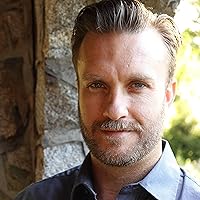
В этой книге Жинетт Парис открывает новый жанр психологического письма, которое соединяет интимные данные личной биографии, человечески трогательные истории пациентов и радикальные, захватывающие дух теоретические рассуждения о будущем глубинной психологии. Она считает, что на следующей ступени эволюции психология будет меньше интересоваться патологией, предоставив это нейронаукам, и станет чем-то вроде философского обучения, способного подготовить личность к путешествию по стране радости и боли. Необходимость спуска в царство Аида составляет центральную идею глубинной психологии, и эта идея заново исследуется в этой книге.
Ginette Paris Ph.D. is a psychologist, therapist and author of many books, including Wisdom of the Psyche: Depth Psychology after Neuroscience (Routledge 2007). She was trained as a psychologist in Montréal, Canada where she was a tenured professor in the Department of Communication of the U. of Québec in Montréal for 15 years. In 1995 she became a permanent US resident and a core faculty at the Pacifica Graduate Institute in Santa Barbara. Her books have been translated in French, German, Italian, Portuguese, Spanish. Her lectures and workshops, in the US, Canada and Europe, are usually done in collaboration with Pacifica's Public Events, or through The Foundation for Mythological Studies. Dr. Paris is a Honorary Member of the C.G. Jung Society of Montreal and serves on the editiorial board of Spring: A Journal of Archetype and Culture.
Wisdom of Psyche reads like a farewell address from a seasoned sage. It's intentionally a fairly jargon-free overview of depth psychology. Very accessible. She doesn't hold back, allowing her personal stories—specifically, using a dramatic head injury which put her into a coma—to hold together her observations about the general state of Depth Psychology. Or, maybe humanistic psychologies of the 21-century, integrating the force that has become Neuroscience. She criticizes, praises, challenges dogma, questioning anybody who might be a devotee of the great depth psychologists, the way only an close but loving family member can.
She offers her own guesses as to what is coming from the new psychologies, apart from the more objective, or scientifically based disciplines like Neuroscience. She asserts, "The next evolution of psychology will be concerned less with pathology—leaving it to neuroscience—and will become more like a philosophical training, capable of preparing the person for the voyage in the country of pain and joy—depth psychology as the art of not wasting the joy of life."
"The basic task of psychotherapy," she argues, is "to go back and give the inner child what he or she needs to grow up." Further, like other depth psychologies, it is less about fixing a person, and more about enriching their experience, giving them a deeper ability to feel, imagine, engage with life, and to take a full acceptance for their existential freedom. She challenges the notion of therapy as a medical model for healing: "Scientific modeling works beautifully for scientists, but fails miserably when trying to 'explain' the psyche as one would explain the night sky with current findings in cosmology. Psychological constellations are unstable because they are based on one's personal myth, which is always replaceable by another myth." Science demands a static notion of truth, but depth psychologies offer a dynamic and invigorating access to psychological truth. She credits others like Sartre, Foucault, Szasz, and Laing for criticizing the medical approach to the soul, calling out the many failings of the DSM, a pseudo-scientific system of morality (the DSM's interpretation of homosexuality as a sickness is just one of many blunders). She points out, "The standards of normality have all been elaborated just as the DSM was elaborated. One evening, if you are a homosexual, you got to bed resigned to the fact that you are a sick person. The next day, when you wake up, a vote by the members of those who establish the DSM, following a change in social values, makes you normal! Oops!... The range from acceptable to unacceptable for a 'normal personality' is inextricably linked with history, belief, and cultural evolution. It has little to do with clinical categories or abnormal behaviors."
When criticizing therapy as an economic model, she misunderstands some key economic concepts, but one insight stands out: "I have used cognitive approaches to teach basic communication skills, most of which are lacking in our educational system. The term 'depth psychology' is also often presented in opposition to a behavioral-cognitive approach, which is mainly concerned with the possibilities of modifying conscious behavior, thus completely bypassing the notion of the unconscious. Cognitive-behavioral therapists will hold the prejudice that the depth perspective calls for too long an inner voyage, with the consequent danger of getting lost in too vast a territory. Depth psychologists will hold the reciprocal prejudice, depicting cognitive-behavioral therapies as a fix-it-quick-back-to-work approach dictated by managed care [another reason why it is so popular with insurance companies]...Like the choice between two areas of study, choosing between a behavioral-cognitive approach or an archetypal-imaginal approach depends on whether one wants to accomplish the long pilgrimage that is the search for a new self to take a course in communication to improve relationships."
On and on she goes, showing the deficiencies of therapy as a legal model and as a model for redemption. Paris is a more bombastic atheist than most depth psychologists I've encountered, so her jabs in this section—a complete rejection of the notion of redemption—come off as a bit angry and too dismissive of religious experience.
On the question of where psychology belongs, she places it firmly in the humanities camp, contrasting it with the pathology-obsessed orientation of medical and neuroscience fields. I welcome and appreciate that, deeply. From her decades of experience practicing the art of depth psychotherapy, she concludes that "the more one has a choice of images, myths, narratives, scenarios, stories, paradigms, virtual scripts—call them what you like—to live by, the richer the life...Nothing determines our quality of life in the future more than the myths in which we place the events of our lives."
This week, I had a beautiful spiritual, intellectual love affair with Ginette Paris’ Wisdom of the Psyche: Depth Psychology after Neuroscience. The book is a requirement for a summer course I am taking with Dr. Paris in a couple weeks. I really knew nothing about the text or her when I sat down with it. The preface took me by surprise: this was not just another academic venture. This book comes from her absolute being, written in the aftermath of surviving a fall that caused her brain to hemorrhage. This is a profound exploration of the human psyche, ardently written and informed by her academic career. I heartily recommend it to anyone interested at all in the human condition, mind, and spirit. Paris has a wonderful way of combining the academic with the personal, even including other voices in her text by discussing former patients and providing personal writing samples on both her personal experiences and theirs. She really lets the reader in, allowing a transformative reading experience. At the core of the text, she is, of course, examining psyche. She also provides numerous accessible definitions for depth psychology. And, within that, here’s just some of the potent ideas she discusses: racism, homosexuality, feminism, consumerist culture, archetypes, storytelling, parenting, pain, family, conflict, education, language, soul, redemption, religion, history, globalization, love, soma, relationships, identity, adulthood, anxiety, fear, and depression. I just finished the book a little while ago, and my head is just buzzing with a million thoughts. I can’t wait to start delving into them more, especially when I get to attend her lectures!
When I was searching for Rowland's 2002 book that explores Jung from a postmodern and feminist point of view, I discovered this book by Paris.
Its idea is fascinating to me because discourse these days is dominated by science. But, science is only one discourse. It's not the most impotant, most accurate, or most interesting, but it has the most power. Just say something is scientific and peoples' ears perk up.
Another example occured when I heard a radio program on whether scientists can locate an ethical element in our brains. Studies showed that people making ethical decisions had their brains activated, lit up. I guess it just doesn't matter that Hume said, in 1776, that humans have a moral center. He didn't need any scientific equipment to theorize this. We just need science to "prove" it. Kind of silly.
So, what to do in the case of a profession that has been overtaken by scientific discourse regardless of whether that discourse helps many poor souls?
Maybe Paris has some answers. . . (maybe going to Paris wouldn't hurt, either!).
“My psychological creativity comes from the respect I now have for those unredeemable figures of my inferiority feelings” (pg 77). This book is stuffed to the brim with juicy insights such as this one. How can I befriend my shadow? How can I ascertain truth from guise? How can I make sense of suffering? How can I learn from my insecurities? What is wisdom? Ginette Paris explores these questions using a depth psychological perspective as she shares insight from both her professional work and personal life.
With astute critiques of the stifling, status-clinging, comfort-chasing culture in which most of us have developed, the pursuit of psychological wisdom as described by Paris is an embrace of the unknowable. More so than other texts on depth psychology that I’ve read, this book is quite concrete (despite its abstract subject matter) and doesn’t discombobulate ideas to the point of mental exhaustion. It is generous to the non-academically inclined reader without being overly simplistic.
A very satisfying and enriching read, I’m glad to have my own marked up copy on my bookshelf to reference again and again.
Книга является скорее сборником размышлений опытного постюнгианского терапевта о судьбах и проблемах психотерапии, местами последовательно, местами фрагментарно, довольно-таки общо, в том смысле, что в понятийные и методологические тонкости глубинной психологии автор не погружается. Автобиографический пласт и авторские метафоры очень понравились. Назидательные пассажи про феминизм, политические веяния и за все хорошее против всего плохого показались излишними и скучными. В целом, любопытный ракурс, читается легко и быстро.
Yo que no soy una persona relacionada al estudio de la psicología pude entender los puntos importantes de este libro. Analiza los 3 pilares necesarios para el buen desarrollo de una persona, da ejemplos claros y frases que reflejan la realidad de alguna persona cercana en nuestras vidas.
El análisis de los principales problemas "sociales" por así llamarle, desde una violación, hasta el machismo aún dominante en gran parte de los países no sólo de latino américa -como muchos pretenden-, sino de la mayor parte del mundo, me parecen muy atinados ya que se toman culturas pasadas donde situaciones similares son relacionadas con aspectos distintos en la identificación de problemas psicológicos de nuestra cultura actual. Sobre este tema, me agradó bastante el punto de la iniciación de la vida sexual en la cultura griega que era visto como algo normal en su vida, no estoy comparando que esto sea la manera más adecuada en nuestros tiempos, pero sí nos habla de como algo similar puede ser visto desde otro punto de vista dependiendo nuestro "Mito".
En español se llama "La vida interior", lo publica Taurus y definitivamente es un libro que ayuda ala transformación profunda. Voy en la tercera lectura de este libro, y cada vez encuentro más cosas que me sirven, que me cimbran, que me hacen replantear mi vida. Muy recomendable. De acuerdo con Eve.
This is another psychotherapy book. What surprised me is that it was very understandable psychodynamic book. A Trainee gave it to me to read and I put it off for a while so was very happy when I found it interesting and clear. It was written in the first person by a UC Santa Barbara professor and her experiences.
This was an easy to follow book on depth psychology. It emphasises the importance of becoming aware of our own myth and tells us that depth psychology can help us create our own stories. I would have appreciated if the author talked about how a layman who has no access to expensive psychoanalysis can improve themselves. Enjoyed reading it and highlighted many paragraphs.