

What do you think?

The Man with the Golden Arm
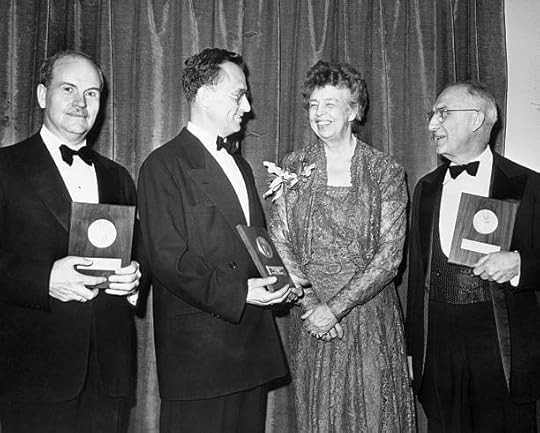
The Man with the Golden Arm is Nelson Algren's most powerful and enduring work. On the 50th anniversary of its publication in November 1949, for which Algren was honored with the first National Book Award (which he received from none other than Eleanor Roosevelt at a ceremony in March 1950), Seven Stories is proud to release the first critical edition of an Algren work.
A novel of rare genius, The Man with the Golden Arm describes the dissolution of a card-dealing WWII veteran named Frankie Machine, caught in the act of slowly cutting his own heart into wafer-thin slices. For Frankie, a murder committed may be the least of his problems.
The literary critic Malcolm Cowley called The Man with the Golden Arm Algren's defense of the individual, while Carl Sandburg wrote of its strange midnight dignity. A literary tour de force, here is a novel unlike any other, one in which drug addiction, poverty, and human failure somehow suggest a defense of human dignity and a reason for hope.
Special contributions by Russell Banks, Bettina Drew, James R. Giles, Carlo Rotella, William Savage, Lee Stringer, Studs Terkel, Kurt Vonnegut, and others.
A novel of rare genius, The Man with the Golden Arm describes the dissolution of a card-dealing WWII veteran named Frankie Machine, caught in the act of slowly cutting his own heart into wafer-thin slices. For Frankie, a murder committed may be the least of his problems.
The literary critic Malcolm Cowley called The Man with the Golden Arm Algren's defense of the individual, while Carl Sandburg wrote of its strange midnight dignity. A literary tour de force, here is a novel unlike any other, one in which drug addiction, poverty, and human failure somehow suggest a defense of human dignity and a reason for hope.
Special contributions by Russell Banks, Bettina Drew, James R. Giles, Carlo Rotella, William Savage, Lee Stringer, Studs Terkel, Kurt Vonnegut, and others.
464 pages, Paperback
First published January 1, 1949
About the author
Nelson Algren
71 books299 followersPeople note American writer Nelson Algren for his novels, including
The Man with the Golden Arm
(1949), about the pride and longings of impoverished people.
Born of Swedish-immigrant parents, Nelson Ahlgren Abraham moved at an early age to Chicago. At University of Illinois, he studied journalism. His experiences as a migrant worker during the Depression provided the material for his first Somebody in Boots (1935). Throughout life, Algren identified with the underdog. From 1936 to 1940, the high-point of left-wing ideas on the literary scene of the United States, he served as editor of the project in Illinois. After putting the finishing touches to his second, he in 1942 joined and enlisted for the war. Never Come Morning received universal acclaim and eventually sold more than a million copies.
A dark naturalist style of Algren passionately records the details of trapped urban existence with flashes of melancholy poetry. He characterizes the lowlife drifters, whores, junkies, and barflies of row. He records the bravado of their colloquial language and lays their predicament bare.
Born of Swedish-immigrant parents, Nelson Ahlgren Abraham moved at an early age to Chicago. At University of Illinois, he studied journalism. His experiences as a migrant worker during the Depression provided the material for his first Somebody in Boots (1935). Throughout life, Algren identified with the underdog. From 1936 to 1940, the high-point of left-wing ideas on the literary scene of the United States, he served as editor of the project in Illinois. After putting the finishing touches to his second, he in 1942 joined and enlisted for the war. Never Come Morning received universal acclaim and eventually sold more than a million copies.
A dark naturalist style of Algren passionately records the details of trapped urban existence with flashes of melancholy poetry. He characterizes the lowlife drifters, whores, junkies, and barflies of row. He records the bravado of their colloquial language and lays their predicament bare.
Ratings & Reviews
Friends & Following
Create a free account to discover what your friends think of this book!
Community Reviews
Displaying 1 - 30 of 379 reviews

February 21, 2020
La novela me ha gustado, no tanto como sus principios parecían presagiar, pero sí lo suficiente como para que me parezca una buena novela, aunque flojee en ciertos momentos, aunque tenga cierto reparo con su tesis.
Es este uno de esos libros que crearon personajes arquetípicos que después hemos visto en multitud de ocasiones y formatos, y no siempre, todo hay que decirlo, con igual fortuna que en esta novela. El lirismo que envuelve el lenguaje barriovajero seguramente fue un valor mucho más importante en su tiempo y en su idioma original, aunque su tratamiento aquí me ha parecido más que correcto. También tuvo que ser novedosa la forma en la que aborda ciertos temas -los estragos que causa una guerra en aquellos que la sobreviven, la corrupción policial, la justicia penal, el sistema carcelario, la pena de muerte, la prostitución, las drogas, el alcoholismo- aunque hoy en día ya no son motivo de escándalo por mucho que sigan siendo tanto o más actuales. Por el contrario, lo que sí nos llama ahora mucho más la atención son los comentarios políticamente incorrectos sobre el género, la raza o el origen geográfico.
“Si la quiere, ¿que importan unos golpes? Si un hombre te dice que eres suya... ¿qué más dan unas cuantas bofetadas?”Pero, por encima de todo ello, la novela de Algren es un canto en favor de los desafortunados en el reparto de cartas de la vida, un relato a la vez áspero y compasivo con la lucha impotente por no perder la dignidad. Impotente, sí, porque esta es la gran tesis del libro: no hay escapatoria a la mala suerte en la lotería de dones y, sobre todo, de circunstancias.
Por callejones, habitaciones oscuras y bares de mala muerte corren sin llegar a ningún sitio buscavidas y pierdevidas, drogadictos y camellos, putas y chulos, trúhanes y canallas, gente que no encuentra el rumbo a su vida, gente que necesita a otra gente, gente que le sienta mal a otra gente. Seres débiles, dependientes de un grano de morfina, de la botella, del calor de alguien a su lado aunque ni quererse sepan. A todos ellos, Algren los mira con piedad, con el respeto que se merece todo ser humano solo por serlo, aunque sus respuestas a la situación en la que viven no sea digna de elogio...
“Vivían en la cárcel de una manera muy parecida a como vivían fuera de ella, vagamente satisfechos la mayor parte del tiempo, sin esperanza ni desesperación, sin desear otra cosa que un sitio donde dormir y una bandeja de hojalata con algo que comer, tanto daba qué, un par de veces al día. Ni les desvelaba el futuro ni se arrepentían del pasado ni les preocupaba el presente.”... con mucha crítica social...
“Nunca les habían dado una buena razón para aplicar sus fuerzas a algo útil. Así que acababan renegando de ellas mediante todo tipo de autoengaños.”... y con el sabor amargo de aquel EEUU que se estaba formando a todo galope a caballo de las mafias y en el que convivían la opulencia más inmoral con la indigencia más miserable a la que eran arrojados sin solución miles de americanos.
“En los barrios bajos ni siquiera los nativos tenían la sensación de haber nacido en América. Les daba la impresión de que simplemente habían emergido del lado equivocado de las vallas publicitarias.”Y a pesar de todo el drama que encierra, también hay hueco para el humor, aunque sea un humor de la desesperación. Como el caso de esa prostituta a la que le gustaban las historias de sexo intelectual...
“ella va con un tío, esa es la parte del sexo. Luego se casan, y esa es la parte intelectual”... o aquella historia sobre la fabricación de ataúdes estándar incapaces de albergar los cuerpos de esos desgraciados que no consiguen sobrevivir a la cárcel y cuyas dimensiones corporales exceden a la media y que Nelson sentencia con una gran frase:
“Ya no eran tiempos de gigantes”

April 14, 2021
Novela melancólica. Algren nos narra la vida de Frankie Machine y su amigo "Gorrión" en el barrio polaco del Chicago después de la II Guerra Mundial.
Es una novela muy plana. Está muy bien escrita y todo eso, pero me he aburrido soberanamente. Todo es muy pausado, sin altibajos, una narración sobria, pero poco más.
Al ser un clásico y una obra de culto, me esperaba algo más de chispa.
A melancholic novel. Algren tells us about the life of Frankie Machine and his friend "Sparrow" in the polish neighborhood of Chicago after World War II.
It's a very flat novel. It's very well written and all that, but I've been sovereignly bored. Everything is very slow, without ups and downs, a sober narrative, but little more.
Being a classic and a cult work, I expected a little more spark.
Es una novela muy plana. Está muy bien escrita y todo eso, pero me he aburrido soberanamente. Todo es muy pausado, sin altibajos, una narración sobria, pero poco más.
Al ser un clásico y una obra de culto, me esperaba algo más de chispa.
A melancholic novel. Algren tells us about the life of Frankie Machine and his friend "Sparrow" in the polish neighborhood of Chicago after World War II.
It's a very flat novel. It's very well written and all that, but I've been sovereignly bored. Everything is very slow, without ups and downs, a sober narrative, but little more.
Being a classic and a cult work, I expected a little more spark.

June 10, 2020
I have read a few of the Chicagoan Nelson Algren texts--most notably the bleakly beautiful Never Come Morning--but I had read this novel for which he received his most recognition, which also received the first National Book Award in 1950. It is basically a portrait of the underside of Chicago that he knew and loved well, the world of booze and short cons and heroin and coke addiction, of gambling and brothels and bars and baseball.
The main character referred to in the title is Francis Majcinek, known as "Frankie Machine,” a card dealer and drummer with the “golden arm” that also was a place where he injected morphine. He got addicted in WWII to this painkiller as his leg was filled with shrapnel.
“He was falling between glacial walls, he didn't know how anyone could fall so far away from everyone else in the world. So far to fall, so cold all the way, so steep and dark between those morphine-coloured walls...”
The story takes place in postwar downtown Chicago, 1946-48, after which Algren returned from the war, intending to write a war novel. What do we know about this period? Baby-making (baby boomers got their start then), middle class whie picket fences and economic renewal, in the post war happy-days-are -here-again. But as Algren makes clear, this city’s underclass was still very much struggling.
Frankie is married to Sophie, who is wheel-chair bound after a drunken accident caused by Frankie, though some of her struggle with walking could be psychological. Frankie’s sidekick in crime is Sparrow, a thief, who is his accomplice when he accidentally kills a guy. Frankie also has an affair with Molly, when things head even more “south.” The novel ends with a poem, an ode to Frankie. That’s a kind of quick summary of what happens.
The main focus of the book is Chicago’s down and out, sprinkled with contemporary music and a sort of gutter lyricism that shows his sympathy and passion for the people he meets on the streets. The dialogue is pitch perfect, showing a range of ethnicities in a variety of places from bars to strip clubs to jail to cramped apartments.
Hemingway said of the book, “Algren can hit with both hands and move around and he will kill you if you are not awfully careful. . . Mr. Algren, boy, you are good.”
Tough guy, muscular poetry that favors the lost, the gone, the disenfranchised.
This is what Hem means:
“If Jesus Christ treated me like you do, I’d drive in the nails myself.”
“For way down there, in a shot glass's false bottom, everything was bound to turn out fine after all.”
“I couldn't buy the lice off a sick cat," the cabbie answered from the very depths of self-deprecation.”
“Then the wooden benches along the walls, where so many outcasts had slept, would be lit by a sort of slow, clocked lightning til the bulb steadied and fastened its tiny feral fury upon the center of the room like a single sullen and manic eye. To burn on there with a steady hate. Til morning wearied and dimmed it away to nothing more than some sort of little old lost gray child of a district-station moon, all its hatred spent.”
Leonard Cohen’s “Stranger Song,” which features some of the novel in it:
https://www.youtube.com/watch?v=ZqlR5...
"O you've seen that man before / his golden arm dispatching cards / but now it's rusted from the elbows to the finger."
I listened to a 17-minute reading by Algren himself on Hoopla of a short version of Frankie and Sophie’s story.
The main character referred to in the title is Francis Majcinek, known as "Frankie Machine,” a card dealer and drummer with the “golden arm” that also was a place where he injected morphine. He got addicted in WWII to this painkiller as his leg was filled with shrapnel.
“He was falling between glacial walls, he didn't know how anyone could fall so far away from everyone else in the world. So far to fall, so cold all the way, so steep and dark between those morphine-coloured walls...”
The story takes place in postwar downtown Chicago, 1946-48, after which Algren returned from the war, intending to write a war novel. What do we know about this period? Baby-making (baby boomers got their start then), middle class whie picket fences and economic renewal, in the post war happy-days-are -here-again. But as Algren makes clear, this city’s underclass was still very much struggling.
Frankie is married to Sophie, who is wheel-chair bound after a drunken accident caused by Frankie, though some of her struggle with walking could be psychological. Frankie’s sidekick in crime is Sparrow, a thief, who is his accomplice when he accidentally kills a guy. Frankie also has an affair with Molly, when things head even more “south.” The novel ends with a poem, an ode to Frankie. That’s a kind of quick summary of what happens.
The main focus of the book is Chicago’s down and out, sprinkled with contemporary music and a sort of gutter lyricism that shows his sympathy and passion for the people he meets on the streets. The dialogue is pitch perfect, showing a range of ethnicities in a variety of places from bars to strip clubs to jail to cramped apartments.
Hemingway said of the book, “Algren can hit with both hands and move around and he will kill you if you are not awfully careful. . . Mr. Algren, boy, you are good.”
Tough guy, muscular poetry that favors the lost, the gone, the disenfranchised.
This is what Hem means:
“If Jesus Christ treated me like you do, I’d drive in the nails myself.”
“For way down there, in a shot glass's false bottom, everything was bound to turn out fine after all.”
“I couldn't buy the lice off a sick cat," the cabbie answered from the very depths of self-deprecation.”
“Then the wooden benches along the walls, where so many outcasts had slept, would be lit by a sort of slow, clocked lightning til the bulb steadied and fastened its tiny feral fury upon the center of the room like a single sullen and manic eye. To burn on there with a steady hate. Til morning wearied and dimmed it away to nothing more than some sort of little old lost gray child of a district-station moon, all its hatred spent.”
Leonard Cohen’s “Stranger Song,” which features some of the novel in it:
https://www.youtube.com/watch?v=ZqlR5...
"O you've seen that man before / his golden arm dispatching cards / but now it's rusted from the elbows to the finger."
I listened to a 17-minute reading by Algren himself on Hoopla of a short version of Frankie and Sophie’s story.

September 28, 2011
Listen up, those of you who loved Hard Rain Falling. Carpenter's good, but as far as I can tell from just reading one book from each of them, Carpenter owes just about everything he's got to Algren.
The Man With the Golden Arm follows Frankie Machine, morphine-addict and sometime card-dealer, on a slow path of dissolution--my favorite kind of path. It's similar to Infinite Jest in its sober and sobering study of addiction and the cycle of poverty, and I have a hard time believing Sergeant McGantic wasn't the direct inspiration for Wallace's smiley-faced Sergeant-at-Arms.
Not that that's the only angle, of course. Frankie falls in with a young punk called Sparrow, they become friends, and a murder causes any number of problems between them, driving the tension of the second half of the story. This was apparently the main thrust of the whole book until someone told Algren he needed another angle, so he added in the morphine stuff later. Which is shocking; I never, ever would have guessed that. Algren weaves it in so seamlessly that it seems like it was the impetus for the book all along.
And the style! It might be a little lyrical for the tastes of some, but the effortlessness of it negates any distaste I may have had for the more purple passages. And there's a great contrast between the grittiness of the dialogue and the grace of the narration. Here's a sample quote from among the more lyrical:
"A roach had leaped, or fallen, from the ceiling into the water bucket, where a soggy slice of pumpernickel and a sodden hunk of sausage now circled slowly, about and about, although there was no current. Belly upward, the roach's legs plied the alien air, trying dreamily to regain a foothold; while Frankie, leaning dreamily on one elbow, knew just how that felt." A little facile, maybe; we already probably could have guessed that Frankie felt that way. But the phrasing is so good as to cancel that out and then some. Or this:
"The marks of debauchery were seamed across his face like a chronic disease."
Compare that with dialogue that's firmly colloquial and seems very believable as far as I can tell (this, by the way, from an old Polish cuckold, talking to his wife and her lover):
"Work all day, seven days, no days off, buy nize t'ings by howz, pay grocernia, pay buczernia, pay mens I don't even know what's for, comes time to sleep everyt'ing all paid 'n nize clean howz so ever'body sleep--who comes by howz from whisky tavern? Mrs. No-good with dronk pocket-picker! Should be in bed by hoosband instead on head 'n makes funny: 'Is Christmas, now we fight all night!' Is somethin' got to happen, is all."
That's way more doctored, of course, than the voices of the other, less heavily-accented characters. But regarding the frequent italics: I remember taking issue with Nicola Barker's excessive use of same in Darkmans, but this is different. Maybe that's because I believe modern-day Brits don't place tons of emphasis on individual words within a sentence, but I very much do believe that Chicagoans from the 1940's did. And Algren picks up on it, elucidating the cadences of that speech and doing a good job of bringing me right there.
I really don't know what else to say about this, because again, I feel like I've lost the capacity to intelligently review a book, maybe because I don't have whole afternoons to devote to it like I used to, but overall, the quality of the prose and the timelessness and profoundness of the story have me convinced that Algren is seriously underread and underrated.
"
The Man With the Golden Arm follows Frankie Machine, morphine-addict and sometime card-dealer, on a slow path of dissolution--my favorite kind of path. It's similar to Infinite Jest in its sober and sobering study of addiction and the cycle of poverty, and I have a hard time believing Sergeant McGantic wasn't the direct inspiration for Wallace's smiley-faced Sergeant-at-Arms.
Not that that's the only angle, of course. Frankie falls in with a young punk called Sparrow, they become friends, and a murder causes any number of problems between them, driving the tension of the second half of the story. This was apparently the main thrust of the whole book until someone told Algren he needed another angle, so he added in the morphine stuff later. Which is shocking; I never, ever would have guessed that. Algren weaves it in so seamlessly that it seems like it was the impetus for the book all along.
And the style! It might be a little lyrical for the tastes of some, but the effortlessness of it negates any distaste I may have had for the more purple passages. And there's a great contrast between the grittiness of the dialogue and the grace of the narration. Here's a sample quote from among the more lyrical:
"A roach had leaped, or fallen, from the ceiling into the water bucket, where a soggy slice of pumpernickel and a sodden hunk of sausage now circled slowly, about and about, although there was no current. Belly upward, the roach's legs plied the alien air, trying dreamily to regain a foothold; while Frankie, leaning dreamily on one elbow, knew just how that felt." A little facile, maybe; we already probably could have guessed that Frankie felt that way. But the phrasing is so good as to cancel that out and then some. Or this:
"The marks of debauchery were seamed across his face like a chronic disease."
Compare that with dialogue that's firmly colloquial and seems very believable as far as I can tell (this, by the way, from an old Polish cuckold, talking to his wife and her lover):
"Work all day, seven days, no days off, buy nize t'ings by howz, pay grocernia, pay buczernia, pay mens I don't even know what's for, comes time to sleep everyt'ing all paid 'n nize clean howz so ever'body sleep--who comes by howz from whisky tavern? Mrs. No-good with dronk pocket-picker! Should be in bed by hoosband instead on head 'n makes funny: 'Is Christmas, now we fight all night!' Is somethin' got to happen, is all."
That's way more doctored, of course, than the voices of the other, less heavily-accented characters. But regarding the frequent italics: I remember taking issue with Nicola Barker's excessive use of same in Darkmans, but this is different. Maybe that's because I believe modern-day Brits don't place tons of emphasis on individual words within a sentence, but I very much do believe that Chicagoans from the 1940's did. And Algren picks up on it, elucidating the cadences of that speech and doing a good job of bringing me right there.
I really don't know what else to say about this, because again, I feel like I've lost the capacity to intelligently review a book, maybe because I don't have whole afternoons to devote to it like I used to, but overall, the quality of the prose and the timelessness and profoundness of the story have me convinced that Algren is seriously underread and underrated.
"

January 26, 2023
Nelson Algren's The Man With The Golden Arm represents a surprisingly lyrical glance at the motley assortment of small-time hustlers, B-girls, backroom gamblers, barflies, drug addicts & burned-out cases in late 1940s Chicago, with the author not embellishing them but rather allowing each of them their own indelible humanity.
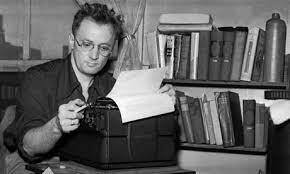
What Algren conveys to the reader is "the great secret & special American guilt of those who own nothing at all in the land where ownership & virtue were one." His characters...
There is also Solly Saltskin, known as "Sparrow", an anxious little man with "thick glasses, a chinless face, pipe-stem neck & the self-critical attitude of one whose dreams have always ended badly". He is a dedicated grifter & sometime dog-snatcher who then ransoms them back to their owners, once commenting that he "couldn't buy the lice off a dead cat."
"Sparrow" & Frankie share an ambivalent relationship, one of antipathy but with each somehow protective of the other, perhaps because they have both long been on the losing end of life in their oppressive neighborhood of grimy bars, 2nd-hand shops, roach-filled tenement rooms & flop-houses.
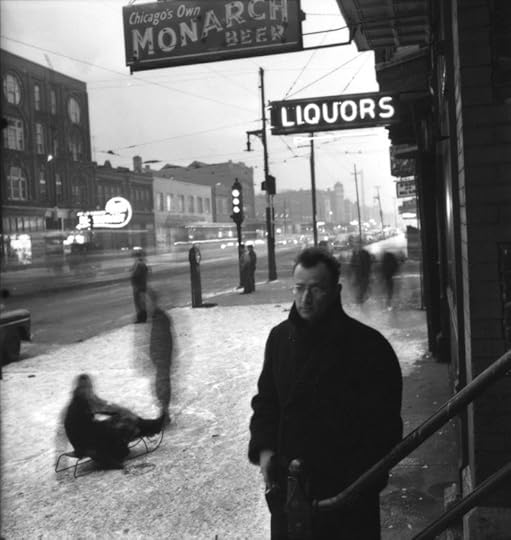
Algren hardly presents us with the Chamber of Commerce view of Chicago, a city of 3 million bustling souls, with a sparkling view of Lake Michigan's skyline, world-class museums & expanive skyscrapers; in fact the domain of this novel is intensely claustrophobic, resembling a kind of prison, the interior of which a few of the characters are not unfamiliar with.
For Nelson Algren was in a way like George Orwell, choosing to live among the cast-offs & basement dwellers of society while portraying their world, the difference being that Algren made it a lifelong avocation.
I'd read Algren previously but with Man With The Golden Arm was stunned by a poetic element that raises this novel well beyond anything I'd previously encountered, relaying in a quite poetic manner a sense compassion for his characters & their haunted environment:
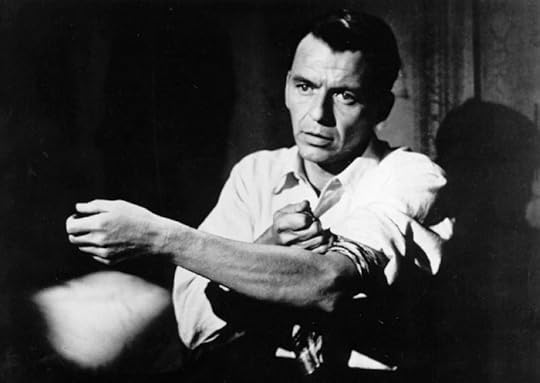
Frankie plays cards, dealing them it is said with a "golden arm" but he often loses what little money he has. He takes comfort in a woman named Molly Novotny, with Algren's characters clinging to each other because they have no hope of surviving alone. They offer a lamentation for "the old days, the old ways before all the stoplights turned to red & there was still time between deals for a laugh or two over nickel beer."
"God has forgotten us" Sophie cries out amidst the gray confessional walls of her tenement room, as Frankie attempts once again to get the "monkey off his back." Meanwhile, there are "catamites & sodomites, bucket-workers & bail-jumpers, the damned & the undaunted."
What makes this novel special is that in relating the lives of countless deadbeats, floozies & con artists, Algren bathes them with an air of compassion, a sense that while they may have few advocates, the author is very definitely in their corner.
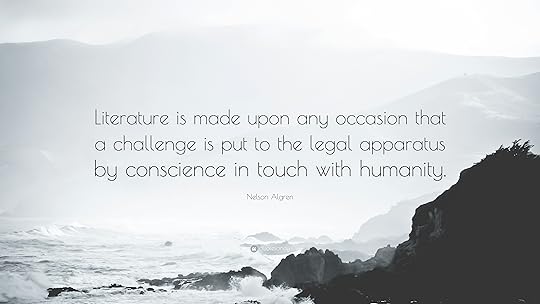
By way of an admission, I've lived in & around Chicago for more than 50 years & the author's metaphorical presence of the El-trains is quite palpable to me. Beyond that, while tempted to view Man With The Golden Arm as a prose version of Baudelaire's Fleur du Mal, these are demimonde characters who are not truly evil but rather dispossessed, while cast with Algren's considerable benevolence.
And the image of a tattered kite caught among the electrical wires, being blown to & fro, seemingly yearning to become free, is an image I will never forget.
To be sure, neither this novel nor Nelson Algren's other works will ever appeal to a broad audience but for me, this is a powerful, sensitively rendered 5* book. The novel ends with a memorable poetic epitaph.
There is also a 100 page appendix with memorial tributes to Algren by the likes of Studs Turkel, Mike Royko (both of whom knew the author well), Kurt Vonnegut, Stuart McCarrell & Bettina Drew (who authored a biography of Algren), among others.
Perhaps, in the 50th Anniversary Critical Edition that I read, there might have been room for glossary of terms used by the card-sharps, petty-gamblers & bottle-jockeys who inhabit The Man With The Golden Arm. A rudimentary map of Chicago city streets & intersections that are portrayed within the novel might also have been helpful for readers unfamiliar with Chicago.
*Within my review are images of Nelson Algren; Frank Sinatra as Frankie Machine in the Otto Preminger film version of Man With The Golden Arm; a quote from Nelson Algren; lastly, Nelson Algren at center beside Eleanor Roosevelt at the National Book Award ceremony.
**The Otto Preminger film version of Algren's The Man With the Golden Arm is only very loosely based on the novel & while interesting in places, fails to capture the poetic nature of Algren's prose, causing the characters to seem far less robust than in the novel. Beyond that, Algren received no payment for having inspired the film version & disavowed it.
What Algren conveys to the reader is "the great secret & special American guilt of those who own nothing at all in the land where ownership & virtue were one." His characters...
were the other side of the billboard which gave each American his commandments, which they had failed all down the line. They could not afford the liquor or tobacco that gave them distinction & their lives had long gone stale. They had emerged from the wrong side of the billboards, gave off a certain jailhouse odor & even if native-born, no longer felt a part of America.Most prominent among the outcasts is Francis Majcinek, cast as "Frankie Machine" & it is said that the hustler's god watched over him. He is hooked on morphine & married to Sophie, someone who courses about a 2nd floor apartment over a saloon in a wheelchair, relegated to an invalid state via a drunken crash with Frankie behind the wheel.
There is also Solly Saltskin, known as "Sparrow", an anxious little man with "thick glasses, a chinless face, pipe-stem neck & the self-critical attitude of one whose dreams have always ended badly". He is a dedicated grifter & sometime dog-snatcher who then ransoms them back to their owners, once commenting that he "couldn't buy the lice off a dead cat."
"Sparrow" & Frankie share an ambivalent relationship, one of antipathy but with each somehow protective of the other, perhaps because they have both long been on the losing end of life in their oppressive neighborhood of grimy bars, 2nd-hand shops, roach-filled tenement rooms & flop-houses.
Algren hardly presents us with the Chamber of Commerce view of Chicago, a city of 3 million bustling souls, with a sparkling view of Lake Michigan's skyline, world-class museums & expanive skyscrapers; in fact the domain of this novel is intensely claustrophobic, resembling a kind of prison, the interior of which a few of the characters are not unfamiliar with.
For Nelson Algren was in a way like George Orwell, choosing to live among the cast-offs & basement dwellers of society while portraying their world, the difference being that Algren made it a lifelong avocation.
I'd read Algren previously but with Man With The Golden Arm was stunned by a poetic element that raises this novel well beyond anything I'd previously encountered, relaying in a quite poetic manner a sense compassion for his characters & their haunted environment:
Long lonesome shadows of the December were cast on the tenements that fled the neon carnival below while the air hung wearily. This was the shadow-gatherers hour: the hour for those all over the earth who had rest neither in sleep nor waking. Some gathered their shadows like memories; but Sophie gathered hers like unborn children to her pale & secret eyes.Algren's novel involves ample Christian imagery, countered by the passing elevated trains that bind the night together, occasionally illuminated by flashing signal towers in "a world gone wrong."
She knew when the shadows waited to come by the way the luminous crucifix glowed a bit. They move toward her then for warmth, they had been feeling unwanted all day. Like for everyone else for whom things had gone wrong. She alone knew how lost all the shadows felt: it made them the dearer to her own unwanted heart, a heart weighed down by its own uselessness.
As the moon of her girlhood had woven all night: great copper strands through clouds of cloth upon the darkness's measureless loom. Moonlight that once revealed so many stars now showed her how the city was bound, from southeast to the unknown west, steel upon steel upon steel: how all the rails held the city too tightly to the thousand-girdered El.
Frankie plays cards, dealing them it is said with a "golden arm" but he often loses what little money he has. He takes comfort in a woman named Molly Novotny, with Algren's characters clinging to each other because they have no hope of surviving alone. They offer a lamentation for "the old days, the old ways before all the stoplights turned to red & there was still time between deals for a laugh or two over nickel beer."
"God has forgotten us" Sophie cries out amidst the gray confessional walls of her tenement room, as Frankie attempts once again to get the "monkey off his back." Meanwhile, there are "catamites & sodomites, bucket-workers & bail-jumpers, the damned & the undaunted."
What makes this novel special is that in relating the lives of countless deadbeats, floozies & con artists, Algren bathes them with an air of compassion, a sense that while they may have few advocates, the author is very definitely in their corner.
By way of an admission, I've lived in & around Chicago for more than 50 years & the author's metaphorical presence of the El-trains is quite palpable to me. Beyond that, while tempted to view Man With The Golden Arm as a prose version of Baudelaire's Fleur du Mal, these are demimonde characters who are not truly evil but rather dispossessed, while cast with Algren's considerable benevolence.
And the image of a tattered kite caught among the electrical wires, being blown to & fro, seemingly yearning to become free, is an image I will never forget.
To be sure, neither this novel nor Nelson Algren's other works will ever appeal to a broad audience but for me, this is a powerful, sensitively rendered 5* book. The novel ends with a memorable poetic epitaph.
There is also a 100 page appendix with memorial tributes to Algren by the likes of Studs Turkel, Mike Royko (both of whom knew the author well), Kurt Vonnegut, Stuart McCarrell & Bettina Drew (who authored a biography of Algren), among others.
Perhaps, in the 50th Anniversary Critical Edition that I read, there might have been room for glossary of terms used by the card-sharps, petty-gamblers & bottle-jockeys who inhabit The Man With The Golden Arm. A rudimentary map of Chicago city streets & intersections that are portrayed within the novel might also have been helpful for readers unfamiliar with Chicago.
*Within my review are images of Nelson Algren; Frank Sinatra as Frankie Machine in the Otto Preminger film version of Man With The Golden Arm; a quote from Nelson Algren; lastly, Nelson Algren at center beside Eleanor Roosevelt at the National Book Award ceremony.
**The Otto Preminger film version of Algren's The Man With the Golden Arm is only very loosely based on the novel & while interesting in places, fails to capture the poetic nature of Algren's prose, causing the characters to seem far less robust than in the novel. Beyond that, Algren received no payment for having inspired the film version & disavowed it.

August 26, 2022
The years spent watching post-war MGM musicals showed me America as a place where people danced in the street whatever the weather and all colours were vivid. People got married to the right people, even though they initially thought they were the wrong people, and everything ended happily.
And then I read this. From 1949 this is no less shocking in subject matter or style than the 90’s efforts of Trainspotting or Grits. In fact the depiction of heroin addiction, the hopelessness of enslavement to something you despise and the very visceral depiction of the body during craving and during satiation is arguably more harrowing here. It has contemporary resonance, the parallels to the current opioid crisis are undeniable. Frankie Majcinek (Frankie Machine) has returned from the war decorated with a purple heart and saddled with a heroin addiction acquired through being given morphine for an injury. Algren shows the battle Frankie fights wit himself, the repeated pledges that each fix will be his last, the parasitic nature of his dealer.
Unlike Trainspotting the people who inhabit Algren’s underbelly of Chicago are not likeable, not witty and, arguably, irredeemable. They have no loyalty, they cheat each other, they have no sympathy and no morals – one of the most saddest things is the dog that they turn into an alcoholic so that even the animal is as pathetic as them. Home, work and the street all represent the same struggle, the same crushing oppression and lack of joy. They can only be tolerated because they are surviving the poor excuse for a life they lead and for that Algren does manage to inspire some compassion from the reader.
To say this is bleak is an understatement but it is also an amazing achievement. Algren’s writing is unsparing, honest and poetic. Not an easy read, but when was anything worthwhile easy?
And then I read this. From 1949 this is no less shocking in subject matter or style than the 90’s efforts of Trainspotting or Grits. In fact the depiction of heroin addiction, the hopelessness of enslavement to something you despise and the very visceral depiction of the body during craving and during satiation is arguably more harrowing here. It has contemporary resonance, the parallels to the current opioid crisis are undeniable. Frankie Majcinek (Frankie Machine) has returned from the war decorated with a purple heart and saddled with a heroin addiction acquired through being given morphine for an injury. Algren shows the battle Frankie fights wit himself, the repeated pledges that each fix will be his last, the parasitic nature of his dealer.
Unlike Trainspotting the people who inhabit Algren’s underbelly of Chicago are not likeable, not witty and, arguably, irredeemable. They have no loyalty, they cheat each other, they have no sympathy and no morals – one of the most saddest things is the dog that they turn into an alcoholic so that even the animal is as pathetic as them. Home, work and the street all represent the same struggle, the same crushing oppression and lack of joy. They can only be tolerated because they are surviving the poor excuse for a life they lead and for that Algren does manage to inspire some compassion from the reader.
To say this is bleak is an understatement but it is also an amazing achievement. Algren’s writing is unsparing, honest and poetic. Not an easy read, but when was anything worthwhile easy?

February 4, 2017
I'm not entirely sure how I feel about this book.
First off, the writing. Holy crap can Algren write. The language is lush and gorgeous. His ability to paint vivid character portraits is among the best I've ever read. Analogy and metaphor are this cat's playground. While I'm not much for the world of literature, it's easy to see why this won the National Book Award in 1950.
On the other hand, though, is the story itself. Goddamn depressing. Wait, I should use all-caps: IT IS GODDAMNED DEPRESSING. All of the characters a miserable, trapped in the tenements with no future, no hope, and steadily destroyed their lives with booze and drugs. There is no plot. I repeat, there is no plot. Like a lot of literature (which may be the reason I don't gravitate toward it), this is simply a slice of life from a rough part of Chicago. Aside from the drinking, cavorting, complaining and succumbing to base instincts, the characters don't do anything.
So combine amazing writing, and a story without a plot, and you get my four stars. If you are a writer, read it. Period. If you are not a writer and you like stories with a plot, it's not for you.
First off, the writing. Holy crap can Algren write. The language is lush and gorgeous. His ability to paint vivid character portraits is among the best I've ever read. Analogy and metaphor are this cat's playground. While I'm not much for the world of literature, it's easy to see why this won the National Book Award in 1950.
On the other hand, though, is the story itself. Goddamn depressing. Wait, I should use all-caps: IT IS GODDAMNED DEPRESSING. All of the characters a miserable, trapped in the tenements with no future, no hope, and steadily destroyed their lives with booze and drugs. There is no plot. I repeat, there is no plot. Like a lot of literature (which may be the reason I don't gravitate toward it), this is simply a slice of life from a rough part of Chicago. Aside from the drinking, cavorting, complaining and succumbing to base instincts, the characters don't do anything.
So combine amazing writing, and a story without a plot, and you get my four stars. If you are a writer, read it. Period. If you are not a writer and you like stories with a plot, it's not for you.

January 24, 2015
I grew up in Chicago in the neighborhood Algren writes about and at the same time he was writing about it ... so from the beginning I was at odds with this book. This isn't the neighborhood that I grew up in! But ... after finishing the book and thinking about some of my Polish relatives who either owned taverns or spent a lot of time in taverns I have to reluctantly admit that Algren is portraying a part of Chicago that I was simply too young to know about.
Some reviewers have referred to this neighborhood as a slum. Well, this neighborhood at that time was most definitely not a slum. It was a blue-collar, Polish and Jewish working class neighborhood. Many of the buildings in this Wicker Park neighborhood were divided into rental apartments. These three-story buildings often had two apartments per floor and were protected by rent controls for a number of years after World War II. The streets were clean and many of the kids walked to Catholic schools. Milwaukee Avenue, often referred to as Polish Broadway, was a main shopping area with lots of nice stores. The store he calls Niebolts was Wiebolts department store and Golds was Goldblatts department store. Both are now long gone but served the working class very well.
The kind of neighborhood taverns where people sit around and play cards, drink, and maybe even do dope can still be found in virtually any little as well as big town today. If you look for it you will find it. Algren, at the time had little money and this was an inexpensive neighborhood to live in. He seems to have been naturally attracted to this level of society. He liked to drink and gamble and he liked to write about people who for whatever reason were stuck in a world they were not likely to ever escape from. Algren portrays them as they really were -- mostly not very nice. But, they were fellow human beings and as such they were worthy of having their story told as well.
His writing style is lyrical and poetic.....deliberately quite a contrast to the folks he is writing about. This book was hard to get through because these people are so unappealing, but I'm really glad I made the effort. I think he was rightly given the first National Book Award for this novel. In a cruel joke that I'm sure Algren appreciated he never made a penny off the movie version of his book!
Some reviewers have referred to this neighborhood as a slum. Well, this neighborhood at that time was most definitely not a slum. It was a blue-collar, Polish and Jewish working class neighborhood. Many of the buildings in this Wicker Park neighborhood were divided into rental apartments. These three-story buildings often had two apartments per floor and were protected by rent controls for a number of years after World War II. The streets were clean and many of the kids walked to Catholic schools. Milwaukee Avenue, often referred to as Polish Broadway, was a main shopping area with lots of nice stores. The store he calls Niebolts was Wiebolts department store and Golds was Goldblatts department store. Both are now long gone but served the working class very well.
The kind of neighborhood taverns where people sit around and play cards, drink, and maybe even do dope can still be found in virtually any little as well as big town today. If you look for it you will find it. Algren, at the time had little money and this was an inexpensive neighborhood to live in. He seems to have been naturally attracted to this level of society. He liked to drink and gamble and he liked to write about people who for whatever reason were stuck in a world they were not likely to ever escape from. Algren portrays them as they really were -- mostly not very nice. But, they were fellow human beings and as such they were worthy of having their story told as well.
His writing style is lyrical and poetic.....deliberately quite a contrast to the folks he is writing about. This book was hard to get through because these people are so unappealing, but I'm really glad I made the effort. I think he was rightly given the first National Book Award for this novel. In a cruel joke that I'm sure Algren appreciated he never made a penny off the movie version of his book!

May 24, 2016
A Dark Novel From The Poet Of The Lost
I had the opportunity to watch a new documentary film, "Nelson Algren: The End is Nothing, the Road is All" in which one of the interviewees refers to Algren (1909 -- 1981) as the "poet of the lost". The film moved me to revisit Algren, a writer I don't know well, and to read his best-known novel, "The Man With The Golden Arm". Algren received the first National Book Award for this novel in 1950 -- an outstanding initial choice for a premiere literary award. In the novel, Algren tells the story of lost, lonely individuals. He writes with a harsh beauty amply justifying the film's reference to him as the "poet of the lost". The novelist Kurt Vonnegut who knew Algren refers to him near the end of the film as "the loneliest man I ever met", a description that would apply to many of the characters in Algren's award-winning novel.
The novel is set in the bars, cheap apartments, prisons, and streets frequented by the Chicago underclass in 1947- 1948. The novel's main character, who goes by the name of Frankie Machine, has acquired the nickname of the "man with the golden arm" due in part to his steadiness in dealing cards. Frankie aspires to put his steadiness of arm, wrist and hand to use by becoming a jazz drummer. Characters in this novel often are called by their roles, and Frankie is known as "Dealer". Frankie served in the Army in WW II, took a severe wound to the stomach, and became a morphine addict. Algren's novel is one of the first to explore seriously and realistically the use of drugs.
The novel is filled with low life, highly differentiated characters, including Frankie's friend Solly, a mildly-retarded petty thief who usually is called Sparrow, or "punk". Frankie is unhappily married to Sophie, called "Zosh" who is bitter and confined to a wheelchair after an accident with Frankie driving the car. Frankie has a mistress, Mollie, a stripper and bar maid; Sparrow has a mistress, Violet, whom he sees when her husband, the Old Man is asleep or in his cups. The book is replete with shady, colorful characters, including the bar owner, the keeper of the fixed card games that uses Frankie as the dealer, crooked lawyers, quack doctors, gamblers, drunks, petty criminals, and fixers.
The plot develops slowly and involves Frankie and Sparrow's relationship and the accidental killing of the fixer, Louis, which results in Frankie's attempt to evade the law. The novel is in two lengthy sections with most of the action and plot development taking place in the second section. Most of the book consists of a lengthy series of vignettes of varying lengths separated by paragraph breaks. These small sections each focus on a particular scene and a small group of individuals. They develop character and settings. Aspects of the story get foretold in each of the settings but dimly so with the overall focus of the story becoming clear only as it proceeds. The scenes are often not chronological and sometimes tend to run into each other with an almost surrealistic effect.
Much of the novel is in dialogue and full of the slang of the late 1940s. The book is replete with religious, racial, and national derogatory terms that would not meet contemporary standards The book is full of quotations from billboards, ads, and popular songs. The omniscient narrator's voice is, in contrast to the dialogue, poetic and rhythmical. With its lyricism, the novel concludes fittingly with a poem. Throughout the book, the narrator describes and comments on the characters and their actions with a mix of compassion and irony. In this passage early in the novel, the narrator comments on the American dream through Frankie's eyes.
"The great, secret and special American guilt of owning nothing, nothing at all, in the one land where ownership and virtue are one. Guilt that lay crouched behind every billboard which gave each man his commandments; for each man here had failed the billboards all down the line. No Ford in this one's future nor ever any place all his own. Had failed before the radio commercials, by the street car plugs and by the standards of every self-respecting magazine. With his own eyes he had seen the truer Americans mount the broad stone stairways to success surely and swiftly and unaided by others; he was always the one left alone, it seemed at last, without enough sense of honor to climb off a West Madison Street Keep-Our-City-Clean box and not enough ambition to raise his eyes back to the billboards."
The following passage describes a nightly gathering of suspects in a local police station.
" Yet they come on and come on, and where they come from no captain knows and where they go no captain goes: mush workers and lush workers, catamites and sodomites, bucket workers and bail jumpers, till tappers and assistant pickpockets, square johns and copper johns; lamisters and hallroom boys, ancient pious perverts and old blown parolees, rapoes and record-men; the damned and the undaunted, the jaunty and condemned."
The novel starts slowly and with some rough edges gathers in force and conviction. The reader gradually gets drawn into the settings and develops a feeling for the characters and their struggles and failings without romanticizing them. "We are all members of one another" is a theme driven home in the work through all the stories of isolation, frustration and loneliness. "The Man With The Golden Arm" is slow and difficult; but it is an American masterwork. I am grateful to the documentary I saw for getting me to read this novel at last.
Robin Friedman
I had the opportunity to watch a new documentary film, "Nelson Algren: The End is Nothing, the Road is All" in which one of the interviewees refers to Algren (1909 -- 1981) as the "poet of the lost". The film moved me to revisit Algren, a writer I don't know well, and to read his best-known novel, "The Man With The Golden Arm". Algren received the first National Book Award for this novel in 1950 -- an outstanding initial choice for a premiere literary award. In the novel, Algren tells the story of lost, lonely individuals. He writes with a harsh beauty amply justifying the film's reference to him as the "poet of the lost". The novelist Kurt Vonnegut who knew Algren refers to him near the end of the film as "the loneliest man I ever met", a description that would apply to many of the characters in Algren's award-winning novel.
The novel is set in the bars, cheap apartments, prisons, and streets frequented by the Chicago underclass in 1947- 1948. The novel's main character, who goes by the name of Frankie Machine, has acquired the nickname of the "man with the golden arm" due in part to his steadiness in dealing cards. Frankie aspires to put his steadiness of arm, wrist and hand to use by becoming a jazz drummer. Characters in this novel often are called by their roles, and Frankie is known as "Dealer". Frankie served in the Army in WW II, took a severe wound to the stomach, and became a morphine addict. Algren's novel is one of the first to explore seriously and realistically the use of drugs.
The novel is filled with low life, highly differentiated characters, including Frankie's friend Solly, a mildly-retarded petty thief who usually is called Sparrow, or "punk". Frankie is unhappily married to Sophie, called "Zosh" who is bitter and confined to a wheelchair after an accident with Frankie driving the car. Frankie has a mistress, Mollie, a stripper and bar maid; Sparrow has a mistress, Violet, whom he sees when her husband, the Old Man is asleep or in his cups. The book is replete with shady, colorful characters, including the bar owner, the keeper of the fixed card games that uses Frankie as the dealer, crooked lawyers, quack doctors, gamblers, drunks, petty criminals, and fixers.
The plot develops slowly and involves Frankie and Sparrow's relationship and the accidental killing of the fixer, Louis, which results in Frankie's attempt to evade the law. The novel is in two lengthy sections with most of the action and plot development taking place in the second section. Most of the book consists of a lengthy series of vignettes of varying lengths separated by paragraph breaks. These small sections each focus on a particular scene and a small group of individuals. They develop character and settings. Aspects of the story get foretold in each of the settings but dimly so with the overall focus of the story becoming clear only as it proceeds. The scenes are often not chronological and sometimes tend to run into each other with an almost surrealistic effect.
Much of the novel is in dialogue and full of the slang of the late 1940s. The book is replete with religious, racial, and national derogatory terms that would not meet contemporary standards The book is full of quotations from billboards, ads, and popular songs. The omniscient narrator's voice is, in contrast to the dialogue, poetic and rhythmical. With its lyricism, the novel concludes fittingly with a poem. Throughout the book, the narrator describes and comments on the characters and their actions with a mix of compassion and irony. In this passage early in the novel, the narrator comments on the American dream through Frankie's eyes.
"The great, secret and special American guilt of owning nothing, nothing at all, in the one land where ownership and virtue are one. Guilt that lay crouched behind every billboard which gave each man his commandments; for each man here had failed the billboards all down the line. No Ford in this one's future nor ever any place all his own. Had failed before the radio commercials, by the street car plugs and by the standards of every self-respecting magazine. With his own eyes he had seen the truer Americans mount the broad stone stairways to success surely and swiftly and unaided by others; he was always the one left alone, it seemed at last, without enough sense of honor to climb off a West Madison Street Keep-Our-City-Clean box and not enough ambition to raise his eyes back to the billboards."
The following passage describes a nightly gathering of suspects in a local police station.
" Yet they come on and come on, and where they come from no captain knows and where they go no captain goes: mush workers and lush workers, catamites and sodomites, bucket workers and bail jumpers, till tappers and assistant pickpockets, square johns and copper johns; lamisters and hallroom boys, ancient pious perverts and old blown parolees, rapoes and record-men; the damned and the undaunted, the jaunty and condemned."
The novel starts slowly and with some rough edges gathers in force and conviction. The reader gradually gets drawn into the settings and develops a feeling for the characters and their struggles and failings without romanticizing them. "We are all members of one another" is a theme driven home in the work through all the stories of isolation, frustration and loneliness. "The Man With The Golden Arm" is slow and difficult; but it is an American masterwork. I am grateful to the documentary I saw for getting me to read this novel at last.
Robin Friedman

December 13, 2024
“That’s me – the kid with the golden arm. It’s all in the wrist ‘n I got the touch – dice, stud or with a cue. I even beat the tubs a little ‘cause that’s in the wrist too. Here – pick a card.”
Francis Majcinek, a small-time hustler from the Polish community of Chicago, is known up and down Division Street as a ‘regular’ – a man you can rely on, whether he is dealing cards for Zero Schwiefka, drinking at Antek’s bar or coasting the city with his friend Sparrow, looking for an easy buck. He’s called Machine and Dealer for his steady arm and keen eye.
“I never get nowheres but I pay my own fare all the way.”
Frankie dreams of escaping the tenements and finding a job as a drummer in a band, preferably with Gene Krupa. Dreams are cheap in the impoverished tenements of post-war Chicago. Everything else is hard to get. Frankie Machine has a heavy load to carry down the night streets of his city. His wife Sophie [Zosh] is confined to a wheelchair after a drunken accident in a car driven by Frankie. She makes use of his guilt to make his whole life miserable . There’s also the 35 pound monkey riding on Frankie’s back: during the war, he was treated with morphine for a gut wound, and now he has become an addict, although he is struggling to control his dependence.
Frankie moaned like an animal that cannot understand its own pain. His shirt had soaked through and the pain had frozen so deep in his bones nothing could make him warm again.
“Hit me, Fixer. Hit me.”
It’s comin’ on like a wave way out there, bigger ‘n bigger ‘n comin’ right at you till it’s big as this hotel. It hits you ‘n you’re gone. You’re so sick you’re just turnin’ around down there under that wave not caring who knows, your mother ‘r your sister ‘r your buddy ‘r your wife – anythin’ just so’s you can stop drowin’ for a minute.
He is a hustler, an addict, a criminal, yet Frankie Machine is almost mythical in his struggle to defy his fate, in his refusal to bow down in the face of unbeatable odds. Our [mine, at least] hearts go out to him and to the rest of the Division Street people as they try to survive for one more day in the grinding machine of the big city. This is all due to the Man With the Golden Pen, winner of the First National Book Award, yet denied by his own home city for the dismal, uncompromising portrait of the hard life of the people who failed at living the great American Dream. I guess it is easier to close your eyes to the misery and suffering of your own brothers and sisters and to pretend that their downfall is their own damn fault. And it is easier to blame the messenger for the dirty image of a spoiled dream, for finding kindness and love and brotherhood in the gutter.
The citizens of Division Street are made to feel ashamed of their own predicament.
The great, secret and special American guilt of owning nothing, nothing at all, in the one land where ownership and virtue are one. Guilt that lay crouched behind every billboard which gave each man his commandments; for each man here had failed the billboards all down the line. No Ford in this one’s future nor ever any place all his own. Had failed before the radio commercials, by the streetcar plugs and by the standards of every self-respecting magazine. Americans mount the broad stone stairways to success surely and swiftly and unaided by others; he was always the one left alone, it seemed at last, without enough sense or honor to climb off a West Madison Street Keep-Our-City-Clean box and not enough ambition to raise his eyes back to the billboards.
Nelson Algren grew up close to Division Street. He knew war, he knew prison, he knew the gambling dens and the drinking bars of his borrow. He probably knew the loneliness and despair of three o’clock in the morning since he chose that Scott Fitzgerrald quote to put in the book:
In the real dark night of the soul it is always three o’clock in the morning, day after day.
The whole point of the story for me is not the terrible vista of decay, vice and corruption that the city fathers complained about. It is instead the compassionate eye, the poet’s sensibility and the reporter’s integrity that sings for the crying, struggling, forgotten brothers and sisters pushed aside in our march to prosperity.
Faces bloody as raw pork ground slowly in the great city’s grinder; faces like burst white bags, one with eyes like some dying hen’s and one as bold as a cornered bulldog’s; eyes with the small bright gleam of hysteria and eyes curtained by the dull half glaze of grief. These glanced, and spoke, and vaguely heard and vaguely made reply; yet looked all day within upon some ceaseless horror there: the twisted ruins of their own tortured, useless, lightless and loveless lives.
Sparrow, Antek, Molly, Zosh, Violet, Blind Pig, Umbrella Man, Cousin Kvorka, Schwiefka, Nifty Louie : a sorry menagerie of misfits and losers, not fit for polite society, yet I feel I grew up near them in my own blue collar industrial town, seeing the same fights over money between spouses, the same late arrivals in a drunken stupor, the same lines for the gambling tickets at weekends, the petty crimes and senseless violence, not so different from Chicago to the slums of Ploiesti.
He was many men and no man at all. He was a hysterical little bundle of possibilities that could never come true. He was a mouth at the end of a whisky glass, a knock-kneed shuffle in dancing pumps. Pumps – “for when I used to win them marathons all the time” – kept with the semblance of a shine by a girl with a heart-shaped face and the wonder gone out of her eyes.
What is so special about Algren is that he is never judgemental of these numerous examples of human weakness. He sees the dreams of these people, the hopeless hope of escape, the dignity of the endless struggle to survive just one more day.
“Lies are just a poor man’s pennies.”
“Everybody got to have a little bit,” she told him pleadingly.
“A little bit of what, Zosh?”
“A little bit of beer, a little bit of fun,” she told him in her little sing-song. “A little bit of anythin’, a little bit of love.”
It’s very difficult to find a blameless character on Division Street. There’s something despicable, disgusting, demeaning about each one, including Frankie Machine. Probably that’s the whole point: they are rejects, losers, criminals. Algren shows us they are human, no different in the end than the policemen who hunt them or the politicians who condemn them.
The book is not an easy one, first for its subject and the venality of most of the characters, and secondly for the density of the prose and the author’s integrating essays and poems directly into the text. Yet these lyrical passages are the ones that captivated me the most, slowing me down considerably as I lingered and re-read a particular turn of phrase, a painful dialogue, a fiery condemnation of the system.
This was the shadow-gatherer’s hour: the hour for those all over the earth who had rest neither in sleep nor waking. Some gathered their shadows like memories; but she gathered hers like unborn children to her pale and secret eyes.
She knew when the shadows waited to come by the way the luminous crucifix glowed a bit. They moved toward her for warmth, they had been feeling unwanted all day. Like everyone else in the world for whom things had gone wrong. They knew that here they were loved and wanted at last. She alone knew how lost all shadows felt: it made them dearer to her own unwanted heart.
Molly, the teenage prostitute with the dead eyes and the soft heart, beaten up on a daily basis by her drunkard pimp, is my prime choice of an angel in the gutter. She is probably Frankie Machine’s only shot at redemption, if he could only choose her over the monkey on his back. Molly’s nighttime vigils, her listening for the cold passage of the L-trains, waiting to see if somebody, anybody would come knocking at her door, is my personal favorite.
All through that night, long after he had left for work, she remembered how he had been before and how he was now. And a tenderness mixed of pity and love shook her like the wind off the tracks at midnight.
Till tenderness turned into sleep; as night turned into morning.
Just as Zosh, the bitter cripple, is the most difficult person to feel pity for, although eventually Algren will work his magic for her, too.
For those nearest our hearts are the ones most likely to tread upon them. What she could not gain through love she sought to possess by mockery. He was too dear to her: into everything he did she must read some secret hatred of herself.
“Whyn’t you come right out ‘n say you wisht I’d got killed ‘stead of crippled?” she accused him without warning.
There is some laughter here, mostly gallows humour and inappropriate banter between cops and criminals, or drunken revelries. There are even parties and music and dancing, brief interludes in a thoroughly downward spiral of doom for Frankie and the rest of the gang. It never lasts long.
“Works too hard.”
Only this time it wasn’t funny at all.
For all the doors belonged to hard-working people. All the doors of both their lives and nobody laughs at a thing very long when he’s drunk out of bleakest loneliness.
>>><<<>>><<<
I feel like I have too much to say, too many passages I want to save and comment on, too much pain and heartbreak that needs to be recognized and recorded. But I might run out of words quota for an online review, so I will let Record Head draw the conclusion. It feels appropriate when the judge and jailer cries for the pain of his victims, when the captain of police starts questioning the job and the system he serves.
And didn’t feel he had heart enough left to face one more man manacled by steel or circumstance until his own heart should stop hurting.
Yet they come on and come on, and where they come from no captain knows and where they go no captain goes: mush workers and lush workers, catamites and sodomites, bucket workers and ball jumpers, till tappers and assistant pickpockets, square johns and copper johns; lamisters and hallroom boys, ancient pious perverts and old blown parolees, repoes and record-men; the damned and the undaunted, the jaunty and condemned.
Heartbroken bummies and bitter rebels: afternoon prowlers and midnight creepers. Peeping Toms and firebox pullers. The old cold-deckers and the young torpedoes coming on faster than the law can pick them up.
The unlucky brothers with the hustlers’ hearts.
For if everyone were members of one another – he put the notion down. That would mean those on the other side of the wall were his own kind.
It could not be. For if they were anything less than enemies he had betrayed himself a thousandfold. It would be too much to make a traitor out of a man for having done his simple duty. But what if he had done traitor’s work all his life without realizing it?
[...] Alone below the glare lamp in the abandoned query room, stifled by a ravaging guilt, he knew now those whom he had denied, those beyond the wall, had all along been members of himself. Theirs had been the common humanity, the common weakness and the common failure which was all that now could offer fresh hope to his heart.
Nelson Algren wants us to stop thinking in terms of cops and robbers. We are in the end brothers-in-arms separated by a simple roll of the dice. There, but for the grace of God, goes you and I and Record Head.
What else is left to say? Not much without spoilers or repeating the themes I already mentioned. I will just conclude with the rest of the [numerous] quotes I wanted to save from the text, hoping they are self-explanatory about the world of Frankie Machine.
... Frankie would sit back wearily, sick of seeing them come on begging to be hustled, wondering where in the world they all came from and how in the world they all earned it and what in the world they told their wives and what, especially, they told themselves and why in the world they always, always, always, always came back for more.
In their world of petty cheats, phony braggarts, double clockers, elbow sneaks, small-time chiselers, touts and stooges and glad-hand-shakers, one had always to be on guard.
... any one side of any jailhouse wall is never much different than any other side. There are only the same old threadbare variations on the same age-old warnings against all the well-tried ancestral foes: whisky and women, sin and cigarettes, marijuana and morphine, marked cards and capped cocaine, dirty laughter and easy tears, engineered dice and casual disease, bad luck and adultery, old age and shyster lawyers, quack doctors and ambitious cops, crooked priests and honest burglars, lack of money and hard work.
It was just so damned hard to fight alone, that was all, with so little to fight for.
Yet the week ran out on Saturday night and he was no richer than he’d been on Monday morning. The old merry-go-round was rolling again and he had to ride as hard as any.
He was groping through an uphill darkness toward some door that must be there; yet with an increasing feeling, the closer he came to it, of being hopelessly trapped.
Frankie stood on the fire escape and saw how the unseen lights of the Loop were reflected in the sky like the light from some gigantic forge beating in the pit of the city’s enormous heart. A heart seeming now to beat in suppressed panic. A panic lying in wait, each midnight hour, at his own heart’s forge.
Night of the All Nite restaurants, the yellow-windowed machine-shop night where daylight was being prepared on lathes. Night of the thunderous anvils preparing the city’s iron heart for tomorrow’s iron traffic. Night of the city lovers, the Saturday Night till Sunday Morning lovers, making love on rented beds with the rent not due till Monday.
Night of iron and lovers’ laughter: night without mercy. Into a morning without tears.
“Ain’t nobody on my side?”
She was really asking him.
“Nobody, sister. Not a soul,” Sparrow answered, she suited his own mood so well. “You’re all on your own from here on out. Ain’t nobody on anybody’s side no more. You’re the oney one on your side ‘n I’m the oney one on mine.”
“Tough it out, kid, tough it out,” he tried to urge himself, feeling the first line of sweat forming along his forehead.
“Some cats just swing like that, Molly-O.”

November 2, 2022
What could be sadder than a pool hall in the Depression in Chicago? And the hustlers who make their living by gambling on games of pool occupy a special kind of outcast land. This is another book that was made into a blockbuster movie (The Hustler, two versions) where the writer who created the book died broke. A sad and empty place but a powerful work of period literature.

Read
September 8, 2012The old American myth is that if we work hard and have a properly optimistic attitude, the world is at our fingertips. Life is good and good for you in God's Country. This is bullshit.
And Nelson Algren, at the height of the McCarthy Era, had the courage to say so. His are the stories of all the American dreamers who lost out. While the story drags a bit at time, it's still compelling. Algren breaks up the storyline with long, poetically gorgeous ruminations about sociology, psychology, and what it is to be down and out in the most prosperous nation on the planet. The net effect is a remarkably complete-seeming and poignant picture of a forgotten hellscape of addiction, squalor, and the derailment of the immigrant dream.
And Nelson Algren, at the height of the McCarthy Era, had the courage to say so. His are the stories of all the American dreamers who lost out. While the story drags a bit at time, it's still compelling. Algren breaks up the storyline with long, poetically gorgeous ruminations about sociology, psychology, and what it is to be down and out in the most prosperous nation on the planet. The net effect is a remarkably complete-seeming and poignant picture of a forgotten hellscape of addiction, squalor, and the derailment of the immigrant dream.

December 29, 2013
I read A Walk On The Wild Side about a year ago and liked it well enough that I thought I should read more by Algren. I no longer feel that way. You could pull about 100 pages of storyline from this book and make a pretty good screenplay. That is exactly what was done, and Frank Sinatra's role in the film by that title was one of Frank's most powerful and well executed roles. Watch the movie, throw the book in the garbage. So we have 100 pages of value, and 243 pages of drivel, absolute tripe. This book highlights the role of what a good editor can and should do. I am speculating that this received no editing, hopefully some of his later work did. 243 pages of rambling, jumbled, faux poetic words so sophomoric that I would expect any high-schooler to do better. I fell asleep night after night soon after reading 10 boring pages. I find very few books like this, but I'm marking this one: FAIL.

November 10, 2017
It's rough, it's sloppy, it's poetic, meandering, even--I think--contradictory at one point, and ultimately exquisitely sad and utterly beautiful. Particularly effecting here is the mix of cynicism with vulnerability, making this novel maybe the finest depiction of that human condition in which we're always bleeding and always finding novel ways to stem the blood flow by pretending it doesn't hurt that much, by ridiculing the pain as if we don't feel it at all.
My first Algren, I can't wait to read another. It packs much of the same wallop of a Hubert Selby Jr., a favorite of mine, but with perhaps a less controlled narrative, and, most interestingly, without the ostensibly Christian empathy angle from which Selby created his works. So, either Algren arrived at depicting the naked, suffering human from a purely secular, existentialist angle--logical, it seems to me, as that's pretty much my own philosophical stance and I always fall back on a love of humanity, and particularly useless suffering as our/humanity's most salient characteristic and therefore the greatest beauty of our restlessly self-destructive species--or that he was a Christian beneath his writerly pose.
Speaking of which, I enjoyed the extra essays in this critical edition, especially the personal memoir of John Clellon Holmes, who puts Algren into what we have to figure now is his historical context. As well as bemoaning how short is the shelf life of writing--shorter, sadly, than the lives of most writers. This is why I waited until I was 50 to publish. I wish.
My first Algren, I can't wait to read another. It packs much of the same wallop of a Hubert Selby Jr., a favorite of mine, but with perhaps a less controlled narrative, and, most interestingly, without the ostensibly Christian empathy angle from which Selby created his works. So, either Algren arrived at depicting the naked, suffering human from a purely secular, existentialist angle--logical, it seems to me, as that's pretty much my own philosophical stance and I always fall back on a love of humanity, and particularly useless suffering as our/humanity's most salient characteristic and therefore the greatest beauty of our restlessly self-destructive species--or that he was a Christian beneath his writerly pose.
Speaking of which, I enjoyed the extra essays in this critical edition, especially the personal memoir of John Clellon Holmes, who puts Algren into what we have to figure now is his historical context. As well as bemoaning how short is the shelf life of writing--shorter, sadly, than the lives of most writers. This is why I waited until I was 50 to publish. I wish.

December 13, 2013
The Man with the Golden Arm is an incredible peace of American literature which tells the story of Frankie Machine. When Frankie arrives home to Chicago from the Second World War he comes back with a Morphine habit which he initially hides from his associates and wife.
Life for Frankie is hard, he dreams of being a drummer but his real skill is in his arm, being a card dealer. He uses his skills to make his money. However back at home his wife Sophie is not making life easy for him either. She has been in a wheelchair since her and Frankie had a car accident however it is suggested the illness is psychosomatic- she certainly uses this to keep Frankie with her. As the book progresses life for Frankie becomes more and more unbearable and his habit spirals out of control.
I had a really hard time grading this book because I found it a really difficult read, it took me a long time to get into it and although there were some very interesting sections I found it hard going. However the contribution Nelson Algren made to the history of literature with this book cannot be ignored. It was one of the first novels which saw poorer classes being depicted as poor and whats more not trying to better themselves, unlike authors before him Algren was trying to tell his readers that sometimes when society thinks people are bad they really are. The excellence of the writing and the quality story cannot be ignored and I would encourage others to read this novel. It truly deserves it's place on the 1001 books to Read Before you Die list.
Life for Frankie is hard, he dreams of being a drummer but his real skill is in his arm, being a card dealer. He uses his skills to make his money. However back at home his wife Sophie is not making life easy for him either. She has been in a wheelchair since her and Frankie had a car accident however it is suggested the illness is psychosomatic- she certainly uses this to keep Frankie with her. As the book progresses life for Frankie becomes more and more unbearable and his habit spirals out of control.
I had a really hard time grading this book because I found it a really difficult read, it took me a long time to get into it and although there were some very interesting sections I found it hard going. However the contribution Nelson Algren made to the history of literature with this book cannot be ignored. It was one of the first novels which saw poorer classes being depicted as poor and whats more not trying to better themselves, unlike authors before him Algren was trying to tell his readers that sometimes when society thinks people are bad they really are. The excellence of the writing and the quality story cannot be ignored and I would encourage others to read this novel. It truly deserves it's place on the 1001 books to Read Before you Die list.

January 5, 2022
A great story that digs deep into the depth of human despair and horrific road to salvation. In "The Man With The Golden Arm" the author does, what has to be a first person journey into the worse that life has to offer to those who have given up.
The story revolves around Johnny Machine a professional dealer & heroin junkie. Just released from jail with the hope of getting honest work as a drummer, Johnny has to deal with all the demons he left behind and thought he had moved past.
Surrounded by the drugs, the hustle, the lies and disappointments Johnny finds himself going down the proverbial drain.
Is salvation in the cards for Johnny or is the man with the golden arm doomed.
Beautifully written and excellently paced this story goes to great effort to blast the human condition in the readers face, no holds barred. As brutal and devastating as the story is, ironically enough salvation lies in the gentlest of emotions, the softest of touches. There is a beauty that seemingly comes out of nowhere in this story and then you suddenly realize it's always been there.
A classic & notably the first winner of the National Book Award (which he received from none other than Eleanor Roosevelt at a ceremony in March 1950).
The story revolves around Johnny Machine a professional dealer & heroin junkie. Just released from jail with the hope of getting honest work as a drummer, Johnny has to deal with all the demons he left behind and thought he had moved past.
Surrounded by the drugs, the hustle, the lies and disappointments Johnny finds himself going down the proverbial drain.
Is salvation in the cards for Johnny or is the man with the golden arm doomed.
Beautifully written and excellently paced this story goes to great effort to blast the human condition in the readers face, no holds barred. As brutal and devastating as the story is, ironically enough salvation lies in the gentlest of emotions, the softest of touches. There is a beauty that seemingly comes out of nowhere in this story and then you suddenly realize it's always been there.
A classic & notably the first winner of the National Book Award (which he received from none other than Eleanor Roosevelt at a ceremony in March 1950).

April 3, 2022
Well. Shit. It was a rough go. Algren didn't make it an easy story to get through on many levels. I put it down a few separate times to read other things...but, by the time I finished the book, the story made me cry and not a lot of books accomplish that. I get tears in my eyes, but I don't always cry.
(Or maybe Algren can't take full credit for the crying and it's a mix of my own current insomnia and life changes along with the story of Frankie Machine and the other characters that brought the tears rolling down my face.)
I feel that it takes a long time with Algren's writing to find the warmth of the feeling in the way he writes about his characters or maybe he just brought it all together in the last 100 pages with more feeling and focus.
I'm glad I didn't give up on this poetically long-winded, character-filled, and gritty story.
Tedium aside, there is undoubtedly much beauty to be found in the prose and poetic voice of Nelson Algren.
(Or maybe Algren can't take full credit for the crying and it's a mix of my own current insomnia and life changes along with the story of Frankie Machine and the other characters that brought the tears rolling down my face.)
I feel that it takes a long time with Algren's writing to find the warmth of the feeling in the way he writes about his characters or maybe he just brought it all together in the last 100 pages with more feeling and focus.
I'm glad I didn't give up on this poetically long-winded, character-filled, and gritty story.
Tedium aside, there is undoubtedly much beauty to be found in the prose and poetic voice of Nelson Algren.

April 5, 2024
Awarded the first National Book Award in 1950. It's Chicago, 1942. The book immerses the reader in the world of back alley cards, drug dealers, morphine, alcohol, beggars, strippers, and domestic abuse. It's raw and gritty. So good!

December 2, 2020
Nelson Algren's The Man With the Golden Arm is about a group of dead-end Chicago residents who are into drink, drugs, gambling, and petty theft. Chief among them is Frankie Machine, an Army vet who ekes out a living dealing cards at a gambling club, but who is fighting (not too successfully) an addiction to morphine injections. He and his sidekick Sparrow Saltzkin look out for each other and try to steer clear of Captain "Record Head" Bednar of the Chicago Police.
This is without a doubt the most compassionate look at American lowlifes, who, in this novel, tend to be mostly of Polish extraction. Frankie is married to Sophie, who is wheelchair-bound after an auto accident for which she blames Frankie. At some point, Frankie abandons Sophie for Molly Novotny, a bar girl/stripper who is younger and more supportive.
The best scene in the book appears near the middle, where Captain Bednar is conducting a police line-up. We hear the hoods who have been assembled and take a long look into Bednar's mind.
Nelson Algren is the Céline of Chicago, and his book -- which was highly touted when it was published in 1949 -- deserves another look, as does its author.
This is without a doubt the most compassionate look at American lowlifes, who, in this novel, tend to be mostly of Polish extraction. Frankie is married to Sophie, who is wheelchair-bound after an auto accident for which she blames Frankie. At some point, Frankie abandons Sophie for Molly Novotny, a bar girl/stripper who is younger and more supportive.
The best scene in the book appears near the middle, where Captain Bednar is conducting a police line-up. We hear the hoods who have been assembled and take a long look into Bednar's mind.
Nelson Algren is the Céline of Chicago, and his book -- which was highly touted when it was published in 1949 -- deserves another look, as does its author.

December 23, 2013
Beautifully written, deals with tragic, depressing subject matters in a poetically artistic way. Sad and bleak, was very glad to have finally finished this one just to escape the world it put me in. Will never be able to forget it. Think Selby via Faulkner, with a bit of Dostoyevsky, Hugo, and Tennessee Williams mixed in. Subject matter and conclusion may be too much for many.

April 21, 2013
I'm ashamed to say I only got halfway through this. It felt so claustrophobic that I threw it to the floor and ran outside in my underwear. To Algren's fans everywhere I offer sincere regrets. I admired what I read but I didn't want to read anymore.

July 6, 2022
3.5 stars. An interesting, sad, tragic, depressing, sometimes humorous, realistic, character based novel about Frankie Machine, aged 30, who lives in the Chicago underworld, dealing cards and hustling two-bit scams to pay for his heroin addiction that he says he will quit, but can’t.
I enjoyed the realistic dialogue, particularly the conversations between the police officer and characters who provide their versions of events where they have been caught red handed doing something illegal.
This book is very well written with well developed, albeit, mostly hopeless characters.
This book was first published in 1949 and won the 1950 National Book Award.
I enjoyed the realistic dialogue, particularly the conversations between the police officer and characters who provide their versions of events where they have been caught red handed doing something illegal.
This book is very well written with well developed, albeit, mostly hopeless characters.
This book was first published in 1949 and won the 1950 National Book Award.

March 28, 2024
Toss up between 4-5 stars. This was shuffled to the top of the ever increasing TBR pile ever since reading The Mandarins last year. Overall a gritty story filled with sad characters but atmosphere, atmosphere, time and place.

April 13, 2026
The Man With The Golden Arm by Nelson Algren was the 1956 Nominee for three Oscars, including for Best Actor in a Leading Role for Frank Sinatra, it is also one of The New York Times’ Best 1,000 Movies Ever Made, having seen this one, I am now at 801 features checked on this NYT 1,000 site, and you find thousands of notes on films from this an other pages on my blog https://realinibarzoi.blogspot.com/20... and YouTube channel, if you prefer it that way
7 out of 10
I have not been impressed by The Man With The Golden Arm, The Tender Trap https://realinibarzoi.blogspot.com/20... is another Sinatra vehicle I have seen recently and neither finds a place on my list of Top 500, not even The Best 2,000 or more
‘to be honest’ – we have learned in some AT&T training that one should not use something like that, because it makes it look as if in the other situations you are not telling the truth – this is a biased take, they all are, for that matter, for I clearly dislike Frank Sinatra, associated as he was with The Mob, a friend of the gangsters
Indeed, I was thinking when watching this that he may have been better cast as Schwiefka or the other Good Fella, considering his status in personal life, then there is The Kid Stays in The Picture https://realinibarzoi.blogspot.com/20... a book by Robert Evans
Evans was an actor, producer and head of Paramount, the studio that has recently acquired Warner, after the bidding battle with Netflix – it seems that the Ellison family will steer the news so that they will be favorable to their friend, Orange American Psycho – Robert Evans produced Chinatown, Rosemary’s Baby, The Godfather
He has this story about Frank Sinatra, who was married to Mia Farrow – what a fantastic change, from Sinatra, to his opposite, Woody Allen, they are both somewhat vile, apparently, well, one of them has been, for he is no more – when she was filming Rosemary’s Baby https://realinibarzoi.blogspot.com/20... directed by Roman Polansky
Frank Sinatra was a bully and he summoned Mia Farrow, telling her to stop the acting, and she refused, and at the end of the production, she asked Robert Evans – if we are to believe him – to take an ad in the newspapers, with the box office of Rosemary’s Baby (huge success) on one page, and the sales for the Sinatra movie on the other, opposite page, the latter had been a flop, the feature he had made at the same time
Sinatra is The Man With The Golden Arm, the Dealer aka Frankie Machine, he is good in card games, but he is also an addict, he comes out of prison, and he is trapped between two women, one of them is the famous Kim Novak – she was fabulous in Vertigo https://realinibarzoi.blogspot.com/20...
Frankie Machine tries to do the right thing – only making me think of the allegiance of the thespian, Sinatra, in bed with the mafiosi – but the scoundrels try to take advantage of him, speculating his weakness, lack of money, the hero may succeed, and some of the narrative is compelling, except I do not find the lead actor convincing
7 out of 10
I have not been impressed by The Man With The Golden Arm, The Tender Trap https://realinibarzoi.blogspot.com/20... is another Sinatra vehicle I have seen recently and neither finds a place on my list of Top 500, not even The Best 2,000 or more
‘to be honest’ – we have learned in some AT&T training that one should not use something like that, because it makes it look as if in the other situations you are not telling the truth – this is a biased take, they all are, for that matter, for I clearly dislike Frank Sinatra, associated as he was with The Mob, a friend of the gangsters
Indeed, I was thinking when watching this that he may have been better cast as Schwiefka or the other Good Fella, considering his status in personal life, then there is The Kid Stays in The Picture https://realinibarzoi.blogspot.com/20... a book by Robert Evans
Evans was an actor, producer and head of Paramount, the studio that has recently acquired Warner, after the bidding battle with Netflix – it seems that the Ellison family will steer the news so that they will be favorable to their friend, Orange American Psycho – Robert Evans produced Chinatown, Rosemary’s Baby, The Godfather
He has this story about Frank Sinatra, who was married to Mia Farrow – what a fantastic change, from Sinatra, to his opposite, Woody Allen, they are both somewhat vile, apparently, well, one of them has been, for he is no more – when she was filming Rosemary’s Baby https://realinibarzoi.blogspot.com/20... directed by Roman Polansky
Frank Sinatra was a bully and he summoned Mia Farrow, telling her to stop the acting, and she refused, and at the end of the production, she asked Robert Evans – if we are to believe him – to take an ad in the newspapers, with the box office of Rosemary’s Baby (huge success) on one page, and the sales for the Sinatra movie on the other, opposite page, the latter had been a flop, the feature he had made at the same time
Sinatra is The Man With The Golden Arm, the Dealer aka Frankie Machine, he is good in card games, but he is also an addict, he comes out of prison, and he is trapped between two women, one of them is the famous Kim Novak – she was fabulous in Vertigo https://realinibarzoi.blogspot.com/20...
Frankie Machine tries to do the right thing – only making me think of the allegiance of the thespian, Sinatra, in bed with the mafiosi – but the scoundrels try to take advantage of him, speculating his weakness, lack of money, the hero may succeed, and some of the narrative is compelling, except I do not find the lead actor convincing

December 3, 2023
We are all members of one another.
The Man With The Golden Arm is a serious story told playfully. It chronicles the steady dehumanization of drunks, gamblers and junkies (mostly "Polaks", and it matters) in '40s Chicago, and the cops and other authorities in their orbit; characters feel strongly about one another but it's never as simple as love or hate, and frequently characters come to respect or rely on alleged enemies and to reevaluate their convictions. Algren's greatest talent, if this book is representative, is for character introductions; he excels at giving the reader a few quick details that immediately give him a strong sense of life and personality.
The prose has a musicality to it that makes one think he would have been a hip-hop fan if he'd been around to hear it; sometimes it gets a bit carried away in rhythm and rhyme, to the point of being a bit silly, but this is a minor complaint. Dialogue by contrast is realistic and gritty, and there's a lot of fun midcentury ruffian slang, if that excites you.
Overall the quality of the writing and the human element are very strong, but it could have aimed higher. It's all quite straightforward and exciting and is an easy read if you're experienced; a copy would be a fine gift if you happen to know an ambitious, edgy teenager who just had his mind blown by A Clockwork Orange or Slaughterhouse Five and wants a hit of something stronger.
My nominee for the best scene is "The Great Sandwich Battle", a delightfully absurd vignette about working-class urban domestic squabble. The men are slightly more well-written and realistic than the women, but the foci and themes are overwhelmingly masculine so that's no surprise.
The Man With The Golden Arm is a serious story told playfully. It chronicles the steady dehumanization of drunks, gamblers and junkies (mostly "Polaks", and it matters) in '40s Chicago, and the cops and other authorities in their orbit; characters feel strongly about one another but it's never as simple as love or hate, and frequently characters come to respect or rely on alleged enemies and to reevaluate their convictions. Algren's greatest talent, if this book is representative, is for character introductions; he excels at giving the reader a few quick details that immediately give him a strong sense of life and personality.
The prose has a musicality to it that makes one think he would have been a hip-hop fan if he'd been around to hear it; sometimes it gets a bit carried away in rhythm and rhyme, to the point of being a bit silly, but this is a minor complaint. Dialogue by contrast is realistic and gritty, and there's a lot of fun midcentury ruffian slang, if that excites you.
Overall the quality of the writing and the human element are very strong, but it could have aimed higher. It's all quite straightforward and exciting and is an easy read if you're experienced; a copy would be a fine gift if you happen to know an ambitious, edgy teenager who just had his mind blown by A Clockwork Orange or Slaughterhouse Five and wants a hit of something stronger.
My nominee for the best scene is "The Great Sandwich Battle", a delightfully absurd vignette about working-class urban domestic squabble. The men are slightly more well-written and realistic than the women, but the foci and themes are overwhelmingly masculine so that's no surprise.

December 5, 2012
Some cats just swing that way...
The book is so good I don't know what to say about it but I can say something about that introduction because that was plain awful. Again and again Giles tells us how Algren "challenges" us to identify with these grotesque poor people. Well when I first started reading this I did have that wow moment of damn, I never did quite imagine so clearly what it would be like to actually be one of those putrid crusty drunks leering cock-eyed from a bar stool (I'm thinking of Blind Pig here...) But by the time I ended it I wasn't thinking about social justice or middle class privilege or how proud of myself I was that I had identified with the characters. I was just - in awe. Of some of the most seductive writing and tragic characters I have ever met. Sophie stuck in her wheelchair by the force of her own spite, watching out the window as she waits for Frankie to come home. The "piece of trade" downstairs, waiting too, as the el billows her white curtains. Record Head Bedmar mulling and mulling on how we are all members of one another. All members of one another. The punk scampering along behind his idol. Violet dragging her velvet train around picking up cigarette butts telling all the men at the party that they can only kiss her if they compliment her husband's socks. And Frankie Machine of course running and running from that monkey but the monkey keeps on laughing at him just the same. All the riffraff of West Division street come together to make this one of the best tributes humanity's got.
The book is so good I don't know what to say about it but I can say something about that introduction because that was plain awful. Again and again Giles tells us how Algren "challenges" us to identify with these grotesque poor people. Well when I first started reading this I did have that wow moment of damn, I never did quite imagine so clearly what it would be like to actually be one of those putrid crusty drunks leering cock-eyed from a bar stool (I'm thinking of Blind Pig here...) But by the time I ended it I wasn't thinking about social justice or middle class privilege or how proud of myself I was that I had identified with the characters. I was just - in awe. Of some of the most seductive writing and tragic characters I have ever met. Sophie stuck in her wheelchair by the force of her own spite, watching out the window as she waits for Frankie to come home. The "piece of trade" downstairs, waiting too, as the el billows her white curtains. Record Head Bedmar mulling and mulling on how we are all members of one another. All members of one another. The punk scampering along behind his idol. Violet dragging her velvet train around picking up cigarette butts telling all the men at the party that they can only kiss her if they compliment her husband's socks. And Frankie Machine of course running and running from that monkey but the monkey keeps on laughing at him just the same. All the riffraff of West Division street come together to make this one of the best tributes humanity's got.
June 29, 2009
I have had a beautiful (if a tad yellow around the edges) used copy of "The Man with the Golden Arm" sitting on my shelf, unread, for 5 years now. Part of me did not want to read it for fear of damaging its aging cover by hauling the book to and fro, and part of me was immensely turned off by his other writings. Algren has a tendency to romanticize too much, to assign higher meanings to low functioning people existing in a sub-prime city.
"The Man...," however, hits on so many universal truths, and does so using such poetical precision that the romanticization of the gritty works. Algren's writing is truly flawless, from a stylistic standpoint. There is not a wasted line in the entire novel. It is a wonder that this book is not talked about more, as it should probably be somewhere in the canon of Great American Literature, and I may need to take another look at the rest of Algren's catalogue...
"The Man...," however, hits on so many universal truths, and does so using such poetical precision that the romanticization of the gritty works. Algren's writing is truly flawless, from a stylistic standpoint. There is not a wasted line in the entire novel. It is a wonder that this book is not talked about more, as it should probably be somewhere in the canon of Great American Literature, and I may need to take another look at the rest of Algren's catalogue...

August 31, 2008
A mind-blowing book, set in the tenements and bars of the down-and-out in pre-WWII Chicago. the main character a junkie card-dealer whose arm is golden because of his steady dealing skills and the lines of scars. an amazing mixture of idiomatic language capturing the thoughts, ticks, and dreams of the homeless, alcoholics, cripples, bar owners and prostitutes and a pristine, lyrical narrative voice- you are both in the world and looking in into its tragedy. is this book christian in its negative utopia?-- redemption through utter despair, failure, and heart-wrenching betrayals-- or is it a negative image of a communist ideal?

Read
December 29, 2022. . .

November 5, 2025
4.99999. This is not an easy book. For many reasons. I found the beginning part of the book to especially feel like being thrust into a random place without a map. It is also not made easy due to many of society’s ills being portrayed in this book: a lot of violence(particularly domestic violence & animal cruelty),drunkenness, drug addiction, con-artistry, thievery, deception, corruption, etc. also, many people are complete jerks-to themselves and to eachother.
But then also, there seems to be a denseness to this book which adds to the difficulty. I feel it is because just about every sentence feels so Intentional. It feels like there so little filler if any. As a result, you get a book that is rewarding, deserving of the National book award that it received, and is unfortunately seemingly overlooked due to its length, constant flow with no stopping, language, and depth. I can totally tell just how great of a writer Algren was, for nothing really feels lazy, nothing feels too repetitious either.
The dialogue is mainly slang, and not only slang, but even archaic terms and whatnot. Basically, 1940’s slang with 1940’s regular vocabulary. (It took me a few minutes to realize a “permanent” is a perm. Which should’ve been obvious but I’ve Never heard of that full word used before).
It’s not a happy book, but there is humor at times. And there is a sense of people trying to make do with bad situations. People finding pleasure and gratitude in the smallest of things. Some people changing, some people never changing. The Chicago he wrote of is still there. The people may be long gone, with others taking their place. But the problems discussed, the closeness of reaching what we have always hoped for but never quite get to obtain, are felt everywhere, and not just in the city by the lake.
The difficulty is in keeping one’s eyes open. Maintaining lucidity. And not surrendering to the gloom.
But then also, there seems to be a denseness to this book which adds to the difficulty. I feel it is because just about every sentence feels so Intentional. It feels like there so little filler if any. As a result, you get a book that is rewarding, deserving of the National book award that it received, and is unfortunately seemingly overlooked due to its length, constant flow with no stopping, language, and depth. I can totally tell just how great of a writer Algren was, for nothing really feels lazy, nothing feels too repetitious either.
The dialogue is mainly slang, and not only slang, but even archaic terms and whatnot. Basically, 1940’s slang with 1940’s regular vocabulary. (It took me a few minutes to realize a “permanent” is a perm. Which should’ve been obvious but I’ve Never heard of that full word used before).
It’s not a happy book, but there is humor at times. And there is a sense of people trying to make do with bad situations. People finding pleasure and gratitude in the smallest of things. Some people changing, some people never changing. The Chicago he wrote of is still there. The people may be long gone, with others taking their place. But the problems discussed, the closeness of reaching what we have always hoped for but never quite get to obtain, are felt everywhere, and not just in the city by the lake.
The difficulty is in keeping one’s eyes open. Maintaining lucidity. And not surrendering to the gloom.
Displaying 1 - 30 of 379 reviews