Jump to ratings and reviews
Rate this book

China Dream

Rate this book
Blending fact and fiction, this darkly comic fable “may be the purest distillation yet of Mr. Ma’s talent for probing the country’s darkest corners and exposing what he regards as the Communist Party’s moral failings” (Mike Ives, The New York Times).

Called “Red Guards meet Kurt Vonnegut . . . powerful!" by Margaret Atwood on Twitter, China Dream is an unflinching satire of totalitarianism. Ma Daode, a corrupt and lecherous party official, is feeling pleased with himself. He has an impressive office, three properties, and multiple mistresses who text him day and night. After decades of loyal service, he has been appointed director of the China Dream Bureau, charged with replacing people's private dreams with President Xi Jinping's great China Dream of national rejuvenation. But just as he is about to present his plan for a mass golden wedding anniversary celebration, his sanity begins to unravel. Suddenly plagued by flashbacks of the Cultural Revolution, Ma Daode's nightmare visions from the past threaten to destroy his dream of a glorious future.

Exposing the damage inflicted on a nation's soul when authoritarian regimes, driven by an insatiable hunger for power, seek to erase memory, rewrite history, and falsify the truth, China Dream is a dystopian vision of repression, violence, and state-imposed amnesia that is set not in the future, but in China today.

208 pages, Hardcover

First published November 1, 2018

188 people are currently reading
6656 people want to read

About the author

Ma Jian

44 books321 followers
Ma Jian was born in Qingdao,China on the 18th of August 1953. In 1986, Ma moved to Hong Kong after a clampdown by the Chinese government in which most of his works were banned.

He moved again in 1997 to Germany, but only stayed for two years; moving to England in 1999 where he now lives with his partner and translator Flora Drew.

Ma came to the attention of the English-speaking world with his story collection Stick Out Your Tongue Stories, translated into English in 2006.

His Beijing Coma tells the story of the Tiananmen Square protests of 1989 from the point of view of the fictional Dai Wei, a participant in the events left in a coma by the violent end of the protests. His most recent novel China Dream will be published in the US in May 2019.

Ratings & Reviews

What do you think?
Rate this book

Friends & Following

Create a free account to discover what your friends think of this book!

Community Reviews

5 stars
260 (12%)
4 stars
699 (34%)
3 stars
750 (37%)
2 stars
239 (11%)
1 star
59 (2%)
Displaying 1 - 30 of 273 reviews
Profile Image for Jim Fonseca.
1,163 reviews8,510 followers
April 9, 2020
The main character, Ma Daode, is an older high-placed government official in charge of creating a ‘new dream of China’s rejuvenation’ intended to replace wasted personal dreams. His office develops poetry, slogans and websites. In a science fiction vein he envisions a computer chip that will do this. Meanwhile he struggles with, and at times is overwhelmed by, his own horrible memories of the violence and turmoil that accompanied Mao Zedong’s Great Leap Forward of the early 1960’s and the Cultural Revolution from 1966 to 1976.

description

As were many people, Director Ma was both a persecutor and a victim in those times. He reported on his own parents with tragic consequences for them, as well as eventually for him, as he revealed himself as a ‘son of reactionaries.’

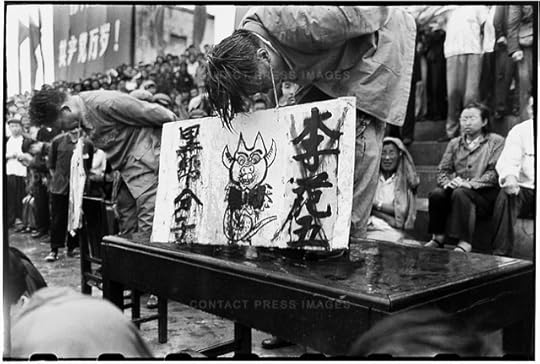
One persistent theme in China is how opposing sides both use patriotism and, in the past, homage to Mao, to beat up and kill each other. The Red Guards of the Cultural Revolution split into factions that fought and killed each other, each claiming the other side was reactionary or ‘western’ and not revolutionary enough. It was the “Million Bold Warriors” vs. “The East is Red.” The carnage was incredible.

I was aware of the violence and that millions of professional people were sent to do manual labor on farms and get ‘re-educated,’ as the main character was when his faction lost out. I was aware that people were beaten up, but I did not realize that there were massacres where hundreds of thousands of people were killed in the violence. And this doesn’t count the perhaps 30 million who died as a result of the famine after the reorganization of land during the Great Leap Forward.

description

A modern example occurs in the story when Director Ma is charged with pacifying villagers who refuse to abandon their homes and land so that the city can expand after obliterating their village. Both sides claim to revere President Xi Jinping. The officials are there to promote China’s growth in his name, but the peasants hang a huge picture of the President and paint the buildings and walls with his slogans about preserving rural values. The destruction of these signs will be filmed when the bulldozers roll.

The main character goes to a herbal healer for a potion to help him forget but it seems to make things worse. It seems that the more Director Ma tries to forget the more he remembers, and these things start creeping into his speeches with predictable repercussions for him -- they aren’t supposed to be mentioned. Unlike Stalin, who was politically erased in Russia, in China you are still supposed to honor Mao, but you have to pretend he never did anything wrong. The whole story is overlaid with black humor, as while he gives his speeches and has these dark thoughts, he is receiving, reading and responding to sexy texts from his mistresses. The story has fantasy, lots of violence, and explicit sex.

Another major theme is corruption. The main character receives boxes of chocolates with wads of money and little gold bars inside. The demolition of the village is occurring only after all the appropriate palms have been greased. It’s who you know, not what you know, so Director Ma has several mistresses because affiliating with a high official is a quick way for a woman to get ahead.

description

Needless to say, the author (b. 1953) is exiled from China. He has lived in Hong Kong, Berlin and now London. He is a painter as well, and even his paintings were banned, and he was detained in China in 1983 during the ‘Anti-Spiritual Pollution Campaign.’ His books are banned and his name or his books can’t be mentioned. The book’s dedication is “To George Orwell, who foretold it all.” Is it correct to call a novel dystopian if most of the dystopia displayed actually exists?

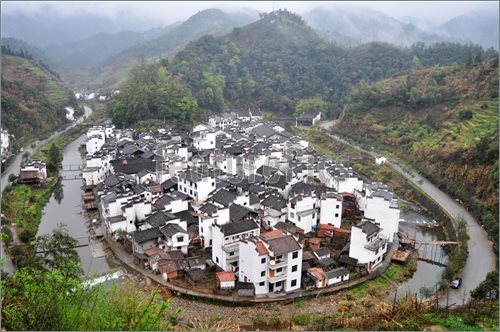
Photo of Chinese village from featurepics.com
Scene during the Cultural Revolution from The Cultural Revolution Through Photography at undsoc.org
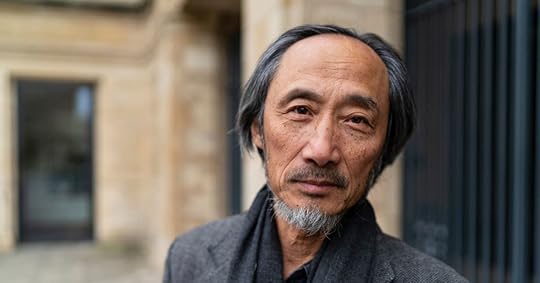
The author from api.time.com

Profile Image for Marko K..
181 reviews221 followers
April 4, 2021
Iako će mnogima biti vrlo konfuzna, ova knjiga počinje sa piščevim prologom koji će vam približiti kontekst ove novele. Ono što je takođe bitno je napomenuti da je ova knjiga zabranjena u Kini zbog teme, kao i to da je sam Ma Đijen nepoželjan tamo, i trenutno živi i radi u Londonu. ''Kineski san'' je satira na sadašnji politički sistem u Kini, i na tu univerzalnu ideju kineskog sna Si Đinpinga, koji bi trebalo da predstavlja neku vrstu odgovora na američki san, samo komunističkije. Glavni lik u ovom romanu je Ma Daode, predsednik fiktivne Kancelarije za san, koji za zadatak ima da sanogramima izbriše individualne želje građana (nepoželjne za vlast), kako bi svi imali baš kineski san kao univerzalan. Prateći korumpiranog Ma Deodea, ženskaroša, saznajemo dosta o trenutnom poličitkom sistemu u Kini, a mnoge delove možemo povezati i sa našim sistemom. Međutim, Ma Deodea opterećuju scene i sećanja iz prošlosti iz perioda Kulturne revolucije u Kini (1966-1976), revolucije koja je odnela nekoliko miliona nedužnih života koji su bilo kako iskazali nepoštovanje prema tadašnjoj vladajućoj partiji. Ma Daode oseća grižu savesti zbog učestvovanja u toj revoluciji o kojoj se zna tek od skoro zna u Kini jer je bila izbrisana iz istorije.

Ovu knjigu porede sa Orvelom i Hakslijem, i donekle imaju sličnosti. I ovo je satira nekog političkog sistema i skidam kapu Đijenu za hrabrost koja mu je bila potrebna da izda ovaj roman. ''Kineski san'' je dobar roman, iako bi trebalo da vas zanima ova tematika ako planirate da ga čitate. Ima mana, ali je skroz fino štivo ako volite političke satire, zabranjene knjige, ili prosto hoćete da saznate nešto o modernoj kineskoj istoriji i politici.
Profile Image for Tommi.
243 reviews150 followers
November 15, 2018
Like the author notes in the preface, China Dream is written in a rage, and understandably so, as Xi Jinping’s China, with its Chinese Dream, is beginning to resemble something potentially as dangerous as Mao’s Cultural Revolution in the 1960s and 70s. Unfortunately, for me, this rage does not quite turn into something “poetic” or “dream-like” like the blurb suggests. This is rather coarse in language and violent in content, with more than a few scenes of unrealistic action and dialogue. This might, however, indicate a problem in translation or me being unaware of some culture-related nuances (or simply me misreading the novel, not quite buying that implausibility equals “dream-like”). I appreciated the reading experience nonetheless, as it exposed me to Chinese history and reminded me of some bewildering things such as the Great Leap Forward. And I’m glad the novel exists – we need the voices of dissidents like Ma Jian.
Profile Image for Benjamin L. .
54 reviews15 followers
March 17, 2020
Not Recommended.

I must admit I often find it difficult to review foreign language political fiction. I find Satire as a genre is hindered by translation and cultural differences far more than most, and that can sometimes make it difficult to know if if I have a good grasp on the text or not. What things do i not understand because they are poorly presented, and what things do I not understand because it was written with a mind qualitatively different to my own? I also had this problem with the Strugatsky brothers' 'Hard to be a God' and Zamyatin's 'We'. Nonetheless, There comes a time to simply come clean, and say what I thought about the book.

In China Dream's case, it's nothing good. The book initially caught my attention with the blurb, proportioning to be focused on "plans for a microchip that will be implanted into the brain of every citizen to replace all painful recollections with a collective dream of national supremacy." As a Neuroscientist I am very interested in the ethical quandaries my field brings to the fore, and given China et. al are already using face-tracking AI based on bioinspired artificial neural networks, an exploration into the collusion of neuroscience and authoritarianism seems like a timely topic. Unfortunately, China Dream has little if anything to do with this. The main character is the party-appointed head of the bureau funding the science of the 'China Dream' microchip, but his story has absolutely nothing to do with the development, implementation, or outcomes of the technology. It's literally just his job description, and has nothing else to do with the book.

Rather, China Dream is more akin to a 'slice of life' following the corrupt exploits of the main character, as he goes about his day taking bribes, texting women, and seeing prostitutes. There was more sex in this book than red flags, and some of it was quite graphic, if tepid. In my understanding, the point was to provide a portrayal of a Communist Party Official counter to the one favoured by the Chinese Government; corrupt, libidinous, immoral, unsympathetic, and hypocritical. On the one hand, this is certainly a brazen act of defiance - and one that got the book and author banned from china -, but on the other hand the overall statement 'party officials are corrupt' is hardly the cutting or interesting satire. China Dream fails to take the satire a step further - there is no real narrative here, no real plot, and not even any real character development - It's a simple portrait and, although defiant, not a compelling one. The narrative hardly contains the depth to warrant the back-cover comparison to Orwell.

Throughout the main character's adventures in corruption, he suffers frequent flashbacks to his time as a soldier in the Red Guard. These flashbacks are titbits, and don't themselves contain a threading narrative that I could detect, but rather serve to contrast with the character's current way of life, or play on his current worries. These flashbacks are sometimes rich in historical detail, but it often becomes difficult to follow along because not much is given context. For example, much is made of the violent Rivalry between two Red Guard factions - the East is Red and the Million bold Warriors- that have organised around different interpretations of Mao's ideals, however what their interpretations are, what their differences in interpretation or demography are, or any details aside from the name are left out. I felt like I had to top reading and do extensive research in order to get a handle on what was going on; who the players were, what they wanted, and what their power base was, and I quickly found my self searching for answers in the academic history literature.

As the novel progresses, bouts of flashbacks become more frequent and interfere with his life more, ultimately fuelling his (entirely off-screen) passion for the China Dream project, which will replace all citizen's memories with a collective memory of national supremacy (whatever that is supposed to mean is not explored in the text). Eventually, the main character realises he doesn't want to lose some of his memories - and here it seems is the main convergence point of the book, but it's played like a cheap 'Got ya!' - this party official seeking to force all citizens to lose their memories, doesn't want to lose his memory. Again, it doesn't quite have the depth or cut I was after, especially given in the very next chapter there is an about-face, and it's back to business as usual.

In the preface, the author notes that he wrote China Dream in a rage on a whim, reacting to the latest excess of the Chinese government. That's as noble a reason to write a novel as i've heard, but I don't think it absolves the need for drafting or outlining. China Dream reads like a Landry List of actions and sexting, and the text can often be difficult to penetrate. I'm not confident I haven't been entirely unfair in my appraisal of the book due to having missed something important about the forest while trying to navigate the trees. I often found myself having to re-read sections to understand what was going on (And sometimes, simply giving up and moving on), and mostly, I was just bored.

And that really sums up my experience with China Dream. Mostly, I was just bored.
Profile Image for Anna.
2,118 reviews1,019 followers
March 10, 2019
This strange, hallucinatory novella deals with the terrible legacy of Mao’s Cultural Revolution, through the eyes of a repellent bureaucrat named Ma Daode. Despite his attempts to forget, he is haunted by events of the past that sabotage his current success. The novella is episodic in structure and certain chapters worked much better for me than others. I disliked the extended sequence in the brothel, which made a point about corruption but needn’t have been so lengthy and repulsive. Towards the end, though, the barriers between past and present seemed to collapse and events build to an almost apocalyptic battle between the living and the dead. In this fashion, Ma Jian conveys the horrific violence of the Cultural Revolution, an extraordinary civil war in which family members turned on one another while all claiming to be fighting for the same thing. The Cultural Revolution, as I understand it, was an artificially manufactured conflict, intended to disrupt inter-generational solidarity, end respect for tradition, and undermine any possible opposition to the communist regime. It did so at the cost of millions of lives.

Once Ma Daode’s attempts to distract himself from intrusive memories fail, incendiary scenes like this ensue:

Director Ma raises his microphone again to say, “Let us thank the relevant leaders for allowing these parents to realise their China Dream, and thank our foreign sponsors for their generous support. Fifty years ago this place was a mass grave filled with nameless bodies, but today it is a Garden Square on which we celebrate golden anniversaries! The China Dream eradicates all dreams of the past and replaces them with brand-new dreams! As I look out at your smiling faces, I can’t help but think of my own mother and father who lie buried in the ground beneath us. Sadly, the relentless struggle sessions they were subjected to proved too much for them to bear, so they are not able to join us today.” As more tears fill his eyes, he tries to snap back to his senses. “Of course, the past must be buried before the future can be forged. Only then can our dreams come true. Only then can young people experience the beauty of love...”
“Our daughter was murdered in the violent struggles of the Cultural Revolution,” the old man says, his voice ringing out like a bell.


The theme of reckoning with a brutal totalitarian past, while coping with a repressive authoritarian present day, reminded me of Svetlana Alexievich's Second-Hand Time. The chasm between the generation who committed atrocities during the Cultural Revolution and those who are too young to know what it was echoes the Russian experience. ‘China Dream’ certainly isn’t a systematic effort to collect a range of testimonies, rather it focuses on one fictional figure who represents a whole generation. The result is vivid, frightening, sometimes funny, and always visceral. Definitely not an easy read, but a striking one. Although I preferred Yan Lianke’s The Four Books, I think the two complement each other. Lianke considers the horrors of the Great Leap Forward, Jian those of the Cultural Revolution. Both authors are enthusiastically suppressed by the Chinese government.
Profile Image for Hadrian.
438 reviews242 followers
August 1, 2020
"Men and ghosts are intricately entwined."

A short and vicious satire about the party-state in contemporary China.

Ma Jian writes about a corrupt, venal, office-sitter named Ma Daode. 'Daode' here, 道德, means 'ethical'. When he's not defrauding his constituents, bulldozing their houses, or kissing his boss's ass, he finds time for his many mistresses. He also gets sloshed at the Red Guard Nightclub, so named because the servers are all in skimpy green uniforms.

Ma Daode has a darker side; he is haunted by fugue-like visions about the convulsive violence of the Cultural Revolution, Mao's power play to wrest political control of the country starting a decade after the Great Leap Foward. Grief and long-repressed memories burst forth, not just from the experience of traumatic violence, but also the trauma of having committed violence. Ma Daode ends up producing a memory-wiping tonic, called "China Dream Soup", to rid himself of these terrible memories.

The slapstick violence and crude horseplay of the novel accent the author's own vicious satire - corrupt officials, wasteful misogyny, blatant use of the elderly as political props, and so on. It echoes an old dissident's cry for truth and freedom. However that comes about will have a long reckoning thereafter.

Profile Image for Antonia.
296 reviews90 followers
August 19, 2019
Китайският писател дисидент Ма Дзиен (ИК Жанет 45, "Изплези си езика", "Майсторът на фиде") вчера имаше рожден ден, а аз по случайност тъкмо приключих прочита на последния му роман "Китайска мечта".
Първо ще започна с корицата -- дело на китайския артист Ай Уейуей, за който едва ли има човек на Земята да не е чувал. За разпилените клони Ма Дзиен споделя, че в тях вижда "бруталността на едноличната власт, разцеплението на личността и копнежът на душата за свобода."
Още в предговора Ма Дзиен пише: "Тираните на Китай никога не са се ограничавали само да контроилират човешките животи: винаги са се опитвали да влязат в човешкия мозък, за да го премоделират отвътре. Китайската мечта е още една красива лъжа съчинена от държавата, която цели да изтрие мрачните спомени от съзнанието и да ги замени с щастливи мисли. Десетилетия на индоктриниране, пропаганда, насилие и неистини оставиха китайците толкова изтръпнали и объркани, че хората загубиха способността да различат факт от измислица. Те преглътнаха лъжата, че лидерите на партията са допринесли за икономическото чудо на страната, а не нископлатените работници. Бесният консумеризъм, окуражен през последните трийсет години, заедно с напомпания национализъм, лежи в сърцето на Китайската мечта и превръща китайците в пораснали деца, които са нахранени, облечени и забавлявани, но които нямат никакво право да помнят миналото и да задават въпроси.
Но работата на писателя е да проучи тъмнината и, преди всичко, да каже истината. "
Колкото ударен е предговора, толкова, а дори и повече, ударна е и прозата на Ма Дзиен в "Китайска мечта". Този човек пише с голяма ярост и е абсолютно безпощаден. Пулсиращо е презрението му към политическите схеми и манипулации на китайското управление. Главният герой Ма Даод (Ma Daode) е директор на програмата за китайската мечта, който безрезервно вярва в създаването на чип, който трябва да бъде имплантиран в човешкия мозък и моментално да изтрие спомените на хората, а след това да ги упои с утопичните обещания на партията. Звучи като фантастика, но не това е жанровата насока на романа. Директор Ма е от най-мазните подлизурковци, които едва докопали властта, вече широко злоупотребяват с нея. Ма Дзиен никак не се пести изграждайки образа му -- обвързва го с най-лошите пороци, усмива го, търкаля спомените му между минало и настояще, разкъсва съвестта му и накрая го побърква.
Харесва ми свирепостта, която е втъкана в повествованието на Ма Дзиен. Той пише така, сякаш светът утре ще сврърши -- дръзко, смело и безкомпромисно.
"Китайска мечта" е съвсем кратък роман, но от важните такива. Той е творческото отражение на една отчайваща действителност, която съвсем скоро, със смяна на поколенията, може да бъде упоена и забравена завинаги.
Дано успеем в близко бъдеще да го четем и на български.
Profile Image for Jammin Jenny.
1,534 reviews218 followers
September 30, 2019
I really liked this historical fiction novel that takes us behind the scenes of communist China and some of the atrocities the leaders of that country did to their citizens. I hope more people read this book and learn some of the things that went on. I had a hard time telling fact from fiction, but in the epilog the author makes more of that clear.
Profile Image for Ruth Parker.
766 reviews32 followers
May 5, 2020
The premise of this is amazing but the translation is pants. Really disappointing. I wish I could read the original as I think it would work so much better in Chinese. There was a lot that was roughly translated, translated without context... it just didn’t work.
1 review
June 6, 2019
This book, the English version, for me, as a native Chinese speaker, is quite disappointing.

The English translation is more or less literal and only literal, meaning that it does not transcend the context of two very different and often opposite cultures. The author, Ma, as I understood, wrote in Chinese and you can tell by reading the translation, where there are a lot of literal only translations of beautifying Chinese poems and idioms (though I am not able to guess all). Very often, this bad translation stands in the way of understanding what the author is trying to convey. It makes thing even harder since there is a not small amount of symbolism. Many things in the Chinese culture have no counterpart in the British culture and a good translator would seek equals in meaning in the wider western culture, e.g., Greek myths, Nordic tales, Roman gods, etc. The translator for this book has not done such and thus a bad translation entailed. I shall seek the Chinese publication later this year in Taiwan.

For the context of the book, I must first say that my understanding is quite hampered by the bad translation. But still, it is not what I expected. I was expecting a solemn Orwellian tale, like 1984 or Animal Farm, or a playful sarcasm, like the Brave New World. China Dream is none of those. It has no playfulness, though do have sarcasm, neither solemness. In the end, the whole thing transforms into absurdity, which is fine if it is played masterfully, but it is not the case here. The book, in fact, especially when compared with the classics, is quite dry and boring. I, of course, note the cautions in the book. But the effects would be better by reading 1984 again along with some memoirs from some old Red Guards.

Profile Image for MJ RU1Z.
322 reviews19 followers
October 14, 2025
Esta obra corta me ha parecido durísima —de hecho he tenido que esperar unos días para poder ordenar mis ideas sobre ella— y, lo más crudo, es que parece que la distopía que se relata aquí se esté haciendo realidad, o ya lo sea en cierto sentido.

Me han llamado la atención algunas reseñas que he leído y que parecen tomarse esta novela como pura ficción, cuando en realidad es mucho más real que lo que el discurso del gobierno chino quiere hacer creer al resto del mundo: una fábula idealista y completamente falsa. Parece mentira que nos hayamos olvidado tan pronto de cómo se comportaron durante la pandemia.

En cuanto a mi valoración personal, siento que todo me ha resultado en ella bastante difícil de leer y también de digerir. No sé qué es peor, si la parte violenta correspondiente a la Revolución Cultural —que atormenta a Ma Daode, el protagonista— o la época de excesos en un futuro cercano al nuestro en la que se encuentra.

De hecho, a mitad de la novela —y mira que es cortita— tuve que parar de leer y dejarla reposar unos días. Sin embargo, y aunque dicho protagonista es un ser vomitivo, he de reconocer que la novela llega un momento en que se vuelve tan loca —la parte del realismo mágico— que todo lo leído se suaviza de algún modo.

Y tampoco puedo dejar de lado el párrafo en el que se describen los excesos del protagonista en forma de relación sexual simultánea con varias mujeres —prostitutas al servicio de los funcionarios públicos corruptos como él— y Ma Jian lo hace de una manera tan poética —al más puro estilo tradicional chino usando palabras como ‘tallo de jade’, ‘peonia’, ’pétalos’ o ‘espesura’— que casi me hizo olvidar la deplorable situación que se estaba narrando.

En resumen, creo que esta obra pretende revolver conciencias y abrir mentes incrédulas para darnos de bruces con la realidad que sucede ante nuestras narices en el ‘Imperio Medio’, el ‘Dragón Rojo’ o el ‘Gigante Durmiente’, como se suele apodar a China por distintas razones. Y creo que Ma Jian lo ha conseguido, siempre y cuando el lector lea correctamente sus palabras.

PD: La portada ha sido diseñada por Ai Wei Wei, el artista disidente que como Ma Jian ha sido expulsado y censurado por el gobierno chino. O sea, este es un libro subversivo que es arte por dentro y por fuera.

Esta novela participa en el reto La vuelta al mundo en 12 libros en el mes de agosto.
Profile Image for Kamila Kunda.
430 reviews358 followers
January 18, 2024
Every year I talk to Chinese students, who upon coming to Europe discover dark sides of Chinese 20th century history. Just today I talked to one who expressed unease and distress learning about the frenzy of the Cultural Revolution and the brutality of the Tiananmen Square massacre. Together we discuss ways to come to terms with reality.

In the centre of slim novel “China Dream” by Ma Jian there is Director Ma, haunted by nightmarish flashbacks from his time as a Red Guard, his denunciation of his parents who died of suicide and the death of his first teenage love that he witnessed. Fast forward, he is the director of the project called China Dream, which “eradicates all dreams of the past and replaces them with brand-new dreams”. Good memories must perish too but that’s a small price to pay for peace of mind for millions of Chinese, willing, like Ma, to undergo collective amnesia thanks to a microchip implanted into their brains.

Ma is a sleazy, corrupt official, who devoted one room in his apartment to storing gifts and money he receives for favours. Married but having affairs with ‘only’ 12 mistresses, with a daughter studying in the UK, he’s the epitome of a modern version of a Red Guard, bullying others into submission. Obsessed with getting rid of his visions, he goes to a traditional healer to obtain the recipe for the Old Lady’s Dream concoction, powerful enough to “wipe out the entire Cultural Revolution” from Ma’s memory. He is a grotesque figure but much of Chinese political scene is grotesque, compulsively inventing ways to erase the past and discourage people who digging deep.

On the educational level, I learned nothing new from the novel. I wasn’t emotionally invested, having already read about ghosts of the past from various angles in other books. “China Dream” is, though, brilliantly written and confirms Ma’s greatness as a writer and his wife Flora Drew as a translator. The cover of the book was designed by Ai Weiwei, and in the afterword Ma Jian explained: “In the shattered branches, I see the brutality of autocracy, the splintering of the self and the human soul yearning for freedom. In encapsulates everything I wanted China Dream to say”.
Profile Image for Calzean.
2,770 reviews1 follower
June 16, 2020
This certainly is not subtle in criticising the moral failings of the Chinese leadership.
The main character's mental state slowly disintegrates as he grapples with his memories of the Great Leap Forward and the Cultural Revolution with his role as a senior government official creating a ‘new dream of China’s rejuvenation’, balancing the idolisation of Mao with Xi Jinping and his sexual appetite.
There's plenty of black humour, examples of corruption, nepotism, cronyism and removal of any dark stains of recent Chinese history. No wonder the author is banned in China.
Profile Image for Emily.
66 reviews82 followers
November 10, 2021
Emily and her books
Se vuoi tenerti aggiornato sulle mie letture e recensioni...
Instagram
Youtube
Altri link utili

ATTENZIONE: la recensione presenta SPOILER!

« A te non importa di cancellare i sogni e i ricordi delle altre persone. (...) Ma quando si tratta di eliminare i tuoi, esiti! »

Pubblicato in lingua inglese nel 2018, Il Sogno Cinese è l'ultimo libro del controverso e censurato scrittore cinese Ma Jian.

Ma Daode, uomo corrotto e fedifrago, nonché direttore dell'Agenzia del Sogno Cinese nella città-prefettura di Ziyang, è incaricato di promuovere il grande “Sogno cinese di ringiovanimento nazionale” promesso dal presidente Xi Jinping. Tale "sogno" condurrebbe il Paese a un benessere economico ancora maggiore e restituirebbe la Cina alla sua gloria passata.

Non solo vengono organizzati numerosi progetti come il "Sogno delle nozze d’oro" dove si festeggiano in massa gli anniversari di matrimonio di coppie ottuagenarie oppure concorsi di poesia sul Sogno Cinese, ma è in programma anche la creazione di un minuscolo microchip da inserire nella testa, chiamato Dispositivo del Sogno cinese, il quale sostituirà tutti i sogni individuali con il Sogno cinese collettivo. Qualsiasi sogno del passato che ancora indugia nella mente svanirà come per incanto...

Ma il passato di Ma Daode inizia a tormentarlo, con allucinazioni e deliri ad occhi aperti che si aggravano giorno per giorno. I ricordi del periodo in campagna come giovane istruito (i cosìdetti zhiqing 知青) e le violenze perpetrate come Guardia rossa durante la Rivoluzione Culturale si sovrappongono alla vita di tutti i giorni. L'uomo non riesce più a distinguere realtà da fantasia. La paura di perdere la sua posizione e i suoi privilegi aumenta sempre di più e ciò lo porterà sull'orlo della follia.

Un libro dalle premesse intriganti, il cui obiettivo è quello di raccontare in modo alternativo la realtà che già viviamo. Con un ritmo forsennato e dinamico, veniamo risucchiati nella spirale di follia del protagonista e, assieme a lui, non riusciremo più a distinguere la realtà dal sogno.

Commento personale

Il racconto, a prima vista piuttosto snello essendo di sole 132 pagine non contando la prefazione, nota finale e ringraziamenti, parte con un primo capitolo corposo e colmo di spunti interessanti.

Si parla dell'agenzia del Sogno cinese e si cita la creazione di questo impianto neuronale, un microchip da inserire nella testa e che eliminerebbe i ricordi del passato. Dalla sinossi del libro, ho supposto che tale linea narrativa (il microchip, l'impianto nelle persone e le conseguenze di tale azione) sarebbe stata il punto centrale della storia, ma proseguendo con la lettura ho capito che era solo un dettaglio secondario nella narrazione. Non verrà approfondito il funzionamento del chip né impiantato su qualche persona, è solo un progetto di Ma Daode addirittura considerato da alcuni suoi colleghi assurdo e irrealizzabile.

L'autore Ma Jian scrive nella prefazione al libro: "Nello sforzo di esprimere una verità letteraria più alta, nei miei romanzi tendo sempre a fondere realtà e finzione.". Tutto ciò lo vediamo fin da subito dalle allucinazioni che infestano i giorni, le notti e i sogni del protagonista Ma Daode. Questi ricordi-deliri ci vengono segnalati nella lettura da un cambio di font (da stampatello a corsivo), ma si fanno sempre più frequenti e serrati fino ad arrivare al culmine nell'ultimo capitolo dove realtà e finzione si uniscono e il lettore, assieme a Ma Daode, non riesce più a distinguere cosa sia reale e cosa sia finto.

In certi punti, soprattutto nel finale, ho trovato confusionario il continuo susseguirsi di realtà e allucinazioni. Mi sono ritrovata a dover rileggere più e più volte certi passaggi, notando però che alcune parti non sono riuscita a comprenderle al 100%, nonostante la rilettura.

Come altre opere di scrittori/scrittrici cinesi, il contesto storico è estremamente importante. Anche ne Il sogno cinese vengono citati numerosi eventi che potrebbero richiedere un approfondimento per chi non li conoscesse. L'autore introducendo gli eventi storici nel racconto, dedica sempre qualche riga per spiegarli, ma una ricerca approfondita può dare al lettore una visione più ampia delle vicende storiche citate e del peso che hanno avuto nella storia cinese.

In generale, non è stata una lettura sgradevole, ma non è risultata propriamente nelle mie corde.
Profile Image for Akemi G..
Author 9 books149 followers
May 28, 2019
I picked up this book without knowing about the author or the content, just assuming it's a satirical novella--and maybe a kind of alt history SFF?

It's more ghost-story fantasy than science fiction, which is my only complaint. When I read a passage like this in the first chapter:
Once the Internet Monitoring Unit merges with our China Dream Bureau, the supervision of dreams will become integral to our daily work. We will record, classify, and control the dreams of every individual, and begin work on a neural implant, called the China Dream Device, which will replace everyone's private dreams with the collective China Dream.

my heart throbbed with expectation, but However, because we do something similar even without the device . . . isn't that what we do when we browse the social media, by sharing personal information, passing inspirational memes, and getting ideas . . . maybe this is the right development.

The story grows more about burying the past by a sort of drug--because painful memories are a burden for the future, they insist. And I wonder--how many veterans have done this?

The book is about Continental China's Cultural Revolution (and here is my warning: plenty of gruesome violent scenes) and its current nationalism, but maybe we want to read it to see ourselves reflected there.

Very insightful. If you enjoyed Submission by Michel Houellebecq, check this out, too.
Profile Image for Kamakana.
Author 2 books416 followers
September 3, 2019
030919: corruption, fanaticism, war, forgetting. i liked this book more as it came to surreal conclusion. i do not know details of exactly how repressive china is now, how history is deliberately buried, how it will erupt despite, or how much is played to materialism, corruption, but what i do read is horrific. this is not vision of society i would like to see dominate. this book, satire, black comedy- is great short, sharp, shock...
Profile Image for MissFede.
460 reviews26 followers
January 24, 2020
2.5 stars.

I would have liked the story and characters to be more developed and the scifi elements more prominent. As it is I found it a bit bland and forgettable.
Profile Image for Anel Mušanović.
330 reviews286 followers
November 27, 2021
Naravno da su uvijek te male knjige koje te natjeraju da ti mozak radi sto na sat. Kineski san je djelo pisca Ma Đijen koje predstavlja satiru političkog sistema Kine i ideje kineskog sna koja treba da predstavlja neki vid utopijskog sistema gdje bi svi imali jednako mišljenje.

Moram priznati da je knjiga bila teška za čitanje. Krenuo sam sa čitanjem, a onda sam nakon nekoliko stranica stao i otišao da istražujem o politici u Kini. Iako autor na samom početku piše predgovor koji treba da vam malo bolje objasni na šta to tačno ova knjiga udara, meni je i dalje na momente bila blago zbunjujuća. Međutim, pozitivna stvar je ta što autor kroz fusnote objašnjava sve ono što je vezano za Kinu, a što inače nije baš poznato nekom ko nije izučavao tu kulturu.

Glavni lik je strašno privlačan u tom književnom smislu, zato što je baš neka dobra mješavina onog hladnog u čovjeku i njegove želje za dobrotom. Ono što mi se nije dopalo jeste taj uljepšani stil pisanja. Ostavljam vam rečenicu ovdje kako bi mogli vidjeti na šta tačno mislim.

"Njegova žadna stabljika sada poskakuje među butinama Osmice, ali kada čuje kako Desetka stenje, on se oslobađa stiska, zabada ud pravo u njen božur i prstima širi latice."

Ovo je nešto kao scena seksa, ali ste na LSD-u. Sav ton ove knjige je ovakav i nije nešto što mi se pretjerano dopalo.
Zanimljivo je to da je knjiga zabranjena u Kini zbog svojih tema, a Ma Đijen piše iz Londona gdje se trenutno nalazi. Kineski san je zanimljivo djelo koje je potrebno uzeti u ruke sa velikom pažnjom i zanimanjem. Tema je delikatna, a dosta često se ista može vidjeti u kontekstu naše vlastite političke vlasti koja u svojoj težnji za nekom harmonijom puca na više različitih dijelova.

Uzmite u ruke ukoliko volite kritiku politike, kinesku kulturu, ili možda sao čudnovato pisanje.
Profile Image for Rita Costa (Lusitania Geek) .
545 reviews59 followers
November 21, 2023
A história segue Ma Daode, um alto funcionário do governo chinês encarregado de criar o “Sonho Chinês”, uma visão de rejuvenescimento nacional. No entanto, à medida que a narrativa se desenrola, torna-se claro que as ambições pessoais e políticas de Ma Daode estão interligadas com uma realidade mais sombria, expondo as contradições e os compromissos morais dentro do sistema.

Uma obra corajosa que desafia a narrativa oficial e leva os leitores a refletir sobre as consequências do autoritarismo. É uma leitura atraente para os interessados ​​na literatura chinesa contemporânea e no cenário sócio-político do país.

Li com a intenção de descobrir mais sobre a China em termos sócio-político através do passado até ao presente, mas acaba por ser uma obra satírica sobre desafios e problemas políticos da China, com um cenário distópico.

Durante a leitura, foi-se revelando que essa mentalidade de “americam dream”, versão chinesa, é na verdade uma ilusão, onde a propaganda e uma teia de mentiras foram ferramentas fundamentais para manter esse “sonho” perante a sociedade chinesa. No entanto achei alguns acontecimentos um pouco irrealistas ou descabidos.

⭐️⭐️⭐️
Profile Image for Girish.
1,157 reviews263 followers
December 31, 2022
For those who are finding it tough to understand China's idealogical bulldozing, this book offers a satirical take on the how. I had read the Girl in Red scarf earlier this year that talked about China's Cultural Revolution - a phase that turned the children against their parents and rewrote history and value system.

The book takes the POV of Direct Ma Daode incharge of implementing the China Dream through a chip that will rewrite all individual dreams. Once he implants himself with the chip, he is able to remember the events from his cultural revolution days - the suicide of his parents, the exile - all the while he is promoting the China Dream displacing villages for industrialist and taking bribe.

His many mistresses, the concubines, the speeches that are interspersed first with memories and then words - Ma Daode slowly starts losing his sanity. Worse he gets noticed.

The book as a satire got him exhiled. Maybe with reason. In the cultures that understand only individuality and aspirations - this is a stretch.

Quick but complex read that requires knowing some history.


Profile Image for Hiroto.
270 reviews66 followers
January 16, 2019
Dnf @p100.
L'auteur, à défaut de construire une intrigue ou que sais-je, une atmosphère !, passe son temps à nous conter la libido insatiable de son perso principal dont je n'ai, je l'avoue absolument rien à fiche.
Profile Image for Ariya.
590 reviews72 followers
November 4, 2020
Is the book politically important? - definitely. The beautiful intense prose squeezes out the bleak era of the sinister Chinese regime in not-too-distant future. The content echoes with Orwell's 1984, relating to the psychology of the main character under the seemingly mind control autocratic system.

The integral part of this novel exhibits the totalitarianism manifested itself as 'China Dream device', a tool ingrained in one individual's brain, locking all personal thoughts into one pipping drainage: to be grateful for the nation, meanwhile, the individual emotions and familial love are displaced, blocked down and restrained.

The main character, Ma Daode, was a high-ranking official in the regime, and similar to 1984's Winston; he was suffering from entangled memories: the past of his childhood as his family was killed during the Cultural Revolution in Maoism movement, and the present when he, ironically, executes those who are opposed to the ideas of freedom and anti-China dream domineering ideology.

Ma Daode represents the every man character under the oppressive regime. He was a traditional, macho, selfish, unfaithful husband with 'toxic masculinity' by book. As performing the superficial role to serve the system, his mind started to deranged by the memories in childhood which were suppressed by lies and corrupted underneath the 'progression' towards the brightest future of Xi Jinping's nefarious propaganda. Ma Daode's transformation since the beginning to the end when he was being succumbed to the insanity is horrifying. His mind is submitted to the nation's goal, while his soul is screaming out of pain in the past.

Unlike Orwell alluding to Russian communism in 1984, the author, Ma Jian, does not compromise. He states as clear as crystal that the story is set in China, with Chinese government and the real historical events play the critical part as the haunting trauma. In a way, the story extrapolates the autocratic system in China as predicted to exist in the future and sheds the black-and-white view points in order to display its standpoint. By all means, it is somehow understandable considering the author has been exiled from China due to his political ethos towards Xi Jinping's regime.

I want resume my question again: is this book politically important? Yes. But is it enjoyable read? Far from it. It’s depressing and very misogynistic. I feel disturbed and detached from the characters as they were so self-absorbed and masochistic. It sets a milestone for writing about China’s regime in literary yet it is so non-audience friendly that arguably the book would reach the worldwide readership as any other dystopian novels.
Profile Image for Benyakir Horowitz.
Author 7 books46 followers
November 25, 2019
When, I first read this book, I had a hard figuring out what genre this book exactly is. Is it dystopian? Only if you count modern China as it. Is it Sci-Fi? There’s very little Sci-Fi to it. In fact, it’s relegated to a few sentences in a couple of chapters. Is it satire? Well, yes, but satire isn’t really a genre (though it’s usually literary or comedic). I forget the word, but it's literary with a few supernatural elements (like Toni Morris or Paul Coelho).

It’s hard to describe what I liked about the book is that I liked everything about it. The first chapter feels like Sci-Fi, and it reminded me of the best parts of Sci-Fi, especially the stuff I like from the 60s to 70s. What may be disappointing to some is how little Sci-Fi there is in it. But that’s kinda the point. A few other things (like the daughter of the protagonist) get a somewhat superficial treatment, but, again, that may be the point.

As I’ve talked about in my other reviews, there’s this push to be a decision to make up a plot. This plot has no decision, but I don’t think that negatively impacts the character development. From the books on screen writing I’ve read, they’d call this a non-plot. But that’s not what’s going on. It’s a story, and it’s one I’m happy I read.

I felt like this review should be a bit longer. The story is about the destruction of a man’s psyche as he finds it harder by the day to separate the brutality and tragedies of his youth from he modern attitude of China to both literally and metaphorically pave over and ignore their history in the 20th century.
Profile Image for Plamen Nenchev.
206 reviews42 followers
June 20, 2021
The novel borrows its name from Chinese president Xi Jingping's propaganda China Dream slogan, which is considered to be the embodiment of Chinese communist political ideology. The name takes a slightly sinister turn in the book though: This is the name of a programme meant to implant a chip in the head of every Chinese, a chip that will indoctrinate them with the official China "Dream" of the communist government, which will replace the individual dreams and desires of ordinary Chinese.

In the light of Jingping's mass digital surveillance policies and the awful Social Credit scheme, I understand that this is an important novel that draws attention to an enormous human rights problem, yet... this still does not make China Dream a good book. It is supposed to be satire, but it is neither funny, nor absurdist, not even crude. It lacks the cold-blooded smarts of Orwell, the surreal atmposherics of Vonnegut or the boisterous rowdiness of Marc-Uwe Kling.

There is no one to root for, no one to be affraid for, there is not even one remotely likeable character. Everyone is a sleazy bureaucratic sell-out without values or redeeming qualities. The book does not scare you, does not make you laugh, and does not make you feel anything other than a dull feeling of revulsion.

Read this book. It is only around 150 pages, it is a quick read, and it is important. But don't expect much. No, this is most certainly not the next Vonnegut as the blurb is trying to convince us.
Profile Image for Librería 9 3/4.
42 reviews45 followers
June 2, 2022
 Este libro parte de una premisa interesantísima. En una República Popular China que ha conseguido evolucionar tecnológicamente tanto como para poder registrar y controlar los sueños de sus ciudadanos, los líderes populares quieren insertar un implante cerebral que reemplace sueños individuales por sueños colectivos de supremacía política. Y hasta ahí, todo pinta bien.  

Lo cierto es que ha sido una lectura que se me ha atragantado, debido a que, aún partiendo de una premisa super interesante, el camino hasta el final queda diluido por una cantidad de contras que, en mi caso, superan la parte buena e interesante.

Entiendo la posible crítica social que el autor quiere hacer, pero sinceramente hay momentos en los que la lectura se torna confusa, ya que mezcla sueños y situaciones que no sabes ni quién las lleva a cabo, ni cuándo ocurren, ni siquiera por qué te lo están contando en ese momento.

No obstante, como decía, la premisa es buena y si solo hubiese sido por esos detalles confusos que he comentado anteriormente, habrían quedado diluidos y no habría resultado ser una lectura tan insatisfactoria. La verdad es que lo que más me incomodó fue la gran carga machista y misógina que tiene. Uf, de verdad, creo que hay escenas que me sacaron completamente del libro y que sobraron totalmente. 

En definitiva, es un libro que me decepcionó mucho y que sinceramente, yo no recomendaría. 
Profile Image for Merobeca.
58 reviews24 followers
April 6, 2022
La premisa me pareció perfecta. Un alto cargo funcionado del actual estado chino dirigiendo el desarrollo de un chip para controlarlos a todos (más bien sus sueños) y así eliminar el individualismo a favor de que el sueño chino prospere y colonice el planeta.

Bien, que Ma Daode sea un asqueroso se pasa. Mayores asquerosos he leído en la vida que me han gustado y orgías más explícitas han pasado por mis ojos (a través de letras, no pensemos mal) sin escandalizarme.
Para mí, el mayor problema ha sido sobretodo que el libro está escrito desde el odio y rencor hacia el régimen. Además de que para, ser una sátira con chispas cómicas, ni me ha hecho gracia ni me ha atrapado. De hecho, la narración es bastante caótica y va a saltos, haciendo que muchas veces parezca un sinsentido.

Como puntos positivos que refleja bien un sistema (distópico y mezclado con ciencia ficción que desde luego no es real) un sistema totalitario y manipulador donde reina la hipocresía.

Como puntos negativos, todo lo demás.

No me ha gustado lo más mínimo y he sudado para terminarlo. Ni leeré nada más del autor ni lo recomendaría a nadie, por muy mal que me caiga.
Profile Image for Rebecca H..
277 reviews107 followers
Read
May 13, 2019
This is a short novel with a lot to say about both contemporary China and Chinese history. The main character, Ma Daode, is the director of the China Dream Bureau, and his plan is to create a chip that will replace people’s private dreams with propaganda created by the government. We quickly learn that one of the reasons Ma Daode is so passionate about this project is that he desperately wants freedom from his horrible memories of the Cultural Revolution, where he witnessed terrible violence. As these nightmares haunt him in flashbacks he can’t control, his carefully-structured life begins to disintegrate around him. This is a darkly funny, satiric novel about the dangers of attempting to ignore history. Ma Jian’s work has been banned in China, making him an essential author to follow.

https://bookriot.com/2019/05/10/may-2...
Profile Image for James Rozier .
19 reviews2 followers
March 14, 2023
A Chinese government official turns out to be a paranoid schizophrenic and kills himself
Profile Image for Marl M.
17 reviews1 follower
May 14, 2021
Picked up this book from a “AAPI authors you should check out” stand at my local bookstore. I picked this one in particular because I do enjoy dystopian fiction and sci-fi. Unfortunately, the extent to which this is categorically sci-fi depends on whether you consider an occasional, otherwise neglected mention of a microchip as enough to characterize the book on. This felt more like a crude, in your face exposition to the misogyny and self-flagellation (without any real conviction or recompense) of Ma Daode. I recognize that the reader is not meant to revere Ma Daode’s character, but the disgust I felt as I read prevented me from enjoying or appreciating the author’s intentions. Satire or not, reading from the perspective of a character like Ma was too disturbing for my liking.
Displaying 1 - 30 of 273 reviews

Can't find what you're looking for?

Get help and learn more about the design.