Natalie Kusz was attacked by an Alaskan sled dog that tore away half of her face. She wasn't expected to live, but she survived, though she lost an eye and faced grueling years of surgery, recovery, and reconstruction. Natalie tells her story in such a way that no reader can fail to find it heartrending and unforgettable.
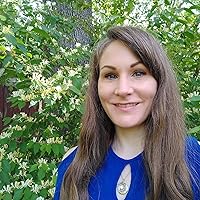
Natalie Kusz (born 1962) is an American memoirist.
She graduated from University of Alaska Fairbanks with a B.A. and an M.F.A. She taught at Bethel College, and Harvard University. She teaches at Eastern Washington University. Her work appeared in O, Harper's, Threepenny Review, McCall's, Real Simple, and The New York Times.
Natalie Kusz has written a fine, strong, unusual memoir about her loving, eccentric family, their life in Alaska, and the accident that maimed her face. One of the things that sets Road Song apart is that the latter, a truly horrific event early in the story, is just one of the book's compelling threads, an important one but not its focus.
The title tells you that, in large part, this is a book about a joyous family. What Kusz focuses on is always different and unexpected—there are so many surprises in this book. For instance, the nature of her adolescent rebellion and her family's response.
Her muscular prose, reflective bent, and her interest in other people and in deeper meanings lend the memoir a feeling of profundity. Yet it is lighthearted for a tale of so much struggle, truly loving and life-affirming.
I'd say this lady had some rather extraordinary parents, although her mother was a bit too self-sacrificing. And I'd also say that Natalie Kusz is one hell of a good writer. If you ever get the crazy notion that you're going to head to Alaska, buy some land, build your own house, and live the sweet life, first give yourself a reality dose by reading this book.
I bought this thinking it was a travel book, maybe it was in the beginning, but then it changed into a tale of strength and resilience that just blew me away. Wow, what an incredible story Natalie tells. If you find a copy, buy it.
Beautifully written memoir about a family who endured a lot of extraordinary life events including a very adventurous decision to leave suburbia and live off the land in Alaska. As a child and newly arrived Alaskan, the memoirist suffered a most horrific dog attack that left her clinging to life as a young child and struggling with deformity and ongoing medical issues after that. Never once did I feel that the author was being cathartic or seeking pity. This story hit my emotions several times but the overall tone was never depressing, and this, I think, is partly due to the authors expert ability to weave elements together; sadness, difficulty and triumph being presented rhythmically. Throughout the entire story, the cohesive theme is how the family members loved and supported each other, not how they suffered. I found the prose beautiful. One particular scene that stands out to me is one that drew me right into the scene, almost hearing and feeling what was being written. It occurs when the memoirist finally reveals a significant event to her mother, fearing reproach. "At noon that day, my mother came to school, and in the wind under the flagpole she said, "It's true isn't it?" I had spent the morning in a fever, grabbing after all possible means to hide this truth, all possible ways out, and had ended up here, holding nothing in my hands. I said "Yes," expecting a great and violent cataclysm of the earth, but the wind continued blowing against my back, and the flag went on snapping open and shut again, darting above us like a fish." (P 143) Essential to any memoir, is the memoirists presentation of events as well as how those events shaped the people in the story. This story beautifully ties both together, comparing the physical environment of Alaska to life events. After one significant event of loss, the author presents a beautiful metaphor of the renewal period of the tundra, from forest fire to re-growth. After a significant loss she writes:, "So it was again, a time of new ashes, a smoldering and watchful time like those early years after my accident. (Loss event - not described here so as not to spoil!) had come as a searing great fire, and as a family we had fought it as such, pulling on boots and wide hats and gathering up hatchets, chopping at flames and carrying in water, until in the end we had stood there as survivors on the bare, smoking surface of the world." (P 185) I loved this book for the incredible story it told and the absolutely beautiful manner in which it as told. It was never sappy and never pitiful. Despite all events that could easily have wandered into tear-jerker territory, somehow the author tells her story with familial love and endurance as the overall theme. Highly recommend.
Some of Kusz’s descriptions are just so beautiful that I had to pause to really think about them. I really enjoyed this memoir. My only critique is that towards the end, I couldn’t always tell which time frame she was referring to in her life. I was listening to the audiobook but I was pretty engaged. I decided to let it go and just listen. Amazing story of resilience and love.
A friend who taught literature gifted me with a list of her favorite biographies and autobiographies. Road Song was one she highlighted because it showed how the human spirit can overcome dire circumstances. Since I have always been drawn to this subject, I chose it. This autobiography does not disappoint in dire circumstances. The author, Natalie Kusz, had great inner strength to survive and eventually thrive. But what made this book special to me was her honesty about adopting self-harm behaviors as she struggled to return to a more or less normal life, and her deep connections to a family that supported her. Her father was a Polish survivor of WWII who told his family about the years of fear and deprivation he faced, as well as the moral courage his Polish family showed in the face of Nazi occupation. Her mother had grown up with a mentally unstable mother and lived in fear of inheriting mental illness. Their anti-institutional attitudes fit well with the 1960's, so they chose to leave a world which seemed too materialistic and head for Alaska. The harsh and isolating climate brought the family closer together and demanded they work together to make a life for themselves. Although they did not always make good choices, they supported one another and survived. Natalie repeats the family stories, songs, and traditions that sustained them. She tells of words or phrases that became family jokes and helped them when times were rough. She describes deep life-long friendships that were made in Alaska and gatherings that brightened the dark days of winter. She also tells how her family sacrificed to pay for numerous surgeries to repair the damage from her accident and support her when she went to college. She describes how her family, as a unit, handled tragedy, and how this often conflicted with more socially acceptable ways. The Kusz family was the bedrock that enabled Natalie and her sisters and brothers to thrive. This is not a happy book, but it is a meaningful one.
This evening I talked on the phone to my little brother (little? he's 57). We had one of those nice chats about all sorts of subjects, about shared memories and about our life's current little details.
He was telling me about a TV program he's enjoying, called Alone, I believe. I haven't seen it but it reminded me that in my teens I dreamed of moving to Alaska to homestead. Our maternal grandmother had a subscription to National Geographic and during one visit, while the grown ups were catching up in the kitchen I'm sure, I sat on her couch and picked up the January 1973 issue and happened upon an article, "Alaskan Family Robinson." It mesmerized my 15 year old Wannabe Earth Mother self. I can still see the photos, emblazoned on my heart: the man building their log cabin, the woman nursing one son while homeschooling the other, the family bundled, trekking in snow shoes with all their cold cheeks cherry red. There were pictures of homemade bread baking, picking wild berries, heating water on an old big wood burning stove for a Saturday bath. I wanted all of that. Or at least I thought I did.
Truth is, I don't like the cold much. Winters spent in New Mexico, and later, in Texas, are the limit of my cold tolerance levels. Even winters living in Oklahoma and Kansas seem bitterly cold to me now. I would not have enjoyed Alaska, I think.
Still, over the years I've continued to be attracted to reading about living in Alaska. And tonight I remembered this memoir! And I recall it was so good, even though she is tragically mauled by a dog. Her writing was superb. So remembering it was a delight and then another delight when I saw to my shock I had not added it to books I've read. I've tried to add books as they come to mind and it's been a good little while since I've added a pre-GoodReads Era one.
I went to Kusz's GR author page. I'm so glad she kept going, kept writing. Taught at Harvard even. Yay you Natalie!
I picked this up as part of my Alaska binge but found that it's not really about Alaska. I'm glad I read it, and wouldn't have without the Alaska connection suggested via Amazon. This family (mom, dad, and four children) moved to Alaska from California in the late 60s, and this is the oldest child's story. It's really Natalie's memoir, written as a young adult, as she recounts their move to Alaska when she was six. Natalie was attacked by a sled dog in their early days in Alaska and spent years undergoing surgery after surgery for repair to her face. Her writing brings the reader into her family, acquainting you with their joys, sorrows and difficulties with frank views of death and grief.
Some quotes: "Ours was a storytelling family even in pleasing times, and in those days my parents looked on words as our sustenance, rich in their flavor and wholesome for the soul."
"As a family, we made a deal that, should any of us die, the others would feel glad for us, have a simple funeral at little cost, wear something other than black."
"Pay attention to what remains, and we won't use up energy wishing backward."
I loved this memoir, and agree with Lynne Sharon Schwartz when she wrote: "Her story of an arduous childhood in a family rare in its bravery and integrity deserves a prominent place in the literature of memory." As a memoir writer I am fascinated by how Natalie Kusz structured her story, with memories and flashbacks woven all through the narrative so that by the end the complete story had been told without the reader realizing it. It's one of those books where I read the last page very, very slowly this morning, knowing that after the last word on the last page I would have to put the book up on the shelf with the other "finished" summer readings. Sigh.
I knew nothing about this book before starting (which is how I like it!) and was sucked into it pretty quickly. It was so intimate! I grew to love this flawed family, and what family isn't?
I probably read this when It first came out in 1990, though I do not recall the year. I would have guessed an earlier year. Kusz is ten years younger than me, and I did not recall the self-harm though that impacted me at the time; I didn't remember her mother's death because mine was still strong. I recall it, but her story of the attack is not as memorable to me as the long, long story of surgeons trying to repair the damage.
Beth Kephart quotes from the attack on Handling the Truth and the powerful details she cites are not what I held onto. I remember the move to Alaska, the terrible cold, the warning about the dogs, how she ignored that warning and was horribly injured, and her mother's initial hospital bedside prayer that she would die. I remember the failed surgeries to repair the damage, how bone melted away [is is a quote?]. Her studies. I remember that she had been sent to Orthopedic Children's Hospital in Seattle, because for many years I used their calendars—they got me through six years working my way through the University of Washington to three degrees. I wrote a to-do list for each day with little, empty circles for each, and filled the circles in when I accomplished that goal. Usually six circles to fill. Eight.
For some reason this connection to Seattle gave me a feeling of kinship with Kusz. Did my friend Toni gift me the book as she so often has? Maybe. I owned the book, but do I have it now? Maybe. I should.
I've never forgotten this book, even though I could not remember the title. This is the story of a family moving to Alaska in search of some sort of dream. The author was injured very badly by a sled dog and all her summers were spent having one surgery after another. When she finally came to terms with her injuries and the disfigurement caused by the dog bite, she was finally able to move on emotionally with her life.
In this memoir, Natalie Kusz demonstrates the rare talent of holding together a story with many threads and portraying the dull, burning ache of loss and rebuilding. As other Goodreads reviewers have noted, there are times when the narrative tension lessens, but the reward for following these threads is a story built with depth in masterful layers. This rich and insightful story shows what it means to endure and evolve. Just wow.
I had a hard time getting into this book. The story drags at times and leaves you with no closer on what happens next other times. The parents were loving and forgiving but overall clueless on how to truly care for others. I do like that fact that it is raw and real but does lack true depth on just what all happen, parts of the story are missing.
This was recommended in a book about writing memoir. It was written 30 years ago and is about growing up in a tight family with dreams and ambition. When the author was 6 years old, she was attacked by a sled dog in Alaska. She describes the aftermath of that event as well as how her family endured other hardships for years to come.
Memoirs and Alaska ... except there wasn't much Alaska in this story. Memoir. Definitely, but I didn't come away feeling like I knew NK. Yes. She described how that relatively brief accident when she was seven shaped her life. She describes what she endured, but she 'blocked' me. She didn't introduce me to her inner self, which I have come to expect in a memoir.
I'm not usually much of a literary memoir reader, but I remember reading an excerpt from this in high school, and recently I was curious about its context and tracked the book down. It was surprisingly mesmerizing—vivid, lyrical, harrowing, poignant. Also short enough to blast through in an afternoon while procrastinating other things. Worth the read.
I read this in less than 24 hours. It was a really interesting story and I especially enjoyed learning all about the author's family. It turns out my husband's grandparents who live near Delta Junction knew the author's father. I'd recommend this one, especially if you're into Alaskana!
So many wise thoughts. The front and back covers of my copy are filled with page numbers and a brief description of reflections I wanted to find easily again.
A wonderful picture of a family facing their crises, early (and hard) times making a life in Alaska. She shows real insight and perception in viewing both herself and her family.
Does drag at times, but otherwise good. FYI, this is not about adventure in Alaska, but how the author's injuries from a sled dog attack affect her life and the lives of her parents and siblings.
Road Song is a moving account of family life, hardship, and perseverance. The family's experiences in Alaska make this a memorable story about facing life's challenges.