

What do you think?
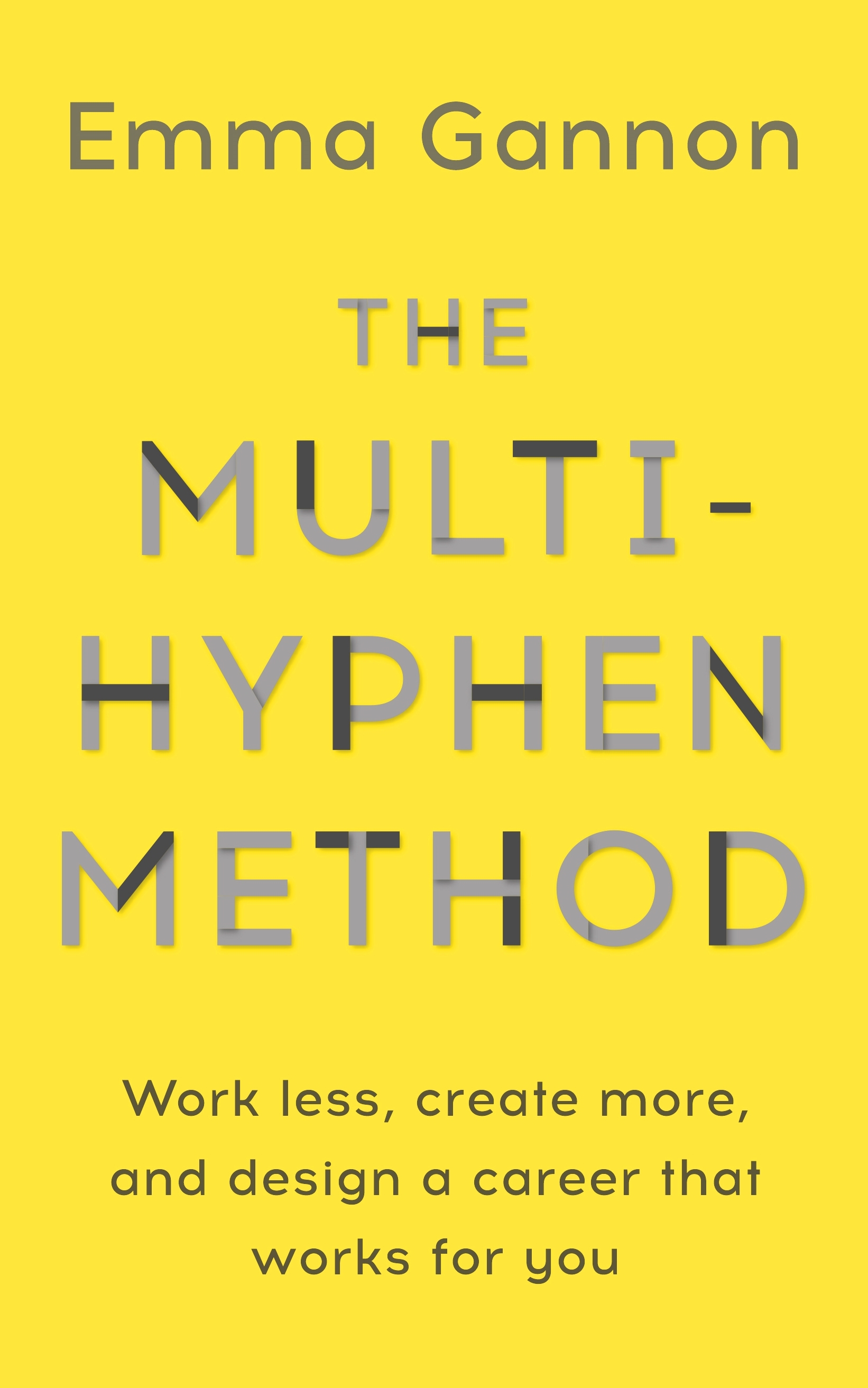
The Multi-Hyphen Method: Work less, create more, and design a career that works for you
The Multi-Hyphen Method is an essential new business book for the digital age.The internet and our phones mean we can work wherever, whenever and allow us to design our own working lives. In The Multi-Hyphen Method Emma Gannon teaches that it doesn't matter if you're a part-time PA with a blog, or a physio who runs an online jewellery store in the evenings - whatever your ratio, whatever your mixture, we can all channel the entrepreneurial spirit. Today, the stigma of being a jack of all trades is being dispelled and having more strings to your bow is essential to getting ahead in the modern working world and Emma Gannon's book is the ultimate guide in helping us navigate our way towards success.
288 pages, Hardcover
First published May 31, 2018
About the author
Emma Gannon
25 books738 followersEmma Gannon is the Sunday Times bestselling author of eight books, including ‘A Year of Nothing‘ and ‘Olive’, her debut novel, which was nominated for the Dublin Literary Award. Her second novel, ‘Table for One’, published in 2025 with HarperCollins. Emma also runs the popular Substack newsletter, ‘The Hyphen’, which has thousands of paid subscribers. She also hosts creativity retreats all over the world and was a judge for the 2025 Women’s Prize for Non-Fiction.
Ratings & Reviews
Friends & Following
Create a free account to discover what your friends think of this book!
Community Reviews
Displaying 1 - 30 of 186 reviews
July 4, 2018
1.5 stars
Some of the key messages:
- Work smarter not harder
- Everyone has a different definition of success
- Everyone has a different definition of work/life balance
- Build transferable skills rather than being specialised (although I partly disagree as there are professions / roles which require specific skills i.e. dev)
Not revolutionary ideas, but important to raise and remind people of. (This is why I have rated it a 1.5 rather than a 1)
But my main issue with the book was the writing; it was pretty bad. It never explored a topic in detail and the author's opinion was backed up by referencing - what were quite often- random articles or "word bites" ("according to" was on every page at least twice). That isn't how you incorporate other people's opinions or studies. The author also used TheBalance.com and Refinery29 as sources. What. It just reminded me of my highschool days where I was told to have X number of sources and referenced anything and everything that was on the internet.
There were also a lot of inconsistencies:
- AI / automation and technology are taking away jobs. But then to read this sentence later on in the book: "Because of the Internet, your job is now not as safe as it once was and you are in competition with anyone who has the skill set to do your job, not just your colleagues". So is the Internet taking away jobs? Or is it technology? Earlier in the book, it mentioned that it was costly to replace and retrain employees. Having other people in the world who are equally if not more skilled is not a new phenomenon. Also, the author completely ignores the fact that companies outsource certain departments (tech, processing, admin, HR, accounts,etc), not because of the Internet but because it is cheaper to have the jobs there.
- Don't use your job title to label yourself, but label yourself as a multi-hyphenate individual.
- A side hustle doesn't mean having another income stream, it can be a hobby → a section titled "Hobbies are Not the Same as Side-Hustles"
- "Your hyphens don't even have to be work-related to make a difference. Your hyphen could be 'parent' or 'carer' or 'poker champion'". Okay. Not really sure how this fits in, but okay.
Also wasn't sure if the author was serious or kidding:
It seems as though Wi-Fi and social media would definitely be added onto this pyramid [Maslow's hierachy of needs'] if it was reimagined nowadays.
I sincerely hope the latter.
Tl;dr - the ideas were reasonable, but the book was just an absolute mess.
Some of the key messages:
- Work smarter not harder
- Everyone has a different definition of success
- Everyone has a different definition of work/life balance
- Build transferable skills rather than being specialised (although I partly disagree as there are professions / roles which require specific skills i.e. dev)
Not revolutionary ideas, but important to raise and remind people of. (This is why I have rated it a 1.5 rather than a 1)
But my main issue with the book was the writing; it was pretty bad. It never explored a topic in detail and the author's opinion was backed up by referencing - what were quite often- random articles or "word bites" ("according to" was on every page at least twice). That isn't how you incorporate other people's opinions or studies. The author also used TheBalance.com and Refinery29 as sources. What. It just reminded me of my highschool days where I was told to have X number of sources and referenced anything and everything that was on the internet.
There were also a lot of inconsistencies:
- AI / automation and technology are taking away jobs. But then to read this sentence later on in the book: "Because of the Internet, your job is now not as safe as it once was and you are in competition with anyone who has the skill set to do your job, not just your colleagues". So is the Internet taking away jobs? Or is it technology? Earlier in the book, it mentioned that it was costly to replace and retrain employees. Having other people in the world who are equally if not more skilled is not a new phenomenon. Also, the author completely ignores the fact that companies outsource certain departments (tech, processing, admin, HR, accounts,etc), not because of the Internet but because it is cheaper to have the jobs there.
- Don't use your job title to label yourself, but label yourself as a multi-hyphenate individual.
- A side hustle doesn't mean having another income stream, it can be a hobby → a section titled "Hobbies are Not the Same as Side-Hustles"
- "Your hyphens don't even have to be work-related to make a difference. Your hyphen could be 'parent' or 'carer' or 'poker champion'". Okay. Not really sure how this fits in, but okay.
Also wasn't sure if the author was serious or kidding:
It seems as though Wi-Fi and social media would definitely be added onto this pyramid [Maslow's hierachy of needs'] if it was reimagined nowadays.
I sincerely hope the latter.
Tl;dr - the ideas were reasonable, but the book was just an absolute mess.

June 21, 2018
I was so excited to read this (actually, listen to it) but found it thin. Maybe I know more about side-hustling that I thought, but there was very little advice where I thought, ‘Oo, that’s good, I’ll try that.’ I mean, the author’s offerings include tips like ‘try to put aside some money for tax.’ Hmm. Also, I’d have liked to have heard more about/from parents looking for flexibility - the stuff that WAS in there felt a bit tokenistic, yet becoming a parent MUST be the reason most people start looking for a more flexible career?

June 25, 2018
I'm always wary of any sort of business books just because it can never be specific enough to the reader and this is no exception. I just felt like the book regurgitated a lot of other books or studies, didn't say anything that wasn't sort of obvious and didn't come away feeling like I'd gained anything from the couple of days I read it when on holiday (other than a sick tan).

February 13, 2021
Definitely felt like this was a general jdea that would have made a good long read but was hugely padded out to make it into a book. Most of it was obvious common sense about going freelance, with a bizarre lack of method given the title.
At times the referencing of random magazine articles as a source of truth rather than opinion combined with random topics like ‘don’t hate follow someone on social media’ felt a bit desperate.
It was very millennial/online influencer focussed.
I’d recommend Be a Free Range Human as a better read.
At times the referencing of random magazine articles as a source of truth rather than opinion combined with random topics like ‘don’t hate follow someone on social media’ felt a bit desperate.
It was very millennial/online influencer focussed.
I’d recommend Be a Free Range Human as a better read.

July 22, 2020
This is a better book than a lot of similar titles that I've read this year.
I really liked that there was an entire chapter about money, where in other books, it's hardly mentioned. It was also really gratifying how Gannon pointed out that hobbies are different than monetizable jobs, and that it's totally ok to do something jut for yourself. A lot of these types of book really try to sell you on the go big or go home mentality, and it was both soothing and refreshing how practical Gannon was when listing the options for people who may or may not want to completely abandon the traditional full time job.
I really liked that there was an entire chapter about money, where in other books, it's hardly mentioned. It was also really gratifying how Gannon pointed out that hobbies are different than monetizable jobs, and that it's totally ok to do something jut for yourself. A lot of these types of book really try to sell you on the go big or go home mentality, and it was both soothing and refreshing how practical Gannon was when listing the options for people who may or may not want to completely abandon the traditional full time job.

May 4, 2018
Such a fantastic book full of useful, practical and takeaway advice on how to create a career that works for you. Whether that’s asking for flexible working hours in your current job, discussing burnout culture with tips on how to avoid this, and giving you that much needed motivation to turn your side hustle into a start up, this book acknowledges that the world of work is changing and tells you how you can take control of this and make the most from your job.

March 24, 2021
***I received an audio ARC of this book from NetGalley in exchange for an honest review***
The Multi-Hyphen Life (formally the Multi-Hyphen Method) is a career/self-help book that looks at the complexities and benefits of a career with multiple facets and income streams. i.e. having multiple jobs. I listened to the audiobook, which is read by the author.
The book attempts to be a career guide, a self-help book, and a run-down of contemporary labour. It does some of these things better than others. I read many reviews after finishing the book that expressed some frustration. I think the frustration many readers felt was because they were looking for a book on one of these topics, and not all three. I enjoyed all three topics, but I did feel that all of them could have been explored more in-depth.
I'll start with the self-help parts of the book, mostly the early chapters.
I do feel like I needed to read this book or at least some parts of it. I've been very hung up on my inability to find a full-time job for most of the past year. It's good to remember that many people my age (and older) have fulfilling careers despite not have full-time jobs. However, it is awful that full-time jobs with benefits have become so rare.
I've been panicking about the possibility of having to continue to cobble together many different income streams (as opposed to getting a single full-time job) post PhD. While the lack of stability sucks (especially when thinking about mortgages etc.), this book examines some positives. It is easy to feel like a failure when you can't get any interviews for full-time work; this book at least made me feel a bit better about all of that.
It is discouraging to pay so much for your education and then only secure part-time work without benefits. It is hard to tell how much of that discouragement is cultural and how much of it is personal. The MHM dives into the shame, and the discouragement people feel surrounding work. I think it does this very well. The best thing about this book is that it attempts to help you understand that it's okay to make the best of a bad situation. And our labour market currently is very, very, very, very bad.
As a self-help book, this book helps the reader confront the shame they feel around work (and overwork) and acknowledges that it is not the worker's fault. This is important. I think the MHM succeeds in this regard.
As a career guide, I don't think it fully succeeds in its goals. It could benefit from a lot more specifics. How are these people making money? Not "with a podcast," but literally, how does the podcast make money?
These specifics could be from the many interesting people she very briefly interviewed or from the author herself. There is a disconnect happening where you have: "these people are successful here is what they do", but not "and here is how someone like you can do it."
The author clarifies that the book is *not* a how-to guide to becoming an influencer, but it needs to be a how-to of something! Otherwise, it isn't telling the reader (a millennial or Gen Z reader at least) anything they don't already know. It isn't doing anything to demystify these new types of work.
"Multi-hyphenates" Self-employed people, influencers, podcasters, writers, they make money, but how? The book gives a lot of advice that most people have heard before but stops short of getting specific enough to tell you things you don't know.
The most useful stuff is when she mentions specific tools/services she uses. She doesn't do this often, but when she does, it is great.
In Chapter 10, the author briefly explains how to monetize these various side hustles (affiliate links etc.), but it is really a very short list that doesn't detail how these things work. It really could be a blog post. I think Chapter 10 could have been fleshed out into multiple chapters, and it would have improved this book a great deal.
Lastly, this is a book about the changing nature of work. This is the book's portion that I am the most qualified to talk about, and I have read about this topic in great depth.
As a Marxist, I was a bit worried that this book might make me mad, but it didn't. Gannon acknowledges the horrendous state of the economy, and this book was written *before* the current recession. She acknowledges how the gig economy takes advantage of people. For the most part, she does not valorize the capitalist crisis.
Ganon points out many flaws in late-capitalism and office-work culture. Unfortunately, she stops short of actually pointing out the root of the problem. It's presented more as "this is how it is, and it all sucks, so why not opt-out of it?" I understand that saying "the problem is capitalism" is probably not something an editor would let you do when you are attempting to write a book for a very large audience. But because of this, the discussions of inequality and labour feel a bit toothless.
This would be a great book for Bosses and CEOs to read to learn about the challenges employee face, but sadly I don't think that's who is reading this book. Because workers are reading the book, they are well aware that work is literally making them sick. But, at the end of the day, they are not the people who could do something about these problems. Other than by organizing, which I will return to in a second.
While Gannon does a great job of outlining what's wrong with work, she also forwards a "do what you love" mentality that I feel is incompatible. While she is much more pragmatic about that mentality than most people, it still contradicts much of what she says. Even someone living the dream can struggle with all these issues as well.
A lot of these problems discussed can't be solved by "multi-hyphen life" They can only be solved by unions, better health care, better housing, better government, better social programs, etc. This book could be a fantastic argument for why everyone needs a union, but that's not the argument it is advancing.
I wish passion, flexibility, and side hustles were the cure for burnout and unstable work, but they aren't. If they were, academia and journalism would be much better places to work!
Lastly, while the audiobook was very well read by the author, I would pick the text version over audio. The book has many short sections with headings etc., and it would be better to read it traditionally if you are able.
I really think Gannon is very talented, and this book had the potential to be one of three great books, but instead, it was a surface examination of three topics/approaches. I do think that many people could still get a lot out of this book, especially if you know what you are getting going into it, so I would still recommend it to the right person at the right time.
The Multi-Hyphen Life (formally the Multi-Hyphen Method) is a career/self-help book that looks at the complexities and benefits of a career with multiple facets and income streams. i.e. having multiple jobs. I listened to the audiobook, which is read by the author.
The book attempts to be a career guide, a self-help book, and a run-down of contemporary labour. It does some of these things better than others. I read many reviews after finishing the book that expressed some frustration. I think the frustration many readers felt was because they were looking for a book on one of these topics, and not all three. I enjoyed all three topics, but I did feel that all of them could have been explored more in-depth.
I'll start with the self-help parts of the book, mostly the early chapters.
I do feel like I needed to read this book or at least some parts of it. I've been very hung up on my inability to find a full-time job for most of the past year. It's good to remember that many people my age (and older) have fulfilling careers despite not have full-time jobs. However, it is awful that full-time jobs with benefits have become so rare.
I've been panicking about the possibility of having to continue to cobble together many different income streams (as opposed to getting a single full-time job) post PhD. While the lack of stability sucks (especially when thinking about mortgages etc.), this book examines some positives. It is easy to feel like a failure when you can't get any interviews for full-time work; this book at least made me feel a bit better about all of that.
It is discouraging to pay so much for your education and then only secure part-time work without benefits. It is hard to tell how much of that discouragement is cultural and how much of it is personal. The MHM dives into the shame, and the discouragement people feel surrounding work. I think it does this very well. The best thing about this book is that it attempts to help you understand that it's okay to make the best of a bad situation. And our labour market currently is very, very, very, very bad.
As a self-help book, this book helps the reader confront the shame they feel around work (and overwork) and acknowledges that it is not the worker's fault. This is important. I think the MHM succeeds in this regard.
As a career guide, I don't think it fully succeeds in its goals. It could benefit from a lot more specifics. How are these people making money? Not "with a podcast," but literally, how does the podcast make money?
These specifics could be from the many interesting people she very briefly interviewed or from the author herself. There is a disconnect happening where you have: "these people are successful here is what they do", but not "and here is how someone like you can do it."
The author clarifies that the book is *not* a how-to guide to becoming an influencer, but it needs to be a how-to of something! Otherwise, it isn't telling the reader (a millennial or Gen Z reader at least) anything they don't already know. It isn't doing anything to demystify these new types of work.
"Multi-hyphenates" Self-employed people, influencers, podcasters, writers, they make money, but how? The book gives a lot of advice that most people have heard before but stops short of getting specific enough to tell you things you don't know.
The most useful stuff is when she mentions specific tools/services she uses. She doesn't do this often, but when she does, it is great.
In Chapter 10, the author briefly explains how to monetize these various side hustles (affiliate links etc.), but it is really a very short list that doesn't detail how these things work. It really could be a blog post. I think Chapter 10 could have been fleshed out into multiple chapters, and it would have improved this book a great deal.
Lastly, this is a book about the changing nature of work. This is the book's portion that I am the most qualified to talk about, and I have read about this topic in great depth.
As a Marxist, I was a bit worried that this book might make me mad, but it didn't. Gannon acknowledges the horrendous state of the economy, and this book was written *before* the current recession. She acknowledges how the gig economy takes advantage of people. For the most part, she does not valorize the capitalist crisis.
Ganon points out many flaws in late-capitalism and office-work culture. Unfortunately, she stops short of actually pointing out the root of the problem. It's presented more as "this is how it is, and it all sucks, so why not opt-out of it?" I understand that saying "the problem is capitalism" is probably not something an editor would let you do when you are attempting to write a book for a very large audience. But because of this, the discussions of inequality and labour feel a bit toothless.
This would be a great book for Bosses and CEOs to read to learn about the challenges employee face, but sadly I don't think that's who is reading this book. Because workers are reading the book, they are well aware that work is literally making them sick. But, at the end of the day, they are not the people who could do something about these problems. Other than by organizing, which I will return to in a second.
While Gannon does a great job of outlining what's wrong with work, she also forwards a "do what you love" mentality that I feel is incompatible. While she is much more pragmatic about that mentality than most people, it still contradicts much of what she says. Even someone living the dream can struggle with all these issues as well.
A lot of these problems discussed can't be solved by "multi-hyphen life" They can only be solved by unions, better health care, better housing, better government, better social programs, etc. This book could be a fantastic argument for why everyone needs a union, but that's not the argument it is advancing.
I wish passion, flexibility, and side hustles were the cure for burnout and unstable work, but they aren't. If they were, academia and journalism would be much better places to work!
Lastly, while the audiobook was very well read by the author, I would pick the text version over audio. The book has many short sections with headings etc., and it would be better to read it traditionally if you are able.
I really think Gannon is very talented, and this book had the potential to be one of three great books, but instead, it was a surface examination of three topics/approaches. I do think that many people could still get a lot out of this book, especially if you know what you are getting going into it, so I would still recommend it to the right person at the right time.
April 30, 2019
I found this book insightful and hugely useful in thinking about multiple income streams and how to make a work routine that suits your lifestyle.
That said, I think it’s important to make it known that this book is aspirational and I’m not sure how realistic it is for people who come from less privileged backgrounds. I don’t mean to detract from the amazing book that the writer has curated, but the only way I can see moving to a ‘multi-hyphen’ career working is by having a fairly substantial nest egg to use whilst building income, or jumping from traditional work to a full freelance timetable, which is near on impossible.
I do aspire to have a career like this, and the advice is fantastic, but I’d be interested in hearing about what happens if you quite literally can’t afford to make the switch, or don’t have the capacity to spend every hour you’re not in full time work (or sleeping) working on a ‘side hustle’. This isn’t a criticism, just an observation.
That said, I think it’s important to make it known that this book is aspirational and I’m not sure how realistic it is for people who come from less privileged backgrounds. I don’t mean to detract from the amazing book that the writer has curated, but the only way I can see moving to a ‘multi-hyphen’ career working is by having a fairly substantial nest egg to use whilst building income, or jumping from traditional work to a full freelance timetable, which is near on impossible.
I do aspire to have a career like this, and the advice is fantastic, but I’d be interested in hearing about what happens if you quite literally can’t afford to make the switch, or don’t have the capacity to spend every hour you’re not in full time work (or sleeping) working on a ‘side hustle’. This isn’t a criticism, just an observation.

September 28, 2020
The title of the book seemed quite promising which led me to get this book for Advanced Review. Though the narration was good, done by the author herself, I didn't find anything to be called a breakthrough. The book underlines that the definition of success is different for different people and it's okay to have multiple job profiles and income sources in today's day and age. While this proves to be true in the current scenario, it felt like the book was rushed through without providing prominent knowledge. Could have been executed in a better manner.

March 31, 2025
Thank you to my sister for this book because it was a gift to my 2019 self but thankful I finally got round to reading this before I venture back into the world of work.
I’m paraphrasing but this book will offer you a different approach to your work life. It sets out a new way of expanding our horizons, not feeling trapped and realising that each of us have multiple roles to play in the world.
I particularly enjoyed reading from the real life examples showing people other than the author have done this method and succeeded. It’s a well written book that’ll have you thinking about YOU and how you can be ‘successful’ in many ways than one.
I’m paraphrasing but this book will offer you a different approach to your work life. It sets out a new way of expanding our horizons, not feeling trapped and realising that each of us have multiple roles to play in the world.
I particularly enjoyed reading from the real life examples showing people other than the author have done this method and succeeded. It’s a well written book that’ll have you thinking about YOU and how you can be ‘successful’ in many ways than one.

July 30, 2020
“Work less, create more and design a life that works for you”
This amazing book tackles the topic of living a multi-hyphen life. Multi-hyphenism normalises the way people are choosing their own work life balance steering away from traditional full time work and juggling multiple incomes.
The days of a transitional 9-5 role with single income is on the outer. Millennials are choosing to have a role with flexibility and enabling them to have a side hustle or side skills that blend ones entrepreneurial desire to want more, be financially secure and more fulfilled in life.
Emma tackles technology, work life balance, finances, zoning your skills, how to multitask and get your worth! Most millionaires have servers forms of income streams. If you looking for more, to switch your career or start a side hustle this ones for you!
Once I finished Olive I knew that I needed more of Emma Gannon. Thank you so much NetGalley for giving me the opportunity to listen to this fantastic book.
Highly recommend listening/reading this if you’re looking for something empowering and inspirational.
This amazing book tackles the topic of living a multi-hyphen life. Multi-hyphenism normalises the way people are choosing their own work life balance steering away from traditional full time work and juggling multiple incomes.
The days of a transitional 9-5 role with single income is on the outer. Millennials are choosing to have a role with flexibility and enabling them to have a side hustle or side skills that blend ones entrepreneurial desire to want more, be financially secure and more fulfilled in life.
Emma tackles technology, work life balance, finances, zoning your skills, how to multitask and get your worth! Most millionaires have servers forms of income streams. If you looking for more, to switch your career or start a side hustle this ones for you!
Once I finished Olive I knew that I needed more of Emma Gannon. Thank you so much NetGalley for giving me the opportunity to listen to this fantastic book.
Highly recommend listening/reading this if you’re looking for something empowering and inspirational.

November 26, 2018
Phenomenal read that has made me think more about what our expectations are of what work can and should be.

September 26, 2020
This book really resonated with me and I would recommended it to anyone who doesn’t feel like having one direct straightforward career or one single organization in sight for their professional journey. People interested in considered options in their path, reinventing themselves and potentially looking to have more than one source of income (especially if they are from unrelated professional activities).
Why I found this book as a good reflection, but also a great collection of new ideas:
1. The author goes deep in analyzing changes in the job market and the transformation in the traditional ways of working, including statistics and context for some of the statements. Some of the statistics seem to be focused in the UK market, but in my view it still provides strong context for workers in other locations.
2. The book includes lessons, thoughts and personal recommendations from the author and other professionals that have experienced the multi-hyphen life.
3. There are suggestions in how to improve the daily ways of working. Topics like working hours, email management, job sharing, flexibility, burnouts, collaboration, overworking, productivity and “being busy” were reflected on… which made it very relatable.
In terms of format, I listened to the audiobook, narrated by the author, and even though it could get a bit slow at times, really enjoyed the experience. My original plan was to give 4 stars to the overall book, but after some thinking, I will go with the 5. Will probably get the book again in another format in order to add some notes…
Audio narration: 4/5
Overall book: 5/5
*I voluntary read a free copy of this book through Netgalley.

September 18, 2020
The Multi-Hyphen Life is a book that emphasizes how to make yourself marketable in an ever changing world. It focuses on how the job market has changed in modern history and how to adapt to a more productive way of working.
I loved this audiobook. It was so refreshing to hear someone who isn't extremely productive in the 9-5 workday model talk about the steps she took to become more diverse in the work force. I don't usually do self help books and I would not call this book that. This book is more of a roadmap to taking back your work freedom. With so much accessible over the internet, it is so great to hear someone talk about how to maneuver all the skills you can learn. It's even more insightful with COVID and all the working from home! Love, love, love this book!!
I loved this audiobook. It was so refreshing to hear someone who isn't extremely productive in the 9-5 workday model talk about the steps she took to become more diverse in the work force. I don't usually do self help books and I would not call this book that. This book is more of a roadmap to taking back your work freedom. With so much accessible over the internet, it is so great to hear someone talk about how to maneuver all the skills you can learn. It's even more insightful with COVID and all the working from home! Love, love, love this book!!

May 14, 2021
I've done a bit of reading about multipotentialites of late — because I am one. Whereas other books focus on psychology or multipotetiality as a personality trait this book is more about the workplace. It's an interesting treatise about how technology allows us to work wherever, whenever, and however we want. But because it stresses how we all need to get with the multi-hyphen way of working, if we want to succeed in the modern world, it often comes across like an apologist for the gig economy and as though it's pandering to millennials with special snowflake syndrome. Interesting and thought-provoking nonetheless.

September 20, 2023
A classic business book for the millennial side hustle. Some solid ideas but definitely depends on a shift in the current culture of careers. Interesting takes on burnout and self care in the digital work age.

June 9, 2018
Insightful, refreshing, and motivating.
(And the chapter on money left me sleeping a little easier at night. It's nice to know we are not alone.)
(And the chapter on money left me sleeping a little easier at night. It's nice to know we are not alone.)

September 6, 2022
This is a great book, in which the author speaks about having various strings to our bow in regards to our career, especially when we can use all of our passions and creative energies in our careers, instead of only using them as hobbies. Although we can have one main career, she says that we can also have other little side missions where we can use our creative skills to bring in supplementary income.
I found this book really interesting and useful, and I got a lot of tips from it in how I can enhance my own career, and use my skills to my advantage.
The author of the book also narrated the audiobook, and she did a great job.
I highly recommend this book to anyone who wishes to enhance their career and better themselves.
Many thanks to the author/narrator, publisher and NetGalley for a copy of this book.
I found this book really interesting and useful, and I got a lot of tips from it in how I can enhance my own career, and use my skills to my advantage.
The author of the book also narrated the audiobook, and she did a great job.
I highly recommend this book to anyone who wishes to enhance their career and better themselves.
Many thanks to the author/narrator, publisher and NetGalley for a copy of this book.

April 3, 2019
2.5/5*

June 11, 2018
Loved this book. Such a brilliant perspective on the future of work, millennials (or not), business and doing what’s right for you and your future. Plus Emma’s a super-talented story-teller. Check it out.

April 2, 2021
This book is full of useful tips for those engaging in what the author refers to as a multi-hyphenate career, though is more commonly known as a portfolio career.
I've had a portfolio career for several years now and this book would've been a lot more helpful for me when I was starting out.
A lot of what it says echoes with my own experiences, such as fighting against presenteeism, the 9-5, workplaces not understanding why people would have a secondary career. These are all barriers I've had to overcome and the author makes a strong case for why we should embrace those seeking a multi-hyphenate career and she's also a lot more pragmatic than other such books - i.e. she doesn't suggest quitting your job right away.
It's essentially the book I would write if I was encouraging others to give more time for their side hustle. The tips are those I've already put into motion, hence the 3* rating, but it was a good affirmation that I'm doing those things right. If you're just starting out with a portfolio career, this will be a lot more helpful.
I've had a portfolio career for several years now and this book would've been a lot more helpful for me when I was starting out.
A lot of what it says echoes with my own experiences, such as fighting against presenteeism, the 9-5, workplaces not understanding why people would have a secondary career. These are all barriers I've had to overcome and the author makes a strong case for why we should embrace those seeking a multi-hyphenate career and she's also a lot more pragmatic than other such books - i.e. she doesn't suggest quitting your job right away.
It's essentially the book I would write if I was encouraging others to give more time for their side hustle. The tips are those I've already put into motion, hence the 3* rating, but it was a good affirmation that I'm doing those things right. If you're just starting out with a portfolio career, this will be a lot more helpful.

September 30, 2020
3,5 stars

July 14, 2020
What a surprisingly poignant, thoughtful, well-crafted perspective on the modern workforce! I really enjoyed this read.
As useful as this book might be to some folks, however, I found it equally... depressing, in a way? Not for any fault of the author's, because I think she did a fantastic job. I just felt kinda sad about the general state of the world while reading this book. The Multi-Hyphen Life feels like a bandaid for a larger societal problem; it's a damn good band-aid, mind you, but I feel like so much of what it talks about and so much of what it aims to instill in its potential readerbase stems from an inherent problem with the way millennials have been forced to grow up, and the world they inherited. This book felt less like a celebration of having multiple interests and more like marching orders for how to finally, FINALLY find happiness in this messed up society we live in.
As for the subject matter - if you're at all familiar with the concept of time tracking, or money management, or diversification of income streams, you're probably already in tune with 90% of what this book is talking about. I feel like The Multi-Hyphen Life does a really great job of starting someone out and breaking the ice about multiple revenue streams to a greater, more general audience, and I really loved the fact that it was written with a bit of a feminist tilt, something we greatly need in an industry awash with hustle porn, "all for the grind" dudebros and their myriad of self help books. You could easily hand this book to a fan of Tim Ferris or Dave Ramsey and they'd have a field day. And I think that's perfect.
All in all, I think this book did a great job of putting to words the weird, wonky workflows of us millennials hellbent on trying to get as much done as we can before the inherent terror of dying destitute finally catches up with us and we burn out. It might be a bit out of date in ten years, or even five years, but I think that's just the nature of the beast with this industry - and I have no doubt in my mind that Emma Gannon will be around to help folks steer their ship through those murky waters, too.
As useful as this book might be to some folks, however, I found it equally... depressing, in a way? Not for any fault of the author's, because I think she did a fantastic job. I just felt kinda sad about the general state of the world while reading this book. The Multi-Hyphen Life feels like a bandaid for a larger societal problem; it's a damn good band-aid, mind you, but I feel like so much of what it talks about and so much of what it aims to instill in its potential readerbase stems from an inherent problem with the way millennials have been forced to grow up, and the world they inherited. This book felt less like a celebration of having multiple interests and more like marching orders for how to finally, FINALLY find happiness in this messed up society we live in.
As for the subject matter - if you're at all familiar with the concept of time tracking, or money management, or diversification of income streams, you're probably already in tune with 90% of what this book is talking about. I feel like The Multi-Hyphen Life does a really great job of starting someone out and breaking the ice about multiple revenue streams to a greater, more general audience, and I really loved the fact that it was written with a bit of a feminist tilt, something we greatly need in an industry awash with hustle porn, "all for the grind" dudebros and their myriad of self help books. You could easily hand this book to a fan of Tim Ferris or Dave Ramsey and they'd have a field day. And I think that's perfect.
All in all, I think this book did a great job of putting to words the weird, wonky workflows of us millennials hellbent on trying to get as much done as we can before the inherent terror of dying destitute finally catches up with us and we burn out. It might be a bit out of date in ten years, or even five years, but I think that's just the nature of the beast with this industry - and I have no doubt in my mind that Emma Gannon will be around to help folks steer their ship through those murky waters, too.

July 22, 2020
The Multi-Hyphen Life // by Emma Gannon
From the NetGalley description: "If you've been itching to convert your craft into a career, your side-hustle into a start-up, or just want to think about work-life balance in a new way, then The Multi-Hyphen Life is for you."
In The Multi-Hyphen Life, Emma Gannon explains what she thinks the future will look like in the work force and how we as workers can prepare ourselves for it better. She also speaks about how having multiple jobs, rather than a single one as most people currently do, can be better for our mental and physical health as well as our lives in general. She explains what it means to be a multi-hyphenate and what you need to be careful with to avoid burnout and subpar results. She shows us why now is the perfect time to become an entrepreneur, and why working less and creating more is the way to go.
I really enjoyed this book and felt like I learned a lot. It is the kind of book that I want to read again and again because I know I will be able to gain something new each time. I even want to own a physical copy of it so I can highlight and take notes in it because it feels like knowledge that I will easily be able to apply to my life. It has given me motivation again to start the small business I have been considering for a while now. She has a good mix between facts and anecdotes, and I like her use of lists as well. I like it when an author reads their own book, especially when they are non-fiction books, and she did a very good job. Her pace is great and you can tell that she is convinced of the truth of her own statements in the way she reads her words. I am looking forward to reading or listening to this again.
Thank you to the author, publisher, and NetGalley for providing me with a free copy of this audiobook in exchange for an honest review.
From the NetGalley description: "If you've been itching to convert your craft into a career, your side-hustle into a start-up, or just want to think about work-life balance in a new way, then The Multi-Hyphen Life is for you."
In The Multi-Hyphen Life, Emma Gannon explains what she thinks the future will look like in the work force and how we as workers can prepare ourselves for it better. She also speaks about how having multiple jobs, rather than a single one as most people currently do, can be better for our mental and physical health as well as our lives in general. She explains what it means to be a multi-hyphenate and what you need to be careful with to avoid burnout and subpar results. She shows us why now is the perfect time to become an entrepreneur, and why working less and creating more is the way to go.
I really enjoyed this book and felt like I learned a lot. It is the kind of book that I want to read again and again because I know I will be able to gain something new each time. I even want to own a physical copy of it so I can highlight and take notes in it because it feels like knowledge that I will easily be able to apply to my life. It has given me motivation again to start the small business I have been considering for a while now. She has a good mix between facts and anecdotes, and I like her use of lists as well. I like it when an author reads their own book, especially when they are non-fiction books, and she did a very good job. Her pace is great and you can tell that she is convinced of the truth of her own statements in the way she reads her words. I am looking forward to reading or listening to this again.
Thank you to the author, publisher, and NetGalley for providing me with a free copy of this audiobook in exchange for an honest review.

January 30, 2023
2.5/5 ⭐⭐
First, I'm a massive fan of Emma Gannon and her work. Her podcast Ctrl Alt Delete is fantastic, insightful, creative, and one of my favorite podcasts of all time. I've also read her debut novel Olive. I think it's a very relatable and beautifully written book, especially for young women who are trying to figure out their lives and ultimately decide whether they want to have children.
Now, going back to The Multi-Hyphen Method, I agree and sympathize with the main point that in today's economy, it's simply not enough to commit to one job or company. I also believe in having multiple income streams and developing numerous projects/skills/trades. The overall conversation around automation/digitalization & 'the future of work' is very interesting to me. So, I'd say that this book resonates well with what kind of life I want mine to be.
However, I rated this book 2.5/5 because, to me, it lacked real substance. I feel like The Multi-Hyphen Method is like a skeleton without any real meat. Most ideas presented are not that new and not very well developed. Most of the content is about what you know/have already read/seen or figured out along the way if you're familiar with freelancing/juggling multiple careers/jobs.
On top of that, some chapters feel more like those Buzzfeed articles on 'Top 10 Best Ways to Save Money' than critically and creatively developed deep topics. Also, there are too many ideas/quotations shared by other people. As I've said, the concept is great, but ultimately there's nothing new. I wish Emma all the success in her future, and I'm 100% sure I will read her other books, but this was just too weak for me in terms of content.
First, I'm a massive fan of Emma Gannon and her work. Her podcast Ctrl Alt Delete is fantastic, insightful, creative, and one of my favorite podcasts of all time. I've also read her debut novel Olive. I think it's a very relatable and beautifully written book, especially for young women who are trying to figure out their lives and ultimately decide whether they want to have children.
Now, going back to The Multi-Hyphen Method, I agree and sympathize with the main point that in today's economy, it's simply not enough to commit to one job or company. I also believe in having multiple income streams and developing numerous projects/skills/trades. The overall conversation around automation/digitalization & 'the future of work' is very interesting to me. So, I'd say that this book resonates well with what kind of life I want mine to be.
However, I rated this book 2.5/5 because, to me, it lacked real substance. I feel like The Multi-Hyphen Method is like a skeleton without any real meat. Most ideas presented are not that new and not very well developed. Most of the content is about what you know/have already read/seen or figured out along the way if you're familiar with freelancing/juggling multiple careers/jobs.
On top of that, some chapters feel more like those Buzzfeed articles on 'Top 10 Best Ways to Save Money' than critically and creatively developed deep topics. Also, there are too many ideas/quotations shared by other people. As I've said, the concept is great, but ultimately there's nothing new. I wish Emma all the success in her future, and I'm 100% sure I will read her other books, but this was just too weak for me in terms of content.

July 25, 2020
I listened to this audiobook after reading Kidding Kidding: Childlike Solutions to Bullsh*t Adult Problems and the similarity of ideas and perspectives and perhaps even the redundancy of some concepts did not take away from this book at all. I would highly recommend this book to anyone questioning life, purpose, their career, lifestyle, or anyone that is making plans for the future (students, please read this!).
I loved absorbing this book as an audiobook because it nicely fit into my schedule when I was completing mundane but necessary tasks. The narrator (who is also the author, yay!) has a pleasant voice and is relatively easy to listen to.
Thank you Netgalley for the audiobook ARC.

I loved absorbing this book as an audiobook because it nicely fit into my schedule when I was completing mundane but necessary tasks. The narrator (who is also the author, yay!) has a pleasant voice and is relatively easy to listen to.
Thank you Netgalley for the audiobook ARC.

June 18, 2020
I’ve been listening to The Multi-Hyphen Life today while working, which is fitting, though ‘multi-tasking’ differs from ‘multi-hyphen.’ Multi-hyphen refers to fusing multiple professional identities into one high-functioning person. author discusses advocating for oneself, failure, focusing, generational differences, keeping a day job, promoting oneself, & much more. this is a solid self-help book. the advice applies to me as a PhD candidate - high school history teacher at all-girls boarding/day prep school - occasional freelance public historian/writer - even more occasionally guitar player/singer. holding back the fifth star bc I’m unconvinced that the advice applies to everyone. many people keep their personal identity separate from work, & that’s okay. overall this book is concise, engaging, light, motivational, & a smart take on working in an ever-changing economy 💛

August 1, 2018
I thought there was a lot of fluff until I got to chapter 7, where it got more interesting. Wish I’d skimmed through the first 6 chapters, which felt like a long magazine article.
That said, it was inspirational, there is no doubt about that.
That said, it was inspirational, there is no doubt about that.

June 22, 2021
A great look at different attitudes towards our current working culture, and why having multiple job titles is a good thing! There was some insightful advice in there, and statistics to back it all up.

August 2, 2019
A fantastic insight into a new way of working. Lots of useful advice for anyone wanting to take the leap from the traditional one job, 9-5 structure to a work-life fit that works for you.
Displaying 1 - 30 of 186 reviews