

What do you think?

Letters Home 1936-1977
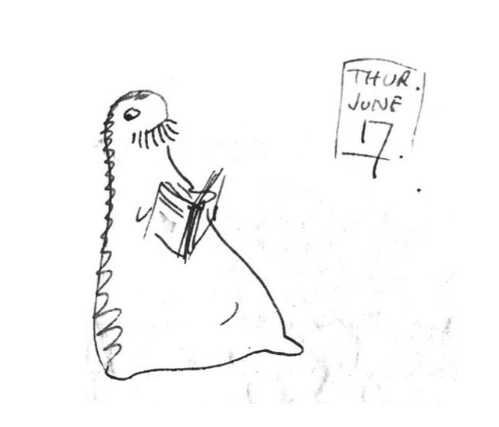
Letters Home gives access to the last major archive of Larkin's writing to remain unpublished: the letters to members of his family. These correspondences help tell the story of how Larkin came to be the writer and the man he was: to his father Sydney, a 'conservative anarchist' and admirer of Hitler, who died relatively early in Larkin's life; to his timid, depressive mother Eva, who by contrast lived long, and whose final years were shadowed by dementia; and to his sister Kitty, the sparse surviving fragment of whose correspondence with her brother gives an enigmatic glimpse of a complex and intimate relationship. In particular, it was the years during which he and his sister looked after their mother that shaped the writer we know so well: a number of poems written over this time are for her, and the mood of pain, shadow and despondency that characterises his later verse draws its strength from his experience of the long, lonely years of her senility. One surprising element in the volume, however, is the joie de vivre shown in the large number of witty and engaging drawings of himself and Eva, as 'Young Creature' and 'Old Creature', with which he enlivens his letters throughout the three decades of her widowhood.
This important edition, meticulously edited by James Booth is a key piece of scholarship that completes the portrait of this most cherished of English poets.
This important edition, meticulously edited by James Booth is a key piece of scholarship that completes the portrait of this most cherished of English poets.
688 pages, Hardcover
First published October 30, 2018
About the author
Philip Larkin
141 books705 followersPhilip Arthur Larkin, CH, CBE, FRSL, was an English poet, novelist and jazz critic. He spent his working life as a university librarian and was offered the Poet Laureateship following the death of John Betjeman, but declined the post. Larkin is commonly regarded as one of the greatest English poets of the latter half of the twentieth century. He first came to prominence with the release of his third collection The Less Deceived in 1955. The Whitsun Weddings and High Windows followed in 1964 and 1974. In 2003 Larkin was chosen as "the nation's best-loved poet" in a survey by the Poetry Book Society, and in 2008 The Times named Larkin as the greatest post-war writer.
Larkin was born in city of Coventry, England, the only son and younger child of Sydney Larkin (1884–1948), city treasurer of Coventry, who came from Lichfield, and his wife, Eva Emily Day (1886–1977), of Epping. From 1930 to 1940 he was educated at King Henry VIII School in Coventry, and in October 1940, in the midst of the Second World War, went up to St John's College, Oxford, to read English language and literature. Having been rejected for military service because of his poor eyesight, Larkin was able, unlike many of his contemporaries, to follow the traditional full-length degree course, taking a first-class degree in 1943. Whilst at Oxford he met Kingsley Amis, who would become a lifelong friend and frequent correspondent. Shortly after graduating he was appointed municipal librarian at Wellington, Shropshire. In 1946, he became assistant librarian at University College, Leicester and in 1955 sub-librarian at Queen's University, Belfast. In March 1955, Larkin was appointed librarian at The University of Hull, a position he retained until his death.
Larkin was born in city of Coventry, England, the only son and younger child of Sydney Larkin (1884–1948), city treasurer of Coventry, who came from Lichfield, and his wife, Eva Emily Day (1886–1977), of Epping. From 1930 to 1940 he was educated at King Henry VIII School in Coventry, and in October 1940, in the midst of the Second World War, went up to St John's College, Oxford, to read English language and literature. Having been rejected for military service because of his poor eyesight, Larkin was able, unlike many of his contemporaries, to follow the traditional full-length degree course, taking a first-class degree in 1943. Whilst at Oxford he met Kingsley Amis, who would become a lifelong friend and frequent correspondent. Shortly after graduating he was appointed municipal librarian at Wellington, Shropshire. In 1946, he became assistant librarian at University College, Leicester and in 1955 sub-librarian at Queen's University, Belfast. In March 1955, Larkin was appointed librarian at The University of Hull, a position he retained until his death.
Ratings & Reviews
Friends & Following
Create a free account to discover what your friends think of this book!
Community Reviews
Displaying 1 - 3 of 3 reviews

August 13, 2022
O poeta Philip Larkin escreveu para sua mãe, Eva Larkin durante toda sua vida. Começou em outubro de 1940, quando iniciou seus estudos no St John's College.
Eram cartas semanais e nos últimos anos de vida da sua mãe, as cartas eram diárias, nesta edição há aproximadamente 607 delas.
Os assuntos eram triviais; a dificuldade de Larkin em perder peso, o medo de sua mãe em relação a chuvas e tempestades, prisão de ventre, o noivado da princesa Anne, etc. Relatava também as viagens, encontros, participações em programas de rádio da BBC. Enfim muitos assuntos foram abordados em mais de 40 anos de correspondência entre ambos, com algumas interrupções, pois quando seu pai, Sidney Larkin faleceu ele morou dois anos com sua mãe.
Interessante notar que suas cartas incluem desenhos carinhosos de sua mãe como uma criatura parecida com uma foca, muitas vezes usando um gorro de criada. Depois que seu pai morreu em 1948, ele começou a dirigir se a ela de maneira diferente, como “Minha querida Mop-Monst-Haugh” ou “Querida criatura” ou, na maioria das vezes, “Minha querida velha criatura”.
Apesar de Larkin ter um temperamento complicado ele tentou estar sempre presente na vida da mãe apesar que o "fardo" de cuidar de sua mãe viúva recaiu principalmente sobre sua irmã, Catherine, mas Larkin escrevia-lhe todo fim de semana, visitava regularmente e, enquanto trabalhava na Universidade de Leicester no final dos anos 1940,como já disse, viveu com ela por dois anos. Com uma biblioteca para administrar e ambições literárias para perseguir, ele não poderia ter feito muito mais. Ainda assim, o subtexto das cartas é a culpa: ele passava tão pouco tempo com ela e não podia ajudá-la a se sentir menos solitária.
Adorei este livro, lia um capítulo por dia, me tornei um membro da família, pois pude observar e sentir tudo o que escreviam e agora é doloroso saber que nossa convivência terminou...
Eram cartas semanais e nos últimos anos de vida da sua mãe, as cartas eram diárias, nesta edição há aproximadamente 607 delas.
Os assuntos eram triviais; a dificuldade de Larkin em perder peso, o medo de sua mãe em relação a chuvas e tempestades, prisão de ventre, o noivado da princesa Anne, etc. Relatava também as viagens, encontros, participações em programas de rádio da BBC. Enfim muitos assuntos foram abordados em mais de 40 anos de correspondência entre ambos, com algumas interrupções, pois quando seu pai, Sidney Larkin faleceu ele morou dois anos com sua mãe.
Interessante notar que suas cartas incluem desenhos carinhosos de sua mãe como uma criatura parecida com uma foca, muitas vezes usando um gorro de criada. Depois que seu pai morreu em 1948, ele começou a dirigir se a ela de maneira diferente, como “Minha querida Mop-Monst-Haugh” ou “Querida criatura” ou, na maioria das vezes, “Minha querida velha criatura”.
Apesar de Larkin ter um temperamento complicado ele tentou estar sempre presente na vida da mãe apesar que o "fardo" de cuidar de sua mãe viúva recaiu principalmente sobre sua irmã, Catherine, mas Larkin escrevia-lhe todo fim de semana, visitava regularmente e, enquanto trabalhava na Universidade de Leicester no final dos anos 1940,como já disse, viveu com ela por dois anos. Com uma biblioteca para administrar e ambições literárias para perseguir, ele não poderia ter feito muito mais. Ainda assim, o subtexto das cartas é a culpa: ele passava tão pouco tempo com ela e não podia ajudá-la a se sentir menos solitária.
Adorei este livro, lia um capítulo por dia, me tornei um membro da família, pois pude observar e sentir tudo o que escreviam e agora é doloroso saber que nossa convivência terminou...

April 11, 2024
Philip Larkin hates his childhood home. “We all hate home and having to be there,” says Larkin in “Poetry of Departures.” He laments “writing home… [as] if home existed” in “The Old Fools.” He declares, eponymously, that “Home is so Sad.” Well, dear reader, if you’ve ever wondered what has caused Philip Larkin’s home to be so f*cking melancholy and distant, look no further than his letters, which will prove, I think you’ll find, that the problem is definitely him. Is it surprising? Who walked away from Lucky Jim thinking “boy does that man sound like good company”?
Philip comes off as more than a little unlikeable. I remember when this book was released reading a review in the LRB about it and was struck by how f*cking funny this bit of one of his letters to his mother is, and it's just as funny the second time around:
“The thought of Christmas depresses me. Please don’t go to trouble. Every year I swear I’ll never endure it again, & make you promise to be sensible, & now here you are talking about duck again, just as if I had never shouted and got drunk & broken the furniture out of sheer rage at it all.”
Keep in mind: this is a man is writing to his widowed mother as her only son.
Otherwise he’s just sort of a brat. Sometimes he’s a needless snob (complaining, for instance, about his secretary saying “onvelope” (which he considers “low”) rather than “envelope”), other times he’s self-deprecatingly? bragging about being lazy and entitled (“I wonder if I can explain more clearly: I feel that I shall never take any job seriously enough to warrant any responsibility”), he just generally comes off like an unbearable person and a sh*tty son, no doubt enabled by his anxious/depressive mother. Notes in the book tell us Philip’s sister Kitty once said “Philip could do no wrong in his father’s eyes. Or his mother’s. They worshipped him.” In another note we’re told that Kitty destroyed most of Philip’s letters to her. Here we have Philip’s letter to his mother, reassuring her about upcoming holidays with the two of them, something which at this point must have been a perpetual waking nightmare:
“I’m sorry you’ve been feeling worried about the prospect of holidays, and of things in general. I’m enclosing a copy of the letter I wrote to K & W, wch you can keep, about holidays: It hasn’t produced any reply yet. It does seem rather complicated – too hard for Kitty to grasp, I expect – but all the same it’s perfectly reasonable.”
Who could stay mad at such a guy???
The drawings are very cute. I didn’t expect Philip Larkin to be a Tove Jansson, yet here we are.
Philip comes off as more than a little unlikeable. I remember when this book was released reading a review in the LRB about it and was struck by how f*cking funny this bit of one of his letters to his mother is, and it's just as funny the second time around:
“The thought of Christmas depresses me. Please don’t go to trouble. Every year I swear I’ll never endure it again, & make you promise to be sensible, & now here you are talking about duck again, just as if I had never shouted and got drunk & broken the furniture out of sheer rage at it all.”
Keep in mind: this is a man is writing to his widowed mother as her only son.
Otherwise he’s just sort of a brat. Sometimes he’s a needless snob (complaining, for instance, about his secretary saying “onvelope” (which he considers “low”) rather than “envelope”), other times he’s self-deprecatingly? bragging about being lazy and entitled (“I wonder if I can explain more clearly: I feel that I shall never take any job seriously enough to warrant any responsibility”), he just generally comes off like an unbearable person and a sh*tty son, no doubt enabled by his anxious/depressive mother. Notes in the book tell us Philip’s sister Kitty once said “Philip could do no wrong in his father’s eyes. Or his mother’s. They worshipped him.” In another note we’re told that Kitty destroyed most of Philip’s letters to her. Here we have Philip’s letter to his mother, reassuring her about upcoming holidays with the two of them, something which at this point must have been a perpetual waking nightmare:
“I’m sorry you’ve been feeling worried about the prospect of holidays, and of things in general. I’m enclosing a copy of the letter I wrote to K & W, wch you can keep, about holidays: It hasn’t produced any reply yet. It does seem rather complicated – too hard for Kitty to grasp, I expect – but all the same it’s perfectly reasonable.”
Who could stay mad at such a guy???
The drawings are very cute. I didn’t expect Philip Larkin to be a Tove Jansson, yet here we are.
September 27, 2021
slight lie here. I couldn't finish it.
I though Larkin could never write anything I didn't find interesting.
I was wrong.
Hard to put into work how boring these letters, certainly those after about 1950, are.
I happened to pay £1 for my copy. Still feel robbed.
I though Larkin could never write anything I didn't find interesting.
I was wrong.
Hard to put into work how boring these letters, certainly those after about 1950, are.
I happened to pay £1 for my copy. Still feel robbed.
Displaying 1 - 3 of 3 reviews