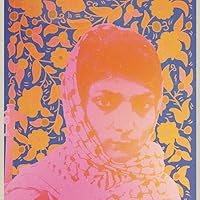
A vibrant history in graphic art of the "Wobblies," published for the centenary of the founding of the Industrial Workers of the World.
The stories of the hard-rock miners' shooting wars, young Elizabeth Gurly Flynn (the "Rebel Girl" of contemporary sheet music), the first -sit-down strikes and Free Speech fights, Emma Goldman and the struggle for birth control access, the Pageant for Paterson orchestrated in Madison Square Garden, bohemian radicals John Reed and Louise Bryant, field-hand revolts and lumber workers' strikes, wartime witch hunts, government prosecutions and mob lynching, Mexican-American uprisings in Baja, and Mexican peasant revolts led by Wobblies, hilarious and sentimental songs created and later revived-all are here, and much, much more.
The IWW, which has been organizing workers since 1905, is often cited yet elusive to scholars because of its eclectic and controversial cultural and social character. Wobblies! presents the IWW whole, scripted and drawn by old-time and younger Wobbly and IWW-inspired artists.
Now retired as Senior Lecturer at Brown University, Paul Merlyn Buhle is the author or editor of 35 volumes including histories of radicalism in the United States and the Caribbean, studies of popular culture, and a series of nonfiction comic art volumes.
Wobblies! A Graphic History of the Industrial Workers of the World is a powerful and comprehensive introduction to this iconic, radical union. From its beginnings in 1905 as a new kind of union based on class struggle, through its near utter destruction by 1919, and on into the modern era and those who keep its spirit alive, the whole tale is here told.
Organized as an episodic collection of stories, starting with the 1905 convention that formed the IWW, it tells the tales of Wobblies heroes and martyrs — Mother Jones, Big Bill Haywood, Lucy Parsons, Emma Goldman, Frank Little , Joe Hill — and critical IWW actions, like the Lawrence Textile Bread and Roses strike, and the Patterson silk workers strike and the pageant they organized together with John Reed and Mabel Dodge. Their triumphs, and their more numerous tragedies are here. Their free speech battles. Their songs. Their comics, and poster art. All of this and more is included in this massive, 320 page graphic history.
The history here is solid. The storytelling is compelling. The artwork, by numerous artists and in various styles, is bold, striking, and effective. The graphic format is philosophically perfect for capturing the Wobblies spirit.
The IWW loved their comics - especially Mr Block and their silly songs about criminal bosses, brainwashed fools and dreams of revolution . This work captures that spirit in word and image and gives you a solid history of this heroic band of revolutionaries. I imagine that Old school IWW would have loved this book - I can see Ralph Chaplin or Big Bill declaring this a fine piece of propaganda.
Contains all the history of the IWW in a graphic novel format and is easy to read. I sort of think this is the way the IWW founders would have wanted it! Having studied the IWW extensively for my thesis, I found it was very accurate but also entertaining.
Απαραίτητη προσθήκη σε οποιαδήποτε βιβλιοθήκη φιλοξενεί την ιστορία του αμερικανικού ριζοσπαστισμού. Συγχαρητήρια στις εκδόσεις ΚΨΜ για μια ποιοτική μετάφραση - απόδοση στα ελληνικά αυτής της εικονογραφημενης ανυπότακτης ανθολογίας.
I don’t think I’ve ever read a graphic novel anthology and was amazed by the different art styles and narrative forms. A couple slightly weak parts, but the story weaved together very well.
this graphic novel was a beautiful exploration of the creativity that exists all over the country in the workers’ minds. i had never heard of the iww until i read this and i intend to be a cardholder some day. we all need to recognize our place that this world has put us in and come together to escape it. solidarity will save ourselves, our neighbors, our families, our friends present and future, and our fellow workers. it’s the only thing we can do.
This is a fantastic collection of text and sequential graphic stories detailing the rise and incredible story of the IWW; in the course of which, the reader will learn or become more familiar with, tons of labor history - much of which is never taught in school, of course.
The folks who fought the oligarchs or robber barons of the late 19th Century, when exploitation and poor working conditions and child labor were rampant, faced severe risks including death. These labor heroes not only died, they were sometimes tortured to death. Hundreds of non labor organizers perished in horrible industrial accidents, as the owners of industry resisted implementing safety measures, including horrific mass deaths in mines all over the US. These incidents are not highlighted in school curricula, but if it weren't for the deaths and sacrifices of these labor heroes, we would not have OSHA and so forth - not have the safety regulations we have today. Everyone has heard of the Triangle Shirtwaist Company fire, wherein scores of seamstresses perished because the owner had locked the workers in, so as to prevent them from taking unauthorized breaks. Yet, similar incidents occurred elsewhere - that we never hear about. Human life was trivialized by these brutal "masters of industry" the Rockefellers, the Fricks, and so forth - figures that today are associated with benign institutions/organizations, such as Rockefeller University, or the Frick Museum, managed to "whitewash" their names - especially by having one of their own run for public office as a progressive/reform candidate, such as the late Nelson Rockefeller, who was a moderate Republican known for progressive initiatives - but in the heyday of the founders of the Rockefeller fortune, or the Frick or Carnegie fortunes, they were feared "captains of industry" who routinely hired Pinkerton and Burns security guards, who would then work in tandem with regular gov law enforcement, to quash efforts of IWW to organize workers and strike for better working conditions, higher pay and so forth. The frame-up of IWW organizers was a classic tactic - sometimes the frame-up, sometimes even the extrajudicial killing. If this sounds like something that might occur in the Wild West, or in some lawless far-away dictatorship, think again: These things happened in the Land of the Free, repeatedly. The path to fairness, labor power, is paved in blood and sacrifice. This is an eye-opening book that vividly details the part the IWW played and explains the difference between the AFL (craft based, more conservative) and the CIO (organized steel and auto workers) and the IWW (more a way of life, aiming for world-wide fairness). The IWW has had its ups and downs, which the book discusses, but is still in existence - its website today details organizing drives even at restaurants and cafes. The lesson to be derived from the book is to never forget what the pioneers of union organizing went through - what our ancestors went through wherever they were working, if they had been sucked into the gigantic life-crushing machine of industry in the late 19th Century. Until the IWW turned the tables with its tactic of the sit-down strike, wherein the premises would be occupied by workers, and fought to organize and represent all workers in an industry ("One Big Union") instead of organizing workers by craft, the owners got away with shameless exploitation, often employing sheer deceit to lure workers out West to work in mines, promising high wages that were then never paid, or luring hundreds of extra workers, so that wages could be kept low by the over-supply of labor. Keeping the unemployment rate high remains a favorite objective of the owners of big businesses - since the oversupply of labor means the price of labor can be kept law. Automation of course also means unemployment - probably accounts for the reason wages in the US have been stagnating for a while, given that automation is progressing apace.
This is an interesting and enlightening book no matter what the political beliefs are of the reader. Because it does discuss some particularly gruesome torture killings of labor organizers, and the horrific deaths of hundreds of miners, I would only recommend the book to adult readers. However, these stories somehow should be taught in school, so that students can find out what it took to get safer workplaces, decent wages, and some limits placed on the insatiable greed and cruelty of owners. This book reveals an incredible panorama of American history - notable for the hope the organizers brought to workers in remote mines, industrial-scale farms, and mills - and their unswerving courage in organizing exploited labor.
I was more taken by the concept than the execution. The book consisted of many sections by different artists and writers, each taking on some person, event, or theme, and some of the artists were more suited to actually reading than others. Some were almost entirely unreadable, which was unfortunate given that the stories were interesting.
A history of the IWW, or the Wobblies, done as a cohesive series of separate pieces by a stellar bunch of artists. The information is valuable, and the comics are nicely done. But I found it hard to get through. The format made it easier to read than text-only, but it was still very text-heavy, which was okay but not great for me. Still, I'd recommend it to anyone interested in the subject - which should be everyone.
A series of graphic “articles” rather than a single narrative. Slightly chaotic and uneven, switching quickly between different styles, tones, and themes.
Is there anything more inspiring than reading about organizers like Elizabeth Gurley Flynn, Big Bill Hayward, Lucy Parsons, and Joe Hill? How did I read an entire book about Judi Bari and miss the fact that she was organizing California sawmill workers under the IWW? While at times, the multiple contributors gives the book a real hodgepodge, cut-and-paste feel, there is an overall "timeline" trajectory, and the Wobbly ethos is so dear to my heart that it's hard to find fault with anything that is both artistic and celebratory of people who fought (and continue to fight) for the rights of hobos, women, immigrants, and people of all races. Much love to all Wobs everywhere who know that the working class and the employing class have nothing in common!
"This system cannot be stopped by force. It is violent and ruthless beyond the capacity of any people's resistance movement. The only way I can even imagine stopping it is through massive non-cooperation." Judi Bari
"In a Republic, there are many ways the strong, the cunning, the rich can seize power and hold it." Emma Goldman
"There are women of many descriptions In this queer world as everyone knows Some are living in beautiful mansions And are wearing the finest of clothes. There are blue-blooded Queens and princesses Who have charms mad of diamonds and pearl But the only and thoroughbred lady Is the Rebel Girl." Joe Hill
This book got me interested in the Wobblies, and before I ever joined or even met a member I was reading this for inspiration and moral support on my first experiment in workplace organizing. Later when I joined the IWW, I viewed this book a bit different....it lacks on stories post-1919, but it is still a solid and worthwhile book and I'm glad it was made.
This is a very affecting history of extremely brave people who stood up against intense brutality to try to change our societies and systems which are strongly geared to the repression of any basic humanity in the name of profit and greed. I don't see how anyone who may disagree on politics or ideology could not be saddened and shocked by the brutality imposed by many regular folk in crushing their fellow workers.
There is nothing new in the world. This is an important history and yet it is the story of all times in which our sad species has struggled to achieve whatever it is we are doing on this chuck of space rock.
I also recently read "Our Members be Unlimited: a comic about workers and their unions" by Sam Wallman which I also highly recommend.
Disappointing. More of a radical diatribe than an actual history of the IWW.
Sections employing white print against a black background were hard to read, especially considering the font used. I realize some younger people think this is an artistic look, but books are intended to be read -- not simply looked at.
A great introduction to labor history and overview of the history of the IWW. I love how the loosely structured narrative and sometimes crude illustrations captures the anarchic spirit of much of the source material.
V hit and and miss. Mostly miss for me, though I did love Dylan Miner's plates. As noted in other reviews this is pretty inaccessible - a contents page but no page numbers, multiple stories impossible to read. One to skim through.
an easy way to digest the history of one of the most revolutionary unions of all time, this book is fun and has great art while still being incredibly informative.
A great introduction to Wobbly ideas, key people, and key events. A little disjointed and faded disappointingly into the modern era. Lovely comics and beautiful art!