

What do you think?
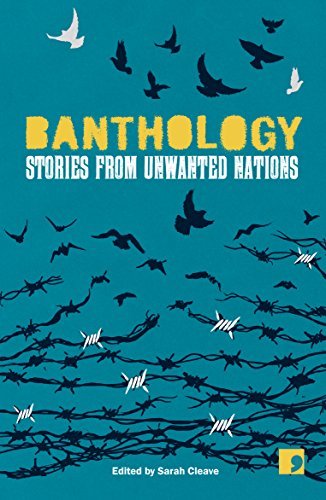
Banthology: Stories from Unwanted Nations
In January 2017, President Trump signed an executive order banning people from seven Muslim-majority countries – Iran, Iraq, Libya, Syria, Somalia, Sudan and Yemen – from entering the United States, effectively slamming the door on refugees seeking safety and tearing families apart. Mass protests followed, and although the order has since been blocked, amended and challenged by judges, it still stands as one of the most discriminatory laws to be passed in the US in modern times.
Banthology brings together specially commissioned stories from the original seven ‘banned nations’. Covering a range of approaches – from satire, to allegory, to literary realism – it explores the emotional and personal impact of all restrictions on movement, and offers a platform to voices the White House would rather remained silent.
Part of our 'Banned Nations Showcase'.
Banthology brings together specially commissioned stories from the original seven ‘banned nations’. Covering a range of approaches – from satire, to allegory, to literary realism – it explores the emotional and personal impact of all restrictions on movement, and offers a platform to voices the White House would rather remained silent.
Part of our 'Banned Nations Showcase'.
63 pages, Kindle Edition
First published April 24, 2018
Ratings & Reviews
Friends & Following
Create a free account to discover what your friends think of this book!
Community Reviews
Displaying 1 - 30 of 61 reviews

April 30, 2018
This short anthology contains one contemporary story from each country on the Trump administration banned list. These stories are neither comprehensive nor fully representative, and don't set out to be, they are merely 7 captures of 7 small stories that happen to come from an author from each country and possibly about that situation. One takes place entirely in an airport (probably my favorite) where the rules keep changing and the woman literally has no way of winning. Very 21st century, very of the now, just normal people from countries deserving of respect. Thanks to Deep Vellum for pulling this together and getting it all translated into English.
I received a review copy of this through Edelweiss; it came out 24 April 2018.
I received a review copy of this through Edelweiss; it came out 24 April 2018.

April 26, 2018
"Reading can be an escape, something transportative that takes you to different countries, cultures and states of mind. It can take you to all the places that Donald Trump doesn't want you to go."
(introduction)
Huzzah for Deep Vellum bringing this book to the US - it highlights stories we need to hear. Writers from Iran, Iraq, Syria, Yemen, Somalia, Sudan, and Libya were "asked to develop a fictional response to Trump's discriminatory ban, exploring themes of exile, travel, and restrictions on movement". The resulting short stories, all in translation, range from realistic to fantastic.
I ended up reading each story in one gulp, often while on the train to work. When I got to the end I'd sit with it while the landscape slid past - people are going through this. It's fiction, but it's real. Even the most fantastic stories have an air of 'lying to tell the truth', using unbelievable circumstances to skewer reality. All but one use first person, holding us close, refusing any comfort afforded by distance.
We follow someone doing whatever necessary to get to safety, visit a fantasy-like village above the clouds, and follow refugees as they put on a play (of sorts). As with any collection I liked some stories more than others, but they all got me out of my brain and own life experiences, which is the point. A great starting point for anyone interested in the people and cultures that some in power would rather we ignore.
Thanks to Deep Vellum and Edelweiss for providing a review copy.

November 20, 2019
-If you are the wind, a bird, or even a stranger there, you're in luck, because you're still free, like those who are yet to be born- Return Ticket x Najwa Binshatwan.
🌍🌍🌍🌍🌍
The stories within Banthology come from the minds of some of the talented writers who hail from seven of the Muslim nations targeted by Drumpf's(not a typo) travel ban.
🌍🌍🌍🌍🌍
These stories explore the nature of immigration and the challenges faced by immigrants. From #Sudan, #Syria, #Iran, #Libya, #Somalia, #Iraq and #Yemen, come stories that trace a harrowing journey across Europe trying to find a safe if not the safest country; finding the courage to face a new beginning; existing in a country not your own while trying to ignore the loss one feels(much like a phantom limb); being born in a country that travels beyond the normal confines of the space-time continuum; to having trauma erase memories that those we love best have passed on; finally reaching the limits of the tragedy a soul can endure before shattering; and having the promised child slip through your grasp leading to the annihilation of us as we are.
🌍🌍🌍🌍🌍
These are all stories from immigrants or descendants of immigrants detailing the lives of immigrants as they move across the canvas of the world, trying to find the exact point where their specific color will be enveloped; finally forming the complete picture of this tapestry called HOME.
🌍🌍🌍🌍🌍
🌍🌍🌍🌍🌍
The stories within Banthology come from the minds of some of the talented writers who hail from seven of the Muslim nations targeted by Drumpf's(not a typo) travel ban.
🌍🌍🌍🌍🌍
These stories explore the nature of immigration and the challenges faced by immigrants. From #Sudan, #Syria, #Iran, #Libya, #Somalia, #Iraq and #Yemen, come stories that trace a harrowing journey across Europe trying to find a safe if not the safest country; finding the courage to face a new beginning; existing in a country not your own while trying to ignore the loss one feels(much like a phantom limb); being born in a country that travels beyond the normal confines of the space-time continuum; to having trauma erase memories that those we love best have passed on; finally reaching the limits of the tragedy a soul can endure before shattering; and having the promised child slip through your grasp leading to the annihilation of us as we are.
🌍🌍🌍🌍🌍
These are all stories from immigrants or descendants of immigrants detailing the lives of immigrants as they move across the canvas of the world, trying to find the exact point where their specific color will be enveloped; finally forming the complete picture of this tapestry called HOME.
🌍🌍🌍🌍🌍

Read
April 23, 2018In honor of World Book Day, which is celebrated today in the U.S., I've decided to post my review of Banthology edited by Sarah Cleave. This is a collection of seven stories from the seven nations that were banned in the first version of the 2017 U.S. executive order on immigration. All the stories have been translated into English from their original languages. I received a digital copy from Edelweiss in return for this honest review.
There were stories with strong satiric elements. One of them was my favorite story in the anthology because it was a more complex tale with multiple themes. That story is "Return Ticket" by Najwa Binshatwan of Libya. I loved it because it's a magical realist story that also contained satire of rigid Islamic fundamentalism. It is written in the form of a letter by the female protagonist addressed to her grandchild who hasn't yet been born. The story deals with satiric depictions of the places where she traveled, her relationship with her husband and her attempt to return to the fictional utopian village of Schrödinger. It was presumably given this name because of the village's uncertain location like the physicist Erwin Schrödinger's theoretical cat which might be either alive or dead. It's a clever story with a well-developed viewpoint character who I found sympathetic.
I was attracted to the anthology by its central concept which I felt was well-intended. The stories that I liked made Banthology worthwhile particularly Binshatwan's excellent "Return Ticket".
For my complete review see http://shomeretmasked.blogspot.com/20...
There were stories with strong satiric elements. One of them was my favorite story in the anthology because it was a more complex tale with multiple themes. That story is "Return Ticket" by Najwa Binshatwan of Libya. I loved it because it's a magical realist story that also contained satire of rigid Islamic fundamentalism. It is written in the form of a letter by the female protagonist addressed to her grandchild who hasn't yet been born. The story deals with satiric depictions of the places where she traveled, her relationship with her husband and her attempt to return to the fictional utopian village of Schrödinger. It was presumably given this name because of the village's uncertain location like the physicist Erwin Schrödinger's theoretical cat which might be either alive or dead. It's a clever story with a well-developed viewpoint character who I found sympathetic.
I was attracted to the anthology by its central concept which I felt was well-intended. The stories that I liked made Banthology worthwhile particularly Binshatwan's excellent "Return Ticket".
For my complete review see http://shomeretmasked.blogspot.com/20...

July 6, 2020
A beautiful, moving collection of short stories that affected my heart. I'm not usually a fan of short stories but this collection made me think I might become one. The inspired title 'Banthology' is elucidated in the back cover blurb:
"In January 2017, President Trump signed an executive order banning people from seven Muslim majority countries ... from entering the United States ... Banthology brings together specially commissioned stories from the original seven "banned nations" ... and offers a platform to voices the White House would rather remained silent."
The stories are diverse but I encountered some commonalities. Each one (except for the last one) thematised being a refugee and seeking asylum in some shape and form, of fleeing, of getting away. Each one (except the last one) is told in the first person. Three of them feature dogs as creatures that inspire paralyising fear. Four of them make powerful use of the present tense. Five of them make powerful use of fantastical elements, not quite magical realism but dream-like, fairy-tale-like, fantasy-like irruptions into reality. These fantasy elements clothe painful and horrible realities, they speak of violence, they are expressions of suppression and projection because the actuality is too hard to bear. Four of them feature children, three of them girls whose girlhoods, dreams, verve and family connections get achingly disrupted. I think all of them feature transitional spaces; all of them address troubled travels and uprootedness.
Sudan. Woman author. Rania Mamoun, Bird of Paradise. Translated from the Arabic by Ruth Ahmedzai Kemp. A girl who dreams of flight like a bird; a woman stranded at an airport. "When I was a young girl, my eyes were drawn to the sky and I yearned to float up and see what lay behind it." A strange resonant twist at the end.
Syria. Man author. Zaher Omareen, The Beginner's Guide to Smuggling. Translated from the Arabic by Perween Richards and Basma Ghalayini. A stunning report of one man's flight as a refugee. The transits, the repeated tries, the false passports, the anxiety, and the energy behind the impetus to keep going. The prose is raw. And at times funny. "'Vagyok Magyarorszarol .... I'm from Hungary,' I replied, in a terrible Hungarian accent. He laughed heartily. The son of a bitch was on to me. He inspected my passport with painful slowness. A flock of pigeons flapped in my stomach." A punch to the gut twist at the end.
Iran. Woman author. Fereshteh Molavi, Phantom Limb. A sad story about exiles floating about in an in-between world in Toronto. A metaphor of strange beauty provides the red thread. "I grudgingly picked up the phone. It was Farhad's father. Long distance. ... I recognised his broken Farsi with a heavy Kurdish accent. 'Let him know that his mother's right leg was cut off last week.' I tried to dig a sound out of my larynx, but nothing came."
Libya. Woman author. Najwa Binshatwan, Return Ticket. Translated from the Arabic by Sawad Hussain. Wow, such a strange conceit, of a village called Schrödinger that straddles realities, is there and isn't there, and of the humiliating and terrible trip that the old woman narrating it to her grandson undertook. "Fortunately, I passed the test at the airport and was granted entry into this angular world. My admittance was on the condition that I removed my striped headscarf and changed into something more 'triangular'. I was forced to remove my coat, glasses, watch, shoes, even my underwear before going through the detectors. The hardest part was hiding my shame from the guard; especially as the country had recently passed a law making it a crime to feel embarrassed."
Somalia. Woman author. Ubah Cristina Ali Farah, Jujube. Translated from the Italian by Hope Campbell Gustafson. A heartbreaking tale of a little girl, her young sister and her mother in times of upheaval and war. The girl is an unreliable narrator with her memories of her hair growing like the jujube's spiky branches, sprouting leaves and flowers. Italicised 'interpreter's notes' are interpolated and tell us of another, grimmer reality. Beautifully told and very, very sad. "When I think about Mama before the war, I see her sitting on her heels in the courtyard, hair wrapped in a green net, her face yellow with turmeric and butter, the precious ingredients of her beauty mask."
Iraq. Woman author. Anoud, Storyteller. Riveting, painful, grim. A blow-by-blow account of a young girl's experience of air raids, murder and war, at first with her parents and sister, after a few years with also her baby brother, then at her first job, her first love... it is frightening how the years and decades keep piling up and yet there is no end in sight. A powerful shift to another country. A terrible descent. "'I want a pink gas mask,' I told my sister. ... But when the first night of bombing began, I was petrified, crying hysterically and shaking so violently I had to clench my fists to regain some control of my fingers."
Yemen. Man author. Wajdi al-Ahdal, The Slow Man. Translated from the Arabic by William M. Hutchins. A strange story that starts out as historical tale from the deep past and features Egypt, a pharao, Babylonians, Ishmaelites, Canaanites, portents, a possible assassination, and then a trot through the millennia until we get spat out at the other end in a thrill of science fiction. Strangely resonant. "After centuries of massive engineering efforts that employed the manpower of millions of slaves, the waters of the Nile finally reached the Senegal River and flowed into the Atlantic Ocean." Extraordinary.
Format: Lovely little paperback (the book is very short). Crisp pages; clear font. Co-published by Comma Press (Britain) and Deep Vellum Press (US). I now want to read more from Comma Press. I loved getting an insight into the literatures from countries from whom we hear so little. And kudos to them for translating and commissioning. Supported by Arts Council England (kudos to them, too).
A wonderful, refreshing, surprising and moving read.
"In January 2017, President Trump signed an executive order banning people from seven Muslim majority countries ... from entering the United States ... Banthology brings together specially commissioned stories from the original seven "banned nations" ... and offers a platform to voices the White House would rather remained silent."
The stories are diverse but I encountered some commonalities. Each one (except for the last one) thematised being a refugee and seeking asylum in some shape and form, of fleeing, of getting away. Each one (except the last one) is told in the first person. Three of them feature dogs as creatures that inspire paralyising fear. Four of them make powerful use of the present tense. Five of them make powerful use of fantastical elements, not quite magical realism but dream-like, fairy-tale-like, fantasy-like irruptions into reality. These fantasy elements clothe painful and horrible realities, they speak of violence, they are expressions of suppression and projection because the actuality is too hard to bear. Four of them feature children, three of them girls whose girlhoods, dreams, verve and family connections get achingly disrupted. I think all of them feature transitional spaces; all of them address troubled travels and uprootedness.
Sudan. Woman author. Rania Mamoun, Bird of Paradise. Translated from the Arabic by Ruth Ahmedzai Kemp. A girl who dreams of flight like a bird; a woman stranded at an airport. "When I was a young girl, my eyes were drawn to the sky and I yearned to float up and see what lay behind it." A strange resonant twist at the end.
Syria. Man author. Zaher Omareen, The Beginner's Guide to Smuggling. Translated from the Arabic by Perween Richards and Basma Ghalayini. A stunning report of one man's flight as a refugee. The transits, the repeated tries, the false passports, the anxiety, and the energy behind the impetus to keep going. The prose is raw. And at times funny. "'Vagyok Magyarorszarol .... I'm from Hungary,' I replied, in a terrible Hungarian accent. He laughed heartily. The son of a bitch was on to me. He inspected my passport with painful slowness. A flock of pigeons flapped in my stomach." A punch to the gut twist at the end.
Iran. Woman author. Fereshteh Molavi, Phantom Limb. A sad story about exiles floating about in an in-between world in Toronto. A metaphor of strange beauty provides the red thread. "I grudgingly picked up the phone. It was Farhad's father. Long distance. ... I recognised his broken Farsi with a heavy Kurdish accent. 'Let him know that his mother's right leg was cut off last week.' I tried to dig a sound out of my larynx, but nothing came."
Libya. Woman author. Najwa Binshatwan, Return Ticket. Translated from the Arabic by Sawad Hussain. Wow, such a strange conceit, of a village called Schrödinger that straddles realities, is there and isn't there, and of the humiliating and terrible trip that the old woman narrating it to her grandson undertook. "Fortunately, I passed the test at the airport and was granted entry into this angular world. My admittance was on the condition that I removed my striped headscarf and changed into something more 'triangular'. I was forced to remove my coat, glasses, watch, shoes, even my underwear before going through the detectors. The hardest part was hiding my shame from the guard; especially as the country had recently passed a law making it a crime to feel embarrassed."
Somalia. Woman author. Ubah Cristina Ali Farah, Jujube. Translated from the Italian by Hope Campbell Gustafson. A heartbreaking tale of a little girl, her young sister and her mother in times of upheaval and war. The girl is an unreliable narrator with her memories of her hair growing like the jujube's spiky branches, sprouting leaves and flowers. Italicised 'interpreter's notes' are interpolated and tell us of another, grimmer reality. Beautifully told and very, very sad. "When I think about Mama before the war, I see her sitting on her heels in the courtyard, hair wrapped in a green net, her face yellow with turmeric and butter, the precious ingredients of her beauty mask."
Iraq. Woman author. Anoud, Storyteller. Riveting, painful, grim. A blow-by-blow account of a young girl's experience of air raids, murder and war, at first with her parents and sister, after a few years with also her baby brother, then at her first job, her first love... it is frightening how the years and decades keep piling up and yet there is no end in sight. A powerful shift to another country. A terrible descent. "'I want a pink gas mask,' I told my sister. ... But when the first night of bombing began, I was petrified, crying hysterically and shaking so violently I had to clench my fists to regain some control of my fingers."
Yemen. Man author. Wajdi al-Ahdal, The Slow Man. Translated from the Arabic by William M. Hutchins. A strange story that starts out as historical tale from the deep past and features Egypt, a pharao, Babylonians, Ishmaelites, Canaanites, portents, a possible assassination, and then a trot through the millennia until we get spat out at the other end in a thrill of science fiction. Strangely resonant. "After centuries of massive engineering efforts that employed the manpower of millions of slaves, the waters of the Nile finally reached the Senegal River and flowed into the Atlantic Ocean." Extraordinary.
Format: Lovely little paperback (the book is very short). Crisp pages; clear font. Co-published by Comma Press (Britain) and Deep Vellum Press (US). I now want to read more from Comma Press. I loved getting an insight into the literatures from countries from whom we hear so little. And kudos to them for translating and commissioning. Supported by Arts Council England (kudos to them, too).
A wonderful, refreshing, surprising and moving read.

January 9, 2026
Sedem kratkih zgodb, ki so jih napisali avtorji različnih generacij iz sedmih držav, katere je oranžna hudoba med svojo prejšnjo diktaturo dala na seznam nacij, katerim so vrata v deželo "svobodnih" zaprta.
Sudanska zgodba je o ženski, ki bi rada bila rajska ptica, da bi lahko letela in odletela stran od brata, ki ji ne da svobode odločitve.
Sirijska zgodba, Vodič o tihotapljenju za začetnike, s črnim humorjem prikaže težko pot sirijskega begunca.
Iranska zgodba opisuje življenje štirih beguncev, ki se poizkušajo preživljati v ZDA in ohraniti dostojnost življenja, hkrati pa trpijo velike izgube.
V Libijski zgodbi glavna junakinja išče moža potujoč od letališča do letališča; v zgodbi je dodan homage fiziku Schrödingerju in njegovemu znanemu argumentu absurdnosti.
Somalijska zgodba je polna bolečine in opisuje mlado žensko, ki bi rada dobila kontakt z mamo in sestro, od katerih je bila ločena ob začetku vojne.
Iraška zgodba opisuje mlado begunko, tudi ločeno od družine, ki se spominja vseh grozot, skozi katere je šla od otroštva naprej.
Jemenska zgodba je parabola o posledicah človeških dejanj.
Sudanska zgodba je o ženski, ki bi rada bila rajska ptica, da bi lahko letela in odletela stran od brata, ki ji ne da svobode odločitve.
Sirijska zgodba, Vodič o tihotapljenju za začetnike, s črnim humorjem prikaže težko pot sirijskega begunca.
Iranska zgodba opisuje življenje štirih beguncev, ki se poizkušajo preživljati v ZDA in ohraniti dostojnost življenja, hkrati pa trpijo velike izgube.
V Libijski zgodbi glavna junakinja išče moža potujoč od letališča do letališča; v zgodbi je dodan homage fiziku Schrödingerju in njegovemu znanemu argumentu absurdnosti.
Somalijska zgodba je polna bolečine in opisuje mlado žensko, ki bi rada dobila kontakt z mamo in sestro, od katerih je bila ločena ob začetku vojne.
Iraška zgodba opisuje mlado begunko, tudi ločeno od družine, ki se spominja vseh grozot, skozi katere je šla od otroštva naprej.
Jemenska zgodba je parabola o posledicah človeških dejanj.
November 16, 2022
When Trump issued his 'Muslim ban' in 2017, Comma Press had the clever idea of issuing an anthology featuring a story from each of the seven countries - Iran, Iraq, Syria, Yemen, Somalia, Sudan and Libya. It's a riposte, a championing of the voices and imaginations of those banned. And the writers, of all ages and different styles, have come up with a bunch of brilliant pieces, engaging and weird, challenging and funny. A superb collection.
June 20, 2025
I’m late to Banthology, but it’s still relevant. Rather than a curated selection of existing work, the authors were tasked to create stories in response to Trump’s 2017 travel bans. Yes, some of them address xenophobia and terrorism, but the overarching threads of displacement and migration make this small collection powerful beyond the geopolitical context. Even without the shadow of the travel bans, this collection feels relatable to anyone who has traveled long distances, lost communication with loved ones, waited endlessly, or felt any difficult emotions upon returning to where they started. “Liminal” is a newer vocabulary word for me, showing up recently in fantasy books I’ve read, but these stories did the best job of relaying that abstract concept, imparting the notion of a travel purgatory or waiting room so vividly that it seems like it was passed without words. Loved: Bird of Paradise (Sudan), Phantom Limb (Iran), Return Ticket (Libya), Jujube (Somalia); Liked: The Beginner’s Guide to Smuggling (Syria), Storyteller (Iraq); Meh: The Slow Man (Yemen); Need to Reread: N/A.

April 6, 2018
A slim and lovely collection of seven short stories from authors who claim countries caught in the “Muslim Ban” as home. The pieces range from hyper-realist to bordering on fantasy. All deal with displacement, grief, and loss. Somali-Italian author Ubah Cristina Ali Farrah’s story about a teenage refugee in Italy is heartbreaking.
September 17, 2018
Championing and giving a voice to the nation's banned by executive order. Just as sad and thought provoking as you'd expect. The varied stories relate to the ban and its effects in some way, though some are tangential. They're more of snapshots of a culture.
Sudan. Bird of Paradise, Rania Mamoun.
A woman trapped at an airport, struggling to understand what she hopes for out of life.
Syria. The Beginner's Guide to Smuggling, Zaher Omareen.
Lyrical and descriptive, mixing beauty with fear, and a long journey with many road blocks.
Iran. Phantom Limb, Fereshteh Molavi.
Immigrants trying to cope with the ordeals of their families still at home, helpless to affect change.
Libya. Return Ticket, Najwa Binshatwan.
A strange town named Shrödinger.
Somalia. Jujube, Ubah Farah.
The aftermath of war.
Iraq. Storyteller, Anoud.
A recitation of a troubled life, the narrator seeking understanding.
Yemen. The Slow Man, Wajdi al-Ahdal.
Another travel ban, accompanied by portents.
Sudan. Bird of Paradise, Rania Mamoun.
A woman trapped at an airport, struggling to understand what she hopes for out of life.
Syria. The Beginner's Guide to Smuggling, Zaher Omareen.
Lyrical and descriptive, mixing beauty with fear, and a long journey with many road blocks.
Iran. Phantom Limb, Fereshteh Molavi.
Immigrants trying to cope with the ordeals of their families still at home, helpless to affect change.
Libya. Return Ticket, Najwa Binshatwan.
A strange town named Shrödinger.
Somalia. Jujube, Ubah Farah.
The aftermath of war.
Iraq. Storyteller, Anoud.
A recitation of a troubled life, the narrator seeking understanding.
Yemen. The Slow Man, Wajdi al-Ahdal.
Another travel ban, accompanied by portents.

September 15, 2020
This is a collection of seven stories from seven different countries banned by Trump administration to enter USA.
Sudan: Bird of Paradise by Rania Mamoun: The narrator reminisces childhood longing about traveling, flying and seeing the world. Being denied multiple times, when the time comes, the narrator finds herself at crossroads.
Syria: The Beginner's guide to smuggling by Zaher Omareen: There is tragic undertones here that's layered deep underneath continuous quest for survival.
Iran: Phantom Limb by Fereshteh Molavi: We see a week in life of Iranian immigrants who once lived much differently, had had different careers and way of lives and now in Canada, look forward to each day...differently.
Libya: Return Ticket by Najwa Binshatwan: A fascinating story about belonging written as fabulist fiction. The narrator writes this story about village, having not able to travel, to their unborn grandson and ends the little story in a very realistic note.
Somalia: Jujube by Ubah Cristina Ali Farah: Life of Somali refugee before and after her village was massacred.
Iraq: Storyteller by Anoud: The trauma that children of war face is carried throughout their lives and it intervenes in while making choices in life.
Yemen: The Slow Man by Wajdi al-Ahdal: I am really not sure what to make of this. An alternate history? A cautionary tale?
Sudan: Bird of Paradise by Rania Mamoun: The narrator reminisces childhood longing about traveling, flying and seeing the world. Being denied multiple times, when the time comes, the narrator finds herself at crossroads.
Syria: The Beginner's guide to smuggling by Zaher Omareen: There is tragic undertones here that's layered deep underneath continuous quest for survival.
Iran: Phantom Limb by Fereshteh Molavi: We see a week in life of Iranian immigrants who once lived much differently, had had different careers and way of lives and now in Canada, look forward to each day...differently.
Libya: Return Ticket by Najwa Binshatwan: A fascinating story about belonging written as fabulist fiction. The narrator writes this story about village, having not able to travel, to their unborn grandson and ends the little story in a very realistic note.
Somalia: Jujube by Ubah Cristina Ali Farah: Life of Somali refugee before and after her village was massacred.
Iraq: Storyteller by Anoud: The trauma that children of war face is carried throughout their lives and it intervenes in while making choices in life.
Yemen: The Slow Man by Wajdi al-Ahdal: I am really not sure what to make of this. An alternate history? A cautionary tale?

August 28, 2024
A very short anthology with seven short stories each from a different author from a different country. These countries all appeared on the "Muslim ban" in January 2017 for the newly sitting United States President at that time. The author countries are: Sudan, Syria, Iran, Libya, Somalia, Iraq and Yemen.
This book shows that people from around the world are more alike than dissimilar. We may have different customs and beliefs, but we all have same emotions. And same desires, such as wanting freedom to be yourself and not be hungry, be safe.
This was a very quick read, easily read in a few hours. Most of the stories are translations. There is only one story from each country. The book feels way to short.
This book shows that people from around the world are more alike than dissimilar. We may have different customs and beliefs, but we all have same emotions. And same desires, such as wanting freedom to be yourself and not be hungry, be safe.
This was a very quick read, easily read in a few hours. Most of the stories are translations. There is only one story from each country. The book feels way to short.

May 27, 2020
This as an interesting collection. None were under 3 stars.
BIRD OF PARADISE by Rania Mamoun Sudan🇸🇩 ⭐⭐⭐
THE BEGINNER’S GUIDE TO SMUGGLING by Zaher Omareen Syria 🇸🇾 ⭐⭐⭐⭐
"Where on Earth do they get these pronunciations from?" He was talking about French and after taking 5 French classes, I understand this so well 😂.
PHANTOM LIMB by Fereshteh Molavi - Iran🇮🇷⭐⭐⭐
RETURN TICKET by Najwa Binshatwan Libya🇱🇾⭐⭐⭐⭐⭐
JUJUBE by Ubah Cristina Ali Farah Somalia🇸🇴⭐⭐⭐
STORYTELLER by Anoud Iraq🇮🇶 ⭐⭐⭐
THE SLOW MAN by Wajdi al-Ahdal Yemen🇾🇪 ⭐⭐⭐
BIRD OF PARADISE by Rania Mamoun Sudan🇸🇩 ⭐⭐⭐
THE BEGINNER’S GUIDE TO SMUGGLING by Zaher Omareen Syria 🇸🇾 ⭐⭐⭐⭐
"Where on Earth do they get these pronunciations from?" He was talking about French and after taking 5 French classes, I understand this so well 😂.
PHANTOM LIMB by Fereshteh Molavi - Iran🇮🇷⭐⭐⭐
RETURN TICKET by Najwa Binshatwan Libya🇱🇾⭐⭐⭐⭐⭐
JUJUBE by Ubah Cristina Ali Farah Somalia🇸🇴⭐⭐⭐
STORYTELLER by Anoud Iraq🇮🇶 ⭐⭐⭐
THE SLOW MAN by Wajdi al-Ahdal Yemen🇾🇪 ⭐⭐⭐


July 18, 2024
great and quick and insightful read with many different voices and unique perspectives for the quick little humbling reminder of our privilege to live as we do
May 19, 2020
Stories from Seven Banned Nations
Review of the Comma Press paperback edition (2017)
This anthology collects 7 short stories from the 7 Muslim majority countries that were singled out for an immigration ban by the USA in 2017. The stories and styles have a wide variety including aspects of humour, magic realism and even science fiction futuristic fantasy. The stories include:
1. Bird of Paradise (Sudan) by Rania Mamoun translated from Arabic by Ruth Ahmedzai Kemp
2. A Beginner's Guide to Smuggling (Syria) by Zaher Omareen translated from Arabic by Perween Richards & Basma Ghalayini
3. Phantom Limb (Iran) by Fereshteh Molavi فرشته مولوی
4. Return Ticket (Libya) by Najwa Binshatwan translated from Arabic by Sawad Hussain
5. Jujube (Somalia) by Ubah Cristina Ali Farah translated from Italian by Hope Campbell Gustafson
6. Storyteller (Iraq) by Anoud
7. The Slow Man (Yemen) by Wajdi Al-Ahdal translated from Arabic by William M. Hutchins
My thanks to Comma Press who provided this book as a bonus for my Translation Fiction Online Book Club order of Thirteen Months of Sunrise.
Review of the Comma Press paperback edition (2017)
This anthology collects 7 short stories from the 7 Muslim majority countries that were singled out for an immigration ban by the USA in 2017. The stories and styles have a wide variety including aspects of humour, magic realism and even science fiction futuristic fantasy. The stories include:
1. Bird of Paradise (Sudan) by Rania Mamoun translated from Arabic by Ruth Ahmedzai Kemp
2. A Beginner's Guide to Smuggling (Syria) by Zaher Omareen translated from Arabic by Perween Richards & Basma Ghalayini
3. Phantom Limb (Iran) by Fereshteh Molavi فرشته مولوی
4. Return Ticket (Libya) by Najwa Binshatwan translated from Arabic by Sawad Hussain
5. Jujube (Somalia) by Ubah Cristina Ali Farah translated from Italian by Hope Campbell Gustafson
6. Storyteller (Iraq) by Anoud
7. The Slow Man (Yemen) by Wajdi Al-Ahdal translated from Arabic by William M. Hutchins
My thanks to Comma Press who provided this book as a bonus for my Translation Fiction Online Book Club order of Thirteen Months of Sunrise.

January 26, 2018
Almost exactly a year ago, on January 27th, 2017, Donald Trump signed an Executive Order banning people from seven Muslim-majority countries (Lybia, Sudan, Somalia, Yemen, Syria, Iraq, and Iran) from entering the United States for 90 days, halting refugee resettlement for 120 days, and banning Syrian refugees indefinitely. In response to this, independent British publisher Comma Press picked an author from each of the countries affected by the ban and commissioned them to write a short story exploring themes of exile, travel, and restrictions on movement. The result is Banthology: Stories from Unwanted Nations, which came out last Thursday.
Three of the stories fall within the realm of fantasy and science fiction:
In Wajdi al-Ahdal's Islamofuturist satire 'The Slow Man' (Yemen; translated from the Arabic by William H. Hutchins), an Ancient Egyptian border commander who doesn't like Babylonians unwittingly plays a part in the incident that results in the Babylonian takeover of Egypt, and, from Egypt, of the rest of the world; 4,000 years later, monotheism has failed to catch on and we're all worshipping the Babylonian god Marduk. It's a strange story, with strange pacing and vertiginous twists and turns, but I appreciated its sheer what-the-fuckery.
In Najwa Binshatwan's 'Return Ticket' (Lybia; translated from the Arabic by Sawad Hussain), we learn about a village named Schrödinger that is at the same time everywhere and nowhere, though of course from the perspective of someone living in Schrödinger it is the rest of the world, not Schrödinger, that is weird. I loved the narrator's mini-odyssey through a series of (non-Schrödinger) airports with increasingly absurd security regulations, and it made me hope that the author would one day turn it into a longer piece—perhaps a modern response to Gulliver's Travel that takes place exclusively in airports.
In Ubah Cristina Ali Farah's magical-realist 'Jujube' (Somalia; translated from the Italian by Hope Campbell Gustafson), we learn that the, before the war that tore her family apart, the narrator's mother had been a healer with a special connection to the jujube tree. This was by far the standout story for me: both the author and the translator have a gift for conveying sensory information, particularly when it comes to colour—starting with the very first paragraph, in which we meet the narrator's mother, "her face yellow with turmeric and butter" and her head nodding "like the feathery flower heads that sprout from acacia in bloom". Of all the stories in Banthology, 'Jujube' made me most feel like I'd visited a faraway country, and Ubah Cristina Ali Farah is the author I'm most likely to keep in mind in future book hunts.
'Jujube', which is partly set in Italy, is also one of three stories whose protagonists live far from their countries of origin. In Fereshteh Molavi's 'Phantom Limb' (Iran), the connection between a young Iranian man living in Canada and his mother, who is still in Iran, manifests itself in strange ways, while in Anoud's 'The Storyteller' (Iraq), a homeless Iraqi woman living in London is stuck in a loop of reciting over and over again, the key traumatic experiences of her lifetime, from the first time she felt hunger, due to the economic sanctions of the 1990s, to the first time she took shelter from an air raid, in 2003, to the time she saw tourists take photos of a Baghdad car bomb at the Imperial War Museum, in 2014, and so on. 'The Storyteller' is without a doubt the most harrowing story of the bunch, while 'Phantom Limb' keeps the hardship and tragedies of its characters' lives bubbling just under the surface of its deceptively causal and lighthearted tone.
Finally, two of the stories feature people trying to leave their countries of origin.
In Rania Mamoud's 'Bird of Paradise' (Sudan; translated from the Arabic by Ruth Ahmedzai Kemp), the narrator's family prevent her from straying far from home for so long that when she finally gets the opportunity to leave, she finds that her own mind makes it impossible to board the plane that would take her away. It's a relatively simple story, simply told, but the image of the narrator queuing at the airport but unable to take a single step forwards when boarding starts may well haunt me for a long time.
Finally, in Zaher Omareen's 'The Beginner's Guide to Smuggling' (Syria; translated from the Arabic by Perween Richards and Basma Ghalayini), the narrator is a Syrian refugee attempting to reach Sweden via Greece and France. Like 'Phantom Limb', 'The Beginner's Guide to Smuggling' is fairly lighthearted and humorous in tone, except for the glimpses the narrator lets slip of his previous life as a prisoner, and all his previous attempts at escaping his country.
When Comma Press first sent me this anthology, I was intrigued by the concept but also worried that the quality would be uneven, as that's usually my experience with these kinds of collection. However, I'm happy to report that I found something compelling in every single one of these stories, and, as a bonus, the book is just over 100 pages long, making it both a quick read and something that can be very easily revisited. To quote the introduction by Sarah Cleave, the collection's editor, I'd recommend them to anyone who wants to go "to all the places that Donald Trump doesn't want you to go".
(And who knows, maybe next year we'll get a sequel—a Shithology, perhaps?)
This review originally appeared at my blog, Strange Bookfellows--head over to https://strangebookfellowsblog.wordpr... more book recommendations!
Three of the stories fall within the realm of fantasy and science fiction:
In Wajdi al-Ahdal's Islamofuturist satire 'The Slow Man' (Yemen; translated from the Arabic by William H. Hutchins), an Ancient Egyptian border commander who doesn't like Babylonians unwittingly plays a part in the incident that results in the Babylonian takeover of Egypt, and, from Egypt, of the rest of the world; 4,000 years later, monotheism has failed to catch on and we're all worshipping the Babylonian god Marduk. It's a strange story, with strange pacing and vertiginous twists and turns, but I appreciated its sheer what-the-fuckery.
In Najwa Binshatwan's 'Return Ticket' (Lybia; translated from the Arabic by Sawad Hussain), we learn about a village named Schrödinger that is at the same time everywhere and nowhere, though of course from the perspective of someone living in Schrödinger it is the rest of the world, not Schrödinger, that is weird. I loved the narrator's mini-odyssey through a series of (non-Schrödinger) airports with increasingly absurd security regulations, and it made me hope that the author would one day turn it into a longer piece—perhaps a modern response to Gulliver's Travel that takes place exclusively in airports.
In Ubah Cristina Ali Farah's magical-realist 'Jujube' (Somalia; translated from the Italian by Hope Campbell Gustafson), we learn that the, before the war that tore her family apart, the narrator's mother had been a healer with a special connection to the jujube tree. This was by far the standout story for me: both the author and the translator have a gift for conveying sensory information, particularly when it comes to colour—starting with the very first paragraph, in which we meet the narrator's mother, "her face yellow with turmeric and butter" and her head nodding "like the feathery flower heads that sprout from acacia in bloom". Of all the stories in Banthology, 'Jujube' made me most feel like I'd visited a faraway country, and Ubah Cristina Ali Farah is the author I'm most likely to keep in mind in future book hunts.
'Jujube', which is partly set in Italy, is also one of three stories whose protagonists live far from their countries of origin. In Fereshteh Molavi's 'Phantom Limb' (Iran), the connection between a young Iranian man living in Canada and his mother, who is still in Iran, manifests itself in strange ways, while in Anoud's 'The Storyteller' (Iraq), a homeless Iraqi woman living in London is stuck in a loop of reciting over and over again, the key traumatic experiences of her lifetime, from the first time she felt hunger, due to the economic sanctions of the 1990s, to the first time she took shelter from an air raid, in 2003, to the time she saw tourists take photos of a Baghdad car bomb at the Imperial War Museum, in 2014, and so on. 'The Storyteller' is without a doubt the most harrowing story of the bunch, while 'Phantom Limb' keeps the hardship and tragedies of its characters' lives bubbling just under the surface of its deceptively causal and lighthearted tone.
Finally, two of the stories feature people trying to leave their countries of origin.
In Rania Mamoud's 'Bird of Paradise' (Sudan; translated from the Arabic by Ruth Ahmedzai Kemp), the narrator's family prevent her from straying far from home for so long that when she finally gets the opportunity to leave, she finds that her own mind makes it impossible to board the plane that would take her away. It's a relatively simple story, simply told, but the image of the narrator queuing at the airport but unable to take a single step forwards when boarding starts may well haunt me for a long time.
Finally, in Zaher Omareen's 'The Beginner's Guide to Smuggling' (Syria; translated from the Arabic by Perween Richards and Basma Ghalayini), the narrator is a Syrian refugee attempting to reach Sweden via Greece and France. Like 'Phantom Limb', 'The Beginner's Guide to Smuggling' is fairly lighthearted and humorous in tone, except for the glimpses the narrator lets slip of his previous life as a prisoner, and all his previous attempts at escaping his country.
When Comma Press first sent me this anthology, I was intrigued by the concept but also worried that the quality would be uneven, as that's usually my experience with these kinds of collection. However, I'm happy to report that I found something compelling in every single one of these stories, and, as a bonus, the book is just over 100 pages long, making it both a quick read and something that can be very easily revisited. To quote the introduction by Sarah Cleave, the collection's editor, I'd recommend them to anyone who wants to go "to all the places that Donald Trump doesn't want you to go".
(And who knows, maybe next year we'll get a sequel—a Shithology, perhaps?)
This review originally appeared at my blog, Strange Bookfellows--head over to https://strangebookfellowsblog.wordpr... more book recommendations!

April 16, 2018
Small collection of seven short stories in a variety of styles by authors from Trump's executive order banning people from seven Muslim-majority countries – Iran, Iraq, Libya, Syria, Somalia, Sudan and Yemen. Stories are set both inside the banned countries and also from the perspective of those who have immigrated from the banned countries.

December 6, 2018
This was a really short read, and it flew by. The stories were as vast and diverse as the countries the authors came from, and each story carried such a unique message about hope, change, and moving around the world. An absolute must read.

Want to Read
May 12, 2018Note: I accessed a digital review copy of this book through Edelweiss.
September 3, 2018
A slim volume (more like a pamphlet) of translated stories. Worth reading, especially Storyteller by Anoud.

June 5, 2025
The Times of Israel is reporting that That Man in America has banned travel from 12 countries,
The proclamation fully restricts and limits the entry of nationals from 12 countries: Afghanistan, Myanmar, Chad, Congo, Equatorial Guinea, Eritrea, Haiti, Iran, Libya, Somalia, Sudan and Yemen.
So it seems like a good time to resurrect my unfinished reading of Banthology, Stories from Banned Nations (2018), edited by Sarah Cleave.
I discovered it back in 2018 via Somali Bookaholic whose review was written from his own personal perspective, back when ‘only’ seven countries had been banned. He had just finished his degree and was hoping to travel, only to learn that he was unwanted because Somalia was then and still is now, a failed state on the Banned Countries list. Through an accident of birth, all sorts of disreputable people can travel freely as long as they don’t attract the attention of Interpol, but respectable people from failed states can’t, even if they are working doggedly to improve governance.
I didn’t finish reading Banthology there and then… it’s not a book to read all-in-one-go, and *blush* it became one of those books lurking on the Kindle that I forgot about, and it seemed irrelevant when President Biden revoked the ban in 2021.
To read the rest of my review please visit https://anzlitlovers.com/2025/06/06/b...
The proclamation fully restricts and limits the entry of nationals from 12 countries: Afghanistan, Myanmar, Chad, Congo, Equatorial Guinea, Eritrea, Haiti, Iran, Libya, Somalia, Sudan and Yemen.
So it seems like a good time to resurrect my unfinished reading of Banthology, Stories from Banned Nations (2018), edited by Sarah Cleave.
I discovered it back in 2018 via Somali Bookaholic whose review was written from his own personal perspective, back when ‘only’ seven countries had been banned. He had just finished his degree and was hoping to travel, only to learn that he was unwanted because Somalia was then and still is now, a failed state on the Banned Countries list. Through an accident of birth, all sorts of disreputable people can travel freely as long as they don’t attract the attention of Interpol, but respectable people from failed states can’t, even if they are working doggedly to improve governance.
I didn’t finish reading Banthology there and then… it’s not a book to read all-in-one-go, and *blush* it became one of those books lurking on the Kindle that I forgot about, and it seemed irrelevant when President Biden revoked the ban in 2021.
To read the rest of my review please visit https://anzlitlovers.com/2025/06/06/b...

December 7, 2018
This book was created in response to the travel ban put in place in America, with authors from the countries included in the ban writing to “explore themes of exile, travel, and restrictions on movement.” I thought this was a brilliant idea, and with only seven stories (one from each country included in the ban), the book isn’t an intimidating read.
All the stories are wonderful. Not all are happy–in fact it could be argued that none of them are happy–but they are all so wonderfully told. I’m thinking about which ones i enjoyed the most, but i genuinely can’t pick a favourite. The few that stood out the most for me were Jujube, The Beginner’s Guide to Smuggling, and Storyteller. These were all about people looking to move and settle in other countries, but each story was unique in its approach to the character, the history, and the outcome. The other two stories that stood out for their much more unusual and less straightforward approach were Return Ticket (about a cosmic anomaly village called Schrödinger) and The Slow Man (about a conflict between the Egyptians and the Babylonians that changes the course of history).
Though these were stories, authors, and subjects outside of my usual reading matter, I really loved this book. It is a short, but worthwhile read and I would encourage anyone to pick it up and give it a go.
All the stories are wonderful. Not all are happy–in fact it could be argued that none of them are happy–but they are all so wonderfully told. I’m thinking about which ones i enjoyed the most, but i genuinely can’t pick a favourite. The few that stood out the most for me were Jujube, The Beginner’s Guide to Smuggling, and Storyteller. These were all about people looking to move and settle in other countries, but each story was unique in its approach to the character, the history, and the outcome. The other two stories that stood out for their much more unusual and less straightforward approach were Return Ticket (about a cosmic anomaly village called Schrödinger) and The Slow Man (about a conflict between the Egyptians and the Babylonians that changes the course of history).
Though these were stories, authors, and subjects outside of my usual reading matter, I really loved this book. It is a short, but worthwhile read and I would encourage anyone to pick it up and give it a go.
May 19, 2022
Some of the stories are better than others.
1. Bird of Paradise - It felt like the middle portion of the story, likening was missing the beginning and end. ⭐️⭐️
2. The Beginner‘s Guide to Smuggling - excellent! This writer is very talented and witty. I would have loved a longer story. I will definitely seek out more by this author. ⭐️⭐️⭐️⭐️⭐️
3. Phantom Limb - lots of potential here, also some wit. A good story that could have used a few more pages for the sake of clarity. ⭐️⭐️⭐️⭐️
4. Return Ticket - I didn’t like this one. I thought there must be some connection to Schrödinger‘s paradox, but if there was I couldn’t see it. ⭐️
5. Jujube - another good one that needed a few more pages for extra clarity. ⭐️⭐️⭐️
6. Storyteller - Excellent. Heartbreaking and visceral. ⭐️⭐️⭐️⭐️
7. The Slow Man - started good, but I quickly got lost. Events and people got too mixed up for me to understand. ⭐️⭐️
1. Bird of Paradise - It felt like the middle portion of the story, likening was missing the beginning and end. ⭐️⭐️
2. The Beginner‘s Guide to Smuggling - excellent! This writer is very talented and witty. I would have loved a longer story. I will definitely seek out more by this author. ⭐️⭐️⭐️⭐️⭐️
3. Phantom Limb - lots of potential here, also some wit. A good story that could have used a few more pages for the sake of clarity. ⭐️⭐️⭐️⭐️
4. Return Ticket - I didn’t like this one. I thought there must be some connection to Schrödinger‘s paradox, but if there was I couldn’t see it. ⭐️
5. Jujube - another good one that needed a few more pages for extra clarity. ⭐️⭐️⭐️
6. Storyteller - Excellent. Heartbreaking and visceral. ⭐️⭐️⭐️⭐️
7. The Slow Man - started good, but I quickly got lost. Events and people got too mixed up for me to understand. ⭐️⭐️

April 27, 2018
A very interesting anthology of stories set during times of movement bans, Banthology is the perfect answer to our troubled timed.
Initiated as a response to Trump's 'Islamic Ban', the stories are written by authors from the banned nation. Each tale paints an honest picture and reflects the confusion, loss, fear and limbo that sets in when movement is restricted.
The variety in approaching this theme is refreshing, with authors resorting to different styles from satire to allegory. While some genres are not my personal favourite, it was nevertheless interesting to explore.
Certain stories really stood out - Zaher Omareen's 'The Beginner's Guide to Smuggling' (Syria) and Ubah Cristina Ali Farah's Jujube (Somalia) were especially impressive.
In the end, the book achieves what it sets out to do – the reader is left with a deep desire to create a world without borders.
Initiated as a response to Trump's 'Islamic Ban', the stories are written by authors from the banned nation. Each tale paints an honest picture and reflects the confusion, loss, fear and limbo that sets in when movement is restricted.
The variety in approaching this theme is refreshing, with authors resorting to different styles from satire to allegory. While some genres are not my personal favourite, it was nevertheless interesting to explore.
Certain stories really stood out - Zaher Omareen's 'The Beginner's Guide to Smuggling' (Syria) and Ubah Cristina Ali Farah's Jujube (Somalia) were especially impressive.
In the end, the book achieves what it sets out to do – the reader is left with a deep desire to create a world without borders.

January 18, 2022
A definite page turner. But also a page-pauser? After every short story, I found myself having to take a moment to breathe and think. Maybe the book resonated so much with me because I'm an immigrant from one of the banned countries.
The short stories here masterfully take you through a complicated series of emotions, by the time you've reached the end, it feels as if you've felt them all. It shows how deeply the decisions of America that we just gasp and frown at easily here -- or worse, agree with -- have deep and terrible after effects on the world at large. Truly the villainous undertones of the world belong to us.
I enjoyed all the short stories, personally rating them all 3.5 stars or above. My absolute favorite is hands down Jujube by Ubah Cristina Ali Farah (Somalia). I'm still thinking about it even now and it's been days.
The short stories here masterfully take you through a complicated series of emotions, by the time you've reached the end, it feels as if you've felt them all. It shows how deeply the decisions of America that we just gasp and frown at easily here -- or worse, agree with -- have deep and terrible after effects on the world at large. Truly the villainous undertones of the world belong to us.
I enjoyed all the short stories, personally rating them all 3.5 stars or above. My absolute favorite is hands down Jujube by Ubah Cristina Ali Farah (Somalia). I'm still thinking about it even now and it's been days.
June 25, 2025
Most themed anthologies tend to feel repetitive, but Banthology is anything but. Each story delivers a distinct and emotionally layered take on migration, exile, and displacement, told through voices that feel urgent and lived-in. What makes this collection essential is how it refuses to separate individual pain from the systems that cause it. The stories directly confront the United States' central role in destabilizing the Middle East and the wider Arab world, making it clear that these crises are not accidents or natural disasters—they are the result of deliberate policy, war, and imperialism. Banthology does not let the reader look away.

June 1, 2019
This anthology is composed of short stories from the countries banned early in 2017 by Donald Trump. The editor writes in the introduction to the book that during times of upheaval, literature has value and responsibility and that reading can take you to different countries, cultures and states of mind. That is why we read, because in our interconnected world we are ill suited to face the challenges of our time with an open mind and empathy if we don’t know who is suffering, why and what we or our governments can and should do about it.

Read
June 14, 2018Banthology is definitely worth a read. The title and cover did their job in catching my eye in the bookstore. Each of the short stories goes by relatively quickly. Some are sad, others are hard to understand conceptually and I'll definitely need to reread them, but overall I really like the idea of using an anthology of fiction to try to build empathy among Westerners for the peoples affected by the travel ban.
Spoiler: there was an Armenian character in one of the stories.
Spoiler: there was an Armenian character in one of the stories.

January 28, 2022
This short collection of stories was published in response to the USA preventing entry of people from several Muslim-majority countries.
Themes of migration, immigration and refuge run through the stories, but they are nonetheless varied. I enjoyed the story by Zaher Omareen the most, but the others were interesting too and included some beautiful, moving, and funny moments.
The readers on the audiobook did a decent job overall.
Themes of migration, immigration and refuge run through the stories, but they are nonetheless varied. I enjoyed the story by Zaher Omareen the most, but the others were interesting too and included some beautiful, moving, and funny moments.
The readers on the audiobook did a decent job overall.
Displaying 1 - 30 of 61 reviews