

What do you think?

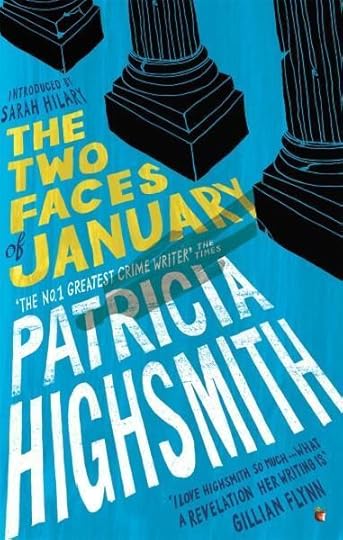
The Two Faces of January
Three of them are waiting. Rydal Keener is waiting for something exciting to happen in his grubby little Athens hotel.
At forty-odd, Chester MacFarland has been waiting much longer, expecting his life of stock manipulation and fraud to catch up with him. And Colette, Chester's wife, is waiting for something altogether different.
After a nasty little incident in the hotel, they all wait together. As the stakes, and the tension, in their three-cornered waiting game mount, they learn that while passports and silence can be bought, other things can cost as much as your life.
At forty-odd, Chester MacFarland has been waiting much longer, expecting his life of stock manipulation and fraud to catch up with him. And Colette, Chester's wife, is waiting for something altogether different.
After a nasty little incident in the hotel, they all wait together. As the stakes, and the tension, in their three-cornered waiting game mount, they learn that while passports and silence can be bought, other things can cost as much as your life.
288 pages, Paperback
First published January 1, 1964
About the author
Patricia Highsmith
487 books5,314 followersPatricia Highsmith (19 January 1921 – 4 February 1995) was an American novelist who is known mainly for her psychological crime thrillers which have led to more than two dozen film adaptations over the years.
She lived with her grandmother, mother and later step-father (her mother divorced her natural father six months before 'Patsy' was born and married Stanley Highsmith) in Fort Worth before moving with her parents to New York in 1927 but returned to live with her grandmother for a year in 1933. Returning to her parents in New York, she attended public schools in New York City and later graduated from Barnard College in 1942.
Shortly after graduation her short story "The Heroine" was published in the Harper's Bazaar magazine and it was selected as one of the 22 best stories that appeared in American magazines in 1945 and it won the O Henry award for short stories in 1946. She continued to write short stories, many of them comic book stories, and regularly earned herself a weekly $55 paycheck. During this period of her life she lived variously in New York and Mexico.
Her first suspense novel Strangers on a Train published in 1950 was an immediate success with public and critics alike. The novel has been adapted for the screen three times, most notably by Alfred Hitchcock in 1951.
In 1955 her anti-hero Tom Ripley appeared in the splendid The Talented Mr Ripley, a book that was awarded the Grand Prix de Litterature Policiere as the best foreign mystery novel translated into French in 1957. This book, too, has been the subject of a number of film versions. Ripley appeared again in Ripley Under Ground in 1970, in Ripley's Game in 1974, The Boy Who Followed Ripley in 1980, and in Ripley Under Water in 1991.
Along with her acclaimed series about Ripley, she wrote 22 novels and eight short story collections plus many other short stories, often macabre, satirical or tinged with black humour. She also wrote one novel, non-mystery, under the name Claire Morgan , plus a work of nonfiction Plotting and Writing Suspense Fiction and a co-written book of children's verse, Miranda the Panda Is on the Veranda.
She latterly lived in England and France and was more popular in England than in her native United States. Her novel Deep Water, 1957, was called by the Sunday Times one of the "most brilliant analyses of psychosis in America" and Julian Symons once wrote of her "Miss Highsmith is the writer who fuses character and plot most successfully ... the most important crime novelist at present in practice." In addition, Michael Dirda observed "Europeans honoured her as a psychological novelist, part of an existentialist tradition represented by her own favorite writers, in particular Dostoevsky, Conrad, Kafka, Gide, and Camus."
She died of leukemia in Locarno, Switzerland on 4 February 1995 and her last novel, Small g: A Summer Idyll, was published posthumously a month later. (Gerry Wolstenholme, July 2010).
She lived with her grandmother, mother and later step-father (her mother divorced her natural father six months before 'Patsy' was born and married Stanley Highsmith) in Fort Worth before moving with her parents to New York in 1927 but returned to live with her grandmother for a year in 1933. Returning to her parents in New York, she attended public schools in New York City and later graduated from Barnard College in 1942.
Shortly after graduation her short story "The Heroine" was published in the Harper's Bazaar magazine and it was selected as one of the 22 best stories that appeared in American magazines in 1945 and it won the O Henry award for short stories in 1946. She continued to write short stories, many of them comic book stories, and regularly earned herself a weekly $55 paycheck. During this period of her life she lived variously in New York and Mexico.
Her first suspense novel Strangers on a Train published in 1950 was an immediate success with public and critics alike. The novel has been adapted for the screen three times, most notably by Alfred Hitchcock in 1951.
In 1955 her anti-hero Tom Ripley appeared in the splendid The Talented Mr Ripley, a book that was awarded the Grand Prix de Litterature Policiere as the best foreign mystery novel translated into French in 1957. This book, too, has been the subject of a number of film versions. Ripley appeared again in Ripley Under Ground in 1970, in Ripley's Game in 1974, The Boy Who Followed Ripley in 1980, and in Ripley Under Water in 1991.
Along with her acclaimed series about Ripley, she wrote 22 novels and eight short story collections plus many other short stories, often macabre, satirical or tinged with black humour. She also wrote one novel, non-mystery, under the name Claire Morgan , plus a work of nonfiction Plotting and Writing Suspense Fiction and a co-written book of children's verse, Miranda the Panda Is on the Veranda.
She latterly lived in England and France and was more popular in England than in her native United States. Her novel Deep Water, 1957, was called by the Sunday Times one of the "most brilliant analyses of psychosis in America" and Julian Symons once wrote of her "Miss Highsmith is the writer who fuses character and plot most successfully ... the most important crime novelist at present in practice." In addition, Michael Dirda observed "Europeans honoured her as a psychological novelist, part of an existentialist tradition represented by her own favorite writers, in particular Dostoevsky, Conrad, Kafka, Gide, and Camus."
She died of leukemia in Locarno, Switzerland on 4 February 1995 and her last novel, Small g: A Summer Idyll, was published posthumously a month later. (Gerry Wolstenholme, July 2010).
Ratings & Reviews
Friends & Following
Create a free account to discover what your friends think of this book!
Community Reviews
Displaying 1 - 30 of 390 reviews

May 1, 2021
My love affair with Patricia Highsmith continues. But, as with all love affairs, there are the inevitable highs and lows. It can't be sunshine and roses ALL the time, can it?
The Two Faces of January, Highsmith's 8th novel, published in 1964, has a promising premise. Rydal Keener, a troubled young man who is loafing around in Greece while spending his grandmother's inheritance, spots a man who looks like his recently deceased father. He can tell at one perceptive glance that this guy is no good - probably a criminal - but the man's resemblance to his father creates an obsession. He follows him around, and happens to be present at the precise moment when a fatal accident happens. For complex psychological reasons, Rydal helps this father-stranger (con man Chester MacFarland) hide the evidence.
At this point, the two men are tied, and thus begins their travels around Greece, along with Chester's beautiful young wife Colette. (Of course she's beautiful and young, and you know this can't end well, right?)
It's got a lot going for it. The European setting, which is charming. The atmosphere, which is brooding. The tension, which is omnipresent. The psychology, which is intriguing.
But.
This is likely my least favourite of dear Pat's work so far. While she still had me turning pages, this wasn't as compelling or as suspensefully delicious as her other work. Perhaps because the characters aren't entirely convincing, or because the cat and mouse game goes on for far too long (too many interior monologues in various hotel rooms).
Still, I haven't been put off. She's proven herself again and again. Besides, as I said, it's a love affair, and let's face it, I've got it bad.
The Two Faces of January, Highsmith's 8th novel, published in 1964, has a promising premise. Rydal Keener, a troubled young man who is loafing around in Greece while spending his grandmother's inheritance, spots a man who looks like his recently deceased father. He can tell at one perceptive glance that this guy is no good - probably a criminal - but the man's resemblance to his father creates an obsession. He follows him around, and happens to be present at the precise moment when a fatal accident happens. For complex psychological reasons, Rydal helps this father-stranger (con man Chester MacFarland) hide the evidence.
At this point, the two men are tied, and thus begins their travels around Greece, along with Chester's beautiful young wife Colette. (Of course she's beautiful and young, and you know this can't end well, right?)
It's got a lot going for it. The European setting, which is charming. The atmosphere, which is brooding. The tension, which is omnipresent. The psychology, which is intriguing.
But.
This is likely my least favourite of dear Pat's work so far. While she still had me turning pages, this wasn't as compelling or as suspensefully delicious as her other work. Perhaps because the characters aren't entirely convincing, or because the cat and mouse game goes on for far too long (too many interior monologues in various hotel rooms).
Still, I haven't been put off. She's proven herself again and again. Besides, as I said, it's a love affair, and let's face it, I've got it bad.

August 9, 2017
Realmente me ha encantado! Es la primera novela que leo de esta autora y no sabía qué podía encontrarme y, con sinceridad, he disfrutado mucho! Supongo que lo que más me ha gustado es el leer sin tener idea de cómo terminaría todo...

March 17, 2012
I feel like reviews of this book are expected to mention a movie and Tom Ripley, so let's get it out of the way, blahblahblahblahblah Viggo Mortenson, blahblahblahblahblah Tom Ripley.
Except, this was published after the second Ripley book and in Rydal Keener it feels like Highsmith has written an extension of his early character, almost as if she is playing with ideas for future Ripley adventures in a manner similar to the way Simenon worked with Maigret to help clarify his bigger ideas for his more serious work. Rydal is a twenty five year old American boy in Europe discovering himself after disowning/being disowned by his family. He attaches himself to some other Americans and bad, tension filled shenanigans occur. Sounds familiar right?
The other thing is there is a new movie adaptation featuring Viggo Mortenson as the other male character, Chester MacFarland and Chester MacFarland is your perfect post 9-11 American villain, he's The Wolf of Wall Street without Scorsese's misplaced glamourising of his offensive Ponzi scheme con man grandeur. It's no wonder this is the book they chose to adapt from Highsmith's large back catalogue.
In between these two men there's a woman, naturally. And I feel you'll be hard pressed to beat Highsmith with the misogynist stick that critics so love to wave around when discussing her. Yes, Colette MacFarland is something of a catalyst for the silliness perpetrated by the men but she's not represented in a negative manner, she's not some cut out of a femme fatale for example, she's a young wife of a man who turns out to be something other than what she thought she was getting.
The tension fuelled shenanigans take in some wonderfully evoked exotic sounding places in Greece and France, more than likely written from first hand experience which give the work an extra layer of fascination but don't expect any dramatic insight in to human behaviour here, just turn up and go along for a skilfully written ride thanks to a woman who was a master of her craft who The Sunday Times affectionately (and accurately) calls "a glittering addition to the meagre ranks of people who can make books that you really can't put down."
Except, this was published after the second Ripley book and in Rydal Keener it feels like Highsmith has written an extension of his early character, almost as if she is playing with ideas for future Ripley adventures in a manner similar to the way Simenon worked with Maigret to help clarify his bigger ideas for his more serious work. Rydal is a twenty five year old American boy in Europe discovering himself after disowning/being disowned by his family. He attaches himself to some other Americans and bad, tension filled shenanigans occur. Sounds familiar right?
The other thing is there is a new movie adaptation featuring Viggo Mortenson as the other male character, Chester MacFarland and Chester MacFarland is your perfect post 9-11 American villain, he's The Wolf of Wall Street without Scorsese's misplaced glamourising of his offensive Ponzi scheme con man grandeur. It's no wonder this is the book they chose to adapt from Highsmith's large back catalogue.
In between these two men there's a woman, naturally. And I feel you'll be hard pressed to beat Highsmith with the misogynist stick that critics so love to wave around when discussing her. Yes, Colette MacFarland is something of a catalyst for the silliness perpetrated by the men but she's not represented in a negative manner, she's not some cut out of a femme fatale for example, she's a young wife of a man who turns out to be something other than what she thought she was getting.
The tension fuelled shenanigans take in some wonderfully evoked exotic sounding places in Greece and France, more than likely written from first hand experience which give the work an extra layer of fascination but don't expect any dramatic insight in to human behaviour here, just turn up and go along for a skilfully written ride thanks to a woman who was a master of her craft who The Sunday Times affectionately (and accurately) calls "a glittering addition to the meagre ranks of people who can make books that you really can't put down."

April 16, 2021
I was eager to read more Patricia Highsmith after finishing Deep Water, a psychological suspense story about a twisted marriage in small town USA ....when The Two Faces of January caught my eye.
Its 1962 and Chester MacFarland and his beautiful young wife Colette are in Athens, Greece ostensibly on vacation, but in reality on the run from the law due to Chester's illegal business dealings back in the USA. Stock manipulation and fraud have him juggling different aliases and looking over his shoulder 24/7.
Rydal Keener is a young American expat working as a tour guide, and hustling tourists on the side. A lost soul of sorts, looking for adventure, killing time until he must inevitably return to the U.S.. to try and sort out his life.
At the outset, Chester is tracked down by a local policeman at his hotel and in a desperate attempt to escape, kills him. Accidentally.
Rydal, who has been watching Chester, because of the uncanny likeness he bears to his father, comes across Chester trying to hide the body and immediately, much to Chesters surprise, offers to help him. And so their fates become linked. Even more so when Rydal and Collette develop a love interest.
From there the novel becomes a kind of cat and mouse between Rydal and Chester, with Collette caught in the middle, as Rydal implicates himself deeper and Chester becomes more dependent on him.
As I type this out, I'm thinking hey this sounds like a good book! But it really falls flat. I just don't think Highsmith sells it well enough. As much as I admire the bare bones, lean style of her prose, I think she needs to dazzle us more to sell us on the characters motives and questionable plot points. And there are no interesting characters. Nobody compelling. So about halfway through the book, the whole reading experience felt rather pointless. Boring.
There was enough here to intrigue Hollywood into making it into a movie with Viggo Mortensen and I'm interested in seeing their treatment of it.
I'm disappointed in the novel though. What else you got for me Patricia?
2 1/2 stars which I won't round up to 3.
Its 1962 and Chester MacFarland and his beautiful young wife Colette are in Athens, Greece ostensibly on vacation, but in reality on the run from the law due to Chester's illegal business dealings back in the USA. Stock manipulation and fraud have him juggling different aliases and looking over his shoulder 24/7.
Rydal Keener is a young American expat working as a tour guide, and hustling tourists on the side. A lost soul of sorts, looking for adventure, killing time until he must inevitably return to the U.S.. to try and sort out his life.
At the outset, Chester is tracked down by a local policeman at his hotel and in a desperate attempt to escape, kills him. Accidentally.
Rydal, who has been watching Chester, because of the uncanny likeness he bears to his father, comes across Chester trying to hide the body and immediately, much to Chesters surprise, offers to help him. And so their fates become linked. Even more so when Rydal and Collette develop a love interest.
From there the novel becomes a kind of cat and mouse between Rydal and Chester, with Collette caught in the middle, as Rydal implicates himself deeper and Chester becomes more dependent on him.
As I type this out, I'm thinking hey this sounds like a good book! But it really falls flat. I just don't think Highsmith sells it well enough. As much as I admire the bare bones, lean style of her prose, I think she needs to dazzle us more to sell us on the characters motives and questionable plot points. And there are no interesting characters. Nobody compelling. So about halfway through the book, the whole reading experience felt rather pointless. Boring.
There was enough here to intrigue Hollywood into making it into a movie with Viggo Mortensen and I'm interested in seeing their treatment of it.
I'm disappointed in the novel though. What else you got for me Patricia?
2 1/2 stars which I won't round up to 3.
April 20, 2014
Patricia Highsmith was the finest exponent of the psychological thriller. Her most famous works - 'Strangers on a train' and the Tom Ripley cycle of novels - are some of the most enjoyable reads of my life. And now I must add the recently filmed 'The Two Faces of January', her ninth novel, first published in 1964, as one that I can thoroughly recommend.
The rather curious title refers to the connection between the month of January, in which the story unfolds, and the Roman god Janus, in whose honour the Romans named the month. Janus is usually depicted as having two faces, as he looks both to the future and to the past. To the ancient Romans, Janus was the god of beginnings and transitions, and thereby associated with gates, doors, and passageways, as well as endings and time. You can find these themes appearing throughout the novel.
The story begins with a passenger ship slipping through the Corinth Canal at night. On board are an American couple - Chester MacFarland and his young wife Colette - taking a vacation in Europe and arriving now in Greece. The opening descriptions are of a passage from one world to another, a transition between countries, but also an image that evokes birth, a new beginning. We soon learn that the man is a shyster on the run from the American authorities, trying to escape his past.
They are observed by a slack young American, Rydal Keener, who is struck by Chester's resemblance to his recently deceased father (whose funeral he chose to miss), while Colette reminds Rydal a little of his cousin Agnes, his first, ill-fated love from some ten years ago. Rydal is using an inheritance to fund a couple of years away in Europe writing poetry and avoiding a planned career in law back in the States. He amuses himself by playing games of chance, and starts to include the American couple, so uncannily reminiscent of those people from his past, in his latest scheme even if he is unsure quite what it might be yet.
Rydal is a particularly Janus-like character, looking both to the past and to the future. He carries the psychological scars of his relationship with his late father and his cousin Agnes, and this unfinished business in his past keeps drifting into the present and casting a fog over his future. Unwittingly, Chester and Colette drift onto his radar. By chapter three their worlds have collided - or dovetailed, it would be more accurate to say, as Chester and Colette find themselves locked in an unspoken pact with Rydal over an incidental murder.
It is typical of Highsmith that these are deeply flawed characters, psychotic anti-heroes whose appearance of normality hides psychopathic personalities and murderous tendencies. As in her 'Talented Mr Ripley', she describes a world of European exoticism, as her characters tour the sun-drenched Mediterranean; the novel was published a year after its American author had permanently relocated to Europe.
Highsmith keeps the reader guessing about the games these three con artists might be playing. It is a tale of two Ripley's, as Chester and Rydal manoeuvre warily around each other, with a devious woman thrown into the mix for good measure. Gradually, insidiously, Chester becomes increasingly dependent on Rydal as the trio go on the run to Crete, while taking in a spot of tourism along the way as they travel the island. And all the while Colette seems to be taking a seductive interest in Rydal... You know that things can only go badly for these people, and it is not long before the body count rises and events take on their own crooked logic.
Highsmith is always adept at pulling off a surprise, taking the story in an entirely different direction from where you thought it was heading. Like a card sharp flicking an ace from the palm of her hand, she throws in a key scene set in the deserted Temple of Knossos that causes the narrative to lurch into a crazy, unexpected turn, tying the two male characters to each other in a mutually destructive relationship. Rydal now plays a dangerous game with Chester, who finds himself unable to free himself from the deadly grasp the other has on him.
This is dark but humorous stuff. You suspend any feelings of disbelief and go along with these miscreants for the ride, which takes us across Europe. Rydal works out his latent hatred and resentment of his father on Chester, who has assumed the role of his substitute father. It is a poisonous relationship reminiscent of that between Guy and Bruno in Highsmith's 'Strangers on a train', except here both parties are as cracked as each other. Who will come out on top? The drink-addled con artist or the hate-filled chancer? And what sort of game is Rydal playing by the time the players get to Paris?
Each chapter leaves you eager for the next and every time I picked up the story again I was excited to be reacquainting myself with these rather nasty people. Highsmith conjures a strange yet satisfying ending that tidies up some unfinished business, completing a transition of sorts. I look forward to reading more of her novels someday soon.
The rather curious title refers to the connection between the month of January, in which the story unfolds, and the Roman god Janus, in whose honour the Romans named the month. Janus is usually depicted as having two faces, as he looks both to the future and to the past. To the ancient Romans, Janus was the god of beginnings and transitions, and thereby associated with gates, doors, and passageways, as well as endings and time. You can find these themes appearing throughout the novel.
The story begins with a passenger ship slipping through the Corinth Canal at night. On board are an American couple - Chester MacFarland and his young wife Colette - taking a vacation in Europe and arriving now in Greece. The opening descriptions are of a passage from one world to another, a transition between countries, but also an image that evokes birth, a new beginning. We soon learn that the man is a shyster on the run from the American authorities, trying to escape his past.
They are observed by a slack young American, Rydal Keener, who is struck by Chester's resemblance to his recently deceased father (whose funeral he chose to miss), while Colette reminds Rydal a little of his cousin Agnes, his first, ill-fated love from some ten years ago. Rydal is using an inheritance to fund a couple of years away in Europe writing poetry and avoiding a planned career in law back in the States. He amuses himself by playing games of chance, and starts to include the American couple, so uncannily reminiscent of those people from his past, in his latest scheme even if he is unsure quite what it might be yet.
Rydal is a particularly Janus-like character, looking both to the past and to the future. He carries the psychological scars of his relationship with his late father and his cousin Agnes, and this unfinished business in his past keeps drifting into the present and casting a fog over his future. Unwittingly, Chester and Colette drift onto his radar. By chapter three their worlds have collided - or dovetailed, it would be more accurate to say, as Chester and Colette find themselves locked in an unspoken pact with Rydal over an incidental murder.
It is typical of Highsmith that these are deeply flawed characters, psychotic anti-heroes whose appearance of normality hides psychopathic personalities and murderous tendencies. As in her 'Talented Mr Ripley', she describes a world of European exoticism, as her characters tour the sun-drenched Mediterranean; the novel was published a year after its American author had permanently relocated to Europe.
Highsmith keeps the reader guessing about the games these three con artists might be playing. It is a tale of two Ripley's, as Chester and Rydal manoeuvre warily around each other, with a devious woman thrown into the mix for good measure. Gradually, insidiously, Chester becomes increasingly dependent on Rydal as the trio go on the run to Crete, while taking in a spot of tourism along the way as they travel the island. And all the while Colette seems to be taking a seductive interest in Rydal... You know that things can only go badly for these people, and it is not long before the body count rises and events take on their own crooked logic.
Highsmith is always adept at pulling off a surprise, taking the story in an entirely different direction from where you thought it was heading. Like a card sharp flicking an ace from the palm of her hand, she throws in a key scene set in the deserted Temple of Knossos that causes the narrative to lurch into a crazy, unexpected turn, tying the two male characters to each other in a mutually destructive relationship. Rydal now plays a dangerous game with Chester, who finds himself unable to free himself from the deadly grasp the other has on him.
This is dark but humorous stuff. You suspend any feelings of disbelief and go along with these miscreants for the ride, which takes us across Europe. Rydal works out his latent hatred and resentment of his father on Chester, who has assumed the role of his substitute father. It is a poisonous relationship reminiscent of that between Guy and Bruno in Highsmith's 'Strangers on a train', except here both parties are as cracked as each other. Who will come out on top? The drink-addled con artist or the hate-filled chancer? And what sort of game is Rydal playing by the time the players get to Paris?
Each chapter leaves you eager for the next and every time I picked up the story again I was excited to be reacquainting myself with these rather nasty people. Highsmith conjures a strange yet satisfying ending that tidies up some unfinished business, completing a transition of sorts. I look forward to reading more of her novels someday soon.

December 15, 2024
I am using this man for my own inner purposes. He is helping me to see Papa a little better [...] A psychological purge by some sort of re-enactment that I don't even understand yet is going on in me
This is absolutely quintessential Highsmith: two men who become bonded together in a sinister fashion, each the obverse of the other; a woman who seems to have relationships with each man but actually serves to mediate their connection until she can be discarded; a cat-and-mouse chase across Europe with the police on their trail but where really the pressures of pursuit are internal; and an intense interest, even obsession, with identity, especially the switching of identities and instability of any kind of knowability.
On top of this, Highsmith layers a particularly Freudian-mythical structure: Rydal has had a troubled relationship with his father who broke up his first love affair before putting him in reform school, and so when he meets Chester and immediately is reminded of his father, there's an Oedipal complex all ready to explode. Add to that the seductive Colette, Chester's wife, who in Rydal's mind is 'my Pallas Athena, Vestal Intacta' - an image of femininity which is part powerful goddess, part virgin figure of chastity - and the triangle gathers momentum. Highsmith even has the nerve to stage a key scene in the labyrinthine palace of Knossos - yes, the place where the Minotaur was incarcerated to hide the monstrous result of Pasiphae's lust! The later stages of the myth also give us Phaedra, in love with her step-son, Hippolytus, and the revenge of Theseus as husband and father. So much mythic fun here.
But even without this overlay, this is a gripping chase. The increasingly unhinged Chester and his shadow self in Rydal are locked in a kind of Freudian battle for self. It's not quite as brilliant as the superb Ripley series, but this is gripping stuff from the queen of the sinister undercurrent.

April 24, 2021
The first seven books I have read in my 2021 Highsmith reading orgy have all started off from the very first paragraph gripping me with a page-turning propulsion. This one didn't. That didn't happen until the third chapter, or the time of the first killing. But then she had me.
This is the fourth or fifth time, in reading Highsmith, where a character has been involved in a tussle of some sort and fallen, cracking his skull, soon to be taken to the coroner. The formulae from there is that the other party to the tussle starts to act like a murderer. And tries to get away with it. The police are slow to solve. But another character gets involved and makes life difficult.
What kind of a young man would aid and abet a man he knew to be wanted by the police, a man he knew had killed someone, even by accident?
Well, as the French are prone to say: cherchez la femme.
But Highsmith is never merely noir, and is not here. She goes psychiatrist's couch and has the young man harkening back to a time long ago with a girl, and to his own relationship with his father, and transposes that onto the roiling events of the novel. It worked less for me than other Highsmith.
This is the fourth or fifth time, in reading Highsmith, where a character has been involved in a tussle of some sort and fallen, cracking his skull, soon to be taken to the coroner. The formulae from there is that the other party to the tussle starts to act like a murderer. And tries to get away with it. The police are slow to solve. But another character gets involved and makes life difficult.
What kind of a young man would aid and abet a man he knew to be wanted by the police, a man he knew had killed someone, even by accident?
Well, as the French are prone to say: cherchez la femme.
But Highsmith is never merely noir, and is not here. She goes psychiatrist's couch and has the young man harkening back to a time long ago with a girl, and to his own relationship with his father, and transposes that onto the roiling events of the novel. It worked less for me than other Highsmith.

December 22, 2019
Another good Highsmith novel. It was her 10th. A con man meets a lost young man. They form a strange relationship because the young man sees in the con man a resemblance to his father and in the con man's wife a resemblance to an early love. There are murders, tension, and by the end I could see what the young man had worked through regarding his own father.

January 5, 2019
4.5 stars

December 30, 2015
Εντυπωσιακή και περίπλοκη ιστορία. Μια κλασική Χαισμιθ

July 11, 2023
Not her best by any means. The opening is great and the first half is all good but then it meanders in the second half. It felt like a three star read and then the final page pulled me back in again.

April 20, 2026
A psychological purge by some sort of re-enactment that I don't even understand yet is going on in me--and I am sure it is all for the good.For the most part, Highsmith spent her work revisiting, reshaping and reinvigorating her pet pathological interests. She never tired of finding new ways to reinvent duplicity - and, with 'The Two Faces of January', she again succeeded.
Here, her fans will find themselves on familiar ground - and yet, as tends to be the case with Highsmith... not.
In a sense, the author has here scaled down. The suffocating focus is on three people: a married couple, and a young man fate has thrown their way - almost at the exact moment of a murder. The decisive timing establishes an unlikely (or is it?, considering the young man) bond.
These three don't set out to, by turns, be cats and mice to each other. In a strange way, their meeting is - sort of - 'convivial'.
We learn what motivates the three: one goes through life having embraced indifference (most likely with "a many-chambered heart"); another, left broke earlier in life, has decided to "get rich and fast"; the third operates from a place of 'revenge' that is more personal, yet still vaguely defined (I esp. liked how this one was able to learn several languages as a child).
As the novel progressed, I found myself thinking of Sartre's play 'No Exit'; not in the particulars of the play but in the idea that 'hell is other people'.
There are, of course, other characters, but - except for one person who is crucial in facilitating multiple passports - they are quite peripheral and barely there. That points up the pressure-cooker by-product of growing hostility. After all, these people are ostensibly on vacation; as tourists, they are somewhat in their own world, far from people who know them.
When Highsmith is storytelling, she sets out to keep her characters on pins and needles - then, by extension, her readers. But here she goes one step further. The number of nerve-racking obstacles increases to such a heightened (and country-crossing) degree that it would seem the author was in danger of exhausting *herself*.
I came upon one instance in which Highsmith seemed to 'misstep': midway, a narrative choice in location seems unlikely, given its placement. Still... I went with it and chalked it up to irrational behavior (something one can do rather easily with a Highsmith story).
All told, this may not be among my favorite Highsmith novels. But, even though she was no doubt typing, she was not at all sitting down on the job.

September 29, 2014
3d-rate Highsm makes a terrible movie. In fact, milady is vastly overrated. Hitchcock brought her attention w "Strangers on a Train." He altered huge chunks of the novel, which one must do, and then added ingenious Hitchery "moments." In 1961, French director Rene Clement made a sssh! hot & sexy film version of "The Talented Mr Ripley," which was called "Purple Noon." It pushes aside the bloated Minghella paraphrase w the young and gorgeous Alain Delon as Tom Ripley -- not to be missed.
I dumped "2 Faces" after reading...argghhh...but was curious to see this film, which is the amateur hour - lousy direction, lousy script, and down-syndrome casting. Do I make myself clear?
I dumped "2 Faces" after reading...argghhh...but was curious to see this film, which is the amateur hour - lousy direction, lousy script, and down-syndrome casting. Do I make myself clear?

May 19, 2021
2.5 stars. This didn't evoke any emotions on me, it wasn't terrible but wasn't engaging and entertaining either. Was not invested in the story but liked the way it was written but I couldn't care less what happened. Might pick something else by Patricia Highsmith in the future and give her another go. Think I've read one book by her which was OK.
September 14, 2010
09/2010
Classic Highsmithian themes: two men mirror each other, fuelled by guilt and mysterious compulsion. Exotic European locations. Crime and death unpredictable, with unpredictable results. Very readable, but still not one of her best, I don't think.
Classic Highsmithian themes: two men mirror each other, fuelled by guilt and mysterious compulsion. Exotic European locations. Crime and death unpredictable, with unpredictable results. Very readable, but still not one of her best, I don't think.

May 19, 2021
Chester MacFarland is a sort of Bernie Madoff character. He decided it was necessary to flee the US for awhile as he thought it quite possible the FBI might be looking for him for mail fraud. I couldn't help but highlight one of the many schemes he was selling to his clients.
Keener was also looking for an adventure. I think the moral of this novel is that helping a guy you don't even know stuff a dead cop into a hotel cleaning closet is probably not the best path to adventure. I seem to recall a saying that goes what a tangled web we weave when first we practice to deceive. OK, but at least don't lie to yourself!
As is her repute, Highsmith gives us a good psychological novel. I honestly did not know how this was going to turn out, so mystery applies, but don't come here looking for your usual detective sort. It is the interaction between MacFarland and Keener that is the attraction here. Who holds the cards and how will they be played? I will most certainly continue to read Highsmith. I suspect this is just 3-stars, a very good 3-stars, but not quite 4-stars good.
“Universal Key. It’s a magnetic key that opens a magnetic lock. It has to be exactly magnetized, you see. . . .”I was startled to read this as Highsmith must have been making this up as magnetic keys did not exist in 1964 when this novel was published. A quick Google search says they were invented in 1969. Anway, we find MacFarland and his much younger (and very attractive) wife in a nice hotel in Athens. MacFarland had been noticed by Rydal Keener as looking very much like his father who had died fairly recently. Keener was curious. So were the Athens police.
...
“No, it’s being invented. I mean, it’s been invented, natch, but it has to be . . . oh, I don’t know, made, I guess.”
Keener was also looking for an adventure. I think the moral of this novel is that helping a guy you don't even know stuff a dead cop into a hotel cleaning closet is probably not the best path to adventure. I seem to recall a saying that goes what a tangled web we weave when first we practice to deceive. OK, but at least don't lie to yourself!
As is her repute, Highsmith gives us a good psychological novel. I honestly did not know how this was going to turn out, so mystery applies, but don't come here looking for your usual detective sort. It is the interaction between MacFarland and Keener that is the attraction here. Who holds the cards and how will they be played? I will most certainly continue to read Highsmith. I suspect this is just 3-stars, a very good 3-stars, but not quite 4-stars good.

August 9, 2015
Two con men , young Rydal Keener living on the cheap while looking for adventure and Chester MacFarland a racketeer fleeing the U.S. accompanied by his young beautiful wife, cross paths in Athens and become entangled in an ill fated triangle of crime and romance. This Best Foreign Novel Award(1964) winning book is the early work of Patricia Highsmith who was an acclaimed English mystery and suspense writer most famous for her ( The Talented Mr.) Ripley series . My copy is the reprint ( 2014) which accompanied the movie release by the same name. This was the August read for my senior citizens Bookclub and though not my usual genre I enjoyed it as a nice change of pace.
3 stars
3 stars

August 8, 2019
COUNTDOWN: Mid-20th Century North American Crime
BOOK 81 (of 250)
This award winning work (Crime Writers Association Best Foreign Novel) isn't among Highsmith's most famous works. But it's good, solid Highsmith: the style is unmistakably the author's. Anthony Boucher, from the New York Times, says this is "An offbeat, provocative and absorbing suspense novel." Carol Ames of the Los Angeles Times says this work "goes far beyond the bounds of the 'mystery'...It is time she reached a wider audience." It doesn't surprise me if Ames wrote that in 1964 when this novel was published: after all Highsmith zoomed to fame only after the Matt Damon/Jude Law/Gwyneth Paltrow/Cate Blanchett/Phillip Seymour Hoffman 1999 film version of "Talented Mr. Ripley" directed by Anthony Minghella. (THAT's what I call a stupendous film pedigree.) If ONLY Hitchcock had got Highsmith's "Strangers on a Train" right in the first place in the 1950s, every book she wrote would have been filmed. Probably several times.
HOOK = 3 stars: The opening lines are >>>>
"At half past three of a morning in early January, Chester MacFarland was awakened in his berth on the San Gimignano by an alarming sound of scraping. He sat up and saw through the porthole a brightly lighted wall of orangey-red colour...There were scribblings...W. Mussolini...The alarm clock went off...'Darling?-What's going on?'Colette asked. <<<<<
If you've read Highsmith, you know that 'What's going on' is going to go on in a ruin (judging by the cover of the Atlantic Monthly Press reprint with a great cover designed by Andrew Ellis and Marc Tauss.) and yes, someone is watching someone who doesn't really want to be watched, and who is possibly hiding in the shadows of the cover design? Or is that 'hiding person' already dead?
PACE = 2: Highsmith here trades a page-turner for atmosphere and this is absolutely worth a slow, vacation-type luxury read.
PLOT = 4: There is, very early, a murder out of nowhere. Chester isn't who you think he is (do we ever find out, really?), young Colette tries her best to understand her relatively new husband (she has no idea who she has married), and then there is a 2nd murder. Then twists, and double crosses, and purchased passports and more...
CAST = 3: Chester has a lot of secrets. Colette learns them slowly. A new friend, Rydal Keener, enters the relationship and it's like Tom Ripley has wondered into a different book. That's fine (there are five Ripley books, I've read 3 which I think are good to great) as this Ripley-type character is one for the ages: he'll be discussed later in my countdown. Here, Rydal remembers "Proust's remark, that people do not grow emotionally." That's a telling remark, certainly. The characters are good here but they are overshadowed by the magnificent...
ATMOSPHERE = 5 BIG STARS: If you feel you need a mini-vacation, start right here. Highsmith takes us on a beautiful tour of Greek Islands. On one island, Rydal visits the Cafe Brasil and goes by "a mirror some ten feet long on the wall, crossed a small, meaningless foyer...On the next floor, a tall and somewhat angular woman in tweeds, not a bit masculine but flat and sexless as something out of a 1920 British fashion drawing (yea, pure Highsmith)...returned Rydal's gaze with calm, greenish eyes...but that was another game Rydal played, and the Hotel Melchior Condylis was just the place to play it. The game might be called Adventure." We're on page 11, Rydal's adventure is about to begin. "There was an East Indian couple now, and an elderly French couple. There was a young Russian student whom Rydal had tried chatting with in Russian...Last month there had been an Eskimo travelling with an American oceanographer...Then Rydal came to a stop. The man talking to Niko looked remarkably like his father..." Back to Chester and Colette: "In their six days in Athens [they] had gone twice to the Acropolis with their Guide Bleu, had taken a bus to see the sunset at Sounion and Bryon's famous signature in one of the marble columns of the ruined temple there...The Peloponnesus was next, with Mycenae and Corinth...Then back by plane to Paris for another week or so before going home." But they have no home, really, they don't get back to Paris as planned, and set piece after set piece will read better than any travel guide you'll find.
SUMMARY: 3.4. The authentic tours, ruins, mazes, terraces, meals, hotels, views, etc., are the star of this novel. But, yes, there is crime. LOTS of crime. At least 2 murders. What a mess after a coincidental meeting of...well, read and enjoy at leisure!
BOOK 81 (of 250)
This award winning work (Crime Writers Association Best Foreign Novel) isn't among Highsmith's most famous works. But it's good, solid Highsmith: the style is unmistakably the author's. Anthony Boucher, from the New York Times, says this is "An offbeat, provocative and absorbing suspense novel." Carol Ames of the Los Angeles Times says this work "goes far beyond the bounds of the 'mystery'...It is time she reached a wider audience." It doesn't surprise me if Ames wrote that in 1964 when this novel was published: after all Highsmith zoomed to fame only after the Matt Damon/Jude Law/Gwyneth Paltrow/Cate Blanchett/Phillip Seymour Hoffman 1999 film version of "Talented Mr. Ripley" directed by Anthony Minghella. (THAT's what I call a stupendous film pedigree.) If ONLY Hitchcock had got Highsmith's "Strangers on a Train" right in the first place in the 1950s, every book she wrote would have been filmed. Probably several times.
HOOK = 3 stars: The opening lines are >>>>
"At half past three of a morning in early January, Chester MacFarland was awakened in his berth on the San Gimignano by an alarming sound of scraping. He sat up and saw through the porthole a brightly lighted wall of orangey-red colour...There were scribblings...W. Mussolini...The alarm clock went off...'Darling?-What's going on?'Colette asked. <<<<<
If you've read Highsmith, you know that 'What's going on' is going to go on in a ruin (judging by the cover of the Atlantic Monthly Press reprint with a great cover designed by Andrew Ellis and Marc Tauss.) and yes, someone is watching someone who doesn't really want to be watched, and who is possibly hiding in the shadows of the cover design? Or is that 'hiding person' already dead?
PACE = 2: Highsmith here trades a page-turner for atmosphere and this is absolutely worth a slow, vacation-type luxury read.
PLOT = 4: There is, very early, a murder out of nowhere. Chester isn't who you think he is (do we ever find out, really?), young Colette tries her best to understand her relatively new husband (she has no idea who she has married), and then there is a 2nd murder. Then twists, and double crosses, and purchased passports and more...
CAST = 3: Chester has a lot of secrets. Colette learns them slowly. A new friend, Rydal Keener, enters the relationship and it's like Tom Ripley has wondered into a different book. That's fine (there are five Ripley books, I've read 3 which I think are good to great) as this Ripley-type character is one for the ages: he'll be discussed later in my countdown. Here, Rydal remembers "Proust's remark, that people do not grow emotionally." That's a telling remark, certainly. The characters are good here but they are overshadowed by the magnificent...
ATMOSPHERE = 5 BIG STARS: If you feel you need a mini-vacation, start right here. Highsmith takes us on a beautiful tour of Greek Islands. On one island, Rydal visits the Cafe Brasil and goes by "a mirror some ten feet long on the wall, crossed a small, meaningless foyer...On the next floor, a tall and somewhat angular woman in tweeds, not a bit masculine but flat and sexless as something out of a 1920 British fashion drawing (yea, pure Highsmith)...returned Rydal's gaze with calm, greenish eyes...but that was another game Rydal played, and the Hotel Melchior Condylis was just the place to play it. The game might be called Adventure." We're on page 11, Rydal's adventure is about to begin. "There was an East Indian couple now, and an elderly French couple. There was a young Russian student whom Rydal had tried chatting with in Russian...Last month there had been an Eskimo travelling with an American oceanographer...Then Rydal came to a stop. The man talking to Niko looked remarkably like his father..." Back to Chester and Colette: "In their six days in Athens [they] had gone twice to the Acropolis with their Guide Bleu, had taken a bus to see the sunset at Sounion and Bryon's famous signature in one of the marble columns of the ruined temple there...The Peloponnesus was next, with Mycenae and Corinth...Then back by plane to Paris for another week or so before going home." But they have no home, really, they don't get back to Paris as planned, and set piece after set piece will read better than any travel guide you'll find.
SUMMARY: 3.4. The authentic tours, ruins, mazes, terraces, meals, hotels, views, etc., are the star of this novel. But, yes, there is crime. LOTS of crime. At least 2 murders. What a mess after a coincidental meeting of...well, read and enjoy at leisure!

December 22, 2024
I've read loads of Patricia Highsmith's novels and aim to read them all. It's always a joy returning to her work. Her unique world is addictive and is often, as here, downright sleazy and subversive.
The Two Faces of January (1964) was written shortly before she moved permanently to Europe. Her European travel informs the setting and narrative of this one. The action all takes place in January which partly explains the title, it also references the two faced Roman god Janus who symbolised starts, endings, transition and is associated with passages and doors. All themes in The Two Faces of January.
Here we meet another trio of characters, a recurring Patricia Highsmith motif, and as here it's usually two men and one woman. The two deeply flawed men are respectively, a confused young drifter with unresolved feelings of anger and hate for his late authoritarian father, and a drink addicted con man on the run and whose misdemeanours back in the US are catching up with him. Throw in a young bride who reminds the younger man of his cousin who was his ill fated first love and it all sets us up for a spectacular psychodrama.
There's so much to enjoy and appreciate. The dynamic between the characters, murders (of course), and the Greek locations including a key scene at the deserted Temple of Knossos. As usual with Patricia Highsmith resist the urge to overly scrutinise the plot and just buckle up for the ride. You'll be richly rewarded as it all heads for a surprising yet wholly satisfying conclusion.
4/5
More info....
Three of them are waiting. Rydal Keener is waiting for something exciting to happen in his grubby little Athens hotel.
At forty-odd, Chester MacFarland has been waiting much longer, expecting his life of stock manipulation and fraud to catch up with him. And Colette, Chester's wife, is waiting for something altogether different.
After a nasty little incident in the hotel, they all wait together. As the stakes, and the tension, in their three-cornered waiting game mount, they learn that while passports and silence can be bought, other things can cost as much as your life.
The Two Faces of January (1964) was written shortly before she moved permanently to Europe. Her European travel informs the setting and narrative of this one. The action all takes place in January which partly explains the title, it also references the two faced Roman god Janus who symbolised starts, endings, transition and is associated with passages and doors. All themes in The Two Faces of January.
Here we meet another trio of characters, a recurring Patricia Highsmith motif, and as here it's usually two men and one woman. The two deeply flawed men are respectively, a confused young drifter with unresolved feelings of anger and hate for his late authoritarian father, and a drink addicted con man on the run and whose misdemeanours back in the US are catching up with him. Throw in a young bride who reminds the younger man of his cousin who was his ill fated first love and it all sets us up for a spectacular psychodrama.
There's so much to enjoy and appreciate. The dynamic between the characters, murders (of course), and the Greek locations including a key scene at the deserted Temple of Knossos. As usual with Patricia Highsmith resist the urge to overly scrutinise the plot and just buckle up for the ride. You'll be richly rewarded as it all heads for a surprising yet wholly satisfying conclusion.
4/5
More info....
Three of them are waiting. Rydal Keener is waiting for something exciting to happen in his grubby little Athens hotel.
At forty-odd, Chester MacFarland has been waiting much longer, expecting his life of stock manipulation and fraud to catch up with him. And Colette, Chester's wife, is waiting for something altogether different.
After a nasty little incident in the hotel, they all wait together. As the stakes, and the tension, in their three-cornered waiting game mount, they learn that while passports and silence can be bought, other things can cost as much as your life.

January 20, 2024
I finished this book and still can't comprehend Rydal's motivation. He frustrated me the whole book.
Read for Beyond the bookends January prompt-a book made into a film. Do I get double points for having January in the title? 🤔 lol
Read for Beyond the bookends January prompt-a book made into a film. Do I get double points for having January in the title? 🤔 lol

August 25, 2021
The Long-Suffering Wife bought this yellowing paperback at a bookstore somewhere long ago, because she thought – and still thinks today, and quite reasonably – that purveyors of yellowing paperbacks are a disappearing breed that deserve support even if one's shelves at home are groaning with the unread already. It followed us through many moves of house. In this last one, it appeared at the top of a box we were unpacking and seemed to say: “Now is the time to read me.” Perhaps Goodreads users will understand this last sentence more readily than the population at large.
I think it's been more than 40 years since I read Highsmith.
Long ago, in my ill-spent teenage years, I burned through most of the novels Highsmith had written under her real name up to that time. The novels sat on the public library shelves in the “mystery novel” section, patiently waiting to exert their malevolent influence on impressionable young people. Most of them, I remember, had lost their dust jackets and had their hard covers replaced with anonymous library binding – red or blue covers with the title and “Highsmith” in white letters the only identifiers. I found this an incredible stroke of good fortune, because the dull exteriors hid the delightfully corrupting influence of the contents, to which original dust jackets and covers might have given a clue. I could read these books openly around the house. The slimy little killers, unrepentant confidence men, and contented psychopaths who populate Highsmiths' novels were exactly the sort of things that my parents would have frowned upon, had they known.
I believe that this 1964 novel was somehow not in the library's collection of camouflaged corrupters of suburban youth, so I missed it. In the interim I guess I didn't get out enough because I was not aware that it had been made, in 2014, into a completely uninteresting-looking movie starring big name Hollywood stars.
After 40 years, Highsmith is still a very impressive writer. She may be impressive in many ways, but I'd like to praise what I'm going to call the “technical” aspects of being a writer – I'm not sure that is the right word. What I mean is that she moves her characters around quickly and economically, with no wasted words, even when the characters are not doing anything particularly exciting. It's like watching someone who is very good at speed chess. The narrative passes with seeming effortlessness (I'm sure it was quite difficult for the writer) from interior monologue to dialogue to description to action. If you can find the time, you can tear through this book at seventy pages in a sitting without being particularly aware that time has passed.
Having praised Highsmith's ability, I must admit that her mood (in this book, anyway) didn't match my mood in late middle age as her other novels did when I was a teenager. Back then, the idea that upper-middle-class American were, while putting up a pathetic front of normality, a bunch of amoral and psychologically-twisted grifters, just one or two plot twists away from a nightmarish fate, seemed a very daring assertion. Now, it doesn't excite me too much. I've seen some awful behavior by this cohort, but I've also seen people behave admirably under difficult circumstances. The result, I guess, is that I get less shallow pleasure in seeing awful fictional characters behave awfully. Is that maturity? Or decadence?
Also, more simply, second-wave (or is it third- now?, I've lost track) pandemic life is difficult enough to navigate without the company of such depressed and depressing fictional companions. I don't need any reminding that ordinary people are capable of acts of monstrous selfishness. A glance at the news is sufficient reminder.
This book reminded me a little of certain movies that I remember being made in the early 1960s and earlier, just before air travel in the US became much cheaper. In these movies, the action seemed in some ways just an excuse to move characters around an exotic background, which you, the reader, would be unlikely to accumulate the scratch to visit personally. Now that everybody with a little bit of initiative (at least pre-pandemic) can crawl around the Acropolis, and a certain small number of unfortunates can get mixed up in Amanda Knox-like nightmarish criminality, the background of this book, and its characters, seem a little less exotic than they did, I imagine, when it was published.
I remember, long ago, thinking that Highsmith would be an excellent instructor in the art of writing fiction that both grips the reader but also has aspirations higher than mere entertainment. I still think that is true. If the world situation ever becomes less fraught than it is now, I'd happily return to reading more by Highsmith. I could put myself in serious danger of learning something.
I think it's been more than 40 years since I read Highsmith.
Long ago, in my ill-spent teenage years, I burned through most of the novels Highsmith had written under her real name up to that time. The novels sat on the public library shelves in the “mystery novel” section, patiently waiting to exert their malevolent influence on impressionable young people. Most of them, I remember, had lost their dust jackets and had their hard covers replaced with anonymous library binding – red or blue covers with the title and “Highsmith” in white letters the only identifiers. I found this an incredible stroke of good fortune, because the dull exteriors hid the delightfully corrupting influence of the contents, to which original dust jackets and covers might have given a clue. I could read these books openly around the house. The slimy little killers, unrepentant confidence men, and contented psychopaths who populate Highsmiths' novels were exactly the sort of things that my parents would have frowned upon, had they known.
I believe that this 1964 novel was somehow not in the library's collection of camouflaged corrupters of suburban youth, so I missed it. In the interim I guess I didn't get out enough because I was not aware that it had been made, in 2014, into a completely uninteresting-looking movie starring big name Hollywood stars.
After 40 years, Highsmith is still a very impressive writer. She may be impressive in many ways, but I'd like to praise what I'm going to call the “technical” aspects of being a writer – I'm not sure that is the right word. What I mean is that she moves her characters around quickly and economically, with no wasted words, even when the characters are not doing anything particularly exciting. It's like watching someone who is very good at speed chess. The narrative passes with seeming effortlessness (I'm sure it was quite difficult for the writer) from interior monologue to dialogue to description to action. If you can find the time, you can tear through this book at seventy pages in a sitting without being particularly aware that time has passed.
Having praised Highsmith's ability, I must admit that her mood (in this book, anyway) didn't match my mood in late middle age as her other novels did when I was a teenager. Back then, the idea that upper-middle-class American were, while putting up a pathetic front of normality, a bunch of amoral and psychologically-twisted grifters, just one or two plot twists away from a nightmarish fate, seemed a very daring assertion. Now, it doesn't excite me too much. I've seen some awful behavior by this cohort, but I've also seen people behave admirably under difficult circumstances. The result, I guess, is that I get less shallow pleasure in seeing awful fictional characters behave awfully. Is that maturity? Or decadence?
Also, more simply, second-wave (or is it third- now?, I've lost track) pandemic life is difficult enough to navigate without the company of such depressed and depressing fictional companions. I don't need any reminding that ordinary people are capable of acts of monstrous selfishness. A glance at the news is sufficient reminder.
This book reminded me a little of certain movies that I remember being made in the early 1960s and earlier, just before air travel in the US became much cheaper. In these movies, the action seemed in some ways just an excuse to move characters around an exotic background, which you, the reader, would be unlikely to accumulate the scratch to visit personally. Now that everybody with a little bit of initiative (at least pre-pandemic) can crawl around the Acropolis, and a certain small number of unfortunates can get mixed up in Amanda Knox-like nightmarish criminality, the background of this book, and its characters, seem a little less exotic than they did, I imagine, when it was published.
I remember, long ago, thinking that Highsmith would be an excellent instructor in the art of writing fiction that both grips the reader but also has aspirations higher than mere entertainment. I still think that is true. If the world situation ever becomes less fraught than it is now, I'd happily return to reading more by Highsmith. I could put myself in serious danger of learning something.

August 27, 2025
Meh, not my favorite. Athens—yes! Crete—yaaas. Paris—getting weary, and by Marseille I was exhausted. The attraction between Rydal and Colette creates an intriguing dynamic, but Highsmith (for the most part) wasn't in the business of love stories. And ultimately it's difficult to sympathize with Rydal when he is thinking of/picking up other women in the aftermath. At least Chester is just a rich asshole con man—you know, the type who would happily bury his trophy wife on a golf course for a tax break—but what Rydal needs is a therapist. He is annoying rather than intriguing because he never quite snaps. He isn't a Tom Ripley, and merely has some unresolved daddy issues which in moments threaten to overwhelm him. There's a spectacular chapter at the Palace of Knossos and from then on the book changes to a tedious game of cat and mouse in which very little actually occurs. Both men have the power to destroy each each other, but don't, and the reasons are never quite believable.

May 11, 2014
There's a film of "The Two Faces of January" out this month, starring a favourite of mine, Viggo Mortensen. I'm also getting to the end of the Ripley books that Patricia Highsmith wrote (although I'm trying to ration myself with the last one, as there won't be any more!). So time to try some of her other books.
I just love her writing style, it's not overly verbose and and there is always plenty of action and humour. The Two Faces of January is like reading about another Ripley in another city. An enjoyable read and now I can't wait to see it at the cinema.
I just love her writing style, it's not overly verbose and and there is always plenty of action and humour. The Two Faces of January is like reading about another Ripley in another city. An enjoyable read and now I can't wait to see it at the cinema.

June 9, 2026
I really love “Deep Water”,”Strangers in the Train”,”Cry of the Owl”,but this one…don’t get it wrong …very good start,but somewhere at the second half started off to slow down and some repetitive scenes and actions .I have finished it,so obviously kept my interest so could see how the story ends.Defo will keep reading her books.

Read
July 10, 2016I gather the title of this book derives from the (literally) two-faced Roman god Janus, and alludes to the novel’s two male antagonists, Americans forty-something Chester and twenty-something Rydal.
The story, however, is set largely in Athens (and not Rome as might be expected), although it does take place in January; supplying inclement conditions that enhance the sombre mood.
Despising one another, Chester and Rydal waltz through the story locked in a reluctant embrace – an orbit destabilised by an alluring female, Colette (Chester’s young wife, no less) – inevitably causing the combatants to spin out of control.
It is a fascinating exercise in the narrator’s point of view, for Ms Highsmith switches from one actor to the other, further amplifying the giddying sense of their fates being uncontrollably and inextricably intertwined. (And bound for disaster.)
As I have worked my way through the ‘Highsmiths’ I have become accustomed to their ‘tailing off’ – but I would say this one resolves more satisfactorily than most (while still managing to leave you feeling a little uneasy).
The story, however, is set largely in Athens (and not Rome as might be expected), although it does take place in January; supplying inclement conditions that enhance the sombre mood.
Despising one another, Chester and Rydal waltz through the story locked in a reluctant embrace – an orbit destabilised by an alluring female, Colette (Chester’s young wife, no less) – inevitably causing the combatants to spin out of control.
It is a fascinating exercise in the narrator’s point of view, for Ms Highsmith switches from one actor to the other, further amplifying the giddying sense of their fates being uncontrollably and inextricably intertwined. (And bound for disaster.)
As I have worked my way through the ‘Highsmiths’ I have become accustomed to their ‘tailing off’ – but I would say this one resolves more satisfactorily than most (while still managing to leave you feeling a little uneasy).

April 2, 2024
7/10
Man kann mit Highsmith einfach nicht fehlgreifen. Wie Paul Ingendaay in seinem hervorragenden Nachwort erwähnt, ist dieser Roman das Ergebnis vielfacher Überarbeitung, basierend auf dem meistabgelehnten Manuskript in ihrer Schriftstellerinnenkarriere. Dieser Genese verdankt das Buch seine trotz aller highsmithtypischen Straffung hervortretende Breite, die sich in Nebenfiguren wie Genevieve Schumann ausdrückt.
Das Hauptmotiv ist allerdings die seltsame Anziehung zwischen dem Aktienbetrüger Chester MacFarland, der auf der Flucht vor der Justiz mit seiner jungen Frau Colette Urlaub in Europa macht, und Rydal Keener, einem weniger wohlhabenden Bildungsbürgerkind.
Die umfassende Handlung würde meine Rezension sprengen, der wichtigste Punkt ist allerdings: in dem Paar erkennt Rydal seinen Vater und seine Jugendliebe wieder, an die er beide mit gemischten Erinnerungen, die etwas Unabgeschlossenes umfassen, zurückdenkt. Er wird durch Zufall zum Mordkomplize und das Trio wird nach der Flucht vor der Polizei durch einen halben Unfall zum Männerduo, dass sich fortan umkreist, annähert und abstößt, hasst und sich dennoch nicht voneinander lösen kann. Noch am Schluss wird die räumliche Trennung durch Parallelszenen nivelliert, stehen sich die beiden als Feinde und Verbündete gegenüber. Zum einen besticht die Ähnlichkeit von Chester und Rydals Vater, zum anderen aber auch, dass man Chester und alle seine falschen Identitäten sowie Rydal als Versionen einer Person auffassen kann, die alle mehr oder minder zwielichtig sind, von denen am Ende aber nur Rydal übrig bleiben darf. Stilistisch überzeugt der Roman vor allem mit seiner detailgenauen und scharfen Beschreibung: die Monotonie und Bürokratie des Reisens wird durch die ständigen Passkontrollen genauso deutlich wie die immer ähnlichen Eingangshallen der Hotels. Kleine Szenen werfen Spiegelbilder auf die Handlung, etwa, als Chester sieht oder träumt, dass zwei miteinander kämpfende Kater umschlungen von einem Dach stürzen. Immer wieder tritt die Kleidung der Protagonisten in den Vordergrund. Neben der moralischen und der Kriminalhandlung liefert Highsmith Ansätze einer Soziologie des Reisens.
Und die Morde wirken wieder einmal als Katalysatoren einer fatal faszinierenden Verbindung zweier Männer.
Man kann mit Highsmith einfach nicht fehlgreifen. Wie Paul Ingendaay in seinem hervorragenden Nachwort erwähnt, ist dieser Roman das Ergebnis vielfacher Überarbeitung, basierend auf dem meistabgelehnten Manuskript in ihrer Schriftstellerinnenkarriere. Dieser Genese verdankt das Buch seine trotz aller highsmithtypischen Straffung hervortretende Breite, die sich in Nebenfiguren wie Genevieve Schumann ausdrückt.
Das Hauptmotiv ist allerdings die seltsame Anziehung zwischen dem Aktienbetrüger Chester MacFarland, der auf der Flucht vor der Justiz mit seiner jungen Frau Colette Urlaub in Europa macht, und Rydal Keener, einem weniger wohlhabenden Bildungsbürgerkind.
Die umfassende Handlung würde meine Rezension sprengen, der wichtigste Punkt ist allerdings: in dem Paar erkennt Rydal seinen Vater und seine Jugendliebe wieder, an die er beide mit gemischten Erinnerungen, die etwas Unabgeschlossenes umfassen, zurückdenkt. Er wird durch Zufall zum Mordkomplize und das Trio wird nach der Flucht vor der Polizei durch einen halben Unfall zum Männerduo, dass sich fortan umkreist, annähert und abstößt, hasst und sich dennoch nicht voneinander lösen kann. Noch am Schluss wird die räumliche Trennung durch Parallelszenen nivelliert, stehen sich die beiden als Feinde und Verbündete gegenüber. Zum einen besticht die Ähnlichkeit von Chester und Rydals Vater, zum anderen aber auch, dass man Chester und alle seine falschen Identitäten sowie Rydal als Versionen einer Person auffassen kann, die alle mehr oder minder zwielichtig sind, von denen am Ende aber nur Rydal übrig bleiben darf. Stilistisch überzeugt der Roman vor allem mit seiner detailgenauen und scharfen Beschreibung: die Monotonie und Bürokratie des Reisens wird durch die ständigen Passkontrollen genauso deutlich wie die immer ähnlichen Eingangshallen der Hotels. Kleine Szenen werfen Spiegelbilder auf die Handlung, etwa, als Chester sieht oder träumt, dass zwei miteinander kämpfende Kater umschlungen von einem Dach stürzen. Immer wieder tritt die Kleidung der Protagonisten in den Vordergrund. Neben der moralischen und der Kriminalhandlung liefert Highsmith Ansätze einer Soziologie des Reisens.
Und die Morde wirken wieder einmal als Katalysatoren einer fatal faszinierenden Verbindung zweier Männer.

April 21, 2025
Like all stupid people who hate themselves, he'll strike out against anybody else.
I really liked this book. I liked the structure, which echoes the labyrinth at Knossos which the characters visit. I also liked the labyrinthine exploration of both the men’s psyches, and the complexities and ambiguities that that uncovers. I found characters believable, and well-developed, which was not the case with the only other work of Highsmith’s that I have read. I liked the portrayal of Colette—both the economy with which Highsmith portrays her, and the way that portrayal plays with the trope of the dumb blonde who cares only about wealth and fashion. It’s taken Chester the whole of their relationship to notice that she’s smarter than he is:
This, Chester realized, was Colette being herself, not playing dumb, or innocent, or pliable, nor using any feminine wiles to make him feel more of a man. He might as well be up against another man.
I found the plot engaging from the beginning, and it was hard to put the book down in the second half. In fact, I finished at 4 a.m., because I woke up in the night and couldn’t get back to sleep partly because I was eager to find out what happened.
I really liked this book. I liked the structure, which echoes the labyrinth at Knossos which the characters visit. I also liked the labyrinthine exploration of both the men’s psyches, and the complexities and ambiguities that that uncovers. I found characters believable, and well-developed, which was not the case with the only other work of Highsmith’s that I have read. I liked the portrayal of Colette—both the economy with which Highsmith portrays her, and the way that portrayal plays with the trope of the dumb blonde who cares only about wealth and fashion. It’s taken Chester the whole of their relationship to notice that she’s smarter than he is:
This, Chester realized, was Colette being herself, not playing dumb, or innocent, or pliable, nor using any feminine wiles to make him feel more of a man. He might as well be up against another man.
I found the plot engaging from the beginning, and it was hard to put the book down in the second half. In fact, I finished at 4 a.m., because I woke up in the night and couldn’t get back to sleep partly because I was eager to find out what happened.

July 6, 2019
“Somewhere outside, there was a cat fight. Chester saw two mangy cats fighting on the edge of a roof, clinching in battle, falling over the edge together.”
American Rydal Keener (25), has a chance encounter with two fellow Americans in an hotel in Athens, and due to a spur-of-the-moment action on the part of young Rydal, their fates become linked. A crime had been committed by conman Chester MacFarland (42), and his young wife Colette assisted him. Rydal allows himself to become involved for apparently no other reason than the fact that Chester resembles Rydal’s father, and Colette reminds him of a girl he knew when he was fifteen years old. But is that the real reason for his actions?
Soon the die is cast, and Rydal enters into a symbiotic relationship with the MacFarlands. There is no real reason for Rydal to remain with the MacFarlands, so what possessed him to do what he did, and what is his motivation or agenda? Who is Chester MacFarland alias William Chamberlain alias Philip Wedekind alias…? What is his hold on Rydal? Or is it Rydal who has a hold on Chester? Are they friends, allies or deadly enemies? Are they like the cats observed by Chester in the quote at the beginning of this review? Janus is the two-faced Roman God after whom January is said to be named. He looks to the future with one face, and to the past with the other. Janus represents many things, such as beginnings and endings, including the beginning and end of conflict. Rydal is facing his past and is trying to come to terms with it through his relationship with the MacFarlands; Chester is looking to his future back in the United States. What do these men have in common, or are they metaphorically speaking two faces/sides of the same coin?
Soon a whole line of people are ready to cash in on Chester’s need and naivety, and in the process Chester’s paranoia grows and grows. In her inimitable manner Patricia Highsmith adds layer upon layer of intrigue, and ramps up the tension - yes, I confess: part of the way through I peeked at the start of the final chapter.
The carefully crafted plot is an unlikely one, but is nonetheless entertaining. Ms Highsmith is a master of the psychological thriller genre and is well known for Strangers on a Train and her Ripley series, some of which were turned into films. This novel is perhaps not quite in the same class, but it is still very good.
#####
I have had to be circumspect in my choice of quotes in order not to spoil the plot:
“‘He looks—Well, he doesn’t look like a crook. He’s an American.’”
“Would it be wise or unwise? The unwisdom was plain, the wisdom not, yet Rydal sensed its presence.”
“So much the better for my purposes. I use purposes purposely. I am using this man for my own inner purposes. He is helping me to see Papa a little better, maybe to see Papa with less resentment, more humour; I don’t know, but God knows I would like to get rid of resentments.”
“Like all stupid people who hate themselves, he’ll strike out against anybody else.”
“What bores me is the mundaneness of all this – wrong word, I mean prosaicness (prosaism?) its dreariness and drabness and its predictability.”
“Optimism had always won the day for him. A man was no good without optimism, no good at all.”
“And each of them, looking at the same thing, had quite different thoughts in his head.”
#####
3.5-stars

May 6, 2015
Con artist Chester MacFarland is wanted by the police back in America, but here in Greece, he feels free to roam with his young Colette. That was until he accidently kills a police officer in his hotel room. The young American law graduate, Rydal Keener is there to help them escape the city. This accident has brought the three together but is this for the best or is there something else at play?
Patricia Highsmith is often referred to as the queen of suspense and The Two Faces of January does not do anything to contradict this. The title alone gives the reader a pretty clear idea of what to expect; the month of January is named after the Roman god Janus. Janus has two faces, one looking to the future while the other looks at the past. The term Janus-faced means “having two sharply contrasting aspects or characteristics”. In the biography Beautiful Shadow: A Life of Patricia Highsmith by Andrew Wilson, Highsmith stated that the title was a reference to the flux-like nature of the characters that she likes to create.
When it comes to character development, Patricia Highsmith really shines like no other. She has a great ability to create complex characters that feel authentic, and that is an ability that I find lacking in a lot of suspense novels. In The Two Faces of January, Highsmith creates a love triangle that is actually interesting to read about. There is the homoerotic relationship between Chester and Rydal and Colette is also quite taken by this young law graduate. This turns the book into more of a psychological look at the shifting nature of relationships rather than a thriller. It does depends on how the reader decides to read The Two Faces of January but for me the depth is what stood out for me.
I probably should mention that The Two Faces of January was adapted into a movie back in 2014 starring Viggo Mortensen, Kirsten Dunst and Oscar Isaac. This was the directorial debut for Hossein Amini, who is best known writing the screenplay for the novels Drive and Our Kind of Traitor; he even wrote the script for The Two Faces of January. I know I need to have more Highsmith within my reading life and I am thinking about re-reading The Talented Mr Ripley, before continuing on with the series. I have noticed there are new editions of the Highsmith’s novels lately and I think I should take advantage of the availability while they are easily accessible.
This review originally appeared on my blog; http://www.knowledgelost.org/literatu...
Patricia Highsmith is often referred to as the queen of suspense and The Two Faces of January does not do anything to contradict this. The title alone gives the reader a pretty clear idea of what to expect; the month of January is named after the Roman god Janus. Janus has two faces, one looking to the future while the other looks at the past. The term Janus-faced means “having two sharply contrasting aspects or characteristics”. In the biography Beautiful Shadow: A Life of Patricia Highsmith by Andrew Wilson, Highsmith stated that the title was a reference to the flux-like nature of the characters that she likes to create.
When it comes to character development, Patricia Highsmith really shines like no other. She has a great ability to create complex characters that feel authentic, and that is an ability that I find lacking in a lot of suspense novels. In The Two Faces of January, Highsmith creates a love triangle that is actually interesting to read about. There is the homoerotic relationship between Chester and Rydal and Colette is also quite taken by this young law graduate. This turns the book into more of a psychological look at the shifting nature of relationships rather than a thriller. It does depends on how the reader decides to read The Two Faces of January but for me the depth is what stood out for me.
I probably should mention that The Two Faces of January was adapted into a movie back in 2014 starring Viggo Mortensen, Kirsten Dunst and Oscar Isaac. This was the directorial debut for Hossein Amini, who is best known writing the screenplay for the novels Drive and Our Kind of Traitor; he even wrote the script for The Two Faces of January. I know I need to have more Highsmith within my reading life and I am thinking about re-reading The Talented Mr Ripley, before continuing on with the series. I have noticed there are new editions of the Highsmith’s novels lately and I think I should take advantage of the availability while they are easily accessible.
This review originally appeared on my blog; http://www.knowledgelost.org/literatu...
Displaying 1 - 30 of 390 reviews