Jump to ratings and reviews
Rate this book

34 Poemas

Rate this book
Los poemas de Cernuda son un desgarro entre la realidad inamovible y la vivencia de un deseo palpable pero oscuro.

70 pages, Paperback

First published January 1, 2000

1 person is currently reading
12 people want to read

About the author

Luis Cernuda

105 books94 followers
Luis Cernuda was a Spanish poet and literary critic.

The son of a military man, Cernuda received a strict education as a child, and then studied law at the University of Seville, where he met the poet and literature professor Pedro Salinas. In 1928, after his mother died, Cernuda left his hometown, with which he had all his life an intense love-hate relationship. He briefly moved to Madrid, where he quickly became part of the literary scene. However, his detached, timid and morose character, his search of perfection frequently made him lose friendships and popularity.

His mentor and former professor Salinas arranged for him to take a lectureship for a year at the University of Toulouse. From June 1929 until 1937 Cernuda lived in Madrid and participated actively in the literary and cultural scene of the Spanish capital. Cernuda collaborated with many organisations working to support a more liberal and tolerant Spain. He participated in the Second Congress of Anti-Fascist Intellectuals in Valencia.

During the Spanish Civil War a friend secured him a position as teacher in Cranleigh School, where he taught Spanish Language and literature. After WWII another friend got him a lectureship in Holyoke, Massachusetts, USA, where he would spend some years. Later on, moved by his sentimental relationships, he would move to Mexico, where he died.

The central concerns of this poet are evident in the title of his life's major opus: La realidad y el deseo ("Reality and Desire"). He published his first collection of verse, Perfil del aire ("Air's profile"), in 1927. Several books followed, and he collected new and already published poetry under this title in 1936. Subsequent editions would include new poetry as new books inside La realidad y el deseo. Expanded on almost until his death in 1963, in this work the poet explores desire, love, subject, object, history and sexuality in poems which draw influences from romanticism, classicism, and the surrealist avant-garde. Besides verse, he also published a collection of reminiscent prose poems, 'Ocnos', about his childhood in Seville.

Cernuda is known as a member of the Generation of '27, a group of Spanish poets and artists including Federico García Lorca. He broke new ground with Los Placeres Prohibidos ("Forbidden Pleasures"), an avant-garde work in which the poet used surrealism to explore his sexuality. During his British period he became deeply familiar with English poetry, which he would admire for its containment and lack of superfluous artifice and paraphernalia. He would also translate several poems and plays into Spanish. He would comment that translating Shakespeare's Troilus and Cressida made him intensely happy.

Deeply influenced by André Gide, Cernuda embraced his homosexuality at an early age and made homosexual desire and love the core of his poetry. Or, at least, unlike other gay poets at the time, in his poetry he was never ambiguous about the fact that the objects of his desire and love were men. One of the most influential poets in contemporary Spanish poetry, he is definitely a crucial ground-breaking figure for homosexual writing in Spanish.

During the Spanish Civil War, deeply moved by the assassination of Federico Garcia Lorca, Cernuda fled to England, where he began an exile that later took him to France, Scotland, Massachusetts (Mount Holyoke College), California and finally settling in Mexico; he never returned to Spain. He never married and had no children.

His major English language critics include Derek Harris and Phillip Silver.

Ratings & Reviews

What do you think?
Rate this book

Friends & Following

Create a free account to discover what your friends think of this book!

Community Reviews

5 stars
11 (28%)
4 stars
9 (23%)
3 stars
13 (34%)
2 stars
4 (10%)
1 star
1 (2%)
Displaying 1 - 4 of 4 reviews
Profile Image for Ismael Serna.
Author 4 books23 followers
December 15, 2015
Las flores son arena y los niños son hojas,
y su leve ruido es amable al oído
cuando ríen, cuando aman, cuando besan,
cuando besan el fondo
de un hombre joven y cansado
porque antaño soñó mucho día y noche.

QUÉ RUIDO TAN TRISTE
Profile Image for Carlos.
797 reviews29 followers
October 13, 2020
Al ser quien esto escribe bisoño e imberbe cuando se trata del género poético, cedo mejor la palabra a dos verdaderos humanistas (uno ensayista, poeta el otro) para describir con puntualidad la obra del gran poeta sevillano; así, dice José Luis Martínez que a Cernuda lo distingue "una temperatura poética integrada por una concepción pesimista de la vida, un dejo nostálgico, y una renunciación que traza en su huida apenas una esquiva, etérea espuma de poesía, desdeñosa de clarines y gritos, más amante de la huella apenas entrevista, de la soledad y de las nieblas, de todo aquello que tiene la perfecta belleza de lo fugitivo...". Por su parte, Tomás Segovia afirma, comparando a Cernuda con el también bardo sevillano Gustavo Adolfo Bécquer, que de este "tiene en efecto la autenticidad en la melancolía, ese acento de ángel brutalizado y de sufrir la vida como una especie de enfermedad, pero no negándola del todo, sino compensando esa tendencia a la muerte con un sentimiento nada común de lo bello y puro que hay en el mundo".
Nada que agregar.
Profile Image for anita.
49 reviews
August 24, 2024
qué dulce hubiera sido
en vuestra compañía vivir un tiempo:
bañarse juntos en aguas de una playa caliente,
compartir bebida y alimento en una mesa,
sonreír, conversar, pasearse
mirando cerca, en vuestros ojos, esa luz y esa música
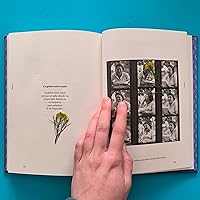
aunque haya sido muy breve, este recopilatorio me ha permitido acercarme a Cernuda y me ha abierto la puerta a su poesía, que sin duda seguiré leyendo. un descubrimiento muy bonito y una edición a la que guardaré un cariño especial por los detalles que esconde
21 reviews
October 25, 2024
No seré capaz de admirar la poesía, esto no es para mi. No conecte para nada.
Displaying 1 - 4 of 4 reviews

Can't find what you're looking for?

Get help and learn more about the design.