Let's just be real from the beginning: This is a problematic book, especially when viewed from a 2017 perspective. I do believe Harriet Beecher Stowe's heart was in the right place, but sort of in one of those ways where people want to do something good, and all they do is just "like" things on Facebook, or say to one another how bad things are, but then shrug and say "But what can we do?"
Sure, in 1852 when this book published, it made some waves because here's a white woman (a WOMAN, y'all!) who saw that shit was pretty stinky when it came to the state of affairs surrounding slavery. There's that whole unproven comment that Abraham Lincoln said something to Stowe about her being the "little woman who started the big war", referring, of course, to the start of the American Civil War. There's no actual proof that statement was ever made, by the way, but that's okay because it sounds pretty cool. Don't we all want to be the little person who does something so incredible that the entire course of history is changed because of us? You're probably lying if you say you haven't at least once in your life considered it.
Don't forget that men and women of color wrote slave narratives before this, and they were/are generally overlooked, but thank god here's a white woman who could put their experiences in words for them annnnnnd look how long it has prevailed. Just think about that a moment.
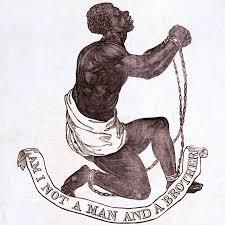
It's probably unfair to read this book from a contemporary perspective. There's so much shit happening in our world right now and it's hard to say if any of it will get any better anytime soon. People like to say that slavery no longer exists, but what they mean is that slavery the way Stowe wrote about it doesn't exist anymore. The truth is, of course, that slavery exists in many different ways, maybe less obviously, than forcing people of color to work on plantations or to be indentured servants or whatever else. Human trafficking (which is how slavery begins) still exists. The number of people of color who are trafficked and forced into prostitution and drug-trafficking are extraordinarily high. Racism runs rampant in most of the United States, even though we like to pretend that things are "better" today. Racism, like sexism, is so ingrained in our everyday experiences that we barely even notice when it happens around us anymore, unless we pay really close attention. Many don't, though.
So when we read a book like this, we cringe at some of the more sentimental beliefs Stowe held that she wrote in this book of hers. To break it down to a very basic level, slavery is bad, Christianity is good.
That's all you really need to understand to get through this book. I imagine most of Stowe's readers were already of the same mindset - I don't know how many plantation and slave-owners would pick up this book and actually put it down and think "Summabitch, I've been doing life wrong all this time! I am WOKE."
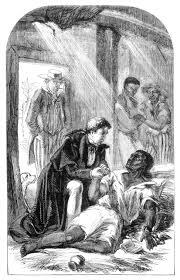
But this is how the characters in Stowe's novel react. There are some characters who elicit this sort of response, generally after said character dies. Then all the survivors are all "Shit, my life is changed, I will never be bad again - pass the Bible!" Let's not even discuss how the best example of this is little Eva, little blond Eva. BECAUSE OF COURSE SHE'S BLOND. She's white, she's blond, she's blue-eyed, she's virtuous, she's straight up awesome-sauce.
Boring.
I actually read about half of this on my own around college at some point. Someone in one of my classes did an impressively bad oral presentation (with a visual aid) on this book and I was so intrigued by how pathetic it was that I had to read the book. I picked it up on my own and got about halfway when I had dinner with my mom who happened to also be reading it on her own. I had been enjoying up to that point, but she went on such a rant about the book that I didn't feel like reading anymore of it. I didn't understand whatever she was going on about at the time, but I think I get it now. It was probably the same concerns that I have now.
I will say this book was great for our book club discussion this week. I appear to have liked it less than others, but I appreciated everything everyone had to say. We even went so far as to wonder if this book would have been different if it had been written by a man (a question that was raised last month when we read Frankenstein as well). Decision: The book would probably never have been written by a man. And if it had been, it would have lacked in the sentimentality, which almost defeats the entire purpose of this book. It's the sentimentality that pulls at the heart-strings, and without it, it would just be... something else entirely.
I was annoyed by the polarities between the characters - everyone is either good or evil, and this is expressed through incredibly cringe-worthy stereotypes. I read somewhere (perhaps Wikipedia, if you want to go look) that this book is probably the one that put those stereotypes (like of the "happy darky", the "mammy", the "pickaninny") into rotation which have just been perpetuated year after year after year.
Uncle Tom himself is so obvious a Christ-figure that I was annoyed that shit wasn't more nuanced than that. This probably explains why this was the second best seller after the Bible. I joked that they probably passed this book out along with the Bible back in the 1850s, a two-for-one deal.
Overall, this didn't appeal to me. It felt too long for the point it was trying to make (slavery is bad, Christianity is good), but can also appreciate the point that, hey, as Christians we should probably not be keeping humans as slaves. Stowe herself didn't really have any good suggestions for how to go about fixing the slavery problem, by the way. Maybe send them back to Africa? I don't believe she meant that maliciously, rather she may have thought that if slavery was abolished, the freed blacks might just want to return to Africa, because why would they want to stick around the US? I could have that wrong; that was my impression based on her notes in the Afterword of whatever that was at the end of the edition I read.
Problematic all around, but still somehow an American classic. Yes, it shows how shitty we were, and that is important to remember because we are constantly on the brink of making a lot of the same mistakes today. But it also shows some of us how little progress we've made because I hear a lot of people today making a lot of the same comments that Stowe made in this book back in 1852. That's pretty disturbing.
So if you get nothing else out of this review, just remember that slavery still exists today, whether you want to admit it or not. It may look different, but it's still there, and the more aware of it we are, the more likely we can actually take appropriate steps to ending it. But to admit there's a problem shows our own complicity, and people reeeeaalllly hate to do that shit.