Jump to ratings and reviews
Rate this book

Villa des Roses

Rate this book
'Villa des Roses is een schets naar de natuur, dat wil zeggen de beschrijving van een pension de famille waar ik 1906-1907 in Parijs geleefd heb.' Zo omschrijft Willem Elsschot zijn debuutroman. In de vele recensies van het boek, dat in 1913 verscheen, is de stijl van de schrijver een terugkerend onderwerp van lof.
Naar eigen zeggen is Willem Elsschot (pseudoniem van Alfons de Ridder) Villa des Roses gaan schrijven door toedoen van 'een 45-jarige juffrouw Van der Tak', een collega van hem bij de Schiedamse werf Gusto: 'Ze wilde altijd dat ik de verhalen die ik vertelde, onder andere over het familie-pension in Parijs waar ik gewoond had, opschreef. Ik sprak nog Vlaams, weet u; en dat vermaakte haar. Wel driehonderd keer heeft ze gezegd:"Fons, waarom schrijf je dat niet eens op."'
Het is maar goed dat Elsschot haar advies ter harte nam: zijn roman over een verlopen pension in Parijs behoort tot de meest gelezen en geprezen boeken van de Nederlandse literatuur. In een sobere, terloopse stijl weet Elsschot de gasten van Villa des Roses onvergetelijk te portretteren.

J. Gresshof:'Zelden trof een Nederlandsch boek mij zoo direct en zoo diep, omdat het anders was dan alle andere Nederlandsche boeken, welke ik gelezen heb.'

127 pages, Paperback

First published January 1, 1913

27 people are currently reading
808 people want to read

About the author

Willem Elsschot

44 books111 followers
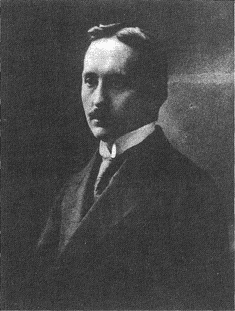
Willem Elsschot is het pseudoniem van Alfonsus Josephus de Ridder, een Vlaamse dichter en schrijver.

Willem Elsschot in de Nederlandstalige Wikipedia

Willem Elsschot in de Digitale Bibliotheek voor de Nederlandse Letteren

Willem Elsschot bij "Schrijversgewijs"

Willem Elsschot is the pseudonym of Alfonsus Josephus de Ridder, a Flemish poet and writer.

Willem Elsschot in the English Wikipedia

Ratings & Reviews

What do you think?
Rate this book

Friends & Following

Create a free account to discover what your friends think of this book!

Community Reviews

5 stars
360 (12%)
4 stars
1,118 (40%)
3 stars
993 (35%)
2 stars
273 (9%)
1 star
45 (1%)
Displaying 1 - 30 of 149 reviews
Profile Image for Ilse.
552 reviews4,438 followers
May 14, 2022
The prose debut of the Flemish writer and poet Willem Elsschot (1882-1960), written in 1910 and published in 1913 (translated in English and German) is a tragi-comical episodic portrayal of a cosmopolitan microcosm of characters resembled in a shabby pension portentously named Villa des Roses in Paris. It was inspired by Elsschot’s own stay in a Paris boarding house, situated in the same Rue d’Armaillé (he inverted the number from 17 to 71), while working as a creative accountant for a fiddling Argentinian business man, Burgos.

_lit003199101_01ill96

The novella still appeals because of its sense of timelessness and its highly entertaining variegated mix of both endearing and obnoxious characters jam-packed in a few pages. Apart from the non-Flemish setting, its laconic and scintillating style and deadpan lines struck me as remarkably contrasting compared to that other classic Flemish novel, published in 1916: Pallieter, the non-conformist and vitalist ode to life and nature by Felix Timmermans – my hometown’s most famous son – written in a succulent, baroque and lyrical style.

Written in Rotterdam where Elsschot was working then, intensely polished by a Dutch friend and colleague and initially published in the Netherlands, Elsschot’s prose has a sterner ‘Dutch’ feel about it, thoroughly unlike the rounded Flemish regional and heimat novels about farming life then in vigor, although the corrosive style in Villa des Roses is milder and more colorful than in his later more ‘businesslike’ stories like Cheese (Elsschot was a smart businessman after all). In some respects, his prose reminded me more of De Maupassant and Balzac than of his Flemish contemporaries (the novella also refers to one of the Contes cruels by Villiers de L’Isle-Adam).

Not every boarder we get introduced to leaves us with a lasting impression. The story’s epicenter is the conniving, counting and calculating pension Madame, Madame Brulot. We also meet her stingy husband (a former notary) a kleptomaniac old lady (Madame Gendron), an Nordic widower, a shady businessman with in his wake two Polish women (a mother and a daughter), a Dutch man, 3 young Hungarian belles of insecure moeurs, a conceited young German, Richard Grünewald, and two maids, Aline and Louise, the latter a young widow, easily seduced by the unscrupulous German, taking the dominant narrative in the subsequent episodes and marking up the most moving passages in the novella on her name. Rebellious as Elsschot was himself, his sympathy goes to the nonagenarian Madame Gendron, humiliated and exploited by the Brulots, rewarding her with a ghastly revenge on her tormentors.

After some hilarious scenes the sense of satire shifts and like in his grim poem The Marriage, melancholy enters, steadily freezing the smile on the reader’s face.

Astoundingly modern in his blatant manifestation of themes far less evident in Flanders (at that time dominated by the Catholic church) Elsschot’s look on humanity – that absurd and bungling species - is mildly ironic and aloof. Human nature is narrow-minded, callous deception, ruse and guile are ubiquitous in human relationships, people are only pursuing their self-interest, erotically, and financially – or one fools, or one is fooled. It’s a dog-eat-dog world. Deceit will be a recurrent theme in Elsschot’s prose from this debut on.

aad6cda67f57a85580f244f08cd6e6d7
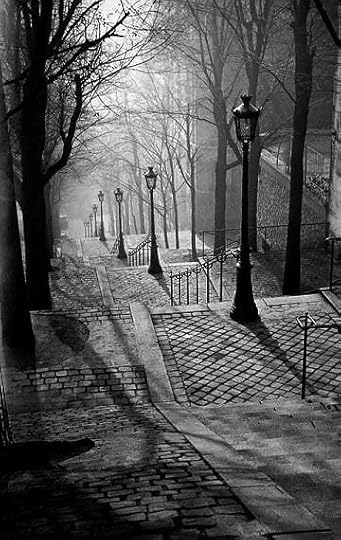
Brassaï, Les Escaliers de Montmartre (1936)

As In a German Pension: 13 Stories was published in 1911, Villa des Roses was the perfect little push I waited for to return to Katherine Mansfield again and take a closer look at her approach of the emblematic atmosphere and interactions in a boarding house.

Recently Eric Rinckhout published a fine piece of detective work on the pension, its characters and Elsschot’s time in Paris, Willem Elsschot in Parijs. He also mentions a 2002 film adaptation of the novel I was unware of, starring Julie Delpy as Louise Créteur.
Profile Image for Jan-Maat.
1,686 reviews2,493 followers
Read
May 20, 2022
In a nutshell the first novel (1910) by Willem Elsschot is set in a Parisian boarding house, it could be read as a set of short stories with overlapping characters as much as a novel , there isn't a story as such. It is somewhat longer than his later novel(la)s.

The boarding house is called 'Villa des Roses' but as the book progresses plainly one needs to see that more in terms of thorns, black-fly, rust and any other infestation or disease that Rose bushes can develop rather than of delicate scents or gorgeous blossoms.

Paris at the beginning of the 20th century may represent modernity, the new, adventure, and other positive connotations, but the boarding house itself represents the opposite; it's the end of the line. The proprietors are themselves renting or leasing the property and have started the business to get away from their former lives, one very elderly resident appears to have been parked in the house until she can be moved to the cemetery, another guest is a Norwegian who has come to Paris to learn French and to get away from the death of his wife - he does not appear to make much if any progress with French. In short tragicomedy beckons. Finally the boarding house will have to close, and the residents one by one leave - the old lady in fact outlives her arrangement and doesn't have to leave in a box, alas the same will not be true of some of the other residents. Although I hasten to add unlike in From the Memoirs of Herr Von Schnabelewopski bad dinners do not cause anyone's demise. On the contrary we are told that although the breakfast provided is meagre, wine both red and white is freely available at the evening meal which is taken advantage of by a young German called Grunewald.

Later Elsschot would claim that Grunewald was himself, this is an interesting claim since Grunewald is something of a cad, maybe even a bounder, perhaps a rotter. He seduces Louise, one of the servants at the boarding house, when she sends him a love letter he happily marks all the grammatical and spelling mistakes before eventually abandoning her . I am unsure if this is something like autofiction, or an instance of somewhat late decadent writing with an unsympathetic narrator or instead early modernism - traditional values have broken down, Confession as a sacrament has failed, one can only lay out what has happened . Elsschot as a writer though maintains his distance from Grunewald the character, we are left seeing Louise returning to her home village, if not damaged by her experience then certainly hurt. The characters came together in the villa, the villa goes, they move away back to their separate corners of Europe. Connections have been made, but none will endure, an air of decay and dissolution hangs over the whole. Not bad at all for a first novel.

Profile Image for Nathalie.
684 reviews20 followers
November 19, 2018
Willem Elsschot schreef zijn eerste roman die zich afspeelt in een verlopen familiepension in Parijs, toen hij in Rotterdam woonde van 1908 tot en met 1911. Willem Elsschot zou zelf gezegd hebben dat hij dit boek was gaan schrijven vanwege 'een 45- jarige juffrouw Van der Tak', een collega van hem bij de Schiedamse werf Gusto, aan wie hij het dan ook opdraagt: “Ze wilde altijd dat ik de verhalen die ik vertelde, onder andere over het familiepension in Parijs waar ik gewoond had, opschreef. Ik sprak nog Vlaams, weet u; en dat vermaakte haar.” Afgestudeerd in de Handelswetenschappen vertrok Elsschot na enkele korte betrekkingen in zijn geboortestad naar Parijs om te gaan werken bij een Zuid-Amerikaanse zakenman, en verbleef er gedurende die tijd zelf in een pension in de rue d'Armaillé in het Quartier des Ternes, waar hij de inspiratie voor Villa des Roses gehaald heeft.

Elsschot zou Elsschot niet zijn als zijn unieke stijl al niet spreekt uit dit eerste boek en hij feiten uit zijn eigen leven verweeft met meerdere fictieve elementen. In deze debuutroman voert hij meer personages op dan in eender welk van zijn latere werken. Mevrouw en de heer Brulot zijn de gewiekste pensionuitbaters die zoveel mogelijk uit hun zaak wensen uit te halen. Daarnaast schetst de auteur treffend en scherp vanaf het begin de personages die in het pension wonen, die uit alle lagen van de bevolking komen. Zo weet je onmiddellijk wat de achtergrond is van de simpele doch niet onschuldige mevrouw Gendron, de als een typische Viking beschreven Noorse gast Aasgaard, de drie Hongaarse dames waarover subtiele hints vallen over hun bezigheden, de immer naar geld zoekende zakenman Martin en de zorgelijke architect Brizard. Het hoofdmotief is de relatie tussen de nieuw aangekomen meid Louise en de Duitse wat dandyachtige gast Richard Grünewald, die van meerdere walletjes wil mee-eten. Maar ook de andere personages laten zich niet onbetuigd. De Brulots bedriegen hun gasten net als zij ook bedrogen worden.

Villa des Roses is een prachtig verhaal geworden over thema’s als eigenwaan, eigenbelang, wraak en schone schijn. Velen willen zoveel mogelijk voor zichzelf uit hun situatie halen, en grijpen maar mee wat er te krijgen valt. Hoewel Elsschot deze menselijke kanten scherp aan de kaak stelt, zal hij ook in dit boek door zijn typische ironische humor het gedrag van zijn personages relativeren en tegelijkertijd liefdevol benaderen. Het is alsof de verteller er in dit boek middenin staat, ook al komt hij als personage zelf niet aan bod. Alleswetend is hij dan weer wel, en zo sleept hij de lezer ongenadig mee in de affaire tussen Louise en Grünewald die onvermijdelijk slecht moet aflopen, en tevens in de levens van de andere pensiongasten in deze knappe debuutroman.

Erik Rinckhout beschouwt dit debuutwerk van Elsschot in zijn nawoord bij dit boek als een meesterwerk, maar welk boek van Elsschot is dat volgens deze Elsschot-kenner en grote liefhebber niet? Opnieuw is het nawoord in deze nieuwe uitgave van Polis een verhelderend betoog om het boek in kwestie in zijn tijd, te zien en de vernieuwde, moderne taal van Willem Elsschot te appreciëren op zijn waarde, ook vandaag nog.

Een vriend en collega van Elsschot, de Nederlandse auteur Jan Greshoff, verwoordde dit als volgt: 'Zelden trof een Nederlandsch boek mij zoo direct en zoo diep, omdat het anders was dan alle andere Nederlandsche boeken, welke ik gelezen heb.'

Deze recensie verscheen ook als Hebban-recensie, zie: https://www.hebban.nl/recensies/natha...
Profile Image for Bob Jacobs.
360 reviews32 followers
May 24, 2024
Vlot, grappig en toch ook ontroerend: Elsschot.
Profile Image for None Ofyourbusiness Loves Israel.
876 reviews175 followers
November 5, 2024
The illustrious Madame Brulot's pension, a veritable gem of Parisian hospitality—if by "gem" one means a diamond in the rough, and by "hospitality" one means a crash course in the art of disappointment. Promising a "first-class family boardinghouse," this establishment delivers anything but, much to the delight of Elsschot's sardonic pen.

Elsschot's keen observational prowess and razor-sharp wit introduce us to a delightful menagerie of characters, each more eccentric than the last. The episodic structure of the narrative perfectly captures the ephemeral nature of the guests and their fleeting connections, blending humor and cynicism in a charming critique of human nature and societal norms.

At the helm of this ship of fools is Madame Brulot, the conniving landlady, and her miserly husband, both masters in the art of manipulation and exploitation. Among the colorful boarders, we encounter a kleptomaniac old lady, hard-to-understand Hungarian ladies, English tourists that came to see The Tower, a dubious businessman, and the young maid, the widow Louise, whose ill-fated romance with a German boarder adds a tragic depth to the tale. Louise's seduction sets off a cascade of dramatic consequences. The tragic suicide of the despondent Monsieur Brizard is another turning point in the story that adds darkness to the setting.

Yet, amidst the gloom, there are moments of bittersweet celebration, such as the champagne birthday party for Madame Dumoulin, which provides a splash of color and respite in the otherwise grim atmosphere. Elsschot's writing, marked by its laconic and scintillating style, remains delightfully fresh, especially for a debut novel.

Villa Des Roses is a timeless and universal work, despite its setting in a bygone era. Written over a century ago, the novella's exploration of human folly, greed, and the quest for connection remains strikingly relevant. Elsschot's detached yet empathetic narrative voice allows readers to engage with the characters' plights without succumbing to sentimentality, all within a few well-crafted and often hilarious pages.
Profile Image for Alan (on December semi-hiatus) Teder.
2,707 reviews249 followers
August 6, 2022
Villa of Characters
Review of the Penguin Modern Classics paperback (1993) translated with an introduction by Paul Vincent of the Dutch language original (1913)
No one had ever come up with an acceptable explanation for the descriptive tag 'des Roses'. True, there was a garden attached to the house, which in itself is quite a rarity in Paris, but since Monsieur and Madame Brulot had moved in - more than sixteen years previously - no one had lifted so much as a finger towards its upkeep, so that all roses and other flowers were things of the past. Moreover, it got very little sun, as the neighbouring houses cast their giant shadows over the whole plot. The only thing able to survive such conditions was the grass, thriving as it does all the more the less it is cared for, and delighting in neglected masonry and incipient ruins.
I had never heard of Belgian writer Willem Ellschot (penname of Alfons de Ridder [1882-1960]) when I was able to borrow a copy of this now out-of-print Penguin Modern Classics edition of his first novella. Granta Books seems to be the only current publisher of Ellschot in English and then only with the two editions of Villa des Roses and his most popular novella Cheese (1933), both in their Paul Vincent translations. Wikipedia says that Cheese is the most translated Flemish novel of all time.


A particularly colorful book cover of one of the Dutch language editions showing Chico the monkey and Villa des Roses proprietress Madame Brulot. Image sourced from Pinterest.

Villa des Roses presents a motley crew of inhabitants at a somewhat down at its heels boarding house establishment in early 20th century Paris. Ellschot wrote the book in 1910, having based it on his own real-life experiences while working in Paris and living in a similar situation.
Monsieur and Madame Brulot preside over their varying clientele with a sliding scale of daily rates, usually based on the ability to pay.

Some of the characters are in quite desperate circumstances though, which they are barely able to conceal from their fellow boarders. The story mostly centres on the seduction of the maid Louise by an unscrupulous German businessman Grünewald, but there is room for some even darker situations as well with the suicidal Monsieur Brizard, the absconding Monsieur Martin and the vengeful kleptomaniac Madame Gendron. In fact some of the scenes and lines here were quite shocking due to their casual delivery. The brutality of one line will likely live in your memory forever once you know the context:
It was a simple funeral: he went to Mrs Wimhurst's pension by a roundabout route and, on the way, in a deserted street, threw the package with the thing in it over a fence.
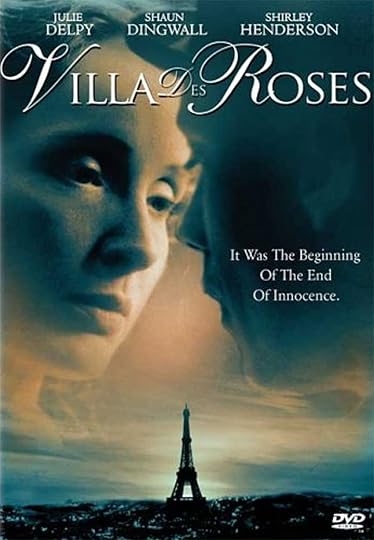

DVD cover for the 2002 film version of "Villa des Roses". Image sourced from IMDb.

Villa des Roses was an insightful portrayal of a variety of character types which encompassed the full spectrum of comedy through to tragedy. My thanks to friend Tony Souza for the loan of this rare book!

Trivia and Links
I highly recommend reading this very informative review by my GR friend Ilse which contains further background on the novel including a link to research about Willem Ellschot's time in Paris.

Villa des Roses was adapted into the English language same-titled film in 2002 directed by Frank van Passel, which starred Julie Delpy as Louise and Shaun Dingwall as Richard Grünewald. There is no trailer on YouTube but you can see the trailer at IMDb. The tone of the trailer leads me to suspect that the movie adaptation plays up the romantic over the comic elements of the book.

Villa des Roses was also adapted as a 3 hour Dutch language TV series in 1989 directed by Marc Lybaert. You can watch the entire 3 hour series in 3 parts on YouTube (but without subtitles) starting with Part 1 here.
Profile Image for Ivy-Mabel Fling.
634 reviews45 followers
March 16, 2023
This being my third 'boarding house' novel(la), I now realise that this setting enables the writers to present a series of vignettes of very varied characters who do not necessarily interact to any great extent. As the characters are not all old and decrepit in this novella, it is considerably less depressing than 'Mrs Palfrey' and, although nothing works out well in the end, it strikes me as less tragic (and somewhat more amusing) than 'Le père Goriot'. I have taken quite a liking to this genre and would recommend it anyone who likes a good tale (well, several tales combined in one volume). I would be grateful to hear of any more similar novels that any of you have read! Thanks.
Profile Image for John Dishwasher John Dishwasher.
Author 3 books54 followers
August 31, 2020
This novella clashes the most solemn events of human life against the self-interested whims of modern humans. This creates an amusing little comedy that portrays people trivializing death, love, motherhood, murder, marriage, aging and more. The story is mostly funny, but in my experience humans don’t really behave this way. I think we actually take such things MORE seriously than we ought. Elsschot’s exaggeration is for comic purposes, however, and the formula of his portrayal does accurately apply to the less solemn events in our lives, like say jobs or politics. The story will be enlightening to someone who has never noticed that most people don’t really care when you get fired from your job. In fact, they may even joke about it.

At about halfway through it struck me that this story could be an upper class person lampooning middle class values and behaviors. While I agree that a blinkered outlook and petty penny-pinching just beg ribbing, the sense that the book might be a mockery made me feel suspicious of Elsschot and took off some of the fun. Such behaviors are bred from necessity and privation.

The strength of the book is in its humor, but humor is almost completely absent in the last quarter of the book. In sum, an ambiguous and uneven work, but the laughs, when they’re there, make it worth reading. It reminded me of The Diary of a Nobody.
Profile Image for De Ongeletterde.
393 reviews26 followers
December 19, 2019
Hoe heerlijk toch beschrijft Willem Elsschot zijn personages in dit mooie boek. In Villa des Roses, een pension in Parijs, verblijven allerlei zonderlinge figuren die elk op hun eigen manier tegelijk protserig zich van hun beste kant laten zien én zielig zijn in hun kleine menselijkheid. Goedgelovigheid treft hier zowel bedrieger als bedrogene en de rake beschrijvingen geven alles een licht humoristische toets, wat van dit boek een zeer aangenaam, vlot leesbaar geheel maakt.
Profile Image for Benny.
679 reviews114 followers
January 18, 2019
Willem Elsschot debuteerde met een korte roman over bedrog. In Villa des Roses is het oplichten of opgelicht worden, of soms allebei, en die ene kleine, brave ziel…die is pas echt te beklagen. Iedereen heeft iets te verbergen, maar niemand slaagt daar echt in. Villa des Roses kent een bijzonder triest einde.

Zeker, de setting is niet meer van deze tijd is – beeld je maar in wat voor kritiek Villa des Roses op Tripadvisor zou krijgen! – maar dat speelt eigenlijk geen rol. Het is om de personages te doen en die blijven, ondanks hun grillen en grollen, makkelijk overeind. Dat heeft alles te maken met de lichtjes ironische en afstandelijke vertelstem, waarmee Elsschot zijn personages scherp kadert, maar ook met warmte bejegent.

Elsschot heeft later straffere dingen geschreven, maar de ongekunstelde souplesse van zijn taalgebruik valt ook hier al op. Op een verouderd woord hier en daar, is het zuivere Nederlands van Elsschot amper verouderd.

Opmerkelijk, tenslotte, is dat de jonge auteur uitgerekend het minst sympathieke personage (misschien wel uit zijn hele oeuvre) hier als zijn alterego beschouwde. Hierdoor zou je deze roman als een publieke biecht kunnen beschouwen, een soort openbare boetedoening. Maar laten we ook dat maar met een korrel zout nemen, want waar eindigt het autobiografische en waar begint de fictie? En: hoe (on)belangrijk is het om dat te weten om van dit boek te kunnen genieten?
Profile Image for Alexandra Lucia Brînaru.
238 reviews20 followers
May 4, 2021
Hoewel dit de debuutroman van Elsschot is, moet ik zeggen dat het mijn favoriete tot nu toe is.
Na eerder "Kaas" te hebben gelezen, wat ik gemakkelijk te lezen vond en tegelijkertijd vrij rustig, vond ik het erg leuk om te zien wat de auteur kon doen met een overvloed aan verschillende karakters. Ik vond het leuk om een beetje in het leven van elk van hen te komen, een feit dat ook bijdroeg aan de sfeer van zo'n plek als Villa des Roses. Het boek zelf was soms ook behoorlijk schokkend, zoals de lezers weten, en ik geniet van een goede schokfactor.
Het heeft ervoor gezorgd dat ik, al met al, meer van de auteur wil lezen, maar meer van zijn werken die op dezelfde manier zijn geschreven.
Profile Image for Daniel Garwood.
Author 1 book22 followers
September 8, 2017
Five stars for this English translation of a comic novella by Flemish writer, Willem Elsschot. The action takes place in a dodgy Parisian guest house, early in the 20th century. The story is crammed with black humour, vivid imagery and unforgettable, but one-dimensional, characters, all presented in a unique, succinct style. Not a word is wasted. Genius!
Profile Image for Wim Oosterlinck.
Author 3 books1,620 followers
Read
August 9, 2020
Ik heb de debuutroman van Willem Elsschot uit 1913 gelezen: de heerlijke klassieker Villa des Roses.

Villa des Roses gaat over een aftands pension in Parijs uitgebaat door mevrouw Brulot, die een aapje als huisdier heeft en een man. Zij leidt het pension met een slinkse gierigheid: ze probeert zoveel mogelijk extra geld te slaan uit haar klanten door allerlei trucjes te gebruiken. Zo bespaart ze op het levensonderhoud van de hoogbejaarde kleptomane madame Gendron door uitstapjes te factureren die niet plaatsvinden, door haar eau de cologne te vervangen door water en haar poederdoos te vullen met aardappelmeel.

Het hoofdverhaal gaat over het nieuwe dienstmeisje Louise, die weduwe is, een zoontje heeft en verliefd wordt op één van de gasten: de Duitser Grünewald. Maar het zijn vooral de nevenverhalen die het boek onweerstaanbaar maken: het voortdurende gesjoemel van mevrouw Brulot, de jammerlijke dood van Gustave Brizard, de appelsienendiefstal van madame Gendron.

In zijn nawoord noemt Elsschotkenner Eric Rinckhout Villa des Roses een boek over bedrog en hypocrisie. Het allegaartje van gasten in het pension wordt door Elsschot geniaal grappig getekend, in zijn gekende droge stijl. Ondanks de hoge leeftijd van het boek blijft Villa des Roses een geweldige aanrader. Elsschot in de roos.

https://wimoosterlinck.wordpress.com/...
Profile Image for Joost.
166 reviews6 followers
February 4, 2018
Wat maakt een verhaal uit 1910 in zekere zin zo tijdloos? Ik denk dat het de herkenbare situering is, een forse handvol gewone kostganger met hun leuke en minder leuke kanten die hutje mutje op elkaars lip wonen in kosthuis Villa des Roses in Parijs. Eerst laat Elsschot ons één voor één met hen kennis maken. Met ironische distantie beschrijft hij de uiterlijke kenmerken en typerend gedrag. Maar zo halverwege komen de duistere kanten van de gasten. En die zijn niet mis! Ombeantwoorde liefde, sadisme, diefstal, abortus....best wel heftig voor een boek uit 1910.
Het doet me ergens denken aan Ja zuster, nee zuster van Annie Schmidt. Mensen van verschillende pluimage die onder één dak lief en leed met elkaar delen. Maar in Elsschot gaat het er wel erg vilein aan toe, van tijd tot tijd.
Natuurlijk is een kosthuis niet meer van deze tijd. En de kleding, de manieren, de standsverschillen, de aanwezigheid van personeel verwijzen allemaal naar een ver verleden. Maar de schrijfstijl van Elsschot is werkelijk van actuele wereldklasse. Gebruik makend van eenvoudige, gangbare bewoordingen kan hij na 108 jaar nog moeiteloos mee in deze tijd.
Profile Image for Samantha Matherne.
876 reviews63 followers
December 19, 2020
The villa itself is filled with a unique set of characters from all over Europe who come together out of convenience and circumstance. The true nature of most of the cast is evident from the start, but sometimes certain people still take shocking turns that I did not see them capable of. Poor Chico the monkey! Karma is due for terrible actions found in this short book, while others just need to be stronger people. Parts were still very funny, though, and I’m glad I read a book by an author from my ancestors’ home country - Belgium. Elsschot is a great teller of the short story, and I hear this is not even his most loved work by many.
Profile Image for Miss Jaggers.
87 reviews5 followers
April 27, 2021
This cover is really shitty. So cheesy.

Putting that aside: the book was a bit boring.

I liked how the writer described every character in the beginning, and gave us some things to think over. However, I was not that interested in the story. It felt weak, and at times too hard to read? (but probably that is because my Dutch level is not that good yet). The humor was dry most of the time.

Profile Image for Myriam.
496 reviews68 followers
October 15, 2017
'Zij hadden het nu eenmaal met elkander aangelegd en indien zij getroffen werd, aan den lijve of in de ziel, dan moest zij maar zien hoe zij haar wonden eigenhandig geheeld kreeg. Dat wist Louise maar al te goed.'

Profile Image for Lise Delabie.
183 reviews35 followers
April 27, 2021
Ik heb me van tijd tot tijd wel goed geamuseerd in dit gezelschap.
Profile Image for Ronny De Schepper.
230 reviews6 followers
February 24, 2022
“Villa des Roses” is min of meer gebaseerd op waar gebeurde feiten, waarbij Elsschot kan worden gepersonaliseerd door de figuur van de student Grünewald. Men kan dan ook spreken van therapeutisch schrijven. Grünewald is immers zeker geen held, integendeel, eerder een lafaard (het meisje keert naar haar geboortedorp terug, nog steeds wachtend op Grünewald die er echter al met een Amerikaanse vandoor is). Ondanks het feit dat het verhaal alle kenmerken van het realisme vertoont (tranche de vie, alle personages evenwaardig, levensechte dialogen), staat de villa toch ook symbool voor onze beschaving die ten onder gaat, zowel letterlijk (milieu) als figuurlijk (menselijk contact, cfr. ook de laatste strofe van het gedicht “Het huwelijk”).
Profile Image for Damla.
107 reviews5 followers
October 10, 2023
3.5*

"En toen zij hem ontwaarde, zo van op een afstand, toen begreep zij dat er voor haar geen zoontje meer bestond, en geen vader en geen moeder, en geen dorp meer en geen verleden, maar dat zij een man bezat van vlees en bloed, die kussen kon en koning was en die ginder te wachten stond, zomaar op zijn twee benen, met al de eenvoud van een gewoon sterveling"
Profile Image for Paulina.
91 reviews1 follower
January 7, 2023
In het begin vond ik dat het verhaal nergens naartoe ging en dat de karakters weinig persoonlijkheid hadden, maar later raakte ik eraan gewend en vond ik sommige stukken echt heel leuk. In het begin was het dus een beetje doorbijten, maar dit boek was geen straf om te lezen.
Profile Image for Kato.
14 reviews2 followers
October 11, 2023
Iets vaag met appelsienen.
Ocharme de aap.
Profile Image for Cathérine  Deshayes.
11 reviews2 followers
July 22, 2025
3.75 als het kon.

Het begin was vreselijk traag, maar de tweede helft op één dag uitgelezen.
Profile Image for Mirthe Verweij.
15 reviews
October 12, 2024
Hij was gezellig om te lezen, en door de wat heftigere gebeurtenissen waar de dagelijkse activiteiten doorheen zijn geweven blijf het leuk om te lezen! Liefde en bedrog komen het hele boek terug, erg interessant! Een roman die lekker wegleest.
Profile Image for Jaer Mertens.
187 reviews9 followers
November 1, 2021
Aardig. Elsschot's stijl blijft leuk. Maar de randjes zijn nog niet zo scherp in dit debuut verhaal. Of althans, zo leek het me te zijn.
Profile Image for carien.
30 reviews1 follower
February 1, 2023
ik ga keihard liegen in mn nederlands recensie want nouja zo prachtig was het niet💀
Profile Image for Laureen.
89 reviews
December 15, 2023
2.5
Die Charaktere sind interessant geschrieben. Der Plot war an sich auch nicht uninteressant, aber er hat ins Nichts geführt. Man muss es eher auf eine literarisch-klassische Art lesen und die einzelnen Passagen an sich wahrnehmen und reflektieren.
Profile Image for Krolby.
111 reviews9 followers
July 9, 2025
Het boek gaat over een pension dat onderverhuurd wordt door meneer en mevrouw Brulot. Iedere gast heeft een eigen verhaal en komt in meer of mindere mate aan bod. Er spelen meerdere verhaallijnen, maar op een gegeven moment draait het vooral om de tragische relatie tussen het nieuwe dienstmeisje Louise en de Duitse onderhuurder Grünewald.

Dit is het eerste novelle van Elsschot en verschilt qua inhoud van zijn latere werken die zakelijker zijn en meer te doen hebben met het beroep van de schrijver. De schrijfstijl is naar mijn mening wel redelijk constant gebleven, aangezien dit boek ook zeer realistisch, sober, ironisch en zonder al te overdreven en uitgebreide omschrijvingen van personages en omgeving is geschreven. Daarmee kan het boek vlot uitgelezen worden. Het boek bevat humoristische passages, al ben ik nooit hardop gaan lachen.

Het thema van het verhaal draait denk ik om oplichterij, wat ook een thema is van het latere werk van Elsschot. Op de eerste plaats zijn de heer en mevrouw Brulot ware oplichters, die mevrouw Gendron veel te veel laten betalen voor de zeer matige diensten die aan haar worden geleverd. De klanten kunnen er overigens ook wat van. De heer Martin bijvoorbeeld, die zonder te betalen in het pension verblijft en telkens meent dat hij binnenkort het verschuldigde bedrag zal afdragen. Over Grünewald wil ik niet eens spreken, die bijna schaamteloos is.

Al met al was het een redelijk goed boek, al zouden een aantal personages best wat beter belicht kunnen worden. Er wordt bijvoorbeeld amper wat over de heer Knidelius verteld, terwijl hij aan het begin toch een interessant persoon lijkt. Het tragische verhaal aan het einde leek mij ook niet zo realistisch, want hoe kan een persoon na alles wat er is gebeurd nog zo naïef blijven?
Displaying 1 - 30 of 149 reviews

Can't find what you're looking for?

Get help and learn more about the design.