This was Peter Kropotkin's final book, in which he theorizes about the development of the modern state and how modern science and technology can assist in freeing working people from capitalism. First published in 1912 in France, sections of this book have been translated and published in English (as short books and pamphlets and journal articles), but never as a whole work as Kropotkin intended. More than 10 percent of this book has never before appeared in English. Introduced and annotated by Iain McKay.
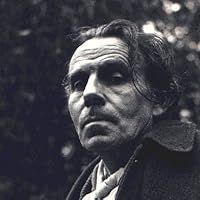
Pyotr Alekseyevich Kropotkin, prince, Russian anarchist, and political philosopher, greatly influenced movements throughout the world and maintained that cooperation, not competition, the means, bettered the human condition.
Definitely skip the intro which is virtually unreadable and, in my view, quite pointless. Obviously, reading old beardy white dudes from the 1800s isn't everyone's cup of tea. Personally, if I had the time, I would make social media accounts for them so that I could entertain myself with 19th century flame wars and make it so others don't need to read 500 pages of this stuff. There are some real gems in here though. Depressing how little has changed in 200 years. But very interesting to understand how anarchist philosophy arose with scientific discovery and Kropotkin's scientific understanding of the way cells, organs, planets, stars.... everything individual and whole at the same time is meshed with his understanding of society. I think Kropotkin would have enjoyed Emergent Strategy.
Interessante Ausführungen zu dem Verhältnis von Anarchismus und den (Natur-)Wissenschaften, denen gut zu folgen ist. Finds auch unter dem Aspekt von Aktivismus und Wissenschaft heute spannend, wobei damals in beidem mehr revolutionäres Potential gesteckt hat (vielleicht). Aber ich glaube auch hier bleibt ein Spannungsverhältnis darin, Ideen über die Welt als Wissenschaft zu framen, zumindest, wenn das dann mit Notwendigkeiten einhergeht, dies vielleicht nicht gibt? Ich will auf jeden Fall nochmal mehr zu Spencer herausfinden!
Written by one of Russias earliest communist thinkers, Kropotkin expresses a worldview similar to Marx. Anarchism is a crisis philosophy, that gets adopted during stressful times to meet what feel like the practical demands of life. In this philosophers' eyes, all the world's societies area conflict between the local tight-knit community that settles its own disputes and an outside autocratic force that seeks to establish its authority over people.
Kropotkin was a man of his time and place, the time being pre-WWI, and the place being Czarist Russia, where the corrupt imperial officials where known for terrorizing the local peasant populace. (European anarchists, the eastern-European ones especially, and their general blue-collar focus has always come off a bit jarring. Where in Europe, those who become anarchists are usually doing so in the name of labor. In contrast anarchist communes in the US are often composed of artists and political activists, they tend to more approachable. Maybe that's just my two-bits).
Back to the matter at hand, this is a philosophical tract justifying anarchism by claiming it is applying scientific justification to it. Additionally, Kropotkin attacks the ideology of the day: that people need a strong state to keep them from turning into murderous monsters ('peace through power', you can see it touted by political figures every-time elections roll around). If you didn't know about the time and place, one might even call certain parts of it borderline libertarian.
Is it interesting? Yes, for me at least. Useful, and true? Noooooooo.
Don't let the name fool you, the modern science here is modern by the XIX century standard. Not a big issue in some cases, but a lot of the views that Kropotkin has of science are sadly a product of their time. Other than that, this is for a large part a sort of historical contextualization on the development of science and philosophy during the XVIII and XIX centuries, and I can't really attest to their accuracy. Kropotkin does attempt to make parallels into the development of anarchist theory, which I thought was interesting. My biggest criticism of the book is that it falls into a form of scientific realism or even scientism to some extent, again definitely a product of its time. Kropotkin definitely matured his view in later works.
Este libro habla del nacimiento y evolución del anarquismo. Interesante desde el punto de vista histórico, aclara muchos matices del ideal anarquista. El título me parece un poco forzado, porque de acuerdo con que el anarquismo se fundamenta en las ciencias naturales, pero tampoco está hablando sobre ciencia. Mucho más científico es su gran obra, “El apoyo mutuo”.
Igual que otros lectores, también pienso que el prólogo es infumable. Mejor saltárselo.
Enlightened me on the history of Anarchism and it was interesting to see some of the very things he criticized still prevelant in society. What a difference a century makes, right?
Me lo compré en la Mostra del Llibre Anarquista de València porque por aquel entonces tenía fe en la ciencia y el progreso. Craso error. Especialmente teniendo en cuenta que la ciencia está en manos de los cuatro lunáticos de siempre.
La introducción, como recomienda la reseña más votada, me la salté porque era un galimatías.
Setengah awal punya perasaan bercampur terhadap buku ini, namun setengah kedua kerasa keren banget.
Ilmu Pengetahuan Modern & Anarkisme menjelaskan berbagai hal dalam buku yang terbilang mungil dan singkat. Antara lain tentang dasar teori anarkisme yaitu "keyakinan" bahwa manusia menemukan idealnya sendiri ketika diberi kebebasan dan tidak diaturatur oleh negara. Di sisi lain, di buku ini kita juga paham bahwa pendapat ideologi kekirian itu anti agama juga bukan hal yang tidak ada dasarnya. Atau kalau beberapa teman kiri yang saya temui di socmed melihat bahwa semata-mata hanya orang yang beragama yang anti kiri, kenyataan bahwa hal yang sebaliknya juga terjadi, juga sulit dibantah sehingga rasanya kedua hal agak sulit untuk bertemu apalagi melihat bahwa kekirian ada berbagai macam modelnya.
Lainnya, ada satu poin dalam buku ini yang bikin tertarik untuk sedikit lebih mendalami ekonomi. Intinya, bukunya recommended. Edisi bahasa Indonesia yang saya baca pun juga bagus dan jelas terjemahannya, ditambah ada biografi Kropotkin sendiri yang bikin makin tertarik dengan yang bersangkutan.