

What do you think?

An Ordinary Man's Guide to Radicalism
I heard many people saying that one of the terrorists had studied in Jamia School, in my batch. If ‘they’ were to say I was friends with him, how would I deny it? I had very few friends in school, but who would believe that?
You can alter your future, but how do you change your past?
--
19 September 2008, the Batla House encounter. That one day changed the life of a young man from Inderwan Bairam in Bihar’s Gopalganj district. An over-protected childhood in the village, an ambitious migration to Delhi as a young boy for better education, an undisciplined and shiftless adolescence – all of this history is flattened out into one tiny slice of Neyaz Farooquee’s identity: Muslim. From Jamia Nagar. Who lived practically next door to the Terrorists who had been killed in the encounter. A Potential Terrorist himself? How, after all, does a man prove that he is (and not merely pretending to be) a Normal Human Being?
Sardonic and wise, Farooquee scrapes out the unvarnished truth about identity and stereotypes, about life in a ghetto, and the small and big disappointments that make up an ordinary life.
A necessary book for our troubled times.
You can alter your future, but how do you change your past?
--
19 September 2008, the Batla House encounter. That one day changed the life of a young man from Inderwan Bairam in Bihar’s Gopalganj district. An over-protected childhood in the village, an ambitious migration to Delhi as a young boy for better education, an undisciplined and shiftless adolescence – all of this history is flattened out into one tiny slice of Neyaz Farooquee’s identity: Muslim. From Jamia Nagar. Who lived practically next door to the Terrorists who had been killed in the encounter. A Potential Terrorist himself? How, after all, does a man prove that he is (and not merely pretending to be) a Normal Human Being?
Sardonic and wise, Farooquee scrapes out the unvarnished truth about identity and stereotypes, about life in a ghetto, and the small and big disappointments that make up an ordinary life.
A necessary book for our troubled times.
- GenresNonfiction
280 pages, Hardcover
Published February 20, 2018
Ratings & Reviews
Friends & Following
Create a free account to discover what your friends think of this book!
Community Reviews
Displaying 1 - 24 of 24 reviews
July 3, 2018
My name is Neyaz Farooquee and this is my Story :-
Bura jo dekhan main chala, bura na mila koi, Jo mann khoja apna, to mujhse bura na koi.
- Saint Kabir
( I searched for the crooked men but couldn't find one, When I looked inside, the most crooked was I )
An ordinary man's guide to radicalism, growing up Muslim in India, is a story of a young man from bihar's gopalganj district, who came to new delhi at a very young age, to learn new things, to receive good quality education, and to fulfill the dream of his grandfather by becoming an IAS officer.
Although he didn't became an IAS officer but instead he became a journalist, and the reason for choosing the profession of journalism, was the infamous 2008 Batla House encounter, in which the two young men were killed by the security forces, and the place where this encounter took place is just few hundred meters away from the house where the Author used to live.
After that encounter, the author had thought of fleeing from Delhi, and everyone in his locality began to suspect each other, even dogs, cats, and ants became suspicious of each other activities.
Though that encounter was very controversial in itself, some says it was a fake encounter by the security forces, and some claims that those who were killed are the terrorist and the traitors.
Almost 70 years has been passed, when we Indians gained our Independence, but still the so called self proclaimed pseduo-nationalist demands from the Muslims of India to prove their nationalism.
But for me no one in India needs to prove their patriotism/nationalism, especially my muslim brothers.
Because from 1979 Afghan jihad to the formation of Daesh, not even 1% population of the Indian Muslims participated in that activities, and that shows that for them their motherland comes first.
This is the debut book of the author, but after reading this I can say that it is one of the best book I've ever came across, the way he narrated his story is awesome.
I thoroughly enjoyed this book. So many Couplets of kabir, poems of alama iqbal added by the author in this book, which makes the reading more pleasurable.
The language of the book is very easy to read. And I strongly recommend Readers to read this book.
My Ratings : 🌟🌟🌟🌟🌟 ( 5/5 )
I hope you like the Review, thanks for reading, Jai Hind.
For more information related to books you can also visit my website - https://dontbignorant.in/
Bura jo dekhan main chala, bura na mila koi, Jo mann khoja apna, to mujhse bura na koi.
- Saint Kabir
( I searched for the crooked men but couldn't find one, When I looked inside, the most crooked was I )
An ordinary man's guide to radicalism, growing up Muslim in India, is a story of a young man from bihar's gopalganj district, who came to new delhi at a very young age, to learn new things, to receive good quality education, and to fulfill the dream of his grandfather by becoming an IAS officer.
Although he didn't became an IAS officer but instead he became a journalist, and the reason for choosing the profession of journalism, was the infamous 2008 Batla House encounter, in which the two young men were killed by the security forces, and the place where this encounter took place is just few hundred meters away from the house where the Author used to live.
After that encounter, the author had thought of fleeing from Delhi, and everyone in his locality began to suspect each other, even dogs, cats, and ants became suspicious of each other activities.
Though that encounter was very controversial in itself, some says it was a fake encounter by the security forces, and some claims that those who were killed are the terrorist and the traitors.
Almost 70 years has been passed, when we Indians gained our Independence, but still the so called self proclaimed pseduo-nationalist demands from the Muslims of India to prove their nationalism.
But for me no one in India needs to prove their patriotism/nationalism, especially my muslim brothers.
Because from 1979 Afghan jihad to the formation of Daesh, not even 1% population of the Indian Muslims participated in that activities, and that shows that for them their motherland comes first.
This is the debut book of the author, but after reading this I can say that it is one of the best book I've ever came across, the way he narrated his story is awesome.
I thoroughly enjoyed this book. So many Couplets of kabir, poems of alama iqbal added by the author in this book, which makes the reading more pleasurable.
The language of the book is very easy to read. And I strongly recommend Readers to read this book.
My Ratings : 🌟🌟🌟🌟🌟 ( 5/5 )
I hope you like the Review, thanks for reading, Jai Hind.
For more information related to books you can also visit my website - https://dontbignorant.in/

May 12, 2018
From a rural village in Bihar to Jamia Nagar, New Delhi- Neyaz Farooque's journey could not be described in a one line. On the background of an encounter in Jamia Nagar, which killed two students and a police officer, author has knitted a tale that will make any cliffhanger look inappropriate. What deserves special mention is that the book is not a mere tale but the autobiography of the author.
The childhood and the school life of the author which dominates the first part of the book is ordinary but author has depicted it in such a way that the reader would be amused to read how a boy who studied in Hindi medium struggled to study in English medium and further how he revived as the studious one after switch to Urdu medium. With the support of a few verses in Quran, author has mocked himself as to how he was framed as a liar and how he lied shamelessly and got away with it, only to be caught later. Further the medical- engineering cliche proves that life is all the same no matter where it sprouts. Unable to get admission to any medical colleges, author ended up joining Biosciences,which is the second best option. The life in Jamia Nagar is portrayed so realistically that we would cringe at the sight of the laptop floating over yellow water containing human excreta, that is overflown from the toilet during the rains.
The crux of the book is invariably the encounter that killed two students who were allegedly terrorists and how the author and his friends lived in never-ending fear of being framed a terrorist since they had common friends and more so since they were Muslims. Author criticises the injustices and discrimination towards Muslims with unveiled dismay. It is intriguing to see authors unique take on not only the encounter but on Osama Bin Laden, Saddam Hussain and America.
The second half of the book is laden with hatred towards America. Eventhough the double standard and the dominating stand of US is known to all, the observation that Laden was used by them sounds like a burlesque. Nonetheless the fact that the author is a journalist and he knows better is not lost on us. Author on the other hand has seamlessly diverted the chances of controversy by portraying the findings as merely the talks he had during the debate with friends.
Verdict
The book is a well written account a common man's take on terrorists, discrimination as well geopolitical scenario but with a lot of prejudice.
The childhood and the school life of the author which dominates the first part of the book is ordinary but author has depicted it in such a way that the reader would be amused to read how a boy who studied in Hindi medium struggled to study in English medium and further how he revived as the studious one after switch to Urdu medium. With the support of a few verses in Quran, author has mocked himself as to how he was framed as a liar and how he lied shamelessly and got away with it, only to be caught later. Further the medical- engineering cliche proves that life is all the same no matter where it sprouts. Unable to get admission to any medical colleges, author ended up joining Biosciences,which is the second best option. The life in Jamia Nagar is portrayed so realistically that we would cringe at the sight of the laptop floating over yellow water containing human excreta, that is overflown from the toilet during the rains.
The crux of the book is invariably the encounter that killed two students who were allegedly terrorists and how the author and his friends lived in never-ending fear of being framed a terrorist since they had common friends and more so since they were Muslims. Author criticises the injustices and discrimination towards Muslims with unveiled dismay. It is intriguing to see authors unique take on not only the encounter but on Osama Bin Laden, Saddam Hussain and America.
The second half of the book is laden with hatred towards America. Eventhough the double standard and the dominating stand of US is known to all, the observation that Laden was used by them sounds like a burlesque. Nonetheless the fact that the author is a journalist and he knows better is not lost on us. Author on the other hand has seamlessly diverted the chances of controversy by portraying the findings as merely the talks he had during the debate with friends.
Verdict
The book is a well written account a common man's take on terrorists, discrimination as well geopolitical scenario but with a lot of prejudice.

November 25, 2019
At this time, when islamophobia has made a huge comeback to haunt our daily lives, there are two questions that often bug me - 'What it would be like to a normal (read - non radical) muslim?' and 'How does a normal muslim become radicalized?'
I picked up this book as the title, "An Ordinary Man's Guide to Radicalism - Growing up Muslim in India" suggested that it would attempt to answer both these questions. I was really hopeful, when I realized that this is sort of a memoir of a journalist who happened to be staying in the neighbourhood of the infamous Batla House encounter. So I read on with great enthusiasm, ignoring some of the obvious flaws of a debutant writer. The childhood adventures of a kid from sub-urban/rural India, coming to Delhi to chase the dreams of sophistication and power through education, were initially endearing, but soon became repetitive and boring. I was desperate for the radicalization or estrangement, which I found very little of. The book turned out to be just a memoir of an ordinary Indian, who happened to be a Muslim, who happened to be the obvious alienation as a neighbouring person of an alleged terrorist whose encounter had a political overtone of much conspiracy. The memoir ended without much fanfare and interesting insights that could help me find some answers to my questions.
I failed to understand the point of this book, probably trying to show that there is no radicalization for an ordinary muslim, but all I can say is, the book was neither a guide nor about radicalism, at most it can be considered ordinary.
I picked up this book as the title, "An Ordinary Man's Guide to Radicalism - Growing up Muslim in India" suggested that it would attempt to answer both these questions. I was really hopeful, when I realized that this is sort of a memoir of a journalist who happened to be staying in the neighbourhood of the infamous Batla House encounter. So I read on with great enthusiasm, ignoring some of the obvious flaws of a debutant writer. The childhood adventures of a kid from sub-urban/rural India, coming to Delhi to chase the dreams of sophistication and power through education, were initially endearing, but soon became repetitive and boring. I was desperate for the radicalization or estrangement, which I found very little of. The book turned out to be just a memoir of an ordinary Indian, who happened to be a Muslim, who happened to be the obvious alienation as a neighbouring person of an alleged terrorist whose encounter had a political overtone of much conspiracy. The memoir ended without much fanfare and interesting insights that could help me find some answers to my questions.
I failed to understand the point of this book, probably trying to show that there is no radicalization for an ordinary muslim, but all I can say is, the book was neither a guide nor about radicalism, at most it can be considered ordinary.
May 31, 2018
Given the rise of conservative and exclusionary thinking all over the world, the publication of Farooquee's memoirs 'An Ordinary Man's Guide to Radicalism' is timely as well as important. The book successfully handles the question that is raises and addresses i.e. What does it mean to be born and to grow up as a Muslim in today's India? The author needs to be congratulated for having produced a largely self-reflexive and honest account. This is noteworthy especially because the book is Farooquee's debut and it reveals a careful but enjoyable treatment of the said grave subject.
In the process of enquiring into the constitution and location of the Muslim (citizen) subject in modern India, the book reveals and seeks to break the many, many walls that separate and isolate people from one another. It does so by highlighting the many painful and happy memories that people across communities and nations share despite differences in beliefs and practices.
The book has quite a few typos and errors of referencing, though. I hope these will be corrected in its future editions that certainly deserve to be published.
In the process of enquiring into the constitution and location of the Muslim (citizen) subject in modern India, the book reveals and seeks to break the many, many walls that separate and isolate people from one another. It does so by highlighting the many painful and happy memories that people across communities and nations share despite differences in beliefs and practices.
The book has quite a few typos and errors of referencing, though. I hope these will be corrected in its future editions that certainly deserve to be published.

March 11, 2019
I received a hardcover copy of this book as a prize for participating in the Books n Beyond Readathon for the period of Sept-Oct 2018 (https://www.instagram.com/booksnbeyon...).
Synopsis:
Dedicated to those who are seeking justice.
The book starts with a prologue. It is in September 2008. The location: Batla House in south Delhi's Jamia Nagar. The author puts forward both perspectives. Both versions; that of the Delhi Police, claiming that the two killed in the encounter on that fateful day of 19 September 2008 were terrorists; the other one of the local people who believe that they were just Normal Human Beings*. How that one incident, and the consequences that followed, changed the author's life – is what this story is about.
The story then starts with the author's ten-year-old self, the age when he came to Delhi for studies from his village, Inderwan Bairam in the district of Gopalganj, Bihar.
*The police claimed that the Terrorists had been over-confident because they were disguised as Normal Human Beings.
Review:
'Intensely personal as well as deeply political, Neyaz Farooquee's book may be the finest memoir since Dom Moraes's My Son's Father.'
-Ramchandra Guha
Divided into two parts, while the former deals with the former decade of the author's life (from the age of ten onwards), the latter talks about the later years. Thereby making it a memoir spanning some ten-fifteen years of the author's life.
Peppered with Urdu couplets and poetry (some of them by the author himself), this made for a very interesting read. Alternating every other chapter between the past and the present, the author maintains a lucid narrative which is as serious as it is humorous.
While I haven't read My Son's Father, this memoir depicted the author's life – from his transition from the village to city life, of learning to depend on no one but himself, from being innocent to becoming world-weary due to circumstances, the building paranoia, suspecting everyone of being someone who they aren't – not only the author's dreams, aspirations, achievements, and failures, but the same things as envisioned by his dear grandfather.
The Batla House Encounter became a defining point in the author's life, so much that it influenced his decision to pursue the profession he is in at present. The authenticity of that particular encounter is still questionable – and the mass paranoia among the Jamia residents – a lingering effect. (I can't even imagine having to live with something like that, constantly looking over my shoulder, only because of the religion I was born in.) Which begs the question:
You can alter your future, but how do you change your past?
P.S. I really liked the unscaled maps (with the amusing markings) of both the author's native village and the locality where he stayed in after coming to Delhi, respectively, on the end-papers of the book.
On a lighter note, that such a self-confessed lazy man wrote a book is an achievement in itself no doubt. Haha! Or was that all in the past? Hmmm…
The author's (now defunct) blog can be found here (which has some very interesting posts about the things of yore):
https://www.blogger.com/profile/17885...
Recommended if you want to know a few realities (or not).
(While it is amusing to read the mixed language, which also brings out the flavour of India; I could understand why some reviewers have expressed dissatisfaction as to the coherence of the text. There are some Urdu and Hindi words whose meanings haven't been given, which can be quite frustrating to read for someone who doesn't know the language.
On second thoughts, the author does mention in the acknowledgements that the book is written in Hindustani.)
Note:
In view of the raging issue of the Ayodhya dispute playing out in the Indian political scene nowadays, I can't help but share something I read in this book:
Mandir-o-masjid giraane ka naya chhodo chalan,
Desh ki azmat bachao ae mere ahle-e-watan.
(Translation: Stop this rush to demolish mosques and temples,
Save, O my countrymen, the greatness of this country, instead.)
Originally posted on:
https://sassyshaina.wordpress.com/201...
Synopsis:
Dedicated to those who are seeking justice.
The book starts with a prologue. It is in September 2008. The location: Batla House in south Delhi's Jamia Nagar. The author puts forward both perspectives. Both versions; that of the Delhi Police, claiming that the two killed in the encounter on that fateful day of 19 September 2008 were terrorists; the other one of the local people who believe that they were just Normal Human Beings*. How that one incident, and the consequences that followed, changed the author's life – is what this story is about.
The story then starts with the author's ten-year-old self, the age when he came to Delhi for studies from his village, Inderwan Bairam in the district of Gopalganj, Bihar.
*The police claimed that the Terrorists had been over-confident because they were disguised as Normal Human Beings.
Review:
'Intensely personal as well as deeply political, Neyaz Farooquee's book may be the finest memoir since Dom Moraes's My Son's Father.'
-Ramchandra Guha
Divided into two parts, while the former deals with the former decade of the author's life (from the age of ten onwards), the latter talks about the later years. Thereby making it a memoir spanning some ten-fifteen years of the author's life.
Peppered with Urdu couplets and poetry (some of them by the author himself), this made for a very interesting read. Alternating every other chapter between the past and the present, the author maintains a lucid narrative which is as serious as it is humorous.
While I haven't read My Son's Father, this memoir depicted the author's life – from his transition from the village to city life, of learning to depend on no one but himself, from being innocent to becoming world-weary due to circumstances, the building paranoia, suspecting everyone of being someone who they aren't – not only the author's dreams, aspirations, achievements, and failures, but the same things as envisioned by his dear grandfather.
The Batla House Encounter became a defining point in the author's life, so much that it influenced his decision to pursue the profession he is in at present. The authenticity of that particular encounter is still questionable – and the mass paranoia among the Jamia residents – a lingering effect. (I can't even imagine having to live with something like that, constantly looking over my shoulder, only because of the religion I was born in.) Which begs the question:
You can alter your future, but how do you change your past?
P.S. I really liked the unscaled maps (with the amusing markings) of both the author's native village and the locality where he stayed in after coming to Delhi, respectively, on the end-papers of the book.
On a lighter note, that such a self-confessed lazy man wrote a book is an achievement in itself no doubt. Haha! Or was that all in the past? Hmmm…
The author's (now defunct) blog can be found here (which has some very interesting posts about the things of yore):
https://www.blogger.com/profile/17885...
Recommended if you want to know a few realities (or not).
(While it is amusing to read the mixed language, which also brings out the flavour of India; I could understand why some reviewers have expressed dissatisfaction as to the coherence of the text. There are some Urdu and Hindi words whose meanings haven't been given, which can be quite frustrating to read for someone who doesn't know the language.
On second thoughts, the author does mention in the acknowledgements that the book is written in Hindustani.)
Note:
In view of the raging issue of the Ayodhya dispute playing out in the Indian political scene nowadays, I can't help but share something I read in this book:
Mandir-o-masjid giraane ka naya chhodo chalan,
Desh ki azmat bachao ae mere ahle-e-watan.
(Translation: Stop this rush to demolish mosques and temples,
Save, O my countrymen, the greatness of this country, instead.)
Originally posted on:
https://sassyshaina.wordpress.com/201...

March 14, 2026
ಭಾರತೀಯ ಮುಸ್ಲಿಮರ ಅನುಕಂಪ ಗಳಿಸುವ ನಾಟಕದ ಹಾಗೆ ಭಾಸವಾಯಿತು. ಪ್ರಕಾಶಕರು ಹಾಗೂ ಅನುವಾದಕರ ಹೆಸರು ನೋಡಿದಾಗಲೇ ಅಜೆಂಡಾ ಸ್ಪಷ್ಟವಾಗುತ್ತದೆ.

October 15, 2018
A autobiographical story of how a young boy from a small village in Bihar (Gopalganj) navigates Delhi and the college life (in Jamia Millia Islamia) before and after the infamous Batla House encounter. It talks about the trials and tribulations of being a minority in India and always living under the eye of suspicion, having to prove your patriotism at every turn. It also documents the author struggles coming from a small town and mixing with the aspirational middle class who have had access to better facilities and education growing up.
The narrative flows effortlessly and the gifted writer sways between his own story and that of Jamia nagar where Batla House is located. The book is written in English but interspersed liberally with couplets in Urdu and Hindi which add a different flavour to the book. It also looks at his own (and his roomates/classmates) struggles philosophically as they try to navigate the life in a big city growing up as Muslims. A fantastic read though it starts slow but pick up steam after his move to Delhi.
The narrative flows effortlessly and the gifted writer sways between his own story and that of Jamia nagar where Batla House is located. The book is written in English but interspersed liberally with couplets in Urdu and Hindi which add a different flavour to the book. It also looks at his own (and his roomates/classmates) struggles philosophically as they try to navigate the life in a big city growing up as Muslims. A fantastic read though it starts slow but pick up steam after his move to Delhi.
December 31, 2018
This is an autobiographical account of growing up Muslim in India and vilification of the community, its culture and institutions. While some stories described are routine and funny, many are poignant and troubling.

September 20, 2018
First and foremost , this book is written in hindustani and not proper english. To which the reader it gets irritating upon a certain limit. All it speaks about is the author's paranoia. Nothing much really tragic to his own life or his freedom but just the fear that sulks in his neighborhood since an encouter about which the book tries hard to squeeze out yet ut fails as it does not clearly tells what really happened . It explains author's own delusion and his insecurity and ofcourse his friends.
I would not try pretend that it never happened but the interpretation isn't much of use.
Its good book for muslims since it explains the duas well....good for urdu poetry readers since it contains good amount of urdu couplets....rest its all about history of jamia n fear n marginalisation of minority the govt. which every minority rants about in this country.
Above these few things its all about his paranoia and his fear of getting arrested .
I found this book of no use.
I would not try pretend that it never happened but the interpretation isn't much of use.
Its good book for muslims since it explains the duas well....good for urdu poetry readers since it contains good amount of urdu couplets....rest its all about history of jamia n fear n marginalisation of minority the govt. which every minority rants about in this country.
Above these few things its all about his paranoia and his fear of getting arrested .
I found this book of no use.

October 12, 2018
It is very taxing to be a minority, though you have your resultant concessions, you are actually treated as a second rate citizen. This factor and added to that being from a religion which is stigmatized the world over the author comes out as the proverbial 'angry young man' but puts forth his point of view bluntly and poignantly. The other notable factor being the lucid depiction of life of muslim family in the hinterland of India with all its intricacies and nuances explained in the form couplets, dohas, duas and hadeeds. A commendable debut book by a very angry/perturbed but focused young man.
November 7, 2018
More like reading a diary. There are certain(few) parts of the book which give you a different perspective and exposes the pains of a minority dominated in a majority friendly world. I picked up the book to understand exactly that, would have loved to hear more of it rather than repeated passages on "may be"s.
September 13, 2021
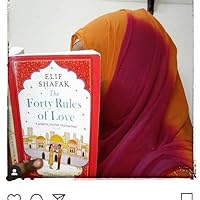
The police responded that….the Terrorists had disguised themselves as Normal Human Beings - as students, as working men.
Normal Human Beings.
Of all the claims that the police made, this was the scariest. In one stroke, it brought every youth in Jamia Nagar under the scanner of suspicion. How was a truly normal person expected to behave?
-Neyaz Farooquee
'An Ordinary Man's Guide To Radicalism' is a memoir of the author and the reflection of many ordinary Muslim youth of India who arrive in big cities from their poor homes to achieve good education and jobs but are inadvertently radicalized or forced to have such thoughts as they reside in ghettos or study in universities stereotyped as Sensitive Area (as in hub for terrorism), and living in constant paranoia of false accusations, arrest, landing in jails or being killed in encounter.
The book is more of a personal essay where the author recounts how his life and ideologies changed following the Batla House Encounter a few minutes from his house in Jamia Nagar simultaneously talking about his life as a child in Bihar (his hometown), teachings of his grandfather, arrival in Delhi, his admission in Jamia School, friends and roommates, wayward adolescence, Jamia Nagar locality, localites, studying Bsc Bioscience in Jamia University and ultimately choosing journalism as career.
This book's unique as the author, albeit a journalist, has narrated unrefined views, outlook, behavior of the local public and students towards the police, media and government. Overnight the students of a university and people of a locality are denoted as potential threat by the media and as per the author young men arrested from the streets. The professors of a revered university are left to investigate, defend and protect Young Minds and the reputation of a University all by themselves.
Through this book Neyaz Farooquee has made a valiant effort to showcase the world about the untold fear or I must say horror haunting the Muslim community and it's youth for the fault of identity.
The tone and language of the book is nowhere extreme or professing radicalism instead the life of the author is a blueprint of the life of thousands of Muslim boys who come from poor/middle class family and live in Delhi alone for studies.
I felt most parts about Islamic teachings, poetries, details about friends, family and city irrelevant and unnecessary. I wished they were avoided.
Recommended for people who love to read non-fiction related to such subjects. The infusion of Hindustani language and numerous shocks and shayaris might be a disappointment for some but if you like such writing you would be charmed.
There is something wrong when a human being can be turned into a minority-majority in the land where they are born.
Us and Them.
Normal Human Beings.
Of all the claims that the police made, this was the scariest. In one stroke, it brought every youth in Jamia Nagar under the scanner of suspicion. How was a truly normal person expected to behave?
-Neyaz Farooquee
'An Ordinary Man's Guide To Radicalism' is a memoir of the author and the reflection of many ordinary Muslim youth of India who arrive in big cities from their poor homes to achieve good education and jobs but are inadvertently radicalized or forced to have such thoughts as they reside in ghettos or study in universities stereotyped as Sensitive Area (as in hub for terrorism), and living in constant paranoia of false accusations, arrest, landing in jails or being killed in encounter.
The book is more of a personal essay where the author recounts how his life and ideologies changed following the Batla House Encounter a few minutes from his house in Jamia Nagar simultaneously talking about his life as a child in Bihar (his hometown), teachings of his grandfather, arrival in Delhi, his admission in Jamia School, friends and roommates, wayward adolescence, Jamia Nagar locality, localites, studying Bsc Bioscience in Jamia University and ultimately choosing journalism as career.
This book's unique as the author, albeit a journalist, has narrated unrefined views, outlook, behavior of the local public and students towards the police, media and government. Overnight the students of a university and people of a locality are denoted as potential threat by the media and as per the author young men arrested from the streets. The professors of a revered university are left to investigate, defend and protect Young Minds and the reputation of a University all by themselves.
Through this book Neyaz Farooquee has made a valiant effort to showcase the world about the untold fear or I must say horror haunting the Muslim community and it's youth for the fault of identity.
The tone and language of the book is nowhere extreme or professing radicalism instead the life of the author is a blueprint of the life of thousands of Muslim boys who come from poor/middle class family and live in Delhi alone for studies.
I felt most parts about Islamic teachings, poetries, details about friends, family and city irrelevant and unnecessary. I wished they were avoided.
Recommended for people who love to read non-fiction related to such subjects. The infusion of Hindustani language and numerous shocks and shayaris might be a disappointment for some but if you like such writing you would be charmed.
There is something wrong when a human being can be turned into a minority-majority in the land where they are born.
Us and Them.
July 25, 2021
An ordinary mans guide to radicalism.
Growing Muslim in India by Neyaz Farouqee
A very personal account of a young ambitious man who comes from what could be termed a privileged rural background.
His story is very similar to anyone who has been raised in such surroundings, living with an extended family and being taught the rudimentary values of life by elders. As he narrates the story of his life and and factors which influenced his thoughts, it makes the reader think. Why is radicalism so intrinsically related to Muslims?
I was raised in an extremely cosmopolitan atmosphere by forward looking parents and so the first thing I noticed was the all pervasiveness of Religion in daily life, whether it be in the number of friends one cultivates or whiling away precious time, everything is regulated by religion. I have also noticed that closed societies tend to make it difficult for young adults to adjust to the changing modern world, especially when there is an absence of scientific learning.
The author raises many questions for which I am grateful. After coming to the city, he naturally chooses to live in a ghetto, amidst the filth and squalor. After 9/11 in America, he wished, "....the walls had been flooded with posters demanding uninterrupted power supply, proper water and sewage systems, or schools and parks, the world would have perhaps been a better place.... Instead, they railed on about distant America".
Belonging to the minority community has its pitfalls - they were always in the eye of the storm. After a particularly frightening police encounter involving terrorists near his home, he admits, "everyone had become a suspect. Friends suspected best friends, acquaintances re-assessed each other, landlords threw out students, ... And young men withdrew into their shells. They lost everything there was to lose: hope, pride, their carefree lives. They didn’t know if it was a virtue or a vice to be: smart, confident, clean-shaven, bearded, working, jobless. Like Normal Human Beings." How can such an atmosphere of fear and mistrust nurture responsible human beings?
This book made me think. Could there ever be a solution to this serious social problem? I wish more people would read it and ponder over this question: Why is it important for some to declare their identify solely through religion rather than nationality? There are no easy answers.
Growing Muslim in India by Neyaz Farouqee
A very personal account of a young ambitious man who comes from what could be termed a privileged rural background.
His story is very similar to anyone who has been raised in such surroundings, living with an extended family and being taught the rudimentary values of life by elders. As he narrates the story of his life and and factors which influenced his thoughts, it makes the reader think. Why is radicalism so intrinsically related to Muslims?
I was raised in an extremely cosmopolitan atmosphere by forward looking parents and so the first thing I noticed was the all pervasiveness of Religion in daily life, whether it be in the number of friends one cultivates or whiling away precious time, everything is regulated by religion. I have also noticed that closed societies tend to make it difficult for young adults to adjust to the changing modern world, especially when there is an absence of scientific learning.
The author raises many questions for which I am grateful. After coming to the city, he naturally chooses to live in a ghetto, amidst the filth and squalor. After 9/11 in America, he wished, "....the walls had been flooded with posters demanding uninterrupted power supply, proper water and sewage systems, or schools and parks, the world would have perhaps been a better place.... Instead, they railed on about distant America".
Belonging to the minority community has its pitfalls - they were always in the eye of the storm. After a particularly frightening police encounter involving terrorists near his home, he admits, "everyone had become a suspect. Friends suspected best friends, acquaintances re-assessed each other, landlords threw out students, ... And young men withdrew into their shells. They lost everything there was to lose: hope, pride, their carefree lives. They didn’t know if it was a virtue or a vice to be: smart, confident, clean-shaven, bearded, working, jobless. Like Normal Human Beings." How can such an atmosphere of fear and mistrust nurture responsible human beings?
This book made me think. Could there ever be a solution to this serious social problem? I wish more people would read it and ponder over this question: Why is it important for some to declare their identify solely through religion rather than nationality? There are no easy answers.

January 23, 2020
The language of this book is easy to read.
This review is spoiler-free...
Imagine you are in a place far away from home. And in this new place, there is a search for a suspect who's almost every factor matches to your self and you can't escape from this place and have to learn to live life in fear.
This is what the author and protagonist in the book, Neyaz Farooquee has to face. When he along with thousands of others who live Zamia locality were questioned about there identity due to an event unfolded in their locality.
Autor and Protagonist of the book - Neyaz Farooquee is from Bihar, moved to Jamia locality in hopes of better Education and fulfilling Goals. Now his journey from the young age at which he moved to Delhi to becoming a journalist, along with the struggles he goes through when 19th September 2008 event unfold and after is what this book his.
But this is not just a story of Neyaz, it is also the story of all those thousands of innocent individuals who were questioned about their identity.
This review is spoiler-free...
Imagine you are in a place far away from home. And in this new place, there is a search for a suspect who's almost every factor matches to your self and you can't escape from this place and have to learn to live life in fear.
This is what the author and protagonist in the book, Neyaz Farooquee has to face. When he along with thousands of others who live Zamia locality were questioned about there identity due to an event unfolded in their locality.
Autor and Protagonist of the book - Neyaz Farooquee is from Bihar, moved to Jamia locality in hopes of better Education and fulfilling Goals. Now his journey from the young age at which he moved to Delhi to becoming a journalist, along with the struggles he goes through when 19th September 2008 event unfold and after is what this book his.
But this is not just a story of Neyaz, it is also the story of all those thousands of innocent individuals who were questioned about their identity.

January 30, 2020
I’m not going to lie, this book was lying on my shelf collecting dust for a long period of time. But with the recent activism around the CAA and NRC ruling, I felt compelled to finally dust the dirt off and pick it up.
This book is a memoir. It tells the story of a muslim man, coming from humble beginnings - brought up in a religious and pious family in Bihar and sent to Delhi at the age of 10 in the hopes that the boy would be a IAS officer. However there was one defining moment in his life and that was the case of the Batla House Encounter.
The Batla House Encounter was a very controversial case in India wherein in 2008 the police raided an apartment in Batla House, Jamia Nagar in the capital of India - New Delhi. The apartment was said to be housing terrorists who masterminded a few bombings that took place pan-India a few months prior. These alleged terrorists were the author’s age - some even studied in the same college - Jamia Millia Islamia. The kicker? The encounter happened 200m away from his house.
To be a muslim at that time (in that area especially) must have been truly terrifying. The police said the reason why the terrorists went undetected for so long was because they were living under the guise of being a ‘Normal Human Being’. What does that mean? The author and his friends had to rethink and question everything they did - they had to rewire their brains and think themselves to be ‘terrorists’ so that others don’t see them to be just that.
It reminded me of the stories I heard after 9/11 and just so many other atrocities. In fact, I remembered this one time my aunt told me that when the Khalistan movement was going on and the government was cracking down on these ‘terrorists’, she had to cut her hair short so that she wasn’t targeted while traveling, etc.
Back to the book, it was definitely informative - both culturally and politically (he has cross referenced a lot of what he wrote with annotations that you can check out towards the end of the book), but it wasn’t a WOW book for me. There were a lot of ‘muhaavaras’/’hadees’/idioms and couplets that just felt...a little unnecessary. Also, there were certain sections of the book that could have just been trimmed off.
So I would suggest this book if you’re trying to read more Muslim literature and if you’re trying to get a better understanding of how Muslims are treated in India, but other than that, it was a maybe 3 star book for me?
This book is a memoir. It tells the story of a muslim man, coming from humble beginnings - brought up in a religious and pious family in Bihar and sent to Delhi at the age of 10 in the hopes that the boy would be a IAS officer. However there was one defining moment in his life and that was the case of the Batla House Encounter.
The Batla House Encounter was a very controversial case in India wherein in 2008 the police raided an apartment in Batla House, Jamia Nagar in the capital of India - New Delhi. The apartment was said to be housing terrorists who masterminded a few bombings that took place pan-India a few months prior. These alleged terrorists were the author’s age - some even studied in the same college - Jamia Millia Islamia. The kicker? The encounter happened 200m away from his house.
To be a muslim at that time (in that area especially) must have been truly terrifying. The police said the reason why the terrorists went undetected for so long was because they were living under the guise of being a ‘Normal Human Being’. What does that mean? The author and his friends had to rethink and question everything they did - they had to rewire their brains and think themselves to be ‘terrorists’ so that others don’t see them to be just that.
It reminded me of the stories I heard after 9/11 and just so many other atrocities. In fact, I remembered this one time my aunt told me that when the Khalistan movement was going on and the government was cracking down on these ‘terrorists’, she had to cut her hair short so that she wasn’t targeted while traveling, etc.
Back to the book, it was definitely informative - both culturally and politically (he has cross referenced a lot of what he wrote with annotations that you can check out towards the end of the book), but it wasn’t a WOW book for me. There were a lot of ‘muhaavaras’/’hadees’/idioms and couplets that just felt...a little unnecessary. Also, there were certain sections of the book that could have just been trimmed off.
So I would suggest this book if you’re trying to read more Muslim literature and if you’re trying to get a better understanding of how Muslims are treated in India, but other than that, it was a maybe 3 star book for me?

October 12, 2021
some parts are nice where the author actually shares his teachings, the literature he loves, his values and what it was like to grow up as a Muslim in India, or the trauma of the Batla House encounter but the rest of the excruciating details were a big bore
March 19, 2019
The other side of the story.
July 10, 2019
Must must read. Especially before the Batla House movie is out.
September 22, 2020
An interesting read.
S lot of details and news articles were pointed throughout the book. This brings you side of the student life from that part of the City.
S lot of details and news articles were pointed throughout the book. This brings you side of the student life from that part of the City.
February 21, 2021
A good read.
Recommended for everyone out there.
Recommended for everyone out there.

August 24, 2024
September 19, 2008, was the date of the infamous Batla House encounter, against Indian Mujahideen terrorists in the Batla House locality in Jamia Nagar, Delhi. This courageous book is the true account of how this one incident changed the life of a young man from an ordinary Muslim family in Inderwan Bairam in Bihar’s Gopalganj district forever. Farooquee who lived in the Muslim neighbourhood, only meters away from where the encounter took place, acerbically describes how his religion singularly becomes his biggest distinguishing factor soon after the encounters as both the police and the media began to suspect every Muslim youth living in the locality as probable terrorists. At a time when incidents of mob killings of Muslims in India are on a meteoric rise, Farooquee’s book is an authentic and necessary exploration of identity and stereotypes.

July 6, 2019
Neyaz contrasts the banalities of his college life at Jamia Millia Islamia with the sudden shock of the encounter at Batla House on that fateful day in September, 2008. What started as the unassuming life in a tolerant but observant Muslim family in Gopalganj, Bihar, ends in a ghetto like Jamia Nagar, Delhi: where politics, national security, communal mistrust and the confusion of youth mix to create an entirely electrifying atmosphere.
Having written extensively for the Hindustan Times and other reputed publications, I expected the author to make his narrative tighter, but the sense of dread was (sometimes comically) expressed throughout. Would be good reading to get under the skin of what it feels like to be marginalized in certain situations in your own state, but the book left me with more questions than answers.
Having written extensively for the Hindustan Times and other reputed publications, I expected the author to make his narrative tighter, but the sense of dread was (sometimes comically) expressed throughout. Would be good reading to get under the skin of what it feels like to be marginalized in certain situations in your own state, but the book left me with more questions than answers.
July 5, 2019
A must read. Especially in today's times.
Here is a book which really defines what belonging to a minority group can mean. It really places you into the shows of the writer and takes you through his experiences.
It is said in law that let a hundred guilty go free, lest one innocent be punished, and that all are innocent till proved guilty.
This book shows what happens if these principle are inverted, or for that matter even seem to be inverted.
Due process of law is a protection guaranteed by our very Constitution and a dilution of it, is not in anyone's interest and especially not of our beloved country. This book shows the importance of due process of law, not just in terms of courts of law, but also as a factor in social cohesion.
A must read!
Here is a book which really defines what belonging to a minority group can mean. It really places you into the shows of the writer and takes you through his experiences.
It is said in law that let a hundred guilty go free, lest one innocent be punished, and that all are innocent till proved guilty.
This book shows what happens if these principle are inverted, or for that matter even seem to be inverted.
Due process of law is a protection guaranteed by our very Constitution and a dilution of it, is not in anyone's interest and especially not of our beloved country. This book shows the importance of due process of law, not just in terms of courts of law, but also as a factor in social cohesion.
A must read!

May 12, 2018
It's an insightful read into how "us vs them" plays out in the real world.
Displaying 1 - 24 of 24 reviews