

What do you think?

Il romanzo di Ferrara #1-6
The Novel of Ferrara
Among the masters of twentieth-century literature, Giorgio Bassani and his Northern Italian hometown of Ferrara “are as inseparable as James Joyce and Dublin or Italo Svevo and Trieste” (from the Introduction). Now published in English for the first time as the unified masterwork Bassani intended, The Novel of Ferrara brings together Bassani’s six classics, fully revised by the author at the end of his life: Within the Walls, The Gold-Rimmed Spectacles, The Garden of the Finzi-Continis, Behind the Door, The Heron, and The Smell of Hay.
Set in the northern Italian town of Ferrara before, during, and after the Second World War, these interlocking stories present a fully rounded world of unforgettable characters: the respected doctor whose homosexuality is tolerated until he is humiliatingly exposed by an exploitative youth; a survivor of the Nazi death camps whose neighbors’ celebration of his return gradually turns to ostracism; a young man discovering the ugly, treacherous price that people will pay for a sense of belonging; the Jewish aristocrat whose social position has been erased; the indomitable schoolteacher, Celia Trotti, whose Communist idealism disturbs and challenges a postwar generation.
The Novel of Ferrara memorializes not only the Ferrarese people, but the city itself, which assumes a character and a voice deeply inflected by the Jewish community to which the narrator belongs. Suffused with new life by acclaimed translator and poet Jamie McKendrick, this seminal work seals Bassani’s reputation as “a quietly insistent chronicler of our age’s various menaces to liberty” (Jonathan Keates).
Set in the northern Italian town of Ferrara before, during, and after the Second World War, these interlocking stories present a fully rounded world of unforgettable characters: the respected doctor whose homosexuality is tolerated until he is humiliatingly exposed by an exploitative youth; a survivor of the Nazi death camps whose neighbors’ celebration of his return gradually turns to ostracism; a young man discovering the ugly, treacherous price that people will pay for a sense of belonging; the Jewish aristocrat whose social position has been erased; the indomitable schoolteacher, Celia Trotti, whose Communist idealism disturbs and challenges a postwar generation.
The Novel of Ferrara memorializes not only the Ferrarese people, but the city itself, which assumes a character and a voice deeply inflected by the Jewish community to which the narrator belongs. Suffused with new life by acclaimed translator and poet Jamie McKendrick, this seminal work seals Bassani’s reputation as “a quietly insistent chronicler of our age’s various menaces to liberty” (Jonathan Keates).
766 pages, Hardcover
First published January 1, 1974
About the author
Giorgio Bassani
76 books241 followersGiorgio Bassani was born in Bologna into a prosperous Jewish family of Ferrara, where he spent his childhood with his mother Dora, father Enrico (a doctor), brother Paolo, and sister Jenny. In 1934 he completed his studies at his secondary school, the liceo classico L. Ariosto in Ferrara. Music had been his first great passion and he considered a career as a pianist; however literature soon became the focus of his artistic interests.
In 1935 he enrolled in the Faculty of Letters of the University of Bologna. Commuting to lectures by train from Ferrara, he studied under the art historian Roberto Longhi. His ideal of the “free intellectual” was the Liberal historian and philosopher Benedetto Croce. Despite the anti-Semitic race laws which were introduced from 1938, he was able to graduate in 1939, writing a thesis on the nineteenth-century writer, journalist, radical and lexicographer Niccolò Tommaseo. As a Jew in 1939, however, work opportunities were now limited and he became a schoolteacher in the Jewish School of Ferrara in via Vignatagliata.
In 1940 his first book, Una città di pianura (“A City of the Plain”), was published under the pseudonym Giacomo Marchi in order to evade the race laws. During this period, along with friends he had made in Ferrara’s intellectual circle, he became a clandestine political activist. His activity in the anti-fascist resistance led to his arrest in May 1943; he was released on 26 July, the day after Benito Mussolini was ousted from power.
A little over a week later he married Valeria Sinigallia, whom he had met playing tennis. They moved to Florence for a brief period, living under assumed names, then at the end of the year, to Rome, where he would spend the rest of his life. His first volume of poems, Storie dei poveri amanti e altri versi, appeared in 1944; a second, Te lucis ante, followed in 1947. He edited the literary review Botteghe oscure for Princess Marguerite Caetani from its founding in 1948 until it halted publication in 1960.
In 1953 Passeggiata prima di cena appeared and in 1954 Gli ultimi anni di Clelia Trotti. In the same year he became editor of Paragone, a journal founded by Longhi and his wife Anna Banti. Bassani’s writings reached a wider audience in 1956 with the publication of the Premio Strega-winning book of short stories, Cinque storie Ferraresi.
As an editorial director of Feltrinelli Bassani was responsible for the posthumous publication in 1958 of Giuseppe Tomasi di Lampedusa's Il Gattopardo, a novel which had been rejected by Elio Vittorini at Mondadori, and also by Einaudi, but which became one of the great successes of post-war Italian literature. Bassani’s enthusiastic editing of the text, following instructions from Elena Croce (daughter of Benedetto) who had offered him the manuscript, later became controversial however; recent editions have been published which follow the manuscript more closely.
Also in 1958 Bassani’s novel Gli occhiali d’oro was published, an examination, in part, of the marginalisation of Jews and homosexuals. Together with stories from Cinque storie ferraresi (reworked and under the new title Dentro le mura (1973)) it was to be form part of a series of works known collectively as Il romanzo di Ferrara which explored the town, with its Christian and Jewish elements, its perspectives and its landscapes. The series also includes: Il giardino dei Finzi-Contini (1962, Premio Viareggio prizewiner); Dietro la porta (1964); L'airone (1968) and L'odore del fieno (1972). These works realistically document the Italian Jewish community under Fascism in a style that manifests the difficulties of searching for truth in the meanderings of memory and moral conscience. In 1960 one of his novels was adapted as the film Long Night in 1943.
Bassani died in 2000, and was buried in the Jewish Cemetery in Ferrara. He was survived by his estranged wife Valeria and their two children.
In 1935 he enrolled in the Faculty of Letters of the University of Bologna. Commuting to lectures by train from Ferrara, he studied under the art historian Roberto Longhi. His ideal of the “free intellectual” was the Liberal historian and philosopher Benedetto Croce. Despite the anti-Semitic race laws which were introduced from 1938, he was able to graduate in 1939, writing a thesis on the nineteenth-century writer, journalist, radical and lexicographer Niccolò Tommaseo. As a Jew in 1939, however, work opportunities were now limited and he became a schoolteacher in the Jewish School of Ferrara in via Vignatagliata.
In 1940 his first book, Una città di pianura (“A City of the Plain”), was published under the pseudonym Giacomo Marchi in order to evade the race laws. During this period, along with friends he had made in Ferrara’s intellectual circle, he became a clandestine political activist. His activity in the anti-fascist resistance led to his arrest in May 1943; he was released on 26 July, the day after Benito Mussolini was ousted from power.
A little over a week later he married Valeria Sinigallia, whom he had met playing tennis. They moved to Florence for a brief period, living under assumed names, then at the end of the year, to Rome, where he would spend the rest of his life. His first volume of poems, Storie dei poveri amanti e altri versi, appeared in 1944; a second, Te lucis ante, followed in 1947. He edited the literary review Botteghe oscure for Princess Marguerite Caetani from its founding in 1948 until it halted publication in 1960.
In 1953 Passeggiata prima di cena appeared and in 1954 Gli ultimi anni di Clelia Trotti. In the same year he became editor of Paragone, a journal founded by Longhi and his wife Anna Banti. Bassani’s writings reached a wider audience in 1956 with the publication of the Premio Strega-winning book of short stories, Cinque storie Ferraresi.
As an editorial director of Feltrinelli Bassani was responsible for the posthumous publication in 1958 of Giuseppe Tomasi di Lampedusa's Il Gattopardo, a novel which had been rejected by Elio Vittorini at Mondadori, and also by Einaudi, but which became one of the great successes of post-war Italian literature. Bassani’s enthusiastic editing of the text, following instructions from Elena Croce (daughter of Benedetto) who had offered him the manuscript, later became controversial however; recent editions have been published which follow the manuscript more closely.
Also in 1958 Bassani’s novel Gli occhiali d’oro was published, an examination, in part, of the marginalisation of Jews and homosexuals. Together with stories from Cinque storie ferraresi (reworked and under the new title Dentro le mura (1973)) it was to be form part of a series of works known collectively as Il romanzo di Ferrara which explored the town, with its Christian and Jewish elements, its perspectives and its landscapes. The series also includes: Il giardino dei Finzi-Contini (1962, Premio Viareggio prizewiner); Dietro la porta (1964); L'airone (1968) and L'odore del fieno (1972). These works realistically document the Italian Jewish community under Fascism in a style that manifests the difficulties of searching for truth in the meanderings of memory and moral conscience. In 1960 one of his novels was adapted as the film Long Night in 1943.
Bassani died in 2000, and was buried in the Jewish Cemetery in Ferrara. He was survived by his estranged wife Valeria and their two children.
Ratings & Reviews
Friends & Following
Create a free account to discover what your friends think of this book!
Community Reviews
Displaying 1 - 30 of 36 reviews

September 23, 2023
Bassini’s novel is actually a compilation of four novels and two collections of short stories set in the late 1930s and in the years immediately after the war. Ferrara is a walled, renaissance city in Northeastern Italy, the home of Bassini’s youth. The experiences of the characters are often what he remembered from his early years. It has been said that Bassini’s relationship to Ferrara is comparable
to Joyce’s relationship to Dublin.
The Jewish community of Ferrara had been well integrated in the life of this city for generations.These doctors, politicians, WWI veterans, teachers, and intellectuals were also involved in the pervasive clash between the Fascists and the Socialists. Early on, many belonged to the Fascist party, either due to ideological agreement or political pressure. But the Fascists became more racist, and in 1938 Mussolini enacted the Racial Laws. The secure and respected positions of these Ferranese Jews crumbled. Through the voices, mostly the youth, their story is told. The characters often appear in multiple novels and short stories. They may be the narrator in one story and a friend or classmate in another. I was always glad to reconnect with them, like bumping into an old friend. I am not the first to say that facts may tell you what happened, but fiction makes you experience it. That is the essence of Bassini’s work.
It took me most of the summer to complete this tome of 800 pages. I spent much time just reflecting on those many friends I felt I knew intimately. Friends whose fate loomed, an atrocity I knew for certain but too awful for them to even imagine. A very powerful book well worth the time investment.
to Joyce’s relationship to Dublin.
The Jewish community of Ferrara had been well integrated in the life of this city for generations.These doctors, politicians, WWI veterans, teachers, and intellectuals were also involved in the pervasive clash between the Fascists and the Socialists. Early on, many belonged to the Fascist party, either due to ideological agreement or political pressure. But the Fascists became more racist, and in 1938 Mussolini enacted the Racial Laws. The secure and respected positions of these Ferranese Jews crumbled. Through the voices, mostly the youth, their story is told. The characters often appear in multiple novels and short stories. They may be the narrator in one story and a friend or classmate in another. I was always glad to reconnect with them, like bumping into an old friend. I am not the first to say that facts may tell you what happened, but fiction makes you experience it. That is the essence of Bassini’s work.
It took me most of the summer to complete this tome of 800 pages. I spent much time just reflecting on those many friends I felt I knew intimately. Friends whose fate loomed, an atrocity I knew for certain but too awful for them to even imagine. A very powerful book well worth the time investment.

April 11, 2019
The past is not dead - the very structure of the story asserted - it never dies. Although it moves further away: at every passing moment. To recover the past is thus possible. What's required, however, if one really has the desire to recover it, is to travel down a kind of corridor which grows longer at every instant. Down there at the very end of the corridor - at the sunlit point where its blackened walls converge - is life, vivid and throbbing as it once was when it first took form. Eternal, then? Yes, eternal. And even if it's ever further away, ever more fugitive, it remains all the more open to new possession.
What a wonderful articulation of our relationship to the past, to the workings of memory, to the complicated nexus between history, memory and fiction. Bassani's past is both individual and public: what he recalls might be uniquely his, but it's also a monument to Italy's - even Europe's, or humanity's? - troubled remembrance and reconstruction of that dark time when fascism was in the ascendant.
I would only tentatively describe these as Holocaust novels, even when characters disappear into the Nazi camp regime - and only one person ever makes it back to Ferrara. They instead engage more profoundly with the specifics of Ferrara's Italian-Jewish community, one so integrated and intermixed, so deeply bourgeois, so intermarried and entwined with the city that it's hard to untangle where the contours of Jewish identity lie: in the synagogue, perhaps? In the celebration of festivals and rites? In the cemetery? It's significant that the unnamed narrator at one point remarks that until he was in his late teens he'd never even considered that his Jewishness was a matter for notice: importantly, this is said against the background of Mussolini's Racial Laws, prompted by the fervour of Nazi Germany.
The collected pieces here are somewhat mixed (and I've reviewed them individually): the heart of the book, I'd say, are The Gold-Rimmed Spectacles, The Garden of the Finzi Continis and Behind the Door - all effortlessly 5-star reads. The Heron is perhaps one of the darkest, most despairing, pieces in literature: how is it possible to live, it asks, when one has been not just wounded but crushed by the darkness of fascism?
Bookending these novels/novellas are two collections of short pieces: Within the Walls introduces characters and events that prove to be crucial backgrounds to the longer stories that follow - and one of its pleasures is following the breadcrumbs of clues that help us identify where these people fit into the larger narrative. The final collection, The Smell of Hay, revisits some of the characters but is most productive for me for Bassani's own meditation on what he has been doing in the Ferrara books which he sees as one long, interconnected work.
Throughout, Bassani's concerns with the recuperations of Proustian memory jostle with other literary influences (Solzhenitsyn and Joyce, perhaps, in the 'one day' structure of The Heron - though there's nothing of the joy of Joyce here). The writing is fluent, the ambivalent imagery of walls (as prisons as well as sanctuaries) ever-present. Betrayal is always waiting in the wings as both planned and unconscious cruelties batter the characters and, at his best, Bassani writes so hauntingly that his memories become ours.
Clear-sighted, complex, unsentimental, deeply humane, intimate yet with an eye on the depth of history, this book (or books?) looks into the dark heart of our European past and makes it joltingly, sometimes beautifully, present again.

Read
November 27, 2018In addition to Giorgio Bassani's six Ferrara novels collected together in one volume, this edition contains an account of Bassani's life and work by his daughter, Paola. She also includes many black and white photographs of himself and his extended family, and of Ferrara between the wars.
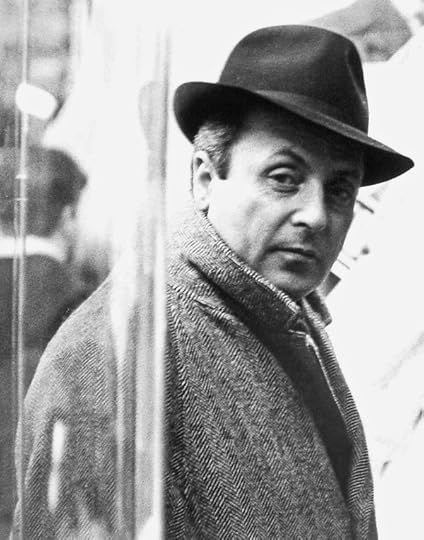
Giorgio Bassani, 1916 - 2000
Although I read all of the novels in this translation by Michel Arnaud and Gérard Genot, I reviewed them separately under their individual titles in English:
Within the Walls
The Gold-Rimmed Spectacles
The Garden of the Finzi-Continis
Behind the Door
The Heron,
The Smell of Hay
Giorgio Bassani, 1916 - 2000
Although I read all of the novels in this translation by Michel Arnaud and Gérard Genot, I reviewed them separately under their individual titles in English:
Within the Walls
The Gold-Rimmed Spectacles
The Garden of the Finzi-Continis
Behind the Door
The Heron,
The Smell of Hay

June 20, 2019
Most of the individual works in this volume came close to five stars for me, though I didn’t rate any as such. (I rate by my feelings, so any lack of stars is due to my own failings.) Even so, and perhaps illogically, I am giving the whole "novel" five stars. Many times a whole is greater than the literal sum of its parts—with books especially.
The separate reviews are here:
Within the Walls
https://www.goodreads.com/review/show...
The Gold-Rimmed Spectacles
https://www.goodreads.com/review/show...
The Garden of the Finzi-Continis
https://www.goodreads.com/review/show...
Behind the Door
https://www.goodreads.com/review/show...
The Heron
https://www.goodreads.com/review/show...
The Smell of Hay
https://www.goodreads.com/review/show...
The separate reviews are here:
Within the Walls
https://www.goodreads.com/review/show...
The Gold-Rimmed Spectacles
https://www.goodreads.com/review/show...
The Garden of the Finzi-Continis
https://www.goodreads.com/review/show...
Behind the Door
https://www.goodreads.com/review/show...
The Heron
https://www.goodreads.com/review/show...
The Smell of Hay
https://www.goodreads.com/review/show...

April 29, 2022
This is one of those books you must give yourself a while to get into. Don’t give up, don’t judge it too quickly! At the start I thought the language was stiff. I had trouble with the Italian names, keeping the characters straight and separating fact from fiction. After a while the confusion clears. However, I do think the book will be less difficult for an Italian. An Italian knows the language, the dialects and the country’s geography and history better than I do. There are helpful explanatory notes, and they are read in the audiobook.
The book is a blend of fact and fiction. Or put it this way, some of the characters are imaginary and some are not, but the Italian history woven into the story is always true. We learn about the Jewish population in Ferrara during the First, through to and after the Second World War. We view the country under fascism, socialism ad communism. The book recreates a time ad a place extraordinarily well.
Much of the story is told in the first person narrative. The author has put himself into the story. We view him and others as complicated individuals looking for answers. Do you have answers to everything? Of course not. Neither do they. You never quite know for sure if what you think one day may not change a day or two hence. There is an ambiguity in the writing that I find realistic.
On closing the book, the reader has learned about Ferrara, Italy, and the people living there. This is a book about place—its inhabitants, its flora and fauna, the land itself and the history that has played out there. And its bicycles, oh so many bicycles! There are coming of age stories. Love and infidelity. Drinking with buddies and hunting and those not enamored by hunting. Friendship and rivalry. And more.
There is ironic humor. Picture a policeman in a wrinkled suit, but pn his feet sneakers. He isn’t so young anymore. We are not viewing an idealistic picture, but reality.
The stories are interconnected. They are arranged in an order that aids comprehension. The book is well put together, mixing humor and fact in an intelligible manner.
P.J. Ochlan narrates the audiobook. Since I don’t know Italian, I cannot judge his pronunciation, but I can say that you think several narrators are speaking since the intonations are so varied. He does men and women and the elderly and the young all well. How he can switch from one voice to another so fluidly is amazing. The narration I have given four stars. I did sometimes find it difficult to know when a note ended and he had returned to the story. It would have been helpful had he said “end of note”!
Jamie McKendrick is the translator and has written the introduction to this volume copyrighted in 1980. With this publication, the author collected and revised earlier novels and stories previously published separately. There is also a forward by Andrei Aciman. Both the introduction and forward are good, but in my view, they should have been placed at the end of the audiobook. At the start, you don’t understand the relevance of that which is said. That the book focuses upon those who are marginalized is an important and valid point made.
I could stress the difficulties I had while reading this book, but at the same time I also know I very much like it. It grew on me. The further I went, the more I understood and the more I enjoyed it. I am very glad to have read it. It put me in another time and place and made that place so very real to me. The book has left a lasting impression on me, one that I will not soon forget. I recommend you pick this volume if you are interested in reading Bassani’s novels and stories.
The book is a blend of fact and fiction. Or put it this way, some of the characters are imaginary and some are not, but the Italian history woven into the story is always true. We learn about the Jewish population in Ferrara during the First, through to and after the Second World War. We view the country under fascism, socialism ad communism. The book recreates a time ad a place extraordinarily well.
Much of the story is told in the first person narrative. The author has put himself into the story. We view him and others as complicated individuals looking for answers. Do you have answers to everything? Of course not. Neither do they. You never quite know for sure if what you think one day may not change a day or two hence. There is an ambiguity in the writing that I find realistic.
On closing the book, the reader has learned about Ferrara, Italy, and the people living there. This is a book about place—its inhabitants, its flora and fauna, the land itself and the history that has played out there. And its bicycles, oh so many bicycles! There are coming of age stories. Love and infidelity. Drinking with buddies and hunting and those not enamored by hunting. Friendship and rivalry. And more.
There is ironic humor. Picture a policeman in a wrinkled suit, but pn his feet sneakers. He isn’t so young anymore. We are not viewing an idealistic picture, but reality.
The stories are interconnected. They are arranged in an order that aids comprehension. The book is well put together, mixing humor and fact in an intelligible manner.
P.J. Ochlan narrates the audiobook. Since I don’t know Italian, I cannot judge his pronunciation, but I can say that you think several narrators are speaking since the intonations are so varied. He does men and women and the elderly and the young all well. How he can switch from one voice to another so fluidly is amazing. The narration I have given four stars. I did sometimes find it difficult to know when a note ended and he had returned to the story. It would have been helpful had he said “end of note”!
Jamie McKendrick is the translator and has written the introduction to this volume copyrighted in 1980. With this publication, the author collected and revised earlier novels and stories previously published separately. There is also a forward by Andrei Aciman. Both the introduction and forward are good, but in my view, they should have been placed at the end of the audiobook. At the start, you don’t understand the relevance of that which is said. That the book focuses upon those who are marginalized is an important and valid point made.
I could stress the difficulties I had while reading this book, but at the same time I also know I very much like it. It grew on me. The further I went, the more I understood and the more I enjoyed it. I am very glad to have read it. It put me in another time and place and made that place so very real to me. The book has left a lasting impression on me, one that I will not soon forget. I recommend you pick this volume if you are interested in reading Bassani’s novels and stories.

February 26, 2022
Quelle chance pour nous, lecteurs, lorsqu'un grand écrivain consacre son art à un lieu qui, sur le radar littéraire, devient le centre d'un monde narratif dont la richesse ne cesse de nous étonner. Les rues, les façades, les places, les parcs, deviennent des points de repère précis d'où émanent des souvenirs, accompagnés de nostalgie, un ingrédient qui est toujours une source d'inspiration. Il suffit de se rappeler cet après-midi où la voix confiante de la petite fille grimpant sur le mur l'a invité à entrer au jardin, ou la dernière fois qu'il a vu le professeur souffrant, connu pour ses lunettes dorées, avant que l'inattendu ne se produise. Les rues, comme un défilé de coordonnées reliant le cœur, une véritable carte des sentiments (Nous sommes les vrais pays, pas les frontières dessinées sur les cartes avec les noms des hommes puissants, a justement écrit Michael Ondaatje) comme des veines qui parcourent le corps et lui donnent vie, toujours liées aux souvenirs, allant de la via Giovecca au vial Cavour, en passant par la via Garibaldi et corso Roma, la via Copera, San Romano, Fondo Banchettto et enfin la via Salinguerra, un voyage dans un autre temps, évoquant un passé lointain. La grande plaque commémorative sur la façade du temple israélite de la via Mazzini, un rappel douloureux des cent quatre-vingt-trois Juifs ferrarais déportés en Allemagne. Et enfin, voir de loin le mur de trois mètres de haut qui entoure le cimetière israélite et apercevoir presque la foule présente aux funérailles de la fameuse institutrice socialiste, décédée au cours de l'hiver 1944. Une époque révolue qui résiste néanmoins à l'oubli et qui, grâce à l'écriture, à l'art littéraire et au dévouement passionné de Giorgio Bassani, est maintenue vivante aujourd'hui dans les merveilleuses pages du Roman de Ferrare.

July 3, 2021
I gave individual reviews to each of the 6 volumes in this omnibus collection, so check there if interested. I must say, this doesn't really coalesce in any great fashion into a seamless work, but then I don't think the author intended it to. Some of the books were more successful than others - I didn't care much for the two compilations of short stories, but the three novellas and Bassani's masterpiece novel, The Garden of the Finzi-Continis, were all enjoyable.

August 4, 2026
Several stand alone novels and short stories united by being set in Bassani’s home town of Ferrara, Italy. Cerebral and poignant but always imbued with a gentle humor. The novels are particularly stunning.

July 5, 2022
Bassani's novels and short story collections detail life in Ferrara pre and post WWII. His narrators are usually outcasts in one or way another - in many cases because they are Jewish. The books are beautifully written and there is so much going on in the littlest movements that exist.

September 14, 2019
Around the World Read - Book 18 - Italy - Giorgo Bassani (1916-2000) remembers Ferrara and its assortment of characters beautifully. Yes, the sum (6 works) is far greater than the individual parts. . You'll find your own favorite scenes. (I've reviewed the 6 works separately). The final paragraph of the 6th work is magnificent: Bassani pens THE answer to many of our questions. This is one of my favorite novels but now I must return my library copy...then buy my own to revisit.
September 26, 2023
Binnen de muren ***
De gouden bril *****
De tuin van de Finzi Contini's ****
Achter de deur ****
De reiger *****
De geur van hooi ***
Het is inmiddels 11 oktober 2023 en ik geef dit boek 5 sterren, omdat het uiteindelijk een verpletterende indruk heeft achtergelaten.
1 + 1 = 3 zal ik maar zeggen.
De gouden bril *****
De tuin van de Finzi Contini's ****
Achter de deur ****
De reiger *****
De geur van hooi ***
Het is inmiddels 11 oktober 2023 en ik geef dit boek 5 sterren, omdat het uiteindelijk een verpletterende indruk heeft achtergelaten.
1 + 1 = 3 zal ik maar zeggen.

August 12, 2026
“Ook al zou ik naar alle waarschijnlijkheid blijven spelen met geometrische, bij voorkeur ronde vormen, met kegels, trechters, concentrische cirkels, enzovoort (dat was de regel van de kunst: als ik nog wilde vertellen had ik die te aanvaarden!), ik moest nu voor mezelf een plaats vinden op het toneel van mijn provincietheatertje, een gelijkwaardige plaats, niet achteraf.
Dus voortaan ook licht op mij, al dan niet schrijvend, op heel mijn persoon. De auteur van ‘Lida Mantovani’, ‘De wandeling voor het eten’, ‘Een gedenkplaat in de via Mazzini’, ‘De laatste jaren van Clelia Trotti’ en ‘Een nacht in ‘43’, en van de eerste drie hoofdstukken van ‘Een gouden bril’, moest ik nu ook maar eens uit mijn hol komen, zich presenteren, eindelijk ‘ik’ durven zeggen.”
Aldus Giorgio Bassani aan het slot van zijn verzameling autobiografische geschriften “De geur van hooi”, dat op zijn beurt het sluitstuk vormt van “Het verhaal van Ferrara” waarin Bassani een groot deel van zijn werk samenbrengt.
Dat ik-zeggen heeft hem geen windeieren gelegd, het bracht hem onder andere bij zijn meest succesvolle roman “De tuin van de Finzi-Contini’s”. Prachtige roman, die las ik een jaar of wat geleden. Maar ik genoot toch echt het meest van de teksten waarin Bassani juist géén ik zegt. Die verhalen die hij hierboven citeert, die ervoer ik als ronduit volmaakt, net als de roman “De reiger”. Al met al een meesterlijke schrijver, heerlijk om zijn soort-van-verzameld werk in een paar weken tijd in zijn thuisland te lezen, een paar honderd kilometer van zijn geliefde Ferrara.
Dus voortaan ook licht op mij, al dan niet schrijvend, op heel mijn persoon. De auteur van ‘Lida Mantovani’, ‘De wandeling voor het eten’, ‘Een gedenkplaat in de via Mazzini’, ‘De laatste jaren van Clelia Trotti’ en ‘Een nacht in ‘43’, en van de eerste drie hoofdstukken van ‘Een gouden bril’, moest ik nu ook maar eens uit mijn hol komen, zich presenteren, eindelijk ‘ik’ durven zeggen.”
Aldus Giorgio Bassani aan het slot van zijn verzameling autobiografische geschriften “De geur van hooi”, dat op zijn beurt het sluitstuk vormt van “Het verhaal van Ferrara” waarin Bassani een groot deel van zijn werk samenbrengt.
Dat ik-zeggen heeft hem geen windeieren gelegd, het bracht hem onder andere bij zijn meest succesvolle roman “De tuin van de Finzi-Contini’s”. Prachtige roman, die las ik een jaar of wat geleden. Maar ik genoot toch echt het meest van de teksten waarin Bassani juist géén ik zegt. Die verhalen die hij hierboven citeert, die ervoer ik als ronduit volmaakt, net als de roman “De reiger”. Al met al een meesterlijke schrijver, heerlijk om zijn soort-van-verzameld werk in een paar weken tijd in zijn thuisland te lezen, een paar honderd kilometer van zijn geliefde Ferrara.
February 6, 2026
4.5/5.
tre/quattro romanzi all’interno della raccolta sono proprio magistrali. mi sembra di conoscere ferrara benissimo adesso
tre/quattro romanzi all’interno della raccolta sono proprio magistrali. mi sembra di conoscere ferrara benissimo adesso

March 29, 2023
Lo stile è molto lento, in ogni mini-romanzo che compone il libro, e l'autore ha la tendenza (odiosa) a finire ogni storia con un anti-climax parecchio fastidioso, anche nel Giardino dei Finzi-Contini, che pure è sicuramente il più pregevole ma nonostante questo non arriva alla quinta stella. Un peccato, ma comunque interessante, specie se si ama la zona ed interessa il periodo storico.

Read
April 8, 2023This is a long collection of short novels about a town in between Bologna and Venice in northeast Italy circulating the long years of the wars, and especially in the lifetime of the novelist Giorgio Bassani, who lived from 1916-2000. Andre Aciman tells us in the introduction to the collection that the second world war created a kind of rift in Italian society, and moreover in Italian literature between those who saw the future as a place to moved toward and understand and an attempt to recreate or reestablish the past that the second war disrupted. This tension both within society, and within individuals made for a kind of emotional displacement. Writers like Giuseppe Tomasi di Lampedusa who wrote The Leopard seemed to be stuck in the past, while writers like Elsa Morante and Alberto Moravia were moving toward the future. Some writers like Bassani here, but also Carlo Levi, Primo Levi, felt the need to try to explain and account for this break in history and life. These novels often play in that discomfort and try to show that emotional breakage within the people and within the walls of the city here.
Within the Walls
“Turning back to the distant years of her youth, always, for as she lived, Lida Mantovani remembered the birth emotion, and especially the days just before it. Whenever she thought about it, she was deeply moved.”
This first book in the collection is either an interrelated series of short stories or short novellas, or a contiguous novel. But regardless the effect is to be “Within the walls” of the city, walking around, and meeting various of the people in the city and learning their stories. The stories tend to circulate around themes of alienation. The first involves a woman whose lover leaves her in a lurch, turning her into a kind of local figure of sympathy, but also disgust. Another involves a fraught would-be marriage in which two people from different social classes find that their positions are much harder to bypass than they thought. In another, a returned antifascist finds that his wartime pursuits don’t automatically translate to peacetime fame when it turns out that a lot of the same fascists he was fighting are just treated like regular people now. And the final story, a wartime massacre is litigated in the peace, and the thin borders between war and peace, especially in a country like Italy, that has had such violent upheavals in central government for such short a time as a country.
The middle story becomes the most poignant and well-rendered. The only Jew to survive the concentration camps returns to the town. He had been turned into the Nazis along with more than a hundred others, and he’s the only one left. And now he’s back. His presence is both confusions and discomfiting. For one thing, and people can’t quite understand this part, he’s gained a lot of weight. For another, his very presence, which was already a bit to periphery (being a Jew and all) is now quite inconvenient as the prevailing attitude in the town is one of “moving on” from the war. But here he is, with his memories, his body, and his serial number tattoo. It’s only when he confronts a fascist count in the street, slapping him “without provocation” that the town finally has the pre-text to shun him as they seemed to want to all along. It’s almost with relief that he committed an act that they could use against him.
~~~~~~~~~~~~
Original review:
This is a 1956 novel by the Italian writer Giorgio Bassani. It’s part of a six novel series called “The Novel of Ferrara” and contains the much more famous novel The Garden of the Finzi-Continis, which became a well-known film. I will review that novel later on.
This novel splits its time among several different tangentially connected stories. The effect is of walking through the small city, being told about various landmarks–some official and some unofficial–and then given the stories behind them. In some cases, these landmarks are the literal plaques and markers relating history around town, and in other cases they are the landmarks of history, which is contained in the memories of the surviving city dwellers. It’s not a small city (about 130,000 now) and so there were plenty of survivors.
The city, like a lot of Italian cities was one seat of fascist power from 1923-1943, from the rise of Mussolini until the fall of Italy to the allied forces and the put down of the regime. The stories float around this wide array of time–there’s a love affair between two ill-suited people, there’s the story of a supporter of fascism, there’s various account of an event in 1943 where 180 Jews were killed in the town, in part because they had been outed and called up, but also in part as a show of “good faith” to the Nazis.
The spends much of its short length focusing on the markers of memory, and then the erasure of the history not necessarily by the conscious decisions of bad actors, but of the sweeps of time and the desire to live. I don’t know where the series goes from here, but I am already thinking a lot on the question of “What do you do after?” and “Can you begin again?”
The Gold-Rimmed Spectacles
“Time has begun to thin them out, and yet it would be wrong to claim that only a few people in Ferra still remember Dr. Fadigati. Oh yes, Athos Fadigati–they would recall–the ENT specialist who had a clinic and his own house in Via Gorgadello, a short walk from Piazza delle Erbe, and who ended up so badly, poor man, so tragically.”
This second novel in the series involves the above-mentioned doctor increasingly becoming a pariah in the town, a common enough theme. His status as a pariah comes in the form of his being an older gay man who has the temerity to not complete hide this from everyone else. Like a lot of novels about conformity, here standing out is the real issue, but even that is survivable if you don’t also try to assert yourself in any kind of way. The doctor here barely does this, but it’s still too much.
~~~~~~~~~~~~~~
Original Review:
“Like Fredric March in Dr. Jekyll and Mr. Hyde, Dr. Fadigati had two lives. But who doesn’t?”
This is a short novel told by a young Italian Jew in between the wars. In this book, he profiles his friendship with a local doctor, well know in the town for being a caring, compassionate, intellectual, and interesting man. He’s also well-known for being gay. The novel picks up a lot from where the previous Bassani novel leaves off, a wide-spread rendering of the city in the time period from about 1919-1960 as told through the eyes of surviving Jewish townsfolk who had to deal with becoming the pariah of the local Fascistic order, and how a figure like Doctor Fadigati became a kind of martyr.
This is a very sad story because of the sense of betrayal at the heart of it, but also it’s a reminder of the sheer luck and fortune involved in surviving anything so horrible as this. In addition, it’s horrifying because of how cheap peace, order, civility, and citizenship really is.
“Nothing so excited an indiscreet interest among the small circle of respectable society as that rightful impulse to keep the private and the public separate in one’s life. So what on earth did Athos Fadigati get up to after the nurse had shut the glass door behind the last patient? The far from evident or at least hardly normal use that the doctor made of his evenings added to the curiosity that surrounded his person. Oh yes, in Fadigati there was a hint of something hard to fathom. But even this, in him, had an appeal, was an attraction.
Everyone knew how he spent his mornings, so no one had anything to say about them.”
The Garden of the Finzi-Continis
“For many years I have wanted to write about the Finzi-Continis–about Micol and Alberto, Professor Ermanno and Signora Olga–and about the many others who lived at, or like me frequented, the house in Corso Ercole I d’Este, Ferrara, just before the last war broke out. But the impulse, the prompt, really do so only occurred for me a year ago, one April Sunday in 1957.”
Generally, this novel is seen as the heart and masterpiece of this collection, and it’s by far the most famous compared to the rest of them. I am also writing this review without yet having finished the final three, and so far this is the fullest and richest of the novels in the collection. It was also filmed and won many awards including the Oscar for Best Foreign Language Film.
The novel begins with a prologue, and like a lot of prologues, you wonder how essential this is to the whole of the novel. But in the prologue, the author tells us about a recent trip to a set of ruins, and how in looking at some ancient tombs a young child in the party asks why no one seems sad. It’s explained that when people die fresher in our memories, they seem more real and their deaths are sadder because of their approximation to us. And the child responds that she disagrees, and that older graves like this one feel more real because of how long the person has been dead, and how much sadder it feels because of a sense of touching on the eternity of death.
Regardless, this leads us to the beginning of the novel, in which our narrator (who is mostly in the persona of the author as has been true about all the other novels so far) tells us about a family tomb in the town of Ferrara, which houses several generations of the Finzi-Continis, a local wealthy Jewish family, but not the recent dead, who died in concentration camps, where he wonders whether they have graves at all.
The novel then moves back several decades to when our narrator is a boy, and his first meetings with the family. The narrator is also Jewish, and this is part of the connection he shares with the family, there not being a lot of Jews in town, but their wealth and status acts as a kind of barrier. Because of his ability in school, he does end up crossing paths with the brother and sister (the children in the family) when they come to school to take their local exams and all three of them score well, putting them in the same space.
Years later they meet again. There’s a moment when the girl, Micol, invites the narrator past the walls of her estate, but he’s too scared and doesn’t. But the connections of days and days of conversation never leave him.
Finally, once our narrator has graduated university and begun his career as a literature scholar and he meets the girl again, becoming friends with her, and falling a little bit in love with her. He becomes more embroiled in her family, befriending the brother as well, and earning the regard of their father. He also quarrels with other young people. It’s a scene of youth and vigor and impending doom, as the late 1930s racial laws are about to come into effect turning their exclusive company into excluded company.
It seems at first like the narrator is experiencing a fledgling romance, but rather it’s one-sided, and like a lot of young men, he doesn’t take this well, and begins to resent Micol, who just wants to be friends with him. His persistence, egged on by the feeling of being aggrieved by her rejection causes him to pursue her with both additional vigor, and more cruel resentment, always looking for an excuse to try to kiss her and force the issue of her rejection. One of his last memories of her is yet another moment of having backed her into a corner and saying some casual cruelty to her. Soon thereafter all the Jews in town are sent to concentration camps, and we are with our narrator years later as he is one of the only survivors. I am not spoiling anything here, as he tells us in the very first paragraph of the novel who will live and who will die in this novel. If we’ve forgotten by now as the mere names in the beginning have now been breathed with life, that’s on us.
Behind the Door
“I’ve been unhappy many times in my life, as a child, as a boy, as a man; many times, if I think about, I’ve touched what what are called the depths of despair. And yet I can recall few periods blacker for me than the months from October 1929 to June 1930, when I had just started the ginnasio supreriore.”
Although perhaps not the very best of the novels I think I like this one the most. In the early parts of The Gardens of the Finzi-Contini, our narrator ends up blowing off studying for his calculus exams, focusing instead on his Latin and Italian exams and believes that he will be able to coast enough for a passing score, if not a very good one. Well, he entirely fails it, and has to schedule to retake the class in the fall. In that novel, we don’t actually get the story, and here, if this is the same narrator (or perhaps only the same situation), our narrator finds himself retaking that class. However, he cannot be a part time student and ends up taking a full course. This puts him in cram classes with several other boys from around town. When he walks into class the first day, he chooses a seat in the middle of the class, and as sometimes happens this puts him in proximity of someone who will have great influence over him, at least for the time being. He has inadvertently placed himself next to the smartest boy in the class, Catolica. They become friends and slight rivals. But this friendship is not the only thing going on in the novel. The circle becomes larger, and our narrator ends up running in a wider circle, eventually leading to the showdown that the title of the novel suggests. One other boy, Luigi, is also friends with our narrator, but he’s more thuggish in his ways, and more vulgar especially. One scene in the novel involves them changing for swimming and Luigi ends up standing naked for a longer time than necessary, clearly a set up for the narrator to see his penis, which horrifies him as it’s quite large. This breakdown in the code of boys (however typical a scene is for many boys’ lives) slightly turns him away from Luigi, but also he feels like he can’t get rid of him. When Catolica and the other boys try to cut out Luigi, unrelated to that event, our narrator defends him, only to be told that Luigi mocks him and cruelly gossips about him constantly. They convince him to hide behind one of the doors in the house when Luigi is around and he will hear it himself. He does so, and while he hears Luigi’s cruelty, he also hears the solemn pity of the other boys, and he feels equally as repulsed by them as Luigi. But school years don’t last and the aftermath here is short.
The Heron
“Not instantly, but resurfacing with something a struggle from the bottomless pit of unconsciousness, Edgardo Limentani thrust out his arm in the direction of the bedside table.”
A man goes on a hunting trip and in killing a red heron begins to envy the now dead bird and slowly loses his will to live. But it’s unclear exactly what he will choose for himself.
The Smell of Hay
“Once upon a time, when I was a boy, there lived in Ferrara a Jewish Signorina who was not ugly, nor poor, nor stupid, nor too old–not especially desirable, if truth be told, but not in the least deserving to be scorned–for whom, however strange it may seem, her family had not managed to find a husband. Strange? Well, yes.”
This is two fables, as the beginning of the book tells us. The first fables begins when a spinster (well, like 30) in the Ferrara eyes a newly arrived Jewish Russian immigrant and decides she will find a way to have a baby with him. They do, and now older this boy is trying himself to get with a girl who doesn’t seem too much to want to be with him, but he’s persistent and they end up together. Part of the fable here is that the intense feeling he has that the coming war and the new racial exclusion laws has drastically shortened both of their lives, that he is so adamant to succeed. He certainly didn’t expect that they could get married and stay together indefinitely. We also return to some of the other stories and characters from earlier of the novels, which speaks to the question I asked myself earlier in my reading about whether or not you could skip around. You can, but I don’t think you should.
Within the Walls
“Turning back to the distant years of her youth, always, for as she lived, Lida Mantovani remembered the birth emotion, and especially the days just before it. Whenever she thought about it, she was deeply moved.”
This first book in the collection is either an interrelated series of short stories or short novellas, or a contiguous novel. But regardless the effect is to be “Within the walls” of the city, walking around, and meeting various of the people in the city and learning their stories. The stories tend to circulate around themes of alienation. The first involves a woman whose lover leaves her in a lurch, turning her into a kind of local figure of sympathy, but also disgust. Another involves a fraught would-be marriage in which two people from different social classes find that their positions are much harder to bypass than they thought. In another, a returned antifascist finds that his wartime pursuits don’t automatically translate to peacetime fame when it turns out that a lot of the same fascists he was fighting are just treated like regular people now. And the final story, a wartime massacre is litigated in the peace, and the thin borders between war and peace, especially in a country like Italy, that has had such violent upheavals in central government for such short a time as a country.
The middle story becomes the most poignant and well-rendered. The only Jew to survive the concentration camps returns to the town. He had been turned into the Nazis along with more than a hundred others, and he’s the only one left. And now he’s back. His presence is both confusions and discomfiting. For one thing, and people can’t quite understand this part, he’s gained a lot of weight. For another, his very presence, which was already a bit to periphery (being a Jew and all) is now quite inconvenient as the prevailing attitude in the town is one of “moving on” from the war. But here he is, with his memories, his body, and his serial number tattoo. It’s only when he confronts a fascist count in the street, slapping him “without provocation” that the town finally has the pre-text to shun him as they seemed to want to all along. It’s almost with relief that he committed an act that they could use against him.
~~~~~~~~~~~~
Original review:
This is a 1956 novel by the Italian writer Giorgio Bassani. It’s part of a six novel series called “The Novel of Ferrara” and contains the much more famous novel The Garden of the Finzi-Continis, which became a well-known film. I will review that novel later on.
This novel splits its time among several different tangentially connected stories. The effect is of walking through the small city, being told about various landmarks–some official and some unofficial–and then given the stories behind them. In some cases, these landmarks are the literal plaques and markers relating history around town, and in other cases they are the landmarks of history, which is contained in the memories of the surviving city dwellers. It’s not a small city (about 130,000 now) and so there were plenty of survivors.
The city, like a lot of Italian cities was one seat of fascist power from 1923-1943, from the rise of Mussolini until the fall of Italy to the allied forces and the put down of the regime. The stories float around this wide array of time–there’s a love affair between two ill-suited people, there’s the story of a supporter of fascism, there’s various account of an event in 1943 where 180 Jews were killed in the town, in part because they had been outed and called up, but also in part as a show of “good faith” to the Nazis.
The spends much of its short length focusing on the markers of memory, and then the erasure of the history not necessarily by the conscious decisions of bad actors, but of the sweeps of time and the desire to live. I don’t know where the series goes from here, but I am already thinking a lot on the question of “What do you do after?” and “Can you begin again?”
The Gold-Rimmed Spectacles
“Time has begun to thin them out, and yet it would be wrong to claim that only a few people in Ferra still remember Dr. Fadigati. Oh yes, Athos Fadigati–they would recall–the ENT specialist who had a clinic and his own house in Via Gorgadello, a short walk from Piazza delle Erbe, and who ended up so badly, poor man, so tragically.”
This second novel in the series involves the above-mentioned doctor increasingly becoming a pariah in the town, a common enough theme. His status as a pariah comes in the form of his being an older gay man who has the temerity to not complete hide this from everyone else. Like a lot of novels about conformity, here standing out is the real issue, but even that is survivable if you don’t also try to assert yourself in any kind of way. The doctor here barely does this, but it’s still too much.
~~~~~~~~~~~~~~
Original Review:
“Like Fredric March in Dr. Jekyll and Mr. Hyde, Dr. Fadigati had two lives. But who doesn’t?”
This is a short novel told by a young Italian Jew in between the wars. In this book, he profiles his friendship with a local doctor, well know in the town for being a caring, compassionate, intellectual, and interesting man. He’s also well-known for being gay. The novel picks up a lot from where the previous Bassani novel leaves off, a wide-spread rendering of the city in the time period from about 1919-1960 as told through the eyes of surviving Jewish townsfolk who had to deal with becoming the pariah of the local Fascistic order, and how a figure like Doctor Fadigati became a kind of martyr.
This is a very sad story because of the sense of betrayal at the heart of it, but also it’s a reminder of the sheer luck and fortune involved in surviving anything so horrible as this. In addition, it’s horrifying because of how cheap peace, order, civility, and citizenship really is.
“Nothing so excited an indiscreet interest among the small circle of respectable society as that rightful impulse to keep the private and the public separate in one’s life. So what on earth did Athos Fadigati get up to after the nurse had shut the glass door behind the last patient? The far from evident or at least hardly normal use that the doctor made of his evenings added to the curiosity that surrounded his person. Oh yes, in Fadigati there was a hint of something hard to fathom. But even this, in him, had an appeal, was an attraction.
Everyone knew how he spent his mornings, so no one had anything to say about them.”
The Garden of the Finzi-Continis
“For many years I have wanted to write about the Finzi-Continis–about Micol and Alberto, Professor Ermanno and Signora Olga–and about the many others who lived at, or like me frequented, the house in Corso Ercole I d’Este, Ferrara, just before the last war broke out. But the impulse, the prompt, really do so only occurred for me a year ago, one April Sunday in 1957.”
Generally, this novel is seen as the heart and masterpiece of this collection, and it’s by far the most famous compared to the rest of them. I am also writing this review without yet having finished the final three, and so far this is the fullest and richest of the novels in the collection. It was also filmed and won many awards including the Oscar for Best Foreign Language Film.
The novel begins with a prologue, and like a lot of prologues, you wonder how essential this is to the whole of the novel. But in the prologue, the author tells us about a recent trip to a set of ruins, and how in looking at some ancient tombs a young child in the party asks why no one seems sad. It’s explained that when people die fresher in our memories, they seem more real and their deaths are sadder because of their approximation to us. And the child responds that she disagrees, and that older graves like this one feel more real because of how long the person has been dead, and how much sadder it feels because of a sense of touching on the eternity of death.
Regardless, this leads us to the beginning of the novel, in which our narrator (who is mostly in the persona of the author as has been true about all the other novels so far) tells us about a family tomb in the town of Ferrara, which houses several generations of the Finzi-Continis, a local wealthy Jewish family, but not the recent dead, who died in concentration camps, where he wonders whether they have graves at all.
The novel then moves back several decades to when our narrator is a boy, and his first meetings with the family. The narrator is also Jewish, and this is part of the connection he shares with the family, there not being a lot of Jews in town, but their wealth and status acts as a kind of barrier. Because of his ability in school, he does end up crossing paths with the brother and sister (the children in the family) when they come to school to take their local exams and all three of them score well, putting them in the same space.
Years later they meet again. There’s a moment when the girl, Micol, invites the narrator past the walls of her estate, but he’s too scared and doesn’t. But the connections of days and days of conversation never leave him.
Finally, once our narrator has graduated university and begun his career as a literature scholar and he meets the girl again, becoming friends with her, and falling a little bit in love with her. He becomes more embroiled in her family, befriending the brother as well, and earning the regard of their father. He also quarrels with other young people. It’s a scene of youth and vigor and impending doom, as the late 1930s racial laws are about to come into effect turning their exclusive company into excluded company.
It seems at first like the narrator is experiencing a fledgling romance, but rather it’s one-sided, and like a lot of young men, he doesn’t take this well, and begins to resent Micol, who just wants to be friends with him. His persistence, egged on by the feeling of being aggrieved by her rejection causes him to pursue her with both additional vigor, and more cruel resentment, always looking for an excuse to try to kiss her and force the issue of her rejection. One of his last memories of her is yet another moment of having backed her into a corner and saying some casual cruelty to her. Soon thereafter all the Jews in town are sent to concentration camps, and we are with our narrator years later as he is one of the only survivors. I am not spoiling anything here, as he tells us in the very first paragraph of the novel who will live and who will die in this novel. If we’ve forgotten by now as the mere names in the beginning have now been breathed with life, that’s on us.
Behind the Door
“I’ve been unhappy many times in my life, as a child, as a boy, as a man; many times, if I think about, I’ve touched what what are called the depths of despair. And yet I can recall few periods blacker for me than the months from October 1929 to June 1930, when I had just started the ginnasio supreriore.”
Although perhaps not the very best of the novels I think I like this one the most. In the early parts of The Gardens of the Finzi-Contini, our narrator ends up blowing off studying for his calculus exams, focusing instead on his Latin and Italian exams and believes that he will be able to coast enough for a passing score, if not a very good one. Well, he entirely fails it, and has to schedule to retake the class in the fall. In that novel, we don’t actually get the story, and here, if this is the same narrator (or perhaps only the same situation), our narrator finds himself retaking that class. However, he cannot be a part time student and ends up taking a full course. This puts him in cram classes with several other boys from around town. When he walks into class the first day, he chooses a seat in the middle of the class, and as sometimes happens this puts him in proximity of someone who will have great influence over him, at least for the time being. He has inadvertently placed himself next to the smartest boy in the class, Catolica. They become friends and slight rivals. But this friendship is not the only thing going on in the novel. The circle becomes larger, and our narrator ends up running in a wider circle, eventually leading to the showdown that the title of the novel suggests. One other boy, Luigi, is also friends with our narrator, but he’s more thuggish in his ways, and more vulgar especially. One scene in the novel involves them changing for swimming and Luigi ends up standing naked for a longer time than necessary, clearly a set up for the narrator to see his penis, which horrifies him as it’s quite large. This breakdown in the code of boys (however typical a scene is for many boys’ lives) slightly turns him away from Luigi, but also he feels like he can’t get rid of him. When Catolica and the other boys try to cut out Luigi, unrelated to that event, our narrator defends him, only to be told that Luigi mocks him and cruelly gossips about him constantly. They convince him to hide behind one of the doors in the house when Luigi is around and he will hear it himself. He does so, and while he hears Luigi’s cruelty, he also hears the solemn pity of the other boys, and he feels equally as repulsed by them as Luigi. But school years don’t last and the aftermath here is short.
The Heron
“Not instantly, but resurfacing with something a struggle from the bottomless pit of unconsciousness, Edgardo Limentani thrust out his arm in the direction of the bedside table.”
A man goes on a hunting trip and in killing a red heron begins to envy the now dead bird and slowly loses his will to live. But it’s unclear exactly what he will choose for himself.
The Smell of Hay
“Once upon a time, when I was a boy, there lived in Ferrara a Jewish Signorina who was not ugly, nor poor, nor stupid, nor too old–not especially desirable, if truth be told, but not in the least deserving to be scorned–for whom, however strange it may seem, her family had not managed to find a husband. Strange? Well, yes.”
This is two fables, as the beginning of the book tells us. The first fables begins when a spinster (well, like 30) in the Ferrara eyes a newly arrived Jewish Russian immigrant and decides she will find a way to have a baby with him. They do, and now older this boy is trying himself to get with a girl who doesn’t seem too much to want to be with him, but he’s persistent and they end up together. Part of the fable here is that the intense feeling he has that the coming war and the new racial exclusion laws has drastically shortened both of their lives, that he is so adamant to succeed. He certainly didn’t expect that they could get married and stay together indefinitely. We also return to some of the other stories and characters from earlier of the novels, which speaks to the question I asked myself earlier in my reading about whether or not you could skip around. You can, but I don’t think you should.

November 18, 2021
First, some groveling and caveats. How does a person with no literary credentials or accomplishments take it upon themselves to review an author with stacks of them? I can’t blame it on lack of self-awareness. I know my status or more appropriately, lack thereof. Perhaps I should just preface with the old rubric “I don’t know [fill in the blank] but I know what I like” (and don’t). I will assume that absolves me of any responsibility to exhibit any suitable humility. But, the book...
“The Novel of Ferrara” is actually five plus novels by the author. All placed in the author’s home town of Ferrara, Italy. Most take place during the 30’s with the rise if Italian fascism as a backdrop. All are written in excellent prose and reveal the inner lives of the characters. But, not surprisingly, I had some concerns.
Obviously I read these in translation. Although it would invalidate about 90% of my adult reading, I had a friend who rigidly stuck with the opinion that reading a work of fiction in translation had no merit. In his view, the work, as translated, was not actually the work. Although I am loath to admit that, there may be some truth in what he preached. If one does not read a work in the original, how is one to know the quality and potential implications of the translation? The obvious solution is to blame the translator for everything one doesn’t like about a work. That bring me back to Bassani.
Bassani’s style frequently displays lengthy sentences with numerous complications such as dependent clauses. Translating such a work would obviously be a challenge for the best translator. In this case, I’m not sure the attempts were always successful. I frequently would need to reread a sentence several time to decipher the meaning. Often, it seemed, additional punctuation would have been helpful. Some sentences seemed to arrive from nowhere and simply have been dropped in the paragraph. I have no idea where to lay the blame. Given the author’s clear literary talent, I must conclude that it was either the translator or (god forbid) my lack of skill.
Beyond those issues I found it difficult to relate to many of the central characters. Ethnic and religious background played a role in this but not a major one. More of an obstacle for me was the developmental stage of many of the characters. I have little patience for (or more importantly ability to navigate) the inner working of an adolescent mind. As important in my case, these adolescents were clearly privileged youth often, for example, using their leisure for tennis. It isn’t that these activities and lifestyle are less significant, its that I have little experience with that lifestyle and felt little connection to the characters.
In summary, the main problem lay with my book choice. Excellent writing but characters and setting for which I struggled to find ample interest or patience.
“The Novel of Ferrara” is actually five plus novels by the author. All placed in the author’s home town of Ferrara, Italy. Most take place during the 30’s with the rise if Italian fascism as a backdrop. All are written in excellent prose and reveal the inner lives of the characters. But, not surprisingly, I had some concerns.
Obviously I read these in translation. Although it would invalidate about 90% of my adult reading, I had a friend who rigidly stuck with the opinion that reading a work of fiction in translation had no merit. In his view, the work, as translated, was not actually the work. Although I am loath to admit that, there may be some truth in what he preached. If one does not read a work in the original, how is one to know the quality and potential implications of the translation? The obvious solution is to blame the translator for everything one doesn’t like about a work. That bring me back to Bassani.
Bassani’s style frequently displays lengthy sentences with numerous complications such as dependent clauses. Translating such a work would obviously be a challenge for the best translator. In this case, I’m not sure the attempts were always successful. I frequently would need to reread a sentence several time to decipher the meaning. Often, it seemed, additional punctuation would have been helpful. Some sentences seemed to arrive from nowhere and simply have been dropped in the paragraph. I have no idea where to lay the blame. Given the author’s clear literary talent, I must conclude that it was either the translator or (god forbid) my lack of skill.
Beyond those issues I found it difficult to relate to many of the central characters. Ethnic and religious background played a role in this but not a major one. More of an obstacle for me was the developmental stage of many of the characters. I have little patience for (or more importantly ability to navigate) the inner working of an adolescent mind. As important in my case, these adolescents were clearly privileged youth often, for example, using their leisure for tennis. It isn’t that these activities and lifestyle are less significant, its that I have little experience with that lifestyle and felt little connection to the characters.
In summary, the main problem lay with my book choice. Excellent writing but characters and setting for which I struggled to find ample interest or patience.
June 13, 2026
Ive read two of the novels and short stories in this book: within the walls (which is in fact a collection of three short stories) and The Garden of the Finzi-Continis. I only realised that the Novel of Ferrara was in fact a collection of novels and short stories when my Kindle continued, seemingly starting something different from what had gone on before. The Garden of the F-C had some positive reviews in a recent Sunday paper and that was the reason for getting it. The latter is much the best and most readable of the collection I think. I liked the short stories in Within the Walls but felt they were disconnected and confusing. The series is really about the town and the Jewish population, what happened and how various characters lived their lives, you never get to know them well, they are removed from the present, lost in an era and time in an Italian town before and during the Second World War, a time that’s gone and buried, painful and remembered only it seems, by the narrator(s).

December 31, 2018
"The past is not dead -- the very structure of the story asserted -- it never dies. Although it moves further away at every passing moment. To recover the past is thus possible. What's required, however, if one really has the desire to recover it, is to travel down a kind of corridor which grows longer at every instant. Down there at the very end of the corridor -- at the sunlit point where its blackened walls converge -- is life, vivid and throbbing as it once was when it first took form. Eternal, then? Yes, eternal. And even if it's even further away, ever more fugitive, it remains all the more open to new possession."

April 28, 2023
Impossible to visit Ferrara again without seeing it through the lens of Bassani’s beautiful stories, and impossible not to visit Ferrara again after reading them.

September 14, 2022
I had seen the Este Castle and the Duomo. I had walked along Via Mazzini and Via Vignatagliata in the old Jewish quarter of Ferrara. I had just stopped in front of the Bassani family house. I had a few minutes left to try to locate Giorgio Bassani's grave in the cemetery, on which gate, at the end of the street, I could see the Star of David and inscriptions in Hebrew. Google had told me that the cemetery was open until 6:00 p.m., but when I arrived fifteen minutes before, I found myself in front of a closed door. On this warm August evening, the janitor must have closed a little early. I was about to continue my itinerary towards the town's Charterhouse, when a car parked in front of the gate and a man got out and entered the small house at the entrance. I turned around and looked at him. He motioned for me to come closer. He confirmed that I had only ten minutes left for the visit, explained to me how to get to the writer's grave - to the right and then at the back - and handed me a black paper yarmulke to cover my head.
I found Bassani's grave. I had the opportunity to walk around the cemetery, which is in fact a large, enclosed garden in the heart of the city, with century-old trees, wide lawns, and here and there, forming clusters, tombstones and funerary monuments, some very old, others, less numerous, more recent. Of course, this garden and these walls evoked in me "The Garden of the Finzi-Continis", the most famous novel by the Italian writer. Later that evening, as I walked down Corso Ercole I d'Este from the Angel's Gate, I recognized the door and the walls in front of which, in Vittorio De Sica's film adapted from the novel, the young tennis players, all dressed in white, stopped their bicycles before entering to participate in the tournaments organized by Micòl and his brother Alberto.
I had read this novel a long time ago and rediscovered it in audio version when I was in Ferrara. The Finzi-Continis are a rich and prestigious family from Ferrara who live in a beautiful estate. But in 1938, the racial laws promulgated by Mussolini's regime led to the exclusion of Jews from many official institutions, such as the university, but also from the city’s tennis club. Alberto and Micòl Finzi-Contini invite their friends, Jews and gentiles, to join them to continue playing. Georgio meets Micòl, whom he used to glimpse at in the synagogue, and with whom he has been in love ever since she invited him to cross the wall of their estate when they were still children.
The relationship between Giorgio and Micòl has its ups and downs, as they try to finish their university theses, despite the racial laws, he in Bologna and she in Venice. They meet again in Ferrara, in this beautiful and closed garden that seems to protect them from the outside troubles. But for how long? The film ends with the arrest of the Finzi-Continis, while the novel begins with a chapter about their funeral monument and indicates that the entire family perished in the extermination camps.
In "The Novel of Ferrara", the book by Georgio Bassani that includes most of his work (including "The Garden of the Finzi-Continis"), the short story "A Memorial Tablet in Via Mazzini" tells the story of Geo Josz, deported to Buchenwald, and the only survivor of the 183 Ferrarese Jews deported during the Holocaust. At 95 Via Mazzini - the address of the old synagogue - two plaques evoke the memory of all the Jews of Ferrara who died in the camps.
http://www.travelreadings.org/2022/09...
I found Bassani's grave. I had the opportunity to walk around the cemetery, which is in fact a large, enclosed garden in the heart of the city, with century-old trees, wide lawns, and here and there, forming clusters, tombstones and funerary monuments, some very old, others, less numerous, more recent. Of course, this garden and these walls evoked in me "The Garden of the Finzi-Continis", the most famous novel by the Italian writer. Later that evening, as I walked down Corso Ercole I d'Este from the Angel's Gate, I recognized the door and the walls in front of which, in Vittorio De Sica's film adapted from the novel, the young tennis players, all dressed in white, stopped their bicycles before entering to participate in the tournaments organized by Micòl and his brother Alberto.
I had read this novel a long time ago and rediscovered it in audio version when I was in Ferrara. The Finzi-Continis are a rich and prestigious family from Ferrara who live in a beautiful estate. But in 1938, the racial laws promulgated by Mussolini's regime led to the exclusion of Jews from many official institutions, such as the university, but also from the city’s tennis club. Alberto and Micòl Finzi-Contini invite their friends, Jews and gentiles, to join them to continue playing. Georgio meets Micòl, whom he used to glimpse at in the synagogue, and with whom he has been in love ever since she invited him to cross the wall of their estate when they were still children.
The relationship between Giorgio and Micòl has its ups and downs, as they try to finish their university theses, despite the racial laws, he in Bologna and she in Venice. They meet again in Ferrara, in this beautiful and closed garden that seems to protect them from the outside troubles. But for how long? The film ends with the arrest of the Finzi-Continis, while the novel begins with a chapter about their funeral monument and indicates that the entire family perished in the extermination camps.
In "The Novel of Ferrara", the book by Georgio Bassani that includes most of his work (including "The Garden of the Finzi-Continis"), the short story "A Memorial Tablet in Via Mazzini" tells the story of Geo Josz, deported to Buchenwald, and the only survivor of the 183 Ferrarese Jews deported during the Holocaust. At 95 Via Mazzini - the address of the old synagogue - two plaques evoke the memory of all the Jews of Ferrara who died in the camps.
http://www.travelreadings.org/2022/09...

December 31, 2022
I stress that this review is being written within hours of my finishing the book. It will not be comprehensive, and I will focus mainly on my impressions. I urge students of literature to read a professional critic for a concrete assessment of this book. I will say I will do more than address whether or not I liked this book, but if you’re seeking to learn about THE NOVEL OF FERRARA before reading THE NOVEL OF FERRARA, read Goodreads’ thumbnail review. I am not here to teach you.
[Indentation. Some comments on my Goodreads reviews point out my lack of paragraphs makes my reviews confusing. I write these reviews on whatever device is handy. Once I post, I often discover my indentations vanish. For clarity, then, I will put the word “Indentation” in brackets at the start of each paragraph.] The edition I read was an English translation by Jamie McKendrick. It was published in the United States in 2018, the publisher being W. W. Norton & Company. Jamie McKendrick wrote the introduction and provided footnotes. André Aciman, author of CALL ME BY YOUR NAME, which is rather in the manner of Bassani himself, wrote the forward.
Indentation.] THE NOVEL OF FERRARA, while a collection of Bassani’s novels and stories, was considerably revised by its author in 1980, six years after its first publication. Essentially, then, this is the ultimate form he chose for the presentation of his fiction. Most of the novels and stories within THE NOVEL OF FERRARA appeared in the quarter-century following World War Two. All of it deals with life in Mussolini’s Italy and the decade or so just after Mussolini was hanged. Italy was Germany’s ally during World War Two, and the backdrop to the novels and stories in this book is Fascist Italy’s participation in the Holocaust. Many of the characters are Jewish and even when THE NOVEL OF FERRARA reads like a coming-of-age story, there are sudden reminders throughout that many of the characters will be sent to concentration camps. They will die there.
[Indentation.] One reason I read this book is that I wanted to see how Italy’s descent into Fascism matched up to what I perceive is happening in the United States right now. Circumstances dictate how far we go, of course. But the rhetoric of today’s far right sounds very much like the rhetoric used by the Fascist characters in THE NOVEL OF FERRARA. Giorgio Bassani lived through it. He remembered it.
[Indentation.] This book is highly visual. The town of Ferrara is colorful. Heavy things occur in gorgeous surroundings. This adds to the irony of this deeply sad saga.
[Indentation.] The novels and stories in this book are rich in observation of everyday life. I think it would be possible for a reader to read this and not notice the implications of certain events. Bassani is extremely subtle. But for all the dinners, study sessions, bicycle rides and daily routines described, at the center of it is the complacency of friends and neighbors as people they’ve known all their lives are disenfranchised by Italy’s Racial Laws. (The Racial Laws were instituted in 1938, almost twenty years into Mussolini’s rule. The slow build-up to this horror should give 21st-century readers cause to reflect.)
[Indentation.] I think Bassani writes a lot like Thomas Mann. He is excellent at showing the inner lives of young scholars. He never underscores his points, but he shows what isolation is like. A novel-length excursion into the mind of a broken man of forty or so, THE HERON, is something of a departure here; it is not focused on an over-achiever. But as with Thomas Mann, Bassani shows what it is to be lonely.
[Indentation. Some comments on my Goodreads reviews point out my lack of paragraphs makes my reviews confusing. I write these reviews on whatever device is handy. Once I post, I often discover my indentations vanish. For clarity, then, I will put the word “Indentation” in brackets at the start of each paragraph.] The edition I read was an English translation by Jamie McKendrick. It was published in the United States in 2018, the publisher being W. W. Norton & Company. Jamie McKendrick wrote the introduction and provided footnotes. André Aciman, author of CALL ME BY YOUR NAME, which is rather in the manner of Bassani himself, wrote the forward.
Indentation.] THE NOVEL OF FERRARA, while a collection of Bassani’s novels and stories, was considerably revised by its author in 1980, six years after its first publication. Essentially, then, this is the ultimate form he chose for the presentation of his fiction. Most of the novels and stories within THE NOVEL OF FERRARA appeared in the quarter-century following World War Two. All of it deals with life in Mussolini’s Italy and the decade or so just after Mussolini was hanged. Italy was Germany’s ally during World War Two, and the backdrop to the novels and stories in this book is Fascist Italy’s participation in the Holocaust. Many of the characters are Jewish and even when THE NOVEL OF FERRARA reads like a coming-of-age story, there are sudden reminders throughout that many of the characters will be sent to concentration camps. They will die there.
[Indentation.] One reason I read this book is that I wanted to see how Italy’s descent into Fascism matched up to what I perceive is happening in the United States right now. Circumstances dictate how far we go, of course. But the rhetoric of today’s far right sounds very much like the rhetoric used by the Fascist characters in THE NOVEL OF FERRARA. Giorgio Bassani lived through it. He remembered it.
[Indentation.] This book is highly visual. The town of Ferrara is colorful. Heavy things occur in gorgeous surroundings. This adds to the irony of this deeply sad saga.
[Indentation.] The novels and stories in this book are rich in observation of everyday life. I think it would be possible for a reader to read this and not notice the implications of certain events. Bassani is extremely subtle. But for all the dinners, study sessions, bicycle rides and daily routines described, at the center of it is the complacency of friends and neighbors as people they’ve known all their lives are disenfranchised by Italy’s Racial Laws. (The Racial Laws were instituted in 1938, almost twenty years into Mussolini’s rule. The slow build-up to this horror should give 21st-century readers cause to reflect.)
[Indentation.] I think Bassani writes a lot like Thomas Mann. He is excellent at showing the inner lives of young scholars. He never underscores his points, but he shows what isolation is like. A novel-length excursion into the mind of a broken man of forty or so, THE HERON, is something of a departure here; it is not focused on an over-achiever. But as with Thomas Mann, Bassani shows what it is to be lonely.
This entire review has been hidden because of spoilers.
December 19, 2021
Read this of and on over the last few months; the book is a large collected edition of various interconnected novels and short stories written by Giorgio Bassani, all set in his native Ferrara in Northern Italy. Bassani grew up in the city's small Jewish community in the first part of the 20th century, and his adolescence and early adulthood coincided with the worsening anti-Semitism of the fascist government.
The stories and novels in the book are mainly set around the immediate pre and post war years, occasionally moving several decades backward or forward in time, but the central gravity of the book are the years 1943-1945, when a larger part of the Ferrarise Jewish community were slaughtered in the holocaust.
Even though Bassani never directly depicts this period under the Salo republic, the holocaust sits as a defining fact for all of the characters, either as a catastrophe waiting for them in the future or that they are living in the wake of. This includes Bassani himself, who recurs through several of the pieces as a nameless first person protagonist.
Aside from Bassani himself, the strongest presence in the book is Ferrara itself; its been claimed that a close reading of "Ulysses" could give the reader a general layout of Dublin, and more than any other book I've read "The Novel of Ferrara" creates a visceral and concrete feeling for a place, to the extent that I felt I might also have a sense of recognition if I ever went to Ferrara.
Bassani's skilful depiction of the wider city, and of the dynamics of its Jewish community in the pre war years, unfortunately isn't always apparent in the individual characters in the novels here. Many of them feel stiff and underdeveloped, included his own autobiographical proxy; as this narrator is the main focal point for the novels in the collection, I found these to be a lot weaker than the stories, which are mainly set in the third person and have a lively, more engaged tone in contrast to the novels, and more vivid characterisation. But i would say that for both the novels and the stories, Bassani seems to demonstrate an almost complete inability to write a successful conclusion; virtually every piece collected here ends in a way that feels truncated or rushed. I think a collection that was just of Bassani's shorter pieces (and the shortest novel here, "Behind the Door") would be much stronger, and give the best view of Bassani's elegy for his city and its people.
The stories and novels in the book are mainly set around the immediate pre and post war years, occasionally moving several decades backward or forward in time, but the central gravity of the book are the years 1943-1945, when a larger part of the Ferrarise Jewish community were slaughtered in the holocaust.
Even though Bassani never directly depicts this period under the Salo republic, the holocaust sits as a defining fact for all of the characters, either as a catastrophe waiting for them in the future or that they are living in the wake of. This includes Bassani himself, who recurs through several of the pieces as a nameless first person protagonist.
Aside from Bassani himself, the strongest presence in the book is Ferrara itself; its been claimed that a close reading of "Ulysses" could give the reader a general layout of Dublin, and more than any other book I've read "The Novel of Ferrara" creates a visceral and concrete feeling for a place, to the extent that I felt I might also have a sense of recognition if I ever went to Ferrara.
Bassani's skilful depiction of the wider city, and of the dynamics of its Jewish community in the pre war years, unfortunately isn't always apparent in the individual characters in the novels here. Many of them feel stiff and underdeveloped, included his own autobiographical proxy; as this narrator is the main focal point for the novels in the collection, I found these to be a lot weaker than the stories, which are mainly set in the third person and have a lively, more engaged tone in contrast to the novels, and more vivid characterisation. But i would say that for both the novels and the stories, Bassani seems to demonstrate an almost complete inability to write a successful conclusion; virtually every piece collected here ends in a way that feels truncated or rushed. I think a collection that was just of Bassani's shorter pieces (and the shortest novel here, "Behind the Door") would be much stronger, and give the best view of Bassani's elegy for his city and its people.
April 14, 2020
A very good compendium of novels. I'd only read Finzi-Contini as a stand-alone work twenty years ago, which I thought good at the time, but the sequence of novels magnifies the accomplishments of that individual work. This is worth reading if you are interested in the region and, of course, its treatment of history in that time period. What I didn't expect, and what came as a pleasant surprise, is that the later novels -- especially The Heron (1968) -- reminded me of Michaelangelo Antonioni, i.e., existential meditations on loners drifting through unheimlich environments. A little research revealed some overlap in the careers of the two men.

March 16, 2021
I was re-reading most of this. As you might expect, it's a bit uneven. The first volume of stories is strong, but also rather tough going; there's none of the lightness of touch you get in the later novels there. The final stories are the opposite; plenty light, but with none of the meat. Of the novels, I found The Heron far too ponderous. But then, I don't like novels that scream symbolism as that one does. The best, for my bet, are the first person novels (Garden, Spectacles, Behind the Door), which are the best-written.
February 17, 2020
An interesting merger of seven novels loosely centered on the Jews of Ferrara. I enjoyed some of the stories/novellas a lot more than the work as a whole. A couple were wonderful, and yet I didn't think it worked as a cohesive story in anyway.

October 1, 2026
I don't think I did this book justice but I did enjoy reading it. Some parts were a little slow but I blame myself. A very cool read, learn a lot about Italy in the fascist era, and about Italian jewry during the period. Should definitely read it!

July 19, 2019
4ish but rounding up because four of the six books were outstanding.

November 24, 2019
A collection of stories, one of which inspired the classic movie "The Garden of the Finzi-Contini."

February 29, 2020
One of the best writers I've had the pleasure of reading in years. Bassani is a subtle master. These stories are unforgettable and haunting.
August 20, 2020
30 hours on Audible. Surprisingly little happens, and yet surprisingly enjoyable.
Displaying 1 - 30 of 36 reviews