A RALLYING CRY FOR THE WHOLE WORLD, BY ONE OF THE MOST RESPECTED LEADERS OF OUR TROUBLED TIMES.
This eloquent, impassioned manifesto is possibly the most important message The Dalai Lama can give us about the future of our world. It's his rallying cry, full of solutions for our chaotic, aggressive, divided no less than a call for revolution.
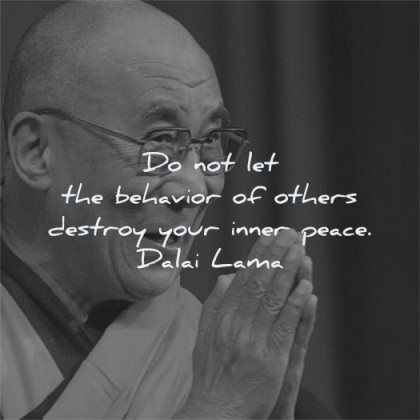
Jetsun Jamphel Ngawang Lobsang Yeshe Tenzin Gyatso (born Lhamo Döndrub), the 14th Dalai Lama, is a practicing member of the Gelug School of Tibetan Buddhism and is influential as a Nobel Peace Prize laureate, the world's most famous Buddhist monk, and the leader of the exiled Tibetan government in India.
Tenzin Gyatso was the fifth of sixteen children born to a farming family. He was proclaimed the tulku (an Enlightened lama who has consciously decided to take rebirth) of the 13th Dalai Lama at the age of two.
On 17 November 1950, at the age of 15, he was enthroned as Tibet's ruler. Thus he became Tibet's most important political ruler just one month after the People's Republic of China's invasion of Tibet on 7 October 1950. In 1954, he went to Beijing to attempt peace talks with Mao Zedong and other leaders of the PRC. These talks ultimately failed.
After a failed uprising and the collapse of the Tibetan resistance movement in 1959, the Dalai Lama left for India, where he was active in establishing the Central Tibetan Administration (the Tibetan Government in Exile) and in seeking to preserve Tibetan culture and education among the thousands of refugees who accompanied him.
Tenzin Gyatso is a charismatic figure and noted public speaker. This Dalai Lama is the first to travel to the West. There, he has helped to spread Buddhism and to promote the concepts of universal responsibility, secular ethics, and religious harmony.
He was awarded the Nobel Peace Prize in 1989, honorary Canadian citizenship in 2006, and the United States Congressional Gold Medal on 17 October 2007.
This is a book specifically written for modern-day youth by His Holiness, the Dalai Lama. He also gives many important messages to the future youth in this book.
We can read a few of his wonderful ideas regarding life, feminism, and people's approach toward women. His simple manifesto's on religion, and vegan life will be motivating for many of us to read.
Dalai Lama has never disappointed me in any of the books written by him. This book is also short, crisp, and to the point, which will help you in one way or the other.
A message from HH The Dalai Lama for the youth of today (written in 2017). The book speaks to the dire situation in today's world, his vision for the future, and his rally cry for a Revolution of Compassion!
The Dalai Lama was quite frank in this discourse, offering opinions on everything from religion, to gender roles/feminism, to impact of eating meat. He also speaks quite a bit to the scientific research in human behavior and of the power of altruistic behavior to change the brain.
He speaks to the problems today with a society that is divisive and controlling. You have grown up in a world proud of its technological prowess, and convinced that nature must be controlled and even changed. This is a serious mistake...[] You are part of nature and compassion decrees that you take care of it as much as you do yourselves.
He speaks to his vision for the way forward and the urgent need to act: The World is your home, humanity is your family.... Place compassion at the heart... And above all, act. You may be the first generation in history to face the very real possibility of extinction of life on our shared planet, but you are also the last one that will be able to do something about it.
The last 3 pages of the book were my favorite, where it provides a Charter of Universal Responsibility! This section was really inspiring and insightful, and I copied these pages to give to my 2 teens!
Excerpt from the charter:
At the heart of the cosmos: My genetic codes incorporate messages from the universe. I am linked to all living things....
At the heart of humanity: I am motivated to act for the good of all living beings purely by altruism, and by accepting my universal responsibility....
At the heart of the great peace of the natural world: I am aware of how I am being manipulated and instrumentalised by techno-economic culture, and of my obligation to embody the wisdom of universal responsibility, based on the power of truth and love...
Inspiring stuff for teens! Inspiring stuff for all of us!
I saw this in the Library and was so taken in by it, I purchased my own copy.
(I originally read this and posted my review on Facebook in 2020.)
And...
As we head in to the mire of 2020 politics, I felt this would be a powerful little book for our time of great challenges and change ahead of us.
Also...
This attention-grabbing little book which is less than 100 pages also includes extracts from "The Charter of Universal Responsibility"...
Which involves three moments of realization and eleven commitments for life – i.e., inner peace and the shared reality of life.
This was a quick read containing an inspiring call to action. I particularly loved when he said:
“I have a dream: Women Will Become National Leaders.”
He goes on to say:
“Accept leadership roles, for we need you to promote love and compassion. Realize my dream, that the 20 nations of the world will be governed one day by women. There will be less war, violence and economic and social injustice. And whatever you do, you must not assume that in order to reach high office, and stay there, you need to adopt the most shameful masculine behaviors.”
This book is a wonderful call to young people (all of us actually) in shaping our future world.
And...
The Dalai Lama highlights that we have the power to move from the most brutal century in human history to a future full of compassion and love for one another and our world.
As you can tell...
I felt it was a very inspiring and to-the-point book I would highly recommend everyone read.
Because...
Change can happen, with care and diligence.
Update: Moving into the 2024 election season in the United States, this can also be a thoughtful reminder for us as citizens of the world. We must always be cognizant as to how much our vote matters.
I greatly admire the Dalai Lama and his way of teaching. While this book is a call to action for millenials, I believe that there is something that everyone can learn from it. However, I found it odd that the Dalai Lama refers to himself as a Marxist, as well as a student of the French Revolution. I could not quite comprehend why both the French Revolution and the Bolshevik Revolution were included as events that should be emulated to effect positive change in the world. Both revolutions eventually turned on themselves and the revolutionaries began executing each other in power struggles for ultimate control of the government. There are good lessons to be learned from both revolutions, and the Dalai Lama does point out the negative aspects of the Bolshevik Revolution, but not the French Revolution. A little extra study of that period in France would have shown that the excesses of the revolution eventually opened the door for Napoleon (a dictator) to seize power. Before advocating that today's young people follow the revolutionary path to achieve a compassionate world, the outcome of past revolutions should probably have been studied in more detail and guidance on how to avoid their pitfalls included in the call to action.
I would recommend the book, but reading it should be done in light of opening one's mind to the possibilities while remembering the dark side of human nature. Change can happen, but only with care and diligence.
A very well written book where His Holiness, the Dalai Lama talks about how we can store peace in aspects of hatred and environment by being compassionate so that we and the future generations can live happily. He gives many examples and takes a call on the whole young generation to take an initiative to make the world better. He also covers on feminism, terrorism, nationalism, global affairs, demerits of eating meat. He says the best way to teach millennial generation through the current crisis would be by going beyond religion basing the learning of compassion on human reason and common sense without any reference to any belief system.
I would also recommend the movie "Seven Years in Tibet", if you want to know more about Dalai Lama and his country, Tibet.
A Call for Revolution, written by the Dalai Lama, is a manifesto for young people on ways to improve the world. Written in a positive tone, and couched with Buddhist influence and a calming perspective, this book is made primarily for the young in Western orientated nations. It calls on many principles already held dear in the west; environmental stewardship, women's rights, activism, loving-kindness, putting people before ideology, and avoiding violence in thought, or physically in warfare. This book is a simple and quick read, but felt inspiring and fresh. The Dalai Lama's perspective is always welcome as a counterpoint to nationalism, authoritarianism or corporate/liberal democracy. It feels fresh, like a cooling breeze. It's messaging is on point, imploring future generations to be better, be kinder, and engage in what the Dalai Lama calls the Revolution of Compassion. This revolution is non-violent, and consists of changing how one thinks, treats others, and views the world. Compassion is for living things of all stripes, as well as those we may not like or agree with, and of course our fellow human beings, whether they be family, friends, neighbours or strangers.
This was a quick read, as I said, and a simple manifesto. Its messaging is on point and interesting. The perspective is fresh and positive. And it is written by the Dalai Lama - an important voice in global affairs over the past decades. A quick book gets a quick review, but this is definitely worth a read for anyone interested in politics, and those looking for an upbeat manifesto to get a little more motivated.
I found this to be less engaging than the Dalai Lama's The Art of Happiness, but the audience and message are also much more narrow in this book, which may account for some of that. This book is targeted specifically toward the world's youth and encourages a way of more conscious living to help save the planet. It has a nice message but felt rushed and not fully developed, especially when compared to the books by Thich Nhat Hanh.
When I saw that HHDL wrote a new book I ordered it directly. The book is brilliantly written. He is speaking to the youngest generation of which I am not. His hope is that the young of the world will be more open minded than my generation and those who came before me so hopefully they learn to fix the world's problems by collaborating instead of setting up camps on opposite sides of the street. I hope he's right. The book should be required reading for high school/jr high students.
Wezwanie do współczłowieczeństwa jako postawy integralnej dla rewolucji patologicznie indywidualizującego się świata. Książka krótka, czasami mało precyzyjna, ale wciąż - z pełnym brzuchem treści.
The people of Tibet had not embraced capitalism by 1950, instead they lived in a feudal theocracy - I thoroughly recommend Seven Years in Tibet as a description of the terrible infant mortality and appalling living conditions that prevailed. As a consequence of failing to exploit their natural resources and build their economy, they did not have the military strength to fight against the Chinese invasion in 1950. Subsequently, they then lost their freedom to China and as traditionally happens to conquered people, millions of them died. In this case, it was under the yoke of Communism which has stamped on Tibetan culture and held back economic development as it is wont to do everywhere that system has been tried.
It's therefore very galling to read of the Dalai Lama's approval of Karl Marx and his condemnation of the military structures that have saved Europe from a similar fate to his own people. Entirely contrary to his chapter crediting the European Union with stopping France and Germany from fighting each other since 1945, it was the decision to divide Germany in two and then the NATO Alliance that has kept Europe at peace and fostered the opportunity for the European Union to exist. He says those who don't learn from history are condemned to repeat it, so let's all recognise that states who do not invest in military spending don't stay on the map in the long term cf Tibet. They also don't have the ability to object when their neighbours mistreat their populations, nor do they have the ability to fight against racist regimes that may emerge cf Nazi Germany.
The policy of the Anglo-sphere since the 1940s has been to speak softly and carry a big stick. His proposed revolution of throwing away the stick and shouting loudly is completely ludicrous. It would remove the ability to influence policy in other countries (eg on climate change) and reduce living standards in the countries that adopt it.
The Dalai Lama's A Call for Revolution: A Vision for the Future in turns recognizes the strengths that young people have in making change and, also, advises them to keep their eye on the prize. How they think, how they take action makes a difference, so he advises, "Don’t let yourselves be gripped by ‘mean world syndrome.' If you do, you run the risk of giving in to despair, of failing to notice that a global momentum for peace is gaining ground" (pp. 8-9).
Instead, he asks young people to "broaden your horizons and think, without losing sight of the complexity of the various interconnected factors. Becoming aware of our interdependence will eventually lead to a decrease in violence, since taking an interest in others is in [our] interest too" (pp. 64-65). Doing so requires considerable discernment, yet the Dalai Lama trusts that his young readers can develop this wisdom.
He ended with extracts from the Charter of Universal Responsibility (written by Sofia Stril-Rever), where he exhorted his readers, "In a spirit of equality, free from prejudice, material attachment and hatred, I commit to playing my part in maintaining and re-establishing the harmony of life," while remembering "that the most secure basis for worldwide sustainable development is based on both the individual and the shared practice of inner peace, love and compassion (pp. 114-115). Finally, he asked his young readers to accept responsibility – for their lives, for the world – and act with wisdom, to say,"I am aware of how I am being manipulated and instrumentalised by techno-economic culture; and of my obligation to embody the wisdom of universal responsibility, based on the power of truth and love" (pp. 115-116).
GR indicates that I've read two other books by the Dalai Lama since I became a member (in 2013) and at least 17 on Buddhism, some several times. This is an interesting book, but not my favorite. It is short (a plus), but shorter is not always better.
And, for a wee bit of trivia, who knew that the Dalai Lama had a Twitter account? Now I do.
I was born on this Earth, a child of life, in the bosom of the cosmos. The messages of the universe are incorporated in my genetic codes. I am connected with all living beings in our shared reality of life. I become aware of the fact that the wellbeing of all living beings depends on the balance of ecosystems, themselves dependent on the peace in the hearts of men, and the spirit of justice in human societies where no one must be rejected, disabled by hunger, poverty, and destitution. In a spirit of equanimity, free from bias, attachment and hatred, I contribute to maintaining, and restoring, harmony in life. Living peace and inner healing in each one of my actions, devoted to the wellbeing of all lives, human and non-human, is a great appeal to being alive, in the joy of universal love which is the life of life.
The core message, of course, is terrific. I’m just nonplussed by uses of evolutionary psychology and (often related) essentialized notions about gender. Capitalism as a driving force of climate change and political turmoil was also untouched. But the emphasis on compassion and the necessary work of revolutions within?: ⭐️ ⭐️⭐️⭐️⭐️
This is a slim volume, but it contains a great message for our young people.
You ARE our future, and what that future will look like is in your hands. Will there be continuing wars, a ravaged Earth from continued climate change and pollution, people at each other's throats over political divisions or will humans br able to change things?
I’m not sure what the point of this book is. His explication of Buddhist texts and doctrine are really helpful. But this is just a string of bland, well-meaning but not deeply thought-out ideas with which most people will broadly agree. It feels more like “slap the Dalai Lama’s name on it and make lots of money.”
This book is written by Sofia Still - Rever Is a collection of private conversations of Dalai Lama with the author. This short read of 84 pages is full of life changing words and guidance, It's a compilation of Dalai Lama's views and peice of advice for the youth of the world. How we are important ? What are responsibility ?? And how we can change the world? How a little change within oneself can make a big difference in the society as a whole. . This eloquent, impassioned manifesto is possibly the most important message that Dalai Lama wants to share with the future of the world. It's his rallying cry, full of solutions to our chaotic , aggressive, divided times ; No less than a call for relocation. . Are we ready to hear it ?? Are we ready to Act ?? . What I felt about this book ?? . The best thing about thing book is it's very short read of just 84 pages and quite simply written so that anyone who isn't habitual of reading books can easily grab this one. . This books talks about various modern days societal, political , environmental and nation wide crises..whose solutions are so simply imbibed within us. Just the thing is we never pay attention or give a moment of self introspection to ourselves. How a simple token of gratitude, a little morally correct attitude can transform many things and what we can do as a youth of a nation all these things are quite smoothly depicted in this book. This book have enlighted my superly negative soul to some positivity and hope for a better world.🌸 .
This is a speech, a graduation speech, meant to inspire and energize another generation. I'm eager to see the web references here: worthy stuff. Recommended.
There are four reasons why I cannot recommend this book and one why I maybe still can.
The first reason I cannot recommend it is the content or let's say the "solution" proposed. I absolutely agree with the diagnosis that our environment needs saving from human destruction, but if the only way out is a cognitive revolution demanding a fundamental change in our core human psychology, then we are lost already. And I refuse to believe that.
Second, while some of the points are interesting and at least somewhat clear (supporting regional unions like the EU), the book fails to provide clear and practicable inputs to solve the problems at hand. Any child today could identify our problems but that diagnosis is worthless without real solutions.
Third, if you're interested in the Dalai Lama's philosophy and thinking, there are much better books out there. This should have been a blog post, speech or statement and is not worth your money.
Last but not least, and this might be a controversial point, but when a public figure states he has the dream that "the 200 nations of the world will be governed one day by women", I cannot help but disregard that mysandrist person's opinion. The most able people should govern our nations, regardless of gender or other such trivial characteristics.
The only point I can think of in favor of this booklet is how short it is. You can read it in about an hour and you might just come to the above conclusions and not waste more money and time on longer books of his.
I’m best classified as one of those wishy-washy types who identify as spiritual, but I believe religion can have a useful place within society. It can also be enormously destructive. Same with science. From my limited view, a society needs both science and religion to thrive, and it’s about how religion and science are used that determines ‘good’ or ‘bad’ rather than a blanket pronouncement against either.
You can therefore imagine my surprise to find a book by the Dalai Lama that essentially condemns religion while blindly praising science. Nope, sorry, that’s not an uplifting message. That’s dangerous.
As for the comments about women and how, if women led the world, there would be nothing but peace: Go spend a summer at an all-girls’ summer camp. Then tell me how women only represent the best of humanity.
Gender does not determine compassion or empathy. Neither does race, nationality, or religion. Science matters. Religion matters. Our world does need a fundamental change for the better, but by bringing together all ages and celebrating the best of disciplines and thought processes, not by condemning them. Not recommended.
This attention-grabbing book is a wonderful call to young people in shaping our future world. HH The Dalai Lama truly believes in the new generation to make a difference - a large and positive difference - in our world. With others busy talking about Millennials taking too many selfies and eating too many avocados, HH The Dalai Lama sees the potential and appreciates the ways the new and young generation looks at and lives life differently. Underlining his calls for compassion with facts, HH The Dalai Lama highlights that we have the power to move from the most brutal century in human history to a future full of compassion and love for one another and our world. A very inspiring and to-the-point book I would highly recommend everyone read. For the younger, as well as, the older generation to see the potential of the new world that is being shaped.
"Inner peace, love, and compassion are not only ways of expressing a noble ideal, but also of offering pragmatic solutions to issues we face in this new reality, as a means of guaranteeing our collective interests in the face of the loosening of social bonds, and the breakdown of social solidarity."
This was a quick read containing an inspiring call to action from the ever poignant Dalai Lama
“Self-centeredness closes doors, while altruism opens them.” I try to read a book by the Dalai Lama every year. Admittedly, as this one is so short, there isn’t much substance compared to others, but I think it’s a good reminder about treating one another with compassion while also advocating for change. It reads very much like a farewell speech, but essentially the Dalai Lama is reaching out to millennials, imploring them to “be the solution finding generation.”
In 2019 America, it’s refreshing to see a well-known leader admit that we have some serious issues to grapple with on a global level, and that we need to work together in order to achieve meaningful change. Compassion and diplomacy are necessary to make this happen.
It’s surprising to read that the Dalai Lama uses the French and Bolshevik Revolutions as examples in this book since both are punctuated by terrible violence and the death of many innocent people, but he also admits that he has not studied these events. I had a difficult time reconciling his message of non-violence with these examples, but I think that on a surface level, his intent is to focus on the notion of “liberty, equality, fraternity” for all, and that we should mobilize to work toward the common good for all humankind, just as others in history have set a precedent of taking action against oppression.
Soooo good. Quick read and totally worth it. I definitely want to learn more about his life and work after reading this. He has a gentle and passionate call towards compassion for each other, the earth, and the future we are creating. There are some practical steps to take at the end, but this is more of a call to action than a how-to manual. I don’t necessarily agree with 100% of his ideology, but I agree with the convictions he lands on on how to proceed with our actions. Highly recommend it.
It is a beautifully addressed to the young generation of the world, this book calls for a revolution of compassion , for ourselves , for everyone around us.
This is very small book with great message to change our world for the betterment.
Dalai Lama puts forward his idea of revolution in terms of peace and compassion. The writing tries to give logical and practical rationale for being more compassionate and kind. The greatest strength of the book is that it is amongst those books which only talk about lofty ideals and don't elaborate on the essence of ideals in real life.