

What do you think?

Elders and Leaders
Strong leadership in the church is exactly what God had in mind. However, very few people, Gene Getz believes, understand the biblical pattern for church leadership. He has written Elders and Leaders to unravel the mystery and alleviate the confusion surrounding this critical topic. In the first part of the book, Getz lays the historical and biblical groundwork for the position of elder. In the second part, he shares how he has applied or has seen these principles applied over the years.
368 pages, Paperback
First published January 1, 1995
About the author
Gene A. Getz
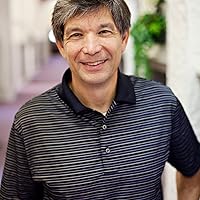
148 books28 followersGene A. Getz, (B.A., Rocky Mountain College; M.A., Wheaton College; Ph.D., New York University), a host and teacher of Renewal Radio, served as a professor at Moody Bible Institute and Dallas Theological Seminary. He has authored more than 60 books, including The Measure of a Healthy Church, Elders and Leaders, and the Men of Character series. He has been a church planting pastor in the Dallas metroplex since 1972 and now serves as President of the Center for Church Renewal and Pastor Emeritus of Fellowship Bible Church North in Plano, Texas.
- http://www.moodypublishers.com/pub_au...
- http://www.moodypublishers.com/pub_au...
Ratings & Reviews
Friends & Following
Create a free account to discover what your friends think of this book!
Community Reviews
Displaying 1 - 25 of 25 reviews

December 22, 2020
Incredibly helpful and a must-read for any in the position of pastoring or planting churches.

December 13, 2014
I wish I had read this book years ago! This is the best book I've ever read about leadership principles in church. Dr. Getz covers the waterfront by careful study of the Word, uncovering and applying timeless principles and plenty of pertinent illustrations from his years in pastoring his own church plant. This is a book to read and re-read and discuss with other leaders.
Some of the topics covered are:
Principles for Leadership Appointments
Principles for Leadership Functions
Age Requirements
Leadership Selection
Board Size and Length of Service
Succession Planning
I can't recommend this book enough!
Some of the topics covered are:
Principles for Leadership Appointments
Principles for Leadership Functions
Age Requirements
Leadership Selection
Board Size and Length of Service
Succession Planning
I can't recommend this book enough!

November 11, 2012
Less a leadership book on how to lead, "Elders and Leaders: God's Plan For Leading The Church" is an exploration on how leadership structure came in to place in the early Church to begin with, and how that impacts us today. The writing comes from the diligence of their own Church leadership in devoting years of time and research and prayer to the subject regarding their own congregation. This book by Gene A. Getz is an effort to offer what they have discovered and believe to be a faithful picture of a biblical model for leadership to others.
The book makes effort to set out the parameters of its research, citing a need for scriptural clarity, cultural insight and historical setting to work together. It is within this that it seeks to discover the difference between what it refers to as "cultural" truths and "supra-cultural truths" (that is, truth that pertains to a cultural setting and circumstance, and truth that should apply to all cultures as a representation of a foundational and timeless God given value). Given this admission, I found the strongest areas to be it's exploration of scripture and the world of the early Church. This is perhaps not surprising though, as it is a much more difficult exercise to bring in cultural and historical realities, of which the book deals with in a less confident fashion.
Perhaps one of the most telling insights are the ones that emerge from the exploration of the early Church world. Both historically and culturally speaking, there is a large degree of connection, continuity and influence found in the Old Testament world and also in the current governing structures of the secular world. It should then not be surprising that we find terms and titles used that would have made sense to their audience in the early Christian era. Another factor can be seen in the gradual emergence of a hierarchal structure in to an early Church movement that was much more community driven. We see a move from a world that saw smaller communities largely connected on a larger level through dedicated traveling "prophets" (apostles), towards a more static and stationary and dominating governing presence. And as the system itself came in to play in different forms and functions, so did questions surrounding appropriate church governance on the other side of the apostles direct leadership. It is here that I think the book loses some ground in terms of dialoguing with this history. While it does give it due mention, it tends to gravitate back towards an innate need to transfer the emerging structure immediately to a supra-cultural level. That said, I think the underlying supra-cultural themes that pushed a lot of the governing and structural realities forward are certainly fair assertions.
One of the questions I had in reading this book is, where might our current Church structures today be challenged from a scriptural, historical and cultural perspective? One of the things that drives this book forward is an awareness of a more communal stye of leadership. We are, after all, attempting to build on a Church structure in which the idea of full time payed leadership is generally absent. Biblically speaking I think the community that emerged out of the Day of Pentecost held a much more organic and connected approach to how they existed and moved in unity and faithfulness to a simple and clear Gospel. It becomes difficult to measure this appropriately today, given that it certainly didn't take these early communities very long to come up against some very divisive issues that served to complicate a simple Gospel message. This ultimately led to the Church's exploration of adequate governing solutions from within the cultural structures of their day. However, it does remain that at a core level, the Church was always meant to move together in a less centralized and exclusive fashion than our current leadership models sometimes portray. The absence of "traveling prophets" means that we now have purely stationary leaders (and full time payed leaders today) that not only assume authority but are often expected to be that authority. And in history, as this presence and development of authority grew, so did the necessary doctrine which would eventually distinguish one community from the next. What can get lost in this is the unity that the early Church initially could attest to on a smaller community level in terms of its devotion to a particular and clear Gospel that also played out on the field of the larger Church community.
The book is clear that the early Church was "elder" governed, in the same way that the early Old Testament society was. It is also clear that the early sense of governance was generally presented in softer terms than we use today. While elders or overseers certainly were evident in some of the earlier communities, they functioned more as servants to the many roles that existed in the Church, which existed on more or less official levels. And certainly the existence of a primary or sole leader remains a challenge in this early picture, even if our current world appears to demand (both on a secular and Church level) a primary leader in order to survive or grow in an ever changing cultural landscape.
I think we would be prudent to recognize, as this book does, the underlying values and principles that not only applied to the early Church models, but also to every successive one moving forward. This could perhaps allow us to adapt to each culture with a bit more freedom, understanding that while structure and models and labels and titles remain earthly functions, that the idea of mentorship, spiritual nurture, shepherding and caring are God given moral realties that can exist on a supra-cultural level. In this sense it could allow both scripture and history to challenge the norms of our day, and to also give us the freedom to navigate it in a less legalistic fashion and move towards a more appropriate, spirit led conviction that truly sees the guiding form of scripture bring history and cultural reality together. My feeling is that Getz doesn't allow the book to move enough in this direction, specifically when it comes to the issue of women in leadership. However, the due diligence it gives to unfolding the early culture itself, along with it's willingness to put scripture forefront on the table is certainly enough to make this a necessary and important read for Churches faced with the question of Church governance and the nature of appropriate spiritual leadership.
The book makes effort to set out the parameters of its research, citing a need for scriptural clarity, cultural insight and historical setting to work together. It is within this that it seeks to discover the difference between what it refers to as "cultural" truths and "supra-cultural truths" (that is, truth that pertains to a cultural setting and circumstance, and truth that should apply to all cultures as a representation of a foundational and timeless God given value). Given this admission, I found the strongest areas to be it's exploration of scripture and the world of the early Church. This is perhaps not surprising though, as it is a much more difficult exercise to bring in cultural and historical realities, of which the book deals with in a less confident fashion.
Perhaps one of the most telling insights are the ones that emerge from the exploration of the early Church world. Both historically and culturally speaking, there is a large degree of connection, continuity and influence found in the Old Testament world and also in the current governing structures of the secular world. It should then not be surprising that we find terms and titles used that would have made sense to their audience in the early Christian era. Another factor can be seen in the gradual emergence of a hierarchal structure in to an early Church movement that was much more community driven. We see a move from a world that saw smaller communities largely connected on a larger level through dedicated traveling "prophets" (apostles), towards a more static and stationary and dominating governing presence. And as the system itself came in to play in different forms and functions, so did questions surrounding appropriate church governance on the other side of the apostles direct leadership. It is here that I think the book loses some ground in terms of dialoguing with this history. While it does give it due mention, it tends to gravitate back towards an innate need to transfer the emerging structure immediately to a supra-cultural level. That said, I think the underlying supra-cultural themes that pushed a lot of the governing and structural realities forward are certainly fair assertions.
One of the questions I had in reading this book is, where might our current Church structures today be challenged from a scriptural, historical and cultural perspective? One of the things that drives this book forward is an awareness of a more communal stye of leadership. We are, after all, attempting to build on a Church structure in which the idea of full time payed leadership is generally absent. Biblically speaking I think the community that emerged out of the Day of Pentecost held a much more organic and connected approach to how they existed and moved in unity and faithfulness to a simple and clear Gospel. It becomes difficult to measure this appropriately today, given that it certainly didn't take these early communities very long to come up against some very divisive issues that served to complicate a simple Gospel message. This ultimately led to the Church's exploration of adequate governing solutions from within the cultural structures of their day. However, it does remain that at a core level, the Church was always meant to move together in a less centralized and exclusive fashion than our current leadership models sometimes portray. The absence of "traveling prophets" means that we now have purely stationary leaders (and full time payed leaders today) that not only assume authority but are often expected to be that authority. And in history, as this presence and development of authority grew, so did the necessary doctrine which would eventually distinguish one community from the next. What can get lost in this is the unity that the early Church initially could attest to on a smaller community level in terms of its devotion to a particular and clear Gospel that also played out on the field of the larger Church community.
The book is clear that the early Church was "elder" governed, in the same way that the early Old Testament society was. It is also clear that the early sense of governance was generally presented in softer terms than we use today. While elders or overseers certainly were evident in some of the earlier communities, they functioned more as servants to the many roles that existed in the Church, which existed on more or less official levels. And certainly the existence of a primary or sole leader remains a challenge in this early picture, even if our current world appears to demand (both on a secular and Church level) a primary leader in order to survive or grow in an ever changing cultural landscape.
I think we would be prudent to recognize, as this book does, the underlying values and principles that not only applied to the early Church models, but also to every successive one moving forward. This could perhaps allow us to adapt to each culture with a bit more freedom, understanding that while structure and models and labels and titles remain earthly functions, that the idea of mentorship, spiritual nurture, shepherding and caring are God given moral realties that can exist on a supra-cultural level. In this sense it could allow both scripture and history to challenge the norms of our day, and to also give us the freedom to navigate it in a less legalistic fashion and move towards a more appropriate, spirit led conviction that truly sees the guiding form of scripture bring history and cultural reality together. My feeling is that Getz doesn't allow the book to move enough in this direction, specifically when it comes to the issue of women in leadership. However, the due diligence it gives to unfolding the early culture itself, along with it's willingness to put scripture forefront on the table is certainly enough to make this a necessary and important read for Churches faced with the question of Church governance and the nature of appropriate spiritual leadership.

August 26, 2018
A book that I read for my elder candidacy at Seed Church, "Elders and Leaders" is about as "exciting" a work that one could read on eldership. More to the point, this isn't pleasure reading. The marketing tagline suggests that this is a Biblical, historical and cultural examination of the role of elder and other leaders in a New Testament church. The book indeed does an examination of those roles.
Getz's work argues for an elder team of equals and in the beginning has an analogy of a flock of birds. There may be one bird leading the rest of the flock but sometimes that bird will fall back and need other members to help restore the tired member and another bird would need to take the lead. According to Getz, so it goes with an elder board.
As I already mentioned, the book examines eldership in Scripture. 1 Timothy 3 and Titus 1 serve as Biblical qualifications for character and traits that should be exhibited. There is also an examination of the historical development of leadership in the New Testament church.
Getz gives practical advice on selecting leaders and the reasons why church leaders should resign or step down from their role. Indeed, the second part of the book is basically how Getz applied the principles of eldership in his own ministry. He respectfully admits that he became more pragmatic as situations that come up with elder boards can certainly be full of nuance.
One area that I firmly disagree with Getz on is that his church did not allow female eldership. He doesn't delve into this debate very much at all but his focus is on male candidates only. Being that men and women are made in the image of God (Genesis 1:27-28) and that the Apostle Paul suggested that males and females are one in Christ Jesus (Galatians 3:28), there is no reason to exclude females from the highest leadership posts in a church. The church has hurt itself by not giving women a seat at the table of power and making decisions for service to the Body of Christ and beyond. This isn't a main focus of the book but I stand in contention against him on this point.
If someone is interested in exploring what the Bible has to say about eldership and a little about how church history has treated the office, they can certainly pick this up and receive information on those topics.
Getz's work argues for an elder team of equals and in the beginning has an analogy of a flock of birds. There may be one bird leading the rest of the flock but sometimes that bird will fall back and need other members to help restore the tired member and another bird would need to take the lead. According to Getz, so it goes with an elder board.
As I already mentioned, the book examines eldership in Scripture. 1 Timothy 3 and Titus 1 serve as Biblical qualifications for character and traits that should be exhibited. There is also an examination of the historical development of leadership in the New Testament church.
Getz gives practical advice on selecting leaders and the reasons why church leaders should resign or step down from their role. Indeed, the second part of the book is basically how Getz applied the principles of eldership in his own ministry. He respectfully admits that he became more pragmatic as situations that come up with elder boards can certainly be full of nuance.
One area that I firmly disagree with Getz on is that his church did not allow female eldership. He doesn't delve into this debate very much at all but his focus is on male candidates only. Being that men and women are made in the image of God (Genesis 1:27-28) and that the Apostle Paul suggested that males and females are one in Christ Jesus (Galatians 3:28), there is no reason to exclude females from the highest leadership posts in a church. The church has hurt itself by not giving women a seat at the table of power and making decisions for service to the Body of Christ and beyond. This isn't a main focus of the book but I stand in contention against him on this point.
If someone is interested in exploring what the Bible has to say about eldership and a little about how church history has treated the office, they can certainly pick this up and receive information on those topics.

September 10, 2024
This rich resource provides a biblical treatment of the structure of leadership from the start of the church to the present day. Taking the time to step through the history of church leadership from 33 AD to the present day in Part 2 (The Biblical Story) with Scriptural references to begin each chapter (titled Back to the Source) , the author continued in addressing Scriptural considerations including titles, functions, selection and appointment of elders, plurality of leadership, primary leaders, and accountability. Moving on to what are described as supracultural and practical applications, he offered principles for appointments, functions, and qualifications, all carefully considered from Scripture. Appendices to this extensive treatment of the topic include a review of the work ekklesia in Scripture, healing, the maturity of candidates, and thoughts on apostles, prophets, and teachers. Two particularly interesting references are offered in Figure 7 (pp. 161-162), where the characteristics of elders from 1 Timothy and Titus are presented in table form, including the distinctions in the lists from each and Figure 8 (p, 161), where character profiles are listed from, Galatians, 1 Timothy, Titus, and 2 Peter. In summary, Elders and Leaders is an exceptional consideration of the importance and grave responsibility of leaders in the body of Christ.

February 28, 2021
This book was recommended to me by another ministry leader, and it was a joy to read. It takes a thorough, diagnostic approach to church leadership, looking for what it calls "supracultural" principles: truths that should be applied no matter the culture. Gene Getz works really hard to "stick to the facts" and stay close to the Scriptures, acknowledging when there is room for difference of form.
This is probably the best book I have read on the topic. The one weakness it has, if you can call it that, is that although it does talk about what small churches can do, the large majority of this book applies to ministries that are mid-sized ministries (150+ people) and larger. And, these days, the majority of churches are smaller than that.
I expect to go back to this book many times over the years.
This is probably the best book I have read on the topic. The one weakness it has, if you can call it that, is that although it does talk about what small churches can do, the large majority of this book applies to ministries that are mid-sized ministries (150+ people) and larger. And, these days, the majority of churches are smaller than that.
I expect to go back to this book many times over the years.

January 10, 2020
A very thorough and practical book about a much debated topic. Wide brush strokes of church history coupled with real life stories and experiences of leaders and elders who are weathering the challenging storms that come with the territory of the calling. A must read for anyone exploring or looking to grow as a leader/elder.
January 31, 2024
Reread. The chronology of the early church at the beginning is a helpful resource. And there are some helpful thoughts and reflections from stories of personal church experiences towards the end. That said, I found there to be too much unwarranted use of 'definitely', 'must', 'we can be sure', and 'certainly'.

June 27, 2021
Lectura Obligatoria
Este es un excelente libro sobre el ministerio pastoral que debe estar en la mano de todo pastor y leerlo y releerlo constantemente. Gene A Getz nos vuelca toda su experiencia en este libro, aprovechemos de su sabiduría para crecer en él pastorado.
Este es un excelente libro sobre el ministerio pastoral que debe estar en la mano de todo pastor y leerlo y releerlo constantemente. Gene A Getz nos vuelca toda su experiencia en este libro, aprovechemos de su sabiduría para crecer en él pastorado.
December 27, 2022
Helpful analysis of the role of the biblical role of elder. Sometimes he makes claims and assumptions without citing his support. Some of those times, I would like to investigate further, but he does not include a footnote or citation.

September 2, 2018
Great resource to help church who lack any structural understanding to guide them in leadership.
May 26, 2021
A great ministry resource for any ministry leader.

December 16, 2013
Required reading for Evangelical Free Church of America GATEWAY Phase 2
This book deals with the following issues:
How many people should be on an elder board? Decisions made by consensus, majority, 3/4, etc.? Role of church staff vs. role of elders? Should the lead pastor also lead the elders?
Getz gets an A+ for comprehensively identifying all the issues related to elders, deacons, and church leaders. The book is written by a seasoned pastor with decades of experience. It's a helpful resource for pastors and elders looking for help in church leadership. E.g., Appendix C is a twenty question template for determining a candidate's "Maturity Quotient."
Where Getz comes up short is following through on the issues he raises. The book lacks exegetical and theological depth. E.g., on p. 104 Getz raises the issue of whether the NT proscribes the ecclesiastical office of deaconess. He writes, "most Christian leaders over the centuries have not accepted the interpretation that Paul was referring to "deacons' wives." No sources are cited to confirm this assertion. Who are "most Christian leaders?" Furthermore, if the assertion is true, what the reader really needs is solid exegetical work which demonstrates the validity of his premise that the NT calls for an office of deaconess.
This book deals with the following issues:
How many people should be on an elder board? Decisions made by consensus, majority, 3/4, etc.? Role of church staff vs. role of elders? Should the lead pastor also lead the elders?
Getz gets an A+ for comprehensively identifying all the issues related to elders, deacons, and church leaders. The book is written by a seasoned pastor with decades of experience. It's a helpful resource for pastors and elders looking for help in church leadership. E.g., Appendix C is a twenty question template for determining a candidate's "Maturity Quotient."
Where Getz comes up short is following through on the issues he raises. The book lacks exegetical and theological depth. E.g., on p. 104 Getz raises the issue of whether the NT proscribes the ecclesiastical office of deaconess. He writes, "most Christian leaders over the centuries have not accepted the interpretation that Paul was referring to "deacons' wives." No sources are cited to confirm this assertion. Who are "most Christian leaders?" Furthermore, if the assertion is true, what the reader really needs is solid exegetical work which demonstrates the validity of his premise that the NT calls for an office of deaconess.

May 29, 2009
It was slow-going initially, but where the book really took off for me was when it came to the chapters of practical application of appointing leaders, equipping them, etc. A couple of the better points made in the book include:
-"Without an ongoing understanding of the way people think, feel, and function in a given culture, it's impossible to both interpret Scripture properly and to apply biblical principles in various cultures of the world. Though insights from culture...must not drive the process." (p. 29-30)
"In contrast to the multitude of 'local churches' we have in a given population center, every mention of multiple leaders in the New Testament is made in reference to a single church in a single city or town. In the biblical story, there was only one church in Jerusalem, in Antioch of Syria, in Lystra,...Though they may have met for teaching, fellowship, and worship at different locations throughout a particular city, they were still considered one church..." I love this picture of ONE church. In a sense, we have that today, although it seems we're much more divided. But what a picture to think that in all of Jerusalem, or any other city, there was just ONE church.
-"Without an ongoing understanding of the way people think, feel, and function in a given culture, it's impossible to both interpret Scripture properly and to apply biblical principles in various cultures of the world. Though insights from culture...must not drive the process." (p. 29-30)
"In contrast to the multitude of 'local churches' we have in a given population center, every mention of multiple leaders in the New Testament is made in reference to a single church in a single city or town. In the biblical story, there was only one church in Jerusalem, in Antioch of Syria, in Lystra,...Though they may have met for teaching, fellowship, and worship at different locations throughout a particular city, they were still considered one church..." I love this picture of ONE church. In a sense, we have that today, although it seems we're much more divided. But what a picture to think that in all of Jerusalem, or any other city, there was just ONE church.

July 24, 2011
READ OCT 2010
Building on his 1974 classic, Getz has created a well done work describing the scriptural, historical, and cultural perspective of leadership in the church.
Best quotes, "God uses the personality and gifts of primary leaders to accomplish very significant goals" (chap. 37, Kindle location 4586) and "No dynamic provides a greater sense of confidence for a primary leader and his family than to know that a group of godly men and their wives stand with him 'with one heart and mind.' On the other hand, nothing creates more insecurity, pain, and anxiety than leaders who are insensitive and unsupportive" (chap. 28, Kindle location 3471).
Building on his 1974 classic, Getz has created a well done work describing the scriptural, historical, and cultural perspective of leadership in the church.
Best quotes, "God uses the personality and gifts of primary leaders to accomplish very significant goals" (chap. 37, Kindle location 4586) and "No dynamic provides a greater sense of confidence for a primary leader and his family than to know that a group of godly men and their wives stand with him 'with one heart and mind.' On the other hand, nothing creates more insecurity, pain, and anxiety than leaders who are insensitive and unsupportive" (chap. 28, Kindle location 3471).

April 3, 2012
I just can't recommend this book highly enough!! If you serve in a leadership role (minister/Elder/Deacon)within a Christian Church, this is an absolute must-read! Getz presents a thorough treatment of all scriptural references to Eldership in the church, giving explanation of the Greek origins of many words used in by Paul and others in the Bible. He also does a great breakdown and differentiation of the Eldership "functions" described in the Bible and the "forms" (not explicitly prescribed in the Bible) which are used by church leadership to carry out these functions.
Biblically sound, personally challenging, and rich with information. EXCELLENT!!!!
Biblically sound, personally challenging, and rich with information. EXCELLENT!!!!
September 4, 2008
This book is not a model for running a church. It is Getz's account of the study that he and his elders engaged in to discover the purpose and role of elders and leaders in the church. I have encountered other books on the same subject and none of them have impacted me as this one did. Getz is truly a gifted ruler.
May 11, 2009
I like the approach that Gene has taken in writing this book. He had his team of elders discuss the topics mentioned in this book so he brings a wide cross-section of input into it. Very well written and layed out. Published after Gene passed away.
It's on my "recommended reading" for leadership
It's on my "recommended reading" for leadership

July 3, 2016
Biblical guidelines for elders up plus insight from a practitioner
Gene Getz not only scours the NT to pull transcultural insights from the scriptures on elder ship in the church. On top of that, his opinions and insight will help you think through how this might look at your church.
Gene Getz not only scours the NT to pull transcultural insights from the scriptures on elder ship in the church. On top of that, his opinions and insight will help you think through how this might look at your church.

February 16, 2011
I read this book with the other elders in our church. I appreciated their approach to scripture. Though I don't think I would ever encourage anyone to use this a the manual for elders, I did think there was value in having read it.
January 7, 2014
definite must read for those aspiring to the office of Elder in the LORDS church...will be adding quite a bit of the material covered as part of the training curriculum for those candidates for ordination in the church...

Read
April 17, 2009Elders and Leaders by Gene A. Getz (?)

June 1, 2009
Goofy at points, this book is broad in its scope of the duties of elders and leaders in the church.

February 28, 2012
GREAT RESOURCE! RE-READING FOR THE 3RD TIME.

February 7, 2014
First half of the book isn't as strong, in my opinion, as Strauch's similar book. Second half of Getz, however, is well worth the read.
Displaying 1 - 25 of 25 reviews