A combination of therapy and expertise in literature, this book explains the six archetypes derived from 4,000 years of literature and how they may guide unhappy people seeking meaning in their lives. Holding up the great books as the best way to understand these timeless story elements, the discussion devotes a chapter to each of the six archetypes: the innocent, the orphan, the pilgrim, the warrior-lover, the monarch pair, and the magician. Story structures are shown to be particularly suited to therapy with adolescents, many of whom have never stepped away from television and the shopping mall long enough to understand their unmet spiritual needs.
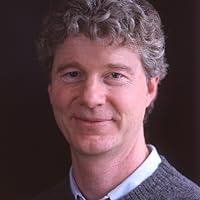
I'm a professor at Curry College. Massachusetts, and a counselor. My doctorate is from Oxford University, in English Literature, and I'm fascinated by literature and by the way it explores the deep structures of the psyche.
This book by Dr. Allan Hunter, explores life through the lens of six archetypes--the Innocent, the Orphan, the Pilgrim, the Warrior/Lover, the Monarch, and the Magician. After the first section explores each archetype, Dr. Hunter takes us on a grand tour of literature, from the ancient Greek tragedies, through Shakespere, and Dickens, all the way to an in-depth analysis of the six archetypes in the Harry Potter books. He explains the stages and sub-stages and shows how we each move around, slipping back to Orphan or acting as Magician for a flash, before we even realize we are doing it. He gives many examples thoughout the book. Dr. Hunter is a therapist and professor of literature and he writes this book in a readable style, making complex concepts understandable. I really appreciate that.
After finishing, I felt disappointed. The title, summary, and blurbs all suggested an examination of literature and its relation to certain archetypes for one's life path. Unfortunately, less than half of the book spends time examining literature. The bulk of this book is Hunter's explanation of his archetypes with modern examples used to demonstrate their usefulness. This was interesting but I was not seeking to sit in on what was basically a psychology seminar that was largely built on an author's hypothesis.
Obviously, this book is not a scientific text and does not present itself as such. What it does present itself as is a synthesis of literary canon with Jungian psychology that has been customized and refined by the author. It is not effective because of the limited use of literary canon and the overuse of exposition and lecture without much underneath in the way of citations and references. There was some recommendations for further reading but not as much as I hoped for.
All that was left was an author espousing his ideas. It is subjective, anecdotal, and sometimes unpersuasive. The ideas are interesting and worth further inquiry but that isn't enough to carry a whole book. This felt like a scholarly journal article exploded into a book.
It gets 3 stars because the writing is highly accessible, as are the ideas. The exposition itself is high quality, just didn't match up with expectations set by title and summary. I also feel he is on to something and can build on it. It just isn't that helpful in its current state.
Allan G Hunter Stories we need to know ref to Rudolf Steiner, Thomas Moore, Julia Cameron (the artists way)
Soul starvation comes from giving up the activities that are creative because the outside world says we're not 'good at it'
went to boarding school and needed to cultivate the inner self to survive age 11 discovered literature, learned lit shows how we can grow into who we are
traveled with RAF father to Madagascar/ later traveled alone, pilgrimage all over Europe in spite of people who said get a job, orphan culture, fit in and be understandable, people on pilgrimage need to keep going and find their inner meaning
book is based on European lit (not Eastern lit)
Joseph Campbell mentor, Hero's Journey
find within ourselves the determination to be ourselves no matter what, nurture compassion, love, understanding being a warrior and a lover each has to come to an inner understanding when to be forceful and when to be understanding
is this person attacking me or are they attacking anyone?
what is wrong with women is too much compassion, submission/ and not enough warrior/ too much appealing to men with extreme clothes, dieting, when being a warrior is needed
6 stages: in over 3000 years of european lit innocent/ like a baby /love and trust/ vulnerability
orphan/ look for a place to belong/ gangs and compliance and not stepping out of line/not being yourself/ leads to discontent/ wanting has to lead to being thus we become pilgrims
pilgrim/ looking for meaning/Flying dutchman sells spices sailing runs into a storm and ship is fated to sail forever/seduced by the future / putting off life means waiting for the perfect moment/ creates the very thing we don't want/ finds something to believe in then becomes a warrior/lover
warriar/lover /care not so much about the money, I care about the people /then very few of us are going to change the world singlehandedly leads to burnout/ some regress to orphan and others become teachers of teachers
Monarch or monarch pair- learn how to trust and nurture others, transforms my experience even or especially when it was difficult for me, to delegate and teach
magician / almost invisible/ when they enter the room, people get more intelligent/ people have better meetings/ we all have a little bit of Magician/ just by being ourselves we allow others to change and do something/
The Odessey/ greek warrior/ being a greek hero wandering 20 years around the Mediteranoan Sea/metaphore for learning something/ story is told to a young woman princess Norcica/ tells story of how to deal with powerful woman who wants to enslave/ be my lover-stay here- become king and demigod--break his word to his wife and son and troop,
how do you treat women well?dominating? seductive? rescue the woman who is helpless? stops being a lost pilgrim and surrenders to 'help me' so he can find how to go home to wife and work together as a monarch couple then Athena- warrior goddess clad in armor-appears and brings them peace
Life gets richer and but people get scared. As life expands, people around us express fear. Don't get caught up in their fear. whenever we change, our friends who may not want us to change, become frightened, you've changed and I want to hear more or you're no fun anymore and may result in hatred as those people desend into orphans/ who are we if we change and then our friends confron what they are doing/ when we get richer others resent us and become afraid/ hope and optimism vs fear/ not whenther you are afraid but what you are going to do with it?
Why are stories so important? Why are some stories more important than others? This book answers these two questions. It explores why the best stories are archetypal and how they help us understand ourselves, our lives and the world we live in. This a gentle and detailed look at different developmental stages that are common to us all.
Perhaps it's not fair to review this book here since I wrote it. Yet I do believe that thinking Archetypally about one's life, and the lives of others, will be of great benefit to many people. We all choose, to some extent, the story we wish to live. Have you chosen to be an Innocent, an Orphan, a Pilgrim, or perhaps a Warrior-Lover? And if you're in transition (and most of us are) then how will you know where you are transitioning to? You'll need this book to help show the way ahead. It's clear, concise, and backed by 3500 years of Western literature's finest guidance. As we know, literature has always been about finding out how to live more fully.
This is my second read through, ironically, I read it when I was closer to an orphan phase a few years back so I rated it a little higher. This book has been helpful for me to understand the world, it deeply ties into what I am learning about polyvagal theory which is an excellent connection to be able to find. All in all for a book published in 2008 I'm a little disappointed that the Greeks, Jesus, and Harry Potter were the ways he decided to get us there. Why not push the margins a little wider and help people broaden their horizons?
I'm still going to read the next book, because this is excellent for increasing understanding and therefore compassion for everyone that I know.
We enjoy our books and movies, but as we struggle through our lives looking for that elusive thing called "happiness", we seem to miss the relevance of literature and culture to our own lives. In this book Hunter makes that relevance abundantly clear. Through the prism of the same six archetypes, and drawing upon literary classics from the Odyssey, to Harry Potter, he takes us through the journey of our lives, drawing out of these stories the lessons we can learn that will light our path, and heal our wounds.
The book is structured systematically and well written in a manner which fairly easy to understand. But it may not appeal to those who are on the lookout for a conventional self-help book or to those who are not much interested in English Literature.
I'm interested to read this, as the premise of it is something I've thought about and sought for years. Joseph Campbell has been instrumental in many of the 'roads' I've chosen down the path of life, and this seems that it might expand on those ideas.